Tag: Uprising and Rebellion

  • Allies and Adversaries in Uprising and Rebellion

    Allies and Adversaries in Uprising and Rebellion

    My current campaign of episodic adventures is starting to get complicated. These notes are mostly for myself, so that the various threads and multi-session characters do not get out of control as people drop in and drop out. Uprising and Rebellion Campaign Two is crafted for that type of play, but pushes me to track NPCs and threads a bit more than typical D&D campaigns.

    Read: Common knowledge in the World of the Everflow.

    Heroes

    These are the Player Characters, some active, some dormant, and all controlled by not-the-DM.

    Req (dwarf, paladin) — He travelled to Kirtin-on-the-Lake in an early wave of emigration from the Lands of the Ken. Part of the Society, he helped the Dock District get free from the Mayor’s influence. The dwarf has a penchant for ale, often forgets names of his friends, and is responsible for forming the Dock District Militia (mostly other longshoreman with glaives).

    Seymore (halfling, rogue) — One of the constants in the Dock District is Seymore’s proselytizing for freedom for all. Working as a streetsweeper, he provided light in the darkness, now his words try to do more as he joins the Society and pushes back against the Mayor, the Ken, and the Empire of Daoud.

    Gardar (human, warlock/sorcerer) — From the land of Mehmd, this one-time cooper and weaponsmith lost his first animal companion to tragedy, fled his former master and now seeks to rid the influence of the Dragons and their allies.

    Keldrass (black dragonborn, monk) — An early traveler from the Fey Isles, he abandoned the quest of those people to study what makes the Kin special and unique. Still confused by these diverse societies without magic but with a love for animals.

    Skrunk (goliath, wild barbarian) — The former coffee roaster lost control when infected with some kind of dragon-kin magic. He has two giant turkeys, a little bit of magic and a lot of rage. He was once plagued by gnomes and Paiddrois both. The Society have used his giant turkey-cart to help transport things.

    Dormant

    Habergeon (warforged, cleric) — The world’s first, and possibly only, warforged, Habergeon was crafted during the fall of a previous age back when magic was plentiful and those who are now gods walked the world as mortals.

    Nerinmil (half-elf, warlock-rogue) — Also in the early wave of travel from Ken to the Land of the Everflow, Nerinmil stands against his ancestors in their quest to oppress the People of Fellowship.

    Grera (mulgoblin, cleric) — Rescued from the jaculus encampment Grera joined the Society in efforts to learn more about the wide variety of peoples in the world. He is the primary connection between the Kon working in the back of the Rusty Clam and the active agents of the Society.

    Roland (human, rogue-thief) — the former sage was recently fired from his position in local university. His teachings challenged Daoud’s control of Kirtin-on-the-Lake. He has a small cat that avoids all conflict.

    Whym (halfling ranger-gloom stalker) — the former circus member is of noble heart and fights to protect those who are threatened by darkness. She has a huge dog, Kelb.

    Galanodel (elf rogue-propagandist) — the former journalist in Ken has combined techniques learned while working in the lands of magic with the praktikum of the gobkons. Now he publishes broadsheets in Kirtin-on-the-Lake pushing warnings against his own kind as well as building support for an independent KotL.
    Allies

    Auger (goliath, professor) — One of Roland’s friends at the U, Odger is a font of knowledge. His library-classroom is a safe haven outside of the Dock District and reachable via a fountain and the sewers.

    Penzer (human, bar owner) — He is the owner of the Rusty Clam, the impromptu headquarters of the Society. There is a once-secret backroom with a tar-tree powered printing press (the press can also be powered by the sap of the black dragontree). Penzer generally hears rumors around the Docks.

    Gregr and Robare (humans, longshorefolk) — Two of the men armed by Req, they have crewed a boat requisitioned by the Society and helped rid the jaculus from the docks. They aren’t great fighters, and try to avoid conflict. They are willing to support the Society in all non-violent actions.

    Wilkie (human, captain of Dock District guard) — No longer the only “full-time” employee of the Guard, this former Daoudian guardsman felt more familiarity with the Docks than the Mayor’s officials. He can be a source of knowledge about what’s going on in neighboring Districts or the Mayor’s forces.

    He was captain with a unit of four full-time Warriors (2 human attackers, 2 halfling defenders). Their five dogs are one mastiff (Wiklie), two herding dogs, and two guard terriers (can set an Alarm as a ritual with no components). They wear chain shirts, glaives, a ruby dagger, and short bows. Wilkie has a longsword and shield. All but one of these died. Denny is the only remaining guard.

    Lily Evertruse (elf, wizard) — Lily scared off the faerie dragon at the Mayor’s Three Fulls party. She seemed friendly with Habergeon and willing to aid the group in their efforts.

    Thorbolt Moorcok (human, vintner) — The head of Moorcok manor and vineyard was befriended by Req as the dwarf helped the family cleanup and rebuild after a group of Dragonsworn attempted to kill the Professor Rollo Silverfin, a Scholar of Illusions.

    Becca (human, conjurer) — She stole a few slates of conjuration to learn extraordinary magic, to include spreading certain spells (Infestation, Sword Burst, ???) to the general public. She is an ally, but also wants to spread magical knowledge to everyone.

    Jasmyne (human, retired captain of Mayor’s guard) — Jasmyne and her monkey enjoy causing small troubles for the Mayor’s not-quite-allies. She also thinks the current Mayor is a buffoon who doesn’t match the strength of his father.

    Resources

    The Bundle of Illusion (a random number of books) and the Slates of Conjuration are in possession/control of the group. The Slates of Conjuration were accessed by Augr’s students, who eventually spread spells to the general public.

    Req created the Dock District Guard (see Wilkie, above). There is also the ad hoc militia which are longshorefolk with bill hooks (uses glaive stats).

    Seymore expanded his network of sweeps and lighters into Duskside.

    The group also has significant influence over the broadsheet produced by two goblins and a mulgob in a backroom at the Rusty Clam.

    Nerinmil has a significant piece of lore.

    Habergeon holds a divine favor.

    Adversaries

    Qiddrot The Dark and Pathlean The Shadow (black dragons) — These hoarders of fellowship are breaking the companion bonds. Their adolescent companion was killed by the group in an ambush. They have met with the Mayor, who learned that the Blacks do not respect the treaty between the Dragons and the City.

    Gnomes — A small group of bold illusionists that seem to be allied with the Blacks, these illusionists and enchanters willingly broke the Treaty in order to help steal joy and happiness.

    Elmsday Fleet of Daoud — Settled just outside the city, the Elmsday Fleet is not under control of the Mayor. The Society has yet to interact with the Fleet as it looms to insert itself on the side of oppression.

    Proctors of Grace — an Evoker, Abjurer, and Diviner that travel together seeking to remove magic from the Six Kingdoms. They are hunting the Scholars and the Lorebooks.

    Former Mayor-Governor Roreldus Androouet le Riche, Servant of the Queen and Commander of the Northern Fleet and the 3rd Marines (human, banneret) —  a weak man more concerned with power than justice. Will do nearly anything to maintain the place of prominence in Kirtin-on-the-Llake. The Northern Fleet are two boats that roam the lake and are maintained on Androouet Isle in the middle of the lake. The 3rd Marines no longer exist.

    Tanazir the Greaty Wyrm — When alive this blue dragonwas influencing the mayor through promises of wealth. The deceit and corruption made Kirtin-on-the-Lake nearly unlivable as so many leaders and upper class were looking out for themselves.

    Laudra (elf, rogue) — Discovered during the Mayor’s party she uses magic to drift among the Kin. A thief and general troublemaker who seems be ruling Rat Horn. She has two dwarf assistants and some amount of fandom within the working class.

    Jaculus (group, all dead) — Req did capture a jaculus egg. These minor dragons stole fine art and gems from Dock District boots and retreated to an encampment to the north-east of Kirtin-on-the-Lake. The group fought off a few allied Ken.

    Paper Drake (singular, dead) — The folding book drake that once rode in Habergeon’s book pouch escaped during a rest in Odger’s library-classroom. It was quite interested in his most special books on the highest ring of knowledge within the tower.

    Paiddrois The Twilight (dead adolescent black dragon) — First of the Blacks to interact with the Society, Paiddrois was the least powerful and most aggressive of dragons to enter the city. His boldness was a herald of things to come, but also what lead to his death.

    Clues and Portents

    The dragontrees need at least one dragon and 8 other spellcasters to be reawakened. The Red Oak was the first of these and now geysers of flame spew out from it. No new egg has been seen yet. These ceremonies can only happen on when at least two moons are full. The next opportunity is in two days and coincides with a major Daoudian festival in the city.

    Black dragons break the bond of companionship between the Kin and their beasts. At least three dozen of these bonds have been broken. All appearances are that the black dragons hoard these connections. Jaculus hoard gems and fine art. Paper drakes hoard knowledge and appear to want to raid the University of Kirtin. All dragons hoard something and the chromatics seem to hoard emotions. Five of their 11 gnome and dwarf allies have been killed. Four in Winterhome of Shamal and one at the Mayor’s celebration.

  • Goltoppa, a Mehmdian sport in the World of the Everflow

    Goltoppa, a Mehmdian sport in the World of the Everflow

    Fantasy sports can be a fun way to add depth and cultural to a campaign world. One of my players in Uprising & Rebellion is playing a character from Mehmd and invented the sport of Goltoppa. He adapted some of the cultural touchpoints from the hidden empire, placing them into the common state of the game and has asked for it to be featured in a session soon. The character in question is not a Goltoppa player or coach.


    Goltoppa

    by JayDubTheGamer

    Playing Surface:

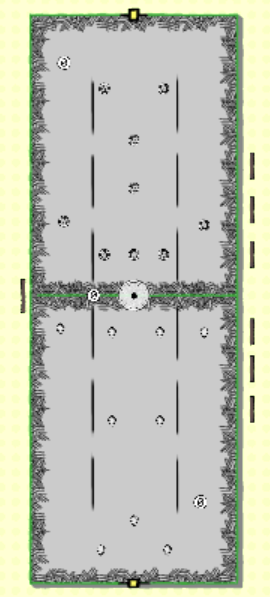
    A goltoppa field created using Dungeon Scrawl

    The game is played on an open, flat, dirt field, generally free of rocks & debris, that is 360 feet  long by 144 feet wide. The field is split lengthwise down the entirety of the center into 72 feet wide halves, and crosswise at 120 feet intervals. These six resulting areas are marked off with white paint borders. Particularly enterprising/wealthy teams have been known to pay to have the sections magicked to different colors. Straddling the centerline at each end of the playing field is a netted goal, 9 feet wide by 3 feet tall. One narrow end of the field is to be facing North, indicating the “head” of the field. Three referees patrol the playing surface to control the action during the run of play.

    Players:

    Goltoppa is played by two opposing teams, consisting of 9 starting players on each side. Teams are permitted to ‘dress’ 3 bench players for each contest, to be subbed into the game in the event of injury. Players may not be subbed into the game for strategic reasons or in the event of a player’s expulsion from the contest. A player’s uniform shall consist of a sleeveless tunic, belted at the waist & extending to mid-thigh, in the primary color of one of the six teams currently representing the league’s six social strata: Noble (violet), Military (red), Religious (white), Artisan (gold), Farmer/Fisher (green), Merchant (blue). Note that players are recruited to represent these strata, and need not be members of them. Additionally, players shall wear sandals that wrap up around their calves, with linen padding over their shins. Each team dresses one Left & Right “Slasher,” designated by a black sash that goes diagonally from either left or right shoulder to opposing hip, with the shoulder covered indicating which side of the field they may patrol. Players may wear short pants as well.

    Play:

     The game is played in two 36 minute halves. At the start of the game, a coin toss determines initial possession, which begins via kicking a ball onto the field from a position to the left of the goal which the possessing team is defending. The ball is traditionally made from a treated cow’s stomach filled with air, or a leather ball of approximately the same size . There are no goalies; all players may attempt to kick the ball toward or away from the goal, or to a teammate. Additionally, each team’s Slashers are allowed to catch the ball on the fly in their hands and run with it to the border of whichever section of the field they currently occupy, at which point they must kick the ball themselves unless trying to place the ball in the opposing goal. A Slasher with possession of the ball may be leg tackled by the opposing team. A successful leg tackle means the Slasher must kick the ball to a teammate (only) from the spot of the tackle. Tackling with one’s arms, striking a Slasher above the waist, or attempting to strip the ball from a Slasher’s hands by a player other than an opposing Slasher is not allowed. A ball that goes out of the field of play results in a change of possession, with the new possessing team kicking the ball into the field of play from the sideline spot where the referees determine the ball crossed out of the field.

    Scoring:

    A score happens whenever the ball is put into the net during the run of play, A ball kicked into the net scores 2 points; a ball placed into the net by hand scores 5 points.

    Penalties:

    Rough Play: Arm tackles; deliberate leg tackles of a non-Slasher; headbutts; intentional hands to the face or back of an opponent – Offending player off the field for 3 minutes.

    Stripping: An attempt to pull the ball from the hands of a Slasher by a non-Slasher – Offending player off the field for 3 minutes.

    Catching: Non-Slasher making deliberate contact with his hands to the ball, especially with an effort to control the ball – Offending player off the field for 2 minutes.

    Scooping: Slasher attempting to pick the ball up off the field, rather than catching it on the fly. This includes a ball that bounces before being caught – Offending player off the field for 1 minute.

    Offsides: Slasher maintaining possession of the ball beyond the area of the field where he caught it, or crossing from his designated half of the field – Change of possession from the spot; no kick to inbound the ball needed.

    Belligerence: Fighting; intentional physical contact/intimidation toward a referee – Offending player ejected.


    Playing Goltoppa at the table

    There will be a series of contested checks to determine scoring. These will use the Tool Sports: Goltoppa and have a few skills that can connect to them.

    My first thought is a way to generate scoring similar to what is described by JayDubTheGamer would be to have five contested checks by half. That’s a lot of rolling, but provides some variety of results and capability of multiple players participating.

    Winning a check by 1-5 results in two points. Winning a check by more than 5 results in 5 points. Winning a check by more than 10 results in seven points and winning by 15 or more is good for nine points.

    Losing a check by less than 5 results in two points for your own team. Any natural 1 means that you have given up a five-pointer or have committed a foul, rolling their next challenge at Disadvantage. Any natural 20 means that you have scored a five-pointer.

    This should generate scores that look a bit like early 20th century American football or current rugby.

    Applying skills

    Acrobatics and Athletics will be the most used skills, most frequently connecting to Dexterity and Strength. It would also make sense for someone in a coaching position to use Intelligence with one of those and for a character playing the captain to use Charisma.

    I would allow up to one role to use Deception in order to get away with a foul. That team would have Advantage on the next check, but if they lose that roll their next roll would be at Disadvantage.

    An example:

    Violet teamBlue teamScore
    137Violet 5: Blue 0
    1620 (natural)Violet 2: Blue 7
    915Violet 0: Blue 5
    1212Violet 2: Blue 2
    415Violet 0: Blue 7
    1st half9 points21 points
    29Violet 0: Blue 5
    20 (natural)7Violet 12: Blue 0
    1411Violet 2: Blue 2
    186Violet 7: Blue 0
    39Violet 0: Blue 5
    2nd half21 points12 points
    FINAL30 points33 points

    Yes, that’s ten rolls for a non-combat encounter. Which feels like a bit, but the descriptions are at most two sentences, show the shifts in momentum, and feel like watching a sport when including those descriptions especially around the nat 20s.

    We’ll see how it runs at the table.

  • Integrating social narrative into combat – legendary points connected to a dragon’s hoard

    Integrating social narrative into combat – legendary points connected to a dragon’s hoard

    In the World of the Everflow all dragons have hoards. At this point of Uprising and Rebellion the group has met those that hoard books (paper dragons), jewels and fine art (jaculus), animal companions (black dragons) and strife (blue dragons).

    Heading towards the final faceoff with the great wyrm blue dragon there’s a desire to connect the size of the hoard in that Wyrm’s sphere of influence to its power – subsequently allowing actions by the players to reduce the hoard.

    This will be done by combining the Legendary Resistance and Legendary Action pools. Legendary Resistance will still be a use and lose item while Legendary Actions will be regained at the start of the dragon’s next turn. A pool of physical objects will symbolize the size of the pool. This will represent the intelligence the group learns about the Wyrm.

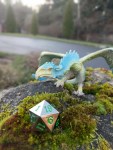
    A blue-green dragon atop a mossy rock leers over a large d20. Behind it is a river
    The Wyrm watches the d20 rolls

    The Blue Wyrm currently resides in the mayor’s palace, having thrived off the strife caused by the rebellion and the Mayor’s corruption. But the heroes have shown that their rebellion is built on hope, a less stratified society and a city capable of trade again. Now just three dragons stand in the way of freedom, possibly.

    Things the characters could do to reduce strife;

    • Healing, feeding Kirtin-on-the-Lake’s residents
    • Freeing animal companions bound to Shadow and Darkness, the two black dragons
    • Increasing trade of desired goods within the war torn city
    • Establishing a popular governance path after the Mayor’s abdication
    • Reducing the size of the 7th Fleet encampment outside of the city
    • Teaching utility cantrips

    I’m certain the party will surprise me with other ideas.

    Things that can increase strife;

    • War with the 7th Fleet
    • Teaching more attack cantrips
    • The Mayor reclaiming the seat of government
    • Open battle in the streets

    They will again surprise me with ideas that create a less peaceful city.

    The Wyrm is going to start with five legendary points in the penultimate session for this story arc. The session will be split between the plan to pick the territory of battle (palace, tunnel, cave) and preparations that could include reducing the Wyrm’s power.

    This tweak to the standard rules should connect a social session to the grand combat ending the Wyrm’s arc.

  • Introducing Militia Actions to support base defense in urban rebellion play

    Introducing Militia Actions to support base defense in urban rebellion play

    In my Uprising & Rebellion Campaign Two the players decided to take on the Mayor’s forces in the open, rather than the dead of night or through obfuscation. In response the Mayor and his forces attacked their home base, the Rusty Clam. Dungeons & Dragons doesn’t do great for large battles.

    A few tweaks I made to more represent the fiction of a rebellious militia and their allies defending their most significant resource were;

    • Have the minions represent half of a squad. The idea here was that the lesser trained guards would break morale when they lost half their group.
    • Allow the PCs to set up themselves up where they wanted. This is their territory. They know it best.
    • Added actions to represent the other rebels and commoners who side with the goals of the uprising. These Militia Actions operate similar to Lair Actions. That initial use has been modified here.

    Militia Actions

    For the session these operated as a Lair Action for each PC. They were taken on the initiative count 10 after their own initiative, which worked out as PC1, enemy1, Militia Action1. That part was a success.

    Each Militia Action was tied to a saving throw by the NPCs. These were designed for Tier 2 play as that’s where the PCs in question are at this time, but since I used cantrips as a guideline they are easy to adjust.

    Funnel – the militia and/or commoners in support of your cause build a wall using objects or themselves to block a path. This wall is 5′ long per tier of play. A successful Strength save (DC 10/15/20/25 based on tier) enables the enemy to ignore the wall.

    Falling or Thrown Objects – the militia and/or commoners in support of your cause pick up objects nearby and throw them at the enemy. These objects do 1d8 damage per tier of play in a space that is 5×5/10x/10/15×15/20×20 by tier. A successful Dex save results in half damage (DC 10/15/20/25).

    Overturn Stand or Cart – the militia and/or commoners in support of your cause create an area of difficult terrain by using common objects to clutter the path. Any enemy passing through the area moves must use twice their movement through the 5×5/10x/10/15×15/20×20 space by tier. They may attempt to move at normal speed, and if using the Dash or Disengage actions, must succeed on a Con save (DC 10/15/20/25) or take 1d6 per tier damage and fall Prone.

    (this one needs the most work)

    Harass – the militia and/or commoners in support of your cause harass and pester the enemies in such a way that limits their defenses. This can be done by word or by minor physical altercation. The next attack by that enemy NPC or intelligent monster is at disadvantage. A successful Int save (DC 10/15/20/25) results in no disadvantage.

    Distract – the militia and/or commoners in support of your cause harass and pester the enemies in such a way that limits their attacks. This can be done by word or by minor physical altercation. The next attack against that enemy NPC or intelligent monster is at advantage. A successful Int save (DC 10/15/20/25) results in no advantage.

    Rally – the militia and/or commoners in support of your cause shouts in support of the PCs. The PCs are then granted 1d6 temporary hit points per tier of play. A successful Cha save (DC 10/15/20/25) by the leader of the enemy results in no temporary hit points being granted, this is to represent their ability to speak over or interrupt the rallying calls.

    Changes for the future?

    I may tie these to various skills or tools rather than saving throws. I had the players roll, and asking players to roll under for a success just didn’t make sense.

    Finally, I think I would allow a summoned swarm from the Propagandist use these when the Propagandist commands them via a bonus action. This would help raise the power level of a subclass that lacks in combat, though in many campaigns this wouldn’t be enough.

    Design Goals

    The primary inspirations for these actions were to mimic some of the play of Assassin’s Creed, where the small crowd of neutrals and allies can support your violence. There are also scenes in Black Sails where the common people of Nassau join the fight against the British. The invasion of Tear and other conflicts in the Wheel of Time feature actions by commoners supporting the heroes too. Various Robin Hood tales, the rescue of The Shire, the movie Aladdin, and so many other tales have common peoples helping the heroes by impeding the enemy.

    While highly urbanized campaigns aren’t common in D&D, they should be supported. The literature and other inspirations for the game do have these elements. Our game can include them in ways that are more than just background story.

    What improvements do you see needing attention?

  • Assigning Social and Exploration Experience in Uprising & Rebellion

    Assigning Social and Exploration Experience in Uprising & Rebellion

    In my campaigns we use experience points rather than milestone levelling. But, we also spend time in the social and exploration pillars, where the game as designed provides little guidance towards the experience that should be rewarded for success overcoming obstacles beyond traps.

    Rewarding the play I want to see, I have given out xp for solved plot points and discoveries. In the past these have been given out at the end of a session without the players knowing ahead of time what their character rewards would be.

    I’m going to attempt to pull back that veil, listing out major plots and side quests with xp values. My goal is so that the player characters will be rewarded for developing their stories and the overall campaign.

    Major plots

    Daoud’s 7th Fleet vs Twilight and Shadow the Black Dragons vs the Mayor with the Blue Dragons vs assembling Kirtinish forces on the east shore – 10,000 xp

    Kirtin-on-the-Lake is now torn between two of the Six Kingdoms and the separate appeals of two groups of Ken. Twilight and Shadow seem to thrive on misery, sucking up negative emotions from the war. The Mayor has gifted the Blue dragons significant territory and their co-operation requires unbonding from animal companions.

    The 7th Fleet wants to take the city back to Daoud. It is actually a massive cavalry army with horses, riding dogs and warbirds. Kirtin’s forces sit, waiting for the three sides to destroy each other and sweep back into the city as welcomed heroes.

    Our heroes haven’t picked a side, because they are all bad. In the past they’ve hoped for trade or normality looking to Sheljar for inspiration.

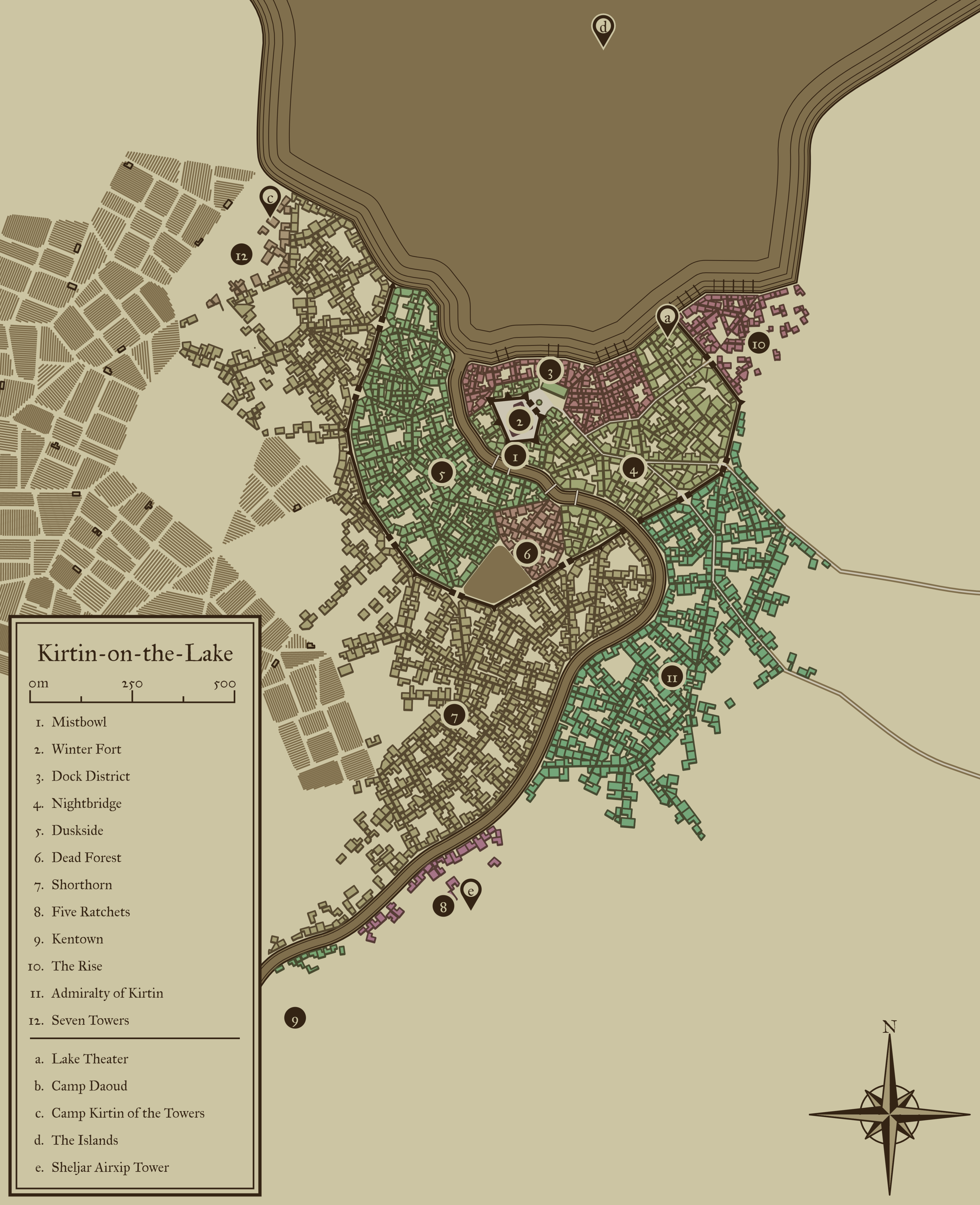
    via the Fantasy City Generator

    Lorebooks – 5,000 xp

    Our heroes have the Lorebook of Illusions and the Crate of Conjuration. They suspect there is another Lorebook locally and a fourth may be in The Ferments. They know not what power the Lorebooks provide, just that a group called the Scholars control them and the Proctors are a violent segment of Ken who are trying to acquire the various books. The world knows that the Folio of Necromancy and the Lorebook of Divination are in Sheljar.

    Defending their books from other Proctors or Scholars is as important as finding more, probably.

    Unseat the Mayor – 7,500 xp — COMPLETED

    The Mayor has turned his back on Daoud and joined with the Blue Dragons and their Ken allies. Even if the heroes cannot yet sway the four-sided war, the group wants the Mayor eliminated via election, appointment or violence — he just needs to be gone.

    Side quests

    Where is Wilkie? – 2,500 xp — COMPELETED

    One of their allies, Wilkie, former leader of the Dock District Guard fled. With their leader in hiding the Dock District has dissolved back to an ad hoc militia. The group of heroes had trusted Wilkie to defend their district.

    Missing Printers – 2,500 xp — COMPLETED

    The printing press and gobkon printers’ office burnt down in a dragon strike. No bodies were found. Once in hiding, then public, the Society of Veil and Shadow has again disappeared. Their pro-Sheljar message remains known, but there have been no broadsheets in three passings of Feylf.

    Is the new flag of quill and sword related to their absence?

    Bounties – 2,500 xp — COMPLETED

    Each of the known heroes has a bounty of 2,500 gold on them. This is mostly because the Mayor hates them for the murder of the gnome during his festival. But also because they keep trying to inspire the people toward concepts like freedom and respect.

    Character quests

    Keldrass wants to repair the bonds broken by the black dragons and help protect the city from the Ken.

    Gardar wants to increase the trade with Mehmd, earn respect outside of the caste system there and maybe have his own Goltoppa team.

    Seymore wants to teach commoners magic, because even though he doesn’t trust it the people need the power. He’s done a bit of this by spreading Minor Illusion.

    Req wants to maintain the independence of the Dock District.

  • Common Knowledge in the Lands of the Everflow

    Common Knowledge in the Lands of the Everflow

    Rather than a one sheet that’s built for players, and the way the game is played, this is the common knowledge sheet that’s built for characters. The goal is a the level of knowledge that every single member of the adventuring party would have (some exceptions for extreme outsider situations).

    Magic is only a generation old in the Lands of the Everflow. Just over one passing of the Dragon (the 4th moon) ago, a born generation came about that all knew minor magics. Just seven years ago the eruption of Cortez broke the barriers of magic. The Lorebook Hunters found the Tome of Divination and the Folio of Necromancy. As magic returned to the world so did dragons, and elves, and goblins with their smog-punk teknology. Magic is real; and the world is not ready for the Born Generation as they age. Some empires fade, others rise, and peoples throughout see the beacon of a Free Sheljar as a new way to govern as the Lands of the Everflow continue to shake under threats for teknology, dragons, and magic.

    The Six Kingdoms

    Kon
    CrinthAzsel
    MiraMehmd
    SheljarThe Slope
    Fey IslesTelseKirtin
    QinKotL
    Daoud
    Green
    Lands
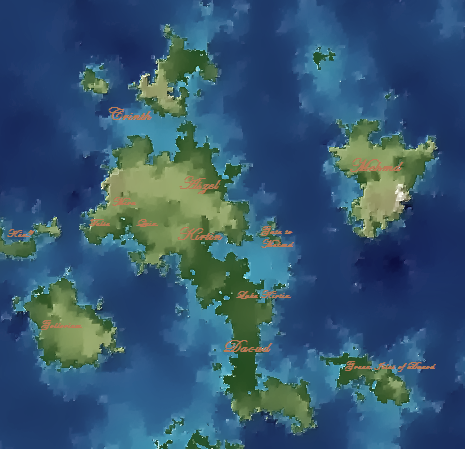
    A word map of the six kingdoms

    That’s a word-map of the Six Kingdoms with a few of the major cities that have featured in the various campaigns. This gives indications to their relative distance from each other. Since the commoner wouldn’t necessarily have an accurate map, the word-map demonstrates the proximity of the lands to each other.

    This map is highly inaccurate, the fanciful dreams of an inauthentic narrator from the Fey Isles.

    Azsel

    A highly structured society built around small families and packs, the Kingdom of Azsel is mostly hin/halflings and their dog companions that trace their lineage to Az and Sel, the first bondings. Every King and Queen traces their lineage to Az, sometimes clearly and sometimes not. Azselites tend to be hierarchical, loyal, and have a strong sense of superiority because of their founder being the one who enabled bondings.

    They are an expansionist society pushing against Crinth in the West and Kirtin in the South. They tend to ignore Mehmd. Messenger dogs keep outlying cities, towns, and forts in touch with the capital.

    Crinth Confederation

    Not really a singular government, the Crinth Confederation is a loose alliance of the northernmost peoples in the Land of the Everflow. Named after the River Crinth, the Confederation is ‘headquartered’ in Thornewall. Goliaths are most common here, particularly those that roam the plains, forest, and tundra. Crinthians have the strongest connection to nature and their architecture attempts to blend living plants into their homes and buildings. Myths from Crinth talk about a time when the bonded animals were large enough for homesteads to be carried on their backs — turtles, birds, mastiffs, snakes.

    Daoud, the Green Lands, and the Emerald Isle

    The grandest fleets of the Six Kingdoms come from Daoud. Naval power is so important to this dispersed nation that even the armies are called navies. Daoud’s forces will raid using rivers, and that’s how they’ve captured Kirtin-on-the-Lake, but also why they struggle to advance into the more mountainous territories of Kirtin and Qin. A land of warmth and greenery, Daoud is full of bright colors and loose fabrics. Similar to Mehmd, there is more variety in bonding with monkeys and fish being common enough, including some who carry their bonded fish in special bags and bowls while they travel.

    Kirtin-on-the-Lake

    Once the winter capital of Kirtin, the city has changed hands several times over the centuries. Currently it is controlled by Daoud. The largest university in the Six Kingdoms predates both Kirtin and Daoud, and may connect to the times before legends.

    Kirtin

    A land at war to the north and to the south, having lost one capital, the people of Kirtin all serve a summer season in the militia. In recent years this has meant service on the Slope, in the past these defensive posts were scattered throughout the mountain homeland of Kirtin. The former Summer Capital of Kirtin, Kirtin-in-the-Sky is a city of winding spires along a cliff face where it is difficult to tell the difference between natural and person-made. Once the center of learning, Kirtin is now a nation of defense.

    The Slope

    Coming down from the mountains The Slope is a frontier land not really controlled by Kirtin or Azsel. Both of those kingdoms send forces to the area regularly, usually in a soft-conflict as the villages along the Slope are unconcerned with empire. Many of Kirtin’s national militia serve on the Slope now that the kingdom has mostly given up on retaking the former winter capital, Kirtin-on-the-Lake.

    Mehmd

    The peoples of Mehmd bond not just with the warm-blooded as the rest of the Six Kingdoms, Mehmd also bonds with lizards and ‘saurs. Oft considered the least of the Six, Mehmd is sometimes considered just a city-state, rather than a kingdom. Water is somewhat scarce as the city sits just beyond the rain shadow from the mountains of Kirtin. Mehmd’s rocky land is crossed with aqueducts and canals taking water to the city.

    Gate to the Wastes

    Mehmd’s largest city is the only one that the rest of the Six Kingdoms encounter. Gate is open to all, but closes of the lands beyond. It is also the largest city of the Six Kingdoms, but on a tiny amount of land.

    Sheljar

    A dead kingdom until the Lorebook Hunters established the Free City of Sheljar. Prior to the Born Generation Sheljar was a mighty empire the controlled all of the West and the lands of the Everflow. A trade empire with major cities on its eastern coasts, Sheljar’s exports included the holy waters of the Font of Two Paths, gems and glassware from Bell’an’faire, alcohols from The Ferments, and stones from the various mountains. It is now fractured, with independent city-states throughout its former lands.

    As magic started to seep back into the Six Kingdoms Sheljar was dominated by a Necromancer. The marsh-city came home to thousands of undead and a family of monsters known as Tunneling Nightmares who spewed vomit of bones and created sunken tunnels throughout the underbelly of the city.

    The Free City is mostly confined to a few isles in the marsh-city. Its main tenant is that all thinking peoples are equal and worthy. They have eliminated most of the undead and all (?) of the Nightmares. They killed the Necromancer.

    Telse, Mira, Qin and the other cities near the Everflow and its two rivers.

    Telse

    The towns of Upper and Lower Telse are dominated by the Orthodox Church of Quar. The main feature is the fountain, pool, and the two rivers that flow forth to both Qin and Mira. Many other faiths also treat the towns for pilgrimage. From the Born Generation to the present day those pilgrims have overwhelmed the town. The Mayor and Bishop rule together, frustratingly looking at the Free City of Sheljar as a threat.

    Qin and Mira

    The two trade cities didn’t fall to the Necromancer and took in many refugees. Both are ruled by trade societies. In Qin these guilds are centered around the trade routes. In Mira they are centered around the craft or goods created.

    Other Lands

    Few of the other lands outside of the Six Kingdoms are well known. Two have recently become quite important.

    Queen’s Land

    From Shejar to the northwest stands a series of island spires and a storm. According to the gobkon beyond that is their own homeland. The matrilineal kingdom is full of smog and caste, with the creation of new technologies being the currency of power.

    Fey Isles

    This series of islands well beyond the Sea of Gallinor is where the dragons and their friends originate. A land of bewildering magic there are colleges and schools to advance the art of the arcane. Only the Oriq, outcasts, are believed to not be able to channel the mystical into reality.

    Races

    Kin, the People of Love and Companionship

    Nearly all of the kin have bonded companions. While dogs and birds are the most common of these, there are also some lizards, horses, and quite rarely fish.
    Mechanically this is in essence a Feat.

    Goliaths

    The giants of the Land of the Everflow, goliaths are most often found on the edges of cities, or out in the wilderness, though they are the most common peoples in the Crinth Confederation. On the Western Wildes, on the Cliffs of Galinor, is a singular tribe of goliaths. They most commonly bond with birds, often using the small creatures to make up for their larger fingers. Not just gentle giants, goliaths are generally warmer to strangers and live in large multifamily groups. Their homes will have open windows across many levels.

    Hin, or Halflings

    The largers will call them halflings, but the hin are half of nothing. Fond of canines some hin ride their bonds, others have small little herds. Hin are loyal to a fault. They enjoy flavors – cooking, tea, coffee, beer, wine, anything that can entertain their mouth and nose. They are most common in Azsel and the Western Wildes where Sheljar once ruled.

    Human

    Most common of all peoples, humans run the gamut of sizes, shapes, and bondings. There are humans bonded with horses, canines, avians, and so much more. They are a menagerie. It is common for the offspring of Hin and Goliath, or Hin and Human, or Goliath and Human to all be called human as their characteristics of humans are all across the spectrum of what makes life amazing. They are most common in everywhere but Azsel (Hin) and Crinth (Goliath).

    Ken, the People of Knowledge and Magic

    These fey peoples have mystical powers, all able to cast magic spells of varying kinds.
    Mechanically this means that ever Ken starts with a feat that grants magic of some type.

    Dragons

    They hoard things and/or emotions. While most peoples in the Land of the Everflow think that always means treasure the ale drakes hoard alcohol; black dragons hoard companionship; faerie dragons hoard joy and mirth; red dragons gather rage. All have powerful magic, which leads some of the peoples to swear fealty to the dragons. Most in the Six Kingdoms still think dragons are a story of trouble over the hill, rather trouble right here in the city.

    Dwarves

    Often the student-warriors and defenders of the colleges, the stout folk are generally evokers and abjurers. Channeling magic into hard violence and shielding others from it. Tending towards dour and serious, when they do unwind they unwind as hard a magic missile. Many keep the various drakes (non-thinking dragon-kin) as pets, but this is not the bond of the Six Kingdoms.

    Elves

    Changing the real world through their summoning powers and abilities to reshape reality, elves of the Fey Isles are aloof and superior. Looking down on the other humanoids for their “lesser” powers the elves like to present themselves as the equals to dragons (they are not).

    Gnomes

    The smallest of the fey, gnomes master the arts of emotion. Changing the way peoples feel or what they experience, gnomes are artists. They want to experience all emotions, at once, if they can. At times some from the Six Kingdoms have seen gnomes with smaller dragons and thought they are bonded. They are not. They’re just great friends with faerie, ale, and others of the weaker types. Gnomes are so fascinated by the Bonding that they have learned to speak with the animals.

    No Rock Gnomes are part of the Ken. There are rumors among the Ken that Gobkons were once gnomes. This is heretical.

    Kon, the People of Teknology and Konstruct

    From the Land of Queen and Konstruct, these goblins are more misunderstood by the people of the Everflow than any other. Covered in soot and grime they are teknical marvels capable of building airxips powered by tar trees, clacketing cycles to move themselves, signal towers and so much more bizarre inventions. Coming in three sizes (Goblin, Hobgoblin, Mulgob) some sages from the Six Kingdoms have theorized that they are related to halflings, humans, and goliaths.

    Mechanically this means that every character starts with Artificer Initiate and Rock Gnome Tinker.

    People of Chorl

    The creations of a rogue Scholar, these peoples are centaurs, aarakocra, minotaurs, fauns, and other blends of beast and human. They are outsiders, shunned due to their being the result Chorl’s use of transmutation magics. They are most common in the unsettled lands of the Western Wildes. The Chorl-ites only gather by animal type.

    The Moons

    Circled by four moons, Aur is roughly the size of Earth. The moons are part a major part of the calendar, and each is centered within different regions.

    Feyelf (7 days) – dominant in the Queens Land

    Glibbon or Glight (31 days) – dominant in Mehmd, Azsel

    Kin (78 days) – dominant in Sheljar, Kirtin, Daoud

    Dragon (6220 days) – dominant in Crinth, Fey Isles

    The Days

    These are the days in the Religion of Quar, the former lands of Sheljar, and Daoud.

    1. Elmsday starts the week and honors Selley (Goddess of Birth, Life and Death) and Belsem (Goddess of the Untamed).
    2. Bell’an’Aur is the second day of the week. It starts with a rejection of that which can’t be tamed and ends with a dinner celebrating Aur. In Kirtin and Crinth this is Feylfday, the day when Feylf is full, shortly after sunset.
    3. Quarsday is the third day. It celebrates Quar (God of Rivers, Mountains)
    4. Day of Glight honors the Lord of Knowledge. In developed lands the afternoons are given to learning.
    5. Torday honors Torq (Goddess of Sea and Storm).
    6. Az and Sel is day six. This honors not a god within the Wildes/Kirtin/Daoud, but the man and dog that legend says discovered the bonding. Nik is also frequently honored on this day. Azsel recognizes Az and Sel as man and dog that were raised to the gods.
    7. Day of Oun is the end of the week. Oun and Obscon are not honored or celebrated, instead the Lords of the End are respected in that all things end. They are often feared.

    Religions

    Neither the Ken nor the Kon are religious. Within the Land of the Everflow there are four major pantheons each with distinct God-groups. The most influential of these is the Orthodox Church of Quar which centers Quar, the Lord of Life and Rivers. Other gods within the group are Belsem (Goddess Nature, the Wild, the Untames), Torq (Scion of the Seas, Storms), Oun and Obscon (Twins of Ending, Death, Souls, Trickery, Darkness), Selley (Goddess of Life and Bondings) and Glight (Knowledge, Study). There is also a Free Church of Quar, an offshoot that objects to the mercantile power of the Bishop. Both churches are most influential in old Sheljar, Kirtin, and Daoud.

    Up in Crinth the most influential pantheon is The Siblings. The god-group are two parents with sextuplets. The Parents are Glight (Light, Knowledge) and Selley (Birth, Moons, Passion). Both have minor roles in the Orthodox Church. The Siblings represent the Hearth, Trickery, Crafts, Beasts, Spirit, and Unity.

    Over in Mehmd the God of Unity from The Siblings is worshipped as the sole god, with all others gods being an aspect of Unity.

    In Azsel both Az and Sel, the First Bondings, are worshipped as Gods. Though they were a real pairing of hin and mastiff as the source of bonding the two represent the power of companionship, life, war, nature and people all together.

    The Everflow

    The Font of Two Paths, or the Everflow, is the magical water that emerges from the cliffside above Telse. When captured from the falls or not significantly intermixed the Everflow has healing powers. The Orthodox Church of Quar controls access to the Everflow in nearly every community. The Church uses its control of the Everflow to have a presence in all cities and most towns throughout the Six Kingdoms.

    Lorebooks

    Every school of magic as well as the hybrid colleges and certain traditions that aren’t usually connected to arcane magic (Druidic, Bards, Tricksters, etc) has a Lorebook hidden somewhere within the Six Kingdoms. The Scholar and their two Students are the only people who know where these books are.

    The world knows that the government of the Free City of Sheljar has both the Lorebook of Divination (Scholar Cortez) and Folio of Necromancy (Scholar Rohan, The Necromancer). The other of the two dozen books, once assumed to just be a singular book, are all considered to be part of the reason for the Born Generation and the return to magic (when Cortez caused the eruption at the Glass Tower) to come to the Land of the Everflow.

  • Four ways to use Oleg Dolya’s new Neighborhood maps

    Four ways to use Oleg Dolya’s new Neighborhood maps

    There are certain DMs (me) who aren’t good at drawing and or mapping. For us, a few dollars a month towards various map makers helps us create our worlds. Even if you don’t commission specific works, the services of Dyson Logos (my favorite dungeons), Two Minute Tabletop (my favorite battlemaps), Deven Rue (my favorite regional maps), and Watabou (my favorite procedural maps) can add depth to your gaming sessions — even when you don’t use miniatures.

    Oleg Dolya, the person behind Watabou, just released neighborhoods.

    This is vital for me. Uprising & Rebellion takes place in large city. Having maps of districts and neighborhoods within that is important for the game. Being able to create one on the fly as my players head off script is vital. Players will always go off script. Just because you think they’re going to have a battle in the Docks doesn’t mean they won’t visit North Shore, the Ward of Mighty Trees, the University or Silk Row.

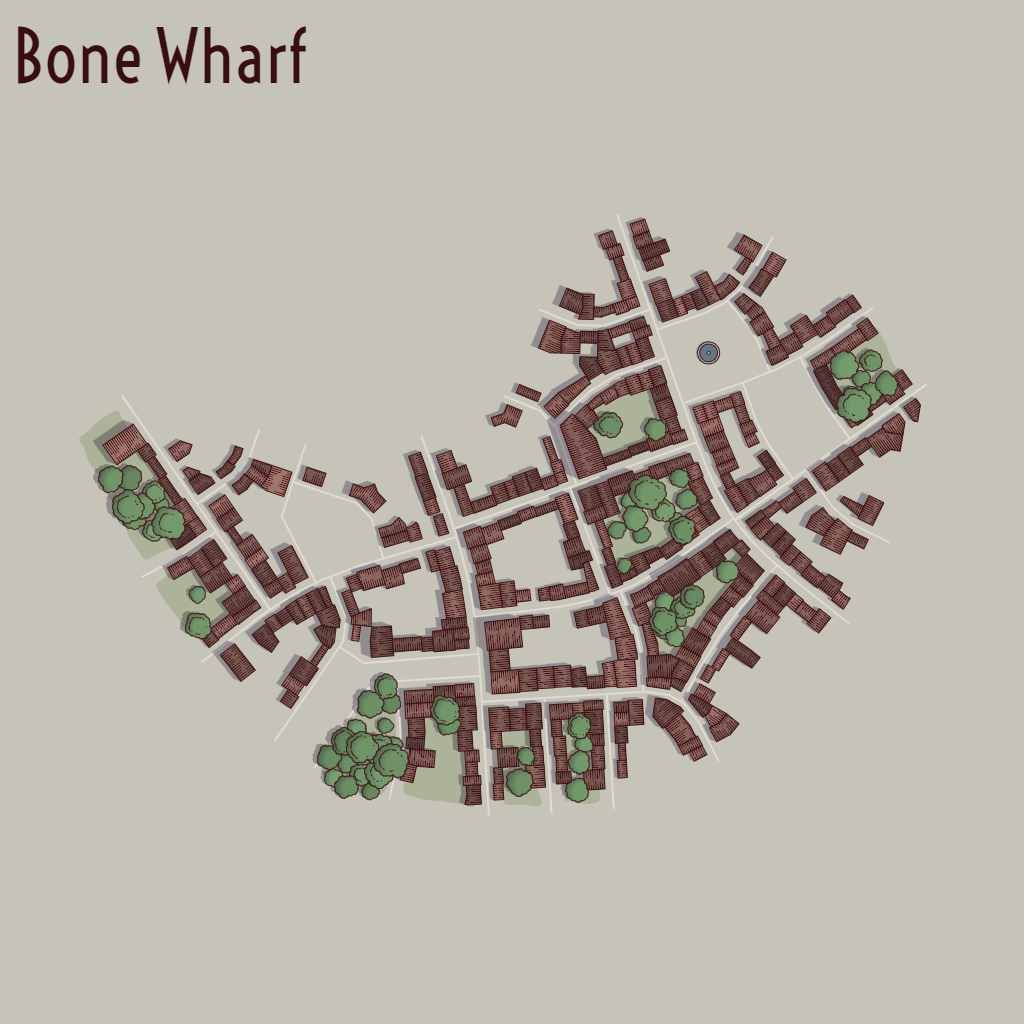
    Created using Watabou

    Will I have two or three of these printed out just for the flavor of the next neighborhood over? Yes.

    Here are three other ways you can use the Neighborhood maps.

    1. Stitch together an assembly of several of them to create a city. The unnatural gaps make perfect sense as mountains, lakes, rivers, etc. A whole city at this level of detail would be interesting. Make certain to use the same color set for each.
    2. Some of the generations for the neighborhood map make sense as compact villages. Yes, Dolya has a village creator, but those don’t have wells, fountains, and ponds in them. The neighborhoods can.
    3. The map can be an underground cavern in the Dwarven city trope. First shift the colors using the ‘0’ key to one that has some darkness to it. Pretend that the trees are mushrooms, and that the streets are the passageways and tunnels to the rest of the world. Bone Wharf is now a Mountain Dwarf city.
    Created using Watabou

    The key to using a procedural map is that you aren’t going to get exactly what you want, or even close to what you want. You are going to get a usable map, fast. Let the oddities of the creation guide you towards creating the people and the space. That long road running from lower-left to upper-right on Silk Row? That’s obviously the Silk Row itself. The fountain is where the various traders and merchants gather to discus their deals. The light smattering of trees are for the very richest of households, those that raise silkworms in the climate that isn’t proper for them. There are some roads that run parallel to the Silk Row, those are for supporting businesses, not the wealthy traders. The non-enclosed squares like the large one up-and-right are areas that are pack animal friendly. You are the DM (or when you use as a player to describe a hometown the creator). Let the algorithm take you to answers you could never find on your own.

    What else do you see in Silk Row? Why is the dwarven city called Bone Wharf? What makes Bone Wharf unique?

  • Uprising & Rebellion Campaign Two: One Sheet

    Uprising & Rebellion Campaign Two: One Sheet

    This campaign is set six years after the Lorebook Hunters returned magic to the World of the Everflow. It is set in Kirtin-on-the-Lake, and is centered on political intrigue with social and exploration pillars being as important as combat. Every player is united in rebellion against the corrupt Mayor, but may have differing ideas about how the various factions can help Kirtin-on-the-Lake be free.

    Made using the Medieval Fantasy City Generator.

    Campaign Premise

    You are common people living in and around Kirtin-on-the-Lake who are inspired to free the city from under the rule of Daoud. You may want it to once again be part of Kirtin, or you may want to copy the Free City of Sheljar. The City Guard, a unit of Daoud’s military, and even Dragons, who see Kirtin-on-the-Lake as their ancestral home, stand in your way.

    Background

    Kirtin-on-the-Lake was once the winter capital of Kirtin. Taken over by Daoud in the generational wars it is a city of borders even before the Awakening and the discoveries of the Lorebook of Divination and the Folio of Necromancy. Now, the Ken and their Dragons are trying to capture what they claim are their ancestral homeland. Daoud and Kirtin remain at war over the city.

    There is also a general uprising of peoples inspired by the Free City of Sheljar. The Mayor has managed to consolidate power by playing the various factions off against each other; this hasn’t helped the common people beyond allowing them peace.

    Made using Perilous Shores

    Grand Conflicts

    The Proctors of Grace and their other allies want to control access to magic. Certain Dragons also want to repopulate Kirtin-on-the-Lake as the Ward of Mighty Trees is the ancestral home of certain types of Dragons (at least a Red as that first DragonTree has regrown).

    Daoud will not allow their winnings (Kirtin-on-the-Lake and the Slope) to leave their control after centuries. The rebellion has taken control of the Dock District. What will they free next? While the mayor may be willing to have the rebels help repel the Proctors, he serves at the whim of an empire that refuses to recognize Kirtin-on-the-Lake as anything but its own territory.

    Factions

    • Mayor and City Guard, generally aligned with Daoud, he is willing to look the other way and cede districts to other invaders for a price.
    • Daoud, the conquering empire of the south. Normally a naval power in the World of the Everflow, their long conflict over Kirtin-on-the-Lake is their largest land holding.
    • Kirtin, the mountain kingdom has been at war with Daoud and Azsel for so long that all of its peoples serve in the military.
    • Proctors of Grace and the Ken, lead by Dragons the various fey peoples are experts at magic and claim that Kirtin-on-the-Lake’s Ward of Mighty trees is their homeland. They also want to put the power of magic under their control and only their control.
    • Society of Veil and Shadows, these rebels are inspired by the Free City of Sheljar and its empowerment of all thinking peoples. Whether Kin, Ken, or Kon the people deserve equality of treatment and opportunity.

    Rumors

    • There are half-animal/half-people roaming the Western Wildes.
    • Out in the Ferments forms of life based on the elements are driving out the Kin there.
    • Headquartered Church of Quar has lost control of the Everflow (the source of all healing potions).
    • Peace has come between the Kingdoms of the North as the Crinth Confederation and Azsel are more concerned with the Kon and the Ken.
    • The Dragons seek the Robe of the Magi.
    • The Tome of Abjuration and its Proctor may be in the city or surrounding area.

    Facets

    • Exploring the zero-to-hero tropes, rebellion, and who gets to control knowledge.
    • Sandbox play.
    • Player agency creates history.
    • Drop in/drop out, whatever.
    • Sessions are 2-3 hours. Adventures are 1-3 sessions.

    Variant Rules

    • Playable races are Human, Hin/Halfling, Goliath/Firbolg, Elf, Dwarf, Gnome (wood only), Goblin, Hobgoblin, Bugbear.
      • Only the Kon (goblinoids may be Artificers.
      • Kin start with a Bonded Companion
      • Ken start with a Feat that grants a 1st level spell such as Magic Initiate.
      • Kon start with Tek
    • There are a few custom subclasses available (Way of Frayed Knot, Society of Veil and Shadows, Conscript, Propagandist, Liberator, Circle of Sewers).
    • There are several custom backgrounds and tools available. We will use cultures, not languages.
    • Use point buy or standard array for starting attributes. If you want something random, the redrick roller gives random point buy valid stats.
    • Start at 3rd level, because power is cool.
    • Long rests require 24 hours within sanctuary. This creates a pace of play more similar to novels than video games.

    Practicum

    Sessions will be on Sunday afternoons and evenings, floating times based on the Puget Sound pro soccer schedule. Characters must be created prior to dropping in. The table will be on an outdoor patio at one of a few locations in South King County.

    Email, private message, or text for more details.

  • Queen and Konstruct: A Goblin’s Lyfe

    Queen and Konstruct: A Goblin’s Lyfe

    There are two important things in a goblin’s lyfe. I’m talking about all of us, the gobkon, the hobkon, the mulkon — all of us — our relationship to the Queen and our Guild. This is hard for you humans, with all your divergent nations and cities and faiths and disgusting menagerie animals to understand.

    Goblin
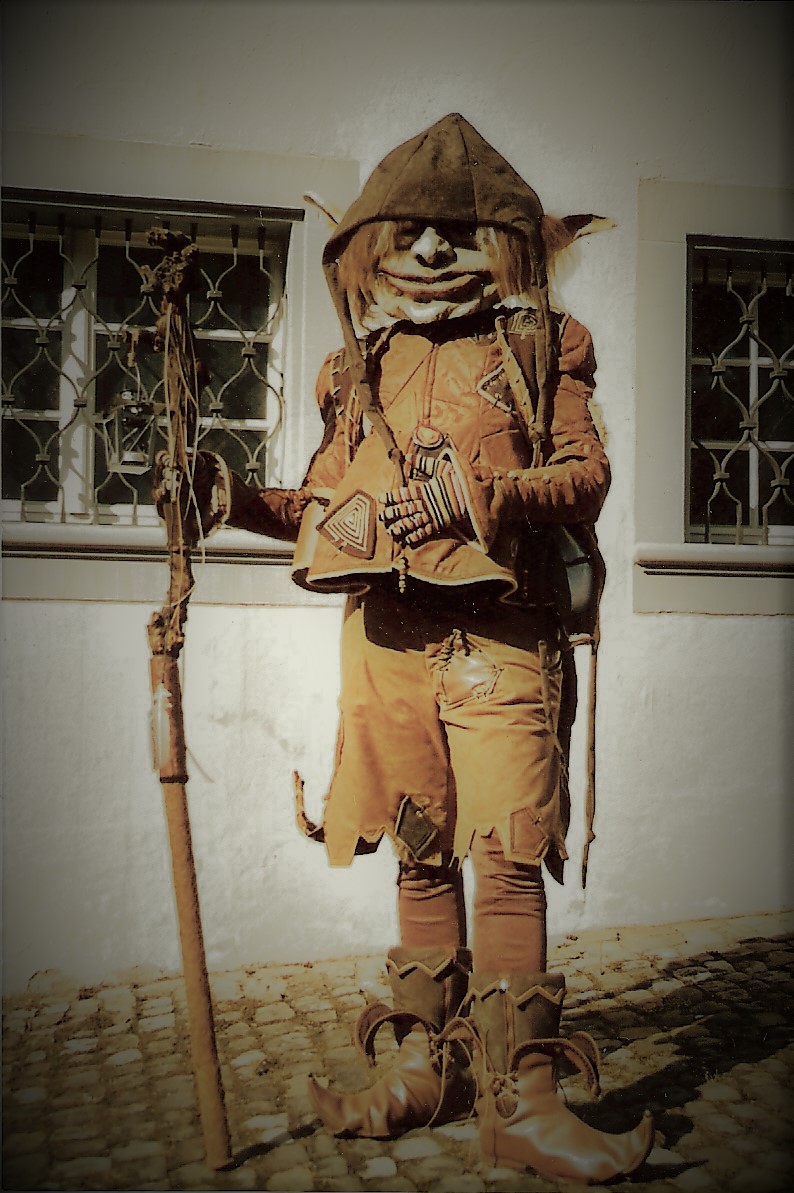
    By creanita design und ausführung by nina saner (CC BY-SA 2.0)

    I’m a printer, part of the Ratxet Guild. My engines run on the power of muls (best!) or whoever else I can hire. The clockwerks give that comforting noise as sheaf and stamp press against each other leaving words behind.

    We’re into gears, mostly. But also some other interesting clockwerks. Frankly, we do better with springs than the Union does. Sure, they’ve the Queens’ Stamp – so we cannot sell to others. In our builds we don’t buy from the Union anymore.

    My first engine was a climbing device. Lean it up against a feral tar-tree and you’ll be able to get to the top on a platform to work that tree with nary your own effort. It was a tough build, because I needed it to be strong enough for a hob. Without a brother there were no hobs to help me. Sis rode atop my shoulders during the entire testing phase.

    At Test it showed a new mechanic for the tar-tree. A Baroness blessed the family via flag and decree. Mother’s standing improved, and the full family took on that glory.

    Now, sister is part of the Airxip Syndicate. They’re relatively new. Taking our bike-props and bladders from the Sisterhood, and the Federation’s tar stacks, the Syndicate built those awesome airxips. I don’t understand her werk. There’s something about steampipes. She’s done well for mother. Her flags came from a Countess, one for her and one for mother. Blerxa left on the First Flight with me.

    I’m Phatha Phioxa Baroness-flagged of the Guild. Sis is Blerxa Phioxa First-Countess Flagged and Many Unfurled of the Syndicate.

    We are what we build and how much the Ladies, may they serve the Queen, reward us for our werks.

    A few more daughters like us and mother could be a Lady. If Blerxa and I hadn’t left for the untamed lands of the Kin Blerx may have earned mother the knighting on her own.

    Our werks are trapped from knowing since we are far from Queen, so I expect mother to have a few more gobkon. Maybe I’ll find out if I go back, not until after I figure out how to use the power of horses in my next werk. They smell, but they are even stronger than mulgobs.

  • Uprising & Rebellion in a Magic Setting

    Uprising & Rebellion in a Magic Setting

    Oppressive governments are a staple of genre fiction. From Robin Hood to the Vlad Taltos series, from Thay to any place ruled by a Sorcerer-King in Athas – the tales of tyranny that must be overcome are common.

    An uprising is nearly impossible against these powers though. They have access to magics and personnel that make hiding difficult. Identifying who is in rebellion within a society that has the fantastic equivalent of an NSA, CIA, KGB, etc at the surface level seems easy. Yet, in our modern world with facial recognition and AI-infused communication monitoring there are still those who rise up against injustice.

    The following are how you make certain that a rebellion that starts like this

    Photo by Rene Asmussen on Pexels.com

    doesn’t end up like this?

    Photo by Pixabay on Pexels.com

    Baseline D&D

    There are some tools to help the Dungeons & Dragons themed revolt within the standard rules.

    Illusion Spells

    Everything starts here, really. From something as simple as Disguise Self to the potent Seeming and Mislead the usages are obvious. They must still be stated and reviewed, lest we overlook the obvious.

    Enchantment Spells

    These go hand-in-hand with Illusion. Getting past the guard who recognizes you is key. Having a huge crowd be under Sympathy can turn the entire tide of the movement.

    Rogues and Bards

    These two classes are natural fits for revolution. A College of Whispers Bard can sneak into a castle or manor and learn the secrets of the realm. A College of Glamour will work the nobles The College of Lore will know the History of the peoples, helping define and refine the message of the group, as can Eloquence. The Colleges of Swords and Valor fight among a crowd quite well.

    Every Rogue fits. Every. They’re probably the baseline for your rebellion. Assassins, Tricksters, Masterminds, Inquisitives, Thieves, Swashbucklers, Scouts – the list of rogues involved in uprising reads like a casting call for Hunger Games or Divergent.

    All Classes Can Fit

    • Artificers can build the defenses needed.
    • Barbarians are those enraged by injustice.
    • Clerics are more than the needed healers, but the ministers pushing for the rights of their flock.
    • Fighters can be the thug guarding a raid, or the armored noble who joins the cause.
    • Monks need not be confined to the outsider from another land, but the brethren who know the ancient ways of the nation.
    • Paladins who take their oath to the betterment of the commoner over the ruling class join your uprising.
    • Sorcerers exist in uprising literature often as the targets of a realm that do not like those born to authority.
    • Warlocks may join their pact to gain powers to help their peoples.
    • Wizards are masters of the spells most important to helping the revolution.
    • Druids and Rangers probably take the most work to have them fit the story, but difficulties are not impossibilities.
    by Hartwig HKD (CC BY-ND 2.0) https://flic.kr/p/aDwaAx

    Filling in Gaps via Homebrew

    There are gaps within the common D&D classes, and these won’t be filled by Tasha’s Cauldron of Everything. The literature and other fictions around resistance feature some tropes that are currently difficult to build in the base rules.

    Each of the following subclasses is a work in progress. Some are more finished than others.

    Society of Veil and Shadow: Rogue

    The Society of Veil and Shadows are a group of rogues dedicated to obscuring and protecting their guild from spies — both arcane and mundane. While able to contribute to the uprising’s success via sneak attacks and other clandestine abilities their true power is their ability to cast a few spells, most of which help keep the rebellion secret.

    Society of Veil and Shadow

    Way of the Frayed Knot: Monk

    The Way of the Frayed Knot is a Monk subclass that attempts to feature some Western fantasy tropes. The most common of these is Friar Tuck from Robin Hood, but there are other studious, religious types that fought alongside rogues and pirates.

    Way of the Frayed Knot

    The Way of Mercy in Tasha’s may be close enough that my own version gets retired.

    Conscript: Fighter

    An old-timer who retreated from the life of adventure and war, but who for some reason gets called back into it. They’ve done their best to avoid violence. Instead violence seeks them out. The Fighter: Conscript (final name TBD) has seen things. Things no one else should see.

    When they get the call to return to their former life they are no longer concerned with having the best weapon and the best armor. Their wits and experience taught them that any tool can be used for any job.

    Conscript

    Propagandist: Rogue

    You rose from the underbelly of empire to demand a better life for all. Your pamphlets and speeches can inspire hope, or fear. Whether from the soapbox or via pamphlet your proclamations turn the tides of rebellion.

    Propagandist

    Still to Come – Circle of Sewers: Druid

    They come from the urchins and gangs, getting to know the vermin of civilization. Simultaneously they serve the people and the animals that run the streets of a city. Able to help feed and heal those in need, the Sewers Druid is equally at home within a gang of thieves as they are a swarm of rats.

    How would you run a D&D campaign that focuses on rebelling against a power much mightier than the player-characters? What tools would you use to rise against The White Witch, or The Union, or the Burgue?

    Fediverse Reactions