Tag: tools

  • ‘Wine lets secrets out’ – the Vintner, a 5e, 5.5e and Black Flag D&D Background

    ‘Wine lets secrets out’ – the Vintner, a 5e, 5.5e and Black Flag D&D Background

    On a family vineyard with vines as thick as hippogriff legs you work the grapes. The slow, tedious springs and summers on the hard scrabble rocks are exhausting, the harvest a frenzy of activity. Then the fun starts, as does the waiting.

    The vintner enjoys all of this time, but the apex of their art is the finished bottle, and sharing it with others. They carry stories in their bottles. Stories of grapes, of skies full of wyvern, of the journey past the bandit camps, of that one time the mage saved their vines, and that other time when the druid thought they were helping.

    Every bottle has a story as does every person who sips it. The vintner is not just an expert at crafting wines. They are a marketing specialist and a storyteller. Each barrel, every cork, each wineskin, every jug – another tale to tell is discovered. The vintner may not have intended to travel the lands on quests, but they know whenever they return to their villa and vineyard they’ll have new discoveries to share.

    Vintner (2014/5e)

    Skill Proficiencies: Nature and one of Deception or Persuasion
    Tool Proficiencies: Farming Tools, Winemaking Tools
    Languages: None
    Equipment: Farming Tools, common clothes, 1 pound of cheese, 3 wine skins, 3 small cups or glasses, 10 gp

    FeatureWine Lets Secrets Out

    The vintner has a knack for storytelling and conversation. Through pouring a tasting and chatting they are able to learn a tale from the person’s past. Sometimes these are of an adventure, or a foible, or a mystery that needs to be solved, and at the rarest times these tales are things that were supposed to always remain hidden.

    Characteristics: For now, use those from the Guild Artisan or pick & choose your favorites. Whenever my background project sees full publication there will be unique characteristics for all of them.

    Vintner (2024/5.5e)

    Ability scores: Wisdom, Charisma, Intelligence
    Feat: Wine lets the secrets out
    Skill Proficiencies: Nature and one of Deception or Persuasion
    Tool Proficiency: Farmer’s Tools
    Equipment: Farming Tools, common clothes, 1 pound of cheese, 3 wine skins, 3 small cups or glasses, 10 gp (or 20 gp)

    Origin Feat: Wine lets the secrets out

    Aided conversations. When attempting to deceive or persuade a non-hostile creature and sharing a beverage you have advantage on the ability check.

    Pidgin: You have picked up bits and pieces of many languages. Select proficiency bonus additional languages in which you know some trade and casual phrases. You have disadvantage when making an ability check using this languages (or cultures).

    Vintner (Black Flag)

    Skill Proficiencies: Nature and one of Deception or Persuasion
    Additional Proficiencies: Farmer’s Tools
    Equipment: Farming Tools, common clothes, 1 pound of cheese, 3 wine skins, 3 small cups or glasses, 10 gp (or 20 gp)

    Talent

    You are familiar with the ways of farming and selling a product that often travels the region. Choose one of the following Talents to reflect that: Polyglot, Trade skills, Scrutinous

    By Jolbert

    This map popped into my Facebook feed the day I published the Vintner. It’s included because it is perfect, and actually reminds me of Balboa.

    Vintner Design Goals

    To more capture the feel of the pseudo-Mid Ages/Renaissance period the Vintner is the grower, the maker, the taster, the seller. While the Guild Artisan can capture this background, it forces the artisan into a guild. Many adventurers pride themselves in their independence. The Vintner had to be a solo gig.

    The choice of Deception or Persuasion is out of a desire to represent the different angles in marketing that can occur within the flavor business.

    When it came to tools versus languages there was a part of me that wanted a language rather than second tool, but that was hampered by two things. First, I generally frown on how D&D handles languages. Second, if I’m bundling growing in and have developed Farmers Tools, let’s use the Farmers Tools.

    The feature, which uses a Chinese proverb rather than the Latin In Vino Veritas, is an attempt to capture the flow of story and words as friends and even enemies commune over a bottle(s). As a DM having a player with this feature helps grant so many clues in new ways.


    Custom Backgrounds for 5th edition Dungeons & Dragons

  • Adding Culture to your game: A new tool

    Adding Culture to your game: A new tool

    Languages in most Dungeons & Dragons settings are rather rudimentary. There’s the pidgin-trade tongue of Common (and sometimes Undercommon). From there, the typical known languages are based on races and the planes.

    A character might know Common, Elvish, and Primordial for example.

    This is bland, unnecessary, and lacks verisimilitude (people don’t either know or not know a language).

    Get rid of languages.

    They rarely come up at the table. For most tables, languages are simply “You can communicate” or “You must use gestures.” Few encounters are successes and failures based on the 3-7 languages a character knows.

    Instead replace them with Culture: NAME.

    This then replaces Intelligence (History). This small tweak aids deeper connections between certain character classes and backgrounds with the world in which they are played.

    What do you gain from adding Culture?

    Especially in games with heavier social and exploration pillars you have a better idea of what your character knows. Rather than have a wood elf raised as an urchin on the streets of Waterdeep be capable of talking to every single elf in the world, as if language is hard-coded in the soul, it is instead a learned thing.

    Said wood elf would instead know Common and the Culture of the Sword Coast, able to communicate with the peoples in and around Waterdeep, as well as knowing the traditions of the various peoples, their symbols, their stories.

    The characters are deeper, with more connections to the world in which they play. A Fighter-Sage would be intimately familiar with many nations and cultures, rather than just a few and whatever the DM determines is known through a d20. A character that has studied the Dalelands would know the holidays, conflicts, and ways to communicate that are common in the the Moon Sea and the Inner Sea.

    At its simplest with Culture, you know more.

    What do you lose by removing Languages and History?

    Not much.

    The characters will still be able to communicate as always. There may be a perceived penalty for a few backgrounds, but there is a fix for that.

    There is additional bookkeeping. You will have to use a custom language on DnDBeyond.com, for example. You do this by clicking on Languages on the character sheet on the website (the app may be different). Then click add proficiency. Then select custom language. Add the culture you choose. If you skip language selection during the creation process you’ll now have a listing of Common plus the Cultures your character experienced and/or studied.

    How does adding Culture work when building a Player Character?

    While building your character in the standard order (Race, Class, Background) take note of every language learned. Each of these are replaced with adding a culture for each language.

    When you would take History you would now have the option to take another proficiency or take a culture.

    Additionally, I would encourage most tables to use a PC’s Intelligence modifier to add (or subtract) from known cultures. This is mostly because Intelligence is undervalued within the game.

    Example: A High Elf, Fighter, Sage would begin knowing as many as 8 cultures known. This would represent their studious familiarity with many peoples.

    How do you use Culture?

    Use Culture like you would use History, but apply it like a tool. Most often it would connect with Intelligence, but there are times when your proficiency in a culture would apply to a check based off of Wisdom (if a character isn’t proficient in Insight their awareness of the opponent’s culture might help them) or Charisma would apply.

    Knowing a culture of a peoples with which you are interacting is particularly helpful in social encounters. A character familiar with a particular empire should be able to take advantage of that knowledge at the table!

    Are you familiar with the Dalelands? Then you would recognize their heraldry, for example. Hidden societies, or subsets of a culture may require a check (DC: 15) to see if you have studied or are aware of that aspect.

    Practical Examples of Cultures in D&D

    Within the World of the Everflow, a rather narrow setting, the following cultures would be available;

    • Western Wildes
      • Ancient Sheljar
      • Ancient Gallinor
    • Kirtin
    • Daoud
    • Crinth Confederacy
    • Azsel
    • Mehmd
    • Gobkon Union
    • Dragonken
    • Church of Quar (yes, this is cross-national group with influence throughout the continent of Kin)
      • There are other faiths and cults that may be appropriate
    • The Scholars and Proctors of Grace

    In a more explored and developed setting such as the Forgotten Realms I would recommend using the super-national regions such as, but not limited to the Sword Coast or the Dalelands or Chult. If you are a member of a Faction, assume that you know their Culture too. The list of political groups, religions, factions, and other strong cultural groups within the Forgotten Realms would fill an entire wiki.

    If you are playing in Eberron: Rising from the Last War the various nations of Khorvaire would all be appropriate Cultures as would most of the religions.

    Tables that use other setting would have to assess that setting. Do not make the cultures too narrow, nor too broad (then you just have the language problem, but different).

    Fediverse Reactions
  • Sports: A New Tool for 5th Edition D&D

    Sports: A New Tool for 5th Edition D&D

    Most Dungeons & Dragons settings (Forgotten Realms, Eberron, DragonLance, Midgard, Greyhawk) exist in a similar socio-economic state to the very late Middle Ages through the Victorian period. The commonality of magic, the relative wealth and existence of a middle class, and other indicators compare fairly well to those concepts. There is a certain apocrypha that makes it clear that much of the fantasy we roleplay is not from Arthurian legend, instead there are modern concepts such as trade guilds, inns with more individual rooms rather than sleeping halls, massive sailing ships, some worlds even have printing presses producing newspapers.

    Something lacking in almost every world set within that many hundred year period is sports. Almost all sporting events mentioned in the literature are individual in nature, essentially replacing things which were in the original Olympics. This ignores the fact that by the time societies had inns, guilds, papers, etc. they had team sports.

    By Unknown author – Pietro di Lorenzo Bini (ed.), Memorie del calcio fiorentino tratte da diverse scritture e dedicate all’altezze serenissime di Ferdinando Principe di Toscana e Violante Beatrice di Baviera, Firenze, Stamperia di S.A.S. alla Condotta [1688], Public Domain, https://commons.wikimedia.org/w/index.php?curid=864734

    A partial list of the team sports from around the globe within the time periods that inspire a majority of D&D fiction includes Town Ball (ball, stick, & safety), Mob Ball (ball, foot, & goal), Lacrosse (ball, stick, & goal), Maya Ballgame (ball, stick/hip, & goal), Polo (ball, stick, horse, & goal), Dakyu (ball, stick, & goal with maybe horses), Buzkashi (animal head, horse, & goal), and others – like the predecessor of hockey.

    Fantasy Team Sports

    Fantasy literature tends to ignore the element of sports. There are some that exist — from the barely mentioned phandrel (team chasing-and-destination) in the Forgotten Realms to, of course, quidditch, which somehow exists in the real world now. The Magicians has welters, which combines chess with magical violence. Strixhaven, the Magic: the Gathering and D&D setting, has Mage Tower and the single reference to Silk Ball (and a map).

    Yes, adventures like Tomb of Annihilation, Rime of the Frostmaiden, and Theros capture individual sports.

    But we know that the times upon which our worlds are based have a wonderful glut of sports. At the minimum these should be used to add color and flavor to our worlds. Make them part of festivals. Have a red v blue v green v orange v black phandrel contest that interrupts a chase scene, or maybe even becomes part of it.

    Still, there’s more available to make your world live and breathe. Not just the Athlete and Gladiator backgrounds, which are great for a hero that specializes in individual sport. Add team sports to your character’s history.

    Sports (type): A 5th Edition Tool

    Lean into tools for the mechanics. They are an excellent way to add more story to your backstory. The use and specialization in a specific set of tools tells us much about the artisan, the bard, the entertainer and so many other backgrounds.

    Expand on your Athlete by adding Sports (type) as one of their tools. Borrow from what was established by Musical Instrument (shawm, etc) for your model. The specific type of sport is purely a flavor and story element, until it isn’t. Maybe, you’ll find a fun town ball bat, or a ball game stick, or whatever, during your journeys and that may provide a clue as to who was in that space prior – DC YY Intelligence (Investigation) with advantage if you have experience with that or a similar sport, for example.

    Bringing sports into your game as a tool expands the tales you can tell. Be Waterdeep’s version of Roy Hobbs, or a Sharn’s version of Mara. Maybe during a chaotic match of mob football between Aviceland and Copperwall in the Foxshaw Field you became a folk hero that repelled a skeleton attack.

    Don’t Worry About Mechanics

    As always, here at Full Moon Storytelling we’re focused on story rather than mechanics. Using a new Tool isn’t going to change your D&D game’s power level, not even as much as Coffee Gear.

    Trying to figure out a winner might be necessary, but not with significant frequency. If you wanted to roleplay actual sports something like Blaseball would be a better than D&D. But, if you need a result and want to use the dice, limit the contest to a single roll for each participant on the team (use party sizes of 3 to 6), and have it opposed by an NPC. Through the description of their primary role within the sport and what that character is attempting have them make a roll Athletics or Acrobatics, assigned to an attribute that most fits their action and with advantage if they character is proficient. Then roll the same for the NPC. Have the first team to 3 successes wins that match.

    Most games before the codification of rule and laws (baseball and football/soccer in the mid 19th century) could last from sunrise to sunset. If the players succeed on their first three rolls, consider that a game done by lunch. If it takes five, or more due to a bunch of ties, make it last into twilight.

    Do not attempt to get deeper into the mechanics than this. Your session doesn’t need hours dedicated to sport. Instead any match should be a way to access new stories told at the table. Instead of hanging at the bar, or boxing – play some Dakyu. Meet some new NPCs based around that event, then hit the tavern to talk about that day’s new star athlete.

    Handy Maps for Play

    Two-minute Tabletop’s wonderful map works for many structures. There’s a small stadium with markings for halves that could work for town ball or mob ball that develop into a spectator sport.

    Strixhaven has maps for both Mage Tower and Silk Ball. The rules for Mage Tower are developed, while Silk Ball has space to make your own sport.

    Prefer this topic as a vlog or podcast?

  • Barbers and bloodletters – hedge healers belong in your D&D campaign

    Barbers and bloodletters – hedge healers belong in your D&D campaign

    Waterdeep, Tear, Dragaera City, Tajar, Zobeck — whatever the city in your world, there are barbers. The technology exists, and the art of Dungeons & Dragons provides a dazzling array of hair and beard styles that go well beyond those from the real world. But how would you play a barber or stylist in D&D?

    That’s easy, via backgrounds. They’re what you were before. Maybe some heroes, especially rogues and bards, would learn to use their common implements as weapons. But anyone could be a stylist or barber before.

    Get your shave and a haircut for two silver.

    Photo by RODNAE Productions on Pexels.com

    Barber

    Whether in a big city or travelling between cities, you are an expert at maintaining hair whether on face or head. With your scissors or razor you create art with hair. Additionally you are capable of non-magical healing. Depending on your practice you may use leaches, your blades or some other form of blood letting.

    Barbers, under any name, are also strong conversationalists. When others are in your stool or chair they feel welcome, sharing the conversation of the neighborhood and their own life.

    Skill Proficiencies: Insight, Medicine
    Tool Proficiencies: Barber’s Tools, Healer’s Kit
    Languages: No additional languages
    Equipment: Barber’s kit, two Healer’s Kits, two vials of perfume, a stool, pouch with 5 gold.

    Feature: Bloodletting

    Whether via razors or leaches, using an action the Barber grants a willing creature the ability to expand a hit die to heal or recover from certain non-magical conditions (Charmed, Frightened, Incapacitated, Paralyzed, Poisoned, Unconscious). The creature takes on a level of exhaustion.

    Personality traits would be similar to the Folk Hero, the Acolyte and the Fisher.

    Barber’s Kit

    Cost: 25 gp | Weight: 2 lbs

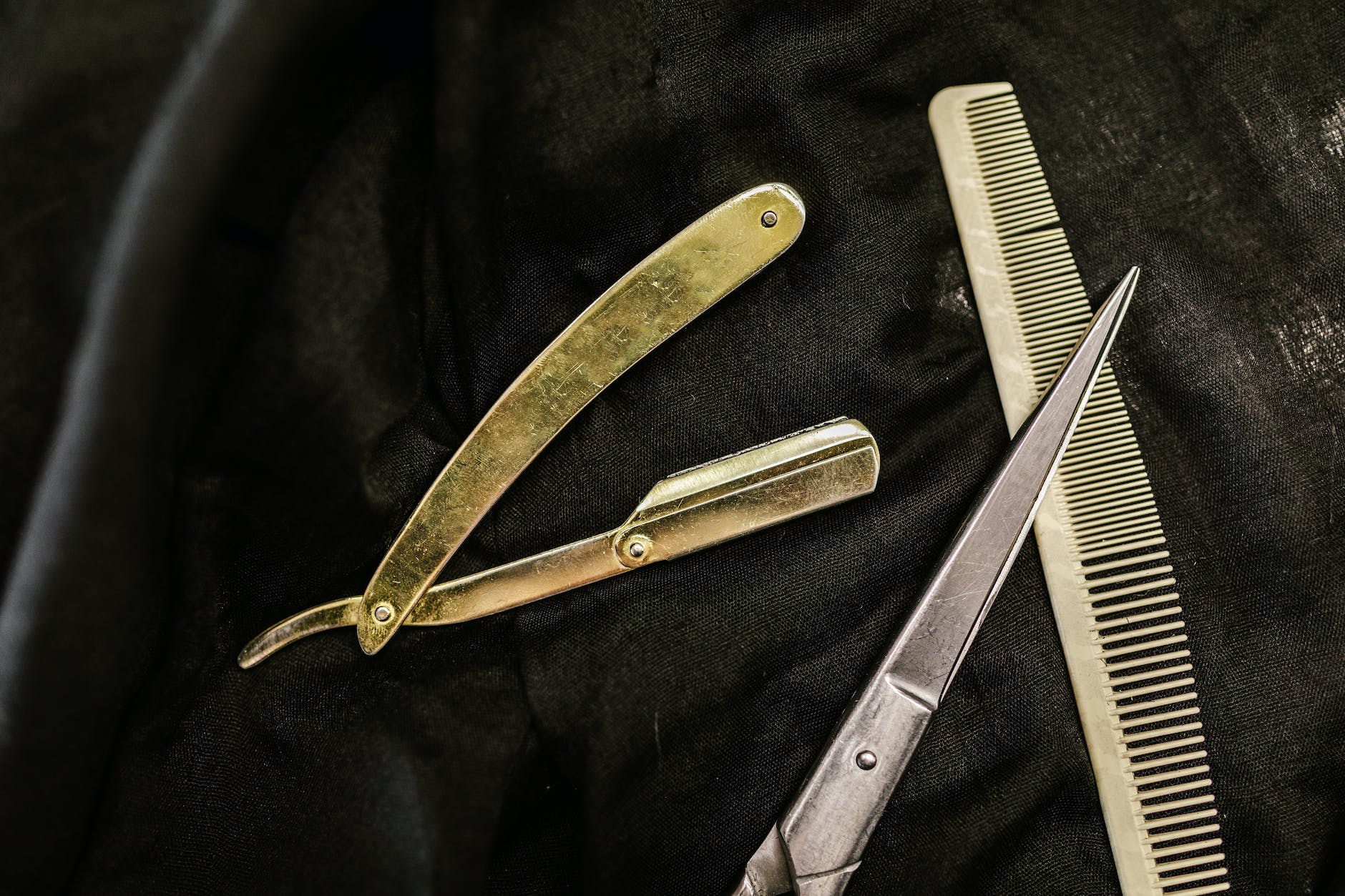
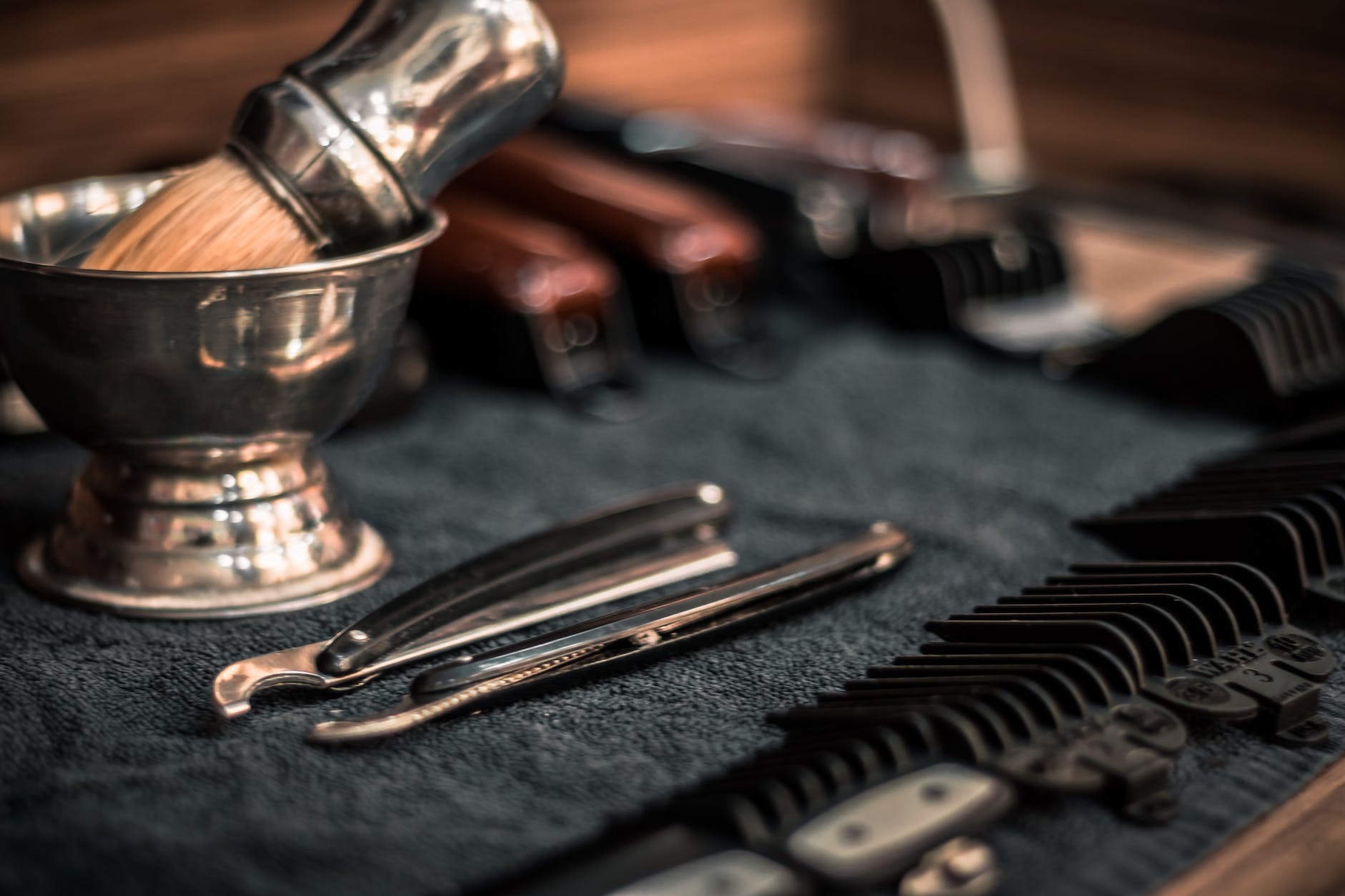
    Proficiency with Barber’s Tools means that you are familiar with how to style hair — cutting it, braiding it, etc. You can color it with various dyes as well. The kit includes a couple razors, scissors, a silver mirror, lotions, dyes, hair ties and other small items to help the barber.

    Photo by Nikolaos Dimou on Pexels.com

    Design Goals

    Once upon a time I read, played and DMed in al-Qadim. The Arab/Turk/etc-ish setting included a barber, part healer and part friendly ear. That barber and their role in post-Renaissance England as “surgeons” fits many of the worlds of D&D.

    They aren’t common in literature and games that inspire our games. That’s okay. They should be. Visiting a barber should be part of the story, even in magical worlds. Mending and Prestidigitation don’t trim your locks or beards.

    Have a conversation, look better, maybe get a tiny bit of natural healing (no, it doesn’t work like this in real life). Also, I really like my stylist Chamaine.

    Custom Backgrounds for 5th edition Dungeons & Dragons

  • Work the earth as a Farmer – a 5e D&D Background

    Work the earth as a Farmer – a 5e D&D Background

    Some heroes work the earth, till the fields, care for orchards, manage vineyards. The adventuring life was not part of their blood. There is no heroic act of rebellion or violence in their past, like the Folk Hero. They show their potential and heart every day. Some rise early, work late, and rest hard. Others understand nature, harnessing those forces to do as little as possible until harvest comes.

    All are connected to the land. Whether serf or free, whether rural or within the city, the farmer raises crops not just for their own family, but to supply a larger group. They are the blood of a civilization – vital.

    Some farmers do not get to remain in the pastoral life. They can be conscripted into battles, inspired by a local bard, maybe their debts force them to work with a local gang, Whatever took your farmer away from their homestead to the adventure they are on now that homestead, connection to earth, and family is a part of them forever.

    The following rules a pre-publication example of a Farmer – a background for the current edition of Dungeons & Dragons.

    Photo by Quang Nguyen Vinh on Pexels.com

    Farmer

    Skill Proficiencies: Athletics, Nature
    Tool Proficiencies: Farming Tools, Vehicles (Land or Water)
    Languages: None
    Equipment: Farming Tools, common clothes, beast of burden (donkey, mule, dog, etc) or cart, basket, 2 days rations, wine skin, 2 gp

    FeatureHorn of Plenty

    Through your knowledge of foods, their qualities and usefulness, combined with an uncanny knack for preparation you are able to stretch food supplies. A meal that would normally serve one serves two. They are both content and satisfied. A harvest in which you participate is also more effective – your senses help find a few more plants that are ready, branches that are missed, or mistakenly dropped produce. Those harvests produce more food, resulting in an increase in gold or barter value of 50%.

    Characteristics: For now, use those from the Folk Hero or pick & choose your favorites. Whenever my background project sees full publication there will be unique characteristics for all of them.

    Alternate: Beekeeper

    Photo by FRANK MERIu00d1O on Pexels.com

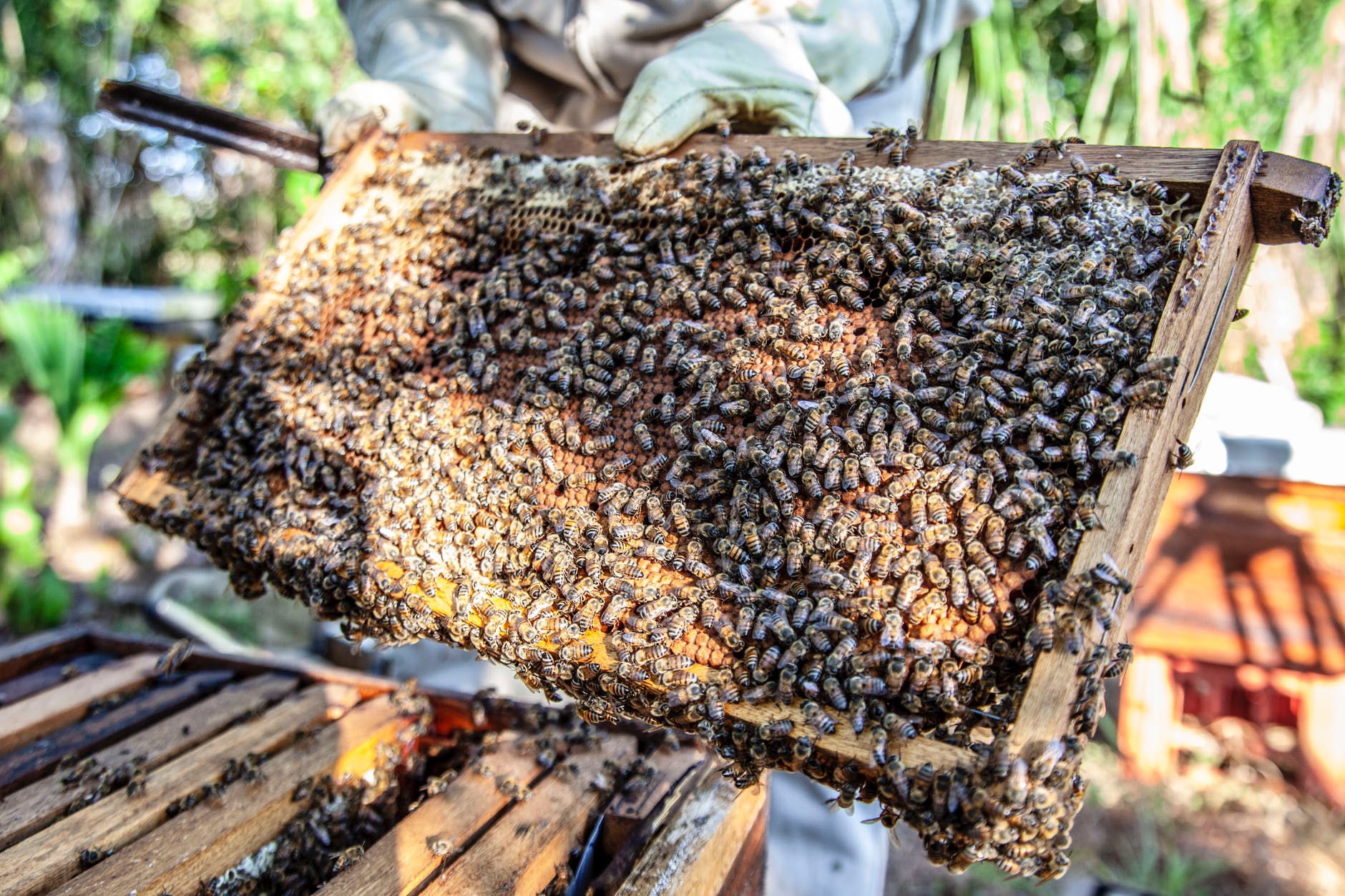
    Drop Athletics for Sleight of Hand. This is to represent the deft hands of someone who does their best to avoid being stung too frequently. Their loads also tend to be lighter compared to farmers who carry bushels of apples, shovel manure, dig irrigation, etc.

    Alternate Feature: Sweets

    You always have some honey – tiny jars, little wax sticks, hard candies, the format is up to you – to give away. Generally those who are gifted your sweets welcome the gift and have a positive impression of you and your group. These gifts can act as a salve to harsh spirits or a reward for previous help. They can also be traded for other uncommon goods that you may be in need of.


    Originally included as an option for the Remarkable Drudge, Farmer’s Tools are a must have for any farmer.

    Farmer’s Tools

    Cost: 5 gp | Weight: 7 lbs

    Proficiency with farmer’s tools means that you are familiar with the operations of a farm, orchard, vineyard, or other cropland. You are knowledgeable in the typical crops within an area, to include when to plant and harvest them. You also know their market value in most lands.


    Custom Backgrounds for 5th edition Dungeons & Dragons