Backgrounds offer so much space to establish who you character was before they entered the stress and conflict of adventuring life. The combination of skill selection, tools, languages, equipment, and personality are a story unto themselves. Jim the Fighter and Nancy the Fighter are similar because of what they do now, but they are also different because of what they did then. Jim was a Noble, raised among the upper class — prim and proper. Nancy was an Urchin, raised on the streets she could sneak among crowds to avoid fights, usually.
And unlike classes, there’s still a lot of uncovered ground. Many tales of what your hero was aren’t encapsulated in the current official backgrounds. The common laborer – the fence builder, the ditch digger, the lumber mover, the stevedore, the longshoreman – is currently ignored.
In trying to fill that niche, while also playing with the idea that utility cantrips are valid parts of a Background, the Remarkable Drudge comes to life. This implementation differs from the earlier version of Seven Backgrounds for Games in the World of the Everflow in one primary way. In the past, the power level of a 1st level character was such that cantrips were folded into the feature. To keep the Drudge and the other Fantastical Backgrounds appropriate to generic D&D worlds the decision is made to replace a single skill and a single tool/language with one cantrip. An evaluation of various Feats available in the Player’s Handbook, Xanathar’s Guide to Everything, and Tasha’s Cauldron of Everything shows the value of a cantrip is slightly more than a skill, but not much more than a skill.
Let’s meet the Remarkable Drudge.
Remarkable Drudge
You are a laborer, often ignored and yet the reason why the community runs as smoothly as it does. You may work the docks, the stockyards, the lumberyards, or lay the planks to improve the dirt roads into wooden streets. Your hard work is the foundation of civilization. But, you’ve also learned, or been born with, a simple spell to make your work a bit easier. The small spell provides utility for you and your coworkers. It may be a hand that can bring you the necessary tool from a distance, the ability to change the shape of earth or water, a way to shout instructions to someone across the field, or a way to light a fire. No matter what your little spells gain you a bit more respect and value than others in your line of work.
Skill Proficiencies: Athletics
Tool Proficiencies: Pick One: Carpenter’s Tools, Farmer’s Tools, Mason’s Tools, Vehicles (Land or Water)
Languages: None
Cantrips: Pick One: Shape Water, Mold Earth, Mage Hand, Prestidigitation, Druidcraft, Thaumaturgy
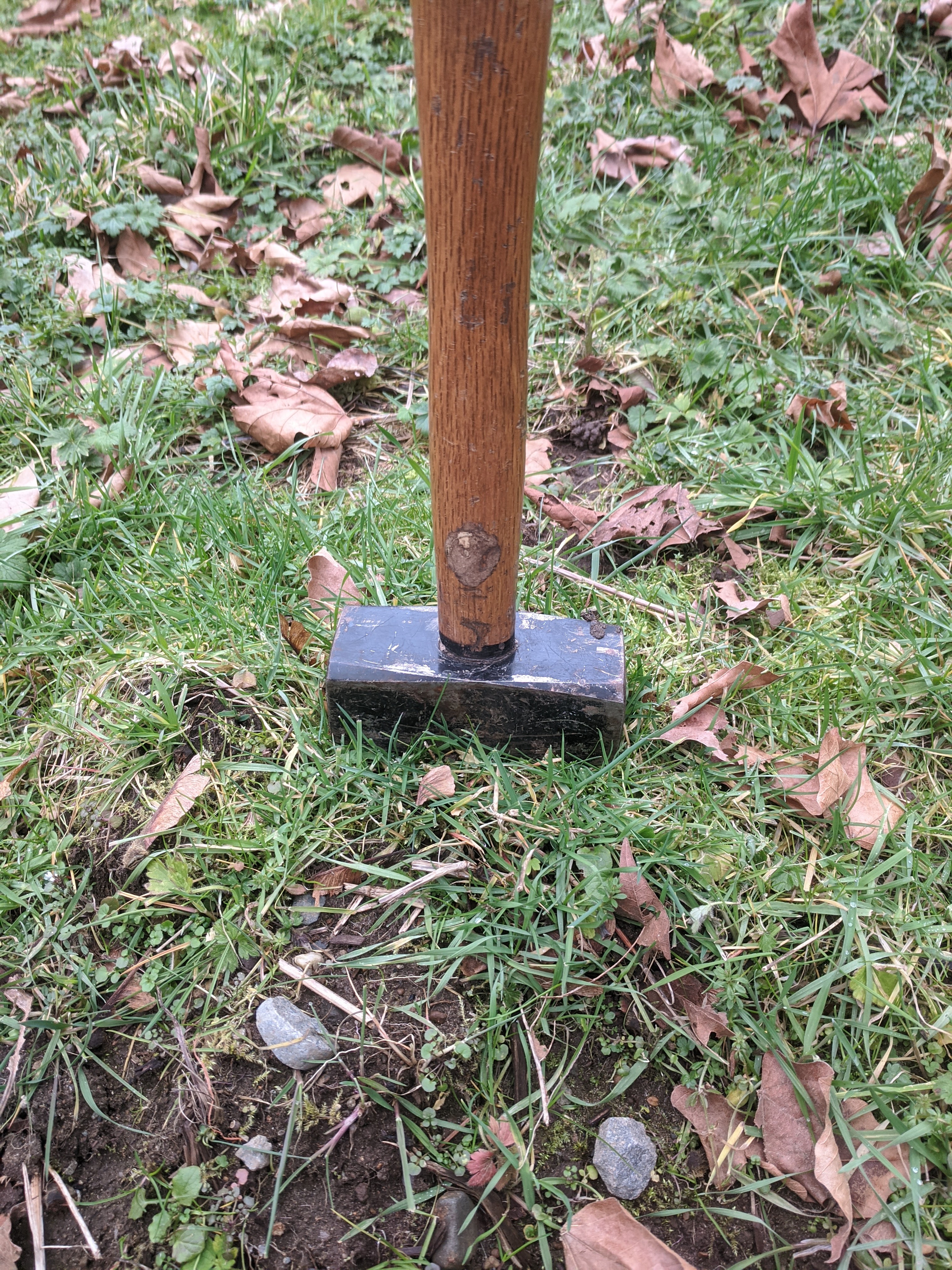
Equipment: Traveler’s clothes, wineskin or jar of mead, mallet, shovel, block & tackle, 2 gp, 5 sp
Feature: This Will Work
Over the years you’ve learned that anything can be a hammer, or a shovel, or well, what you need. When you don’t have the tool or mundane item designed for the job you are usually able to find something else that will work for it – maybe it’s a rock, a brick, a busted up board, or something from someone else’s pack. An imperfect tool is better than no tool at all.
Suggested Characteristics
Drudges are hard workers and celebrate their completed projects with gusto. Frequently working in teams they are warm to those who work hard and cold to those who do not.
For now, use the Personality Traits, Ideals, Bonds, and Flaws of the Folk Hero.
Custom Backgrounds for 5th edition Dungeons & Dragons
- Barker or Crier
- Remarkable Drudge
- Farmer & Beekeeper
- Vintner (updated for 5e, 5.5e and Black Flag)
- Midwife
- Caravanserai & Innkeeper
- Sparkler
- Tinker (updated for 5e, 5.5e and Black Flag)
- Lamplighter or Street Sweeper
- Herbalist
- Far Talker
- Hunter
- Messenger
- Clerk & Tax Collector
- Barber, Stylist or Bloodletter
- Cabbie & Ferien (updated for 5e, 5.5e and Black Flag)
- Clothier or Weaver (updated for 5e, 5.5e and Black Flag)
Farmer’s Tools
Cost: 5 gp | Weight: 7 lbs
Proficiency with farmer’s tools means that you are familiar with the operations of a farm, orchard, vineyard, or other cropland. You are knowledgeable in the typical crops within an area, to include when to plant and harvest them. You also know their market value in most lands.
Components: Farmer’s Tools include a hand trowel, a bag of seeds, a hand rake, a mallet, shears, a bucket, and 10 feet of rope. When near a homestead they would be able to easily borrow a hoe or other full size implements.
Animal Handling: Familiar working in tandem with animals you are able to gain the cooperation from domesticated animals and can give common commands in languages you know.
Nature: You are able to identify the plants and fungus that are consumed as food, often knowing what cultures would typically raise those crops.
Survival: In the wilds you are generally able to locate some produce that provide a minimum level of nourishment.
Forecast: Your understanding of weather patterns is such that you are able to predict the weather for the next few hours. You can sense if there will be a natural change in temperature, wind, precipitation, etc when you have a view of the sky.
Farmer’s Tools
| Activity | DC |
| Identify culture/race raising common crops | 10 |
| Give domesticated animal a simple command | 15 |
| Weather forecast for the next few hours | 15 |
| Identify culture/race raising rare crops | 20 |
Farmer’s Tools are designed to use the tools guidance in Xanathar’s Guide to Everything.