One of the absolute amazing powers of Dungeons & Dragons is the ability to tell stories that you couldn’t tell by yourself. Whether you play at a table of 2, or 4, or 8 there will be ideas brought forth that surprise you. Communal storytelling by the DM and players creates options and opportunities that a single author would miss or gloss over.
The additional experiences and diversity of the group interact to create tales of wonder. This is a large part of why I enjoy D&D. Through the power of social media there is an opportunity to mimic this by using polls to guide the character creation process.
Asking others to help build a character gets you out of potential ruts and tropes, or embeds those tropes even further into your future PC or NPC. In the end of the process you come up with a character that is amalgam of not just your own experiences, but of the near infinite stories available via social media.
The full creation process can be viewed in the Twitter thread.
Tatiana started with “this character uses a sling.” While everything built off that, rather than build through the explicit creation system as outlined in the Player’s Handbook, instead the prompts were chosen in a more narrative fashion.
The various choices informed attribute distribution, race, class, background, spells, and skills. Riverhopper was built in order to create an Adventurer’s League character in case someone wanted to jump onto the Yawning Portal and just play.
Using personality seeds for the choices meant that we have a prankster who left their hometown looking for stories to tell (Bard) and gold to acquire (Criminal). You can find her in alehouses taking out some pocket cheese as she plans her next bit of mischief.
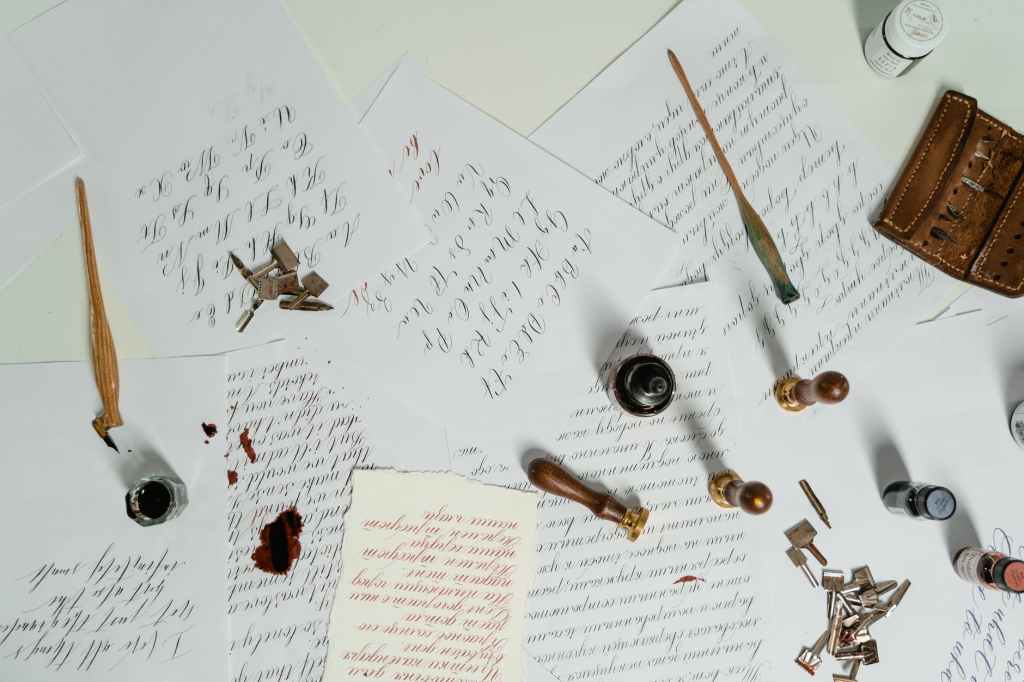
She’s not great remembering names, even though she’ll always remember you – just be something not a name. She keeps a small notebook and quill with her, constantly taking notes in a delicate hand in code that most do not know.
In combat Tatiana is likely to use Heroism and Bardic Inspiration to help her allies as she lurks back slinging stones at the enemy. Prone to rash decisions, Riverhopper will use a trick of the mind or hand to get herself out of trouble. The loveable Halfling is best in a support and face role.
During the pandemic many people are turning to role-playing games. D&D is regularly appearing in the 100 Best Sellers on Amazon. With their deep discounts versus physical locations that makes sense. The same holds true for digital outlets like DnDBeyond, Roll20, and Fantasy Grounds.
Dungeons & Dragons is simultaneously about the game with its stories of heroism in a world of magic and it is about community the group of players who gather regularly to tell those stories together.
Community is hard to come by during the pandemic. Most who read this blog are people who are distancing. Which has slowed the spread of the disease, but it also harms our local small businesses. Things are pretty dire for the friendly local gaming stores out there.
They couldn’t compete on price with online shops prior to the pandemic. Now, they no longer have the ability to safely host events on premise that gave them a unique life and place in our cities.
Here’s my favorites FLGS in Renton, Tacoma, Bellevue, and a few others as well.
Wizard’s Keep Games
I discovered The Keep back when I was selling beer. The old owner and I would talk Magic: The Gathering, Dungeons & Dragons, craft beer, and Tacoma every other week or so.
Wizard’s Keep Games hosted several of my D&D campaign sessions back in the Before Times when there wasn’t a global pandemic. They have a large selection of used D&D books if you’re looking for older materials.
Shane’s Cards
Down near the Uwajimaya, Shane’s leans heavy into collectible card games. They have a few more minis and dice than the Keep, but their RPG corner is a bit cramped.
Their frequent buyer program is helpful if you buy D&D and other stuff, but the pace of releases make it unlikely you’ll hit the significant discounts on D&D alone. Shane’s is a Renton classic.
Tacoma Games
Open and spacious the 6th Ave shop has a ton of miniatures and a wide selection of board games. They were doing curbside pickup during the height of the lockdown. Hit up Tacoma Games.
Terra Crux
Downtown Tacoma’s Terra Crux has a huge selection that reminds me of the days of old going to Book World in Kent. Great spot for paints and minis.
Mox Boarding House – Bellevue
While it isn’t in my dual homes of Renton-Tacoma, I would be failing if I left off the only other physical store I’ve purchased from. Mox Boarding House – Bellevue hosted some of my D&D campaigns, is where I met the Beedle & Grimm’s team, had many a beer in the restaurant, and while I was selling them kegs I would always take a long look at D&D products. They’re big enough you can find third-party books there too.
Others
In Walla Walla I’ve shopped at Books & Games as well as Western Paladin Games. Friends swear by Meeples and Zulu and TeKu and Arcane Comics in the Greater Seattle area.
Support them now, so that when we roll dice together we have a place to gather.
In this week’s post there are tips about creating with accessibility in mind, more libraries playing D&D with youth, maps, recommended podcasts, and so much more.
Beverage accompaniment: Friday Afternoon Tea’s Stormfire. It’s a softer approach to black tea, due to the blue cornflower with the mate and black peppercorn hitting giving it a spike of spice.
Accessibility and Representation
Jennifer Kretchmer‘s resource guide to Accessibility and anti-ableism is a hefty set of reading and viewing. These resources are a wonderful way to understand how your writing and gaming can create opportunities for others. Read, watch, re-read, re-watch.
Here it is, friends. A massive compilation of resources, documents, tools, and more addressing accessibility in tabletop gaming, streaming, and life. I'm incredibly proud to share my Accessibility in Gaming Resource. https://t.co/uzCODeeYjL (1/)
D&D is adapting. More frequently we see creators and performers of color, of differing sexes and sexualities – and we see their characters as well. Representation is vital. Myself, I think back to when I was so tiny there were thoughts about medical ways to cause me to be taller. At the time I always played Halfings, Gnomes, and Dwarves. I did that because I needed to see heroes that were like me.
In the Before Times there was a mighty group of heroes in the South Sound. These women and men put on shows, entertained the masses, and just maybe won a few battles for the hearts and minds of the people of the Near Cliff, Tahoma, and all that call the region home.
We were a tight group of specialists who when combined were a powerful faction of spellslingers, story weavers, and travellers who loved the region and would defend it.
These are the Heroes of Castle Cheney.
Delaney Saul, illustrator, created the group to celebrate my 45th birthday.
Delaney and I had conversations about what race and class each of the heroic representations of the group would be. While creating my friends, and Before Times coworkers, as playable characters (3rd level, Adventurers League rules, Players Handbook only, no stat below 10) I was able to add in a few more details about them.
Casey is the leader of the group – the Director, if you must. A few things were required when creating him. Without any doubt he is a Bard. The man is a natural performer, whether on a mic, dancing on a dugout, or spinning records. He puts himself in front of people. His knowledge of Tacoma, Puget Sound, and so much more made the College of Lore an obvious choice.
When deciding on his race, his natural charisma had to be emphasized. Leaning into the trope that half-elves can be accepted by both of their communities seemed obvious as Casey is beloved in Rainiers and Defiance circles.
Slapping expertise onto Performance and Insight was so obvious a choice, I’m not explaining it. The Background of Entertainer was also an easy choice. I needed to get Casey a Disguise Kit for all of those costume changes we know and love.j
Spell choices leaned into charming types, with Longstrider added because if you’ve ever seen him move around the stadium you know there is magic behind it.
Delaney is an extraordinary illustrator. Capturing her level of talent in D&D meant more than a Background, but instead the magic of images. Locked into the PHB for cost reasons (maybe one of my friends eventually plays themselves) that meant the Illusionist.
Her past as an athlete was captured in two ways. First up, that meant the Gladiator Background. Second it was why I went Wood Elf for race. The increased speed combined with Athletics felt like the perfect way to capture her love and career in basketball.
Witch Bolt became the attack cantrip of choice, because I felt like that one would give Delaney the most joy when she used it. I can just see her eyes light up while going all Palpatine on someone.
Adam is a videographer I’ve worked with and around for nearly a decade now. Between our time together with Sounder at Heart and on Tacoma Defiance broadcasts we probably know each other better than I know anyone else in the Cheney creative team. He is a man with believes in faith, equity, and generosity. A noble Paladin seemed an obvious start.
In order to best represent his excellent eye for what’s going on around him, he had to have the Feat Observant. That meant going with Variant Human. Adam’s cameras capture the life in any game inside Cheney’s walls and the vibrant community that is Tacoma.
For his background I wanted to capture to personality traits.
I can find common ground between the fiercest enemies, empathizing with them and always working toward peace. I am tolerant of other faiths and respect the worship of other gods.
“Acolyte”
If you’ve met Adam you know that every fiber of who he is consists in those traits.
Phinney the Wild is the technical genius behind all of the light, sound, and video at Cheney Stadium. I started working with him on the broadcasts, but really got to know him through a project that started early in the pandemic when I asked each employee about what they were doing. That’s when I learned that Phinney loves the mountains and forests of Washington.
That made it obvious he needed to be a Druid or Ranger. Since he’s the lord of sound, I needed to give him the thunder spells – Druid it is. If I hadn’t chosen to lock myself into PHB or free content, I would have gone Firbolg, but instead he’s a goliath.
Phinney consumes books. That’s where the Sage comes in. He’s also well connected at local colleges, which is a doubly important reason for that nod.
Erin is the other artist at Cheney Castle. Every party can have a duplication in role, but cannot have duplication in identity. To me, the other way to emulate the power of drawing/painting arts is Enchantment. The close choice was simple after thinking through that.
The high elf made sense after that, as I wanted a small boost to illusion magic. Also, Erin is fashionable, which fits the high elf tropes. Her fine precision in her artwork and design is captured in the Guild Artisan Background.
Erin and I worked together on the Defiance season ticket renewal magazine and several other projects. To recognize that her class skills are History and Investigation. No offense to Casey, but Erin spent as much time copy editing my writing for print as anyone.
Reema was my manager for Reign related projects in 2019. Through that time, when the team’s biggest star got in a Twitter war with the President and won every award available to a soccer player while winning The Best and a World Cup, we were in constant communication. Her leadership and belief in me was strong. Her charisma was readily apparent in discussions with ownership, or the brilliant talents that wore the crest – it came naturally to her. In D&D natural power such as hers often is displayed as a Sorcerer.
While the Noble Background is often about being born into high society, I chose that for Reema because she so seamlessly fits into the group. Between her sense of fashion, her wine and cocktail knowledge, and her will she belongs in those situations. The following trait and ideal also pushed that decision over the edge into a big “yep.”
Despite my noble birth, I do not place myself above other folk. We all have the same blood.
It is my duty to protect and care for the people beneath me.
Noble
To represent her ability to make friends simply and easily I gave her the Friends cantrip, while ignoring the part about people knowing magic was used against the new friend.
Maddie is so multi-faceted. To the fans in the stands she’s just part of the entertainment crew. To those of us behind the scenes she’s a manager of mascots, planner of schedules, and keen executor of fun. She’s part mage, that’s obvious. She also slips in and out of spaces, everywhere at once. The Arcane Trickster’s magic of entertainment was an obvious choice.
In her past our favorite Trickster was an elite tumbler. That meant expertise in Acrobatics and Performance, as well as the Entertainer background. Maddie always finds a way to share the fun with an audience.
Picking a race started with a look at which ones offered bonuses to Charisma. This quickly became a choice between lightfoot halfling and half-elf. There was a need to capture Maddie’s bravery in stepping into a role at the last minute, accepting all those challenges without any fear – halfling it is.
AJ, unlike the rest of the group, came to the Sound from elsewhere. He rapidly became a sounder, as in a person of the Sound, even if not a soccer fan. For his build I started with that Outlander background. His tales and stories from his youth, schooling, and previous jobs were foreign to us. The Outlander made so much sense.
The way AJ relaxes is to travel the new lands. He’s an expert on the parks around Pierce County and beyond. The Ranger embraces that. His willingness to support cross-functionally meant I went for the Hunter, as he knocks out small tasks frequently.
He’s good at so much – he can be a radio pbp voice, a video host, a writer, a social media expert, and more. There’s only one race that embraces the ability to do anything – the traditional human. Sorry, AJ, but little fantasy in that one. Bonuses to every single attribute will come in handy no matter what you do.
Throughout the design process every choice came back to how do I make the most heroic version of my friends and coworkers. Which skills, spells, and features made sense to show that these fantasy heroes are based in the real heroics during our year (or more, or less). Together, we overcame obstacles and used our various strengths to destroy the monsters that got in the way.
These are the heroes of Castle Cheney. I miss them, but that when a banner is raised asking for help they will answer, rally, and wave the Flag of Defiance for each other and our city.
Everyone needs a good pick-me-up. The studious wizard, the pickpocket, the noble, and the farmer all can take advantage of the boost of energy whether the beans are from far-off mountains or nearby hills. Adventurers aren’t on standard sleep schedules so the not-quite-magical bean roaster and brewer is quite helpful in the wildes, caverns, dungeons, and seas of any world.
Components: Coffee gear includes a pound of beans, 2 small spoons, 2 small cups, mortar & pestle or small hand grinder, an ibrik or small moka pot, a small rotisserie or pan roaster (can be powered by fire or certain cantrips), spices and sugar.
Those cantrips that could power the two styles of roasters are: Control Flames, Create Bonfire, Druidcraft, Fire Bolt, Prestidigitation, and Produce Flame.
In most D&D worlds a pound of green coffee should be priced around 3 gp and available similar to how cloves are in your worldspace.
Insight: As someone that is in tune with the life of a cafe, coffeehouse, or court you can read the emotions and even pick up rumors spreading through the crowd.
Example: As the party enters a bar or coffeehouse there is a buzz of conversation. Volgat Emberstone recognizes the conversations, listening in on the chatter around him. The player tells the DM that they are attempting to learn if Crylia the Goblin has been in the area.Per Xanathar’s Guide, as this Insight check is aided by the Tool, the player rolls with Advantage if they are proficient in both Insight and Coffee Gear, using the higher modifier of the two. If they are only proficient in only one of the two, they would use just the higher modifier rolling a single d20.
Nature: Familiar with the origins of the glorious bean, you have learned about various locales where coffee is grown.
Example: Marching through Windy Heaven Ridge, Umog sees some wild coffee. The player is wondering if this area is where they might find the tail feather of the Peryton that the Archmage of Cryssalis Valley hired them to bring to him.
Remove Exhaustion: During a Short Rest you can roast and prepare a unique beverage for a single humanoid that drinks water. This special beverage can remove one level of Exhaustion, up to level 3 (going from 3 to 2, or 2 to 1, or 1 to no longer exhausted).
Some like to claim that they are low prep Dungeon Masters. Myself, I’m a high prep DM. Everything I encounter in life is prep for how I run games, or play characters. Every person I meet, every fiction I encounter, every blog entry, every song – these enter me and fuel my approach.
The following is a collection of some of the things that stuck with me over the past week. Consider it a curated post of the fuel for my games, and likely a regular feature here at Full Moon Storytelling.
Humor
Let’s kick this off with what my broadcasting instructor would call a kicker. This is also a snapshot in the continual mainstreaming of the game-of-nerds.
Every week someone asks me about starting to play for the first time. The growth of D&D, and RPGs in general, is stunning. That only increased during the COVID-19 pandemic. So how does one start?
Wired kicks us off with a long look at How to Get Started in Dungeons & Dragons. The story is packed with interviews, links, and the approach that D&D is meant for everybody – there shall be no gates, no keepers.
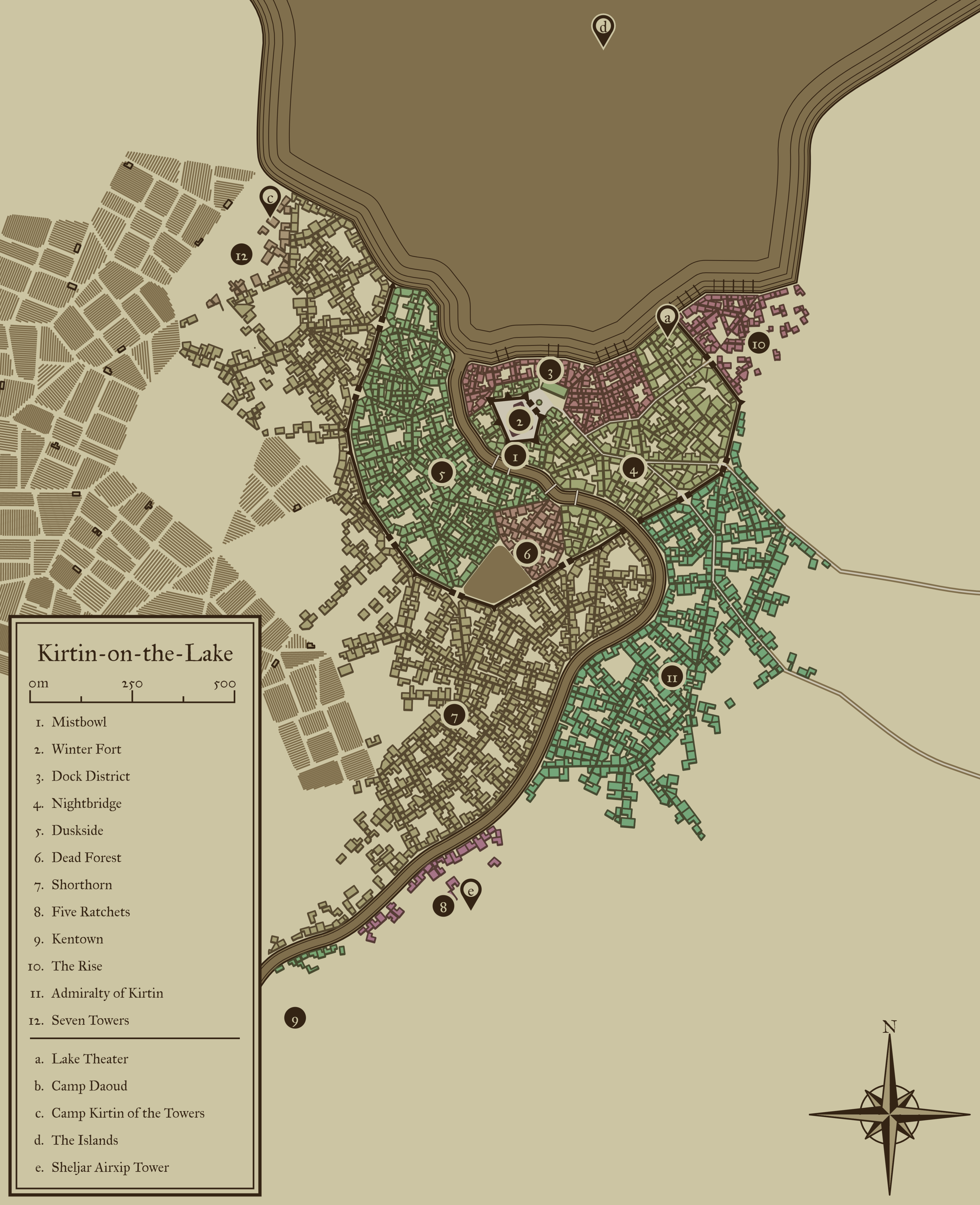
Fantasy maps tell stories. Within each you’ll find 1000 thousand tales. Axebridge from Dyson Logos shows that not every city need to be contained in walls.
This list is my personal creation. I often listen to music while doing my prep for gaming sessions, always with the goal to put me in the mood for that adventure.
As is appropriate for so much of Renton’s history, the exhibit starts with a Moses. Henry Moses, of the dxʷdəwʔabš/Duwamish, often referred to as chief, is the entry point for Renton History Museum’s journey through sports history.
Originally scheduled to launch in spring, the museum and exhibit adapted to a the COVID-19 pandemic. Mask usage is required, the staff takes your info for possible contact tracing, there is a path to guide you through the main exhibits, and with the spacious main hall you feel comfortable even when others enter.
The exhibit itself shifted as gaining access to artifacts was complicated due to the pandemic. The delay the launch means that it is up at the same time as What Difference Do Renton Women Make?
Being up at the same time as an exhibit focused on women makes sense for the dive into Renton’s sporting history. After Moses, the display shifts to two girls who helped Renton High School dominate the King County high school basketball scene in the 20s. And then girls’ sports disappeared from schools.
While Renton produced an Olympic quality women’s track star during the stretch between the Great Depression and Title IX, it was more by accident than any plan. After 37 years with a smattering of sports, the US legal ruling brought about a surge in opportunity for female athletes.
The best museum exhibits do not explain everything. Instead they open up stories that inspire you to learn more. Renton History Museum will help do that for the visitor. Even those steeped in the tales of the South King County city will learn that Mark Prothero was more than a lawyer that defended the Green River Killer, but one of Washington’s best swimmers ever.
Before Zach LaVine was winning dunk contests Renton High won titles in both football and basketball, with seven players that featured on both squads. There are other pros that called Renton home, not just a birthplace.
The triumph in the exhibit is the way that it teases you to learn more – to understand and connect with Renton via sports. That there is a throughline to the other feature exhibit as well as two of the three static subjects for the museum is a great bonus.
Animal companions are a tradition in Dungeons & Dragons. The Ranger with a hunting dog; the halfling riding a wolfhound; the dogs guarding the entry to the castle — all have status as tropes. In the standard rules the “Mastiff” represents all of these.
But not every dog is a mass of muscle, teeth, and bark.
Other dogs exist in any fantasy world. These doggos deserve game-love, too. Inspired by Ambrose, the ranger in the game where my dwarven axe-wizard Awf slings spells and swings a battle axe like some kind of D&D version of John Casey, the Herding Dog leapt into existence.
The desire with the Herding Dog was to not have an increase in power for a medium canine, but represent how shepherds, collies, sheepdogs, and other AKC Herding Group members are different from the working group types that the Mastiff embraces.
There’s a small dip in strength, constitution, and damage with the most significant boosts being adding Animal Handling (to embrace the ability to make the herd go places) and Pack Tactics (to represent that herding dogs often work in groups).
The minor changes give this dog a different identity, stay at the same power level, and give Ambrose a friend that isn’t purely a means to biting enemies. We’re using the Herding Dog in our campaign. Let me know if you decide to add it to your own.
Terriers and Retrievers are on my list of potential design additions.
What I like about this is the density of the shops and how they share spaces, as well as the alley. Dyson Logos did an interesting mix of spaces with this.
Here we have a collection of five mercantile businesses along the south side of Moonset Street. These are fairly traditional business designs – in most cases there is no access to the interior of the business for shoppers and they instead interact through the long shop windows.
Moonset Street Shops
From left to right we have:
First Building – Front – Cloth Shop
This shop mostly deals in lengths and bolts of cloth, imported and domestic. They also provide some dressmaking and tailoring services (the workshops being in the rooms behind the shop, one sharing space with the owner’s bedroom).
First Building – Back – Trinkets & Jewelry
This shop actually has a “shopping space” within the building (so that people can examine the wares without taking them outside) including a small showroom and counters where work is done as well as sales. The back rooms include a workshop and…
In creating Awf there were a few goals. As one of the more experienced players in the party I wanted to have at least a secondary stat be Intelligence. With the party being four to six PCs, there was room for at least one multi-role character. There’s a fighter, a rogue, a ranger, a cleric in the regular group.
That meant that I could fill a few roles – this dwarf axe-wizard is a solid secondary front-line warrior and secondary spellcaster.
As someone who generally tries to avoid the more typical tropes with my PCs, Awf let me explore a few things that 5th edition empowers that weren’t possible when I was originally playing in 1st and 2nd edition of AD&D. He’s a Dwarf Wizard who uses a Battleaxe, fairly well.
The desire to explore a new subclass was approved by my DM. The Bladesinger made sense for a frontline warrior/spellcaster. But, Dwarves aren’t supposed to be one.
Courtesy of Delaney Saul for my birthday
That meant exploring his backstory. Awf has started to talk about that in his backstory in the game, so now it makes sense to share a bit of it.
His hometown suffered a goblin attack. At the time he was a righteous adolescent who believed in the power of his family and village. Unfortunately his homestead was destroyed by goblins. He will never forgive this act.
Fortunately the Order of the Shooting Star, mostly Elven Bladesingers, saved the town through a flanking operation. Awf’s family survived. But he lost respect. They weren’t powerful enough; they weren’t strong enough.
So when the Shooting Stars left, he followed. There was strength in their magic. He followed them for more than ten years. The orphan-by-choice was a hanger-on. He shadowed the lessons of the Eagle Song, as they used axes in their maneuvers, but small axes, for they were not dwarves.
By day Awf Hornjaw was an annoying outcast who offered just enough service to be useful. By night, Awf Hornjaw studied the ways of the Loragwyn clan’s magic.
Being 3’11” and 211 pounds, he didn’t fit in the Knightly Order. He was too fat, too slow, too Dwarf.
But Awf worked. The insulting nickname “Fat Goose” became his calling card. His axe took on the name Oie Cendrée. He learned and succeeded.
Eventually the Loragwyns and the Shooting Stars accepted Awf. His noble desire to sacrifice anything to help others fit their ideals. His skill with adapting Oie Cendrée to the ways of the Song were intriguing.
As Awf left the Shooting Stars they awarded him their name. Awf Hornjaw et Loragwyn is a man with two last names, two identities, and one goal – to find the goblin clan that threatened his family and show them that the Fat Goose is ready to sing the song of violence and ring the gong of death.