• Adding Feats to 5e Backgrounds

    Adding Feats to 5e Backgrounds

    Spelljammer is already on printing two. That’s because they need to make some changes to the Hadozee for reasons of insensitivity. They’re good changes and Wizards of the Coast is changing the processes that allowed the culturally insensitive material to appear first too. This new printing has other errata too.

    The one that sticks out is the addition of Feats to every Background.

    “These backgrounds each give a feat. If a character takes a background from elsewhere and doesn’t get a feat from that background, the character gains one of the following feats of the player’s choice: Magic Initiate, Skilled, or Tough.”

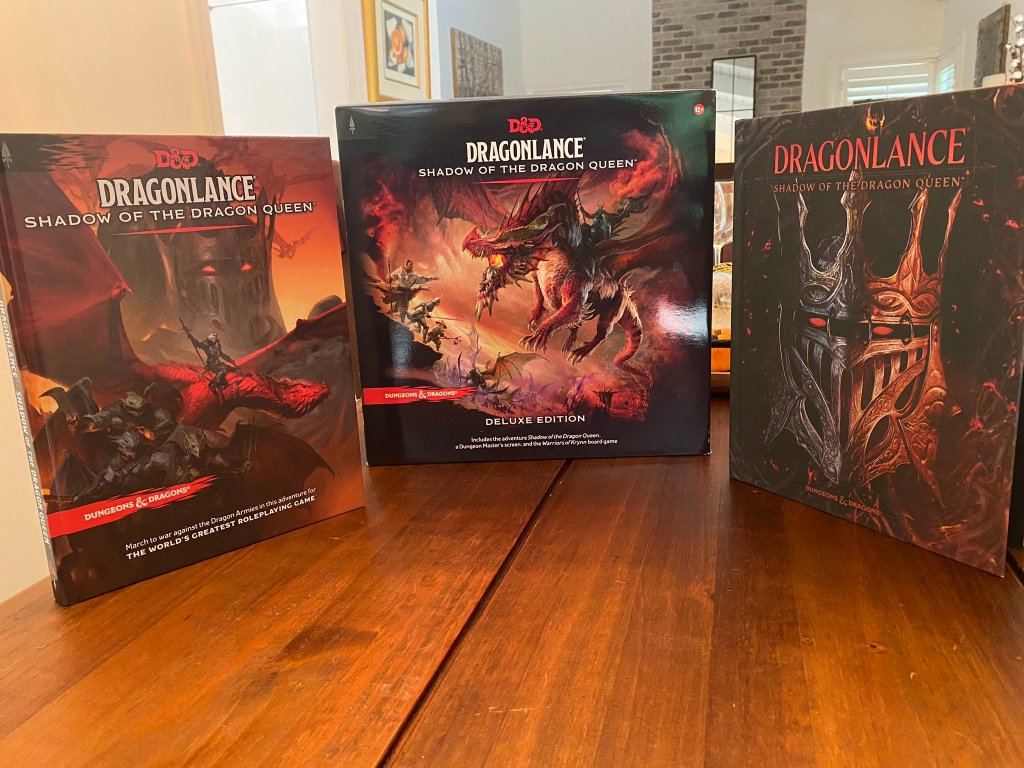
    Dragonlance will have something similar. For Dragonlance this was because these are characters in a war. They must be stronger, tougher, etc. In Spelljammer it kind of makes sense. Normal people aren’t space halflings and asteroid dwarves.

    Similar to the Dragonlance decision my world has an additional feat at first level. In the case of the World of the Everflow these choices are;

    • Kin get a Bonded Companion.
    • Ken get a feat that grants a cantrip.
    • Kon get Artificer Initiate and the Rock Gnome’s tinker ability.

    Similar to the Dragonlance decision to add Feats this was done to add flavor, speaking to the types of powers that people from various continents have.

    With One D&D’s playtest we know there’s a chance at adding Feats for everyone at 1st level.

    What if the One D&D system of 1st Level Feats was added to 5e now?

    You could add Feats to any character in the current game with a minor, but not overwhelming, increase in power with a few simple guidelines.

    1. Only allow Feats that don’t have a +1 to an attribute.
    2. Don’t allow the +5/-10 Feats.
    3. Don’t allow Lucky.
    4. Don’t allow Polearm Master

    That’s it.

    Now you can have flavorful feats in your 5e game at 1st level.

    Instead, attach Feats to Backgrounds

    Now, my current world attaches Feats to racial choices, but one could choose to go the path of Dragonlance, Spelljammer, and Strixhaven. Each of those books assigns their unique Backgrounds specific Feats for flavor.

    A more flexible system would be to attach Feats on a small curve. Those Feats would be selected to emphasize specific stories typically told regarding that Background.

    Using my most popular original Background, the Tinker, as an example. We’ll include the three default Feats from the errata — Magic Initiate, Skilled, Tough. Then only selecting Feats from the Player’s Handbook, Tasha’s Cauldron of Everything, and Xanathar’s Guide to Everything since those are a core book and the two rules expansions.

    Actor reminds me of Paden Fain. Artificer Initiate seems obvious. Linguist fits the wanderer mold. Ritual Caster makes sense to capture the one who picks up hedge magic.

    Putting those on a chart with a curve using two dice can influence the commonality of the Feats.

    Roll 2d4 or choose your favorite.

    2. Magic Initiate
    3. Tough
    4. Linguist
    5. Actor
    6. Skilled
    7. Ritual Caster
    8. Artificer Initiate

    Since it looks likely that Before We Were Heroes won’t be ready before the 2024 edition, I’m thinking of adding that Feat guidance to each listed Background.

    Have another Background you’d like a Feat Chart for, ask in comments.

  • The mistake of abandoning personality via One D&D

    The mistake of abandoning personality via One D&D

    Due to the massive scale of the two playtests that have come out for the next iteration of Dungeons & Dragons reviewing them seems impractical. Unlike Unearthed Arcana they are dozens of pages, with some mechanical changes that make the game a bit easier, some that are hefty.

    Overall One D&D’s tabletop test is backwards compatible so far. A current character could be converted and on a level playing field just by selecting a 1st level Feat.

    In a surprising turn, the Backgrounds available via the One D&D playtest “origins” remove story elements. That’s the first time during the current popularity of D&D that Wizards of the Coast has made a story reduction rather than expansion. No longer are there any personality suggestions, nor personality associated with Backgrounds or Races. That is coupled with changing Inspiration away from rewarding role play to rewarding roll play. The second One D&D playtest also removes Inspiration as a role-play reward and just shoves it to rolling a 1 on a d20.

    This is a mistake.

    Every other change in 5e has been about expanding the stories that are told while expanding how they can be told using our silly dice and paper game.

    Removing Traits, Ideals, Bonds and Flaws is a reduction of story content, a reduction of the style of play which surged D&D into the mainstream. It’s a damn shame.

    Personality isn’t just part of the social pillar. These tiny tools available via backgrounds aren’t locked away from combat scenes. Story and dice should co-exist in modern Dungeons & Dragons. That’s what we see in various livestreams and podcast actual plays. It is one of the grand differentiators from video gaming and board gaming.

    The rules of D&D should include character personality beyond alignment. TIBF expands on alignment and can even replace it, as a better and simpler system with story power.

    No, the TIBF system isn’t perfect. But it’s better than it not existing.

    Fixing Traits, Ideals, Bonds and Flaws

    • Reduce them from the one to two sentence structure to a one to three word phrase.
    • Consolidate the Traits, Ideals and Bonds into a single section and pick two or three there.
    • Have a main list of suggestions rather than have them directly tied to specific Backgrounds, with examples at the Background.
    • Continue to reward role play at the table — my suggestion is to have a specific d20 (I use gold).
    • Have Inspiration dice capped at proficiency bonus uses per long rest, rather than just a cap of one available. People are more likely to use something that they have more than one use of – the potion problem.

    As a lover of backgrounds, I want them to succeed. I want more of them, a lot more. The addition of minor Feats to Backgrounds is glorious (I’m in the process of adding the most common first level Feats to each of my released backgrounds)

    Custom Backgrounds for 5th edition Dungeons & Dragons

    And yes, every response to every playtest survey has me saying this. I don’t expect it to change, and it’s sad that the guidance towards story will be reduced in the 2024 version of the ruleset.

  • Beer Review: +1 Charisma Pale Ale from Boundary Bay

    Beer Review: +1 Charisma Pale Ale from Boundary Bay

    A beer? For nerds! It’s getting to be more and more common these days. Classic Bellingham brewery Boundary Bay’s +1 Charisma took a journey down to me via a coworker.

    Once upon a time I was a distributor for Boundary Bay. I’m not any longer. Their Scotch Ale was one of the beers at my wedding, and I consider it one of the best of that variety.

    This beer was a gift from a friend.

    Boundary Bay +1 Charisma Bay Ale

    Close up of +1 Charisma's 12 ounce can. It looks like a character sheet.

    Beer Review

    First, let’s talk about the beer like a beer.

    Reminiscent of their classic IPA with lighter hop character. It has bitterness, like a classic pale or western IPA. There’s some malt character, providing a crispness. A good balance with the mosaic and moteuka hops.

    Boundary Bay didn’t overdue anything and for someone in the PNW or who regularly drinks strong beer this could be considered a session at only 5.5% ABV and 42 IBU.

    If you are looking for a easy drinking, quality beer that treads that line between West Coast IPA and classic Pale Ale with no haze or sweetness this should be on your game table.

    It currently isn’t on the tap list nor available for order on the website, which tells me this is a Bellingham, WA only release.

    D&D Character Review

    The can art is a Dungeons & Dragons character sheet, and properly done.

    Vorlauf the Great is a 5th level sorcerer with a brewer background. The art makes it look like a custom lineage (hop plant humanoid).

    Str: +1
    Dex: -2
    Con: +2
    Int: -2
    Wis: +1
    Cha: +1

    That’s a valid set of stats for the AC 14, speed 30, initiative -2, +3 proficiency bonus character with the Saving Throws all correctly done. Their preferred spell is Fireball, though I would have been tempted to use something with acid or Hideous Laughter, because it’s a beverage.

    The available spell slots are true to the game, as is the Brewer’s Tools. There is a custom magic item, an Ale of Bewitching (Wondrous, Rare). The section Features and Traits includes the tasting notes.

    Unlike many who dabble in D&D inspired merchandise, Boundary Bay’s artist seems to actually play the game. This character isn’t merely an homage, it’s the real deal. This is a playable, if not quite optimized character. I’ll be adding Vorlauf as an NPC to one of my games.

  • Timelines in the World of the Everflow

    Timelines in the World of the Everflow

    The timeline of the World of the Everflow is getting harder for me to track. There have been six campaigns with some overlap in both reality and at the table. In order for me to keep better track of events and so that the players and their characters have a better idea of events in the past prior to the campaign I started to build a timeline.

    The desire is that these are basically small phrases containing history, not a book of common knowledge to study. I’ll be adding to this as the players remind me of events, create things from their own history or ask questions.

    Current day

    Uprising & Rebellion 2 and Gendarmmes of Sheljar

    One year ago

    Red Oak burns, allowing red dragons to be born; Uprising & Rebellion 1; 7th Fleet of Daoud encamps to the south of Kirtin-on-the-Lake

    Five years ago

    Dragons and the Ken fly to Kirtin-on-the-Lake; Sheljar is freed from Necromancy and the Tunneling Nightmares; some Scholars (Diviner, Necromancer) are made public; Kin can learn magic

    Six years ago

    Goblin Queen’s Fleet lands near Sheljar; Discovery of the Lorebook of Divination; Children of Chorl created; Eruption of Dakan Thaeeb; Lorebook Hunters start their search

    Twenty-seven years ago

    Sheljar falls to the Necromancer

    Twenty-eight years ago

    Born Generation

    Seventy years ago

    Crinth Confederation re-structures to stop expansion of Azsel

    One hundred and twenty-two years ago

    Kirtin loses Kirtin-on-the-Lake again

    Two hundred and twenty-four years ago

    Kirtin retakes Kirtin-on-the-Lake

    Four hundred and sixty-four years ago

    Daoud takes Kirtin-on-the-Lake

    Seventeen hundred years ago

    Az and Sel establish the Bond, rising to godhood; other bondings besides dogs are discovered; the Goliath nation of Galinor disappears

    Two thousand years ago

    Church of Quar controls the Everflow and the Font of Two paths, becoming a continent wide faith; Mehmd closes off the empire with foreigners only allowed at Gate

    Millenia ago

    Quar and the gods create Habergeon, the Everflow and separate the Lands of the Six Kingdoms from the world of magic

  • Introducing Militia Actions to support base defense in urban rebellion play

    Introducing Militia Actions to support base defense in urban rebellion play

    In my Uprising & Rebellion Campaign Two the players decided to take on the Mayor’s forces in the open, rather than the dead of night or through obfuscation. In response the Mayor and his forces attacked their home base, the Rusty Clam. Dungeons & Dragons doesn’t do great for large battles.

    A few tweaks I made to more represent the fiction of a rebellious militia and their allies defending their most significant resource were;

    • Have the minions represent half of a squad. The idea here was that the lesser trained guards would break morale when they lost half their group.
    • Allow the PCs to set up themselves up where they wanted. This is their territory. They know it best.
    • Added actions to represent the other rebels and commoners who side with the goals of the uprising. These Militia Actions operate similar to Lair Actions. That initial use has been modified here.

    Militia Actions

    For the session these operated as a Lair Action for each PC. They were taken on the initiative count 10 after their own initiative, which worked out as PC1, enemy1, Militia Action1. That part was a success.

    Each Militia Action was tied to a saving throw by the NPCs. These were designed for Tier 2 play as that’s where the PCs in question are at this time, but since I used cantrips as a guideline they are easy to adjust.

    Funnel – the militia and/or commoners in support of your cause build a wall using objects or themselves to block a path. This wall is 5′ long per tier of play. A successful Strength save (DC 10/15/20/25 based on tier) enables the enemy to ignore the wall.

    Falling or Thrown Objects – the militia and/or commoners in support of your cause pick up objects nearby and throw them at the enemy. These objects do 1d8 damage per tier of play in a space that is 5×5/10x/10/15×15/20×20 by tier. A successful Dex save results in half damage (DC 10/15/20/25).

    Overturn Stand or Cart – the militia and/or commoners in support of your cause create an area of difficult terrain by using common objects to clutter the path. Any enemy passing through the area moves must use twice their movement through the 5×5/10x/10/15×15/20×20 space by tier. They may attempt to move at normal speed, and if using the Dash or Disengage actions, must succeed on a Con save (DC 10/15/20/25) or take 1d6 per tier damage and fall Prone.

    (this one needs the most work)

    Harass – the militia and/or commoners in support of your cause harass and pester the enemies in such a way that limits their defenses. This can be done by word or by minor physical altercation. The next attack by that enemy NPC or intelligent monster is at disadvantage. A successful Int save (DC 10/15/20/25) results in no disadvantage.

    Distract – the militia and/or commoners in support of your cause harass and pester the enemies in such a way that limits their attacks. This can be done by word or by minor physical altercation. The next attack against that enemy NPC or intelligent monster is at advantage. A successful Int save (DC 10/15/20/25) results in no advantage.

    Rally – the militia and/or commoners in support of your cause shouts in support of the PCs. The PCs are then granted 1d6 temporary hit points per tier of play. A successful Cha save (DC 10/15/20/25) by the leader of the enemy results in no temporary hit points being granted, this is to represent their ability to speak over or interrupt the rallying calls.

    Changes for the future?

    I may tie these to various skills or tools rather than saving throws. I had the players roll, and asking players to roll under for a success just didn’t make sense.

    Finally, I think I would allow a summoned swarm from the Propagandist use these when the Propagandist commands them via a bonus action. This would help raise the power level of a subclass that lacks in combat, though in many campaigns this wouldn’t be enough.

    Design Goals

    The primary inspirations for these actions were to mimic some of the play of Assassin’s Creed, where the small crowd of neutrals and allies can support your violence. There are also scenes in Black Sails where the common people of Nassau join the fight against the British. The invasion of Tear and other conflicts in the Wheel of Time feature actions by commoners supporting the heroes too. Various Robin Hood tales, the rescue of The Shire, the movie Aladdin, and so many other tales have common peoples helping the heroes by impeding the enemy.

    While highly urbanized campaigns aren’t common in D&D, they should be supported. The literature and other inspirations for the game do have these elements. Our game can include them in ways that are more than just background story.

    What improvements do you see needing attention?

A thin shape of a house with script Kristin Clark inset

Full Moon Storytelling is brought to you by Kristin Clark of Keller-Williams Lake Washington
If you are looking to buy or sell a home in King or Pierce County, Washington support Full Moon Storytelling by supporting Kristin.
Here’s a wonderful 3-bed townhome in the Totem Lake area you should consider.
She’s my partner in everything I do.