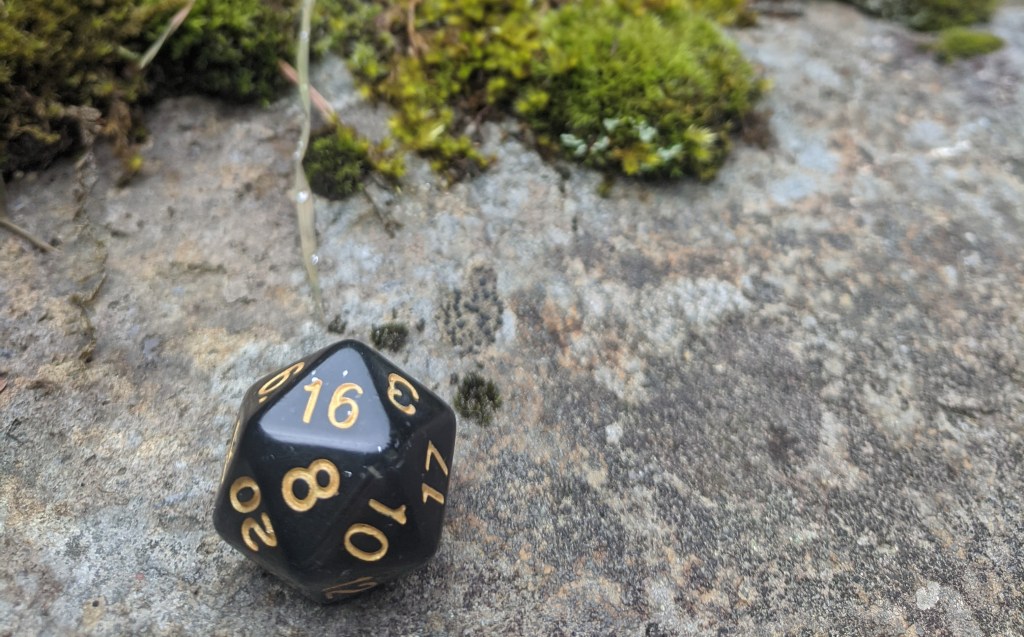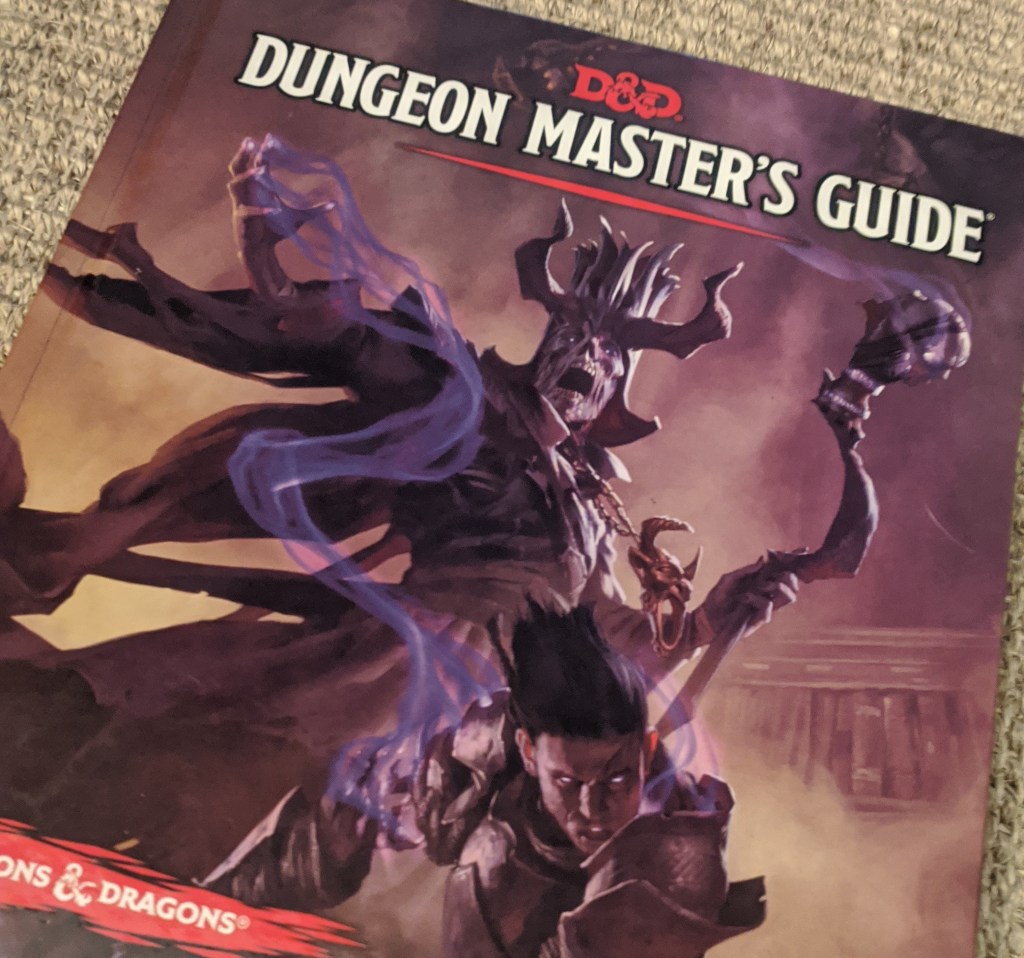
Want to play yourself? Melbourne University created an app that converts your face into the six attributes and a suggested class. It thinks I am a CE, Cleric with STR 15, DEX 9, CON 12, INT 9, WIS 15, CHA 9. Maybe. Probably not, as I haven’t been close to a STR 15 since my 20s.
As always, maps
Here is a map of mine on the @roll20app I have up, with more on the way!
Summerfort is a city of intrigue, a city of traders, explorers, madmen, and murderers, against a backdrop of rolling hills and luscious woods.
The biggest news related to D&D the tabletop game is the upcoming setting book Van Richten’s Guide to Ravenloft. If all you know is Barovia, the new book is about to add many more varieties of horror to your table or video chat games. The Black Dice Society is the perfect stream to introduce you to some of them, but it’s more than that.
On Tuesdays Lore Collage focuses on the D&D game of dice and paper.
Previewing Van Richten’s Guide to Ravenloft
The official intro to the full book includes thoughts from the designers.
Lysa Penrose threaded snapshots from her advance copy over on Twitter.
HEAVY BREATHING!!! Some ravens dropped off a surprise package (Thanks @Wizards_DnD!!) of the upcoming Van Richten’s Guide to Ravenloft!! It even includes some delicious (or cursed) recipes.
Fans of Tales from the Mist, Haunting is Good Society, and horror in general, prepare!!! pic.twitter.com/UtvBxps7h4
— Lysa Penrose (fae/faer) (@lysapenrose) May 1, 2021
Polygon, Forbes, and SyFy each were given an in-depth advance preview of a non-Barovia Domain of Dread. With over 30 Domains available, you can craft the perfect story for your table, even if you have players who follow all of the previews out there. There are still undead, constructs, cosmic horrors, and more lurking behind every page.
One of those Domains is Eberron’s Cyre, which disappeared after some kind of apocalypse during the Last War. Not only covered in Van Richten’s Guide, Cyre is also getting a deeper treatment from Keith Baker.
The survey is up to review the various Draconic races, feats, and spells in the April Unearthed Arcana. There were a bunch of intriguing ideas, but at this time they feature major changes to a PHB race, as well as one of my favorite little peoples. When I filled the survey out I suggested that these draconic races should follow the subrace format of other races, rather the confusing way orcs exist.
"No standard spell could take out a dragon this size. This was clearly the work of a Kolvoord Starburst. Our first duty is to find out the truth of who's performing such a spell" -Paladin Joanne Pikeman @roll20apphttps://t.co/zXDzwq0QUm#dndpic.twitter.com/PdxwECu4tH
Lore Collage is shifting to a regular posting schedule with the aggregation of links having a specific focus. With more and more press being generated by the game, past links posts would have several dozen items, which is just too much.
That breakdown is;
Monday Movies and other franchise news.
Tuesday Tabletop – Official D&D games news and reviews.
Wednesday Playdates in Pandemic – library games, mainstream coverage of socialization via D&D, and advice for your table.
Thursday Third-party – promoting discovered homebrew and professional content
Friday – General geekery that I enjoy unrelated to D&D
Dark Alliance looks like it is going to capture the hack-and-slash style that some tables prefer. Light on the roleplay, the heavy combat game fits a specific gaming niche. Gamerant likes Dark Alliance for those reasons.
Rick and Morty versus D&D special release
Not the boxed set, which isn’t part of my collection, this is the comics series featuring Rick and Morty with a Dungeons & Dragons twist. This special collector’s edition seems like a great gift for the right person (one of my earliest 5e players would dig it).
Hasbro D&D adjacent news
eOne, more well known for it’s movies (like D&D) and TV shows (like Grey’s Anatomy) is selling off its music assets for $385 million in cash.
Fantasy literature is full of parties – Bilbo’s birthday, various fests appear in Robin Hood, lunar celebrations and so much more. Watching or reading celebration scenes helps connects these myths and fantasies to reality. Who doesn’t like a party? They also are a reminder that the times upon which Dungeons & Dragons are founded had a hundred holidays.
All told, holiday leisure time in medieval England took up probably about one-third of the year. And the English were apparently working harder than their neighbors. The ancien règime in France is reported to have guaranteed fifty-two Sundays, ninety rest days, and thirty-eight holidays. In Spain, travelers noted that holidays totaled five months per year.
Within our games we can also capture these feelings of merriment, civic pride, religious faith, and family gathering. Not only can we, we should. The foundational literature demands it. Having characters and societies that are more than sword swinging, spell flinging battlers creates stories of greater emotional depth.
There are several ways that you can integrate these events into your campaigns. Whether they get a couple lines or are a couple sessions will be up to you and your tables.
Fetch Quests
This may be the easiest way to add a holiday to the start of your game. A cold open that involves a civic leader that needs the very specific item for the holiday in question gathers a group of specialists together in order to find the lost item.
Maybe at the beginning the community is downhearted. Rather than party they have to head off into the wilds to search for very specific item. Their journey brings them out of the village. In that world they can discover the thing, bring it back home as heroes and the festival is now also a victory celebartion.
Introducing New Culture
Journeys to strange lands mean new discoveries. When the group arrives in an unfamiliar place have them encounter a festival unlike any they’ve seen before. This introduction to a new culture emphasizes the differences, in a way that is full of brightness, joy, and excitement (unless you choose something dour).
By arriving at fest-time the group immediately knows how different the place is. Maybe if they have observational knowledge of the culture a history or culture check helps the character in question understand what is going on. Otherwise the group learns what’s going on by engaging with the worlds and cultures which you’ve created together.
Change of Pace
Between dungeons, dragons, orc wars, piracy, invasions by mindflayers, elemental cultists, the mists – what happens? Normal life. And normal life in the worlds of D&D is weird. But it’s also people who do things like celebrate birth, coming-of-age, weddings, coronations, harvests, solstices, equinoxes and more.
Take those moments of normality to highlight the abnormality of your D&D world. The dichotomy of a party with the world-shaking events of a tier 3 or 4 adventure is potent. Those few moments of calmness and levity during a session may just be the ones that the table remembers later. Killing a 45th bandit isn’t a big deal. Giving the town kids the feather of an owlbear? That’s a moment!
Victory Celebrations
You’ve cleared the dungeon, slain the dragon, the forces of Gruumsh were held back, recovered the holy tooth of the founding family of the town, the heist was prevented, the heist was successful – however your adventure or campaign ends there must be a party, a big party.
Maybe the characters are throw the party. Perhaps the queen calls the empire to celebrate. Imagine that you’ve save the world and the Old Gods convene the grandest fairies of the planes to reward you and the world for the success.
Inspiration for Characters
You can also spin things the other way. Search real world festivals and holidays and turn them into you own character concepts. Maybe your next Artificer is based the technomancers of Jingle Jangle. What Moon Druid isn’t dedicated to the thirteen full moons? Before you became a hero were you a carnival barker? Your next D&D character could be the expert marksman brought in as a ringer, or the strongest person in the world.
Every birthday, holiday, or real world festival is an opportunity for character creation. So create. I’m certain that Awf’s birthday is coming up. Everyone’s favorite axe-wizard is going to party like the elf-raised dwarf he is – I don’t know what that means yet.
How do you integrate festivals, holidays, and birthdays into your D&D games?
This archetype has been banging around my head for some time. The ability of words to inspire rebellion, to move nations, and to inspire people to be better is quite clear. Dungeons & Dragons kind of wraps this into the College of Whispers Bard, but that’s quite supernatural. The Rogue: Propagandist is mundane, based in historic examples such as Thomas Paine and Benjamin Franklin, as well as in certain versions of Assassin’s Creed.
The design intent is to empower more play in urban and/or political campaigns. This attempt, which is essentially version 1.5, uses new mechanic for the rogue, one that demonstrates that people who publicly advocate for rebellion are often known, but still effective. The Propagandist most powerful abilities are powered by their Sneak Attack dice. This seemed to fit better than making them weak Bards in an Arcane Trickster variant like the Society of Veil and Shadows.
Most of the lore description is removed from this pre-publication draft in order to focus on the mechanics, which are complex and new. The Swarm of Commoners and the Printing Press tool are just shells of what they will be in the future as well.
Rogue: Propagandist
Rebel and Pamphleteer
You rose from the underbelly of empire to demand a better life for all. Your pamphlets and speeches can inspire hope, or fear. Whether from the soapbox or via playbill your proclamations turn the tides of rebellion or keep a government in power.
Propagandist Features
Level
Ability
3rd
Wordsmith, Rabble Rousing
9th
Proclamations
13th
Grand Voice
17th
Master Essayist
Wordsmith
When you choose this archetype at 3rd level you gain proficiency with the Printing Press and a skill from the following list — History, Investigation, Insight, Deception, Persuasion, and/or Performance.
In addition you learn one language of your choice.
At 6th level you may choose the Printing Press for your expertise option.
Rabble Rousing
Your words inspire rebellion. You are able to summon a Swarm of Commoners. These commoners are allied with your cause, but are not willing to die for it. You spend an active Sneak Attack die for each use of this ability per short rest. The number of dice used determine how many Swarms you summon. Rabble Rousing takes a minimum 10 minutes to activate via speech, pamphlet, or other communication. The Swarm is summoned at a time and location where some commoners could be expected. The Swarm of Commoners has advantage on saves versus fear and are considered under the effects of the Charmed condition.
Proclamations
To issue a Proclamation you spend at least ten minutes creating a pamphlet, playbill, speech, cartoon, etc. These Proclamations grant bonuses to those who experience their call. Those bonuses are equal to the number of Sneak Attack dice spent at the time of proclamation (Proclamation Bonus). The Proclamations’ influence extends to a number of subjects determined by the proficiency bonus + ability score modifier in the skill or tool used to deliver the proclamation. The proclamation can be delivered via speech (Persuasion, Deception, Performance), pamphlet (Printing Press), or cartoon (Calligrapher’s Tools, Painter’s Tools). A tool would use Intelligence (i.e. a 9th level Propagandist with an INT of 14 issuing a Proclamation of Safe Haven via a pamphlet would grant 6 readers the benefits of Safe Haven).
Proclamations that require a save do so against a DC determined by 8 + Proficiency and Intelligence Bonus.
List of Proclamations
Unrest – A number of Swarm of Commoners determined by the spent Sneak Attack dice gain a Proclamation Bonus of temporary HPs and gain the same bonus to damage rolls. These Swarms will attack on the Propagandist’s initiative roll minus 10. The Proclamation inspires a rebellion.
Rally – Subjects regain hit points in the number of the spent Sneak Attack dice plus a Proclamation Bonus (ie. 2d6+6) as these Proclamations rebuild the morale of wounded forces.
Urgency – Subjects gain a Proclamation Bonus to their next initiative roll. Subjects are eager to join the fight.
Power – Subjects gain a Proclamation Bonus to their damage rolls during their next combat. Those attentive to the Proclamation recognize that they are powerful.
Warning – Subjects fall under the Frightened condition if they fail a Wisdom Save versus your Proclamation DC. They are wary of the forces working against them, afraid of any Swarm of Commoners and/or the Propagandist. They are overcome with this fear for one hour.
Safe Haven – Subjects are able to gain the benefits of a short rest via the calming words of the Proclamation.
Grand Voice
Beginning at 13th level your words can invigorate your allies. You can use a Reaction to have an ally reroll a failed Intelligence, Wisdom, or Charisma saving throw. You have a proficiency bonus number of uses of this ability per long rest.
At 17th level you may also remove one level of Exhaustion via your Grand Voice, as long as the level of Exhaustion is not level 5 or 6. You may only remove one level of Exhaustion per ally in this manner.
Master Essayist
The strength of your words lasts. At 17th level any of your Proclamations (except Safe Haven) issued using a Printing Press grant their benefits/disadvantages until the target takes a short rest.
Swarm. The swarm can occupy another creature’s space and vice versa. The swarm can move through any opening large enough for a Medium commoner. The swarm can’t regain hit points or gain temporary hit points except via Proclamations.
Actions
Club.Melee weapon attack: +4 to hit, Reach 5 ft., one target. Hit: 6 (3d4) bludgeoning damage. This attack assumes multiple commoners are attacking as one.
The Swarm of Commoners can be adjusted if made up of a single humanoid race. Usually their weapons are clubs, but in some cases they may all use a specific simple weapon.
Any ally of the Propagandist, or the Propagandist themselves, that attacks from within the Swarm of Commoners has advantage on their attacks. They may also use the Swarm for half-cover, attempt a Stealth/Deception check as a bonus action. Upon a success the individual within the Swarm of Commoners is considered invisible.
Printing Press (tool)
These are the necessary tools to create pamphlets, books, and playbills. The press itself is too large for adventuring, but you would still have ink, a sheaf of paper, scissors, a few letter blocks and one or two signet blocks.