Category: Playing D&D

  • Latest Unearthed Aracana sends us to the Phlogiston (maybe)

    Latest Unearthed Aracana sends us to the Phlogiston (maybe)

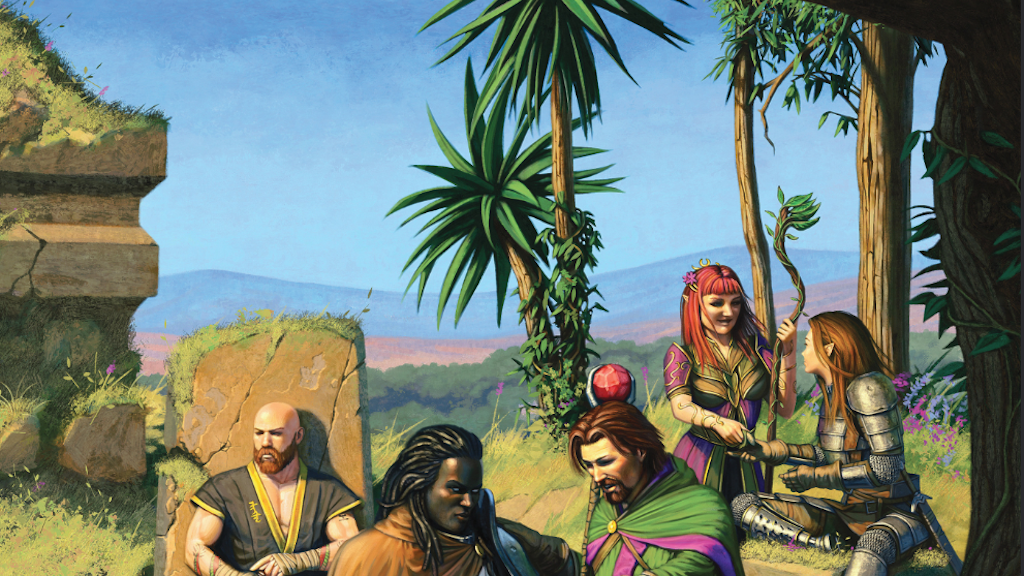
    With the announced pace of products picking up, we should also expect Unearthed Arcana’s pace to pick up. Today, Wizards of the Coast sent out the latest Dungeons & Dragons playtest document with six new races to play n the game. They have strong flavors of my favorite settings from the days of yore — Spelljammer.

    Unlike the foundational settings of D&D Spelljammer has no relationship to the real world or literature. The concept is D&D in space, but an odd kind of space with ships that look like dragonflies and mind flayer heads, all powered by hooking up a magic user to a chair/helm/etc that sucks magic from them. Each “solar system” exists within a crystal sphere, and outside of that is a highly flammable sea of a Phlogiston.

    There are prates, even crafter gnomes, space monkeys that can glide, Victorian hippo-people, asteroid trading posts run by beholders, fleets of mind flayers. The whole of the setting is comc book/cartoon joy with themes of exploration similar to Star Trek.

    Some of the new races are also part of the Planescape realm and the thri-keen are one of the signature elements of Dark Sun.

    Astral Elf

    An elf denizen of the Astral Plane who is likely thousands of years old.

    What I like

    Radiant Soul is a cool way to bounce back from death’s door once per day. That you must be down and making death saves in order to use it connects the mechanics to Astral Elf’s planar nature.

    Trance Tools are a non-cultural way to gain proficiency, nifty little mechanic. Maybe my favorite from this drop, which is funny because…

    What I don’t like

    Don’t know why the world needs another elf, ever. There are a lot in D&D these days, with more to come for every new setting. The Astral Elf, if the feedback is strong, will be the 14th elf within official D&D worlds for Fifth Edition.

    Also, just after so many reminders that each playable races is supposed to have a human-like age spectrum, the Astral Elf is even older than normal elves.

    Will I play one?

    Probably not. Elves and all their permutations are my least played race. The idea of an ancient people viewed as the ideal of sapience has little appeal to me.

    Autognome

    A mechanical gnome gifted with free will.

    What I like

    True Life is a brilliant way to empower healing for living constructs. The Warforged need this in the expected minor racial reworks coming with the three-book gift set.

    Built for Success strongly connects the rules of the race to why the race exists. Gnomes created these automatons to be better than gnomes are, at least at certain tasks.

    What I don’t like

    Sentry’s Rest is another variant on Trances. Having a party with a creature that needs 4 hours, and another that needs 6 hours, and most that need 8 hours adds unnecessary complexity to organizing watches.

    Will I play one?

    Yep, I love the little people. Also, I enjoy tool users and specialists. These would make strong Rogues.

    Giff

    A hippo-headed being of impressive size.

    What I like

    They’re big, really big. Playing a super-sized race that doesn’t have to smush itself through most passages is a great way to feel more powerful than you are in real ife. Hippo Build embraces this.

    What I don’t like

    Damage Dealer connects more strongly to Rogues and Paladins than the Giff’s traditional role as a Fighter. Also, that’s it. They only have two traits. The Astral Elf, embracing their racial superiority have seven.

    Will I play one?

    Yep. Absolutely. Anthropomorphic races are cool. The Giff’s traditional Victorian military culture can be fun. There will be a search for another trait that connects to their build, maybe something as boring as Tough Hide which gives them an extra hit point every level.

    Hadozee

    A highly adaptive simian being who uses winglike membranes to glide.

    What I like

    The climbing speed and Glide are both great ways to capture their tree glider meets monkey vibe.

    Dexterous Feet allowing a bonus action to Use an Object is good, but it doesn’t go quite far enough.

    What I don’t like

    Dexterous Feet should include the tail, and to enable more fun, should allow the activity via a Reaction too. Yes, that break the standard for Reactions, but it’s cool.

    Will I play one?

    Maybe. Kinda want to be an Artificer or Wizard, who manipulates their magic components with their feet and tail.

    Plasmoid

    An amoeba-like being.

    What I like

    These things are bizarre, the oddest playable concept in the game. You have no standard form, as you are an Ooze. Shape Self enables you to look kind of like a person and also lets you grow an ‘arm’ up to ten feet long.

    What I don’t like

    The mechanics are great, the ability to be one the creatures mentally needs a lot of explanation.

    Will I play one?

    Not until the lore is revealed. My head needs help wrapping around this concept even more than it does for Lizard Folk.

    Thri-kreen

    A six-limbed, telepathic insectoid.

    What I like

    Secondary Arms is a good solve for how these six-limbed peoples work with the D&D action economy. There is a fun synergy with Two-Weapon Fighting and with light thrown weapons when you have multi-attack or related abilities.

    What I don’t like

    Sleepless Revitalization reveals another Long Rest variant to confuse the party.

    With five racial traits, most with power, they are insectoid elves.

    Will I play one?

    No, but they are absolutely necessary for the world of Dark Sun, and maybe in my own world (spoiler?).

  • 8 Cantrips to Enhance Fall Festival Celebrations

    8 Cantrips to Enhance Fall Festival Celebrations

    Festivals, holidays, and celebrations are great ways to add verisimilitude to your game. Plus, everyone likes a party. With Halloween and its associated celebrations (All Saints Day, Samhain, Harvest tide, Día de los Muertos, etc) there is frequently a lean into those themes within our gaming. That can be as simple as skeletons, headless horse riders, ghosts, or more complexity. Or it can just mean the presence of cornucopias, jack-o’-lanterns, and candles as the party walks through a village.

    Copying real world makes sense. Twisting and adapting it a bit makes even more sense. You can advance your game world even more by leaning into the Dungeons & Dragons of it all (or your game of preference) by leaning into what makes D&D unique and special — the presence of various kinds of magic.

    Photo by David Gomes on Pexels.com

    Over the next month I’ll be following the prompts from Magic: The Gathering to share the lore and rules within my campaign world. Some will be short hits, others expansions on previous lore. These prompts may just inspire regular rather than irregular blogging.

    This entry grew when thinking about pumpkins. And then the mind drifted. Pumpkin > Jack ‘o Lantern > Will o’ Wisp > Dancing Lights. These 8 utility cantrips in the Basic Rules can add a bit of flavor to your world’s Fall festivals.

    • Dancing Lights – A spell almost certainly inspired by the Will o’ Wisp, the four tiny lights can be any color, a pale silver would be best for this usage. Place them behind a cloth used for ghostly apparitions inside windows and trees making those fake ghosts look even more spectral.
    • Druidcraft – There are so many ways to use Druidcraft that it almost needs its own post, but what if your fake cemetery started to reek, or you cause a group of tree leaves to fall all at once?
    • Light – The image attached to the post almost perfectly demonstrates a use for this tiny spell. Lighting up a carving for the hour after sunset is magic I can get behind.
    • Mage Hand – What haunted house doesn’t have a torch floating by in a spectral hand?
    • Message – Within worlds of lighter magic Message can be used as a friendly spook as people walk about the town.
    • Minor Illusion – A couple of the descriptions of possible illusions read as if they were designed for Halloween… “its volume can range from a whisper to a scream” and “muddy footprints” are ideal haunts.
    • Prestidigitation – Create small marks on doorways that ‘ward’ off evil spirits or welcome visiting neighbors.
    • Thaumaturgy – The ability to dim all lights along a street creates an unwelcome space where spirits can hide and fear can thrive.

    How do you incorporate the mystical, fantastic, and magical into your Fall festivals?

  • The Four Moons — anchoring multiple calendars through celestial bodies

    The Four Moons — anchoring multiple calendars through celestial bodies

    The World of the Everflow has four moons, and several calendars based on those moons and the sun. The calendar and moons arose not because of the name of the site, but because a player asked a question to which I didn’t have an answer. From that simple question the calendar was invented. Lore has developed since then. Most moons are connected to a third of the Six Kingdoms, as well as to the powerful storylines about Bonded Companions, Magic, or Teknology. Each of these moons is also a simple way to tell time. These imperfect solution is intended to help keep players focused on the story at the table, not mechanics. I use a similar technique when talking about distances.

    Over the next month I’ll be following the prompts from Magic: The Gathering to share the lore and rules within my campaign world. Some will be short hits, others expansions on previous lore. These prompts may just inspire regular rather than irregular blogging.

    Meet the Four Moons of Aur.

    Feylf – the weekly moon

    Photo by Alex Andrews on Pexels.com

    Whipping through sky (compared to the real world) Feylf, the Moon of the Fey, is connected strongly to magic. Just 28 years ago this moon’s importance was about myth, legend, story. Now there is a connection to reality that frightens some. It is bright and silvery.

    The Week

    There are nearly zero in-game mentions of the days of the week. This gets too complex for most gaming sessions.

    1. Elmsday starts the week and honors Selley (Goddess of Birth, Life and Death) and Belsem (Goddess of the Untamed). Things begin before they are fully developed.
    2. Bell’an’Aur is the second day of the week. It starts with a rejection of that which can’t be tamed and ends with a dinner celebrating Aur. Aur is the name of the planet. It hadn’t had a name until the calendar issue came up. In Kirtin and Crinth this is Feylfday and is the day when Feylf is full, shortly after sunset.
    3. Quarsday is the third day. It celebrates Quar (God of Rivers, Mountains)
    4. Day of Glight honors the Lord of Knowledge. In developed lands the afternoons are given to learning.
    5. Torday honors Torq (Goddess of Sea and Storm).
    6. Az and Sel is day six. This honors not a god within the Wildes/Kirtin/Daoud, but the man and dog that legend says discovered the bonding. Nik is also frequently honored on this day. Azsel recognizes Az and Sel as man and dog that were raised to godhood.
    7. Day of Oun is the end of the week. Oun and Obscon are not honored. The Lords of the End are respected in that all things end. They are feared.

    Many druids and monks practice their faiths at New and Full Feylf. As do the mages of Ken, the Scholars, and the Proctors of Grace.

    Glibbon – the monthly moon

    On a cycle of 31 days, Glibbon is not connected to any mysticism around the Fey/Ken, nor the Kin, nor Dragons. For the people of the Everflow, Glibbon is a marker of time, nothing more. While they know that Glibbon is connected to the tides and the sea, as its mass and orbit combine with the others to give earth-like tidal patterns (yes, this is a cheat) there is no connection to any ancestor from Kin.

    But, for the Queen and Kon, the primary influencer of the tides connects to various water-powered projects, and Glibbon s named after the first Goblin queen who discovered how to channel the tides to create an irrigation system that would prevent drought n the lands of the tar-trees. All Kon royalty wear purple for Glibbon, the Purple Moon.

    Kin – the seasonal moon

    Photo by Pedro Figueras on Pexels.com

    Circling Aur every 71-ish days, Kin represents the season cycles of birth, growth, harvest, and passing. Almost perfectly consistent with the orbit around the Sun, Kin is named after the bond of love between peoples and their companions. Red, like the blood and heart of people, Kin’s full moon is a time to celebrate the cycle of life and the bonds that make the World of the Everflow a special place.

    Matching the cycle of planting and harvesting, especially within the Western Wildes, Kirtin, and Daoud, the Blood Moon is vital for farmers and herders. Every Full Kin is celebration of the season. In Kirtin and northern Daoud (conquered Kirtin) Winter’s Kin and Summer’s Kin are also the times when the royal court moved between Kirtin-in-the-Sky and Kirtin-on-the-Lake. Less noble peoples may also move during these times, though the Long Wars often interfere with the migratory lifestyle of the Kirtish peoples.

    The Dragon – the generational moon

    Photo by alexandre saraiva carniato on Pexels.com

    Up in the Crinth Confederation the key moon is The Dragon. Completing an orbit every 20 years. They count a person’s life by the number of Full Dragons the individual has seen, with infrequent exceptions for those born a few short years prior a Full Dragon. Their companions are also knows by how many Full Dragons they typically live to see. The Crinth are longer thinkers than most of the realms of the Six Kingdoms.

    The Dragon is full — golden and huge — to the human eye for over two years, as its cycle lasts just under 20 years. The massive moon is connected to the myths and legends of the Time Ancient, when magic and dragons were plentiful. Plenty of emerging faiths have sprung up around The Dragon now that both dragons and magic are again known.

    Within Kirtin-on-the-Lake these faiths gather in the Ward of Mighty Trees/Dead Forrest around the Red Oak, hoping to see the birth of a new dragon in the World of the Everflow — will this happen when The Dragon is full or new? (I actually haven’t decided, as it will be determined by the needs of the story).

    The Sun – years go by

    Anything attached to a year, no matter the calendar in question, uses the orbit of Aur around the Sun. The idea is to keep things as simple as I can with this fictitious calendar. Players need to have a basic understanding of the way the world works within the rules.

    The various calendars all have a Year Zero that starts at a different time. For most of the continent year zero has been re-established as the Year of Awakening. The Church of Quar, the nations of Sheljar and the Western Wildes, Azsel, Mehmd, the Crinth Confederation, and the Scholars all use this convention. The current campaign is set in 28 Post Awakening Quar Calendar.

    For Kirtin and Daoud their Year Zero s when Daoud first took Kirtin-on-the-Lake, back on 4th day of Autumn 792 BA. Their wars define their reality.

    How do the celestial bodies in your world connect to the stories you are telling? Because that’s all that matters with background details like the number of moons and a calendar — story.

  • Uprising & Rebellion Campaign Two: One Sheet

    Uprising & Rebellion Campaign Two: One Sheet

    This campaign is set six years after the Lorebook Hunters returned magic to the World of the Everflow. It is set in Kirtin-on-the-Lake, and is centered on political intrigue with social and exploration pillars being as important as combat. Every player is united in rebellion against the corrupt Mayor, but may have differing ideas about how the various factions can help Kirtin-on-the-Lake be free.

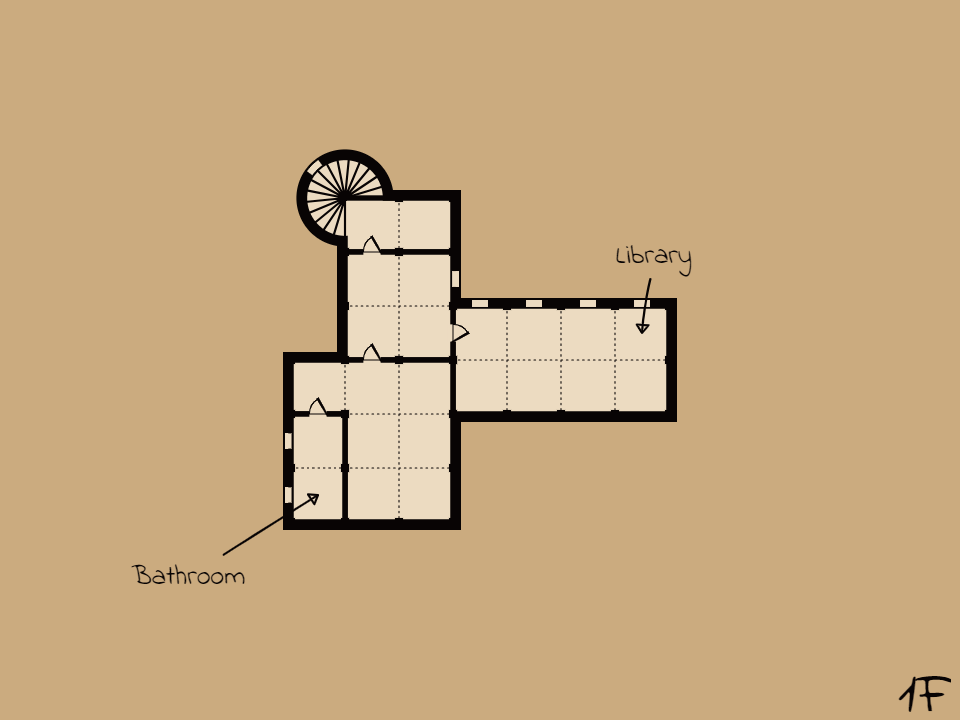
    Made using the Medieval Fantasy City Generator.

    Campaign Premise

    You are common people living in and around Kirtin-on-the-Lake who are inspired to free the city from under the rule of Daoud. You may want it to once again be part of Kirtin, or you may want to copy the Free City of Sheljar. The City Guard, a unit of Daoud’s military, and even Dragons, who see Kirtin-on-the-Lake as their ancestral home, stand in your way.

    Background

    Kirtin-on-the-Lake was once the winter capital of Kirtin. Taken over by Daoud in the generational wars it is a city of borders even before the Awakening and the discoveries of the Lorebook of Divination and the Folio of Necromancy. Now, the Ken and their Dragons are trying to capture what they claim are their ancestral homeland. Daoud and Kirtin remain at war over the city.

    There is also a general uprising of peoples inspired by the Free City of Sheljar. The Mayor has managed to consolidate power by playing the various factions off against each other; this hasn’t helped the common people beyond allowing them peace.

    Made using Perilous Shores

    Grand Conflicts

    The Proctors of Grace and their other allies want to control access to magic. Certain Dragons also want to repopulate Kirtin-on-the-Lake as the Ward of Mighty Trees is the ancestral home of certain types of Dragons (at least a Red as that first DragonTree has regrown).

    Daoud will not allow their winnings (Kirtin-on-the-Lake and the Slope) to leave their control after centuries. The rebellion has taken control of the Dock District. What will they free next? While the mayor may be willing to have the rebels help repel the Proctors, he serves at the whim of an empire that refuses to recognize Kirtin-on-the-Lake as anything but its own territory.

    Factions

    • Mayor and City Guard, generally aligned with Daoud, he is willing to look the other way and cede districts to other invaders for a price.
    • Daoud, the conquering empire of the south. Normally a naval power in the World of the Everflow, their long conflict over Kirtin-on-the-Lake is their largest land holding.
    • Kirtin, the mountain kingdom has been at war with Daoud and Azsel for so long that all of its peoples serve in the military.
    • Proctors of Grace and the Ken, lead by Dragons the various fey peoples are experts at magic and claim that Kirtin-on-the-Lake’s Ward of Mighty trees is their homeland. They also want to put the power of magic under their control and only their control.
    • Society of Veil and Shadows, these rebels are inspired by the Free City of Sheljar and its empowerment of all thinking peoples. Whether Kin, Ken, or Kon the people deserve equality of treatment and opportunity.

    Rumors

    • There are half-animal/half-people roaming the Western Wildes.
    • Out in the Ferments forms of life based on the elements are driving out the Kin there.
    • Headquartered Church of Quar has lost control of the Everflow (the source of all healing potions).
    • Peace has come between the Kingdoms of the North as the Crinth Confederation and Azsel are more concerned with the Kon and the Ken.
    • The Dragons seek the Robe of the Magi.
    • The Tome of Abjuration and its Proctor may be in the city or surrounding area.

    Facets

    • Exploring the zero-to-hero tropes, rebellion, and who gets to control knowledge.
    • Sandbox play.
    • Player agency creates history.
    • Drop in/drop out, whatever.
    • Sessions are 2-3 hours. Adventures are 1-3 sessions.

    Variant Rules

    • Playable races are Human, Hin/Halfling, Goliath/Firbolg, Elf, Dwarf, Gnome (wood only), Goblin, Hobgoblin, Bugbear.
      • Only the Kon (goblinoids may be Artificers.
      • Kin start with a Bonded Companion
      • Ken start with a Feat that grants a 1st level spell such as Magic Initiate.
      • Kon start with Tek
    • There are a few custom subclasses available (Way of Frayed Knot, Society of Veil and Shadows, Conscript, Propagandist, Liberator, Circle of Sewers).
    • There are several custom backgrounds and tools available. We will use cultures, not languages.
    • Use point buy or standard array for starting attributes. If you want something random, the redrick roller gives random point buy valid stats.
    • Start at 3rd level, because power is cool.
    • Long rests require 24 hours within sanctuary. This creates a pace of play more similar to novels than video games.

    Practicum

    Sessions will be on Sunday afternoons and evenings, floating times based on the Puget Sound pro soccer schedule. Characters must be created prior to dropping in. The table will be on an outdoor patio at one of a few locations in South King County.

    Email, private message, or text for more details.

  • My next D&D character is…

    My next D&D character is…

    For some finding inspiration for their next Dungeons & Dragons character can be difficult. A way to solve that difficulty is to find some part of our actual reality as a starting point, and then give it a twist. Maybe add something magical, or heroic, or tragic — and then smash something else from reality into that idea as well.

    Over on my Twitter account I ocaissionally present my every day life as inspiration for D&D characters. This series always starts with “My next D&D character is“.

    Let’s take this Propagandist (or Bard) concept.

    I had recently been gifted a knife for which I had no sheath. When searching for a way to protect both it and the family I remembered my Field Notes notebook from the End Pages series. It was the perfect length. Then, springing from that secret spot in the mind where inspiration resides I thought of a character who stored their blades inside notebooks.

    They certainly write in the book as well, because they must — tracking those who have wrong them or those they care about; jotting down a possible secret; picking up the stories during their travels. Basically they use the notebook the way normal real people do, except it also has a dagger in it.

    Cleaning Houses

    While helping my wife prep homes for sale my mind sits within itself and wonders what magic would be helpful to complete this act. My latest idea was for someone who isn’t smart, but they are either lazy or overworked. So they took the fast way out and made a Pact with the Great Old One. Their Tome is full of rituals to help make living life easier. This warlock isn’t evil. They just needed a way to make living life easier. Now they are on a quest for a mighty power.

    Or, maybe your character studied to learn Prestidigitation because that’s what they needed to do in order to be better at helping the family business. They dreamed of being a warrior. Then one day those things combined.

    During the winter you see an ice sculpture — your next PC is a Water Genasi that carves Ice Sculptures. When the weather is too warm they create the ice that’s needed for sculpting.

    I’ve been a sports writer spanning from amateur to semipro to pro (you can hire me), so many of my ideas revolve around sports. Each with nuance and difference, and yet all come about through following sports.

    During this whole pandemic period I came up with the idea that the party healer also heals the mind. This was entirely a creation due to my own personal mindspace during the pandemic. I needed a party healer that heals body and mind. The mind of adventurers is inherently broken. Like Special Forces soldiers they see some shit and though they work for noble cause (often) there are still mental scars.

    What would the heroic version of my time as a linguist look like? A Mastermind or Inquisitive Rogue, halfling (duh) who studies the cultures and communities of the world, granting them a bit of insight when they fight, but also able to operate as the party face.

    Inspiration is everywhere. It’s in beer, in mushrooms, in trees, in walks down by the river, in your trips to the thrift shop, in the social media you consume. Our life is filled with interesting characters and characteristics. These can be your next PC or NPCs.

    A few of them I’ve statted up over at DnDBeyond. Feel free to use them. If you do just kindly share that you got the idea from Full Moon Storytelling.

  • In darkness there is light — the Lamplighter is a new 5th edition D&D Background

    In darkness there is light — the Lamplighter is a new 5th edition D&D Background

    Within our fantasy worlds are massive cites. There are lots of problems with the scale of some of these cities — they need farms, roads, and light because residents are up at all hours. Settings like Ravnica and Eberron deal with the largest cites via magic. Those worlds with less magic manage metropolises with some magic, some magically imbued races and hand-waving. One of those hands we can wave relates to light.

    Magic is the simple way to add light to cities. Another way to have them with some level of light for safety and to encourage all races to reside within is via a public lantern system. For about 150 years this was the process in Western Europe and Northeast America. People would go through and light lanterns along the street. Those shops and establishments that wanted business in the evening or early morning would do the same.

    These workers would live split lives as early risers and night owls.

    Let’s crank all of this up to d20 and make them potential heroes. Meet the Lamplighter, for “in darkness there is light.”

    Photo by Josh Hild on Pexels.com

    Lamplighter

    You know your neighborhood. You don’t have a favorite bar, or food stand, or favorite bakery — they all are you favorite. They know your route, you know when every one gets up or goes to sleep. You know the street urchin, the acolyte, the haberdasher, the goblin family that makes the best trinkets (maybe you have one favorite). They all know you too.

    Getting around the city you use a run-jump parkour along the crates and awnings, somehow never letting your lighting candle go out. You flow through the streets and alleys. You’re a great observer and with the other Lamplighters the group always knows the secrets and rumors of a land — a nobleman leaving the tavern too late, a merchant up too early with visitors on the stoop, a door left opened. And you know the guilds and gangs of the underground, because when your lights go out they are there, ready to do their work. They know you, and never act against you (unless you count putting out a light early), because you are a beloved symbol of the city. You are a Lamplighter.

    Skill Proficiencies: Acrobatics, Insight
    Tool Proficiencies: None
    Languages: Thieves Cant, one other language (as always, use Cultures instead of Languages)
    Equipment: Common Clothes, Ladder, 5 Flasks Oil, Flint & Steal, 5 Candles, Hourglass, Signal Whistle, Pouch with 2 GP and 7 SP

    Feature: Songs of the Street

    When visiting a new town or city you quickly pick up the rhythm of the streets. The Lamplighter is able to figure out what neighborhoods and buildings are most active at what times, when the urchins and gangs are out, when the guards are on patrol. The pace of a city and its people is second nature to the Lamplighter.

    In your hometown your knowledge is more accurate and more complete, and you will always know someone who will help you in a time of need.

    Lamplighter Design Goals

    Frankly, this background started with Lin-Manuel Miranda’s Jack in Mary Poppins Returns. The lamplighters featured throughout the movie, riding bikes, lighting the neighborhoods of London, and inspiring people to be their best through song, dance, and conversation. There are some bard themes, but nothing is magical besides a few people loving their town and making it better.

    Beyond what Jack does in the movie, there’s also an opportunity for a Lamplighter in the massive cities of not-quite Eberron levels of magic. These workers are active at dawn and dusk. As Waterdeep, Skuld, Calimport and other transition between night and day the neighborhoods transition too. Lamplighters are not guards or police. They fill of space of advisor, guide, and concerned citizen.

    They know that the world’s largest cities need the hope and safety that lanterns provide. Without that comforting light what is a city anyway?


    Custom Backgrounds for 5th edition Dungeons & Dragons

    Fediverse Reactions
  • The Tinker — A 5th edition D&D Background

    The Tinker — A 5th edition D&D Background

    The clattering of tin as they come over the hill; a belly laugh as the tinker learns of some gossip from mother; the circle of enraptured youth as a tale that is at most half-true is told; the fussing over a minor repair for a family that has no goods to offer in service.

    In fantasy the Tinker is a trope that captures a travelling fixer who knows news, rumor, and myth. Their wealth rides a donkey or canoe with them and every community on their circuit is home and an unknowable set of peoples. Now, you too can play a Tinker.

    Photo by Isa Sebastiu00e3o on Pexels.com

    Tinker

    Maybe you grew up in a family of smiths, or were raised by bards, or maybe you were kind of good at a lot of arts, but not really good at one in particular. Whatever your past you decided to leave the ‘civilized’ world and help those families on the frontier. When things break you fix them.

    When communities break you share that information with others who need to hear it. You carry as much information as you do tin. Your donkey is your only friend on the trails throughout the wilds. Everyone you meet trusts you, even the bandits, brigands and raiders. They need your services too.

    Skill Proficiencies: Performance, Insight
    Tool Proficiencies: Tinker’s Tools, Vehicle (Land or Water)
    Languages: None
    Equipment: Donkey/Mule/Pony (if water vehicles chosen a canoe, rowboat or skiff is appropriate), Tinker’s Kit, 1 Pound Each Tin, Copper, Iron, Pack Saddle, 3 Pots, Traveler’s Clothes, Pouch with 5 Gold

    Feature: I Can Fix It

    Facing a mundane device that is broken you are able to fix it, even if you don’t have the proper supplies and parts. This repair may only last a few minutes or a few hours, though it is enough for the device to last through it’s next use. You may wind up using a copper coin, or a bit of string, or a knife during this repair. This feature can be used to fix ammunition, traps, broken wheels, or other adventuring equipment. The repair is not permanent.

    Tinker Design Goals

    Throughout the literature that inspires Dungeons & Dragons are tales of itinerant workers who travel the barely civilized wildernesses drifting between villages. Primarily they are fixers, using bits of tin, copper, iron, leather, etc to repair farming tools or kitchen utensils in the homesteads too far from smithys.

    The fiction also has these tinkers as storytellers. They aren’t bards, as their magic is just the magic of carrying tales of other households, villages, and empires to people who long for information, but don’t want to live in places where information is common. The Tinker tells their tales around a fire or a meal, informing the group through storytelling. At their next stop they will share what they’ve learned. Every encounter is a bit of knowledge to share in an attempt to connect the frontier lands despite weather and monsters that keep those connections broken.

    For these reasons the Tinker has Performance and Insight. Consideration was made for History. That would seem to indicate an intellectual rather than a tale-teller. Insight made sense because of the way the literature has the Tinker connect to the families year after year.


    Custom Backgrounds for 5th edition Dungeons & Dragons

  • Add the bright lights and big booms of fireworks to D&D – the Sparkler Background

    Add the bright lights and big booms of fireworks to D&D – the Sparkler Background

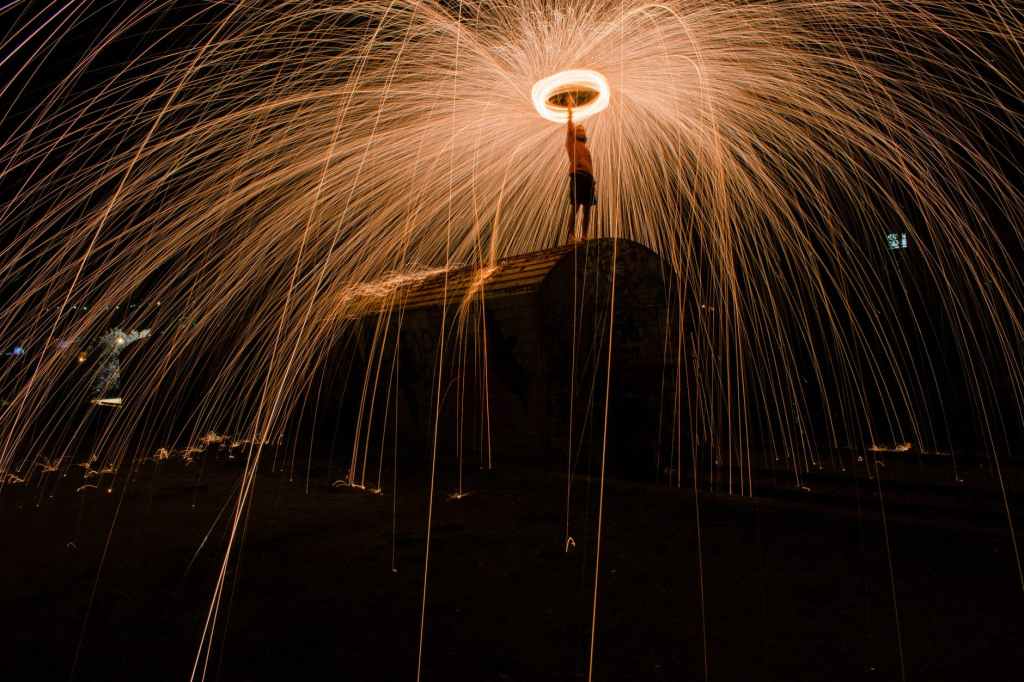
    Combing magic with an emergent technology these workers of fire are usually about celebration and frivolity. They remain rare in most D&D worlds. When they work they are paid quite well. But outside of the largest communities there is little need for a Sparkler. For this reason they often travel in a small group of other Sparklers, attached to a circus, or maybe even part of an empires retinue.

    This Dungeons & Dragons background is designed for 5th edition. It also adds a new tool (using PHB rules) and a new exotic weapon. The Sparkler grants a cantrip rather than one of the skills and tools/languages that are typical of backgrounds.

    Photo by Rakicevic Nenad on Pexels.com

    Sparkler

    You are a master of smokepowder or gunpowder as appropriate to your world. Using these powders you can create displays to inspire or scare thinking beings. As a Sparkler you have also learned how to combine these effects with magic, thereby increasing the the scope of your art.

    Often hired as an entertainer the Sparkler is in high demand during festival season. Due to wandering between large and/or rich communities your close friends tend to be the other Sparklers and your hosts.

    Your knowledge of the powders is often approached as a magic much more powerful than it is, because it is both different and rare. Most Sparklers hide this knowledge from the general public working in secret except during their performances. Some Sparklers specialize in aerial displays, others in massive thunderous noises, and a few even weave the illuminating powder into their fluid dances and twirling — all are artists.

    Skill Proficiencies: Acrobatics or Performance
    Tool Proficiencies: Fireworks
    Languages: None
    Cantrip: Minor Illusion
    Equipment: Traveler’s Clothes, Costume, flint & steel, assorted fireworks including 3 rockets all stored in an oilcloth backpack, pouch with 5 gp

    Feature: Ooohs and Ahhhhhs

    Given a few minutes to prepare, you can create a wonderous display of lights and sounds that can serve as a distraction. This display may be augmented by your Minor Illusion. This display can serve as a distraction for some guards, as inspiration for a besieged city, or as a reward for those who have worked hard. The display, whether spells are used or not, feels supernatural to those who watch it.

    Characteristics: For now, use those from the Entertainer, Guild Artisan, or pick & choose as appropriate for your concept. Whenever my background project sees full publication there will be unique characteristics for each of them.

    Fireworks (Tool)

    Cost: 150 gp | Weight: 20 lbs

    Proficiency with fireworks means that you know how to safely store and transport the pseudomagical devices known as fireworks. You are also proficient in how to set up a small display that would entertain a group for a few minutes. This could be an aerial, ground, or sound based display — or a mix of all three. Larger displays would require several people proficient in the tool to work together.

    Additionally you know how to create more fireworks. With the necessary supplies you can create a new display or three rockets during a long rest. The supplies may not be readily available.

    Rocket (weapon)

    Type: Firearms Ranged Weapon | Cost: 10 gp | Weight: 1 lbs | Damage: 2d4 | Type: Fire | Properties: Ranged (30/90), Loading, Special*

    *On a hit those within 5′ of the target must succeed on a saving throw or take half damage.

    All awakened rodents are proficient in rockets.

    Sparkler Design Goals

    The desire here is to have a real-world, culture-neutral version of a fireworks specialist. The primary example of these in fiction is the Illuminators from the Wheel of Time series, which share some aspects of Romany culture and some from aspects from various northeast Asian cultures.

    Additionally the Sparkler serves to introduce a new tool and a new weapon to the game. The Rocket varies from the standard firearms rules by being a charge on a stick that would be pointed at a target either held in the hand or planted in ground, and then lit. Players may develop other ways to use them rather than just as a first round attack.


    Custom Backgrounds for 5th edition Dungeons & Dragons

    Fediverse Reactions
  • Talking with Ed Greenwood and Jeff Grubb

    Talking with Ed Greenwood and Jeff Grubb

    One of my favorite D&D v/bloggers nailed two great guests at once. You should watch.

    newbiedm's avatarwww. Newbie DM .com

    I had the opportunity to speak with legendary D&D authors Ed Greenwood and Jeff Grubb on the debut episode of my new webshow, The NewbieDM Show. It was an interview I’ve wanted to do for a long time, as I am a big fan of their work. Jeff Grubb is one of those D&D designers who was so prolific in his heyday, that it’s a shame he’s no longer involved with the game. The Manual of the Planes, Forgotten Realms, Al Qadim, Spelljammer… the man’s track record was solid–TSR, CALL JEFF GRUBB!

    Anyway, the interview was great, they are lovely people to chat with, and I hope you enjoy it. It’s part of a larger effort on my part to create more content. If you want to support me, please, subscribe to my twitch and youtube channels (links below). I’m also putting whatever content makes sense as a podcast feed…

    View original post 79 more words

  • Library D&D and other playdates during the pandemic

    Library D&D and other playdates during the pandemic

    Throughout the Covd-19 pandemic libraries and community centers have had to find new ways to keep their communities connected and informed. Virtual D&D has been quite popular with libraries around the US and Canada. Now that pandemic-related restrictions are being reduced, in-person play of Dungeons and Dragons is starting to ramp up. The game has been especially important for school-age children who lose the connections that schools traditionally build.

    Newspapers, magazines, and websites around the world are covering the booming phenomena, and not calling it a Satanic ritual that leads to murder.

    Today’s Lore Collage is focused on playing the game in libraries, other community spaces, and advice for players and dungeon masters.

    Photo by Janko Ferlic on Pexels.com

    Library D&D

    The Manhattan Public Library recommends finding inspiration in the Player’s Handbook and Art & Arcana.

    Other community events

    General D&D advice

    With so many people picking up this intimidating hobby there are a lot of questions about how to play. Much of that can be answered by watching or listening to actual plays on YouTube, Twitch, or your favorite podcasting app. But, some people are like me, readers, so here’s some general Dungeons & Dragons advice.

    Advice for players

    Advice for DMs

    Quick random NPCs are handy.

    As Always, Maps

    From Boing Boing, we discover a way that non-artists can create maps, which I need! Or just play the Legend of Zelda map.

    Maps don’t have to look like maps. They can be art that represents the scene and not just a place to move miniatures around.