The Strixhaven mascots make great familiars, but they’re a bit weak compared to the other options available after 1st level. The imp is clearly the power-play. It’s a CR 1 monster, not the 1/4 and 1/2. And while that’s not a significant problem, it’s one that can be fixed. What would you need to do to make the Inkling Mascot a more permanent companion/familiar?
Recently other companions are designed around un-fluffed stat blocks. The Primeval Druid has a beast, but all description is up to the to the player and DM. One of the players in the Uprising & Rebellion campaign is a multiclass Warlock-Rogue, who just leveled up in Warlock and took Pact of the Chain for the slightly boosted familiar.
Combining the player’s desire with recent history means I’ll be making a few adjustments to Nerinmil’s familiar.
First, the quick part. A bunch of stuff is going to get that character’s Proficiency Bonus (Stealth, to hit, a bonus Armor Class, uses of Ink Spray per Long Rest). We’re also going to add Perception as a proficient skill, because the player has mostly been a ranged attacker and spy who wants to enhance their current role via the familiar.
Because the player really liked the imp, I’ll be granting the ooze-y Improved Inkling resistance to bludgeoning, piercing, and slashing damage. Also, because of that spy role desire, I’m adding in a Reaction: Ichorous Form – When an opponent makes an opportunity attack the Improved Inkling may take use its reaction to flow around the attempted attack if it has perceived the attacker. That opponent than has disadvantage on its attack role.
We’ll also be boosting its mental attributes to Int: 10, Wis: 12, Cha: 10 and dropping the Strength to a 6.
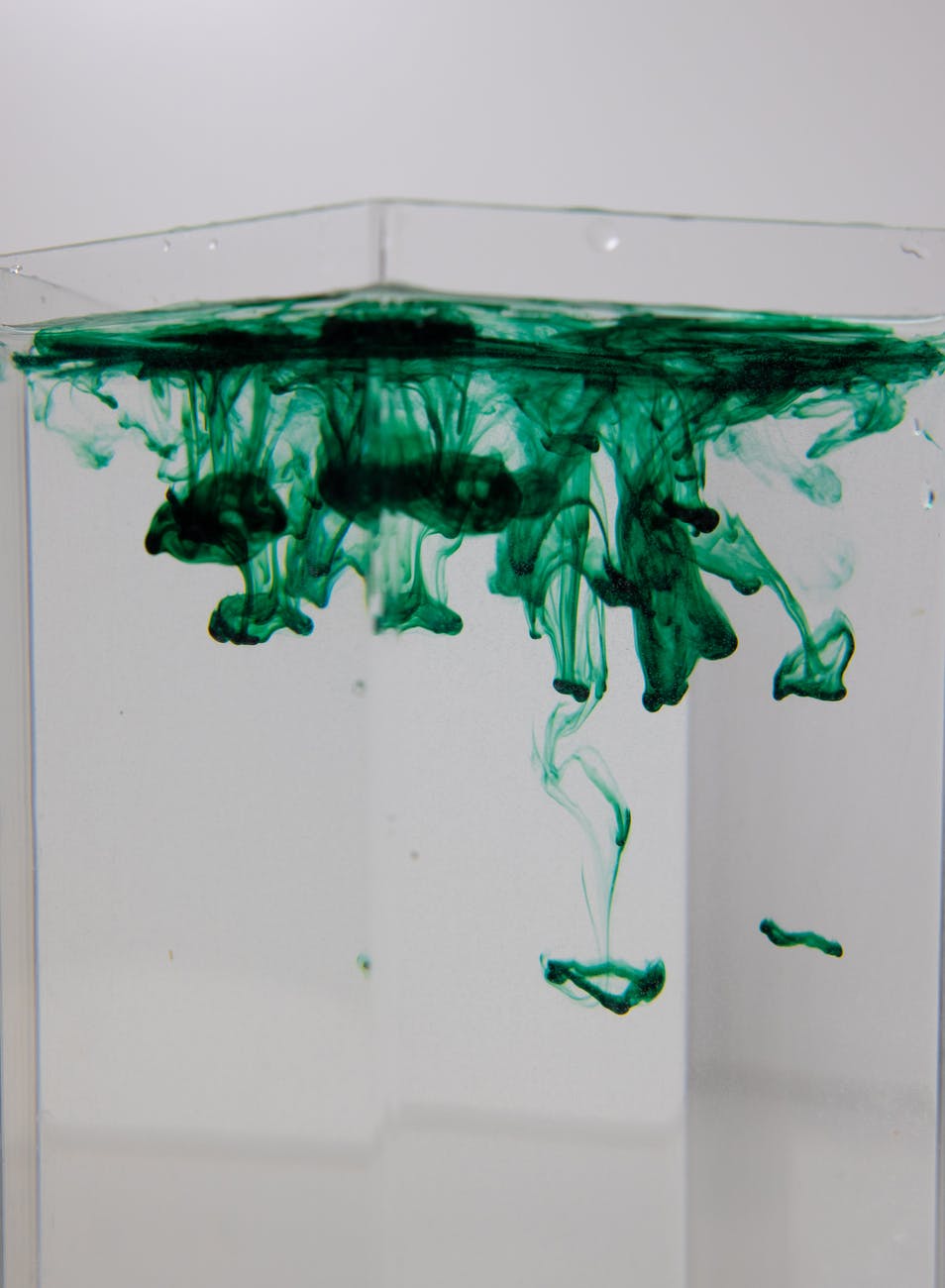
Spot hanging out in his bottle (photo by Jill Burrow on Pexels.com)
Armor Class 16 Hit Points 18 Speed 10 ft., fly 45 ft. (hover) Initiative +3
Reaction: Ichorous Form – When an opponent makes an opportunity attack the Improved Inkling may take use its reaction to flow around the attempted attack if it has perceived the attacker. That opponent than has disadvantage on its attack role.
This was a quick and dirty reskin and improvement based on conversations with the player. It works for the world, where the founder dragons from Strixhaven are part of the Ken’s power center. It works for the character, because his rogue class will eventually be a Propagandist. Using a amorphous ink thing to pick up rumors to put in the broadsheet is perfect.
tl;dr – reskin official creatures to make them appropriate for your world.
Tea, tisanes, rooibos, herbal concoctions and other similar hot drinks are staples in many cultures of the real world and fit so many Dungeons & Dragons cultures as well. The sub-culture around ceremony and expertise makes sense as a Background in 5th edition.
Why would a Tea Master go adventuring? They could be searching for a new supply; have run out of their own supply; know that there is a threat to the trade routes they depend upon; heard from the nobility of a need for the government; have a loyal customer that needs aid. A Tea Master like many service types develops a relationship with the people they serve. Those connections are easy to leverage into relationships that help power story — plus they have tea.
You are a server of fine teas. Maybe you worked in a tea shop, or were a tea merchant, or were the tea master for a noble estate. You prepare teas and small bites of food for the thinking peoples in the area. This can be as simple as a cuppa or an elaborate ritual.
You may be an expert in particular types of tea (powders, fermented, naturals, or combination). These teas and tisanes may come from your local community or come from other lands far from your origin. Regardless, you start with 24 servings of your favorite tea or tisane (tisane=herbal tea). When creating your tea master consider the peoples you served tea to in the past, consider who taught you the ceremony(ies) you know. Use these flavor decisions to embrace your role as a Tea Master.
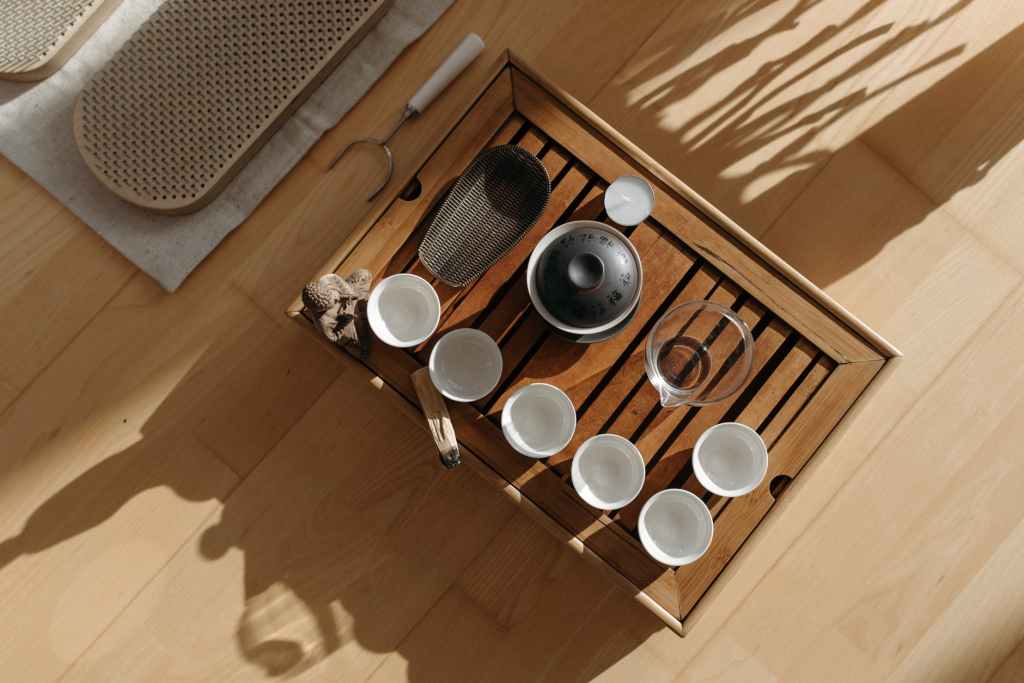
Skill Proficiencies: History and Insight. If you are using cultures rather than languages, then replace history as per those rules. Tool Proficiencies: None Languages: Two languages Equipment: Alms box with 25 silver, bell or whistle or hand drum, tea set for 6 including tea for 4 ceremonies for 6 (10 pounds and 25 gp value), fine clothes, waterskin
Feature: Tea Ceremony
Performing a 1 hour ritualistic ceremony you serve tea often with small plates of food, but that is not required. The ceremony is patient and calming, shifting NPC attitude from hostile to indifferent or indifferent to friendly, if the NPC can be convinced to partake in the full ceremony. PCs partaking in a tea ceremony can use Hit Dice to heal as if the time was spent on a Short Rest.
Personality Traits that make sense for the Tea Master could be from the Acolyte, the Guild Artisan, the Hermit, or the Sage. Mix and match these as necessary.
There are a few reasons I wanted to make the Tea Master. During my time in the Middle East I experienced a couple versions of tea ceremonies. These were done as a welcome to a home or to a camp. In my personal life I have also experienced the elaborate high tea that used to be part of the nobility of England. These seemed to fit the social portion of D&D, especially as they stretch back in time to the days which inspire our stories.
Within fiction there are two tea ceremonies that stand out in my mind — both from The Lion, The Witch, and The Wardrobe. Tumnus uses a tea ceremony to distract and then poison Lucy. The Witch uses a tea ceremony and foods to make Edmund think that she is not a threat. Both examples fit the literature that inspires our game.
There was also a desire to make the tea ‘rules’ different than coffee ‘rules.’ The two are similar in that they are water with vegetation that often provides stimulation as well as being from locales far from the founding cultures of the game. Both belong in D&D, because they were in Europe in the era that inspired the game AND because D&D is about much more than Europe.
Another goal was to remove specificity of culture from the tea ceremony. Tea ceremonies do not have the direct lineage that coffee does (coffee houses have a direct lineage to Ottoman cafes). Tea is a more widespread crop with various cultures celebrating the leaf. So make your tea ceremony your own. Celebrate a real culture, create a pastiche, or invent a new one — do it honoring real cultures that you are a member of or that you’ve studied.
Custom Backgrounds for 5th edition Dungeons & Dragons
Animal companions are a vital part of my campaign world. Much of the reason the World of the Everflow and the Land of Six Kingdoms exists is because I want to explore the connection between humans and dogs. Since this is Dungeons & Dragons that also means exploring the connection between halflings and riding dogs, kobolds and ratters, elves and sighting dogs, goliaths and huskies.
D&D only has one natural dog. There’s also blink dogs, wolves, dire wolves, and a few other mystical beasts. But the real world has dogs that range from one pound to a couple hundred, dogs that are able to swim forever, dogs that are able to detect scent so well they detect cancer, dogs that pull sleds for hundreds of miles.
Fifth edition is simpler than reality, and every other version of the “editions” of D&D, only various basic editions could be classified as simple. It doesn’t need 150 breeds of dogs. It does need more than the mastiff. Here are nine other types of dogs to help expand your D&D game.
Mastiffs or War Dogs
Part of the 5th edition D&D SRD, the mastiff can be summoned by various spells and magic items and ridden by small humanoids. Though described as a hound, the art for mastiffs tends towards bulky. They are war dogs, clearly. Maybe they also represent breeds that guard through violence and intimidation rather than as an early warning system.
Mastiffs and war dogs should always be medium.
Herding dogs
These dogs herd animals, you already figured that out. Whether they are shepherds or certain terriers or heelers, they enjoy large groups.
Herding dogs are usually medium, but small is appropriate.
Guardian dogs
There are a few types of guardian dogs. Where in D&D the mastiff represents the guard dog that is violent and intimidating a guardian dog represents those breeds that act as an early warning system. They observe a space and warn their companions that danger is coming.
Rather than stat this out, the two guardian dogs in my current game are simple. They do 1 HP of damage on attacks, have half hit points of a mastiff, and are small. These represent the terrier breeds that aren’t eliminating vermin but are barking a lot (there’s some crossover in the real world). What makes them special is the ability, once per long rest, to “cast” Alarm as a ritual without any use of spell components. Rather than invent a new ability, creating a small area that the dogs can sense entry into and then bark a lot makes things simple.
Guardian dogs can be small and sometimes medium.
Working dogs
Where the mastiff represents breeds that are violent, working dogs have two main roles in our world of fantasy — the mount and the cart/sled puller. These are big doggos. They never tire. They love you so much they want to work harder. Give them the mastiff stats, but with max HP and a boost of 2 to Constitution. They have disadvantage on attack rolls.
Give a working dog Beast of Burden, you can find that on the Mule. They are tireless, and have advantage on strength or constitution checks that would impose exhaustion.
Working dogs are medium, maybe even large — this is a fantasy world.
Retrieving dogs
Aslan is a red lab and Amira was a golden/yellow mix. These are the dogs that taught me what dogs are. Retrievers haven’t appeared in my game yet. The rules are simple. A retriever fetches. At the end of a combat 100% of ammunition can be found within ten minutes, unless magically hidden or a critical fail was rolled. Additionally, when they are within 30′ of their companion and that companion’s target their companion always has at least 1 piece of ammunition. They do not provoke attacks of opportunity, ever. They use the mastiff stats.
Retrieving dogs are usually medium, but small works.
Water dogs
Labs are funny because they are both retriever and water dogs, but that’s complicated. 5e isn’t supposed to be complicated. So your lab needs to be one or the other. Or get a spaniel. They’re cool too, all dogs are cool. There’s lots of water dogs that basically forget that they are supposed to run on land, not jump in every pond, crick, or ocean they find. And yet. Water dogs do just that.
Mechanically? Use the mastiff, because simple. Drop Keen Hearing & Smell and drop the bite to a d4+1. Add on a swimming speed of 40 and resistance to cold damage.
Water dogs can be medium or small.
Hound or sighting dogs
The dog that helps hunters and trackers is a capable tracker who can sight prey from great distances. These hounds are frequent companions of rangers and other outdoorsy types.
Mastiffs, the base D&D dog, already have Keen Sight & Hearing, so what does a dog that’s even better have? Let’s lean on Elven Accuracy. Whenever tracking, hounds and sighting dogs are able to reroll one of their advantage dice. When their companion is tracking the help of a hound or sighter means that companion has the same. A sighting dog or smell-hound can use the Help action as a Bonus Action for a ranged or melee attack respectfully. Other changes from the mastiff are a drop of strength and constitution by 2 points, reducing their damage, attack bonus, and hit points.
Hounds and sighting dogs are evenly split between medium and small.
Vermin hunting dogs
Certain breeds were meant to get rid of rats, badgers, foxes etc. They are nimble (Dex 16, AC 14) pack animals (Pack Tactics) who are brave (advantage against fear). They will chase a small animal into its home, enjoying that chase through darkness (darkvision 10′). They aren’t strong (Str 9) or tough (HP 2). They’re just fierce. Their bite does 1d4-1 hit points of damage, minimum one. On a successful bite the victim must make a DC: 10 strength check or be grappled.
Many tunneling societies will partner up with vermin hunters, to include, but not limited to, kobolds, gnomes, dwarves, goblins, drow. Sure these dogs may bring rats back to their companions. This is both good and bad and good and bad.
Vermin hunters are small, with some being tiny and a few being medium.
Messenger or racing dogs
These dogs are fast. Whippets, greyhounds and others are real world breeds who are racers. In the World of the Everflow messenger dogs are used to send letters between places. These dogs just have to move, except when they don’t. They sleep hard and eat as much as a working dog.
They have a movement of 60′ and are able to use the Dash Action as a Bonus Action. Additionally their dexterity is 16, giving them an AC of 13. They do not provoke attacks of opportunity. They only do 1 HP of damage on attacks. Otherwise they have the stats of a mastiff.
Most messenger dogs are small. Some could be medium.
Toy or companion dogs
Some dogs are beloved by their companions, but not by everyone else. That’s fine. Everyone deserves dog love. Maybe an eccentric wizard carries one in their pouch, or a bard has one in their pocket, or the king has a medium sized one on its lap constantly. These aren’t dogs for adventuring. These are dogs for socializing.
A toy dog can cast Friends once per long rest. They have 1 HP and an 8 constitution. Their bite does no damage, but causes disadvantage on the next attack roll for the victim. If they are targeted by an attack the attacker may suffer from Hellish Rebuke originating from the toy dog causing psychic damage.
Toy dogs are usually small, maybe tiny, but some medium flooffs think that they are toys and will crawl up in your lap no matter what you want.
What’s the first type of dog you’re adding to your game?
Worlds of points of light in a wilderness, or fallen empires, or warring kingdoms, or with merchant guilds that control trade need ways for far-ranging communities to stay in touch. In the real world this meant messenger pigeons, in Game of Thrones there were crows and ravens to communicate. Other fictions use dogs, or just a hearty human that trudges through awful conditions to keep the ties of society together — The Postman by David Brin, or the Pony Express in reality.
Your Dungeons & Dragons worlds also need these messengers. They make sense and fit the fiction so well. A Messenger in D&D also doesn’t need to be confined to the animals of the real world. A Ravnica or Eberron game might use a tiny ornithopter. Fastieths fit in Eberron and parts of the Six Kingdoms. Spiders or bats fit in Ravenloft. There’s a flavor of messenger companion for every world.
You are the connection between disparate homesteads, towns, or cities. Conveying the messages and scrolls between the communities rapidly without magic you bring news, warning, and joy to peoples who often struggle to keep in touch or that would take weeks to travel and deliver the message themselves. Often welcomed in strange towns, a messenger sometimes wears an official uniform of a ruling power and at others is a freelancer working without direction from above. You and your messenger companion are a symbol of civilization even in the furthest outposts.
Skill Proficiencies: Animal Handling, Nature Tool Proficiencies: None Languages: Two Languages Equipment: One animal messenger companion, travelers clothes, a scroll case with a dozen pages, a quill, an ink pot, a whistle or bell or other command device, a pouch with 5 gp
Choose an animal that is your messenger’s companion and conveyance, and discuss with the DM how the companion will fit into the adventure. These come in four primary groups, and a few examples are provided. Don’t feel limited to the specific animals listed, but use them for guidance regarding their abilities, if, gods forbid, they enter combat.
Small land animals — cats, dogs, iguanas, otters, monkeys, not-quite-giant spiders
Medium land animals — axe beaks, ponies, fastieths, antelopes
Small flying animals — pigeons, crows, ravens, owls, bats
Your messenger companion begins the game with a network of three destinations and the ability to find its way back to you where you sent it from. When delivering a message to a known destination on the network it travels at a fast pace and does so with no penalty to a stealth check (your messenger companion add your proficiency bonus and your Wisdom bonus to their stealth at all times). If you plan to move from your location when you send a message you can instruct your messenger companion to deliver the message and then go to a different destination. You and your messenger companions have a number of network destinations of proficiency bonus +1. If your companion perishes you must train a new one. This takes several weeks of downtime.
Natural weather has less impact on your own travels. Survival and/or Constitution checks made due to harsh natural weather are made with advantage.
Traits, Ideals, Bonds, Flaws: At this time use the Sage, Outlander, or Folk Hero for inspiration.
Messenger Design Goals
Starting with the idea that greyhounds would be perfect canine versions of messenger pigeons, this background just kept growing and growing in its scope. Eventually I spun out the Far Talker as a similar but different role in the world.
Neither snow nor rain nor heat nor gloom of night stays these couriers from the swift completion of their appointed rounds.
Emulating those words was vital, but needed to not be game breaking.
The non-magically empowered companion couldn’t be built out of Find Familiar, which was considered. My world’s bonded companions are meant to be non-magical. While the phrasing of the ability is a bit long, it’s mostly an ability that adds flavor. The messenger companion is not going to change a D&D party’s combat power.
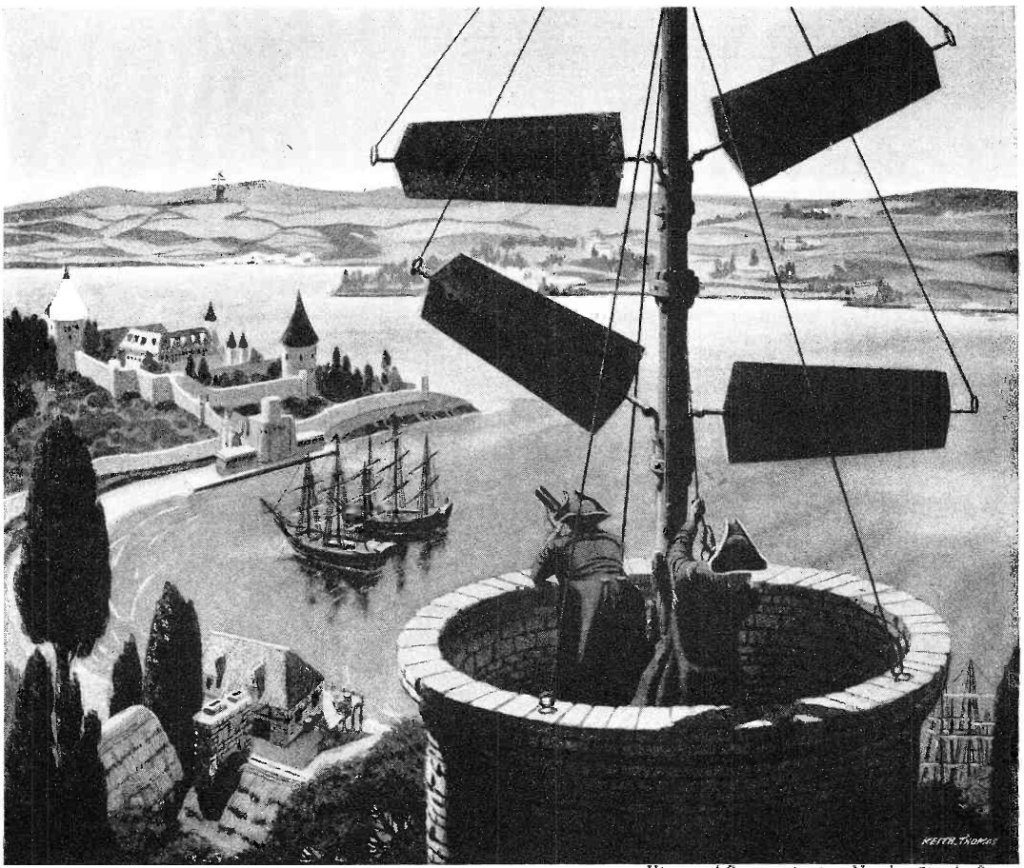
As a horde of humans riding guard drakes crests the Blue Hills, the chappe telegraph operator builds the signal that will reach the Larton Keep now that war has returned to the range. Using whistles, a youngster tells the village miles away that four sheep are lost so they’ll be home late, could his family please have tea ready for when they return.
A thrumming beat injects itself into the air as an owlbear stalks a deer. Knowing the bear is nearing a sacred vale a group of druids and rangers work to separate hunter and prey, for there will be no killing in Frannet’s vale.
Sure, a spell caster might be able to use Message, or two people may have Sending Stone for magical cell phones. But, the Far Talkers converse over a distance of miles, not feet. They speak with many, not one, signaling a warning or just chattering about the weather. Far Talkers and Messengers help societies that stretch over leagues communicate and maintain a culture.
Far Talker
You have the ability to converse over miles, sending messages for a government, faction, or some other organization. In war societies seek your aid to help units communicate. In peace you and other Far Talkers help connect towns and cities, or just keep two distant wizard towers in touch.
Familiar with how the weather impacts your mode of speech you have learned the winds and rains of many lands. Expected to see or hear things at a great distance your senses are strong. You may be an expert at the drums, but you have heard of others who use whistles, tree beating, smoke, flags, or other instruments. No matter what tool is used your messages are simultaneously public and semi-secret.
Skill Proficiencies: Perception, Nature Tool Proficiencies: One musical instrument Languages: One additional, plus the ability to Far Talk in Intelligence bonus languages (minimum 1) Equipment: A symbol of service to a government or large church, a gaming set, a spyglass or musical instrument, traveler’s clothes, a notebook with notation for your type of far talk, 1 day rations, pouch with 2 gold
Feature: Far Talking
Using your chosen tool you can communicate over a distance of 6 miles when outdoors, and twice normal speaking distance when indoors, in a number of languages equal to your Intelligence bonus (minimum 1). Extreme weather may make those long-distance conversations more difficult.
When you meet another practitioner of the Far Talking arts they are always one step friendlier than their companions or social situation would indicate. For example if two scout groups from warring nations met their far talkers would be indifferent while everyone else was hostile. This is true even when the far talkers in question use different languages and tools to talk.
Learning Far Talking
A character without the background can learn Far Talking per the rules to learn a new language. They would then learn one method of Far Talking for a single language.
Some groups of druids, rangers, and their allies might spend time learning Druidic spoken via Whistle Cant. A fleet of pirates could all know Yodeling. Have fun with this.
As always, seek ways that cantrips would enhance these. Those that rely on sound would be amplified by Minor Illusion, Thaumaturgy, and can you imagine Thunder Clap sent through a massive bugle-like device. Those that need light can be made more useful by Prestidigitation, Dancing Lights, Light, and Minor Illusion. A world of magic would have Far Talkers that can speak across many miles.
Personality: Use the Soldier or Folk Hero personality traits for now. When the Background project is done each new Background will have traits, ideals, bonds, and flaws that are unique to the Background.
Design Goals
The Far Talker started out from two different ideas — I wanted to create Whistle Cant as a kind of alt-Druidic and my desire for the Messenger Background. The Messenger became two different Backgrounds. That Messenger will focus on the people who deliver physical messages by walking, running, riding, etc. The Far Talker is the other version. Rather than become Druidic, Whistle Cant became a type of Far Talking, and one of several examples of alt-languages that a Far Talker might specialize in.
Custom Backgrounds for 5th edition Dungeons & Dragons