In a city you might be part of a guild, where in rural communities you could be the only midwife for miles. You are there to aid during pregnancy and birth. Your role goes beyond just those times, as you are also the confidant within the region. Your charges trust you, confide in you, and know that you will support them in their time of need.
You are capable of calming emotions during impassioned times, trained in techniques of general healing, when you are present life is honored and saved. Whether itinerant or attached to a guild, your role within the community is respected. Those who don’t need your services still hold you in esteem, if from a distance.
Midwife
Skill Proficiencies: Insight Tool Proficiencies: Herbalism Kit Languages: None Cantrip: Spare the Dying Equipment: Druidic focus or religious symbol, healer’s kit, traveler’s clothes, flask, jug, steel mirror, soap, 5 gp
Feature: Welcome to our home
Folk that care for families will always welcome a midwife into their house. They will not fight for the midwife, but will help them hide, provide some food or provisions for the midwife and their friends if able, and share the gossip that caregivers invariably know about a community.
Characteristics: For now, use those from the Folk Hero or pick & choose your favorites. Whenever my background project sees full publication there will be unique characteristics for each of them
Midwife Design Goals
First and foremost, this design is to honor my late mother-in-law. She was a maternity nurse, and through her I met many other nurses. Secondly, the background leans into Call the Midwife, which my wife watches regularly. There is a bit of inspiration from Nynaeve al’Meara (Wheel of Time) and her time as Wisdom of Emond’s Field when she cared for the community as a healer and confidant for the women of the community. As there is no healer among official D&D products, the Midwife attempts to fill some of that niche (as will the Barber, the Apothecary, and the Healer).
Like the Remarkable Drudge, the Midwife grants a cantrip at the cost of a skill and a tool/language.
Custom Backgrounds for 5th edition Dungeons & Dragons
Within the literature that inspires Dungeons & Dragons we see many tales of those born to magic. Some of these peoples are untrained, their magic barely controlled. In 5th edition D&D these are represented by Wild Magic Sorcerers. Not all fit the narrative around Sorcerers, because they are more than just an in-born mage. They have hints of spellcasting, but because it is born rather than learned control is not there.
Yes, multiclassing can solve this. So can a Feat.
The desire with Born to be Wild is to capture the feeling of those who have a tiny bit of innate magic in their bodies, but no control. Their magic sparks bizarre occurrences that range from helpful to destructive. Maybe they get trained someday. Maybe they are a warrior who can heal an ally, or a thief that can blast with missiles of power. Whoever they are, they struggle with innate powers and the impact of casting.
Choose a cantrip from the following list: Prestidigitation, Thaumaturgy, Druidcraft. [This represents that you have innate minor powers]
Choose any 1st level spell. You may now cast this spell once per short rest, but when you do you roll on the Wild Magic Surge table of the Wild Magic Sorcerer. This spell may be added to your spell list, but whenever cast does cause a surge. [There is a temptation to have the player roll on the table twice and let them choose the better effect.]
Your spellcasting ability for these spells is Constitution. [This is to represent that the magic courses through your body.]
Design notes
The intent here is to be similar in power to Magic Initiate, but to embrace the chaos of the Wild Magic Sorcerer. Dropping one cantrip and upping the usage of the spell is similar to the Artificer Initiate. Adding Metamagic would give the holder of the Feat control, which is in opposition to the intent.
Animal Companions, or Bonded Companions, or a key element of life in Kin. The Kin are the people of friendship, loyalty of loving those around them. This extends towards their non-humanoid companions as well. Where an elf might group in a land where spells are used to do mundane things, in Kin when a goliath needs a bit of string to finish sewing they send their swallow off to do it, or their heron to fish. Halflings have dogs that pull, push, fetch, hunt, fish, carry, and many other tasks. Human bonds with goats, rams, dogs, birds and horses are quite common. Bonds of Kin are a very essence of life. Almost everyone has one.
This ruleset needs to do a few things.
Scale like cantrips, attacks and proficiency. The companion is expected to live alongside their friend for some time.
Build in a reason that having a Bond die is bad for the PC
Not destroy the action economy
As a bonus, can it be simplified for usage in gaming outside the World of Everflow?
Feat: Bonded Companion
Prerequisite: Wisdom of 13 or higher. Kin and Rangers ignore this prerequisite. This feat can be taken more than once.
You have an intense bond with a beast. These beasts cannot have a higher Intelligence than the character. In certain worlds the bonded companion can be a monstrosity. At this point I considered just granting access to the Bonded Companion system in a similar manner as to how Magic Initiate works, but instead built it within the Feat. The rule could be built by making Bonded Companion a Class Feature and Feat, but I digress. Taking the feat gives you Companion Points. You also gain companion points in the following manners;
Rangers at 1st, 3rd, 5th, 11th, and 17th levels
Druids at 1st and 5th level.
Clerics with the Nature domain at 1st level.
Your Wisdom modifier
Those points can be spent on a single companion or multiple companions. A character can bond with a number of Companions equal to their Wisdom modifier +1 (minimum 1). Each new companion takes a number of weeks to establish a bond as their cost in companion points. This can be done as downtime, or could be a solo adventure. A character may only spend new points when they take the feat or if they are a Ranger or Druid at their higher levels that earn Companion Points.
The following chart lists various Companions and their Companion Point cost.
One
Two
Three
Five
Seven
Ten
Herd dog
Sled Dog
Warhound *
Giant Eagle *&
Rhino &
Mammoth *&
Retriever
Mastiff *
Axebeak *&
Bison
Elephant *
Wyvern *&
Terrier
Bloodound
Ostrich &
Bear *&
Dire Wolf *&
Roc *&
Sentry Dog
Guard dog *
Elk &
Lion *&
Owlbear *&
Sprinter
Raven
Panther *&
Worg *&
Griffon *&
Heron
Eagle *&
Bear Cub *&
Hippogriff *&
Pegasus *&
Pigeon
Falcon *
Wolf *&
Peryton *&
Sparrow
Parrot
Tiger *&
Awakened Tree &
Pony/Mule
Draft Horse
Warhorse *
Fox
Riding Horse
Ape &
Goat/Sheep
Monkey
Awakened Shrub &
Cow
Legend: The ‘&’ is used to indicate an animal companion that can only be paired with a Ranger, Druid or Nature Cleric. They are normally wild. The ‘*’ is used to indicate animals that can enter combat on command.
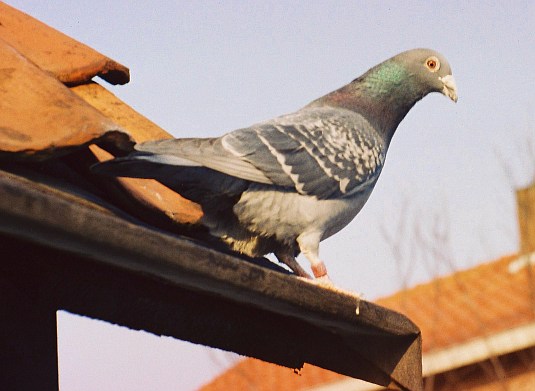
“Postduif” – Licensed under Public Domain via Wikimedia Commons
As a Bonus Action the Bonder can command their animal. These commands are Attack, Dash, Disengage, Dodge, or Help. An animal without a * can only attack if the Bonder passes a Wisdom (Animal Handling) DC: 20 check. The Companion will continue that action until the combat is complete or another Bonus Action is used (ie they will Attack the directed target until that target is no longer participating in the combat). Some Companions have other actions that can be taken (A Retriever can Fetch as an action). Check with your DM for these other actions.
When separated a Bonder and Companion that are on the same plane know the direction and rough travel time between them.
If someone tries to control a Companion it is an opposed Animal Handling check for the Bonder and whatever skill or spell is appropriate for the attempt to control the Companion. The duration of the control is per the appropriate spell or skill.
If a Companion dies the Bonder takes half their Companion’s hit points in psychic damage. If they make a Wisdom save (DC: 15) they then take one quarter of their Companion’s hit points in psychic damage.
Variant Rule in Kin: At first level and below halflings usually bond with canines and goliaths usually bond with avians. All Kin start with an additional Companion Point.
Some heroes work the earth, till the fields, care for orchards, manage vineyards. The adventuring life was not part of their blood. There is no heroic act of rebellion or violence in their past, like the Folk Hero. They show their potential and heart every day. Some rise early, work late, and rest hard. Others understand nature, harnessing those forces to do as little as possible until harvest comes.
All are connected to the land. Whether serf or free, whether rural or within the city, the farmer raises crops not just for their own family, but to supply a larger group. They are the blood of a civilization – vital.
Some farmers do not get to remain in the pastoral life. They can be conscripted into battles, inspired by a local bard, maybe their debts force them to work with a local gang, Whatever took your farmer away from their homestead to the adventure they are on now that homestead, connection to earth, and family is a part of them forever.
The following rules a pre-publication example of a Farmer – a background for the current edition of Dungeons & Dragons.
Skill Proficiencies: Athletics, Nature Tool Proficiencies: Farming Tools, Vehicles (Land or Water) Languages: None Equipment: Farming Tools, common clothes, beast of burden (donkey, mule, dog, etc) or cart, basket, 2 days rations, wine skin, 2 gp
Feature: Horn of Plenty
Through your knowledge of foods, their qualities and usefulness, combined with an uncanny knack for preparation you are able to stretch food supplies. A meal that would normally serve one serves two. They are both content and satisfied. A harvest in which you participate is also more effective – your senses help find a few more plants that are ready, branches that are missed, or mistakenly dropped produce. Those harvests produce more food, resulting in an increase in gold or barter value of 50%.
Characteristics: For now, use those from the Folk Hero or pick & choose your favorites. Whenever my background project sees full publication there will be unique characteristics for all of them.
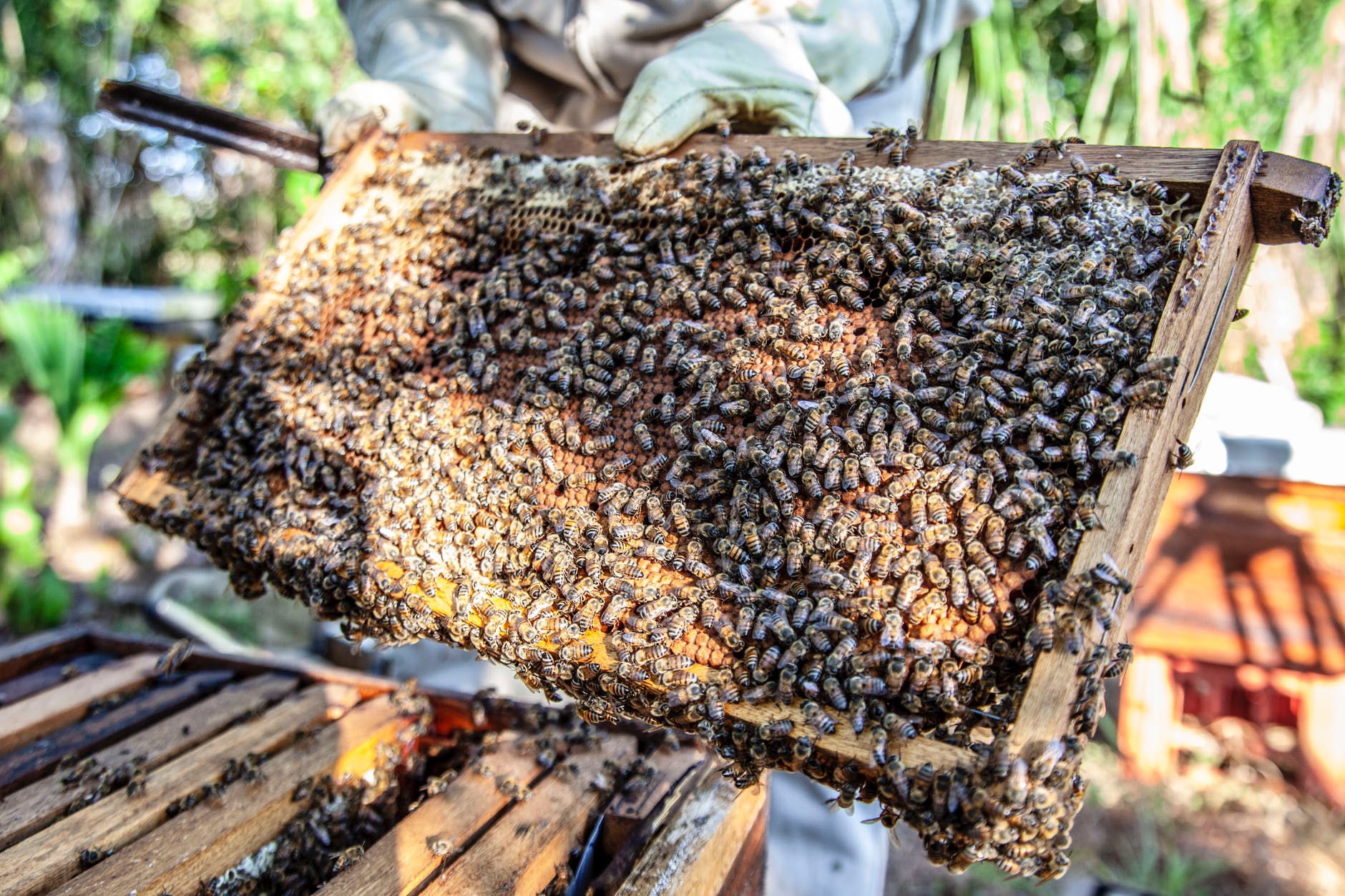
Drop Athletics for Sleight of Hand. This is to represent the deft hands of someone who does their best to avoid being stung too frequently. Their loads also tend to be lighter compared to farmers who carry bushels of apples, shovel manure, dig irrigation, etc.
Alternate Feature: Sweets
You always have some honey – tiny jars, little wax sticks, hard candies, the format is up to you – to give away. Generally those who are gifted your sweets welcome the gift and have a positive impression of you and your group. These gifts can act as a salve to harsh spirits or a reward for previous help. They can also be traded for other uncommon goods that you may be in need of.
Originally included as an option for the Remarkable Drudge, Farmer’s Tools are a must have for any farmer.
Farmer’s Tools
Cost: 5 gp | Weight: 7 lbs
Proficiency with farmer’s tools means that you are familiar with the operations of a farm, orchard, vineyard, or other cropland. You are knowledgeable in the typical crops within an area, to include when to plant and harvest them. You also know their market value in most lands.
Custom Backgrounds for 5th edition Dungeons & Dragons
This archetype has been banging around my head for some time. The ability of words to inspire rebellion, to move nations, and to inspire people to be better is quite clear. Dungeons & Dragons kind of wraps this into the College of Whispers Bard, but that’s quite supernatural. The Rogue: Propagandist is mundane, based in historic examples such as Thomas Paine and Benjamin Franklin, as well as in certain versions of Assassin’s Creed.
The design intent is to empower more play in urban and/or political campaigns. This attempt, which is essentially version 1.5, uses new mechanic for the rogue, one that demonstrates that people who publicly advocate for rebellion are often known, but still effective. The Propagandist most powerful abilities are powered by their Sneak Attack dice. This seemed to fit better than making them weak Bards in an Arcane Trickster variant like the Society of Veil and Shadows.
Most of the lore description is removed from this pre-publication draft in order to focus on the mechanics, which are complex and new. The Swarm of Commoners and the Printing Press tool are just shells of what they will be in the future as well.
Rogue: Propagandist
Rebel and Pamphleteer
You rose from the underbelly of empire to demand a better life for all. Your pamphlets and speeches can inspire hope, or fear. Whether from the soapbox or via playbill your proclamations turn the tides of rebellion or keep a government in power.
Propagandist Features
Level
Ability
3rd
Wordsmith, Rabble Rousing
9th
Proclamations
13th
Grand Voice
17th
Master Essayist
Wordsmith
When you choose this archetype at 3rd level you gain proficiency with the Printing Press and a skill from the following list — History, Investigation, Insight, Deception, Persuasion, and/or Performance.
In addition you learn one language of your choice.
At 6th level you may choose the Printing Press for your expertise option.
Rabble Rousing
Your words inspire rebellion. You are able to summon a Swarm of Commoners. These commoners are allied with your cause, but are not willing to die for it. You spend an active Sneak Attack die for each use of this ability per short rest. The number of dice used determine how many Swarms you summon. Rabble Rousing takes a minimum 10 minutes to activate via speech, pamphlet, or other communication. The Swarm is summoned at a time and location where some commoners could be expected. The Swarm of Commoners has advantage on saves versus fear and are considered under the effects of the Charmed condition.
Proclamations
To issue a Proclamation you spend at least ten minutes creating a pamphlet, playbill, speech, cartoon, etc. These Proclamations grant bonuses to those who experience their call. Those bonuses are equal to the number of Sneak Attack dice spent at the time of proclamation (Proclamation Bonus). The Proclamations’ influence extends to a number of subjects determined by the proficiency bonus + ability score modifier in the skill or tool used to deliver the proclamation. The proclamation can be delivered via speech (Persuasion, Deception, Performance), pamphlet (Printing Press), or cartoon (Calligrapher’s Tools, Painter’s Tools). A tool would use Intelligence (i.e. a 9th level Propagandist with an INT of 14 issuing a Proclamation of Safe Haven via a pamphlet would grant 6 readers the benefits of Safe Haven).
Proclamations that require a save do so against a DC determined by 8 + Proficiency and Intelligence Bonus.
List of Proclamations
Unrest – A number of Swarm of Commoners determined by the spent Sneak Attack dice gain a Proclamation Bonus of temporary HPs and gain the same bonus to damage rolls. These Swarms will attack on the Propagandist’s initiative roll minus 10. The Proclamation inspires a rebellion.
Rally – Subjects regain hit points in the number of the spent Sneak Attack dice plus a Proclamation Bonus (ie. 2d6+6) as these Proclamations rebuild the morale of wounded forces.
Urgency – Subjects gain a Proclamation Bonus to their next initiative roll. Subjects are eager to join the fight.
Power – Subjects gain a Proclamation Bonus to their damage rolls during their next combat. Those attentive to the Proclamation recognize that they are powerful.
Warning – Subjects fall under the Frightened condition if they fail a Wisdom Save versus your Proclamation DC. They are wary of the forces working against them, afraid of any Swarm of Commoners and/or the Propagandist. They are overcome with this fear for one hour.
Safe Haven – Subjects are able to gain the benefits of a short rest via the calming words of the Proclamation.
Grand Voice
Beginning at 13th level your words can invigorate your allies. You can use a Reaction to have an ally reroll a failed Intelligence, Wisdom, or Charisma saving throw. You have a proficiency bonus number of uses of this ability per long rest.
At 17th level you may also remove one level of Exhaustion via your Grand Voice, as long as the level of Exhaustion is not level 5 or 6. You may only remove one level of Exhaustion per ally in this manner.
Master Essayist
The strength of your words lasts. At 17th level any of your Proclamations (except Safe Haven) issued using a Printing Press grant their benefits/disadvantages until the target takes a short rest.
Swarm. The swarm can occupy another creature’s space and vice versa. The swarm can move through any opening large enough for a Medium commoner. The swarm can’t regain hit points or gain temporary hit points except via Proclamations.
Actions
Club.Melee weapon attack: +4 to hit, Reach 5 ft., one target. Hit: 6 (3d4) bludgeoning damage. This attack assumes multiple commoners are attacking as one.
The Swarm of Commoners can be adjusted if made up of a single humanoid race. Usually their weapons are clubs, but in some cases they may all use a specific simple weapon.
Any ally of the Propagandist, or the Propagandist themselves, that attacks from within the Swarm of Commoners has advantage on their attacks. They may also use the Swarm for half-cover, attempt a Stealth/Deception check as a bonus action. Upon a success the individual within the Swarm of Commoners is considered invisible.
Printing Press (tool)
These are the necessary tools to create pamphlets, books, and playbills. The press itself is too large for adventuring, but you would still have ink, a sheaf of paper, scissors, a few letter blocks and one or two signet blocks.