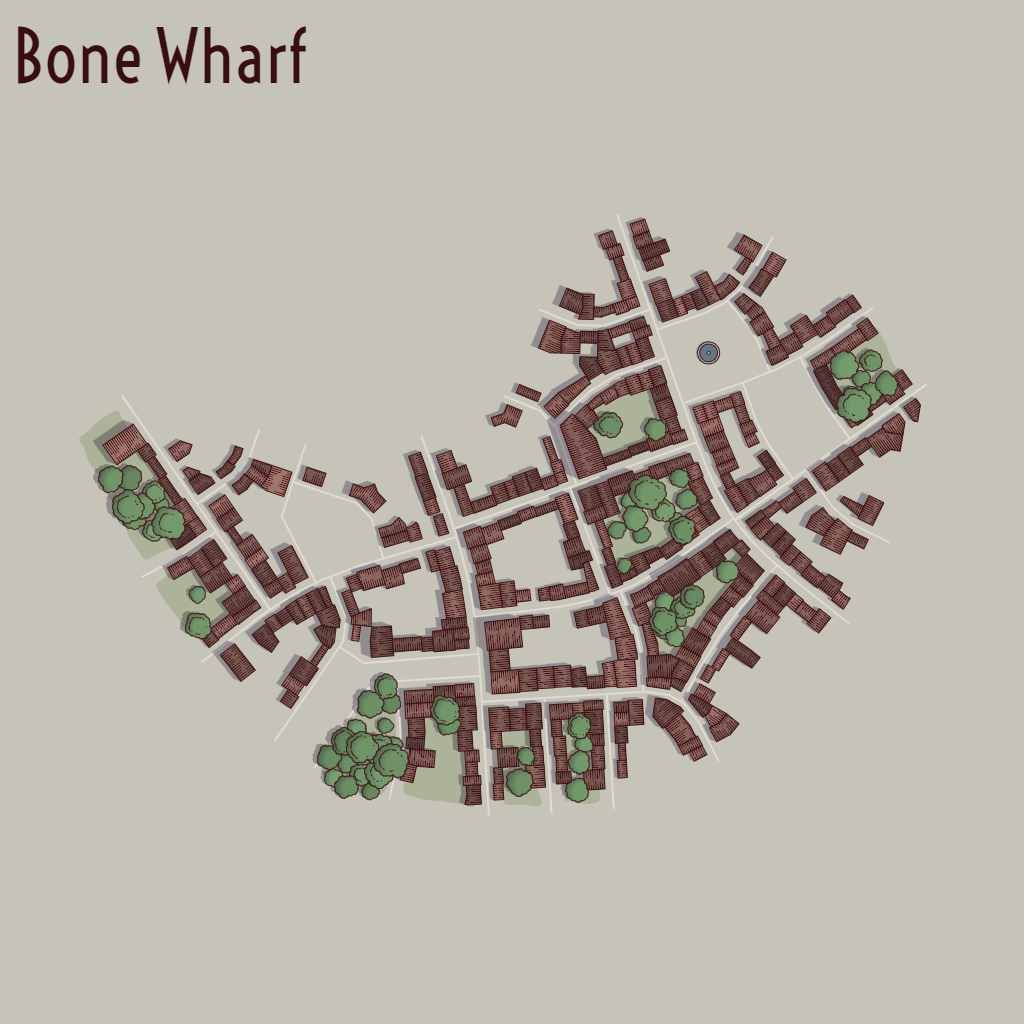
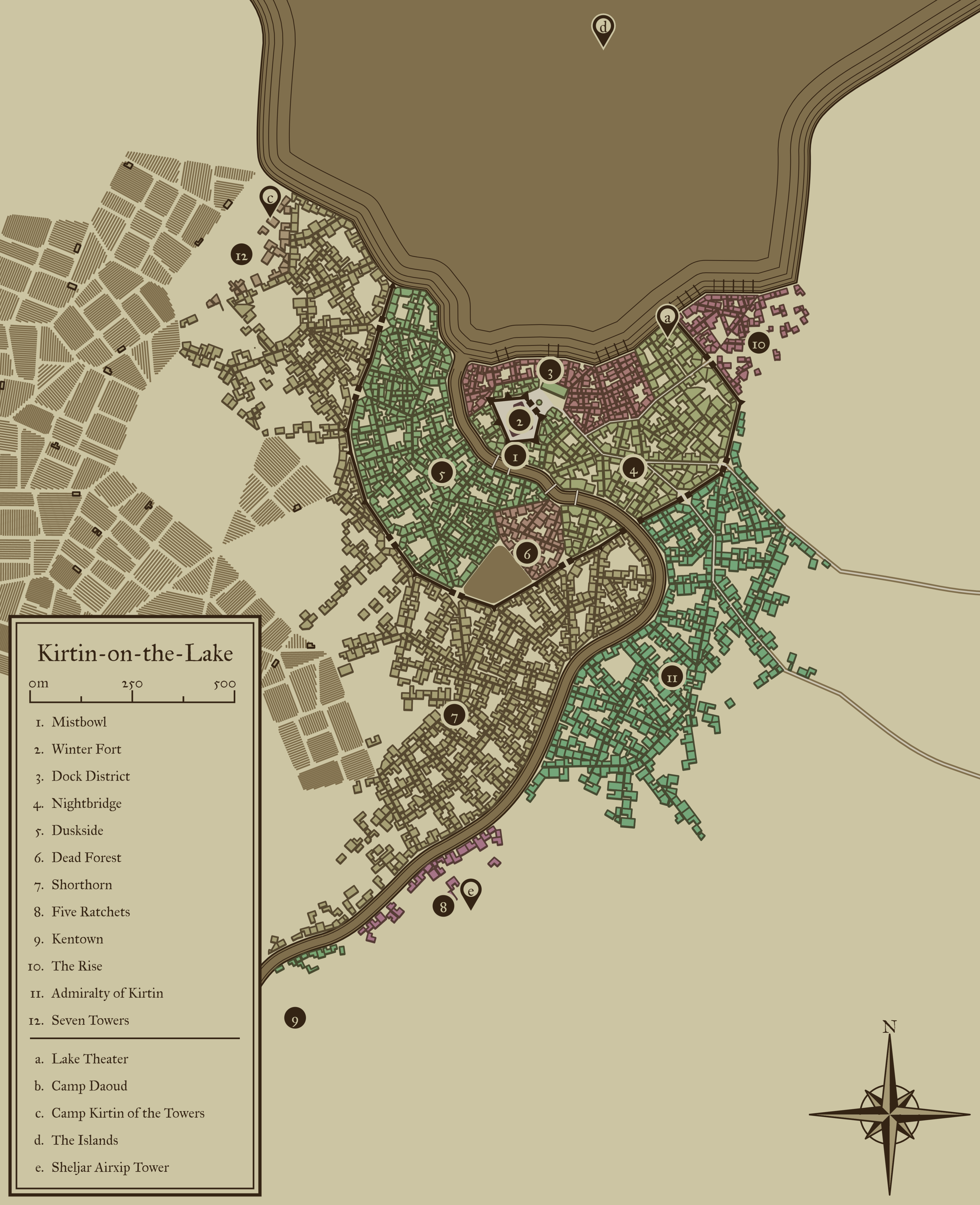
There are certain DMs (me) who aren’t good at drawing and or mapping. For us, a few dollars a month towards various map makers helps us create our worlds. Even if you don’t commission specific works, the services of Dyson Logos (my favorite dungeons), Two Minute Tabletop (my favorite battlemaps), Deven Rue (my favorite regional maps), and Watabou (my favorite procedural maps) can add depth to your gaming sessions — even when you don’t use miniatures.
This is vital for me. Uprising & Rebellion takes place in large city. Having maps of districts and neighborhoods within that is important for the game. Being able to create one on the fly as my players head off script is vital. Players will always go off script. Just because you think they’re going to have a battle in the Docks doesn’t mean they won’t visit North Shore, the Ward of Mighty Trees, the University or Silk Row.
Will I have two or three of these printed out just for the flavor of the next neighborhood over? Yes.
Here are three other ways you can use the Neighborhood maps.
Stitch together an assembly of several of them to create a city. The unnatural gaps make perfect sense as mountains, lakes, rivers, etc. A whole city at this level of detail would be interesting. Make certain to use the same color set for each.
Some of the generations for the neighborhood map make sense as compact villages. Yes, Dolya has a village creator, but those don’t have wells, fountains, and ponds in them. The neighborhoods can.
The map can be an underground cavern in the Dwarven city trope. First shift the colors using the ‘0’ key to one that has some darkness to it. Pretend that the trees are mushrooms, and that the streets are the passageways and tunnels to the rest of the world. Bone Wharf is now a Mountain Dwarf city.
The key to using a procedural map is that you aren’t going to get exactly what you want, or even close to what you want. You are going to get a usable map, fast. Let the oddities of the creation guide you towards creating the people and the space. That long road running from lower-left to upper-right on Silk Row? That’s obviously the Silk Row itself. The fountain is where the various traders and merchants gather to discus their deals. The light smattering of trees are for the very richest of households, those that raise silkworms in the climate that isn’t proper for them. There are some roads that run parallel to the Silk Row, those are for supporting businesses, not the wealthy traders. The non-enclosed squares like the large one up-and-right are areas that are pack animal friendly. You are the DM (or when you use as a player to describe a hometown the creator). Let the algorithm take you to answers you could never find on your own.
What else do you see in Silk Row? Why is the dwarven city called Bone Wharf? What makes Bone Wharf unique?
This campaign is set six years after the Lorebook Hunters returned magic to the World of the Everflow. It is set in Kirtin-on-the-Lake, and is centered on political intrigue with social and exploration pillars being as important as combat. Every player is united in rebellion against the corrupt Mayor, but may have differing ideas about how the various factions can help Kirtin-on-the-Lake be free.
You are common people living in and around Kirtin-on-the-Lake who are inspired to free the city from under the rule of Daoud. You may want it to once again be part of Kirtin, or you may want to copy the Free City of Sheljar. The City Guard, a unit of Daoud’s military, and even Dragons, who see Kirtin-on-the-Lake as their ancestral home, stand in your way.
Background
Kirtin-on-the-Lake was once the winter capital of Kirtin. Taken over by Daoud in the generational wars it is a city of borders even before the Awakening and the discoveries of the Lorebook of Divination and the Folio of Necromancy. Now, the Ken and their Dragons are trying to capture what they claim are their ancestral homeland. Daoud and Kirtin remain at war over the city.
There is also a general uprising of peoples inspired by the Free City of Sheljar. The Mayor has managed to consolidate power by playing the various factions off against each other; this hasn’t helped the common people beyond allowing them peace.
The Proctors of Grace and their other allies want to control access to magic. Certain Dragons also want to repopulate Kirtin-on-the-Lake as the Ward of Mighty Trees is the ancestral home of certain types of Dragons (at least a Red as that first DragonTree has regrown).
Daoud will not allow their winnings (Kirtin-on-the-Lake and the Slope) to leave their control after centuries. The rebellion has taken control of the Dock District. What will they free next? While the mayor may be willing to have the rebels help repel the Proctors, he serves at the whim of an empire that refuses to recognize Kirtin-on-the-Lake as anything but its own territory.
Factions
Mayor and City Guard, generally aligned with Daoud, he is willing to look the other way and cede districts to other invaders for a price.
Daoud, the conquering empire of the south. Normally a naval power in the World of the Everflow, their long conflict over Kirtin-on-the-Lake is their largest land holding.
Kirtin, the mountain kingdom has been at war with Daoud and Azsel for so long that all of its peoples serve in the military.
Proctors of Grace and the Ken, lead by Dragons the various fey peoples are experts at magic and claim that Kirtin-on-the-Lake’s Ward of Mighty trees is their homeland. They also want to put the power of magic under their control and only their control.
Society of Veil and Shadows, these rebels are inspired by the Free City of Sheljar and its empowerment of all thinking peoples. Whether Kin, Ken, or Kon the people deserve equality of treatment and opportunity.
Rumors
There are half-animal/half-people roaming the Western Wildes.
Out in the Ferments forms of life based on the elements are driving out the Kin there.
Headquartered Church of Quar has lost control of the Everflow (the source of all healing potions).
Peace has come between the Kingdoms of the North as the Crinth Confederation and Azsel are more concerned with the Kon and the Ken.
The Dragons seek the Robe of the Magi.
The Tome of Abjuration and its Proctor may be in the city or surrounding area.
Facets
Exploring the zero-to-hero tropes, rebellion, and who gets to control knowledge.
Sandbox play.
Player agency creates history.
Drop in/drop out, whatever.
Sessions are 2-3 hours. Adventures are 1-3 sessions.
Use point buy or standard array for starting attributes. If you want something random, the redrick roller gives random point buy valid stats.
Start at 3rd level, because power is cool.
Long rests require 24 hours within sanctuary. This creates a pace of play more similar to novels than video games.
Practicum
Sessions will be on Sunday afternoons and evenings, floating times based on the Puget Sound pro soccer schedule. Characters must be created prior to dropping in. The table will be on an outdoor patio at one of a few locations in South King County.
Queen’s Fleet continues to expand presence in Kirtin-on-the-Lake; various factions may lead to infighting; what are these stunning and dirty technologies?
Kirtin-on-the-Lake | Neremyn Quizana
Lately you’ve seen, heard, or smelled the newest additions to Kirtin-on-the-Lake. During this stalemate between Daoud and the Dragons and Kirtin traders from the Free City of Sheljar have entered the city. Some land on the lake with ships under great balloons filled with oily gasses; others enter with the rackety-clackety of wooden gears on various cycles of one, two, and even four wheels — like a cart without a horse.
These goblins (we shall use this word for all of them whether merely the size of halflings or the masses of muscle as large as goliaths) are organized differently than any of the Five Kingdoms of the Everflow. Most similar to the guild-houses of Qin, the Kon organize into at least six guilds that are based in familial relationship and what they call ‘teknical’ skills.
Through numerous conversations we have learned that these are their guilds active in the Western Wildes. Not all have been seen in Kirtin-on-the-Lake yet. According to our sources all are present in Sheljar and the towns under the Free City’s sway — Fort Ooshar, Mira, Telse, Bell-an-Fair, Hagtown, and possibly The Ferments.
A new peoples to the Western Wildes, these snapshots should help the fair people of Kirtin-on-the-Lake understand the goblins and their bizarre systems that ignore the shared bonds of people with animal or the potent magicks of the Dragons and their allies.
Most noticed on the streets of Kirtin-on-the-Lake due to their loud clanking cycles, the Clockwerks League is currently the most powerful of the various goblins. The Queen herself is a member, having won many flags prior to ascending to the throne.
Besides the cycles, the Clockwerks include clocks, timers, repeating crossbows, giant powerwheels similar to a waterwheel that uses their mulgobs rather than water. There is word that they will open a new grain mill took.
Ratxets Guild
Conflicting reports say that the Ratxets Guild are a spinoff from the League or something entirely new. They make wonderful climbing devices and on many days you can find a demonstration down by Theater. The ability to use their rope and ratxet to climb the side of Rock is amazing. When this author used the device it made the journey up Rock pleasant rather than the long chore that the stairway can be.
Rumor is that the Ratxet may install a gondola from the Rock that connects several districts by massive sky-ropes.
Coils of strong metal come off of smiths that burn hotter than ours. Without the tartek maybe the Springwerks Union couldn’t exist. This symbiotic relationship betwixt the guilds is routine. They compete harshly for recognition from the Queen and yet their greatest werks are interconnected and use tekniques of others.
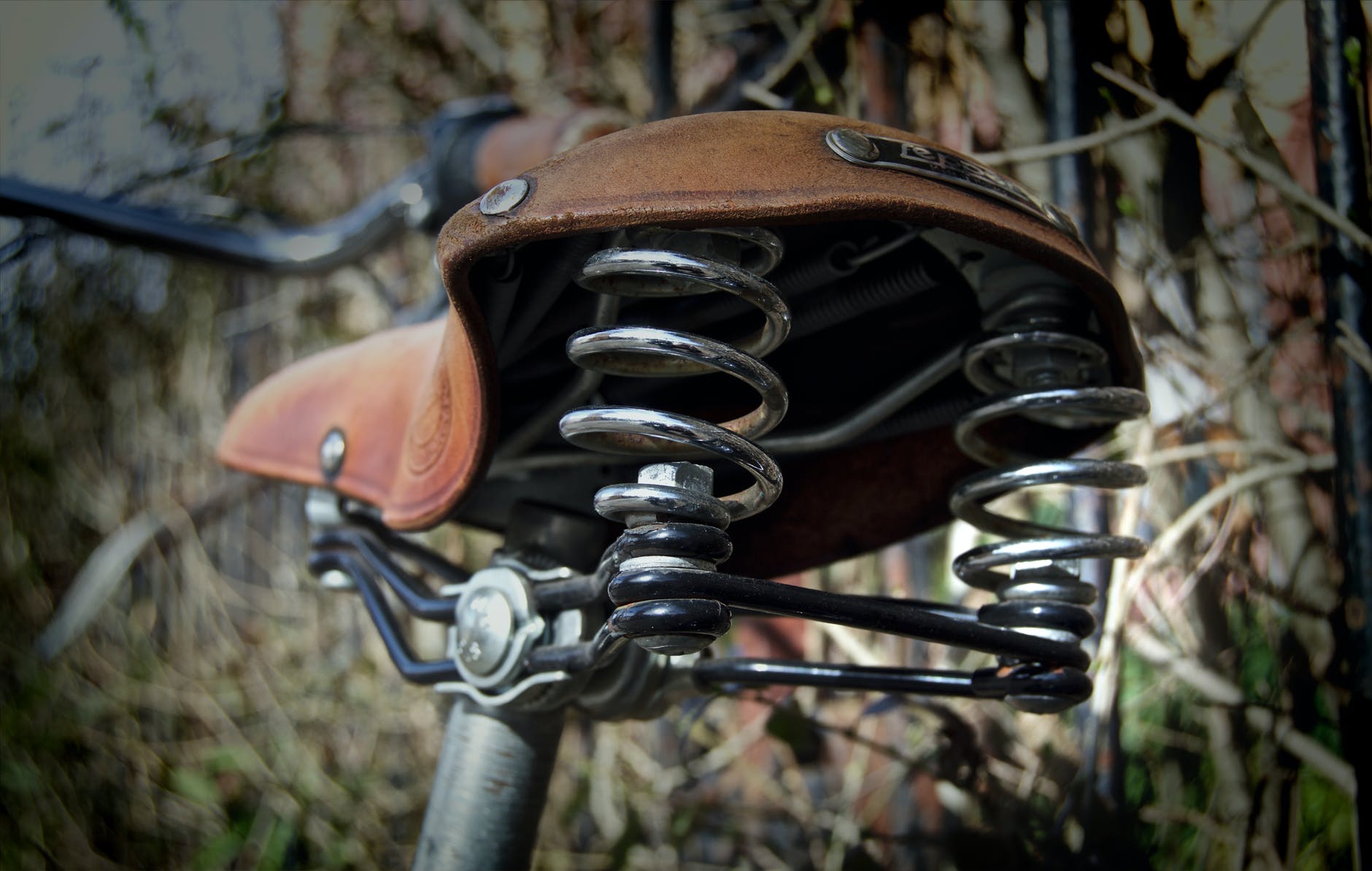
Their crossbows are a bit lighter. A siege engine powered by a Springwerk may be able to fell a Dragon. The energy trapped within the springs is grand. It may take days for the muls and hobs to get the springs set, but once they are the power can slowly release or go all at once.
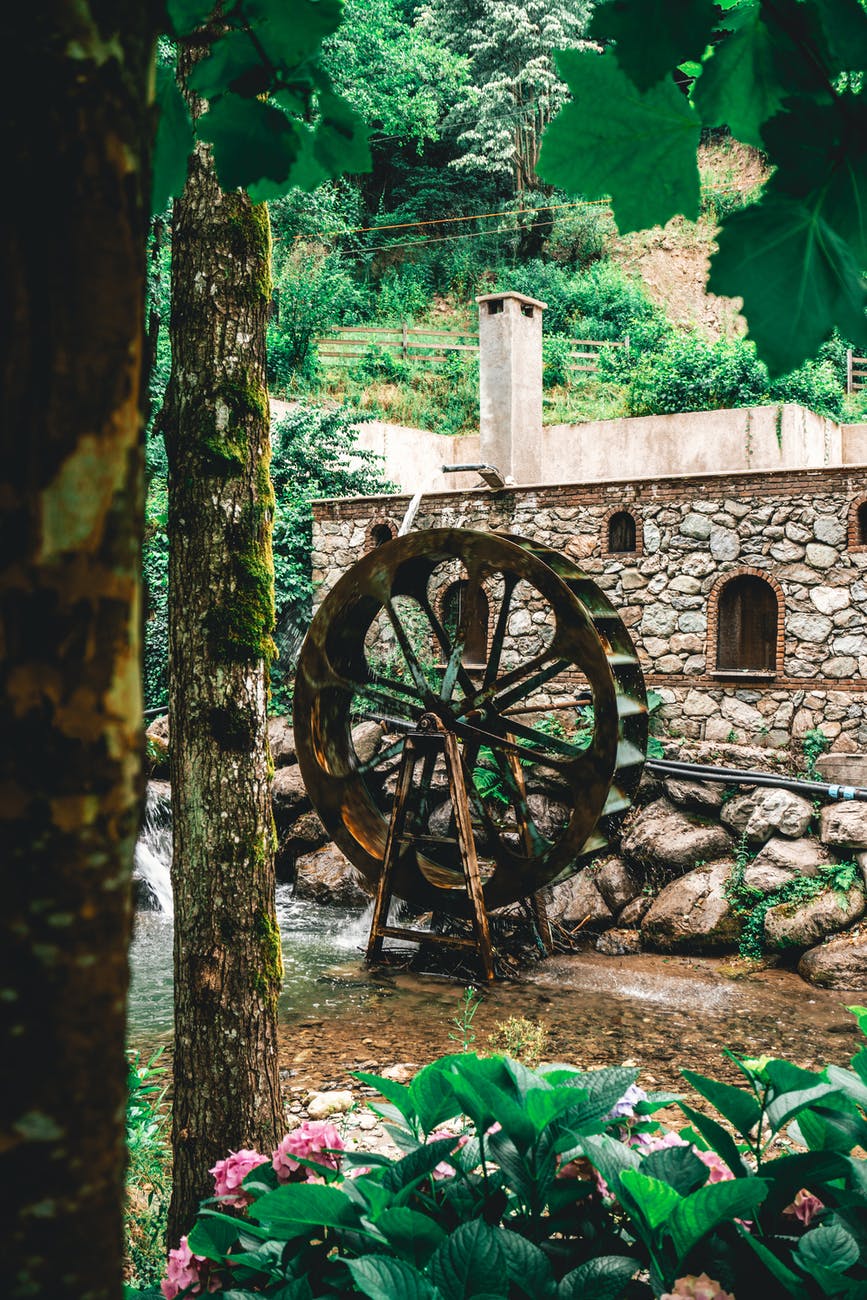
A good little friendly goblin introduced me to how the Alliance works. Our waterwheels are what they used a life of lifes ago. Now using either water or something called pneumatics the Alliance is two former competitors joined. Anything that flows can be trapped, contained, and utilized.
If you’ve been to Haystreet after DragonTree you’ll have seen the inn there with running water! There is an attached bath with a dryer!
Why do so many goblins stink of their tartek when the Alliance allows such great cleanliness? I know after a day at print (our newsletter has bids out to the League and Guild for help reducing prices for you our fair reader) I will use that bath of warm water.
At Carnival you’ve seen the Sparklers. They contain joy in their little packets. The Sisterhood is a group that takes that type of energy and applies it to more than just entertainment. The Alchems are busy foraging the rocks, vegetation, and even animal waste of our lands to find new ways to create violence. Their inventions are on par with many of the magicks of Dragons, in a way that can be taught and handed over.
This Sisterhood will not share their methods of creation. They make the Sparklers look like a newspaper since the Alchms refuse to be public in how they operate.
Also, they hate the Tarteks Federation. Supposedly these groups could be the unified, there’s some sort of familial break that has nothing to do with the teknology used.
You know the smell by know. Using their tar-trees the goblins have changed the air and water in Kirtin-on-the-Lake, maybe forever. They burn this sticky oil and create self-powered cycles, no pedaling needed. Like the Sisterhood, The Federation are reclusive.
This lack of information seems to be how the gobs keep their strength and respect. A combination of Tartek and Airxip work is what enabled the gobkon to cross the Teeth of Sheljar and, as they claim, return to their lands.
Those massive ships travel the air, floating above the rapids of rivers, the mountain passes, the brigands and bandits. Their ‘airxips’ are barely related to Daoud’s large galleons. Some of the airxips cannot even land in the waters of Kin! They must have towers or long rope ladders to interact with the grounds below.
Bladders may be filled with the works of Alchems, Tarteks, or even Airmatics. Each insists their techniques are best. This author does not know which is best. The xips and gliders of the Syndicate enable travel and connection to communities in ways that our horses cannot. Sheljar’s connection to Hagtown shouldn’t be possible. It is just uphill from us, but due to regular visits from the Syndicate it maintains a relationship to the Free City rather than Kirtin or Daoud as it was in the past.
These transports are stunning, if slow. I have booked a ride to go to Kirtin-in-the-Sky for the summer as my first test of what the Syndicate can do. Hopefully the stalemate between rebel, Daoud, Kirtin, and the Dragons will hold until after my report.
Additional reporting was provided by allies and sources within Hagtown, Sheljar, and Telse. Those sources will not be revealed.
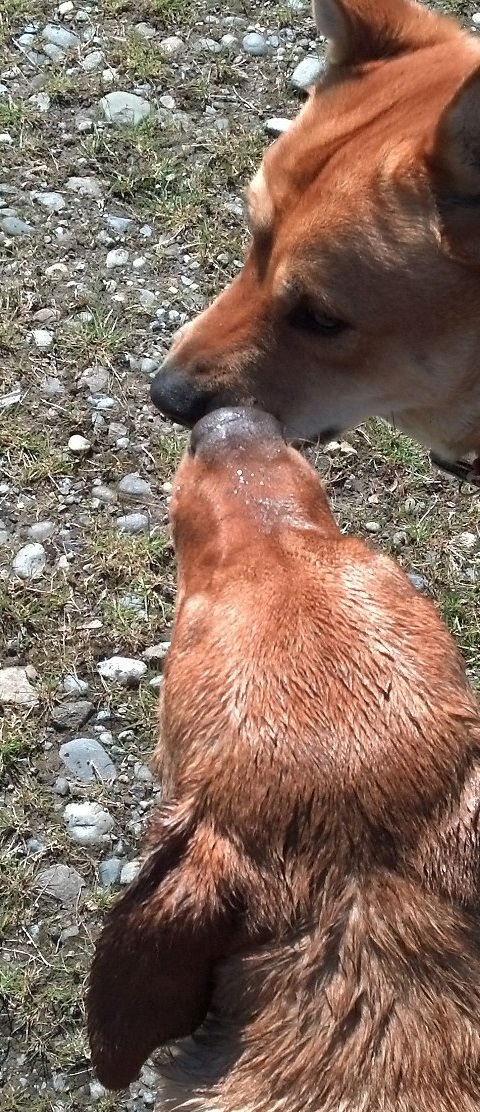
Animal Companions, or Bonded Companions, or a key element of life in Kin. The Kin are the people of friendship, loyalty of loving those around them. This extends towards their non-humanoid companions as well. Where an elf might group in a land where spells are used to do mundane things, in Kin when a goliath needs a bit of string to finish sewing they send their swallow off to do it, or their heron to fish. Halflings have dogs that pull, push, fetch, hunt, fish, carry, and many other tasks. Human bonds with goats, rams, dogs, birds and horses are quite common. Bonds of Kin are a very essence of life. Almost everyone has one.
This ruleset needs to do a few things.
Scale like cantrips, attacks and proficiency. The companion is expected to live alongside their friend for some time.
Build in a reason that having a Bond die is bad for the PC
Not destroy the action economy
As a bonus, can it be simplified for usage in gaming outside the World of Everflow?
Feat: Bonded Companion
Prerequisite: Wisdom of 13 or higher. Kin and Rangers ignore this prerequisite. This feat can be taken more than once.
You have an intense bond with a beast. These beasts cannot have a higher Intelligence than the character. In certain worlds the bonded companion can be a monstrosity. At this point I considered just granting access to the Bonded Companion system in a similar manner as to how Magic Initiate works, but instead built it within the Feat. The rule could be built by making Bonded Companion a Class Feature and Feat, but I digress. Taking the feat gives you Companion Points. You also gain companion points in the following manners;
Rangers at 1st, 3rd, 5th, 11th, and 17th levels
Druids at 1st and 5th level.
Clerics with the Nature domain at 1st level.
Your Wisdom modifier
Those points can be spent on a single companion or multiple companions. A character can bond with a number of Companions equal to their Wisdom modifier +1 (minimum 1). Each new companion takes a number of weeks to establish a bond as their cost in companion points. This can be done as downtime, or could be a solo adventure. A character may only spend new points when they take the feat or if they are a Ranger or Druid at their higher levels that earn Companion Points.
The following chart lists various Companions and their Companion Point cost.
One
Two
Three
Five
Seven
Ten
Herd dog
Sled Dog
Warhound *
Giant Eagle *&
Rhino &
Mammoth *&
Retriever
Mastiff *
Axebeak *&
Bison
Elephant *
Wyvern *&
Terrier
Bloodound
Ostrich &
Bear *&
Dire Wolf *&
Roc *&
Sentry Dog
Guard dog *
Elk &
Lion *&
Owlbear *&
Sprinter
Raven
Panther *&
Worg *&
Griffon *&
Heron
Eagle *&
Bear Cub *&
Hippogriff *&
Pegasus *&
Pigeon
Falcon *
Wolf *&
Peryton *&
Sparrow
Parrot
Tiger *&
Awakened Tree &
Pony/Mule
Draft Horse
Warhorse *
Fox
Riding Horse
Ape &
Goat/Sheep
Monkey
Awakened Shrub &
Cow
Legend: The ‘&’ is used to indicate an animal companion that can only be paired with a Ranger, Druid or Nature Cleric. They are normally wild. The ‘*’ is used to indicate animals that can enter combat on command.
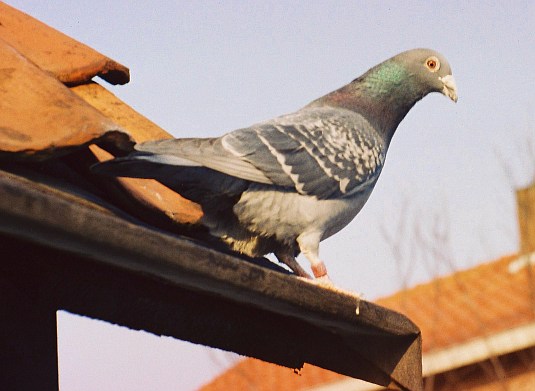
“Postduif” – Licensed under Public Domain via Wikimedia Commons
As a Bonus Action the Bonder can command their animal. These commands are Attack, Dash, Disengage, Dodge, or Help. An animal without a * can only attack if the Bonder passes a Wisdom (Animal Handling) DC: 20 check. The Companion will continue that action until the combat is complete or another Bonus Action is used (ie they will Attack the directed target until that target is no longer participating in the combat). Some Companions have other actions that can be taken (A Retriever can Fetch as an action). Check with your DM for these other actions.
When separated a Bonder and Companion that are on the same plane know the direction and rough travel time between them.
If someone tries to control a Companion it is an opposed Animal Handling check for the Bonder and whatever skill or spell is appropriate for the attempt to control the Companion. The duration of the control is per the appropriate spell or skill.
If a Companion dies the Bonder takes half their Companion’s hit points in psychic damage. If they make a Wisdom save (DC: 15) they then take one quarter of their Companion’s hit points in psychic damage.
Variant Rule in Kin: At first level and below halflings usually bond with canines and goliaths usually bond with avians. All Kin start with an additional Companion Point.
This archetype has been banging around my head for some time. The ability of words to inspire rebellion, to move nations, and to inspire people to be better is quite clear. Dungeons & Dragons kind of wraps this into the College of Whispers Bard, but that’s quite supernatural. The Rogue: Propagandist is mundane, based in historic examples such as Thomas Paine and Benjamin Franklin, as well as in certain versions of Assassin’s Creed.
The design intent is to empower more play in urban and/or political campaigns. This attempt, which is essentially version 1.5, uses new mechanic for the rogue, one that demonstrates that people who publicly advocate for rebellion are often known, but still effective. The Propagandist most powerful abilities are powered by their Sneak Attack dice. This seemed to fit better than making them weak Bards in an Arcane Trickster variant like the Society of Veil and Shadows.
Most of the lore description is removed from this pre-publication draft in order to focus on the mechanics, which are complex and new. The Swarm of Commoners and the Printing Press tool are just shells of what they will be in the future as well.
Rogue: Propagandist
Rebel and Pamphleteer
You rose from the underbelly of empire to demand a better life for all. Your pamphlets and speeches can inspire hope, or fear. Whether from the soapbox or via playbill your proclamations turn the tides of rebellion or keep a government in power.
Propagandist Features
Level
Ability
3rd
Wordsmith, Rabble Rousing
9th
Proclamations
13th
Grand Voice
17th
Master Essayist
Wordsmith
When you choose this archetype at 3rd level you gain proficiency with the Printing Press and a skill from the following list — History, Investigation, Insight, Deception, Persuasion, and/or Performance.
In addition you learn one language of your choice.
At 6th level you may choose the Printing Press for your expertise option.
Rabble Rousing
Your words inspire rebellion. You are able to summon a Swarm of Commoners. These commoners are allied with your cause, but are not willing to die for it. You spend an active Sneak Attack die for each use of this ability per short rest. The number of dice used determine how many Swarms you summon. Rabble Rousing takes a minimum 10 minutes to activate via speech, pamphlet, or other communication. The Swarm is summoned at a time and location where some commoners could be expected. The Swarm of Commoners has advantage on saves versus fear and are considered under the effects of the Charmed condition.
Proclamations
To issue a Proclamation you spend at least ten minutes creating a pamphlet, playbill, speech, cartoon, etc. These Proclamations grant bonuses to those who experience their call. Those bonuses are equal to the number of Sneak Attack dice spent at the time of proclamation (Proclamation Bonus). The Proclamations’ influence extends to a number of subjects determined by the proficiency bonus + ability score modifier in the skill or tool used to deliver the proclamation. The proclamation can be delivered via speech (Persuasion, Deception, Performance), pamphlet (Printing Press), or cartoon (Calligrapher’s Tools, Painter’s Tools). A tool would use Intelligence (i.e. a 9th level Propagandist with an INT of 14 issuing a Proclamation of Safe Haven via a pamphlet would grant 6 readers the benefits of Safe Haven).
Proclamations that require a save do so against a DC determined by 8 + Proficiency and Intelligence Bonus.
List of Proclamations
Unrest – A number of Swarm of Commoners determined by the spent Sneak Attack dice gain a Proclamation Bonus of temporary HPs and gain the same bonus to damage rolls. These Swarms will attack on the Propagandist’s initiative roll minus 10. The Proclamation inspires a rebellion.
Rally – Subjects regain hit points in the number of the spent Sneak Attack dice plus a Proclamation Bonus (ie. 2d6+6) as these Proclamations rebuild the morale of wounded forces.
Urgency – Subjects gain a Proclamation Bonus to their next initiative roll. Subjects are eager to join the fight.
Power – Subjects gain a Proclamation Bonus to their damage rolls during their next combat. Those attentive to the Proclamation recognize that they are powerful.
Warning – Subjects fall under the Frightened condition if they fail a Wisdom Save versus your Proclamation DC. They are wary of the forces working against them, afraid of any Swarm of Commoners and/or the Propagandist. They are overcome with this fear for one hour.
Safe Haven – Subjects are able to gain the benefits of a short rest via the calming words of the Proclamation.
Grand Voice
Beginning at 13th level your words can invigorate your allies. You can use a Reaction to have an ally reroll a failed Intelligence, Wisdom, or Charisma saving throw. You have a proficiency bonus number of uses of this ability per long rest.
At 17th level you may also remove one level of Exhaustion via your Grand Voice, as long as the level of Exhaustion is not level 5 or 6. You may only remove one level of Exhaustion per ally in this manner.
Master Essayist
The strength of your words lasts. At 17th level any of your Proclamations (except Safe Haven) issued using a Printing Press grant their benefits/disadvantages until the target takes a short rest.
Swarm. The swarm can occupy another creature’s space and vice versa. The swarm can move through any opening large enough for a Medium commoner. The swarm can’t regain hit points or gain temporary hit points except via Proclamations.
Actions
Club.Melee weapon attack: +4 to hit, Reach 5 ft., one target. Hit: 6 (3d4) bludgeoning damage. This attack assumes multiple commoners are attacking as one.
The Swarm of Commoners can be adjusted if made up of a single humanoid race. Usually their weapons are clubs, but in some cases they may all use a specific simple weapon.
Any ally of the Propagandist, or the Propagandist themselves, that attacks from within the Swarm of Commoners has advantage on their attacks. They may also use the Swarm for half-cover, attempt a Stealth/Deception check as a bonus action. Upon a success the individual within the Swarm of Commoners is considered invisible.
Printing Press (tool)
These are the necessary tools to create pamphlets, books, and playbills. The press itself is too large for adventuring, but you would still have ink, a sheaf of paper, scissors, a few letter blocks and one or two signet blocks.