Category: World of the Everflow

My homebrew world where tales of animal companionship, forgotten magic, and the question of who controls information are told.

  • The Everflow, a gift from the gods

    The Everflow, a gift from the gods

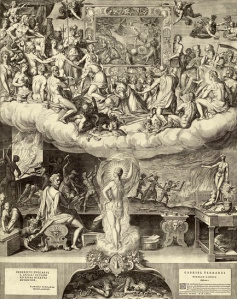
    The Font of Two Paths, the Two-Headed Spring, Pool of Life, Lake of Wonder — the Everflow. This supernatural gift from Quar is the result of the last action of gods who turned their backs on Kin. The Lake of Wonder has two exits, a thing that shouldn’t ever, ever happen when making maps. This wasn’t because of Quar, but instead due to the people who wanted to spread these waters as far as possible. The Font of Two Paths is as much a study of Quar as it is of the ingenuity of his church.

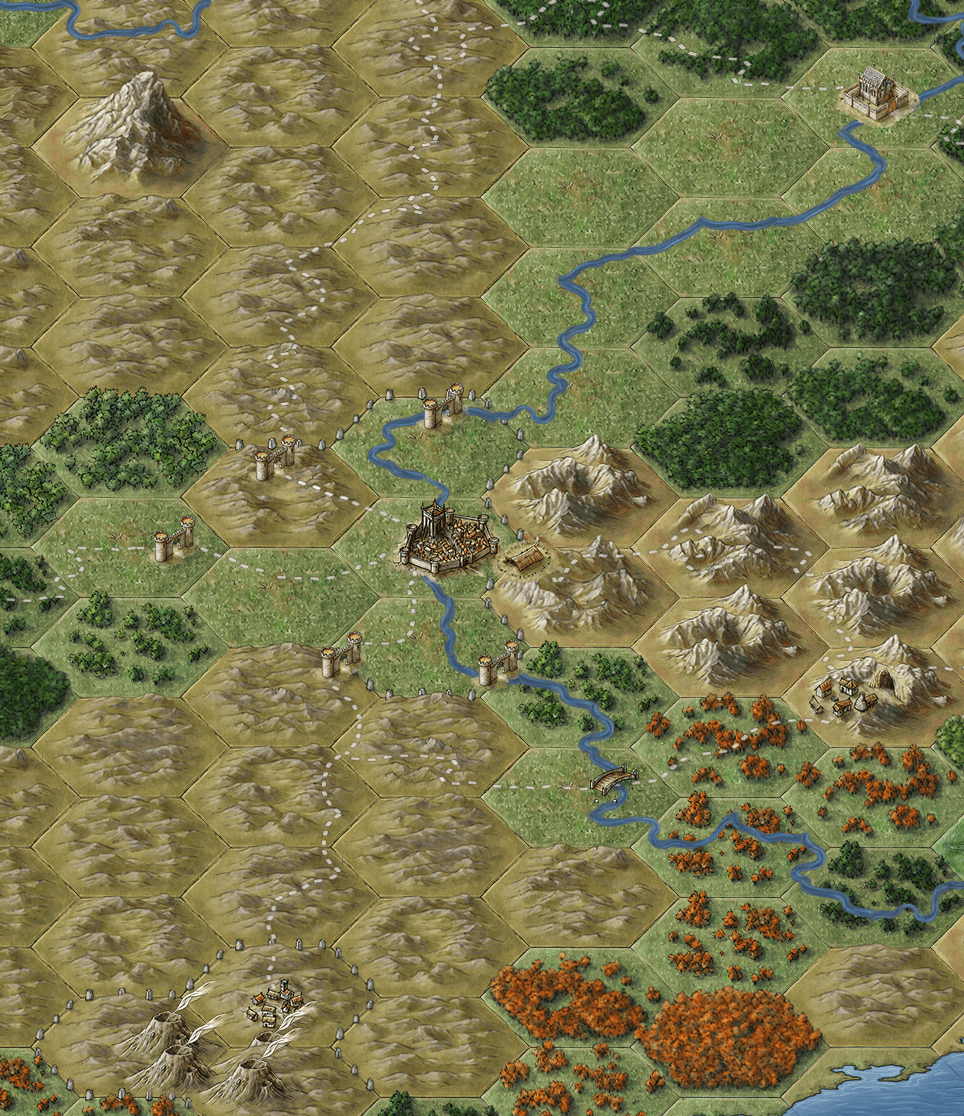
    Telse and its immediate surroundings.
    Map developed using the beta of Hex All Things by Fantastic Maps

    In the land of Kin the time of creation of the Everflow started one of the popular calendars. This day is known, only due to the Church of Quar (in actuality it is the date when the first Bishop took the Church from religion to merchant guild and non-national power).

    The modern era, 21-26 Post Awakening (PA), the Everflow has a few mechanical benefits. This is true in a world where common magic is merely cantrips and the kinship between beasts. A vial of Everflow, attainable in many markets in Telse and through the rest of Kin only at the Church of Quar, works as three uses of a Potion of Healing. In this world it takes only a Bonus Action to consume a use. Taking all three at once is an Action, and also removes a level of Exhaustion. Again, magic is quite rare, so this healing power has created the potency and power of the Church, which profits off of controlling the Source.

    This post is an entry in the Blog Carnival, a group of blogs who share content inspired by the same prompt for a month. This month’s host is Sea of Stars.

    Make up new items or stat up those from myth, describe places where lost items can be found or quests set by the gods for those who wish to “borrow” item for an important task, what artifacts would your campaign villain seek?  What is the craftsman of the gods working on?

    The Third Celestial Armory is their own entry into the Blog Carnival.

    When the Western Wildes were controlled by the Empire of Sheljar the Church’s influence was so strong that Telse remained a mostly-independent city, though the defenses of Telse and Upper Telse were provided by Sheljar as the mighty empire controlled all lands around the lake town.

    This power dynamic shifted at the Fall of Sheljar. As the Necromancer took power in the bog city the other cities in the west earned their freedoms, for the most part.

    Telse, Mira, Qin and the other cities near the Everflow and its two rivers.
    • Sheljar then sat empty as people fled the Tunneling Nightmares and the Night Peoples.
    • Mira is a port city in the north, with some influence over Fort Ooshar.
    • Qin is the city of guilds in the south.
    • The Ferments are a region of hot springs, alcohol, homesteads, and vibrant independence.
    • Bell’an’aur is the community of mines and glass blowing.

    But Telse and Upper Telse remain influential. Bishop Ollium maintains power through the wealth of the church — both in the masses of gold and the healing powers of the Everflow. His church-shops are scattered in all kingdoms (Crinth, Azsel, Kirtin, Daoud, and even Mehmd in the dry east). Though smaller than Qin and Mira, Telse’s gift from the gods, an everflowing fountain of healing water that fills a lake with large locks controlling outflow towards both Mira and Qin.

    This gift changed the world. Due to the corruption inherent in the People of Love (humans, halflings, goliaths — the Kin) a gift of healing created a church more powerful than nations, able to control who lives and dies, able to topple dynasties.

    In times legendary, Quar expected his gift to be a lasting connection created through generous health, as the Font never runs dry everyone would benefit. The flawed god of life did not expect the flaws of man to control this ability.

    Other worlds may have mighty boons from the divine that shake the land, or summon kaiju, or protect cities. In the World of the Everflow the minor gift of healing created a non-national empire, a form of currency, and a town that now has a large refugee populace fleeing the Fall of Sheljar or the cursed magicks now entering the Western Wildes — and dragons.

    No matter how large or small an artifact of the gods is it will change your world. The Waters of the Everflow did so much more than a god intended.

  • Creating a new world

    Creating a new world

    It comes with just a single question. What if? What if I started a new blog? What if we talked about fantasy fiction? What if the stories told coincided with a role-playing game? What if I set myself back two decades and cracked open Dungeons & Dragons again?

    bard-dave
    Every storyteller needs their tools – a good mug, a notebook (or netbook), a satchel for tokens and memories and a block of cheese maybe some sausage, and a trusty sword.

    What if the themes were strong adult subject matter that made for gritty tales of life, death and heroism? What if magic was real? And the gods could talk, but then they stopped?

    What if the continents were small, the peoples plentiful and not all human? What if humans didn’t believe in magic because it had disappeared in the only continent they know? How about making it so they are defined more by their cultures than by their phenotype?

    Have they stopped believing in themselves, in their gods? Do they see good and evil? How?

    Is there slavery? Why? Is there nobility? Can someone be both?

    These questions and the cascade of answers start to form more questions. It’s a nearly infinite series of responses. World building, particularly the creation of a world that breathes, is hard. Crafting a world-space that can withstand episodic gaming is harder.

    Take chunks at a time. That’s what Full Moon Storytelling will be. Small chunks of content for use in a campaign setting, built around a custom set of rules adapted from 5th edition D&D, but with accompanying tales. If the setting says “The Necromancer is just someone trying to be good” there will be a story that explains how that happened.

    As The Worthing Saga took a novella and broke out portions into branch stories, Full Moon Storytelling takes a campaign setting, rule set and crafts micro-fiction, short stories, plotless narrations and episodic adventures within the World of the Everflow.

    Maybe that’s where we start, not with a character, but with a story about a fountain that flows from a cliff and diverts along two paths – the Font of Two Paths, the Two-Headed Spring, Pool of Life, Lake of Wonder. The Everflow influences the western peninsula of Kin, is clearly unnatural and …

    This is Full Moon Storytelling. It’s a way to share writing, writing process and to think aloud, while words spring forth from tiny digits. Things will happen live, in front of you. Process will be as important as output. Creation is play. Come, join me at this fire under a full moon with clear sky as we look up through trees staring towards the open world of wonder, knowing that behind those trees at your back is whatever reality you can imagine.

    Fediverse Reactions
  • Passive-Only Skills

    Passive-Only Skills

    This may help you understand Passive Perception, Passive Investigation, and Passive Insight. The potential for making Passive versions of all of these the default is something I’m still considering.

    thinkdm's avatarThinkDM

    We’ve previously explored where to draw the line between passive and active skills. Today, we’re taking that analysis one step further: Are there skills which should only function as passive skills?

    Perception

    Passive perception is the most prevalent passive skill in the rules. This makes sense. It’s something that you can’t stop doing without impairment.

    So, it’s definitely passive. But, when does it become active? We can think of all sorts of examples:

    • Squinting or shading your eyes to see through glaring light.
    • Cupping your hand to your ear to listen for noise.
    • Closing your eyes to savor a tasty morsel.
    • Drawing a deep breath to discern a scent.

    These techniques allow us to focus our perception specifically. But, we already have a word for actively using our senses to deduce information. It’s called investigation.

    Perception and investigation are the passive and active sides of the same coin. They’re…

    View original post 542 more words

  • Gifts of the Gods, divine artifacts, beginning the RPG Blog Carnival

    My RPG Carnival post will be about the Lorebooks and Font of the Everflow, the items which combined to shift the Land of Kin from some more typical fantasy worlds.

    seaofstarsrpg's avatarSea of Stars RPG Design Journal

    Is all right in the heavens?Welcome to the RPG Blog Carnival for the Month of February, 2021, on the theme of Gifts of the Gods, divine artifacts,

    Such items figure in highly legends such as:

    • The Aegis of Athena, the shield that protects her (and indirectly the Olympians).
    • Mjölnir, the hammer of Thor, popularized in the Marvel comics and movies.
    • The Yata no Kagami (the sacred mirror) of Japanese legend.
    • And in fiction with such items as Stormbringer, the soul-drinking demonic sword and tool of the gods of Chaos.

    A small number of such items, the thunderbolts used by Zeus, are mass produced.

    So, let your imagination run wild!  Make up new items or stat up those from myth, describe places where lost items can be found or quests set by the gods for those who wish to “borrow” item for an important task, what artifacts would your campaign villain seek? …

    View original post 200 more words

  • Taien Sahul – the ripper lizard

    Taien Sahul – the ripper lizard

    Out in the lands of Mehmd mammals and avians are rare. Many of the ecological and domestic niches are instead filled by lizards, amphibians and dinosaur-like creatures. The Taien Sahul are small saurs based on the Velociraptor by Sam Stockdale at ENWorld.

    In Mehmd they tend to roam the wilderness, though certain tribes of Unkempt in the South and the Isles use them as companions. When free they roam in packs of 9 or so (3d6). Their Pounce needs quite a distance in order to be used, but when the commit they tend to rush prey quickly. Taien Sahul can survive in deserts, having advantage on CON checks to deal with dehydration.

    Photo by Innermost Limits on Pexels.com

    Taien Sahul – the ripper lizard
    Small beast, unaligned

    Armor Class 13 (natural)
    Hit Points 3 (1d6)
    Speed 45 ft., climb 10 ft.

    STR 7 (–2)
    DEX 15 (+2)
    CON 10 (+0)
    INT 3 (–4)
    WIS 14 (+2)
    CHA 7 (–2)

    Skills Perception +4, Stealth +4
    Senses passive Perception 14
    Languages —
    Challenge: ½ CR 50 xp

    Keen Sight: The raptor has advantage on sight-based Perception (WIS) checks.
    Pounce: If the raptor moves at least 30 feet straight toward a target and then hits with a claw attack on the same turn, that target must succeed on a DC 10 Strength saving throw or be knocked prone. If a target is prone, the raptor can make one bite attack against it as a bonus action.
    Pack Tactics: The raptor has advantage on an attack roll against a target if at least one of the raptor’s allies is within 5 feet of the target and isn’t incapacitated.

    ACTIONS
    Multiattack: The raptor makes two melee attacks, usually using both claws unless they’ve pounced.
    Bite: Melee Weapon Attack: +4 to hit, reach 5 ft., one target. Hit: 1d4+2 piercing damage.
    Claws: Melee Weapon Attack: +4 to hit, reach 5 ft., one target. Hit: 1d4+2 slashing damage.

  • Tips about naming your characters

    Tips about naming your characters

    Naming characters can be hard. For a DM coming up with names at the spur of the moment can lead to a stoppage in play as their mind struggles to find something appropriate for the NPC that was supposed to be a background character, but your players have thrust that individual into a major role.

    For most players, naming a character is a rare event. It is usually the first or last thing that they do. Then, it’s over until the next campaign starts. Still, you want to get the proper name for your character, because you will carry it with you for a long time*.

    *strong exceptions for rogues, criminals, urchins, and the like.

    As someone who both creates way too many PCs, and once named a formerly non-notable NPC “Anderson” after the car dealer across the street from the restaurant hosting our session I’ve developed a few tricks to naming characters.

    Easy Button

    Those of you using DnDBeyond.com probably already know this, but the Fantasy Name Generator has well over 100 different naming categories. Click the category and it will spit out ten names. Simple is as simple does. Sometimes you’ll hit those buttons a dozen times to get the one you like.

    Xanathar’s Guide to Everything

    All the way back in November of 2017 Wizards of the Coast released Xanathar’s Guide to Everything. The book is most well known for being the first official significant expansion of character classes in 5th edition. Those people into optimization ranted against the inclusion of almost 20 pages of names.

    Frankly, it was a poor critique.

    There are so many more people picking up the game every day, every month, every year. They don’t have the knowledge base that stretches back editions. They may not want unofficial sources for fantasy names.

    Xanathar’s includes official lists of fantasy names as well as dozens of real cultures that are often captured within your gaming table. This section is one of the forgotten joys of Xanathar’s Guide to Everything. Cracking the book open to those sections should help inspire your next character’s name.

    Use Athletes for Inspiration

    After working in sports for nearly 15 years, there should be little surprise that they become part of my gaming paradigm. There’s a reason that Sports as a Tool exists in my worlds.

    Sports, particularly Olympic sports and soccer/football, are an excellent way to discover wonderful inspiration for names. Just look at the recent MLS SuperDraft.

    Mitch Guitar was drafted. Who doesn’t want to make a Bard called Mith Lyre now?

    Sondre Norheim was drafted. Could that be your next dwarf named after a powerful elven king? Yes.

    Real people and cultures can inspire your name. Honor those peoples through the name of your character.

    To discover new names head to a reference website covering a sport with international play. Click on a league outside of the mainstream, click a team at random, and combine a two-four players’ names. Drop a couple letters, or add a few. Research those players because their lives can help inspire you the same way that reading Tolkien can inspire you.

    Sports Reference, Soccerway, and Transfermarkt are my favorite places to do this.

    As a DM, I try to have a small selection of NPCs already made up ahead of a session. These index card sized characters are there because my players will always surprise me. Most of their names have come from various athletes around the world. Some will be consistent within a certain set of cultures, while others recognize that the fantasy worlds in which we play are generally as interconnected as the modern world in which we live.

    Your naming conventions should embrace the fact that the peoples travel extensively.

    How do you name your characters?

  • DC 0 Checks

    DC 0 Checks

    While DMing I’ve used the concept of progressive checks for rolls over the listed DC, but the concept from Think DM takes it even further – start with a DC ZERO and add info the better your players roll. This adds more flexibility to the game, but does require more effort from Dungeon Masters.

    thinkdm's avatarThinkDM

    As a matter of adventure design (or when improvising as a DM), you shouldn’t lock mission-critical information behind a skill check. Because if the characters fail the check, the plot line is dead.

    But, the solution isn’t to get rid of skill checks.

    The solution is DC 0 checks.

    “Isn’t that basically just telling them the information?”

    Yes, but we don’t stop there.

    Progressive Skill Checks

    The idea is to move away from binary skill checks to a progressive resolution system. So, you still have a check to discover mission critical information. But, the DC to learn the stuff you need to know is set at zero.

    As you roll progressively higher, you learn additional information that isn’t necessary, but helpful. You probably could have found out that extra information eventually with your DC 0 clue, but rolling better lets you take shortcuts by applying more intuition or conducting a…

    View original post 335 more words

  • Queen and Konstruct: A Goblin’s Lyfe

    Queen and Konstruct: A Goblin’s Lyfe

    There are two important things in a goblin’s lyfe. I’m talking about all of us, the gobkon, the hobkon, the mulkon — all of us — our relationship to the Queen and our Guild. This is hard for you humans, with all your divergent nations and cities and faiths and disgusting menagerie animals to understand.

    Goblin
    By creanita design und ausführung by nina saner (CC BY-SA 2.0)

    I’m a printer, part of the Ratxet Guild. My engines run on the power of muls (best!) or whoever else I can hire. The clockwerks give that comforting noise as sheaf and stamp press against each other leaving words behind.

    We’re into gears, mostly. But also some other interesting clockwerks. Frankly, we do better with springs than the Union does. Sure, they’ve the Queens’ Stamp – so we cannot sell to others. In our builds we don’t buy from the Union anymore.

    My first engine was a climbing device. Lean it up against a feral tar-tree and you’ll be able to get to the top on a platform to work that tree with nary your own effort. It was a tough build, because I needed it to be strong enough for a hob. Without a brother there were no hobs to help me. Sis rode atop my shoulders during the entire testing phase.

    At Test it showed a new mechanic for the tar-tree. A Baroness blessed the family via flag and decree. Mother’s standing improved, and the full family took on that glory.

    Now, sister is part of the Airxip Syndicate. They’re relatively new. Taking our bike-props and bladders from the Sisterhood, and the Federation’s tar stacks, the Syndicate built those awesome airxips. I don’t understand her werk. There’s something about steampipes. She’s done well for mother. Her flags came from a Countess, one for her and one for mother. Blerxa left on the First Flight with me.

    I’m Phatha Phioxa Baroness-flagged of the Guild. Sis is Blerxa Phioxa First-Countess Flagged and Many Unfurled of the Syndicate.

    We are what we build and how much the Ladies, may they serve the Queen, reward us for our werks.

    A few more daughters like us and mother could be a Lady. If Blerxa and I hadn’t left for the untamed lands of the Kin Blerx may have earned mother the knighting on her own.

    Our werks are trapped from knowing since we are far from Queen, so I expect mother to have a few more gobkon. Maybe I’ll find out if I go back, not until after I figure out how to use the power of horses in my next werk. They smell, but they are even stronger than mulgobs.

  • Thunder Monkeys and Other Remarkable Beasts for Your D&D Campaign

    Thunder Monkeys and Other Remarkable Beasts for Your D&D Campaign

    How magic interacts with the world is often a defining space in Dungeons & Dragons. In the Forgotten Realms magic, whether arcane or divine, exists as 5th edition defines it. In Eberron magic is instead something that is common, fueling the themes of steampunk and noir with orcs and elves. Dark Sun goes the opposite direction. Magic there is not just limited. Magic continues the ecological disaster that mars the world.

    In the World of the Everflow magic burst forth onto the world in two awakenings. The first, explored mostly through short fiction and table narration gave the Kin (People of Love) a single cantrip, all of them. The second awakening brought the ability to cast spells to certain Kin and saw the return of the Ken (People of Knowledge) and Kon (People of Technology) to the shores of the Six Kingdoms.

    As my worldspace, and the associated tales continuing to develop, the thought popped into my head “What happened to the animals during the Awakening?” Throughout known time the Kin were always bonded with companions (initial rules). With the bond between beast and person so strong, did some beasts get small magics?

    The answer is yes.

    And so the Thunder Monkey became a reality in the World of the Everflow.

    Photo by Arindam Raha on Pexels.com

    The mechanics are fairly simple. The Thunder Monkey can cast Thunderclap once per short rest. They can also use the first bullet point from Thaumaturgy at will. All other stats are like the basic version of a baboon with minor tweaks that you feel are appropriate. This spectacular beast is rare within the Six Kingdoms, mostly found in Douad, a Mediterranean feeling space.

    A character, player or non-player, with a Thunder Monkey becomes more notable and memorable.

    Combining mundane beasts with other cantrips can lead to other fun combinations.

    • Lightning Lure Bugs are giant wasps without a stinger, but instead the ability to cast Lightning Lure and Dancing Lights making them useful in a conflict or able to help light the darkness.
    • Flapping Foxes are fennec foxes that cast Gust with the breeze originating from their big ears.
    • Pointers are tracking dogs able to cast True Strike as they direct their companion where the target is.
    • Slinging Spiners are porcupines that cast Sword Burst flinging more spines than their body carries.
    • Fixin’ Friends are spiders that cast Mending, using their silk to fix what is broken.
    • Tidings Birds are pigeons with the ability to cast Encode Thoughts, carrying messages throughout the town.
    • Savage Mousers are housecats with the ability to cast Primal Savagery, their normal painful non-damaging bites now capable of felling a threat.

    These remarkable companions are practically limitless. The damage dealing cantrips (probably Guidance and True Strike as well) at just 1 per short rest will not create any sort of imbalance on any world. Others can be more frequent, likely at 2 or 3 ties a short rest, so that they are used but do not overshadow the players.

    Every cantrip and every beast is an opportunity to expand the stories you are telling through the use of magic. This expands the 1,000 times a thousands tales available at the table.

    What will be the first remarkable beast your character meets?

    Fediverse Reactions
  • Five Shops along Moonset Street

    What I like about this is the density of the shops and how they share spaces, as well as the alley. Dyson Logos did an interesting mix of spaces with this.

    Dyson Logos's avatarDyson's Dodecahedron

    Five Shops

    Here we have a collection of five mercantile businesses along the south side of Moonset Street. These are fairly traditional business designs – in most cases there is no access to the interior of the business for shoppers and they instead interact through the long shop windows.

    Moonset Street Shops Moonset Street Shops

    From left to right we have:

    • First Building – Front – Cloth Shop
      • This shop mostly deals in lengths and bolts of cloth, imported and domestic. They also provide some dressmaking and tailoring services (the workshops being in the rooms behind the shop, one sharing space with the owner’s bedroom).
    • First Building – Back – Trinkets & Jewelry
      • This shop actually has a “shopping space” within the building (so that people can examine the wares without taking them outside) including a small showroom and counters where work is done as well as sales. The back rooms include a workshop and…

    View original post 313 more words