Category: Playing D&D

Custom Backgrounds, classes, advice and more about Dungeons & Dragons

  • Measuring long distances in D&D – time matters

    Measuring long distances in D&D – time matters

    Distances in the modern world are measured quite accurately. Whether you use Google Maps (or whatever your favorite similar app is) or even just wayfinding markers, much of the inhabited world is known. The distance from place to place is precise. But when you’re wandering the wilderness your characters do not need that level of precision, nor would they have it.
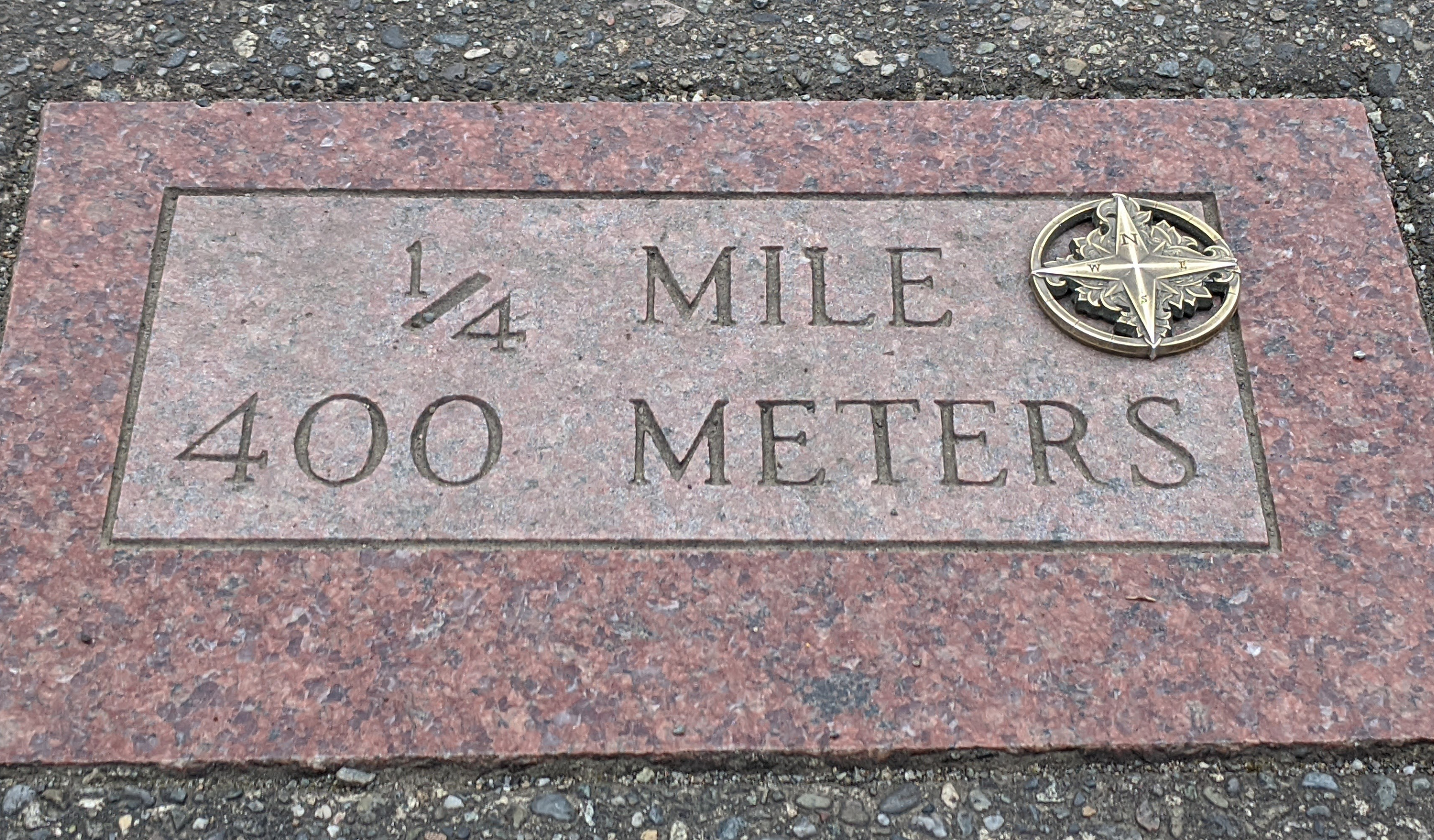
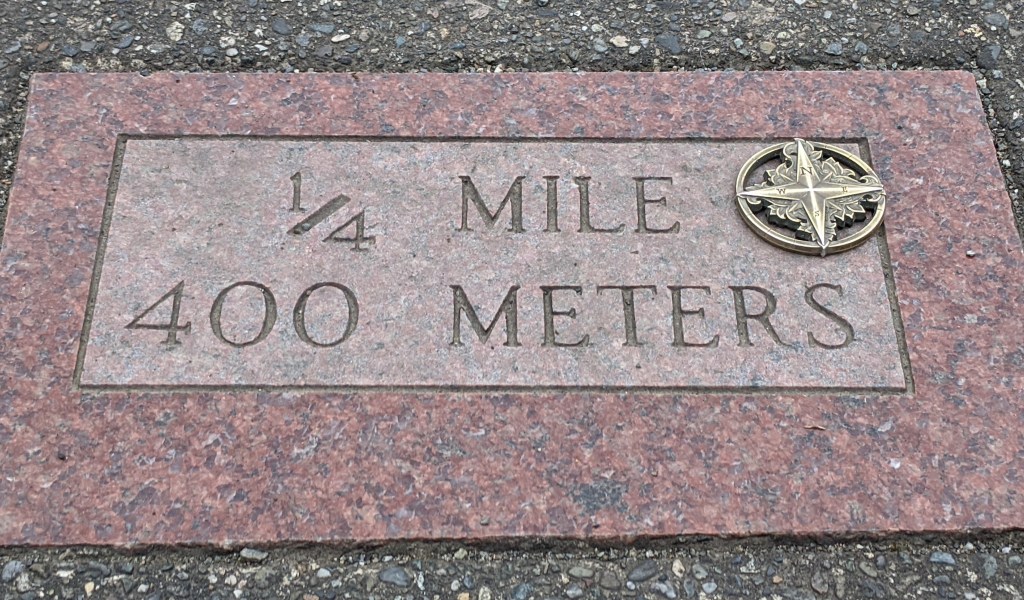
    A sign indicating a distance of 1/4 mile or 400 meters from the last marker.

    Miles, why?

    A mile originated as 1000 paces of road and marked off by an ancient fallen empire. It later gets corrupted by locals to mean dozens of dozens of slightly different things. They only make sense in a world where there was a unitary fallen empire that had a vast majority of its residents be of the medium races.

    This makes sense in some fantasy worlds, but not many. A single cohesive empire within the primary region is a story that is sometimes told, but only those that marched soldiers would use a mile.

    Now, for players, rather than characters, the mile has the advantage of being what Americans use for distance, and the majority of Dungeons and Dragons players are Americans. It’s a handy shorthand for distance.

    It remains though a measure of distance with an accuracy that is meaningless. It does not matter if the next village/cave/castle/dragon is 7.2 miles away.

    Immersive Travel Distances

    What matters is “how long does it take to get there?“

    That’s what characters need to know. Thereby that’s what DMs need to know. Travel time is the key. How many encounters (social, exploration, or combat) will happen during the journey. Do the characters need to stock up on supplies? Do they need to find a cart or mount due to the distance? Do they need to hurry?

    So throw out the mile. It’s unnecessarily precise for your game. Just like the number of minutes you travel don’t matter in the majority of your sessions. Abilities that impact travel are measured in time, not mileage.

    Replace miles with a measure of distance that relates to what the characters know. Make it simple enough that your players know what it is as well.

    Introducing the League

    Borrow from the league. This is a great measure to use in your game world. Yes, it’s also based in that ancient empire. In this case it was the marching distance that a soldier could travel on a road in an hour. It works out to basically 3 miles, which is extra handy, because that’s the number of miles that D&D says a human character travels in an hour.

    This means you do not need to convert any of your maps that display mileage. Just divide it by 3 and you know how many leagues separate the two locations – easy.

    Throw in some variants similar to Welsh measures of distance with the short yoke, the lateral yoke, and the long yoke, and you can capture the nature of travel by shorter races, pony/dog/donkey, horse. These slightly different names help with immersion because in D&D there are essentially four different speeds that matter.

    Photo by Anugrah Lohiya on Pexels.com

    Travel Distances Chart

    Race, Creature, or VehicleCombat SpeedHourDay
    Halfling, Gnome, Kobold, Goblin25′ or 5 pacesShort League (2.5 miles)Short Journ’ or A Daylong (20 miles)
    Human, Elf, Dwarf30′ or 6 pacesStandard League (3 miles)Daylong Journey (24 miles)
    Cart, Dog, Pony40′ or 8 pacesLateral League (4 miles)Daylong (28 miles)*
    Horses60′ or 12 pacesLong League (6 miles)Long Journey (36 miles)*
    *animals don’t like being ridden for quite as long as humans like to march.

    Introducing the Daylong Journey

    That last column is another measurement that matters – the day. In a given adventuring day a party should take two rests and a long rest. They could do those overnight or during the daylight, depending on the party makeup and whether there is a need to hide from baddies.

    Take those rests whether or not there is combat. The fact of the matter is that when people or horses march of hours and hours and hours they need to rest. There’s even a mechanic for forced marches (pg 181 of the PHB) if you want to avoid those rests and push through. Those groups run the risk of exhaustion.

    There is no historic English word for a daylong journey, so just call it a daylong journey in Common. But also recognize that some societies might abbreviate it. The common perception of halflings in most fantasy worlds might call it a Joun’ or just a Daylong. Those cultures that use carts or dogs or ponies might not use a different word. They just know they travel a tiny bit faster, but not a lot faster than humans.

    You can still use the page 182 PHB chart about Fast or Slow travel too. Fast travel is 33% faster than normal travel and harms your passive traits like Perception and/or Survival for tracking. Slow travel is 33% increase in time spent travelling, but you can use Stealth for the group (as a reminder a group check means each player rolls for success and if 50% or more succeed the group succeeds).


    To Sum Up

    • Don’t get caught up in granularity.
    • You’re going on an adventure, not a trip to the grocery store.
    • Do use measurements that your characters care about – a league and daylong journey.
    • Use a system that most of your group likes, which could still be the boring mile.
  • Your D&D characters should have hobbies

    Your D&D characters should have hobbies

    The mechanics of Dungeons & Dragons don’t force you to choose a pastime or hobby. Outside of Bards and the various Backgrounds that include entertainment and arts there is no obligation or hint that a character should do things besides fight, interact socially to solve or cause problems, or explore a wildernesses and dungeons.

    With a limited number of skills and tools you might weaken your character if you take something without a direct impact on their ability to perform as an asset in the adventuring party – so what?

    Be a tiny bit weaker and add something that your character enjoys doing that has nothing to do with defeating dragons or wandering dungeons. In the real world in the eras upon which D&D reflects, this was common. Commoners worked less than we do in the modern era.

    There’s a reason that there are giant stadiums more than a 1,000 years old scattered around the world.

    Various MesoAmerican Ballgames stretching through modern Central America, the Caribbean, and even into Arizona. Sports were commonplace in the eras that inspire many Dungeons & Dragons worlds. That’s why you should add them to your world.

    But it’s more than just sports.

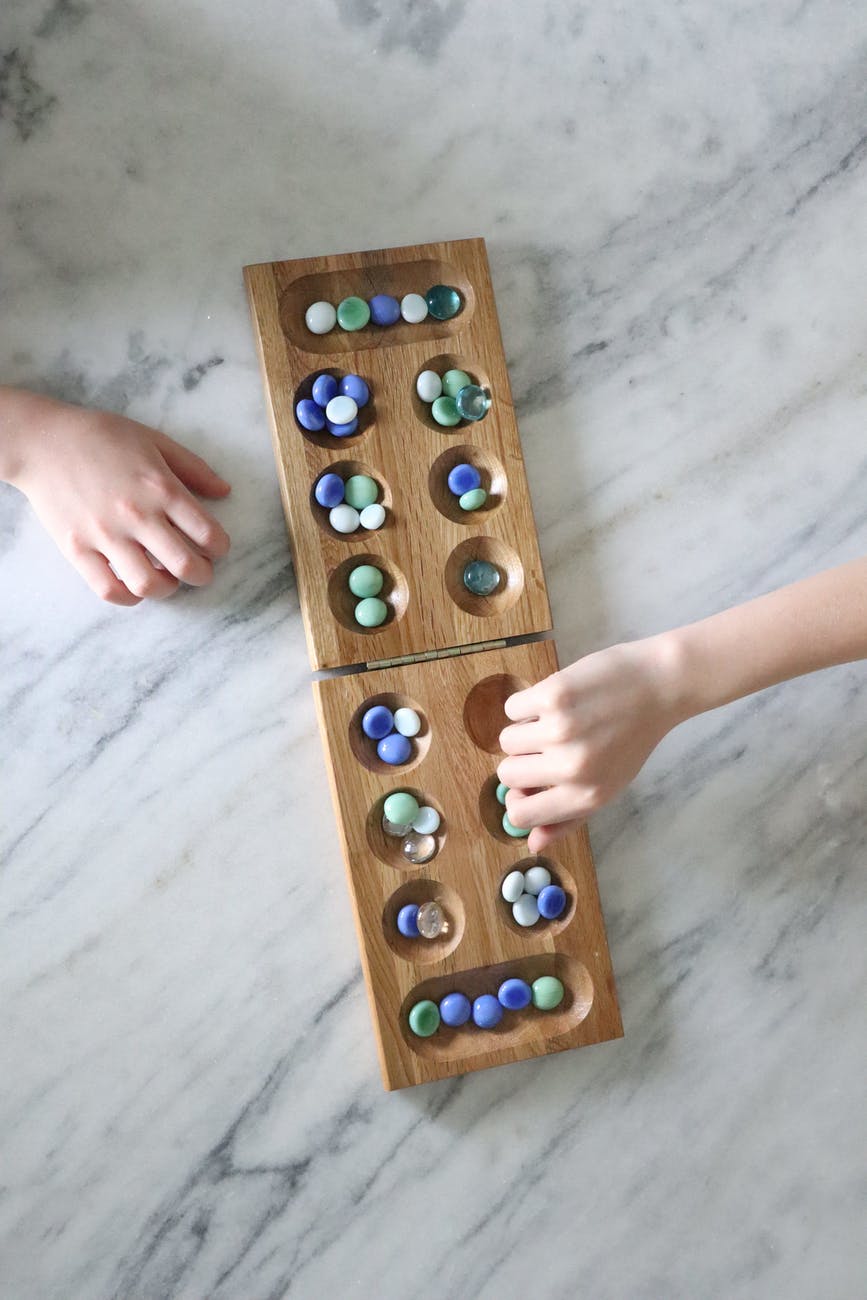
    Look at games like draughts, chess, mancala, 9-man morris, hnefatafl, and others lost to history. People had time. They did things with that time that they enjoyed.

    They sang songs. Told tales. Wrote dumb epic poems that we still read.

    So what does your character do when they aren’t living their life and when they aren’t dungeoning or dragoning?

    Burn a tool or skill on this – or don’t! – maybe they enjoy doing something that they are bad at.

    Maybe your next PC or NPC is the world’s best tafl player, or the local community’s worst singer. Maybe they make little sweaters for the elves that aren’t actually elves, and then they meet real elves. Maybe they are the old man that talks story to the children of his town.

    These elements may show in just a sentence or two in a given gaming session. That’s okay. It’s part of who they are and what they do, even if a d20 isn’t involved.

  • Remarkable Drudge – work hard, play hard with this new Fantastic & Empowered Background v 2

    Remarkable Drudge – work hard, play hard with this new Fantastic & Empowered Background v 2

    Backgrounds offer so much space to establish who you character was before they entered the stress and conflict of adventuring life. The combination of skill selection, tools, languages, equipment, and personality are a story unto themselves. Jim the Fighter and Nancy the Fighter are similar because of what they do now, but they are also different because of what they did then. Jim was a Noble, raised among the upper class — prim and proper. Nancy was an Urchin, raised on the streets she could sneak among crowds to avoid fights, usually.

    And unlike classes, there’s still a lot of uncovered ground. Many tales of what your hero was aren’t encapsulated in the current official backgrounds. The common laborer – the fence builder, the ditch digger, the lumber mover, the stevedore, the longshoreman – is currently ignored.

    Photo by Filip Marcus Adam on Pexels.com

    In trying to fill that niche, while also playing with the idea that utility cantrips are valid parts of a Background, the Remarkable Drudge comes to life. This implementation differs from the earlier version of Seven Backgrounds for Games in the World of the Everflow in one primary way. In the past, the power level of a 1st level character was such that cantrips were folded into the feature. To keep the Drudge and the other Fantastical Backgrounds appropriate to generic D&D worlds the decision is made to replace a single skill and a single tool/language with one cantrip. An evaluation of various Feats available in the Player’s Handbook, Xanathar’s Guide to Everything, and Tasha’s Cauldron of Everything shows the value of a cantrip is slightly more than a skill, but not much more than a skill.

    Let’s meet the Remarkable Drudge.

    Remarkable Drudge

    You are a laborer, often ignored and yet the reason why the community runs as smoothly as it does. You may work the docks, the stockyards, the lumberyards, or lay the planks to improve the dirt roads into wooden streets. Your hard work is the foundation of civilization. But, you’ve also learned, or been born with, a simple spell to make your work a bit easier. The small spell provides utility for you and your coworkers. It may be a hand that can bring you the necessary tool from a distance, the ability to change the shape of earth or water, a way to shout instructions to someone across the field, or a way to light a fire. No matter what your little spells gain you a bit more respect and value than others in your line of work.

    Skill Proficiencies: Athletics
    Tool Proficiencies: Pick One: Carpenter’s Tools, Farmer’s Tools, Mason’s Tools, Vehicles (Land or Water)
    Languages: None
    Cantrips: Pick One: Shape Water, Mold Earth, Mage Hand, Prestidigitation, Druidcraft, Thaumaturgy
    Equipment: Traveler’s clothes, wineskin or jar of mead, mallet, shovel, block & tackle, 2 gp, 5 sp

    Feature: This Will Work

    Over the years you’ve learned that anything can be a hammer, or a shovel, or well, what you need. When you don’t have the tool or mundane item designed for the job you are usually able to find something else that will work for it – maybe it’s a rock, a brick, a busted up board, or something from someone else’s pack. An imperfect tool is better than no tool at all.

    Suggested Characteristics

    Drudges are hard workers and celebrate their completed projects with gusto. Frequently working in teams they are warm to those who work hard and cold to those who do not.

    For now, use the Personality Traits, Ideals, Bonds, and Flaws of the Folk Hero.

    Custom Backgrounds for 5th edition Dungeons & Dragons


    Farmer’s Tools

    Cost: 5 gp | Weight: 7 lbs

    Proficiency with farmer’s tools means that you are familiar with the operations of a farm, orchard, vineyard, or other cropland. You are knowledgeable in the typical crops within an area, to include when to plant and harvest them. You also know their market value in most lands.

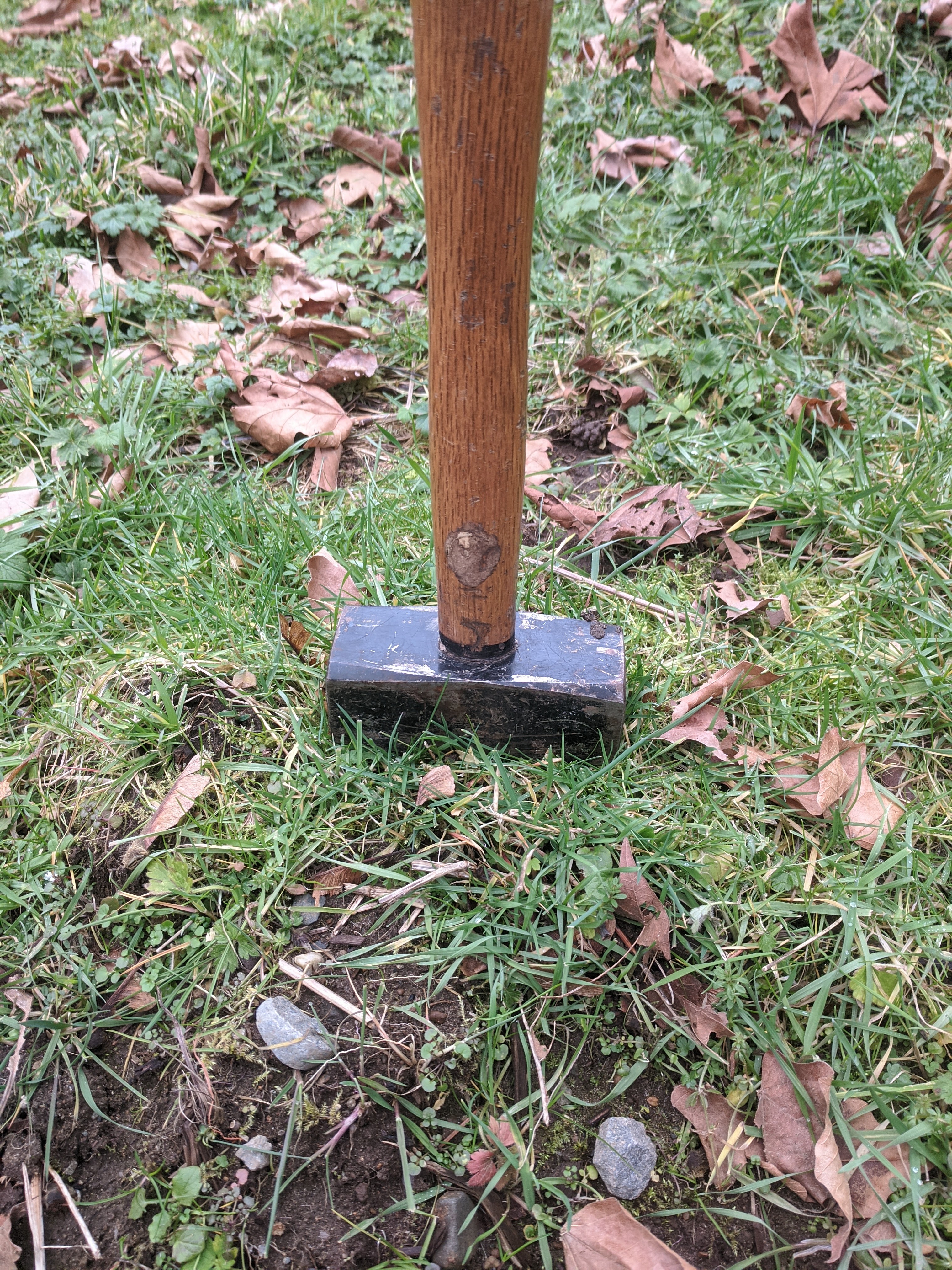
    A sledgehammer rests on green grass with fallen leaves scattered around it. The hammer is well worn from use.

    Components: Farmer’s Tools include a hand trowel, a bag of seeds, a hand rake, a mallet, shears, a bucket, and 10 feet of rope. When near a homestead they would be able to easily borrow a hoe or other full size implements.

    Animal Handling: Familiar working in tandem with animals you are able to gain the cooperation from domesticated animals and can give common commands in languages you know.

    Nature: You are able to identify the plants and fungus that are consumed as food, often knowing what cultures would typically raise those crops.

    Survival: In the wilds you are generally able to locate some produce that provide a minimum level of nourishment.

    Forecast: Your understanding of weather patterns is such that you are able to predict the weather for the next few hours. You can sense if there will be a natural change in temperature, wind, precipitation, etc when you have a view of the sky.

    Farmer’s Tools

    ActivityDC
    Identify culture/race raising common crops10
    Give domesticated animal a simple command15
    Weather forecast for the next few hours15
    Identify culture/race raising rare crops20

    Farmer’s Tools are designed to use the tools guidance in Xanathar’s Guide to Everything.

  • Meet the cast of DDD:253 – Invasion of the Trees

    Meet the cast of DDD:253 – Invasion of the Trees

    We’re speeding towards my first ever livestream of Dungeons & Dragons. There’s a thrill and excitement to this. Unlike most who jump into livestreaming, my playing group is not a set of people who I’ve done this with before. Only one of the players is part of my regular gaming group (I’ve never DMd for them). The two celebrities are the people I know the best. Many wouldn’t plan to jump into streaming this way, but for me the game came together as a desire to help YachtCon: Back to School generate community while donating to the Autism Center at Seattle Children’s Hospital, to act as an evangelist for D&D, and to add some South Sound/Tacoma Defiance flavor to my life after missing it for so long.

    The paid slots are full, but you can still “audit” the stream — yes, that means you can watch us play a D&D scenario with Defiance Head Coach Wade Webber and professional wrestler Ethan HD. There are other great classes, too. But DDD: 253 is my baby and my challenge, my dragon to tame.

    One of the thrills about creating this game is meeting new players. Each of the participants met with me for a one-on-one session zero. In every single one of these the players didn’t just build a combat oriented “build” but worked on backstory and connections towards the adventure on hand.

    It was thrilling to see this!

    There are several reasons why backstory developed. Fifth edition leans into this with Backgrounds. Every participant knows that their DM is into story creep rather than pure roll play. Plus, it isn’t surprising that those willing to generously donate their time and money to the cause would be those whose passions for the game include social, exploration, and combat encounters.

    It will be up to me to take these characters and get at least a small mention of their pasts into the three-hour tour that is DD:253 – Invasion of the Trees (Sunday March 21 at 7p). All of our characters, from Lorenzo to Du-Rag to the ones you are about to meet, are here to help the small town of Prosperityburg solve a simple problem – why did Castle Highberg stop responding to messages?

    A map of the Dusk Shores and the Spring Mountains

    On this campaign of discovery Du-Rag and Lorenzo will be joined by a ragtag group of adventurers. The rest of the group is made up of;

    Lennel is a tortle warlock with a spear and dedication to the seas.

    Lennel is a tortle warlock, connected to the sea. He values the connection between the port town and the Dusk Sea, working to build camaraderie between the peoples.

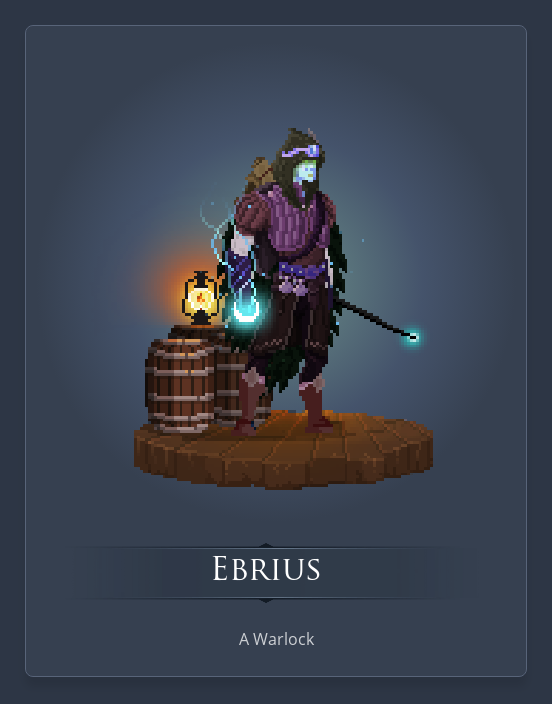
    Ebrius is a tiefling warlock torn between his birth and his heart.

    Ebrius is our second warlock. A tiefling, he works to help the helpless.

    Yelfir is a goliath fighter with a big axe

    Yelfir is a goliath fighter. Born in mountains, she tests her strength and serves the greater good of the community.

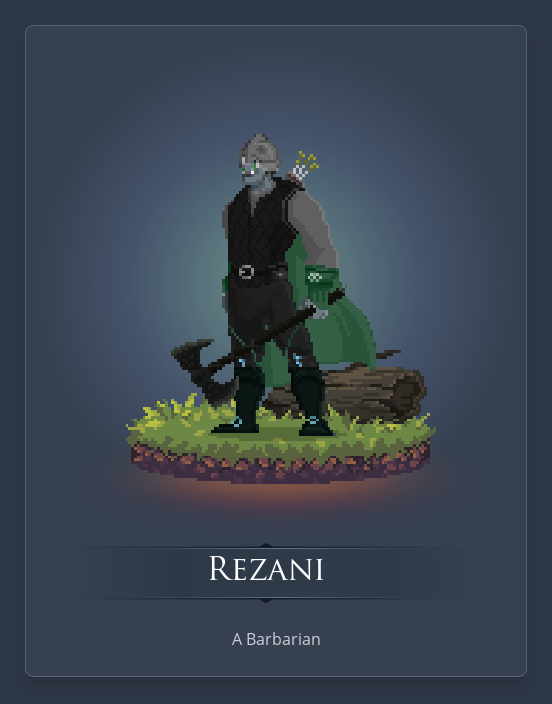
    Rezani is an axe-wielding half-orc barbarian.

    Joining Yelfir on the frontline is another axe-wielder. A half-orc barbarian, Rezani shuns armor as he stares down the greatest dangers.

    Quille is a swashbuckling fishperson who stabs with a rapier and then a dagger.

    When not stabbing you with sharp wit Qulile will stab with a rapier and a dagger. The swashbuckling fishfolk knows the run of the streets and remains calm under pressure, right up until the point he runs.

    Together this group of misfits joins Du-Rag (half-orc cleric) and Lorenzo (human bard) serving the city that sits along Badd Bay in the shadow of the Spring Mountains north of the Weald of Aspirations. The defiant land that they call home is threatened. Rising together they will attempt to stop the Invasion of the Trees.

    Join us Sunday night.

  • Inspiration Is Everywhere: Beer Factories and other modern approaches to food

    Inspiration Is Everywhere: Beer Factories and other modern approaches to food

    Many D&D worlds are anachronistic in their approach to the world space. The inn has rooms with bunks for a single person. Clothing and bathing habits also mimic our current world. Reading is common.

    Here’s the thing — the idea that these things are too modern for a “real” approach to world building is wrong. The ancient world through the Renaissance contained modern conveniences, and they didn’t have magic.

    Beer Factories

    No, your average inn or tavern will not have canned tall boys to crush when the adventurers visit. They most certainly would have lower carbonation beers that are mass produced, not just niche ales, lagers, meads, and such. Beer factories were present in ancient Egypt.

    Archaeologists found eight huge units — each is 20 meters (about 65 feet) long and 2.5 meters (about 8 feet) wide. Each unit includes some 40 pottery basins in two rows, which had been used to heat up a mixture of grains and water to produce beer, Waziri said.

    That’s a lot of beer. In Curse of Strahd there’s the embrace of a rather large winery.

    Embrace this. Have a popular beer, wine, liquor, etc within a region. Develop trade routes with it. Maybe your character tried it when their richer friend gifted them a bottle, jar, or cask. Maybe they carry a small vial of their favorite with them to remember home. Were they part of the merchant class that helped ship the goods from town to town?

    There are plenty of ways to add mass produced beverages to your game. Embrace the additional ways that flavor can connect to your world.

    Recipe Books

    Related to beer is that recipe books go back to the dawn of writing. Your brewer or vintner could be producing a recipe from many towns over, not due to word of mouth, but because the recipe is known to the world.

    The foods will be different than the modern era. Eel was a quite popular protein in England, for example.

    Grab Heroes Feast for some modern foods inspired by Dungeons & Dragons, or just follow Dollop of History for pre-WWII foods going back to the early Middle Ages.

    And, of course, the Redwall Feasts bot has foods that work for any indulgent culture.

    Your world can and should include the senses of taste and smell. Street foods and walkups should exist. Develop a vibrant food culture not because it adds verisimilitude, but because it expands the stories you can tell with D&D.