Category: Playing D&D

  • ‘Wine lets secrets out’ – the Vintner, a 5e D&D Background

    ‘Wine lets secrets out’ – the Vintner, a 5e D&D Background

    On a family vineyard with vines as thick as hippogriff legs you work the grapes. The slow, tedious springs and summers on the hard scrabble rocks are exhausting, the harvest a frenzy of activity. Then the fun starts, as does the waiting.

    The vintner enjoys all of this time, but the apex of their art is the finished bottle, and sharing it with others. They carry stories in their bottles. Stories of grapes, of skies full of wyvern, of the journey past the bandit camps, of that one time the mage saved their vines, and that other time when the druid thought they were helping.

    Every bottle has a story as does every person who sips it. The vintner is not just an expert at crafting wines. They are a marketing specialist and a storyteller. Each barrel, every cork, each wineskin, every jug – another tale to tell is discovered. The vintner may not have intended to travel the lands on quests, but they know whenever they return to their villa and vineyard they’ll have new discoveries to share.

    The following rules are a pre-publication example of a Vintner – a background for the current edition of Dungeons & Dragons.

    Vintner

    Skill Proficiencies: Nature and one of Deception or Persuasion
    Tool Proficiencies: Farming Tools, Winemaking Tools
    Languages: None
    Equipment: Farming Tools, common clothes, 1 pound of cheese, 3 wine skins, 3 small cups or glasses, 10 gp

    FeatureWine Lets Secrets Out

    The vintner has a knack for storytelling and conversation. Through pouring a tasting and chatting they are able to learn a tale from the person’s past. Sometimes these are of an adventure, or a foible, or a mystery that needs to be solved, and at the rarest times these tales are things that were supposed to always remain hidden.

    Characteristics: For now, use those from the Guild Artisan or pick & choose your favorites. Whenever my background project sees full publication there will be unique characteristics for all of them.

    By Jolbert

    This map popped into my Facebook feed the day I published the Vintner. It’s included because it is perfect, and actually reminds me of Balboa.

    Vintner Design Goals

    To more capture the feel of the pseudo-Mid Ages/Renaissance period the Vintner is the grower, the maker, the taster, the seller. Plus, that type of specificity gets anti-5e pretty quick. While the Guild Artisan can capture this background, it forces the artisan into a guild. Many adventurers pride themselves in their independence. The Vintner had to be a solo gig.

    The choice of Deception or Persuasion is out of a desire to represent the different angles in marketing that can occur within the flavor business.

    When it came to tools versus languages there was a part of me that wanted a language rather than second tool, but that was hampered by two things. First, I generally frown on how D&D handles languages. Second, if I’m bundling growing in and have developed Farmers Tools, let’s use the Farmers Tools.

    The feature, which uses a Chinese proverb rather than the Latin In Vino Veritas, is an attempt to capture the flow of story and words as friends and even enemies commune over a bottle(s). As a DM having a player with this feature helps grant so many clues in new ways.


    Custom Backgrounds for 5th edition Dungeons & Dragons

  • Tracking time in the dungeon

    Tracking time in the dungeon

    Reblogging this because simplified tracking of time is always handy

    newbiedm's avatarwww. Newbie DM .com

    One of the things that still gives me a little bit of difficulty when I’m DMing is tracking time in the game’s fiction when the characters are in exploration mode. Combat is simple, the 6 second rounds are codified, and we know that 10 rounds is a minute in the game world, 5 rounds is just :30 seconds, and so on. Which means most fights are resolved in just under :20 seconds! Wow! 

    Social encounters are also fairly easy to determine, as it’s usually real time conversations, with perhaps some minor adjudications of time passing as you negotiate and wait around for the car salesman to go talk to his manager about the offer you made him, etc… 

    But inside the dungeon, as the players are exploring, that’s a whole different…eh… monster. Now, the game offers a bit of rules in that regard… the DMG tells us that PCs moving…

    View original post 929 more words

  • Work the earth as a Farmer – a 5e D&D Background

    Work the earth as a Farmer – a 5e D&D Background

    Some heroes work the earth, till the fields, care for orchards, manage vineyards. The adventuring life was not part of their blood. There is no heroic act of rebellion or violence in their past, like the Folk Hero. They show their potential and heart every day. Some rise early, work late, and rest hard. Others understand nature, harnessing those forces to do as little as possible until harvest comes.

    All are connected to the land. Whether serf or free, whether rural or within the city, the farmer raises crops not just for their own family, but to supply a larger group. They are the blood of a civilization – vital.

    Some farmers do not get to remain in the pastoral life. They can be conscripted into battles, inspired by a local bard, maybe their debts force them to work with a local gang, Whatever took your farmer away from their homestead to the adventure they are on now that homestead, connection to earth, and family is a part of them forever.

    The following rules a pre-publication example of a Farmer – a background for the current edition of Dungeons & Dragons.

    Photo by Quang Nguyen Vinh on Pexels.com

    Farmer

    Skill Proficiencies: Athletics, Nature
    Tool Proficiencies: Farming Tools, Vehicles (Land or Water)
    Languages: None
    Equipment: Farming Tools, common clothes, beast of burden (donkey, mule, dog, etc) or cart, basket, 2 days rations, wine skin, 2 gp

    FeatureHorn of Plenty

    Through your knowledge of foods, their qualities and usefulness, combined with an uncanny knack for preparation you are able to stretch food supplies. A meal that would normally serve one serves two. They are both content and satisfied. A harvest in which you participate is also more effective – your senses help find a few more plants that are ready, branches that are missed, or mistakenly dropped produce. Those harvests produce more food, resulting in an increase in gold or barter value of 50%.

    Characteristics: For now, use those from the Folk Hero or pick & choose your favorites. Whenever my background project sees full publication there will be unique characteristics for all of them.

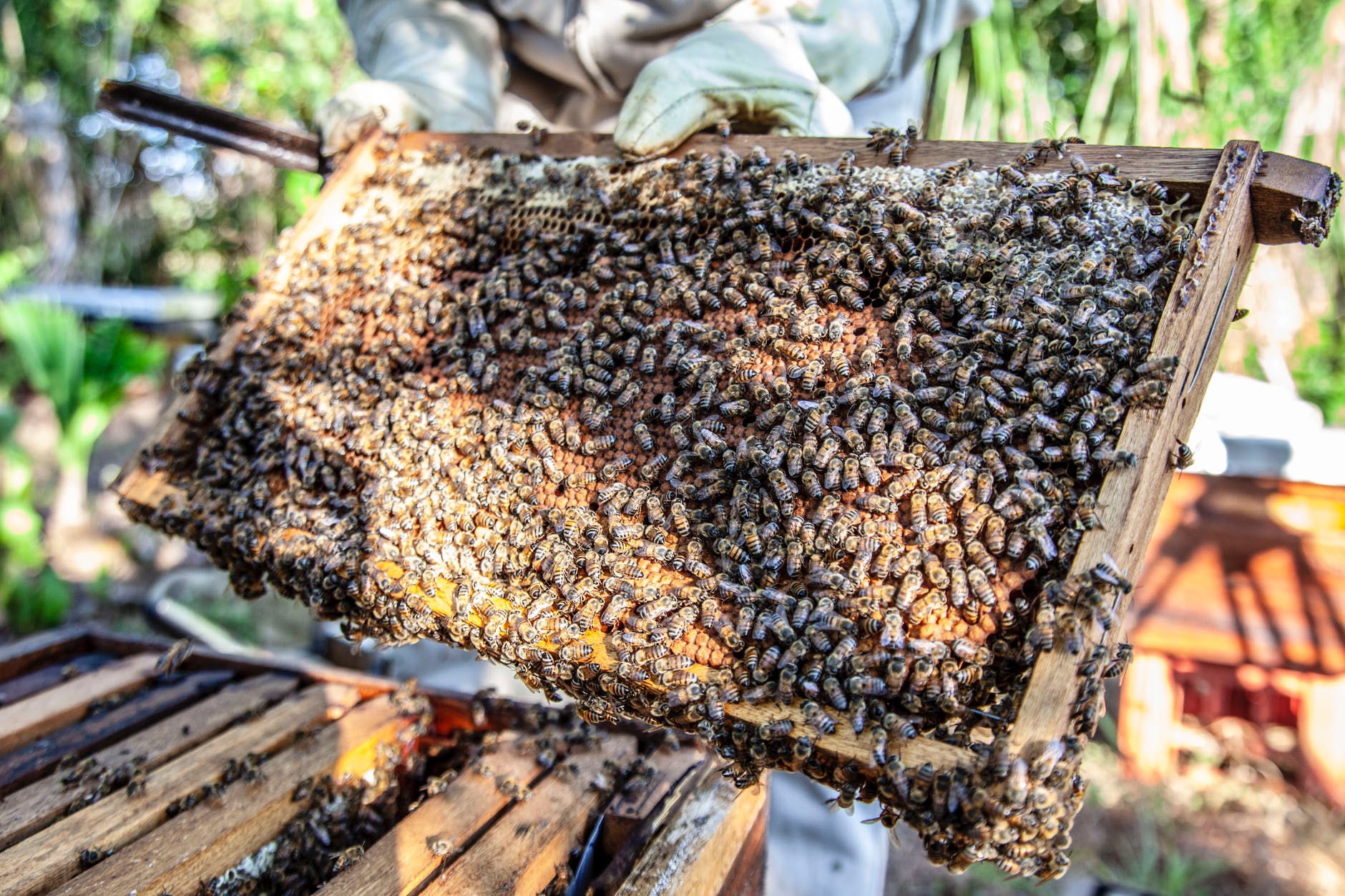
    Alternate: Beekeeper

    Photo by FRANK MERIu00d1O on Pexels.com

    Drop Athletics for Sleight of Hand. This is to represent the deft hands of someone who does their best to avoid being stung too frequently. Their loads also tend to be lighter compared to farmers who carry bushels of apples, shovel manure, dig irrigation, etc.

    Alternate Feature: Sweets

    You always have some honey – tiny jars, little wax sticks, hard candies, the format is up to you – to give away. Generally those who are gifted your sweets welcome the gift and have a positive impression of you and your group. These gifts can act as a salve to harsh spirits or a reward for previous help. They can also be traded for other uncommon goods that you may be in need of.


    Originally included as an option for the Remarkable Drudge, Farmer’s Tools are a must have for any farmer.

    Farmer’s Tools

    Cost: 5 gp | Weight: 7 lbs

    Proficiency with farmer’s tools means that you are familiar with the operations of a farm, orchard, vineyard, or other cropland. You are knowledgeable in the typical crops within an area, to include when to plant and harvest them. You also know their market value in most lands.


    Custom Backgrounds for 5th edition Dungeons & Dragons

  • Adding Festivals, Holidays, and Birthdays to Your Game – the May Blog Carnival

    Adding Festivals, Holidays, and Birthdays to Your Game – the May Blog Carnival

    Fantasy literature is full of parties – Bilbo’s birthday, various fests appear in Robin Hood, lunar celebrations and so much more. Watching or reading celebration scenes helps connects these myths and fantasies to reality. Who doesn’t like a party? They also are a reminder that the times upon which Dungeons & Dragons are founded had a hundred holidays.

    All told, holiday leisure time in medieval England took up probably about one-third of the year. And the English were apparently working harder than their neighbors. The ancien règime in France is reported to have guaranteed fifty-two Sundays, ninety rest days, and thirty-eight holidays. In Spain, travelers noted that holidays totaled five months per year.

    Pre-industrial workers had a shorter workweek than today’s

    Within our games we can also capture these feelings of merriment, civic pride, religious faith, and family gathering. Not only can we, we should. The foundational literature demands it. Having characters and societies that are more than sword swinging, spell flinging battlers creates stories of greater emotional depth.

    Full Moon Storytelling is hosting this month's Blog Carnival because it is my birthday. What better way to celebrate my own aging than talking about D&D parties? Last month's blog carnival was hosted at Codex Anathema, and was all about powerful magic items and artifacts. The rest of 2021's blog carnivals can be found at Of Dice and Dragons.

    There are several ways that you can integrate these events into your campaigns. Whether they get a couple lines or are a couple sessions will be up to you and your tables.

    Fetch Quests

    This may be the easiest way to add a holiday to the start of your game. A cold open that involves a civic leader that needs the very specific item for the holiday in question gathers a group of specialists together in order to find the lost item.

    Maybe at the beginning the community is downhearted. Rather than party they have to head off into the wilds to search for very specific item. Their journey brings them out of the village. In that world they can discover the thing, bring it back home as heroes and the festival is now also a victory celebartion.

    Introducing New Culture

    Journeys to strange lands mean new discoveries. When the group arrives in an unfamiliar place have them encounter a festival unlike any they’ve seen before. This introduction to a new culture emphasizes the differences, in a way that is full of brightness, joy, and excitement (unless you choose something dour).

    By arriving at fest-time the group immediately knows how different the place is. Maybe if they have observational knowledge of the culture a history or culture check helps the character in question understand what is going on. Otherwise the group learns what’s going on by engaging with the worlds and cultures which you’ve created together.

    Change of Pace

    Between dungeons, dragons, orc wars, piracy, invasions by mindflayers, elemental cultists, the mists – what happens? Normal life. And normal life in the worlds of D&D is weird. But it’s also people who do things like celebrate birth, coming-of-age, weddings, coronations, harvests, solstices, equinoxes and more.

    Take those moments of normality to highlight the abnormality of your D&D world. The dichotomy of a party with the world-shaking events of a tier 3 or 4 adventure is potent. Those few moments of calmness and levity during a session may just be the ones that the table remembers later. Killing a 45th bandit isn’t a big deal. Giving the town kids the feather of an owlbear? That’s a moment!

    Victory Celebrations

    You’ve cleared the dungeon, slain the dragon, the forces of Gruumsh were held back, recovered the holy tooth of the founding family of the town, the heist was prevented, the heist was successful – however your adventure or campaign ends there must be a party, a big party.

    Maybe the characters are throw the party. Perhaps the queen calls the empire to celebrate. Imagine that you’ve save the world and the Old Gods convene the grandest fairies of the planes to reward you and the world for the success.


    Inspiration for Characters

    You can also spin things the other way. Search real world festivals and holidays and turn them into you own character concepts. Maybe your next Artificer is based the technomancers of Jingle Jangle. What Moon Druid isn’t dedicated to the thirteen full moons? Before you became a hero were you a carnival barker? Your next D&D character could be the expert marksman brought in as a ringer, or the strongest person in the world.

    Every birthday, holiday, or real world festival is an opportunity for character creation. So create. I’m certain that Awf’s birthday is coming up. Everyone’s favorite axe-wizard is going to party like the elf-raised dwarf he is – I don’t know what that means yet.


    How do you integrate festivals, holidays, and birthdays into your D&D games?

  • Rogue: Propagandist – a literary revolutionary

    Rogue: Propagandist – a literary revolutionary

    This archetype has been banging around my head for some time. The ability of words to inspire rebellion, to move nations, and to inspire people to be better is quite clear. Dungeons & Dragons kind of wraps this into the College of Whispers Bard, but that’s quite supernatural. The Rogue: Propagandist is mundane, based in historic examples such as Thomas Paine and Benjamin Franklin, as well as in certain versions of Assassin’s Creed.

    The design intent is to empower more play in urban and/or political campaigns. This attempt, which is essentially version 1.5, uses new mechanic for the rogue, one that demonstrates that people who publicly advocate for rebellion are often known, but still effective. The Propagandist most powerful abilities are powered by their Sneak Attack dice. This seemed to fit better than making them weak Bards in an Arcane Trickster variant like the Society of Veil and Shadows.

    Most of the lore description is removed from this pre-publication draft in order to focus on the mechanics, which are complex and new. The Swarm of Commoners and the Printing Press tool are just shells of what they will be in the future as well.

    Rogue: Propagandist

    Rebel and Pamphleteer

    You rose from the underbelly of empire to demand a better life for all. Your pamphlets and speeches can inspire hope, or fear. Whether from the soapbox or via playbill your proclamations turn the tides of rebellion or keep a government in power.

    Propagandist Features

    LevelAbility
    3rdWordsmith, Rabble Rousing
    9thProclamations
    13thGrand Voice
    17thMaster Essayist

    Wordsmith

    When you choose this archetype at 3rd level you gain proficiency with the Printing Press and a skill from the following list — History, Investigation, Insight, Deception, Persuasion, and/or Performance.

    In addition you learn one language of your choice.

    At 6th level you may choose the Printing Press for your expertise option.

    Rabble Rousing

    Your words inspire rebellion. You are able to summon a Swarm of Commoners. These commoners are allied with your cause, but are not willing to die for it. You spend an active Sneak Attack die for each use of this ability per short rest. The number of dice used determine how many Swarms you summon. Rabble Rousing takes a minimum 10 minutes to activate via speech, pamphlet, or other communication. The Swarm is summoned at a time and location where some commoners could be expected. The Swarm of Commoners has advantage on saves versus fear and are considered under the effects of the Charmed condition.

    Proclamations

    To issue a Proclamation you spend at least ten minutes creating a pamphlet, playbill, speech, cartoon, etc. These Proclamations grant bonuses to those who experience their call. Those bonuses are equal to the number of Sneak Attack dice spent at the time of proclamation (Proclamation Bonus). The Proclamations’ influence extends to a number of subjects determined by the proficiency bonus + ability score modifier in the skill or tool used to deliver the proclamation. The proclamation can be delivered via speech (Persuasion, Deception, Performance), pamphlet (Printing Press), or cartoon (Calligrapher’s Tools, Painter’s Tools). A tool would use Intelligence (i.e. a 9th level Propagandist with an INT of 14 issuing a Proclamation of Safe Haven via a pamphlet would grant 6 readers the benefits of Safe Haven).

    Proclamations that require a save do so against a DC determined by 8 + Proficiency and Intelligence Bonus.

    List of Proclamations

    • Unrest – A number of Swarm of Commoners determined by the spent Sneak Attack dice gain a Proclamation Bonus of temporary HPs and gain the same bonus to damage rolls. These Swarms will attack on the Propagandist’s initiative roll minus 10. The Proclamation inspires a rebellion.
    • Rally – Subjects regain hit points in the number of the spent Sneak Attack dice plus a Proclamation Bonus (ie. 2d6+6) as these Proclamations rebuild the morale of wounded forces.
    • Urgency – Subjects gain a Proclamation Bonus to their next initiative roll. Subjects are eager to join the fight.
    • Power – Subjects gain a Proclamation Bonus to their damage rolls during their next combat. Those attentive to the Proclamation recognize that they are powerful.
    • Warning – Subjects fall under the Frightened condition if they fail a Wisdom Save versus your Proclamation DC. They are wary of the forces working against them, afraid of any Swarm of Commoners and/or the Propagandist. They are overcome with this fear for one hour.
    • Safe Haven – Subjects are able to gain the benefits of a short rest via the calming words of the Proclamation.

    Grand Voice

    Beginning at 13th level your words can invigorate your allies. You can use a Reaction to have an ally reroll a failed Intelligence, Wisdom, or Charisma saving throw. You have a proficiency bonus number of uses of this ability per long rest.

    At 17th level you may also remove one level of Exhaustion via your Grand Voice, as long as the level of Exhaustion is not level 5 or 6. You may only remove one level of Exhaustion per ally in this manner.

    Master Essayist

    The strength of your words lasts. At 17th level any of your Proclamations (except Safe Haven) issued using a Printing Press grant their benefits/disadvantages until the target takes a short rest.


    Swarm of Commoners

    Huge, Neutral

    • Armor Class 10
    • Hit Points 21 (6d6)
    • Speed 20
    STRDEXCONINTWISCHA
    10 (0)10 (0)10 (0)10 (0)10 (0)10 (0)
    • Saving Throws
    • Damage Resistances Bludgeoning, Piercing, Slashing
    • Condition Immunities 
    • Senses Passive Perception 10
    • Languages Common (or 1 language of a peoples)
    • Challenge Rating

    Swarm. The swarm can occupy another creature’s space and vice versa. The swarm can move through any opening large enough for a Medium commoner. The swarm can’t regain hit points or gain temporary hit points except via Proclamations.

    Actions

    Club. Melee weapon attack: +4 to hit, Reach 5 ft., one target. Hit: 6 (3d4) bludgeoning damage. This attack assumes multiple commoners are attacking as one.

    The Swarm of Commoners can be adjusted if made up of a single humanoid race. Usually their weapons are clubs, but in some cases they may all use a specific simple weapon.

    Any ally of the Propagandist, or the Propagandist themselves, that attacks from within the Swarm of Commoners has advantage on their attacks. They may also use the Swarm for half-cover, attempt a Stealth/Deception check as a bonus action. Upon a success the individual within the Swarm of Commoners is considered invisible.


    Printing Press (tool)

    These are the necessary tools to create pamphlets, books, and playbills. The press itself is too large for adventuring, but you would still have ink, a sheaf of paper, scissors, a few letter blocks and one or two signet blocks.


    Thoughts?

  • Whistle of Az and Sel for the Blog Carnival

    Whistle of Az and Sel for the Blog Carnival

    Within the World of the Everflow every thinking peoples from the Land of Kin bonds with an animal. The most common of these are dogs (especially among halflings), birds (especially among goliaths), and horses (especially among humans). These beasts are family, inseparable companion, and essentially an extension of that person. They share personality and aid each other throughout their shared lives.

    This intimate companionship started after magic left the world. Now, the norm, bonding started with Az, his dog Sel, and a three-hole pipe. Together they created more and more and more and more and more bondings. Eventually this drove Az mad, for the thoughts of 100s of beasts were in his head. What was to be a blessing from one of the gods, turned into a curse for young Az. As he aged, the nation of Azsel formed around Az and Sel. Their whistle becoming the symbol of the nation, it was once under guard as a holy relic. Over the millennia the whistle disappeared. The power of bondings spread beyond what the Whistle started. Companionship is now so common that few consider it magical.

    Many also think legend of Az and Sel is merely a story, not real. But the Whistle of Az and Sel is in fact real, and dangerous, for the curse will drive you as mad. If any have found the Whistle in the current era they are not making that discovery public.

    This is my latest entry for the Blog Carnival.

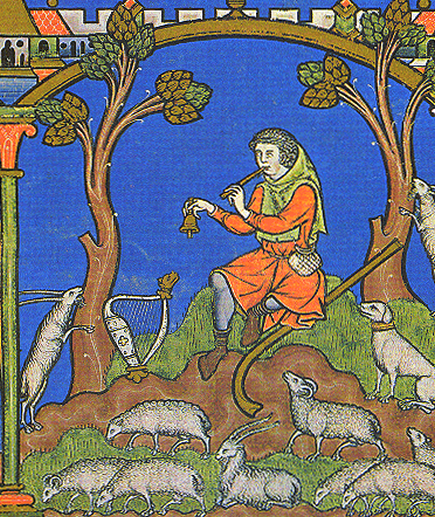
    David, as a young man, playing pipe and bell as he watches his sheep in the pasture. – The Morgan Bible, Folio 25

    Whistle of Az and Sel

    Wondrous Item, artifact, cursed (requires attunement)

    When playing the Whistle of Az and Sel the user can cast the following spells at will, without expending a charge and as a bonus action. These require no spell components nor concentration if that is normally required.

    • Animal Friendship
    • Beast Bond
    • Speak with Animals
    • Animal Messenger
    • Locate Animals
    • Summon Beast
    • Conjure Animals
    • Dominate Beast
    • Commune with Nature
    • Druid Grove

    This power comes with a cost. That cost varies by user.

    When one attunes with the Whistle of Az and Sel they experience two minor and one major detrimental properties. They also suffer from one long-term madness upon attuning and indefinite madness for as long as they are attuned (see DMG page 260). This cursed item requires a quest from a god or powerful magic to be unattuned.

  • Meet Amadin the Barker, including a new 5e D&D Background

    Meet Amadin the Barker, including a new 5e D&D Background

    From the Greatest Showman, to Newsies, to the nameless town criers belting out “Hear ye, Hear ye” the fiction that inspires our gaming has included symbols of governments, news guilds, carnivals, circuses, and religious orders in the streets are regularly part of the scenery. Some of these people would be dragged into heroic adventures.

    Amadin the Barker is one of these. Originally a barker for a travelling carnival, this fey hobgoblin fits within the normal world because of the cover of the carnival. Their uncommon lineage belongs among the strongmen who aren’t strong, the acrobatic performers, the owlbear trainers, and the oracles without magic.

    Created through a series of polls and prompts on Twitter, Amadin the Barker is discovered to be a Blessed Warrior Paladin of Redemption. They are generally peaceful, able to help their circus make money, prevent serious loss of live, and work to redeem themselves.

    Peace. Innocence. Patience. Wisdom.

    They swear upon these values. Sure, they are a warrior when needed. Those needs are rare. Amadin’s greatest tool is their booming voice and their desire to help the peoples who took them in when they were a stranger.

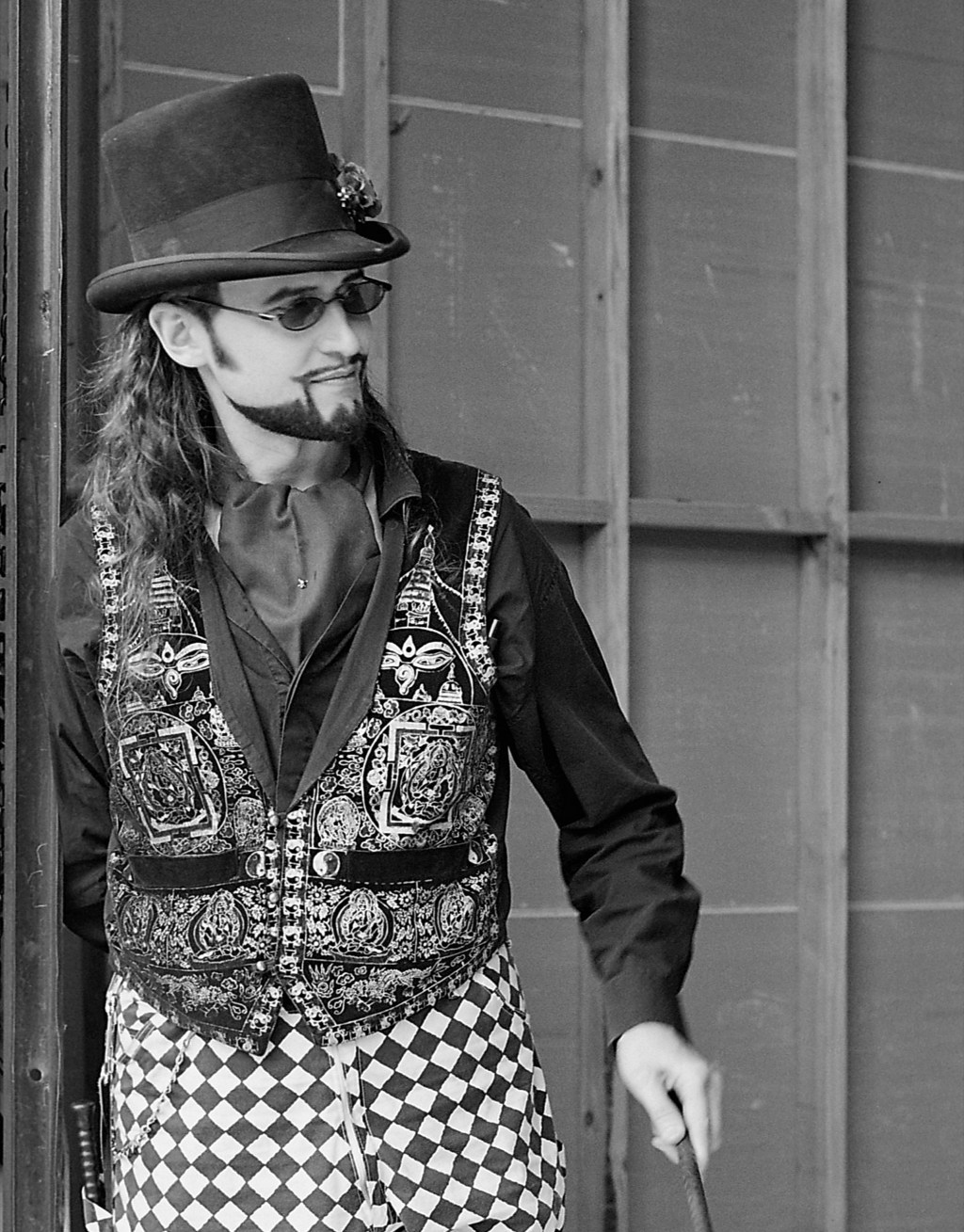
    laaaadeees and geenntleemeeen, step right up and see the most amazing art show in the world by Robert Couse-Baker (CC BY 2.0)

    Amadin the Barker

    Constitution +3Fey Hobgoblin, Paladin of Redemption (3)
    Strength -1Carnival Barker | Into crochet, not good at it
    Fine Clothes, rarely a Chain ShirtGhesh Province
    StaffSincere, Confident
    Comfortable, penny pincherAshamed, Judgmental
    This uses the Index Card version of NPCs for Social and Exploration Encounters

    If you want the full PC version of this community character Amadin is over at DnDBeyond, as are all of the community characters built via polls and interactions on my twitter account.

    Amadin is an example of a carnival barker, town crier, or herald. This new Background is part of my ever-percolating project Before We Were Heroes. Unlike the Remarkable Drudge, there is no cantrip or new tool for the Crier.

    Crier/Herald/Barker

    Skill Proficiencies: History, Persuasion
    Tool Proficiencies: None
    Languages: Two of your choice
    Equipment: A noisy instrument (bell, gong, horn, drum), fine clothes (a Barker should have a costume), common clothes, scroll case, 3 sheets of parchment, quill, jar of ink, 15 gp

    FeatureYou Will Hear Me

    When in a crowd, or during a heated discussion, your words always break through the background noise. When you shout out, or clap, or ring the bell, etc., the attention of the multitudes shifts to the Crier/Herald/Barker who can make an appeal to them. Your pronouncements carry the weight and heft of your organization.

    Barker Design choices

    Skills: Persuasion was obvious. That’s where this background had to start. Their whole role in society is to convince people to do things. The other choice came down to Insight or History. Insight made sense because reading a crowd may be necessary, but History fits the idea that the symbol of an area’s governance or a news guild or a traveler would have this level of knowledge. If a campaign is using Culture rather than Language, drop History for Insight.

    Tools: One of the spaces I’m exploring is giving various Backgrounds tools that they possess that they aren’t necessarily proficient in – in this case a musical instrument. The Crier may use a gong to gain attention. They don’t need to know how to perform a musical piece.

    Languages: With two more slots and the modern cosmopolitan nature of default D&D granting two languages makes sense.

    Equipment: The non-proficient instrument is a little note that some Criers need an assist before they gain attention of the masses. Most backgrounds do not include two sets of clothes. In the case of the Crier/Herald they should have fine clothes for official duties and look common when not. For a Barker replace the fine clothing with a costume, if you’d like.

    Feature: First off, yes, I modified the Sounder at Heart motto for this one. You Will Hear Me captures the feel of a person standing in the crowd and demanding attention. A character could use this as a distraction, or a rallying cry, or maybe as a way to start a charity drive. As always, the feature fits into social and exploration moments more so than combat.

    For personality attributes use Folk Hero, Scholar, Noble, or others that fit. The finished product, whenever it is done will include unique characteristics for all 40 or so Backgrounds.

    Custom Backgrounds for 5th edition Dungeons & Dragons

  • Wizards of the Coast brought the D&D blog back and it’s conversation fuel

    Wizards of the Coast brought the D&D blog back and it’s conversation fuel

    I love blogging. It’s been a huge part of my identity and part of my profession from 2008 to the present day (with the largest exception being the first few months of pandemic furlough). D&D blogging is in an interesting space – most of the conversation is happening on reddit, via video, or sectioned off into various closed systems like Patreon. And most of those conversations are about the happenings at a specific table, not the broader game.

    With Wizards of the Coast bringing back the official Dungeons & Dragons blog that may shift, even if just a bit. There’s so much fuel for longer conversations that do not translate well to modern social.

    This first blog entry in the resurrected kingdom of D&D blogging is from Ray Winninger, and the focus is on the D&D Studio and what it does. tl;dr – it is in charge of the tabletop game, and works with other versions of D&D to make certain that they maintain the flavor and notes that make D&D D&D.

    But, hidden within each of the section are a bunch of interesting notes about the structure of the team, how they design products, and what they are working on.

    Product Pitches

    These are all from internal submissions. No outside personnel participate. Those projects that move forward get a Product Lead. The current Leads are Jeremy Crawford, Amanda Hamon, Chris Perkins, Wes Schneider, and James Wyatt. From their past works within 5e we know what types of primary products most of those work on, and by the end of the year we’ll have an example for each.

    • Crawford – rules expansions
    • Perkins – adventures
    • Schneider – horror
    • Wyatt – world building
    • Hamon – an upcoming product not yet announced. Her experience with Kobold Press could mean magic or setting while her experience with Paizo could mean space fantasy. Or it could be something different. The conversation fuel is great.

    By design, we develop almost twice as many products as we publish. Developing more projects than needed allows us to pick and choose based on how those projects progress; it’s a strategy we use to boost the odds of bringing only the very best concepts to market.

    From the blog

    Within those glassed-in halls of south Renton are a couple dozen near-finished projects that sit in dark dungeons guarded by dragons.

    Five Major Releases in 2021

    • Candlekeep Mysteries is already out. I’m avoiding most of the adventures because I expect to play in a few one shots. Still, I own the book because I wanted to support the new creators.
    • Van Richten’s Guide to Ravenloft is coming out in mid May, just in time for my birthday. As someone who doesn’t know the Domains of Dread beyond Barovia, I’ve started to expand my knowledge through The Black Dice Society.
    • Unannounced summer adventure with Perkins as lead.
    • Unannounced Wyatt lead project that is a Winninger pitch.
    • Unannounced Hamon pitch and project, her first on the team.

    A book project takes 12+ months to go from pitch to release. They’re also working on developing more leads. The growth of the game spurred by 5e and supercharged by the pandemic is leading to a higher output of product than the early years of 5e indicated would happen.


    With this first entry being from the head of the D&D Studio there’s a lot of high level information. Since, by nature, a blog is throughput from the passions and mind of an author to their audience, each entry will be a reflection of the primary author, carved and shaped by their editor.

    Not only will the official blog provide inspiration for further conversation among fans, it is another route to learning about the people behind the game. For those of us that are readers it is a piece that helps us use a second screen while other things are on the primary one (whereas video streams tend to need to be the primary screen).

    What’s up next? We can only guess and talk about our theories.

  • Unearthed Arcana expands playable dragons – lacks playable dungeons

    Unearthed Arcana expands playable dragons – lacks playable dungeons

    The latest drop of Unearthed Arcana is another exploration of Draconic options – this time lineages, feats, and spells. Previously the Dungeons & Dragons team explored a Monk: Way of the Ascendant Dragon and a Ranger: Drakewarden.

    The UA also reminds readers that everyone gets a floating +2&+1 or three floating +1 with two languages (Common and one other being recommended).

    This review of UA will include bolded statements of what I like, what I would change, and what I dislike but can’t think of how to fix.

    Dragonborn

    Fifth edition D&D already has two sets of Dragonborn, one in the Player’s Handbook and another in Explorer’s Guide to Wildemount, the Critical Role book. Soon, there will be even more Draconic races, as the new set splits Dragonborn into the subsets – chromatic, metallic, gem. This Unearthed Arcana is also an expansion of Kobold options, as they were previously released in Volo’s Guide to Monsters.

    For all three there is a small boost in power for the breath weapon. This was needed. The PHB Dragonborn breath weapon wasn’t able to be used enough for it to serve a purpose. Having it be an attack replacement grants some great options for martial players after tier 1 play. Rather than 1 bonus action per rest (short or long) the UA version gets proficiency bonus number of uses per long rest. This is true for all three of the new subraces. They also increase damage from 2d6 with tier scaling to 2d8 with tier scaling. I like this.

    Chromatic

    Their breath weapon is a line, which is a switch for green and red dragonborn.

    At third level they gain the ability to be immune to the energy connected to their draconic origin. This ten minutes at once ability can help ahead of a combat encounter, but is also quite handy for some exploration challenges. It’s a fun little bit of story creep too. I like this.

    Metallic

    Their breath weapon is a cone, which is a switch for brass, bronze, and copper.

    Their third level boost is a secondary breath weapon that they can use once per long rest. There is a choice of two effects – a push and or kind of knock-out gas that incapacitates targets. These are both fine.

    Gem

    Previously gem dragonborn weren’t a thing, and as someone who didn’t get into gem dragons, this section is a lot of new ground. The various gems connect to new damage types (force, radiant, psychic, thunder, necrotic). As all gem dragons are connected to psionics these dragonborn gain the ability to telepathically communicate with a single creature within 30′, as long as they share a language. I like this cool boost.

    At third level they get this weird ability to fly by being surrounded by spectral gems. I don’t like this.

    Kobolds

    The kobolds in Volo’s have two negatives – their strength is reduced and they have sunlight sensitivity. The new draconic versions of kobolds suffer from neither of these.

    But the new kobolds also don’t get Grovel, Cower, and Beg (ok), nor do they get Pack Tactics (boo).

    The draconic versions get to choose between three abilities.

    • Advantage on saves versus fear. I like this.
    • A sorcerer cantrip. I like this because it connects them to the Volo’s monster kobold sorcerer.
    • An unarmed strike with the tail. I would change this strike to be finesse, so that dex builds could benefit.

    They also can roar. I don’t like this.

    I would rather the playable kobolds lean into the variant kobolds like dragonshields, winged, and inventors. Further connections between kobold culture and playable kobolds would be wonderful.

    Feats

    The new feats are about granting non-dragonborn a small lean into the powers and abilities of various dragons. This part is cool, but because they are each a different feat that means your character could take each feat once picking up a bit of chromatic, gem, and metallic. I don’t like this.

    Spells

    There are seven new spells that range from level 2 to 7. Four of them are named spells, with three carrying iconic names from the Forgotten Realms and one from Dragonlance. All are available to sorcerers and wizards, with a few being open to other casters.

    Draconic Transformation is a way to be nearly a dragon.

    Fizban’s Platinum Shield is a potent protective spell.

    Flame Stride is a movement boost that burns people as you pass them.

    Icingdeath’s Frost is a cone blast that covers the target in an ice shell.

    Nathair’s Mischief is a cube (yuck) that is rather fey in its behavior.

    Raulothim’s Psychic Lance is a piercing blast that has an interesting known name twist.

    Summon Draconic Spirit follows the new summons from Tasha’s Cauldron of Everything, and is a dragon.

    I like the story behind the spells and hope that Awf can add the Icingdeath’s Frost and Flame Stride to his known spell list. A Bladesinger running through traffic with flaming feat is a great image.

    Overall there’s a lot of flavor in these, but similar to the Fey UA, there is a clear need to fold the earlier releases and this next book together. There are competing versions of Orc, Hobgoblin, Dragonborn, and Kobold now. These would make more sense as subraces in a book, or digital version, that is consolidated with all the changes, shifts, and combinations.

  • Add these prehistoric beasts to your animal companion and familiar catalogue

    Add these prehistoric beasts to your animal companion and familiar catalogue

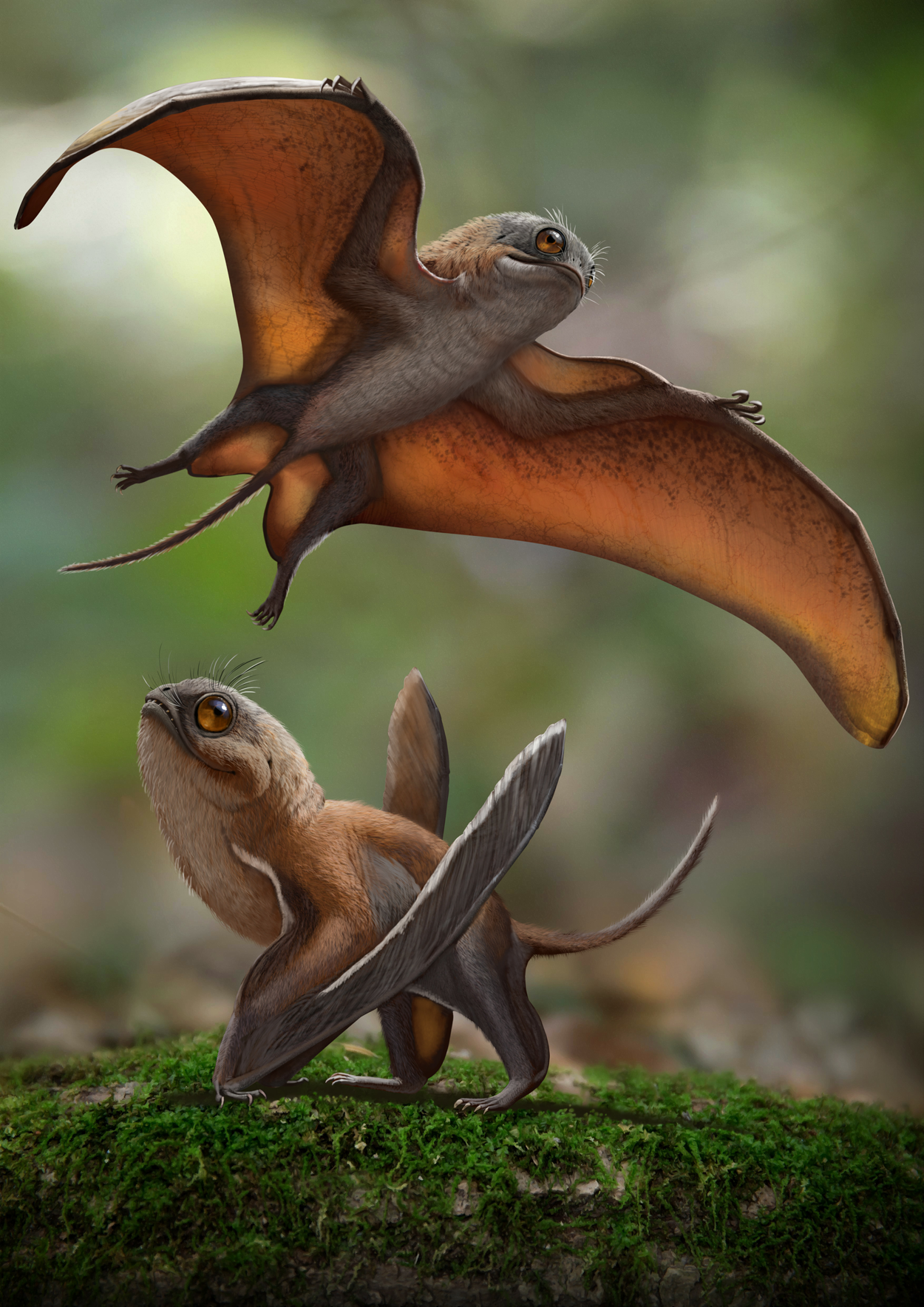
    Who didn’t grow up loving dinosaurs? The massive ones were essentially real-life kaiju, and they populate so much Dungeons & Dragons lore. But prehistory also has smaller dinosaurs. These too belong in your D&D games. They make perfect low-level scene setting creatures — even more special they offer player characters new choices for Familiars and Animal Companions.

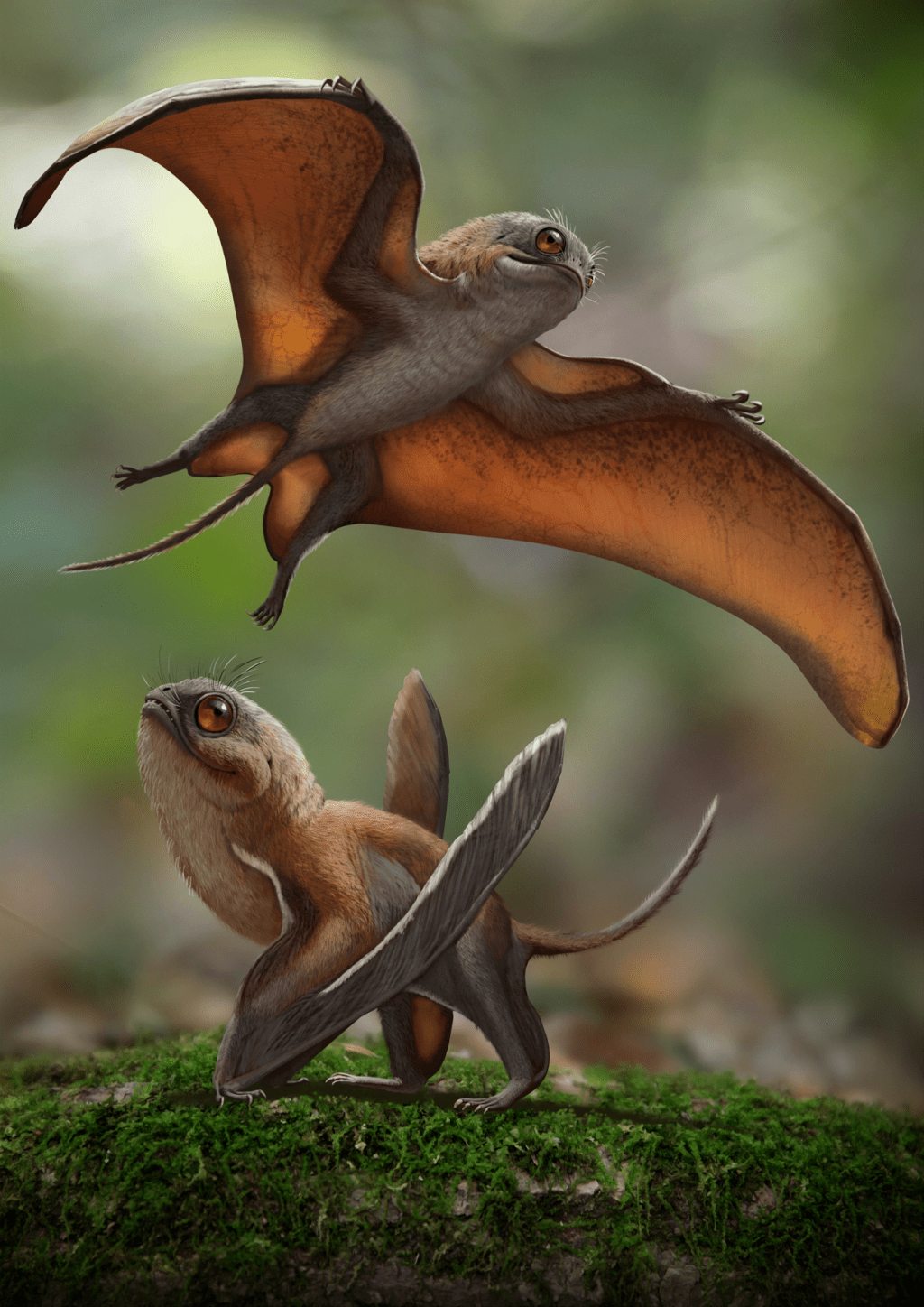
    Via SyFy we learn of a small pterosaur that’s pretty darn cute. The sinomacrops bondei would make an excellent scout and their tiny little hands might be able to hold some spell components or messages.

    Full Size paleoart courtesy of Zhao Chuang available at link

    For stats, use a common bird – the Owl makes the most sense. But Ravens with their mimicry may make sense for you character. A talking tiny ‘saur that flits and floats about to help your wizard? Perfect!

    The fact is that the world of inspiration for other beasties to be your best friend. From small carnivores like the Taien Sahul to the Sinomacrops Bondei your companions do not need to be confined to what is in the basic rules.

    Dragons of Wales has wonderful art that fits many micro-dragons and ‘saurs.

    There’s so much out there. Your world is a fantasy with imps and elves. Your companions can be beasts that are unreal, but power appropriate. Some may even have minor magical powers, slightly shifting their “natural” abilities because if your characters are imbued with magic, shouldn’t their animal companions also be blessed with fantastic abilities?

    Updated: Add these pre-whales too.

    https://twitter.com/ddoniolvalcroze/status/1382369065277132801

    Updated again for this rhino-buffalo thing.

    https://twitter.com/ddoniolvalcroze/status/1384873844519759875