I went and sponsored a soccer team. It’s a pub league team with several friends I met through Sounders soccer. Rather than advertise my soccer blog they all know about already I put the logo for Full Moon Storytelling on their kits. And then I offered to make any of them an Adventurer’s League legal character that represents some of their favorite soccer players and themselves.
A character sheet in Dungeons & Dragons is a story told in short hand.
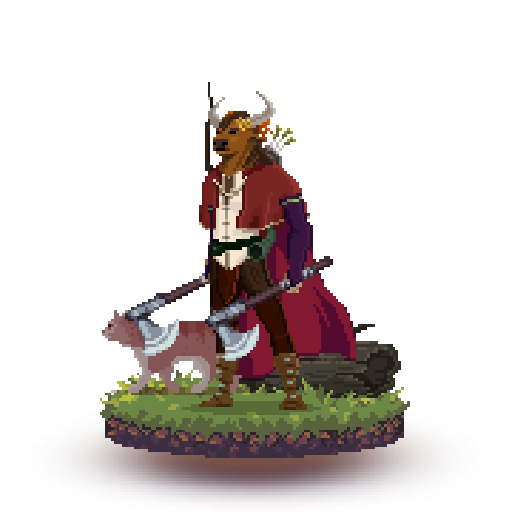
With Passive Aggression, one of the first things I wanted to do was have a little honey badger companion (in Reroll I used a cat). Ozzie Alonso was Seattle’s honey badger for so long that I must, must honor him. The player who submitted their favorite players requested a minotaur, which also suits Alonso well. It is easy to imagine Alonso lowering his head and charging through someone.
The other guidance is the maestro Luka Modrić. Ranger helped with this, because the bit of magic makes sense. Luka is one of the more technical players in the world, with the titles and individual recognition that makes sense. When the player is that exceptional only magic makes sense. Zephyr Strike seemed perfect for that representation.
I chose the subclass Gloom Stalker because of the Our Flag Means Offside FC player sees themselves as someone who can be a support player across the battlefield, Entangle and Dread Ambuser helped capture that story
Here’s the story I was trying to tell with Izzy Handball.
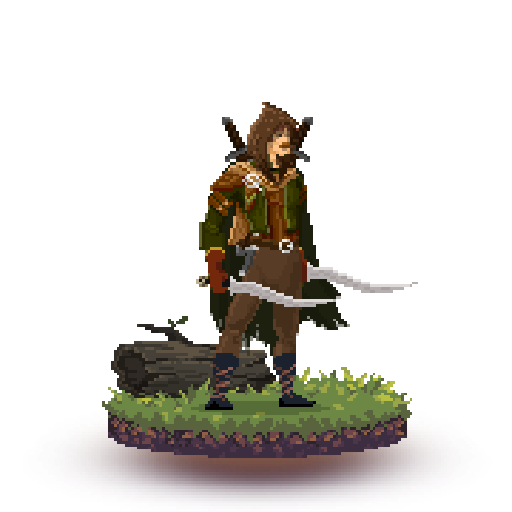
Roger Levesque is a legendary Sounder, from the time before they were in MLS. He also puts on a great pirate impression. Pelé is the world’s greatest player, ever. Young people please don’t come at me with your modern faves — Izzy Handball will slay you.
Combining a cult legend and the world’s greatest was a fun challenge. I started with the pirate, which meant Swashbuckler Rogue, which also fits Pelé’s personality. He loved to go one-on-one, or one-on-four, whatever. Dual-wielding swords made sense because Pelé would strike rapidly, constantly and with both feet.
A wood elf was chosen to further lean into Pelé’s pace, his fey ancestry and his charm.
With both of the soccer players the Folk Hero made sense. Whether form the streets of Brazil or the artificial turf of Starfire, Levesque and Pelé became legends with tales growing taller every year.
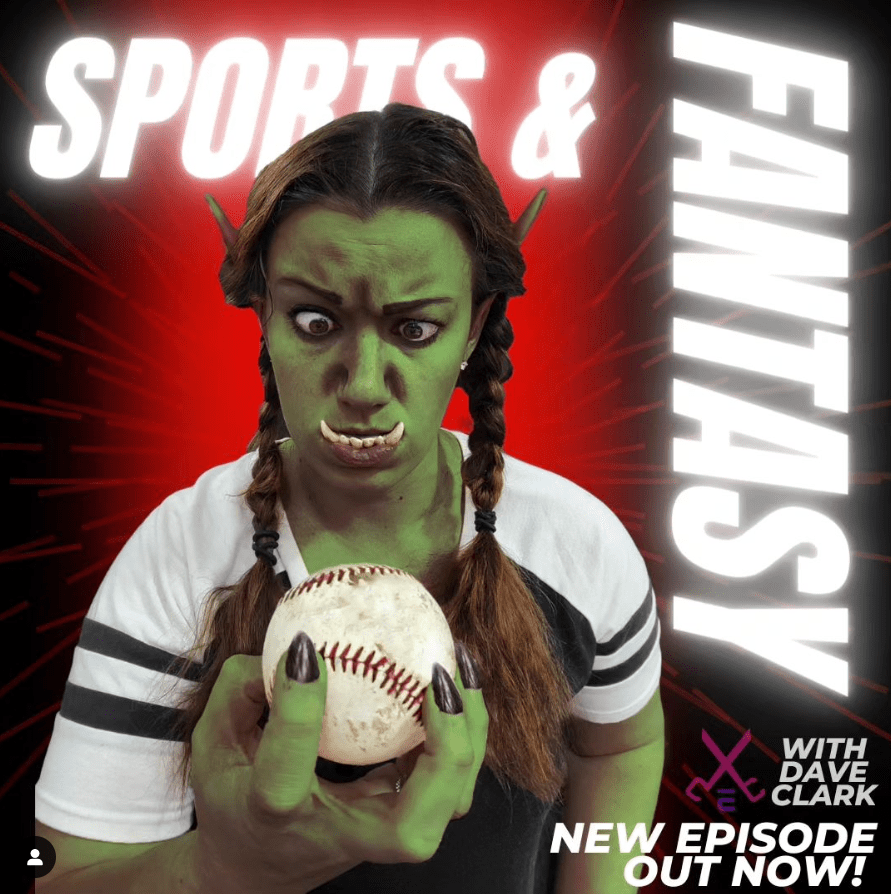
After one of my regular D&D sessions at Logan Brewing someone watching us started asking me about my campaign. I just couldn’t stop talking. We eventually got to talking about Sports in D&D.
That’s when Bears invited me onto her podcast, because I’m a talker.
The Cutting Edge Cosplay group were great hosts. I’ve listened to all of their other episodes and enjoy how much they share their passions for performance via cosplay.
This episode is also available as a podcast.
Share your passions, open up to others — you never know the friends you can make.
I went and sponsored a soccer team. It’s a pub league team with several friends I met through Sounders soccer. Rather than advertise my soccer blog they all know about already I put the logo for Full Moon Storytelling on their kits. And then I offered to make any of them an Adventurer’s League legal character that represents some of their favorite soccer players and themselves.
A character sheet in Dungeons & Dragons is a story told in short hand.
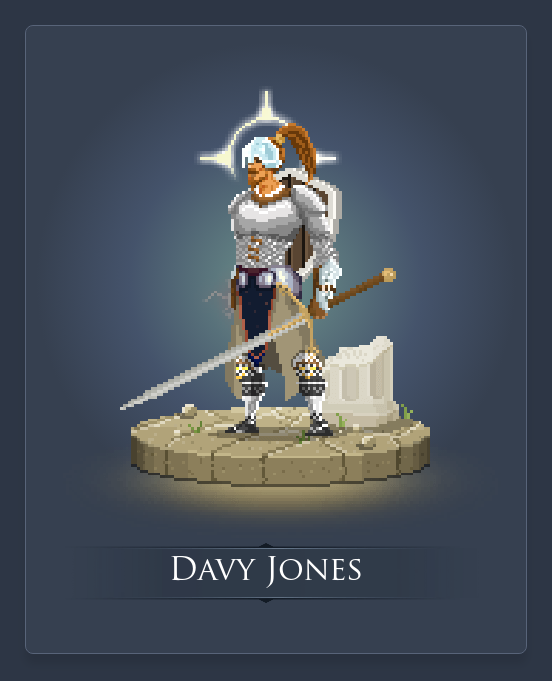
Here’s the story I was trying to tell with Davy Jones — the name on the back of one of the players’ shirts. I didn’t look up the real players to build these. I did use their soccer-name as inspiration.
The soccer players provided in the prompt questions were Fredy Montero, DeAndre Yedlin, Zlatan. In some of the prompts there were references to Jessica Jones and Ljósálfar.
D&D is an imperfect way to represent these things. My attempts here are to capture the vibes of a potent showperson, a striker from distance and a stout defender. An Aasimar is more similar to the light elves of Nordic legend than the current version of D&D, plus that helps add more magic to Davy Jones — Zlatan has to have magic, so does Fredy “Golden God” Montero.
It was Fredy that helped the lean towards Paladin, as well as the Jessica Jones mention. Jones helped the decision towards Oath of Vengeance. Having Compelled Duel was another touch point towards Zlatan.
With DeAndre Yedlin still to be incorporated the Background choice was obvious — Folk Hero. Yedlin was the first MLS Sounder to rise from the Academy, the first to play in the World Cup because of their performance as a Sounder and the first to be sold to Europe. He’s a legend in his home town, and so is Davy Jones.
Each skill, weapon, spell is chosen to emphasize the combination of mystical striker, bewitching technique and the willingness to be a stout defender.
Earlier this week Dungeons & Dragons held a “direct.” These events are about announcing new product. It was a bit odd to see a D&D Direct already, since the full slate of hardback books for D&D is already known. So what did Wizards of the Coast show the fans?
A lot, much of it not related to the game of D&D, but to the brand of D&D.
Hasbro March Monster Madness – new toys and stuffed animals with D&D themes are fine. I’ll probably get one or two (Kristin you didn’t read this)
New Life-Size D&D Figures from Wizkids – I’ll probably get one of these too.
R.A. Salvatore on Drizzt and a Neverwinter Module – The Neverwinter MMO is starting to feel like forever winter. The staying power of the game is impressive
D&D Play Events at Local Game Stores – I like this because FLGS need more support than ever, but also because it helps new people discover the game.
I love adding new people to D&D.
It makes me feel good knowing that this once niche hobby where I was constantly mocked and derided is now popular.
More important than me feeling good is that new players mean new stories.
More players = more stories
I can’t tell you all of my stories, let alone tell you everyone else’s story.
The only route to more stories is more players. By finding new people the original, the mix and the remix at each table is amplified. Playing with the same people all the time is a great way to retell their stories. But the power of life, the power of roleplaying games is story — big, fat, emotionally loaded stories from all the varieties of people in the world.
Story creep is always better than power creep.
That’s why Tasha’s was good. That’s why Radiant Citadel is excellent.
Learning D&D can be hard. There’s no hiding from that. Finding ways to teach new players, especially those not joining a current table is the hardest thing facing any RPG.
This is a brilliant onboarding portal that addresses the most common question I get from the now-hundreds of people who have asked me about Dungeons & Dragons “Where do I start?”
You start at PlayDnD.com. It starts with an intro video.
The Starter Set of course!
But maybe those five characters aren’t right for you. PlayDnD has 11 pregenerated characters. Clicking on those pulls up a fully filled out page on D&D Beyond with a video tour of the character page!
There’s also three adventures, for free!
Lost Mines of Phandelver (which is about to have another sequel, this time in hardback, later this year). This is a mini-campaign
Frozen Sick is a first level adventure
Prisoner 13 is a multi-session adventure set in the prison Revel’s End. Revel’s End is part of the Honor Among Thieves, part of Rime of the Frostmaiden (and co-developed by John Francis Daley who co-wrote and co-directed Honor Among Thieves) and part of Keys from the Golden Vault
The first two can be run by people only semi-familiar with D&D and other fantasy tropes. Prisoner 13 is better for a more familiar DM.
Maybe you need help building a your own character? There’s guide to that.
After that is a bundle to get the Dragons of Strormwreck Isle in both digital and physical at the same time.
There’s a final carousel of clickthroughs that includes ads for D&D Beyond, the D&D Discord, and another item that makes me very happy — help finding your local gaming store.
Play D&D and discover stories of heroism, of diversity, of found family. It just got a lot easier.
Similar to the classic books Choose Your Own Adventure, Before the Storm starts a single character on their path to becoming a hero. It uses two to three options at each path, connects those choices to how the game of Dungeons & Dragons runs, and then rolls a d20 to see if you succeed or not.
There are five different characters, which seem to be the same options as the pre-generated characters for the current Starter Set – Dragons of Stormwreck Isle (at your local game store or DnD Beyond).
Weaving a familiar and simple pick-your-path story with the D&D mechanics is an excellent introduction to what D&D is. People unfamiliar with role-playing games should catch on fairly quickly. The cycle of the D&D process is pretty simple.
Action is described
You make a choice
Does it succeed?
What happens next
That fits a simple computer program easily.
What makes role-playing with a real person so much more interesting is that the stopes for Choice and What Next aren’t confined to pre-programmed options. They’re up to the people at the table, together.
What else makes D&D special is that, unlike Before the Storm, is that it captures that idea that a diverse group is vital to succeeding in life. Everyone has different strengths, different weaknesses. By working together your group is more than the sum of its parts.
Before the Storm is strongly recommended for people who think – I want to play Dungeons & Dragons but don’t know how.
The trope that starts nearly every Dungeons & Dragons campaign is “So, you meet in a tavern.” Which is fitting. For most campaigns start with a diverse group of characters who don’t have strong connections throughout the group. They are a cross-cultural, cross-class, cross-Class, cross-everything group that wouldn’t meet at most places in the medieval-Renaissance-ish fantasy world that is D&D.
But the tavern, via the trope, has become a third place. It’s not home (though it often becomes that). It’s not work (though it often becomes that). It’s the place between. And these places between are frequently where subcultures within a society connect.
Various cultures have had different third places. For modern America it is now the coffeeshop and used to be bowling alleys. In the Ottoman Empire in the classical age had its cafes, where philosophy, music and political debate occurred.
In New England during the American Revolution public houses were the gathering point, for many at that time the first place was a co-located home with work and the second were churches.
The Greeks gathered on the steps of temples. Finns and Russians gather in bathhouses.
Sporting venues have been third places, before they became economically stratified. Travelling carnivals and festivals can be a third place.
No matter the type of third place, it tells you a bit about the culture.
Using third places as a character backstory tool
When creating a PC think about the place where you mingled with peoples unlike you. Where did your dwarf first meet an elf? Where did your farmer first meet a noble? Where did your follower of Lathander meet an unbeliever?
This decision will help tell you about your own history.
It will connect them to a place and associated behaviors that aren’t mechanics, but are fuel for the social pillar. Their own stories about a trip to watch a great debate between philosophers, a visit to the library, or the type of ale they enjoyed at the pub are stories that add more depth to the shared story that is D&D.
Adventurers have the place where they sleep (a cave, a cove, an inn), the place where they work (dungeons), and the places where they spend time meeting strangers with odd quests. Once they start their adventure they have the third place that was cross-cultural communication when they were growing up and now the place between — and that’s up to the whole party of different peoples.
Using third places as a world building tool
Dungeon Masters generally are more active in creating the world. There are a few ways they can use third places in that world.
Collect each players’ third places in your notes. Give them the opportunity to revisit them in new lands.
Start the campaign at the typical third place for the origin culture of the campaign. “So, you meet on the steps of the temple.”
When the group comes to a new land and looks for their comfortable third place (the tavern) demonstrate how that locale is different from their expectation and what the unfamiliar culture would use as their non-stratified place that welcomes outsiders.
Use maps of abandoned third places to show how different the older ages were from the one in which you campaign.
Have an NPC name-drop their favorite third place. This can show how they are familiar to most of the group, or different. Each NPC can have their own place, they should!
Have two third places in the same town share similarities but still be unique beyond their name. Maybe the Rusty Clam is a working pub and the Silver Nail is for the merchant class — and yet the players are welcomed at both.
These are flavor elements, but flavor is story in D&D. And story is what tables build together, usually because Dungeons and Dragons is now our third place.
Fantasy sports can be a fun way to add depth and cultural to a campaign world. One of my players in Uprising & Rebellion is playing a character from Mehmd and invented the sport of Goltoppa. He adapted some of the cultural touchpoints from the hidden empire, placing them into the common state of the game and has asked for it to be featured in a session soon. The character in question is not a Goltoppa player or coach.
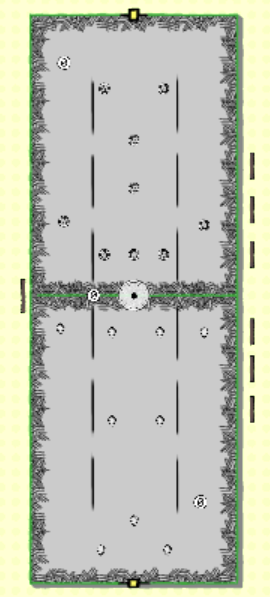
The game is played on an open, flat, dirt field, generally free of rocks & debris, that is 360 feet long by 144 feet wide. The field is split lengthwise down the entirety of the center into 72 feet wide halves, and crosswise at 120 feet intervals. These six resulting areas are marked off with white paint borders. Particularly enterprising/wealthy teams have been known to pay to have the sections magicked to different colors. Straddling the centerline at each end of the playing field is a netted goal, 9 feet wide by 3 feet tall. One narrow end of the field is to be facing North, indicating the “head” of the field. Three referees patrol the playing surface to control the action during the run of play.
Players:
Goltoppa is played by two opposing teams, consisting of 9 starting players on each side. Teams are permitted to ‘dress’ 3 bench players for each contest, to be subbed into the game in the event of injury. Players may not be subbed into the game for strategic reasons or in the event of a player’s expulsion from the contest. A player’s uniform shall consist of a sleeveless tunic, belted at the waist & extending to mid-thigh, in the primary color of one of the six teams currently representing the league’s six social strata: Noble (violet), Military (red), Religious (white), Artisan (gold), Farmer/Fisher (green), Merchant (blue). Note that players are recruited to represent these strata, and need not be members of them. Additionally, players shall wear sandals that wrap up around their calves, with linen padding over their shins. Each team dresses one Left & Right “Slasher,” designated by a black sash that goes diagonally from either left or right shoulder to opposing hip, with the shoulder covered indicating which side of the field they may patrol. Players may wear short pants as well.
Play:
The game is played in two 36 minute halves. At the start of the game, a coin toss determines initial possession, which begins via kicking a ball onto the field from a position to the left of the goal which the possessing team is defending. The ball is traditionally made from a treated cow’s stomach filled with air, or a leather ball of approximately the same size . There are no goalies; all players may attempt to kick the ball toward or away from the goal, or to a teammate. Additionally, each team’s Slashers are allowed to catch the ball on the fly in their hands and run with it to the border of whichever section of the field they currently occupy, at which point they must kick the ball themselves unless trying to place the ball in the opposing goal. A Slasher with possession of the ball may be leg tackled by the opposing team. A successful leg tackle means the Slasher must kick the ball to a teammate (only) from the spot of the tackle. Tackling with one’s arms, striking a Slasher above the waist, or attempting to strip the ball from a Slasher’s hands by a player other than an opposing Slasher is not allowed. A ball that goes out of the field of play results in a change of possession, with the new possessing team kicking the ball into the field of play from the sideline spot where the referees determine the ball crossed out of the field.
Scoring:
A score happens whenever the ball is put into the net during the run of play, A ball kicked into the net scores 2 points; a ball placed into the net by hand scores 5 points.
Penalties:
Rough Play: Arm tackles; deliberate leg tackles of a non-Slasher; headbutts; intentional hands to the face or back of an opponent – Offending player off the field for 3 minutes.
Stripping: An attempt to pull the ball from the hands of a Slasher by a non-Slasher – Offending player off the field for 3 minutes.
Catching: Non-Slasher making deliberate contact with his hands to the ball, especially with an effort to control the ball – Offending player off the field for 2 minutes.
Scooping: Slasher attempting to pick the ball up off the field, rather than catching it on the fly. This includes a ball that bounces before being caught – Offending player off the field for 1 minute.
Offsides: Slasher maintaining possession of the ball beyond the area of the field where he caught it, or crossing from his designated half of the field – Change of possession from the spot; no kick to inbound the ball needed.
Belligerence: Fighting; intentional physical contact/intimidation toward a referee – Offending player ejected.
Playing Goltoppa at the table
There will be a series of contested checks to determine scoring. These will use the Tool Sports: Goltoppa and have a few skills that can connect to them.
My first thought is a way to generate scoring similar to what is described by JayDubTheGamer would be to have five contested checks by half. That’s a lot of rolling, but provides some variety of results and capability of multiple players participating.
Winning a check by 1-5 results in two points. Winning a check by more than 5 results in 5 points. Winning a check by more than 10 results in seven points and winning by 15 or more is good for nine points.
Losing a check by less than 5 results in two points for your own team. Any natural 1 means that you have given up a five-pointer or have committed a foul, rolling their next challenge at Disadvantage. Any natural 20 means that you have scored a five-pointer.
This should generate scores that look a bit like early 20th century American football or current rugby.
Applying skills
Acrobatics and Athletics will be the most used skills, most frequently connecting to Dexterity and Strength. It would also make sense for someone in a coaching position to use Intelligence with one of those and for a character playing the captain to use Charisma.
I would allow up to one role to use Deception in order to get away with a foul. That team would have Advantage on the next check, but if they lose that roll their next roll would be at Disadvantage.
An example:
Violet team
Blue team
Score
13
7
Violet 5: Blue 0
16
20 (natural)
Violet 2: Blue 7
9
15
Violet 0: Blue 5
12
12
Violet 2: Blue 2
4
15
Violet 0: Blue 7
1st half
9 points
21 points
2
9
Violet 0: Blue 5
20 (natural)
7
Violet 12: Blue 0
14
11
Violet 2: Blue 2
18
6
Violet 7: Blue 0
3
9
Violet 0: Blue 5
2nd half
21 points
12 points
FINAL
30 points
33 points
Yes, that’s ten rolls for a non-combat encounter. Which feels like a bit, but the descriptions are at most two sentences, show the shifts in momentum, and feel like watching a sport when including those descriptions especially around the nat 20s.
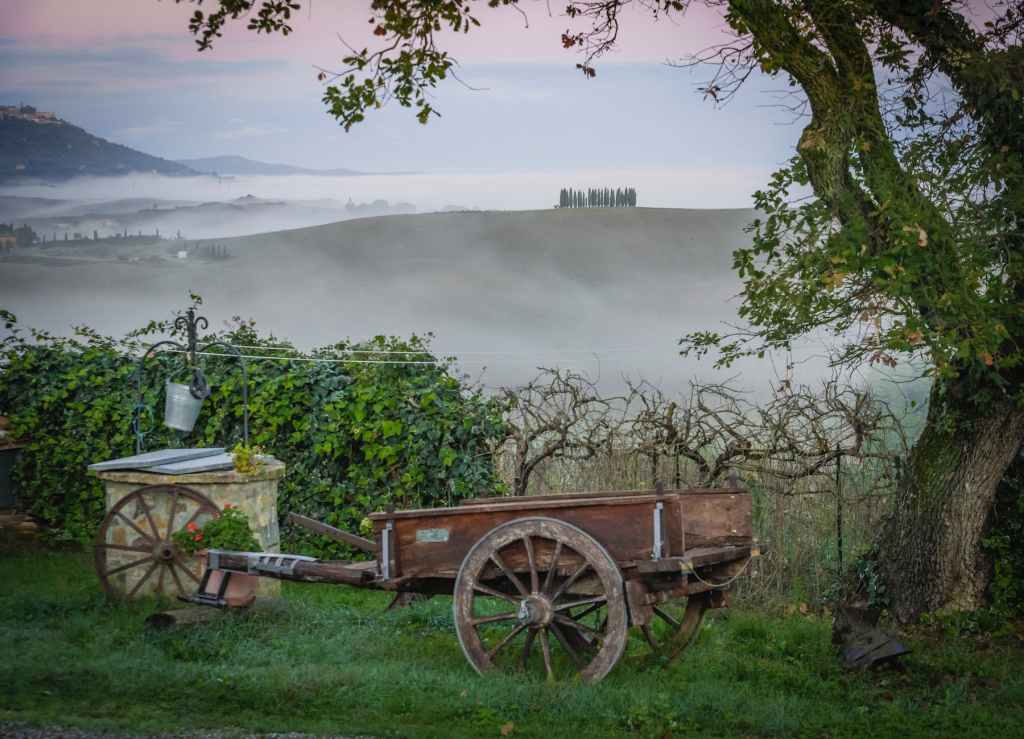
Paths and ways in a fantasy world are not just occupied with masses of people walking with a few nobles on horseback. They are also clogged with carriages and carts delivering goods. In my own world one NPC used two giant turkeys to pull his coffee delivery cart. The players enjoyed the presence of this NPC so much they kept bringing him back up.
The cabbie or ferien are taxis for a world where there are dragons and very expensive teleport circles.
Cabbie
You help carry people and goods between neighborhoods and distances. Working in urban areas either on the land or water you know the paths between places and the peoples who inhabit them.
The cabbie may pull their own cart, use a pony or even have experience with a two-horse carriage. Often they have a stool to help their clientele into their car. Also willing to talk, even when the occupant isn’t interested, the cabbie can learn the happenings of a region or distract that occupant in such a way that they are susceptible to crimes.
Skill Proficiencies: Insight, Deception or Persuasion Tool Proficiencies: Vehicles (pick one of land or water) Languages: One additional language, often from a culture that is nearby the home of the character Equipment: Cart, carriage, rowboat, gondola, sailboat (pick one), a lantern with 3 flasks of oil, traveler’s clothes, a trinket, 2 days rations, pouch with 25 silver
Feature: Talk too much
You are a skilled conversationalist that frequently goes on and on. These long talks are often consuming and distracting. Some cabbies and feriens may have allies who use that speech as a distraction to pick pockets or similar events.
Additionally, you pick up the streets, rivers or flyways of a new city quickly almost never getting lost in natural urban areas.
Personality
Use the Folk Hero and Fisher for guidance.
Alternate: Ferien
First, let’s get this out of the way. There’s no simple gender neutral word for ferryman. Similar to Anagod on World Anvil, I appreciate the older English word ferien. As you expect the cabbie knows the streets of a city or the ways between villages, the ferien works the waterways of a land — rivers, canals, lakes and shores.
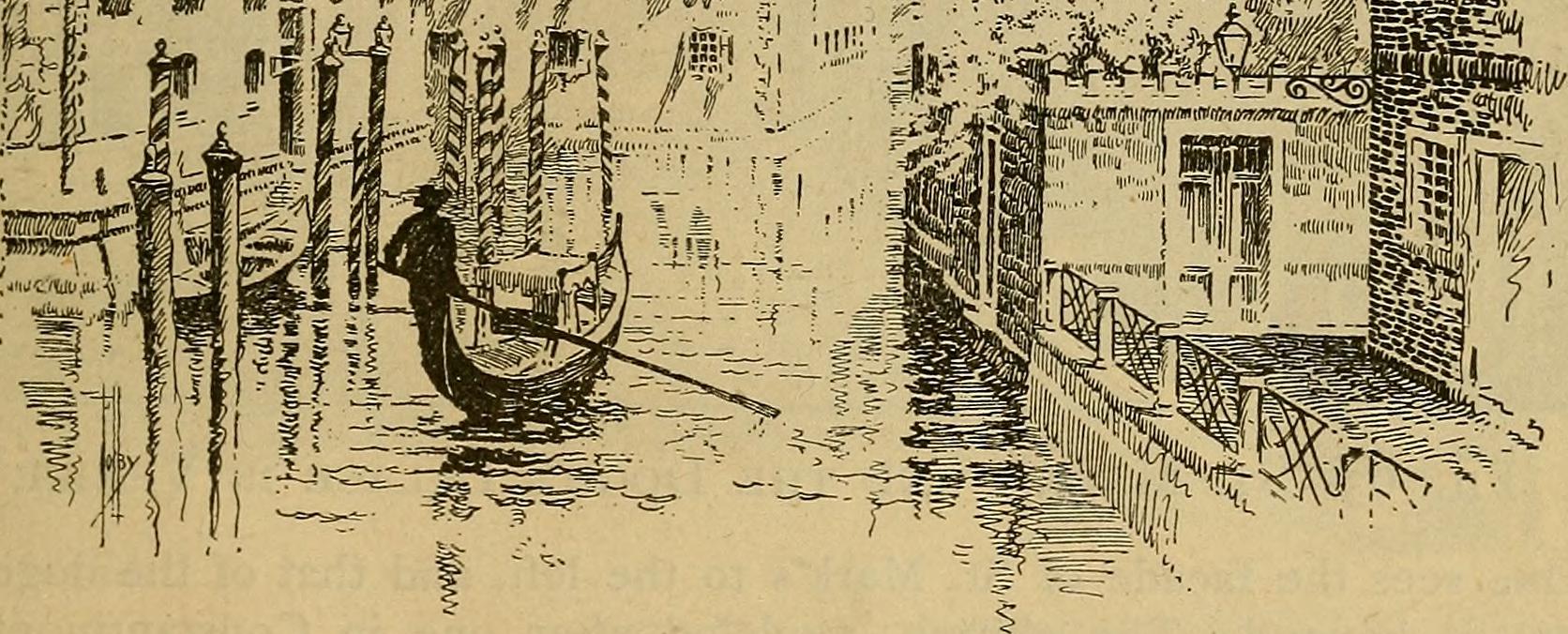
A scene in Venice – public domain
It’s pretty simple to make the Ferien version. Choose Vehicles (water) and then pick a rowboat, canoe, gondola or tiny sailboat for the vehicle. Nothing else needs to change.
Design Goals
Watching Shadow & Bone, or the Lion, the Witch and the Wardrobe, you see that those who manage transportation are part of fantasy stories. Whether the carriage driver or the polemaster in a gondola, these characters deserve the opportunity to be heroes.
Maybe because I’ve been focused on the bog-city of Sheljar for Dungeon 23 I thought it was time to share this background publicly. The bog-city, or an island city, must have peoples who are dedicated to navigating the waters.
Custom Backgrounds for 5th edition Dungeons & Dragons
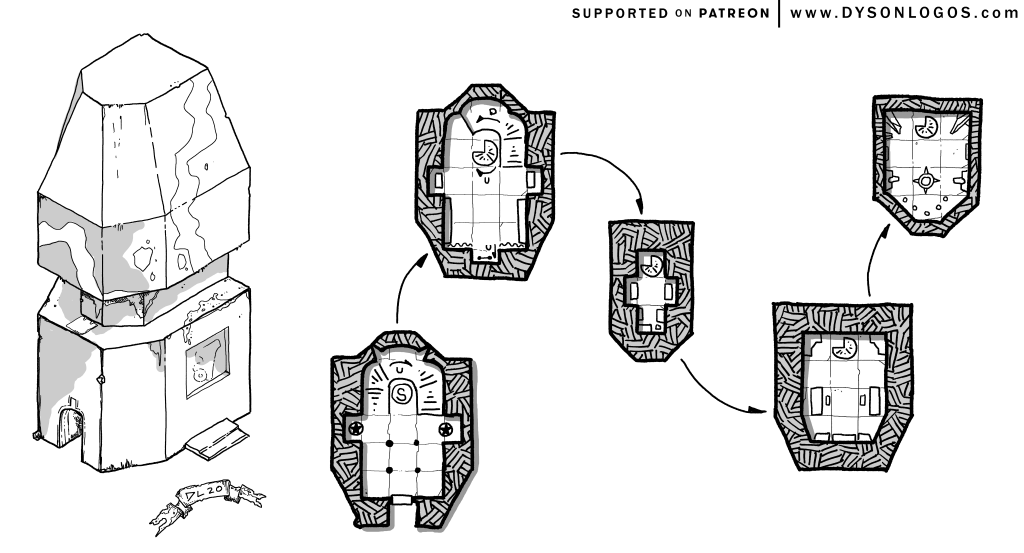
After the quick, safe ride on the sky-cable, you arrive at the top of a small tower. On the isle with the City Center this temple was abandoned when all of Sheljar turned their backs upon Oun and Obscon. These twin gods of death, endings, and darkness were rejected when the dead started to walk the earth again.
The gondola stops atop the pillar shape of the temple, in a haphazard wooden frame, with large hole knocked out of the roof.
Map by Dyson Logos, released as part of his commercially available project.
This narrow temple is cramped for hobgoblins, mulgoblins, goliath and large animals. These tight turns in the cold stone pass quickly as most try to exit the dark temple to dark powers as fast as they can. Though the Necromancer had nothing to do with Oun and Obscon the stench of death is too strong.
On the ground floor a search can result in finding the sealed secret door with an Intelligence check (DC 18). Intelligence, Culture (Sheljar), Religion are proficiencies that may apply if the characters act in ways that would connect them.
That secret door is sealed tight with iron bands. A Strength check (DC 20) can break through. Athletics and certain tools will help open it. Magic could be used as well.
If there is a desire to see how long that secret door has been sealed those that succeeded on the various checks would know that the seal is 25 years old, just as the Necromancer was coming to power. Is there a connection? Why not open the door and find out?
I’m doing Lore 24, an attempt to write small lore elements daily in the year 2024. Each element will be something that’s come up in play or will come up in play within my homebrew World of the Everflow — there will be actionable threads for PCs to grab onto and advance the story.
When the goblins and the Lorebook Hunters decided to make Sheljar into a Free City, where all thinking peoples were respectedm there was a vast, several mile separation between the suburbs and caves that the goblins discovered and the former City Center with its library, temples, city hall and palace.
The First Sky-cable was constructed to connect these places without worry about bridges, or Tunneling Nightmares, or frightening island of zombies. Now it is the most travelled sky-cable. The gondola rides high, so high that its towers peak above the frequent fogs.
So high the weather is different.
Photo by Constantin on Pexels.com. Gondola image for example. It doesn’t look exactly like this.
As the players ride this sky-cable gondola they are in their first “hallway.” This path is dangerous. They are in a space where weather is different. There are creatures that may threaten them. This fastest route to the City Center may not be the shortcut they expected.
Hazards
Roll 2d4 about halfway through the journey in the sky.
2. Uninvited guest — There is someone aboard the gondola with the party. The illusioned elf works for the Proctors of Grace. It casts Detect Magic while Invisible. If it detect magic it attacks. Use the stat block for the Evoker Wizard if the party is in Tier 2. If they are only Tier 1 use the Evil Mage.
3. Frayed cable — The character with the highest Passive Investigation notices the cable is frayed. The group will need to discover a way to get the gondola to the next tower 100′ away or fix the cable. Tinker’s Tools, Vehicles (air), Vehicles (water) offer some solutions. The DC should be 15. If no one succeeds in fixing the cable and it does break there are rudimentary parachutes that reduce the falling damage to one half on a successful Dexterity save of 10. They are 60′ in the air.
4. High winds — The gondola shakes violently. Each character should make a Strength saving throw (DC 13) or take 2d6 HP of damage and fall prone. Those that save take half damage and suffer no other effects. This is frightening but should have little impact on their ability to travel.
5. Freezing rain — Though it was a moderate day beneath the fogs there is freezing rain up in the sky. Each character suffers 3d6 damage. A successful constitution saving throw (DC 10) results in half damage.
6. Isle of horrors — With a Wisdom Check of 10 the party makes out a small island in the bog-city that seems to be overtaken by skeletons with a leader on a skeletal boar. This island is not hosting a tower.
7. What’s that? — 0ff in the distance, at the statue there is a large, white winged creature. An Intelligence Check, DC 20, recognizes it as a white dragon. Ken would role with advantage. Skills that could apply are Culture (Ken), Arcana. A player could convince the DM of other skills being applicable. The dragon does not attack. It lurks, watching.
8. Sabotage — The group notices the tower they just passed being attacked by group (party size +1) of zombies. If half of the zombies are destroyed the others retreat. The characters start 90′ from the zombies. They are able to stop or reverse the gondola. If the zombies are able to do 65 hit points of damage to the tower (AC 12) the tower falls.
If they complete the trip they stop at the bell tower of a semi-abandoned temple in the City Center.
Our intrepid heroes have discovered the the Free City of Sheljar isn’t a place of safety. Sheljar may be a dreamy government of respect for all, it is also a place of undeath, dragons and technology too fragile to survive with not enough people in the city to maintain it.
I’ll admit these DCs and language probably don’t match the standard D&D style. Today’s Dungeon 23 exercise came up against a my go-to-bed soon deadline.
I’m doing Lore 24, an attempt to write small lore elements daily in the year 2024. Each element will be something that’s come up in play or will come up in play within my homebrew World of the Everflow — there will be actionable threads for PCs to grab onto and advance the story.









 Full Moon Storytelling