The mechanics of Dungeons & Dragons don’t force you to choose a pastime or hobby. Outside of Bards and the various Backgrounds that include entertainment and arts there is no obligation or hint that a character should do things besides fight, interact socially to solve or cause problems, or explore a wildernesses and dungeons.
With a limited number of skills and tools you might weaken your character if you take something without a direct impact on their ability to perform as an asset in the adventuring party – so what?
Be a tiny bit weaker and add something that your character enjoys doing that has nothing to do with defeating dragons or wandering dungeons. In the real world in the eras upon which D&D reflects, this was common. Commoners worked less than we do in the modern era.
Look at games like draughts, chess, mancala, 9-man morris, hnefatafl, and others lost to history. People had time. They did things with that time that they enjoyed.
They sang songs. Told tales. Wrote dumb epic poems that we still read.
So what does your character do when they aren’t living their life and when they aren’t dungeoning or dragoning?
Burn a tool or skill on this – or don’t! – maybe they enjoy doing something that they are bad at.
Maybe your next PC or NPC is the world’s best tafl player, or the local community’s worst singer. Maybe they make little sweaters for the elves that aren’t actually elves, and then they meet real elves. Maybe they are the old man that talks story to the children of his town.
These elements may show in just a sentence or two in a given gaming session. That’s okay. It’s part of who they are and what they do, even if a d20 isn’t involved.
Backgrounds offer so much space to establish who you character was before they entered the stress and conflict of adventuring life. The combination of skill selection, tools, languages, equipment, and personality are a story unto themselves. Jim the Fighter and Nancy the Fighter are similar because of what they do now, but they are also different because of what they did then. Jim was a Noble, raised among the upper class — prim and proper. Nancy was an Urchin, raised on the streets she could sneak among crowds to avoid fights, usually.
And unlike classes, there’s still a lot of uncovered ground. Many tales of what your hero was aren’t encapsulated in the current official backgrounds. The common laborer – the fence builder, the ditch digger, the lumber mover, the stevedore, the longshoreman – is currently ignored.
In trying to fill that niche, while also playing with the idea that utility cantrips are valid parts of a Background, the Remarkable Drudge comes to life. This implementation differs from the earlier version of Seven Backgrounds for Games in the World of the Everflow in one primary way. In the past, the power level of a 1st level character was such that cantrips were folded into the feature. To keep the Drudge and the other Fantastical Backgrounds appropriate to generic D&D worlds the decision is made to replace a single skill and a single tool/language with one cantrip. An evaluation of various Feats available in the Player’s Handbook, Xanathar’s Guide to Everything, and Tasha’s Cauldron of Everything shows the value of a cantrip is slightly more than a skill, but not much more than a skill.
Let’s meet the Remarkable Drudge.
Remarkable Drudge
You are a laborer, often ignored and yet the reason why the community runs as smoothly as it does. You may work the docks, the stockyards, the lumberyards, or lay the planks to improve the dirt roads into wooden streets. Your hard work is the foundation of civilization. But, you’ve also learned, or been born with, a simple spell to make your work a bit easier. The small spell provides utility for you and your coworkers. It may be a hand that can bring you the necessary tool from a distance, the ability to change the shape of earth or water, a way to shout instructions to someone across the field, or a way to light a fire. No matter what your little spells gain you a bit more respect and value than others in your line of work.
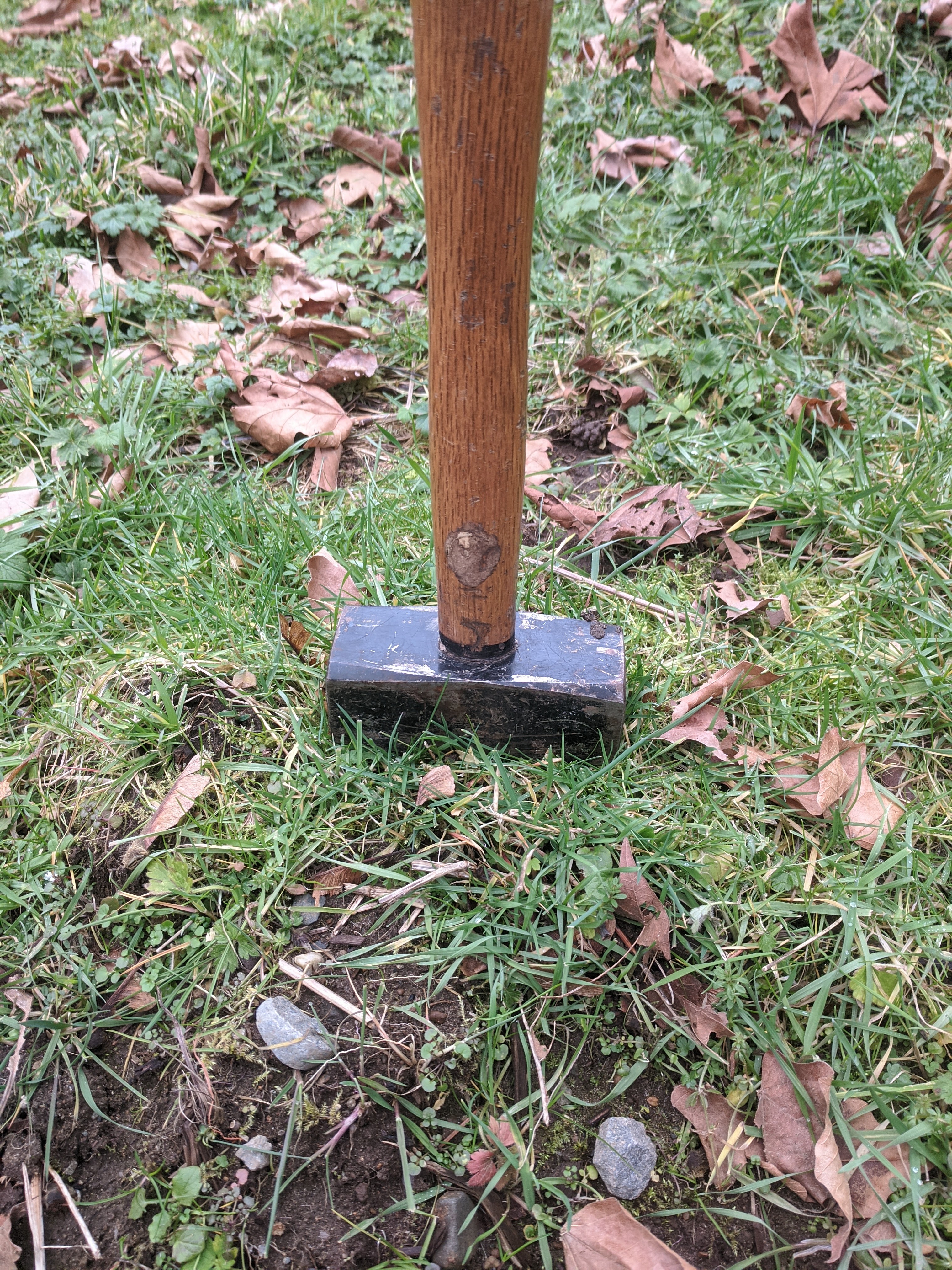
Over the years you’ve learned that anything can be a hammer, or a shovel, or well, what you need. When you don’t have the tool or mundane item designed for the job you are usually able to find something else that will work for it – maybe it’s a rock, a brick, a busted up board, or something from someone else’s pack. An imperfect tool is better than no tool at all.
Suggested Characteristics
Drudges are hard workers and celebrate their completed projects with gusto. Frequently working in teams they are warm to those who work hard and cold to those who do not.
For now, use the Personality Traits, Ideals, Bonds, and Flaws of the Folk Hero.
Custom Backgrounds for 5th edition Dungeons & Dragons
Cabbie & Ferien (updated for 5e, 5.5e and Black Flag)
Clothier or Weaver (updated for 5e, 5.5e and Black Flag)
Farmer’s Tools
Cost: 5 gp | Weight: 7 lbs
Proficiency with farmer’s tools means that you are familiar with the operations of a farm, orchard, vineyard, or other cropland. You are knowledgeable in the typical crops within an area, to include when to plant and harvest them. You also know their market value in most lands.
Components: Farmer’s Tools include a hand trowel, a bag of seeds, a hand rake, a mallet, shears, a bucket, and 10 feet of rope. When near a homestead they would be able to easily borrow a hoe or other full size implements.
Animal Handling: Familiar working in tandem with animals you are able to gain the cooperation from domesticated animals and can give common commands in languages you know.
Nature: You are able to identify the plants and fungus that are consumed as food, often knowing what cultures would typically raise those crops.
Survival: In the wilds you are generally able to locate some produce that provide a minimum level of nourishment.
Forecast: Your understanding of weather patterns is such that you are able to predict the weather for the next few hours. You can sense if there will be a natural change in temperature, wind, precipitation, etc when you have a view of the sky.
Farmer’s Tools
Activity
DC
Identify culture/race raising common crops
10
Give domesticated animal a simple command
15
Weather forecast for the next few hours
15
Identify culture/race raising rare crops
20
Farmer’s Tools are designed to use the tools guidance in Xanathar’s Guide to Everything.
Product release week is on us again — these will speed up, per the recent quarterly earnings review. One of the benefits to Wizards/Hasbro having so many new freelancers on the Candlekeep Mysteries project is that they have an extra couple dozen voices who can hit the promotions circuit, and many did.
As a reminder, I’m running DDD: 253, a charity game, Sunday March 21 at 7p. It is part of YachtCon: Back to School, the Puget Sound’s largest annual soccer convention. Sign up to watch for free, or sign up for our other “classes” and commune with Seattle’s soccer scene about pizza, beer, art, wine, cocktails, trivia, and more.
With Candlekeep Mysteries releasing this week the internet is full of preview material. Some focuses on the individual writers, as diverse a group as Wizards has ever put forward on an official product, and others give broad overviews of the product.
Drop the Die’s reviews their friends and acquaintances, a twist that this product forces because the sheer number of new voices brought to an official product.
Fandamentals went so in depth they have a part one and a part two. Every adventure has spoilery notes.
D&D Twitter featured every writer from from the adventure in a massive multi-week thread. Excellent use of social media to amplify their contract writers.
Introducing #Candlekeep Mysteries, the latest adventure anthology in the Forgotten Realms setting! Explore this collection of new mysteries by up-and-coming D&D designers from across our community. These short adventures arrive March 16!
Chris Perkins wasn’t just the lead on the product, he was also one of the adventure writers. D&D puts his voice behind this 9 minute overview of the book of books.
The latest episode of DragonTalk includes a little nugget that Wizards is donating to a library of each library’s choice.
Time for a new Dragon Talk, the official D&D podcast!
SlyFlourish doesn’t want you to forget about the DMG — frankly, I needed the reminder. Currently the book I re-read most frequently is Xanathar’s Guide to Everything, but that’s mostly because I’m doing a lot of writing about Tools. After that, I’m spending time with Rime of the Frostmaiden’s introduction to help me with writing for DDD: 253 – Invasion of the Trees.
One of the tricks the DM can use as the players get more familiar with the dungeon’s baseline is to speed past the areas that conform to that baseline and instead describe the exciting places.
Portage County, Wisconsin is hosting virtual D&D using DnDBeyond.com. They launched the digital version after donations from Wizards of the Coast and Fandom.
BYU-Idaho is hosting D&D sessions. They are transitioning back to in-person gaming.
When that stimmy hits I’m backing Coyote and Crow. I love alt-histories. One designed from the ground up to honor the First Peoples of North America will be exciting.
Many D&D worlds are anachronistic in their approach to the world space. The inn has rooms with bunks for a single person. Clothing and bathing habits also mimic our current world. Reading is common.
Here’s the thing — the idea that these things are too modern for a “real” approach to world building is wrong. The ancient world through the Renaissance contained modern conveniences, and they didn’t have magic.
Beer Factories
No, your average inn or tavern will not have canned tall boys to crush when the adventurers visit. They most certainly would have lower carbonation beers that are mass produced, not just niche ales, lagers, meads, and such. Beer factories were present in ancient Egypt.
Archaeologists found eight huge units — each is 20 meters (about 65 feet) long and 2.5 meters (about 8 feet) wide. Each unit includes some 40 pottery basins in two rows, which had been used to heat up a mixture of grains and water to produce beer, Waziri said.
That’s a lot of beer. In Curse of Strahd there’s the embrace of a rather large winery.
Embrace this. Have a popular beer, wine, liquor, etc within a region. Develop trade routes with it. Maybe your character tried it when their richer friend gifted them a bottle, jar, or cask. Maybe they carry a small vial of their favorite with them to remember home. Were they part of the merchant class that helped ship the goods from town to town?
Related to beer is that recipe books go back to the dawn of writing. Your brewer or vintner could be producing a recipe from many towns over, not due to word of mouth, but because the recipe is known to the world.
Grab Heroes Feast for some modern foods inspired by Dungeons & Dragons, or just follow Dollop of History for pre-WWII foods going back to the early Middle Ages.
And, of course, the Redwall Feasts bot has foods that work for any indulgent culture.
Your world can and should include the senses of taste and smell. Street foods and walkups should exist. Develop a vibrant food culture not because it adds verisimilitude, but because it expands the stories you can tell with D&D.
Four Fey-folk are explored in the March 11 Unearthed Arcana drop. This includes the classic Fairy, two animal-folk (rabbit and owl), and a Fey Hobgoblin. While all of these races are connected to the Feywild, they are not called out specifically as being from the Feywild, just connected to it. Only the Fairy is Fey, by creature category. In some ways this makes the other three racial options (the document does not call them out as lineages) like “normal” Elves rather than Eladarin. If this UA gets strong feedback there will be two Hobgoblins in existence, one a martial warrior and the other that creates a unique bond through gift giving.
The “Creating Your Character” section provides special character-creation rules for the race options in this article. The races that use these rules can coexist seamlessly with races that use other rules. For example, the race options in the Player’s Handbook have built-in ability score increases, while the races in this article don’t. Race options from both sources can adventure together. If you’d like a race that doesn’t appear in this article, such as an elf or a dwarf, to have similar ability score flexibility, the book Tasha’s Cauldron of Everything provides a rule, called Customizing Your Origin, that gives you that flexibility. That book also gives you the option of building your own race, rather than choosing an existing one. That option is called the Custom Lineage. No matter which option you choose for your character—a race in this article, a Player’s Handbook race, a race modified by the Customizing Your Origin rule, or a Custom Lineage—you can adventure with characters who are built with a different option. This sidebar builds on the design note in our previous Unearthed Arcana, “Gothic Lineages.”
Any fey centered story has to have fairies as playable characters. Fifth edition is finally adding them. They fly, of course. The Fairy joins Aarakocra and Feral Tieflings as able to fly at first level. Owlfolk join that group shortly. These are the only races limited away from some versions of Adventurers League.
All of the abilities just make sense for what we expect from fairies, but the one that stands out to me as unique and situationally potent is Fey Passage. The ability of a small fey to enter nearly sealed spaces fits so much of the legend and lore surrounding these peoples.
Hobgoblin of the Feywild
Whereas the Volo’s version of Hobgoblins focused on every single one of them being at least a light fighter, those Hobgoblins with connections to the Feywild are helpers. Rather than armor or weapon proficiencies, your Hobgoblin gains a leveling version of the Help action. This is much more interesting flavor.
Hopefully when the Fey Hobgoblin gets dialed into official material the two version appear more like subraces, rather than having similar, but still different abilities. There is language drift between the new Fortune from the Many and the old Saving Face. Also, the older version of the Hobgoblin is just weaker. Three proficiencies is just weaker than Fey Gift and Fey Ancestry.
Owlfolk
Another flying creature, of course. The choice to be either medium or small makes sense, as there is variation in size for real owls, as well as the stories upon which the Owlfolk are based. There are two sight based abilities, but neither directly relate to Perception. This UA does insert a third scale of Darkvision. It should likely be changed to either 60′ or 120′ to be inline with other races. 5e is about those kinds of simplicity.
My favorite ability for Owlfolk is Magic Sight. Adding a ritual spell makes so much sense for a race that is so storied in wisdom and intelligence. It combines well with spellcasters and martial types. Hopefully there are more races that access rituals rather than the now standard 1 per long rest usage of a 1st level spell.
Rabbitfolk
Hip, hop and hippity hop. Yes, there will be a Rabbitfolk Bard in my future. There’s some interesting mirroring of Halfling abilities here, which makes sense. The two generally smaller folk both love freedom and large families. Rather than Lucky, the Rabbitfolk get a minor bonus on failed Dexterity saving throws. These similar abilities maintain interest while connecting to their stories.
Here, the Rabbit Hop is the ability that leaps out. Being able to jump around is key for a rabbit. Getting to use it with no cost is wonderful. The d12 of additional feet is clunky (just as the similar rules regarding Athletics are clunky). For gridded play something like +5′ per proficiency bonus would be simpler. For those playing with Theater of the Mind the difference between 3 feet and 4 feet is meaningless in combat.
Overall these should be popular. There are entire game systems dedicated to animal folk. Humblewood was extraordinarily popular, because people just enjoy being little floofs of magic and power. Official support for similar folk makes sense.
Hopefully the feedback helps dial in some changes to the various hobgoblins and other non-core races that have clear subraces but operate as completely separate instances rather than those that share story and abilities.