Working with PJ over at Homebrew & Hacking, I’m helping put together a set of backgrounds and other elements for a micro-setting for use in the 5e D&D variant Level Up. Our project is tightly focused on a culture of temples, philosophers, oracles and city-states — Worlds to-go! The Elysians.
One of the reasons I chose a Level Up project rather than traditional 5e Dungeons & Dragons is that Level Up puts a large emphasis on Backgrounds and Cultures. Things like NPC connections, mementos and even advancement in that pre-heroic profession are featured in a Level Up Background. That fits how I want to tell stories using D&D.
I also listen to PJ’s podcast quite a bit, which I guess PJ just found out.
For the project some of my previous Backgrounds will be adapted, but there are also new ones that help fill the micro-setting of the Elysians.
Head over toKickstarterand click on “Notify Me On Launch” to see the project when it is live. The team PJ is putting together will provide you with some simple tools to help expand your D&D stories and maybe even tell the future.
tl;dr – I’ve become a horse-race style observer of the D&D movie because I see the numbers as a proxy for acceptance of a hobby that remains just on the edge of pop culture.
It is inarguable that the D&D movie didn’t turn a profit at the box office. It was pulled from theaters after earning ~208 million dollars. Production costs were reported to be ~$150 million, some of that budget was higher due to filming during the early stages of the pandemic and across four nations (Iceland, Ireland, England and the U.S.A). Those costs were supposedly split evenly between Paramount and Hasbro, but Hasbro only held distribution rites in the U.K. and Canada due to their ownership of eOne at the time.
Paramount reported in Q1 that they spent at most $62 million on advertising the movie (that number is bundled with another film). Hasbro never revealed their ad spend, but did take a $25 million impairment due to the film not hitting theater expectations.
It is a highly rated film. And some would consider those box office numbers a failure or a flop. I have spent way too much time in certain corners of the internet arguing how it wasn’t flop or failure.
But my evidence isn’t raw dollar numbers. So why do I argue?
Part of it is because I’m a marketer that loves D&D. One piece of guidance I use is the massive increase in search around the movie.
Red is D&D the game. Blue is D&D the movie. The first blue spike is when the movie’s name was released. The second blue spike is the Super Bowl ad. The third is the release buildup. All are echoed more strongly in the game’s search results.
Search results don’t directly connect to purchasing. They are merely an indicator. But that indicator is strong, very strong. No other event in modern D&D has the spike creation that Honor Among Thieves did.
Also, a ton of people are still watching D&D: Honor Among Thieves. It’s been available in the United States via Paramount+ for more than three months. From its release week on streaming it has been a top ten movie every week.
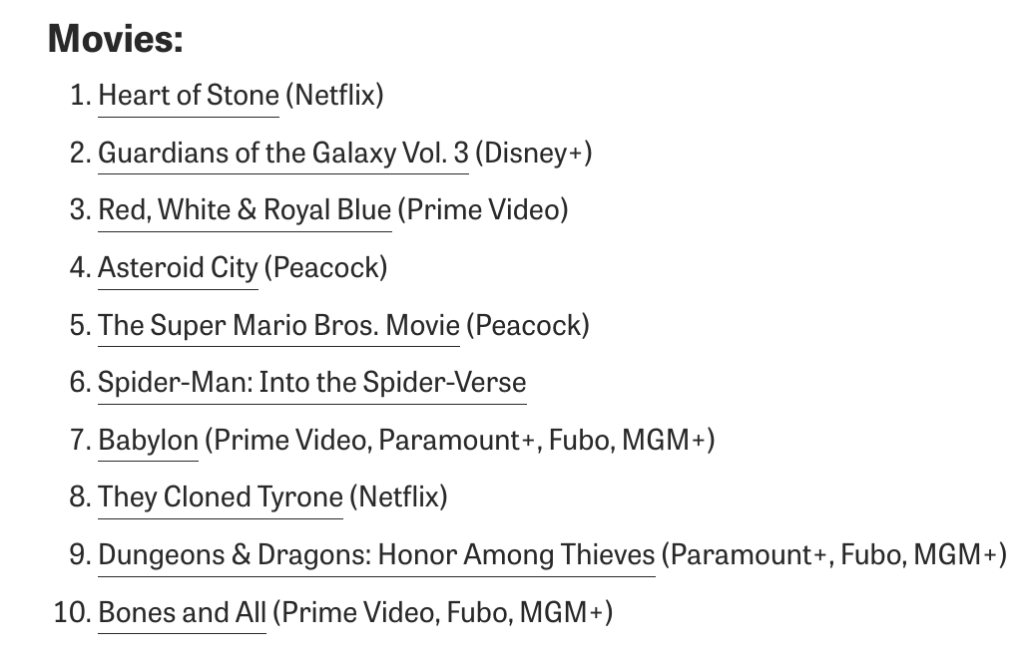
D&D: Honor Among Thieves was #9 heading into this weekend.
Just prior to the current weekend it finally released in the U.K. and Ireland. It is number one on Paramount+ in both markets. When it was released in Canada on Netflix, it was number two for most of the first week. It releases on Amazon Prime globally on August 25.
It ranks when bigger box offices successes don’t.
Some streaming isn’t captured. For example, I just watched it on Alaska Airlines. It was the third listed movie in the New Movies section, again ahead of much more popular films.
For 35 days it was number one or two on iTunes. In the 110 days it has been available there are only seven days it is not in the top 10.
On Google Play it had a 44 day run at #1. Once on general release it has never dropped below 7th.
On Amazon it wasn’t quite as popular, but the D&D movie was still strong.
On less popular services it still did well, on Rakuten it just leapt to number one last week, for example.
How does a movie that fell a bit, but not a lot, short of financial success metrics (pre-March 2020 people would use a doubling of production+marketing, now the 1.5 is more common) do this well in the modern environment?
How did D&D: The Brand (not the game) have a 74% increase in revenue when the movie was a failure? Probably because of licensed goods. There are a lot of them. I bought the Healing Potion mints for example.
Why do I argue with people about this?
Again, I’m a marketer.
But I’m also a nerd who had his D&D books knocked out of his hands walking the halls of high school. I had a parent think that the game was the path to Satan. The moral outrage and general jocks v. nerds aspect of my relationship to the game came up a lot when I was interviewed for “Hero’s Feast: Finding Community through Dungeons and Dragons.”
I’m lucky enough to see, and help, my other main hobby grow in popularity. Soccer in America is mainstream. It’s popular enough in the Seattle area that a hobby website can go independent and fully employ at least one person.
And yes, there are similar successes in D&D. Critical Role is the largest of those. They aren’t alone. These are still often niche cases, and not an indicator of mainstream acceptance, as much as there can be a mainstream in a world where every hobby and interest has its own channel.
Honor Among Thieves was an opening for something like the mainstreaming of comics. It may not have gotten there. It might have. There’s still a D&D TV show in the works, as part Hasbro Entertainment and in cooperation with Paramount.
Paramount and Hasbro also keep expanding where D&D: Honor Among Thieves is available. That’s uncommon with niche properties. The Peripheral was just cancelled. Willow was cancelled. It’s easy to cancel shows and movies that aren’t massively popular.
Streaming continues to sort itself out. Paramount was late to the game. They are moving ahead of older streaming platforms because of their original movies and their deep catalog of TV.
And I guess that means D&D: Honor Among Thieves judgement as a financial success is a lot more like a campaign than a one-shot. There was no overnight hit, just a consistent leveling up and growth over the past six months as the fans of the game keep watching, keep showing others the movie and keep powering the growth of D&D to heights that us 1980s basement dwellers thought was just a dream.
Depending on sourcing (I’ll use Berlitz) that’s now languages one, four, five, twelve and Italian (outside of the top twenty) that have a free, open version of Dungeons & Dragons available to them.
I wouldn’t be surprised if Japanese is added soon, as WotC took over the Japanese release of D&D a couple years ago.
Chinese, Portuguese, Arabic and Dutch were the next most popular languages for Dungeons & Dragons: Honor Among Thieves that have not yet had an SRD released for them.
This is an introduction to the seventh campaign set in the World of the Everflow. The most significant difference between these and the previous campaigns are that the player characters are all members of the Proctors, a group that once completely restricted magic from entering the Land of the Six Kingdoms.
The campaign will start in the city of Ras Rurulit in Daoud shortly after the PCs were dropped off there. They have a safe house. Operating in the city either in hiding or in open defiance of convention will be up to the party.
Your group of Proctors are working together to capture and contain the Book of the Word and the Book of Dance, two groups of Scholars active in southern Daoud. You are authorized to use any measures necessary to control this group. They have been teaching well beyond just a Scholar and two Students – end them.
Background
In the last passing of the Dragon, the fourth moon, the World of Everflow experienced the return of magic, the introduction of goblins with smog teknologies, and empowerment of animal companions. Native to the Lands of the Everflow, the Kin all have animal companions, some learning minor magics. Rarer are those whose companions are empowered.
The fey Ken object to these souls casting spells. Their Proctors crush the spread of magic and seek the Lorebooks from the seventeen schools where spellcraft was trapped. As the Ken invade from the west and the Six Kingdoms’ borders are rewritten, a forgotten peoples float on airxips from the north. The Kon are a smog-punk society with klackety, noisy tek coming from an island of guilds and invention.
Heroes rise with their animal companions joining their journey. From humble beginnings these heroes show the power of fellowship and share knowledge with the greater world.
In this case, the PCs are not heroes. They are not antiheroes. They are the Ken, people of knowledge, hoarding and limiting magic from the common people in the Six Kingdoms.
This map is what the initial intelligence of the Ken thought the Six Kingdoms looked like. It’s quite wrong. Your group of Proctors are in the far south of Daoud, a rough land similar to the non-desert coastal Maghreb.
Grand Conflicts
Proctors versus Scholars
Proctors versus the rare Gobkon in the south
Do the Elder Dragons really know best?
Factions
The Book of the Word – book based spellcasters
The Book of the Song – music based spellcasters
Fleet of the Silent Knight – Daoud’s force responsible for maintaining control of the bay.
Isarnalijik and Isamamimir’s Squadron – the remnants of land forces who insist they are the rightful heir to the desert lands.
Rumors
There are many colleges and universities in the land.
Magistrate Sas Rurulit is the greatest singer in Daoud’s history.
Ishurrumukuf has been taken over by one of the trade guilds of Qin
A great storm is coming from the West.
Facets
The group are a collection of secret agents or special operators. They may act undercover or violently during the mission.
They have one ally to start, Sabrinigha. She runs the safehouse and is a halfling of the born generation slowly discovering spell craft.
The lack of animal companions will be obvious. They’ll need a cover story.
In traditional D&D this mission would be Lawful Evil.
Variant Rules
Ken start with a Feat that grants a 1st level spell such as Magic Initiate.
Short rests are 8 hours. Long rests need sanctuary and 12 hours. This leads to a pace more similar to a novel.
Find Familiar and similar spells are banned from PC knowledge at the start of the game.
50% of Enchantment spells no longer exist. This will not impact your spell choice.
Use point buy or standard array for starting attributes. If you want something random, the redrick roller gives random point buy valid stats.
Start at 7th level because the Proctors are powerful.
There are several custom backgrounds and tools available. We will use cultures, not languages. Each character will start with “Daoud (Common to the area) and Ken” for their cultures. If your PC would have more languages discuss that with the DM.
Each character will start with 500+1d10*25 gold to spend on mundane items or to put in a pouch and use as spending money.
Each character will start with TWO COMMON magic items, plus an Oriq Mask (see Strixhaven) and one RARE item based on the character’s Background and role within the Proctors. That Rare item will have story elements to it, may get stolen. May level up. We’ll see.
Each character must be be a spellcaster, but no Druids or Clerics or Rangers. Proctors serve the Elder Dragons, not gods or nature.
Every character must represent one of the Proctor factions – Seeker, Defender, Striker. The chart below shows a few examples.
Seeker
Defender
Striker
Wizard
Evoker
X
Diviner
X
Abjurer
X
Warlock (dragons)
Archfey
X
Fiend
X
Great Old One
X
Sorcerer
Draconic
X
Wild
X
Rogue
Arcane Trickster
X
Paladin
Ancients
X
Devotion
Monk
Four Elements
X
Fighter
Eldritch Knight
X
X
Bard
Lore
X
X
Valor
X
X
Artificer
Armorer
X
X
X
Artillerist
X
X
Alchemist
X
X
Battle Smith
X
Subclasses in other 5e Wizards of the Coast and Kobold Press books may be used as well.
Driving off into the wilderlands of Oregon my thoughts wandered to the D&D world I’ve created. Creating names for places on the fly is hard. Often people get consumed with making something that feels like Tolkien, Jordan, Weis, Bardugo or other greats. These names are complicated and often involve invented languages.
You don’t need to be so impressive that linguists study you.
Your world will feel alive borrowing from our own world.
These are great names for a fantasy space.
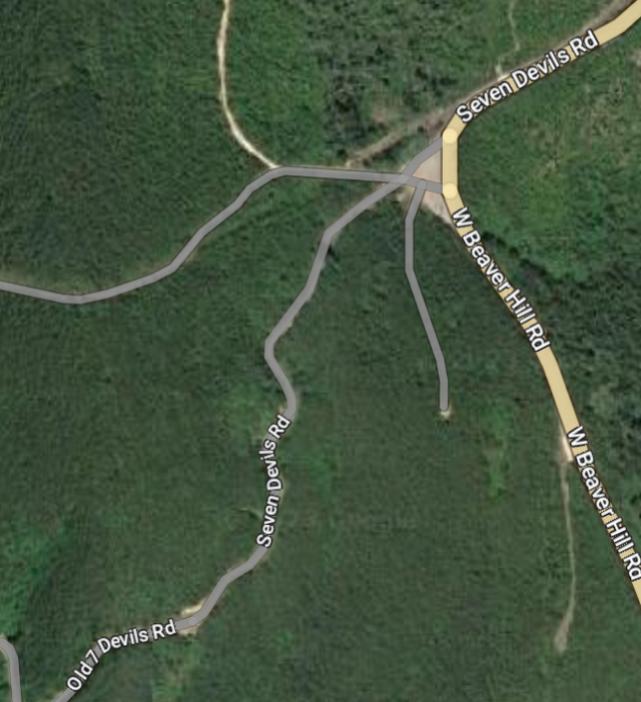
Seven Devils Road and Old Seven Devils Road is perfect for any Dungeons and Dragons game. You don’t need to stretch to far for there to be both an incident that involved seven devils and for the now ruling empire to have a newer, more popular road that carries the same name.
West Beaverhill Road could mean that it is west of Beaverhill. I submit that your fantasy world is more Lewis when you have every cardinal direction have a Beaverhill Road. Each of those is for a different beaverhill. Make those beavers talkative and have them part of the empire to capture some Fillory vibes too.
Whiskey Run Road is just down the way from where we are staying. In my fantasy world that road probably started as a minor trail used by some bootleggers. Now, as they gained power within the realm, thanks to their whiskey runs making money, Whiskey Run Road is the main thoroughfare between the capitol and its not-quite-satellite city. What was once a former smuggler cove is now the headquarters of a major influence on a failing state.
Hidden Canyon Road is something I’m fairly certain I passed by driving to get a cranberry turnover this morning. But my memory of this road is fragile as the road may not exist. The canyon might not exist. I never saw it. In a fantasy world Hidden Canyon Road could be a road, and a bridge, that exists over a fey gulch. There are nights when the gulch exists on most days the hidden canyon and covered bridge is just a normal passage with no need of a bridge at all. But on those nights with a few moons waning the fey canyon is back. Elves and their friends come out of the gulch demanding tax from those who use the bridge.
tl;dr
Take a few road names with you and be ready to create them as fantastic locations using the techniques from SlyFlourish’s Lazy Dungeon Master series. These quite normal names create a world of magic and wonder. Use placenames in reality to inspire your fiction.
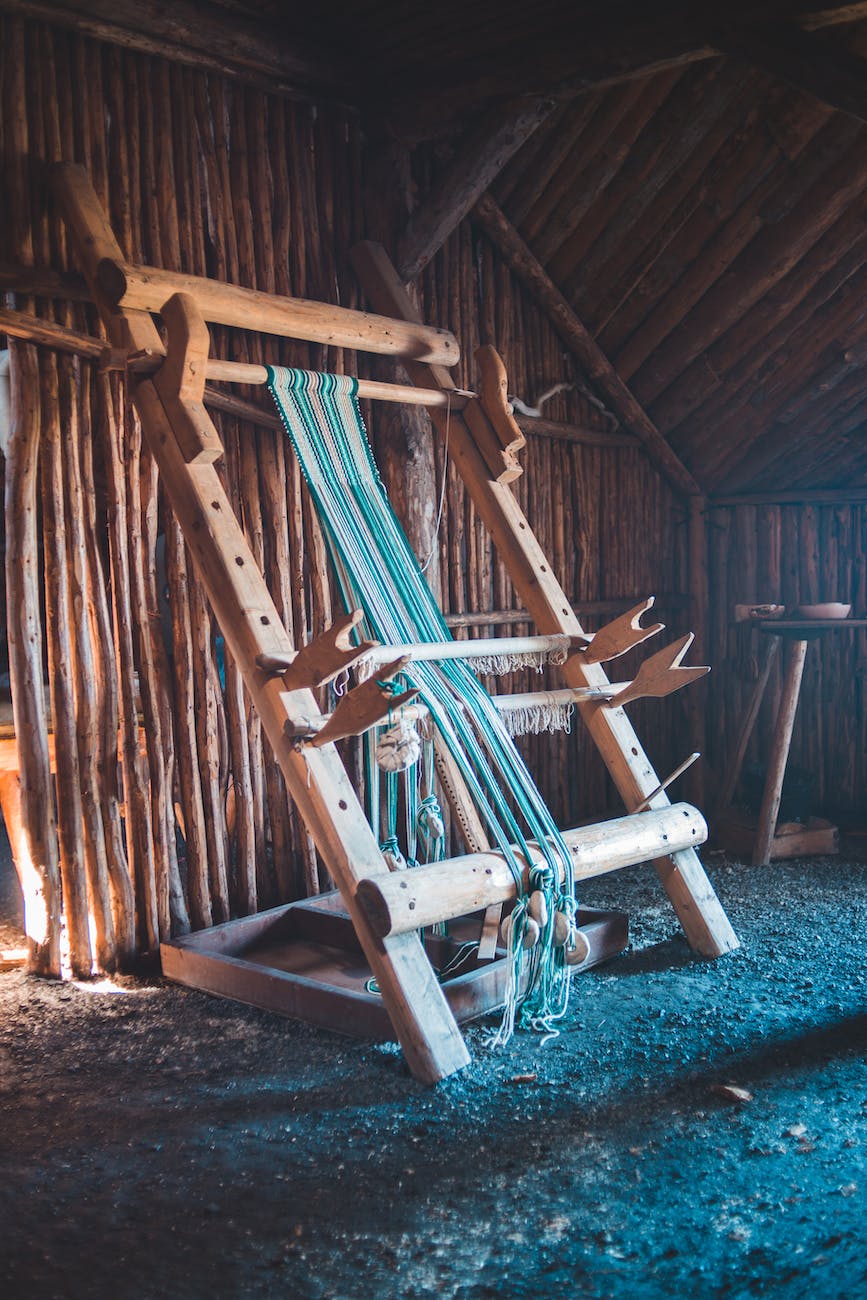
Weaving, sewing, quilting, tapestries — these arts were part of what common people did in the times that inspire fantasy storytelling. It’s rare that these professions are featured as heroes, but they should be. They are community leaders or practitioners of the quiet circle, often of women unempowered in a society.
From these origins one may rise to be a powerful Artificer, a storytelling Bard, a Mastermind Rogue, a healing Druid, a Cleric of Peace, a vengeful Paladin. Or something else.
The weaver is not soft, though they can make great fabrics. A quilter is not necessarily warm to all. These are the people who toil with nimble fingers and converse with those too often overlooked by authority.
You are an independent artisan who makes fabric or clothes or blankets. Your specific art is less important than what you do with it. Your friends and colleagues know things and count on you.
Authority may overlook your presence, but you know their tenor and can hide what they are looking for — whether that’s a person or a thing.
Skill Proficiencies: Insight, Sleight of Hand Tool Proficiencies: Disguise Kit, Weaver’s Tools Languages: No additional Equipment: Blanket, 3 candles, chalk, cloths (either common or winter), 3 needles, spool of thread, pouch, 5 gold
Feature: As the Wheel Wills
You have a certain comfort and understanding that you aren’t always in control. You have advantage on saves against fear, charm and other enchantments after the first round in these conditions.
Additionally, you are able to find and protect secrets. When using Insight or Sleight of Hand to keep or discover secrets you do so with double proficiency.
Personality: use the Folk Hero and Guild Artisan as guidance.
Design Goals
Avoiding the Folk Hero’s problem of “if you’re already a hero you shouldn’t be level 1” is my primary goal with the Clothier. It’s the primary goal with many of the backgrounds I’ve created. Common people become heroes through playing D&D — although someday I’ll make a False Hero, one who hasn’t yet been heroic.
Fernando Pessoa once said “Sometimes, when I wake up at night, I feel invisible hands weaving my destiny.”
I also wanted to capture the magic of weaving and other arts of cloth. These aren’t arts that I understand. They are arts that I want to celebrate.
From the literature that inspires D&D the lines from Wheel of Time about “the Wheel weaves as the Wheel wills” prodded me into action.
Finally there are some important quilters in my life. This background goes out to them too. Whether by stitch, by arms long or short, they are the fabric of our lives. A quilter can tell a story in squares and thread. Hopefully this story helps tell theirs.
Custom Backgrounds for 5th edition Dungeons & Dragons
I went and sponsored a soccer team. It’s a pub league team with several friends I met through Sounders soccer. Rather than advertise my soccer blog they all know about already I put the logo for Full Moon Storytelling on their kits. And then I offered to make any of them an Adventurer’s League legal character that represents some of their favorite soccer players and themselves.
A character sheet in Dungeons & Dragons is a story told in short hand.
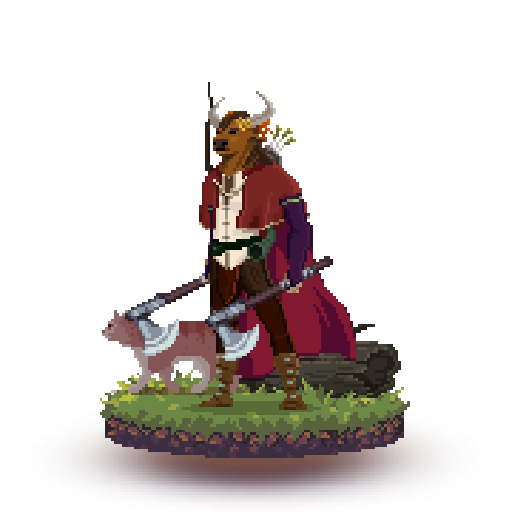
With Passive Aggression, one of the first things I wanted to do was have a little honey badger companion (in Reroll I used a cat). Ozzie Alonso was Seattle’s honey badger for so long that I must, must honor him. The player who submitted their favorite players requested a minotaur, which also suits Alonso well. It is easy to imagine Alonso lowering his head and charging through someone.
The other guidance is the maestro Luka Modrić. Ranger helped with this, because the bit of magic makes sense. Luka is one of the more technical players in the world, with the titles and individual recognition that makes sense. When the player is that exceptional only magic makes sense. Zephyr Strike seemed perfect for that representation.
I chose the subclass Gloom Stalker because of the Our Flag Means Offside FC player sees themselves as someone who can be a support player across the battlefield, Entangle and Dread Ambuser helped capture that story
Here’s the story I was trying to tell with Izzy Handball.
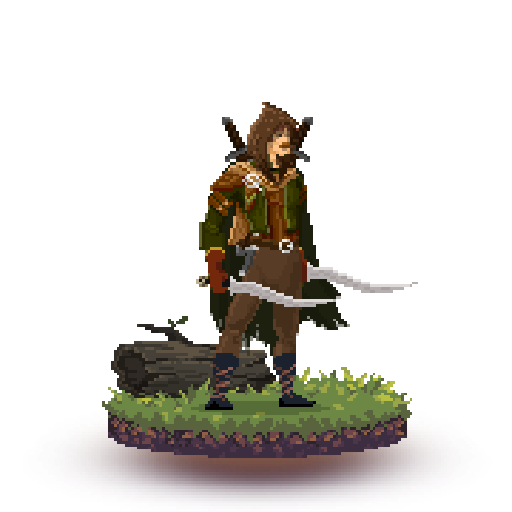
Roger Levesque is a legendary Sounder, from the time before they were in MLS. He also puts on a great pirate impression. Pelé is the world’s greatest player, ever. Young people please don’t come at me with your modern faves — Izzy Handball will slay you.
Combining a cult legend and the world’s greatest was a fun challenge. I started with the pirate, which meant Swashbuckler Rogue, which also fits Pelé’s personality. He loved to go one-on-one, or one-on-four, whatever. Dual-wielding swords made sense because Pelé would strike rapidly, constantly and with both feet.
A wood elf was chosen to further lean into Pelé’s pace, his fey ancestry and his charm.
With both of the soccer players the Folk Hero made sense. Whether form the streets of Brazil or the artificial turf of Starfire, Levesque and Pelé became legends with tales growing taller every year.
After one of my regular D&D sessions at Logan Brewing someone watching us started asking me about my campaign. I just couldn’t stop talking. We eventually got to talking about Sports in D&D.
That’s when Bears invited me onto her podcast, because I’m a talker.
The Cutting Edge Cosplay group were great hosts. I’ve listened to all of their other episodes and enjoy how much they share their passions for performance via cosplay.
This episode is also available as a podcast.
Share your passions, open up to others — you never know the friends you can make.
Most Dungeons & Dragons settings (Forgotten Realms, Eberron, DragonLance, Midgard, Greyhawk) exist in a similar socio-economic state to the very late Middle Ages through the Victorian period. The commonality of magic, the relative wealth and existence of a middle class, and other indicators compare fairly well to those concepts. There is a certain apocrypha that makes it clear that much of the fantasy we roleplay is not from Arthurian legend, instead there are modern concepts such as trade guilds, inns with more individual rooms rather than sleeping halls, massive sailing ships, some worlds even have printing presses producing newspapers.
Something lacking in almost every world set within that many hundred year period is sports. Almost all sporting events mentioned in the literature are individual in nature, essentially replacing things which were in the original Olympics. This ignores the fact that by the time societies had inns, guilds, papers, etc. they had team sports.
By Unknown author – Pietro di Lorenzo Bini (ed.), Memorie del calcio fiorentino tratte da diverse scritture e dedicate all’altezze serenissime di Ferdinando Principe di Toscana e Violante Beatrice di Baviera, Firenze, Stamperia di S.A.S. alla Condotta [1688], Public Domain, https://commons.wikimedia.org/w/index.php?curid=864734
A partial list of the team sports from around the globe within the time periods that inspire a majority of D&D fiction includes Town Ball (ball, stick, & safety), Mob Ball (ball, foot, & goal), Lacrosse (ball, stick, & goal), Maya Ballgame (ball, stick/hip, & goal), Polo (ball, stick, horse, & goal), Dakyu (ball, stick, & goal with maybe horses), Buzkashi (animal head, horse, & goal), and others – like the predecessor of hockey.
Fantasy Team Sports
Fantasy literature tends to ignore the element of sports. There are some that exist — from the barely mentioned phandrel (team chasing-and-destination) in the Forgotten Realms to, of course, quidditch, which somehow exists in the real world now. The Magicians has welters, which combines chess with magical violence. Strixhaven, the Magic: the Gathering and D&D setting, has Mage Tower and the single reference to Silk Ball (and a map).
Yes, adventures like Tomb of Annihilation, Rime of the Frostmaiden, and Theros capture individual sports.
But we know that the times upon which our worlds are based have a wonderful glut of sports. At the minimum these should be used to add color and flavor to our worlds. Make them part of festivals. Have a red v blue v green v orange v black phandrel contest that interrupts a chase scene, or maybe even becomes part of it.
Still, there’s more available to make your world live and breathe. Not just the Athlete and Gladiator backgrounds, which are great for a hero that specializes in individual sport. Add team sports to your character’s history.
Sports (type): A 5th Edition Tool
Lean into tools for the mechanics. They are an excellent way to add more story to your backstory. The use and specialization in a specific set of tools tells us much about the artisan, the bard, the entertainer and so many other backgrounds.
Expand on your Athlete by adding Sports (type) as one of their tools. Borrow from what was established by Musical Instrument (shawm, etc) for your model. The specific type of sport is purely a flavor and story element, until it isn’t. Maybe, you’ll find a fun town ball bat, or a ball game stick, or whatever, during your journeys and that may provide a clue as to who was in that space prior – DC YY Intelligence (Investigation) with advantage if you have experience with that or a similar sport, for example.
Bringing sports into your game as a tool expands the tales you can tell. Be Waterdeep’s version of Roy Hobbs, or a Sharn’s version of Mara. Maybe during a chaotic match of mob football between Aviceland and Copperwall in the Foxshaw Field you became a folk hero that repelled a skeleton attack.
Don’t Worry About Mechanics
As always, here at Full Moon Storytelling we’re focused on story rather than mechanics. Using a new Tool isn’t going to change your D&D game’s power level, not even as much as Coffee Gear.
Trying to figure out a winner might be necessary, but not with significant frequency. If you wanted to roleplay actual sports something like Blaseball would be a better than D&D. But, if you need a result and want to use the dice, limit the contest to a single roll for each participant on the team (use party sizes of 3 to 6), and have it opposed by an NPC. Through the description of their primary role within the sport and what that character is attempting have them make a roll Athletics or Acrobatics, assigned to an attribute that most fits their action and with advantage if they character is proficient. Then roll the same for the NPC. Have the first team to 3 successes wins that match.
Most games before the codification of rule and laws (baseball and football/soccer in the mid 19th century) could last from sunrise to sunset. If the players succeed on their first three rolls, consider that a game done by lunch. If it takes five, or more due to a bunch of ties, make it last into twilight.
Do not attempt to get deeper into the mechanics than this. Your session doesn’t need hours dedicated to sport. Instead any match should be a way to access new stories told at the table. Instead of hanging at the bar, or boxing – play some Dakyu. Meet some new NPCs based around that event, then hit the tavern to talk about that day’s new star athlete.
Handy Maps for Play
Two-minute Tabletop’s wonderful map works for many structures. There’s a small stadium with markings for halves that could work for town ball or mob ball that develop into a spectator sport.
Welcome to Connor’s Fantasy Stadium battle map, a field of packed earth ready for a clash of gladiators, athletes, or whatever you imagine!
I went and sponsored a soccer team. It’s a pub league team with several friends I met through Sounders soccer. Rather than advertise my soccer blog they all know about already I put the logo for Full Moon Storytelling on their kits. And then I offered to make any of them an Adventurer’s League legal character that represents some of their favorite soccer players and themselves.
A character sheet in Dungeons & Dragons is a story told in short hand.
Here’s the story I was trying to tell with Davy Jones — the name on the back of one of the players’ shirts. I didn’t look up the real players to build these. I did use their soccer-name as inspiration.
The soccer players provided in the prompt questions were Fredy Montero, DeAndre Yedlin, Zlatan. In some of the prompts there were references to Jessica Jones and Ljósálfar.
D&D is an imperfect way to represent these things. My attempts here are to capture the vibes of a potent showperson, a striker from distance and a stout defender. An Aasimar is more similar to the light elves of Nordic legend than the current version of D&D, plus that helps add more magic to Davy Jones — Zlatan has to have magic, so does Fredy “Golden God” Montero.
It was Fredy that helped the lean towards Paladin, as well as the Jessica Jones mention. Jones helped the decision towards Oath of Vengeance. Having Compelled Duel was another touch point towards Zlatan.
With DeAndre Yedlin still to be incorporated the Background choice was obvious — Folk Hero. Yedlin was the first MLS Sounder to rise from the Academy, the first to play in the World Cup because of their performance as a Sounder and the first to be sold to Europe. He’s a legend in his home town, and so is Davy Jones.
Each skill, weapon, spell is chosen to emphasize the combination of mystical striker, bewitching technique and the willingness to be a stout defender.