Tag: Character Builds

  • How Christmas can inspire your next Artificer

    How Christmas can inspire your next Artificer

    First appearing to the mass market fanbase within 5th Edition Dungeons & Dragons in Eberron: Rising from the Last War and now in Tasha’s Cauldron of Everything, the Artificer is a kind of techno-wizard. For someone without previous connections to Eberron, the setting that exploded on the scene in 3rd edition, the Artificer confused me.

    The fiction upon which it is based seemingly is all self-referring, or modern fantastical. There’s a subclass that essentially reads as if it is Iron Man ported back into D&D for example. Whereas most D&D classes stretch into the myths and legends that predate the game itself, the Artificer does not seem to have that convention.

    Oddly enough, it was a Christmas movie that reminded me of Artificers within our lore. There are magical techno-wizards within holiday tales. From Christmas elves of tradition, to the inventors of Jingle Jangle, you can find your inspiration for your next Artificer.

    These creators take the mundane and imbue it with magic. They create automatons, magically tinker, infuse items, and all the other things you expect from the description of an Artificer.

    Masters of invention, artificers use ingenuity and magic to unlock extraordinary capabilities in objects. They see magic as a complex system waiting to be decoded and then harnessed in their spells and inventions. You can find everything you need to play one of these inventors in the next few sections.

    Artificers use a variety of tools to channel their arcane power. To cast a spell, an artificer might use alchemist’s supplies to create a potent elixir, calligrapher’s supplies to inscribe a sigil of power, or tinker’s tools to craft a temporary charm. The magic of artificers is tied to their tools and their talents, and few other characters can produce the right tool for a job as well as an artificer.

    From DnDBeyond.

    Opening up a vision of an Artificer to include these amazing gift-gives also helps change how you approach D&D. A character of kindness and generosity, or that thieving Gustafson, expands the stories you can tell. When you visit the village you can brighten the spirits of the community via your infusions and spells.

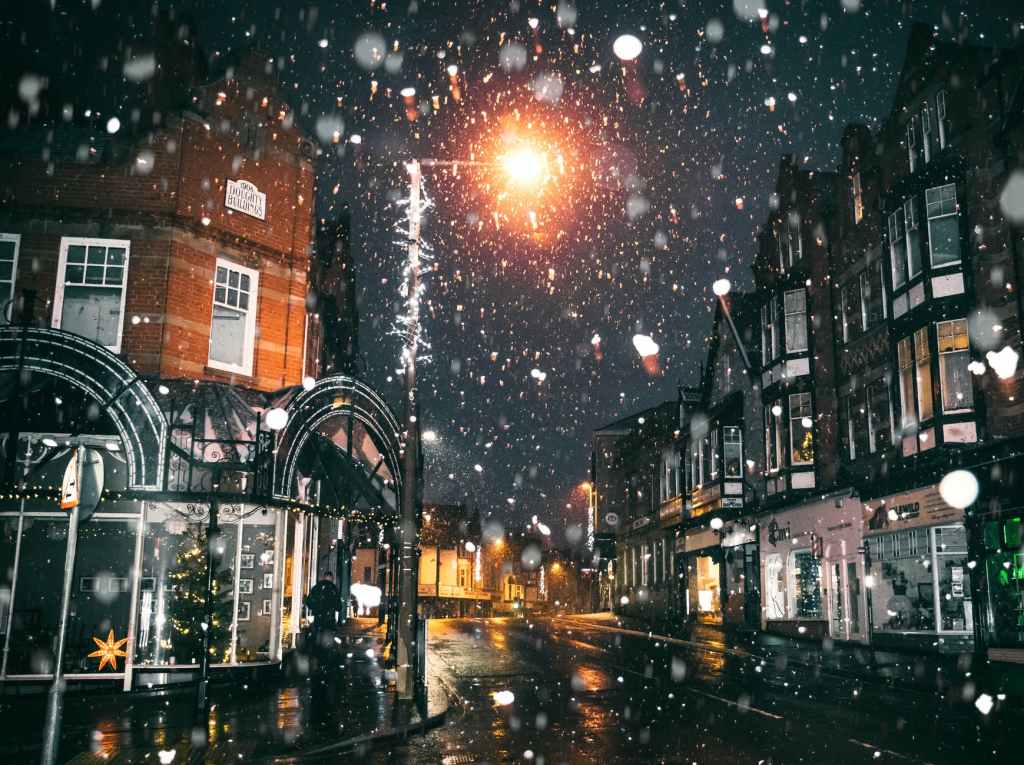
    Photo by Lisa Fotios on Pexels.com

    It may be a Hallmark/Lifetime/FreeForm/UPTv cliche, but there is magic in the holiday season. Incorporating the magic of elves, toys, inventors, Santa, and others into your D&D characters and stories means adding more joy to a game that so often centers violence.

    Generosity and joy exist in D&D (even in Barovia). Your Artificer has the power to amplify those feelings (while also being an effective combatant, but there are many places that talk about optimizing in those ways). There are 1,000 times a thousand stories available at any table and any session. Adding a little Christmas to your Artificer is a way to discover more of them.

    Be Jeronicus, Jessica, Journey, or even Gustafson. Be Alabaster Snowball, Bushy Evergreen, Pepper Minstix, Shinny Upatree, Sugarplum Mary, or Wunorse Openslae. Roll dice and tell stories about the power of Artifice.
  • Meet Amadin the Barker, including a new 5e D&D Background

    Meet Amadin the Barker, including a new 5e D&D Background

    From the Greatest Showman, to Newsies, to the nameless town criers belting out “Hear ye, Hear ye” the fiction that inspires our gaming has included symbols of governments, news guilds, carnivals, circuses, and religious orders in the streets are regularly part of the scenery. Some of these people would be dragged into heroic adventures.

    Amadin the Barker is one of these. Originally a barker for a travelling carnival, this fey hobgoblin fits within the normal world because of the cover of the carnival. Their uncommon lineage belongs among the strongmen who aren’t strong, the acrobatic performers, the owlbear trainers, and the oracles without magic.

    Created through a series of polls and prompts on Twitter, Amadin the Barker is discovered to be a Blessed Warrior Paladin of Redemption. They are generally peaceful, able to help their circus make money, prevent serious loss of live, and work to redeem themselves.

    Peace. Innocence. Patience. Wisdom.

    They swear upon these values. Sure, they are a warrior when needed. Those needs are rare. Amadin’s greatest tool is their booming voice and their desire to help the peoples who took them in when they were a stranger.

    laaaadeees and geenntleemeeen, step right up and see the most amazing art show in the world by Robert Couse-Baker (CC BY 2.0)

    Amadin the Barker

    Constitution +3Fey Hobgoblin, Paladin of Redemption (3)
    Strength -1Carnival Barker | Into crochet, not good at it
    Fine Clothes, rarely a Chain ShirtGhesh Province
    StaffSincere, Confident
    Comfortable, penny pincherAshamed, Judgmental
    This uses the Index Card version of NPCs for Social and Exploration Encounters

    If you want the full PC version of this community character Amadin is over at DnDBeyond, as are all of the community characters built via polls and interactions on my twitter account.

    Amadin is an example of a carnival barker, town crier, or herald. This new Background is part of my ever-percolating project Before We Were Heroes. Unlike the Remarkable Drudge, there is no cantrip or new tool for the Crier.

    Crier/Herald/Barker

    Skill Proficiencies: History, Persuasion
    Tool Proficiencies: None
    Languages: Two of your choice
    Equipment: A noisy instrument (bell, gong, horn, drum), fine clothes (a Barker should have a costume), common clothes, scroll case, 3 sheets of parchment, quill, jar of ink, 15 gp

    FeatureYou Will Hear Me

    When in a crowd, or during a heated discussion, your words always break through the background noise. When you shout out, or clap, or ring the bell, etc., the attention of the multitudes shifts to the Crier/Herald/Barker who can make an appeal to them. Your pronouncements carry the weight and heft of your organization.

    Barker Design choices

    Skills: Persuasion was obvious. That’s where this background had to start. Their whole role in society is to convince people to do things. The other choice came down to Insight or History. Insight made sense because reading a crowd may be necessary, but History fits the idea that the symbol of an area’s governance or a news guild or a traveler would have this level of knowledge. If a campaign is using Culture rather than Language, drop History for Insight.

    Tools: One of the spaces I’m exploring is giving various Backgrounds tools that they possess that they aren’t necessarily proficient in – in this case a musical instrument. The Crier may use a gong to gain attention. They don’t need to know how to perform a musical piece.

    Languages: With two more slots and the modern cosmopolitan nature of default D&D granting two languages makes sense.

    Equipment: The non-proficient instrument is a little note that some Criers need an assist before they gain attention of the masses. Most backgrounds do not include two sets of clothes. In the case of the Crier/Herald they should have fine clothes for official duties and look common when not. For a Barker replace the fine clothing with a costume, if you’d like.

    Feature: First off, yes, I modified the Sounder at Heart motto for this one. You Will Hear Me captures the feel of a person standing in the crowd and demanding attention. A character could use this as a distraction, or a rallying cry, or maybe as a way to start a charity drive. As always, the feature fits into social and exploration moments more so than combat.

    For personality attributes use Folk Hero, Scholar, Noble, or others that fit. The finished product, whenever it is done will include unique characteristics for all 40 or so Backgrounds.

    Custom Backgrounds for 5th edition Dungeons & Dragons

  • Orne Willowrush – an NPC for your adventuring needs

    Orne Willowrush – an NPC for your adventuring needs

    Opening up an NPC creation series with a character I should have made ages ago – one with glasses. If you don’t know me, I’m basically finger-blind. Without glasses or contacts I am unable to count how many fingers you would be holding up if you are more than a couple feet away from me. And yet, I never have played a character or NPC with glasses. I actively avoided it.

    After reading Deven Rue’s recent post about embracing characters with vision impairment or blindness I decided that needed to change.

    Heading over to DM Heroes, I hit the random button until it turned up a character with glasses. Then, it was about creating a character with an interesting background who was not a quest giver. Because as Rue says, “Make us non-quest related. Just people in your world. Living. Existing.”

    Meet Orne Willowrush

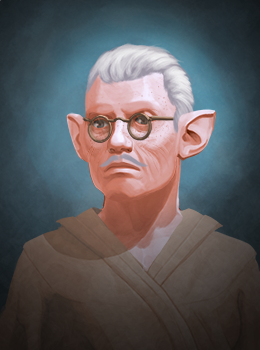
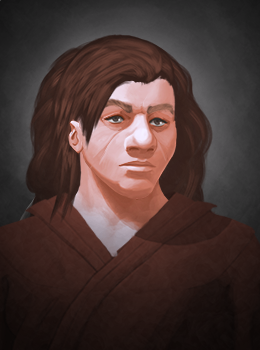
    This image shows the bust of an older male halfling with somewhat receding grey hair that is swept back. He wears glasses and has a thin mustache. His clothing looks like it could be a rough robe or shawl shirt. It is light brown.
    Created using DM Heroes one of my favorite NPC art tools

    First up is a Simple Index Card Version of an NPC. These are designed so with just a few words you can know who an NPC is from a basic description of appearance, to some basic motivations. In Willowrush’s case he’s a former soldier who once fought for the realm, but now works as a cooper. In my deep belief that everyone in your D&D world should have a hobby he is a fisher. He is not skilled in fishing though. He just enjoys doing the calmness of fishing with his friends. He can get dreamy about his past, but also doesn’t like to talk about it. Orne recently lost his beaver – Tryn. He’s just newly bonded with an otter – Orla.

    Orne’s best friend is a librarian named Incirion Vadu, a goblin. You can often find them at the river together, ignoring work. Incirion knows Mending, and will often have an extra pair of glasses for Orne.

    Orne Willowrush

    Dexterity, Strength +1Stout Halfling, Conscript Fighter (3)
    Constitution, Charisma -1Cooper | Woodworking Tools, Fisher’s Tools
    Padded Armor, Common Clothes, Glasses, OtterWinestar, Lemplet Place
    Staff, adzeWants to relive past glories
    Modest lifestyle, and will buy you a glass of wineDaydreamer, Reticent, Recently lost his beaver companion
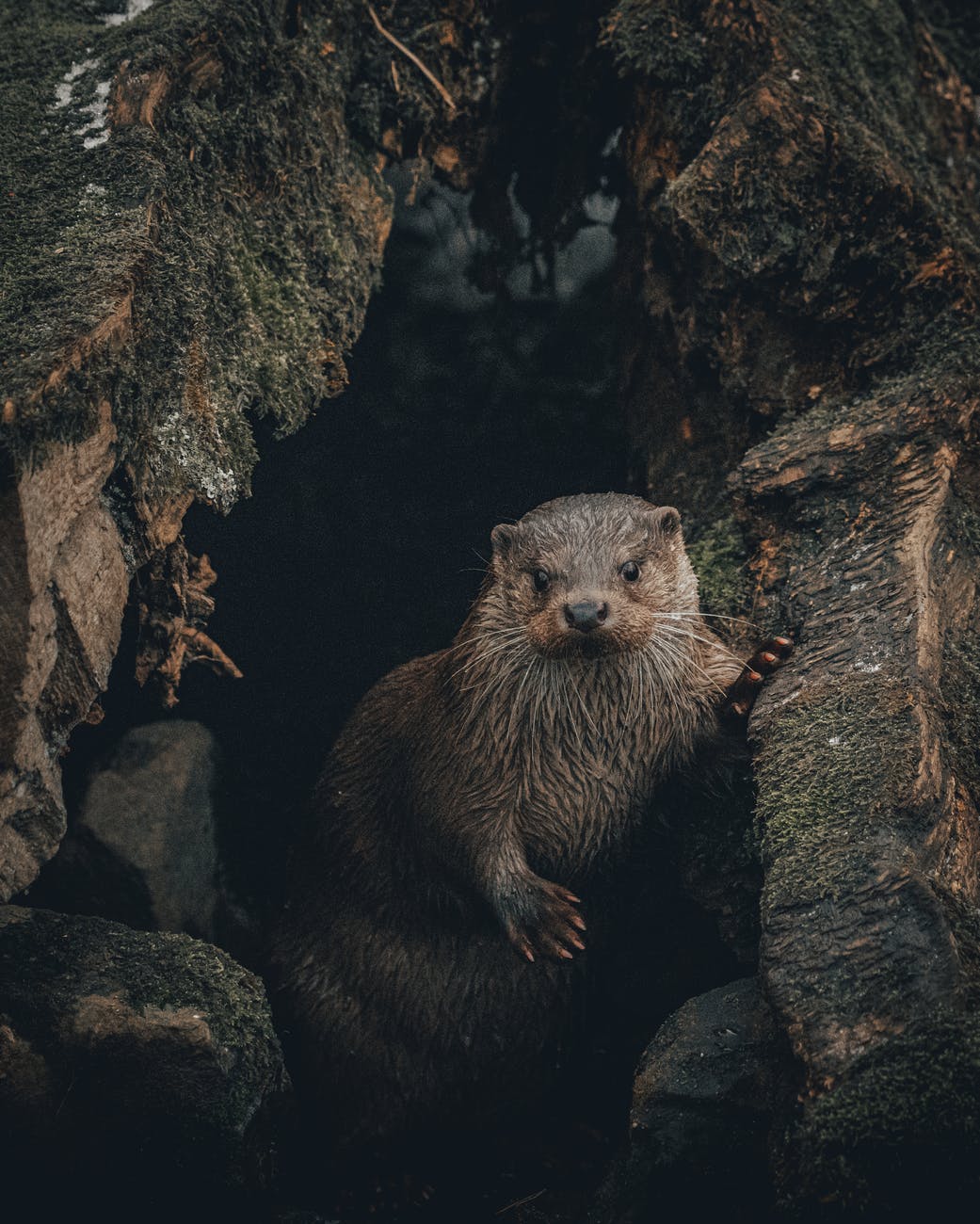
    An otter peers out from a small cave.
    Photo by David Frazer on Pexels.com

    If you want him built as a fully playable character I’ve added him to my DnDBeyond Community Characters campaign. Orne on Beyond is a Scout rather than a Conscript, so as to not introduce new rules.

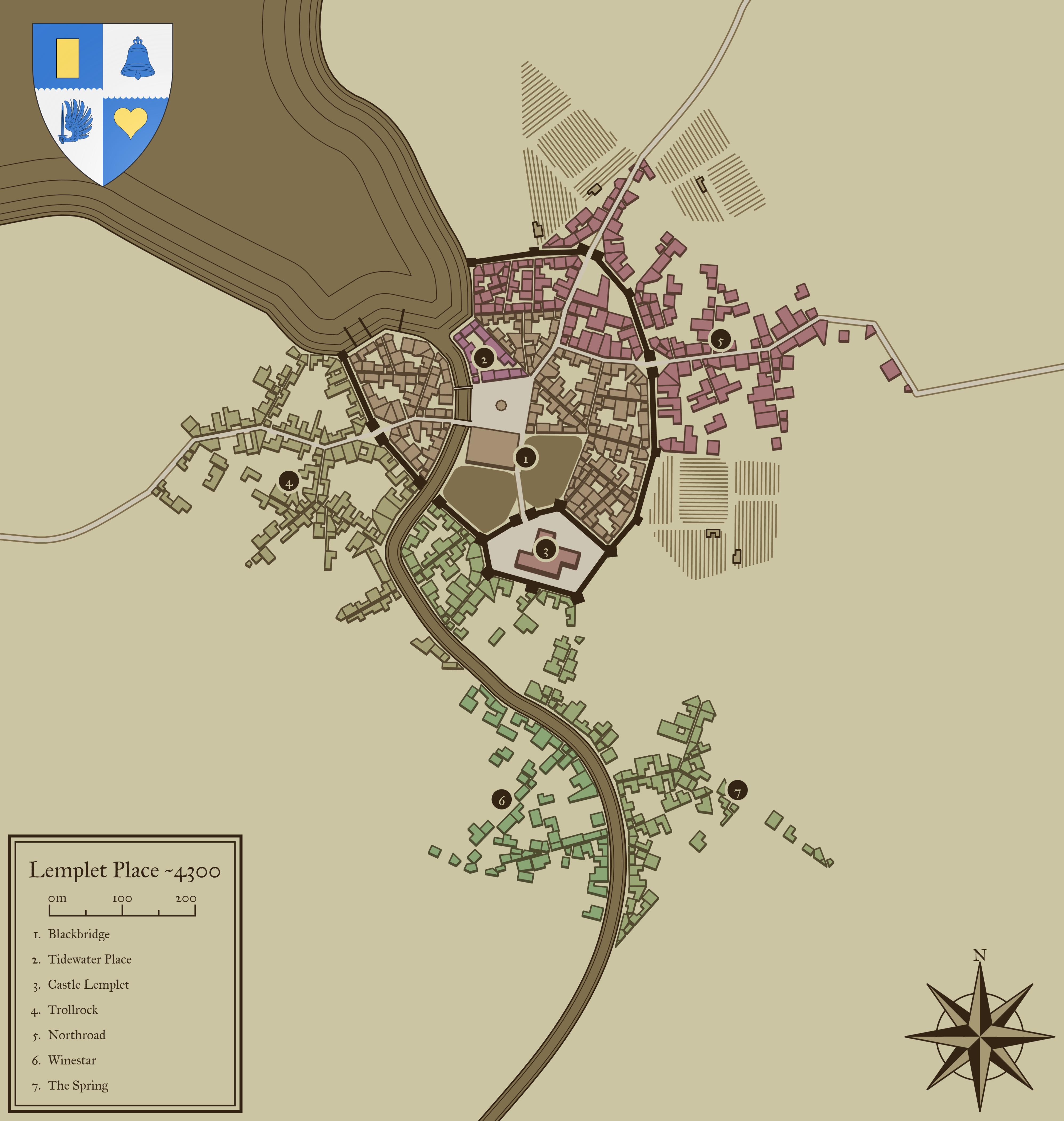
    Winestar, Lemplet Place

    A map of Lemplet Place, a fictitious town. The river runs from south to north into a bay. There are seven neighborhoods with three being inside or somewhat inside the walls. Main roads leave to the east, the west, and the northwest. There is a castle, a green, and a large temple.
    Built using the Medieval Fantasy City Generator

    Winestar is a neighborhood built along the rolling ridge of the Lemplet River. It’s a mix of farmsteads with a few crafts to support their needs. Most of the good produced enter the walled part of the city via barge or float. The Spring, across the river, is up on a cliffside, and is generally more wealthy than Winestar, especially those parts that are next to the castle walls. Within Winestar you will, of course, find many small vintners, with most of the homes at least having a passing hobby of wine creation. In general, Winestar produces luxury goods whereas Northroad is sustenance farming.

    Lemplet Place is a city of about 4,300 people.

    1. Blackbridge – known for the eponymous bridge, the downtown of Lemplet Place
    2. Tidewater Place – the slums, used to flood with high tide
    3. Castle Lemplet – originally built as a exterior castle, the city has grown around it
    4. Trollrock – the northern block surrounds a huge rock hill with a cave inside, no trolls though
    5. Northroad – sustenance farming
    6. Winestar – grapevines, orchards
    7. The Spring – for the wealthy that moved out of the city

    How will you use Orne Willowrush in your campaign?

  • Your D&D characters should have hobbies

    Your D&D characters should have hobbies

    The mechanics of Dungeons & Dragons don’t force you to choose a pastime or hobby. Outside of Bards and the various Backgrounds that include entertainment and arts there is no obligation or hint that a character should do things besides fight, interact socially to solve or cause problems, or explore a wildernesses and dungeons.

    With a limited number of skills and tools you might weaken your character if you take something without a direct impact on their ability to perform as an asset in the adventuring party – so what?

    Be a tiny bit weaker and add something that your character enjoys doing that has nothing to do with defeating dragons or wandering dungeons. In the real world in the eras upon which D&D reflects, this was common. Commoners worked less than we do in the modern era.

    There’s a reason that there are giant stadiums more than a 1,000 years old scattered around the world.

    Various MesoAmerican Ballgames stretching through modern Central America, the Caribbean, and even into Arizona. Sports were commonplace in the eras that inspire many Dungeons & Dragons worlds. That’s why you should add them to your world.

    But it’s more than just sports.

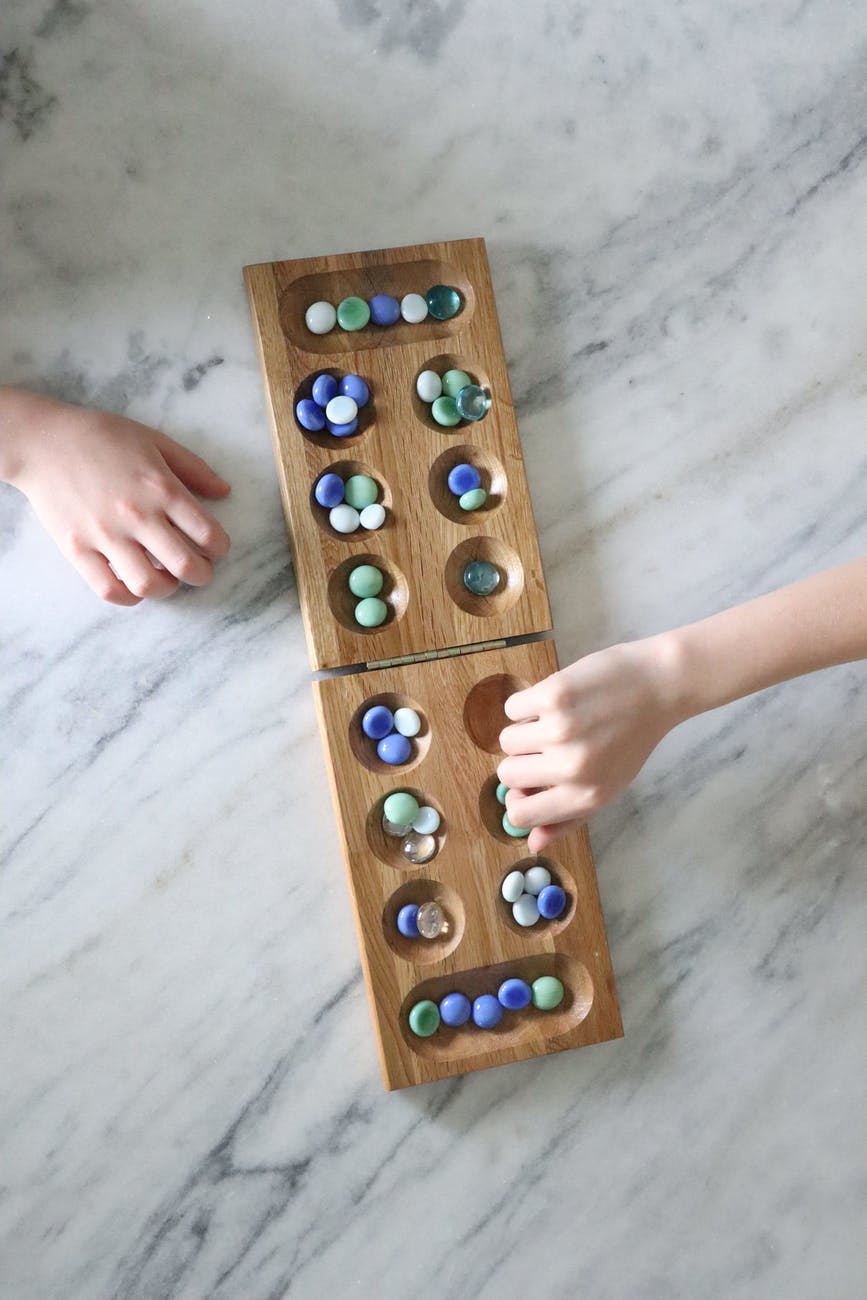
    Look at games like draughts, chess, mancala, 9-man morris, hnefatafl, and others lost to history. People had time. They did things with that time that they enjoyed.

    They sang songs. Told tales. Wrote dumb epic poems that we still read.

    So what does your character do when they aren’t living their life and when they aren’t dungeoning or dragoning?

    Burn a tool or skill on this – or don’t! – maybe they enjoy doing something that they are bad at.

    Maybe your next PC or NPC is the world’s best tafl player, or the local community’s worst singer. Maybe they make little sweaters for the elves that aren’t actually elves, and then they meet real elves. Maybe they are the old man that talks story to the children of his town.

    These elements may show in just a sentence or two in a given gaming session. That’s okay. It’s part of who they are and what they do, even if a d20 isn’t involved.

  • Excellent online tool for NPC portraits and traits

    Excellent online tool for NPC portraits and traits

    As a big advocate for NPCs built for social and exploration encounters, finding a tool that creates those randomly, with art, is wonderful.

    Christian Oesch’s DM Heroes page throws together a handful of racial/lineage options with descriptions that are not centered on combat. Additionally there are suggestions on how to connect them to each other.

    Veklani Skandalor

    Female Dwarf Cobbler – If it doesn’t kill you…

    Veklani’s suggested traits are;

    Features

    70 years old (young adult)
    4′2″ (128cm)
    Normal voice
    Speaks about themself in 3rd person.

    Traits

    Never changes their facial expression.
    Hates the government.
    Is happy because of a recent dream.

    Story

    Asks the party to help their become a cult leader.
    Wants to kill Erag Ambershard

    Other

    Prays to Dugmaren Brightmantle, god of discovery (CG)


    If you don’t have time to custom craft a handful of minor NPCs just in case, this tool does wonders. It also can be a handy tool to get quick art for your PC, though you’ll need to spend time tuning the various sliders and such. Reroll, Hero Forge and others might be better for that.

    Here’s Thoumas built with ReRoll.

    You can read about the Swarmkeeper of Terriers here.

    Quick art for your characters, whether player or DM controlled, helps with immersion and inspiration. Find those tools that help you and your group enjoy the game most.

    And if you have the funds for custom art, do that! Custom art is wonderful too.

  • Tips about naming your characters

    Tips about naming your characters

    Naming characters can be hard. For a DM coming up with names at the spur of the moment can lead to a stoppage in play as their mind struggles to find something appropriate for the NPC that was supposed to be a background character, but your players have thrust that individual into a major role.

    For most players, naming a character is a rare event. It is usually the first or last thing that they do. Then, it’s over until the next campaign starts. Still, you want to get the proper name for your character, because you will carry it with you for a long time*.

    *strong exceptions for rogues, criminals, urchins, and the like.

    As someone who both creates way too many PCs, and once named a formerly non-notable NPC “Anderson” after the car dealer across the street from the restaurant hosting our session I’ve developed a few tricks to naming characters.

    Easy Button

    Those of you using DnDBeyond.com probably already know this, but the Fantasy Name Generator has well over 100 different naming categories. Click the category and it will spit out ten names. Simple is as simple does. Sometimes you’ll hit those buttons a dozen times to get the one you like.

    Xanathar’s Guide to Everything

    All the way back in November of 2017 Wizards of the Coast released Xanathar’s Guide to Everything. The book is most well known for being the first official significant expansion of character classes in 5th edition. Those people into optimization ranted against the inclusion of almost 20 pages of names.

    Frankly, it was a poor critique.

    There are so many more people picking up the game every day, every month, every year. They don’t have the knowledge base that stretches back editions. They may not want unofficial sources for fantasy names.

    Xanathar’s includes official lists of fantasy names as well as dozens of real cultures that are often captured within your gaming table. This section is one of the forgotten joys of Xanathar’s Guide to Everything. Cracking the book open to those sections should help inspire your next character’s name.

    Use Athletes for Inspiration

    After working in sports for nearly 15 years, there should be little surprise that they become part of my gaming paradigm. There’s a reason that Sports as a Tool exists in my worlds.

    Sports, particularly Olympic sports and soccer/football, are an excellent way to discover wonderful inspiration for names. Just look at the recent MLS SuperDraft.

    Mitch Guitar was drafted. Who doesn’t want to make a Bard called Mith Lyre now?

    Sondre Norheim was drafted. Could that be your next dwarf named after a powerful elven king? Yes.

    Real people and cultures can inspire your name. Honor those peoples through the name of your character.

    To discover new names head to a reference website covering a sport with international play. Click on a league outside of the mainstream, click a team at random, and combine a two-four players’ names. Drop a couple letters, or add a few. Research those players because their lives can help inspire you the same way that reading Tolkien can inspire you.

    Sports Reference, Soccerway, and Transfermarkt are my favorite places to do this.

    As a DM, I try to have a small selection of NPCs already made up ahead of a session. These index card sized characters are there because my players will always surprise me. Most of their names have come from various athletes around the world. Some will be consistent within a certain set of cultures, while others recognize that the fantasy worlds in which we play are generally as interconnected as the modern world in which we live.

    Your naming conventions should embrace the fact that the peoples travel extensively.

    How do you name your characters?

  • Prekx, Gujri, and Shrubbrs – the best fencers this side of Flowing Lake

    Prekx, Gujri, and Shrubbrs – the best fencers this side of Flowing Lake

    Prekx was happy to get hired for this job. Anytime he could get further from the village with all their suspicious eyes was good. Many still thought of him as a goblin, and not just a fence maker. Even now, with his reputation after building Gujri, the steel goat, to find the gaps and holes faster than real goats and at no loss of meat there were those who thought about the attack from his former tribe. Prekx didn’t even know his tribe. He’s just known the land around Flowing Lake.

    Growing up under the care of the mage Alizon, he learned what magic could do and that if you know the proper gestures, and words, and components you can just do things. Not normal things – big, impressive things. That’s how he learned the spells that helped him make up for his weak size — Mold Earth and Mage Hand.

    Magic helped him overcome size and strength. It introduced him to carpentry and the fine works of woodcarving. It helped him build Shrubbrs – that tiny cluster of branches and roots and thorns with a heart of fire-stone. Magic is where he turned, because that’s where he had his friend.

    Gujri would find the hole in the fence. Then Prekx and Shrubbrs would join the steel goat there to clear some land around it, make it easy for the human to repair. Instead of standing in brambles they would have space.

    Then it was off to towards the river. Someone needed a string-metal fence. Normals couldn’t make that. It’s a little invention that he came up with using his artifice. Lighter, and stronger, the string-metal fences were become popular. They will hold out the vermin, hopefully. There’s a flock of cockatrice and a cluster of giant spiders that are an issue lately.

    Maybe he can fence those towards each other? It would be easier than a herd of sheep being petrified or chicken coop covered in webs.

    “Gujri! Get over here,” Prekx shouts.

    The only answer is the crank of rusted metal. That’s another problem altogether.

    Photo by Artur Roman on Pexels.com

    Fence Making is Magic – an Artificer build

    The concept for this character started in a simple place. I was working on horse fencing, which is hard, physical drudgery. The thought sprung into my head ‘how would a D&D hero do this?’

    That starts with Mold Earth and Mage Hand. Between those most of the digging and walking over back-and-forth, back-and-forth, back-and-forth, sorry distracted by all that walking, just makes things easier. I looked into a sorcerer for that, but unfortunately it didn’t quite represent what I wanted.

    From there, taking the Feat: Magic Initiate became obvious. In order to be an expert carpenter (the closest tool to a fence maker in the game) meant one of three choices. Artificer felt better than Rogue and Bard. The reason for that is that the handy assistance from the built companions just made too much sense.

    Shrubbrs and Girji would be invaluable aids in maintaining and building a fence. Not only that, but a worker on the edge of a civilized area could use the extra defensive help from a steel goat.

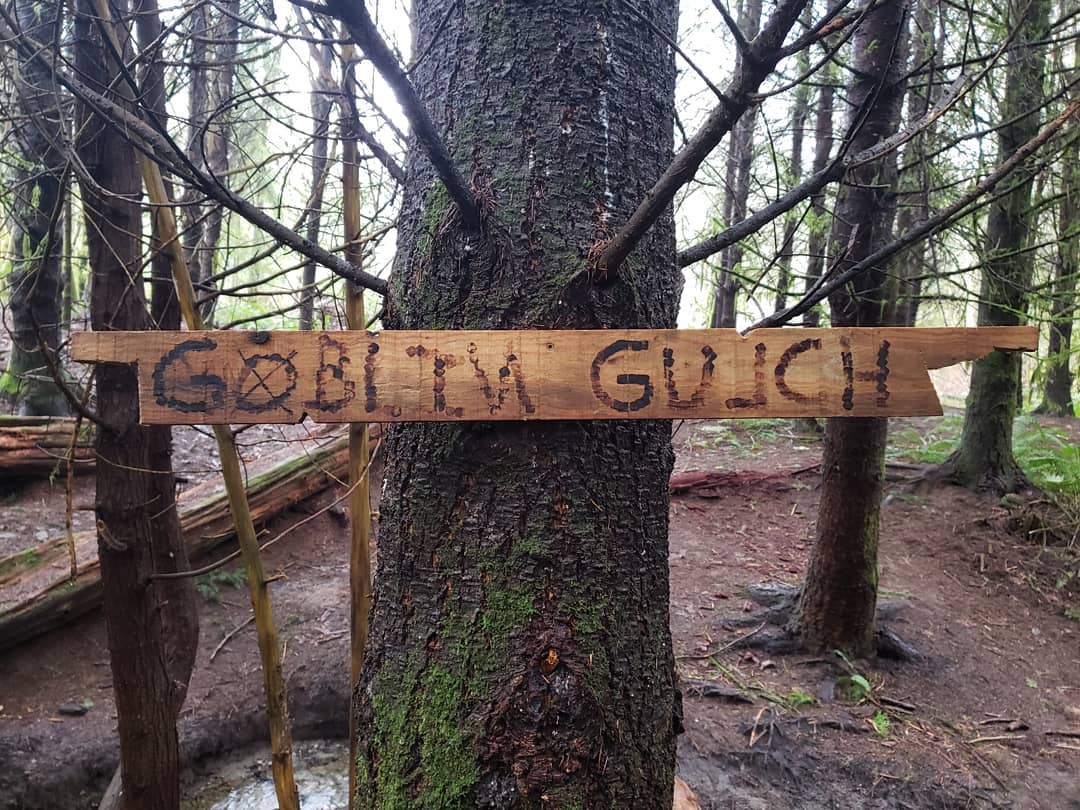
    Throw in a cool photo of Goblin Gulch, and now, a character is born.

    Goblin Gulch by Nick Wietzel

    There will probably be a deeper dive into Goblin Gulch later, but in Prekx’s case he left the Gulch when young.

    Prekx Booyahg Booyahg Booyahg of the Gulch is a goblin artificer, steel defender.

    He’s Flowing Lake’s (an idea I came up with during the recent flooding) best fence maker. That background was based on the Folk Hero, with minor tweaks.

    For the flaws I leaned into the goblin tribe he left, saying that the ruler there wants Prekx dead. Also, he learned to hate bullying from his youth as a goblin. He learned to love magic from his latter youth as a student with Alizon.

    His sincerity he picked up because he’s damn good at his job and he’s a goblin. He will never hide either of those things.

    Finally, he’s confident in his abilities and do what he can to instill confidence in others. But at times he will misuse long words because his education started late.

  • Heroes Come From Everywhere

    Heroes Come From Everywhere

    If you didn’t get the clue from Darius Dondermonger, I enjoy heroes with interesting backstories. A cheese maker can become a famed ranger. Your cleric may have just been a mercenary, or a candlemaker. That butcher in the village that was conscripted? They’re now one of the realm’s greatest fighters.

    Photo by Daisa TJ on Pexels.com

    Backgrounds are the D&D rule that best embraces this concept in 5e. Toss in a dose of Xanathar’s Guide to Everything Chapter 1: Section: This Is Your Life and you’re on your way to having a backstory that embraces the pre-hero version of your character.

    Still, it takes a player that is willing to embrace that zero part of your zero-to-hero journey. It’s up to you to embrace the idea that a fence maker can become a powerful sorcerer.

    That’s essentially what the “My Next D&D Character Is…” thought-bombs are over on twitter. They are the embrace that these unconventional Dungeons & Dragons concepts are as valid as the the mercenary, the head of the local thieves guild, the student-wizard, the acolyte-cleric. Normal people get caught up in grand stories. Your adventuring party and character creation should embrace that.

    Make someone who is just exhausted by all the strife, or a town ball hero, the neighborhood helper/do gooder, the chessmaster, or so many more ideas.

    Throw off the yoke of convention and make the story that you want to tell. Make the character that embraces some small aspect of you, your friends, or just that person down the street – amplify that and create. All stories are valid. Everyone can become a hero.

    For the most part, when creating these types of characters with no homebrew rules I start with the Folk Hero Background (the Guild Artisan is #2), and then remove all of the skills, languages, and tools. The mechanics are then built around the profession. Use the tool that makes sense, add two skills that fit the closest to the concept, and then add a language or another tool to round out the idea.

    In DnDBeyond.com this is done in standard character creation during step 4, custom background. There’s then a choice of 2 skills + [options]. You will also be asked which feature to adopt (Rustic Hospitality is likely the best). It’s quick and easy, and part of the core system as 5th edition is designed.

    The more complex way is to partner with your DM to build custom backgrounds from scratch, or connect with me and take one of my 40+ concepts out for a test drive.

    Who is your next zero-to-hero?

  • Darius Dondermonger – inspired by dragons and cheese.

    Darius Dondermonger – inspired by dragons and cheese.

    Character concepts come from all sorts of places. Sometimes they grow over years, tended like a rare flower they sprout and bloom after long care. Then there are those that burst forth from your mind to page (actual or digital) in a flurry.

    Darius Dondermonger came into being when two roads combined. The first road originated some time ago, when the D&D released the Drakewarden. Dragons are quite important in the World of the Everflow, so I knew I would revisit the Drakewarden. The second road came when grocery shopping. We needed cheese, lots of cheeses. Yes, we’re fans of charcuterie. These roads merged when reading about Dragon’s Milk Stout’s web-RPG release. As often happens, flavor started to inspire the story.

    The Chef Feat in Tasha’s Cauldron of Everything is quite useful for someone who latches onto flavors like this. That pushed towards a Variant Human so that the foods he creates can help heal and/or inspire his companions towards greatness.

    Darius Dondermonger kept growing. From a legacy family in a small village, Darius was to be the head of household and manage the ageing of grana (think Parmesean and similar cheeses). Some of these for decades. They use adjuncts at times. That is what sent him to the forests and hills of the area.

    He is also flawed. Not only does he prefer the hunt for herbs and the like to management, he also prefers the making of cheese to business. That’s part of why he rejects the full family name. The other part is that he does not feel he’s earned that name, for he has lost something special to them.

    Lastly, he took on Dunder, due to his companion’s, and later his own, connection to thunder & lightning.

    He is more than just a ranger, more than just a cheesemonger specializing in aged cheeses – Darius Dondermonger has a small dragon companion and has discovered that he is also part dragon. The family’s most exclusive grana comes from their age-old connection to drakes, wyverns, and all of dragonkind.

    That same blood compels Darius to travel away from town, for someone with his powers cannot just work the books of Amberhearth and Highwall’s greatest cheese makers. Someone with the blood of dragons must, must, pursue a grander destiny — and also find that which they’ve lost.

  • Turn flavors into the story you wish to tell

    Turn flavors into the story you wish to tell

    In wine, beer, coffee, etc there’s the concept of the perfect pairing. At its simplest, the concept is to find foods that complement that specific flavor notes of the beverage. More completely you can find ways to do this through similar and disparate notes – sometimes hitting opposites on the flavor wheel gives the taster an experience that highlights both the food and the beverage.

    Pairing beverages with gaming in something I just do. When playing Awf I always have a beverage. Sometimes that beverage is inspired by his personality – drinking an earl grey lavender toddy out of a masonry mug to highlight his duel cultures of dwarf and bladesinger. Other times the beverage connects to the adventure that Droop’s Brigade is going – Skookum Caverns, a barrel aged strong ale, as we enter Wave Echo Cave.

    The use of flavor here helps inspire the story being told during that gaming session. The flavors evoke a mental space where Awf’s unique history of annoying elves enough that they taught him bladesong, despite his being a stubby dwarf, is brought to the forefront. Or, the dangers and darkness of a cave are brought to the front of mind through can art and the potency of a strong ale.

    Flavor does wonderful things. Pairings aren’t just about maximizing the flavor experience. The connection between taste-smell and memory is powerful. People buy Kona coffee because it awakens memory, much more than due to its quality. A margarita on a cold winter day can put your headspace back to a nice beach vacation. Hot cocoa in front of a fire, even while home alone by yourself, will send you dreaming back to a Christmas visit to a small town.

    As roleplayers, in Dungeons & Dragons or any other game, we can use the magic of flavor to help us. The foods and beverages of your game night are important. Make those small choices that aid gaming, just like you would a token, art, or cosplay.

    Rather than confine yourself into using flavor as a way to connect your current character, you can also use flavor to inspire new characters.

    Each of those characters started with the simple prompt related to a beverage and the object out of which it is consumed. From there decisions were made not just regarding the race, class, and background, but also to inform the skills, attributes, spells, and weapons chosen.

    Rum connected to sailors, pirates, merchants, or water genasi. Carbonation was an indication of something light, refreshing. Salt a connection to authority. The mistaken belief that halflings are just old children popped into the head with the root beer.

    What those various prompts did was start internet searches into the techniques used to create certain beverages, into their history, into their cultural significance. Chasing those touchpoints and activating them through D&D and by including others in the process, my character portfolio expanded. These are now new NPCs, or maybe even PCs, that would never exist.

    Food and drink can inform your characters just as art, books, movies, shows, music and media can. Great cooks say that their meals tell stories. Adapt that into your PC and NPCs.

    Empower flavor to empower the stories you tell.

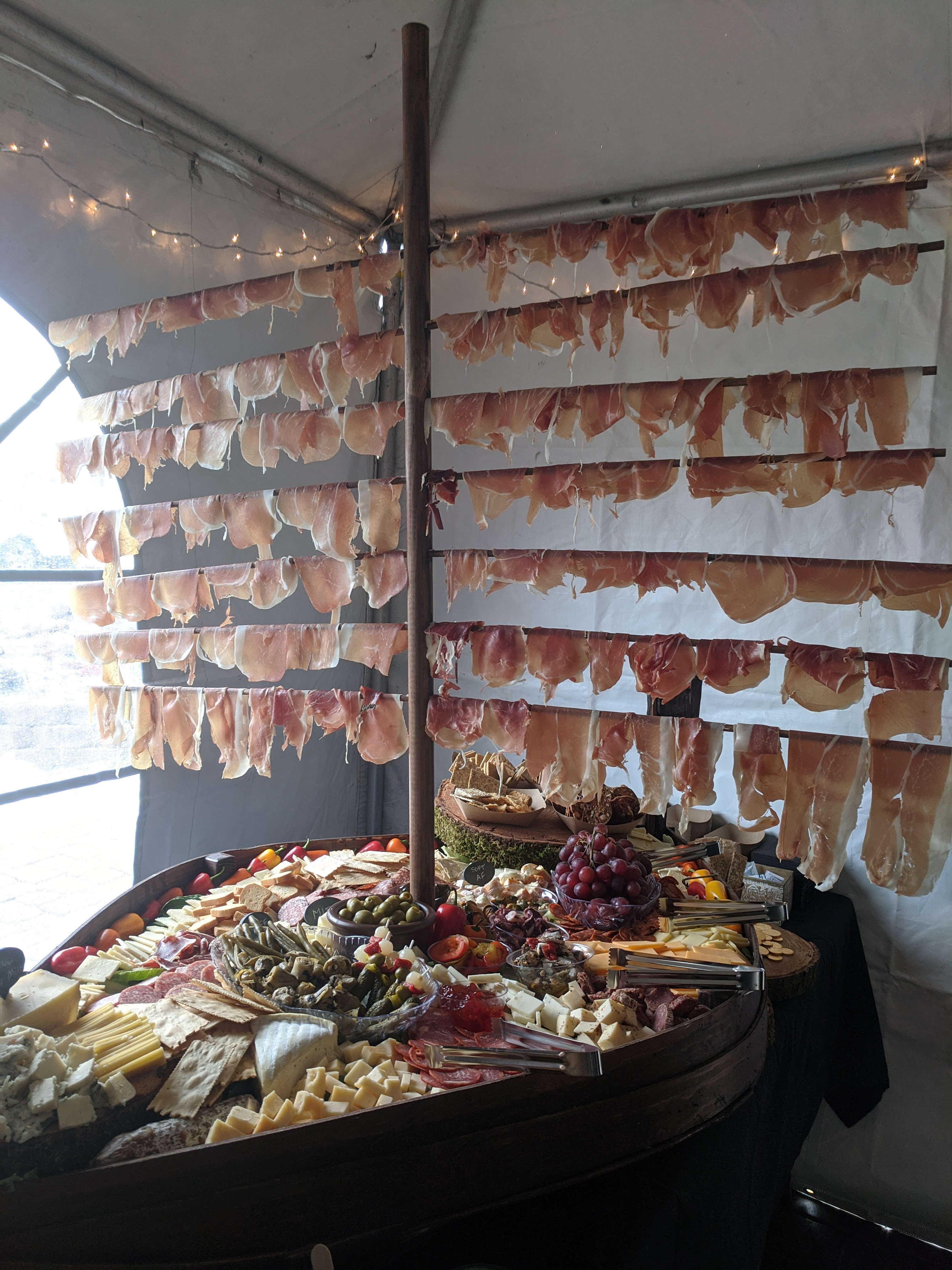
    A replica viking longboat loaded up in charcuterie. From the 4-foot tall mast hangs shaved prosciutto. The base of the boat has cured meats, pickled vegetables, and various cheeses.

    What type of character builds a replica longboat and uses it as a charcuterie table? How does that inform who they are?