Tag: Character Builds

  • Tips about naming your characters

    Tips about naming your characters

    Naming characters can be hard. For a DM coming up with names at the spur of the moment can lead to a stoppage in play as their mind struggles to find something appropriate for the NPC that was supposed to be a background character, but your players have thrust that individual into a major role.

    For most players, naming a character is a rare event. It is usually the first or last thing that they do. Then, it’s over until the next campaign starts. Still, you want to get the proper name for your character, because you will carry it with you for a long time*.

    *strong exceptions for rogues, criminals, urchins, and the like.

    As someone who both creates way too many PCs, and once named a formerly non-notable NPC “Anderson” after the car dealer across the street from the restaurant hosting our session I’ve developed a few tricks to naming characters.

    Easy Button

    Those of you using DnDBeyond.com probably already know this, but the Fantasy Name Generator has well over 100 different naming categories. Click the category and it will spit out ten names. Simple is as simple does. Sometimes you’ll hit those buttons a dozen times to get the one you like.

    Xanathar’s Guide to Everything

    All the way back in November of 2017 Wizards of the Coast released Xanathar’s Guide to Everything. The book is most well known for being the first official significant expansion of character classes in 5th edition. Those people into optimization ranted against the inclusion of almost 20 pages of names.

    Frankly, it was a poor critique.

    There are so many more people picking up the game every day, every month, every year. They don’t have the knowledge base that stretches back editions. They may not want unofficial sources for fantasy names.

    Xanathar’s includes official lists of fantasy names as well as dozens of real cultures that are often captured within your gaming table. This section is one of the forgotten joys of Xanathar’s Guide to Everything. Cracking the book open to those sections should help inspire your next character’s name.

    Use Athletes for Inspiration

    After working in sports for nearly 15 years, there should be little surprise that they become part of my gaming paradigm. There’s a reason that Sports as a Tool exists in my worlds.

    Sports, particularly Olympic sports and soccer/football, are an excellent way to discover wonderful inspiration for names. Just look at the recent MLS SuperDraft.

    Mitch Guitar was drafted. Who doesn’t want to make a Bard called Mith Lyre now?

    Sondre Norheim was drafted. Could that be your next dwarf named after a powerful elven king? Yes.

    Real people and cultures can inspire your name. Honor those peoples through the name of your character.

    To discover new names head to a reference website covering a sport with international play. Click on a league outside of the mainstream, click a team at random, and combine a two-four players’ names. Drop a couple letters, or add a few. Research those players because their lives can help inspire you the same way that reading Tolkien can inspire you.

    Sports Reference, Soccerway, and Transfermarkt are my favorite places to do this.

    As a DM, I try to have a small selection of NPCs already made up ahead of a session. These index card sized characters are there because my players will always surprise me. Most of their names have come from various athletes around the world. Some will be consistent within a certain set of cultures, while others recognize that the fantasy worlds in which we play are generally as interconnected as the modern world in which we live.

    Your naming conventions should embrace the fact that the peoples travel extensively.

    How do you name your characters?

  • Prekx, Gujri, and Shrubbrs – the best fencers this side of Flowing Lake

    Prekx, Gujri, and Shrubbrs – the best fencers this side of Flowing Lake

    Prekx was happy to get hired for this job. Anytime he could get further from the village with all their suspicious eyes was good. Many still thought of him as a goblin, and not just a fence maker. Even now, with his reputation after building Gujri, the steel goat, to find the gaps and holes faster than real goats and at no loss of meat there were those who thought about the attack from his former tribe. Prekx didn’t even know his tribe. He’s just known the land around Flowing Lake.

    Growing up under the care of the mage Alizon, he learned what magic could do and that if you know the proper gestures, and words, and components you can just do things. Not normal things – big, impressive things. That’s how he learned the spells that helped him make up for his weak size — Mold Earth and Mage Hand.

    Magic helped him overcome size and strength. It introduced him to carpentry and the fine works of woodcarving. It helped him build Shrubbrs – that tiny cluster of branches and roots and thorns with a heart of fire-stone. Magic is where he turned, because that’s where he had his friend.

    Gujri would find the hole in the fence. Then Prekx and Shrubbrs would join the steel goat there to clear some land around it, make it easy for the human to repair. Instead of standing in brambles they would have space.

    Then it was off to towards the river. Someone needed a string-metal fence. Normals couldn’t make that. It’s a little invention that he came up with using his artifice. Lighter, and stronger, the string-metal fences were become popular. They will hold out the vermin, hopefully. There’s a flock of cockatrice and a cluster of giant spiders that are an issue lately.

    Maybe he can fence those towards each other? It would be easier than a herd of sheep being petrified or chicken coop covered in webs.

    “Gujri! Get over here,” Prekx shouts.

    The only answer is the crank of rusted metal. That’s another problem altogether.

    Photo by Artur Roman on Pexels.com

    Fence Making is Magic – an Artificer build

    The concept for this character started in a simple place. I was working on horse fencing, which is hard, physical drudgery. The thought sprung into my head ‘how would a D&D hero do this?’

    That starts with Mold Earth and Mage Hand. Between those most of the digging and walking over back-and-forth, back-and-forth, back-and-forth, sorry distracted by all that walking, just makes things easier. I looked into a sorcerer for that, but unfortunately it didn’t quite represent what I wanted.

    From there, taking the Feat: Magic Initiate became obvious. In order to be an expert carpenter (the closest tool to a fence maker in the game) meant one of three choices. Artificer felt better than Rogue and Bard. The reason for that is that the handy assistance from the built companions just made too much sense.

    Shrubbrs and Girji would be invaluable aids in maintaining and building a fence. Not only that, but a worker on the edge of a civilized area could use the extra defensive help from a steel goat.

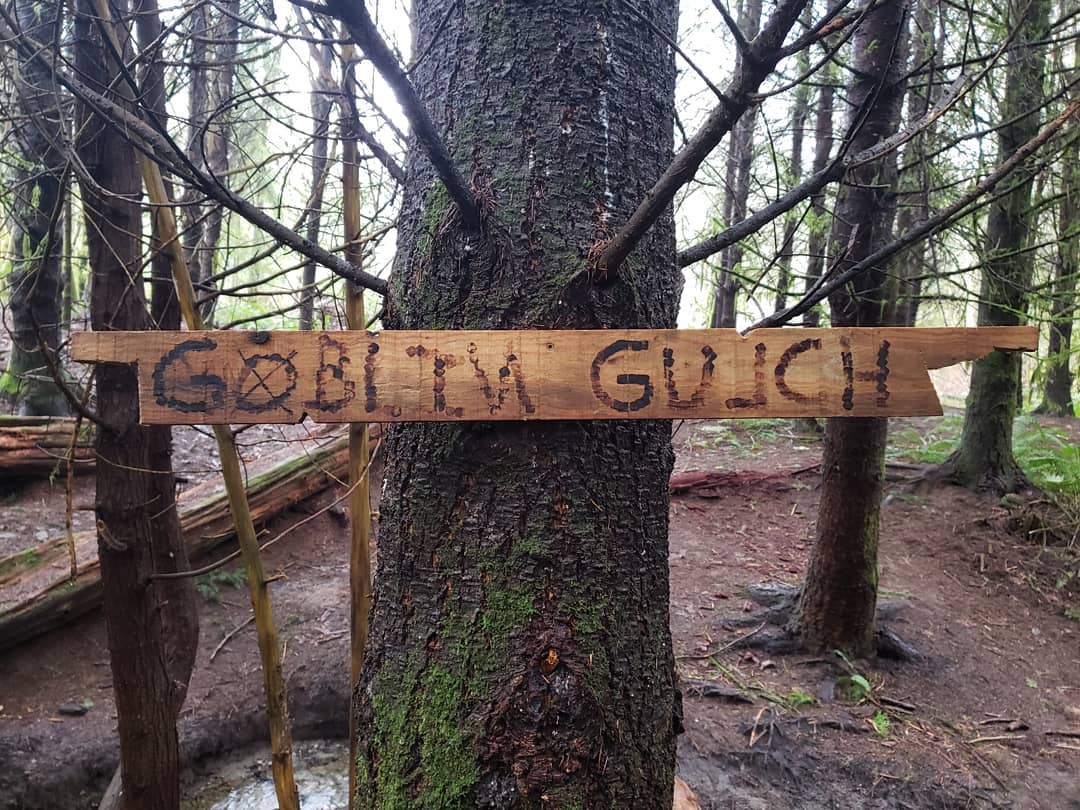
    Throw in a cool photo of Goblin Gulch, and now, a character is born.

    Goblin Gulch by Nick Wietzel

    There will probably be a deeper dive into Goblin Gulch later, but in Prekx’s case he left the Gulch when young.

    Prekx Booyahg Booyahg Booyahg of the Gulch is a goblin artificer, steel defender.

    He’s Flowing Lake’s (an idea I came up with during the recent flooding) best fence maker. That background was based on the Folk Hero, with minor tweaks.

    For the flaws I leaned into the goblin tribe he left, saying that the ruler there wants Prekx dead. Also, he learned to hate bullying from his youth as a goblin. He learned to love magic from his latter youth as a student with Alizon.

    His sincerity he picked up because he’s damn good at his job and he’s a goblin. He will never hide either of those things.

    Finally, he’s confident in his abilities and do what he can to instill confidence in others. But at times he will misuse long words because his education started late.

  • Heroes Come From Everywhere

    Heroes Come From Everywhere

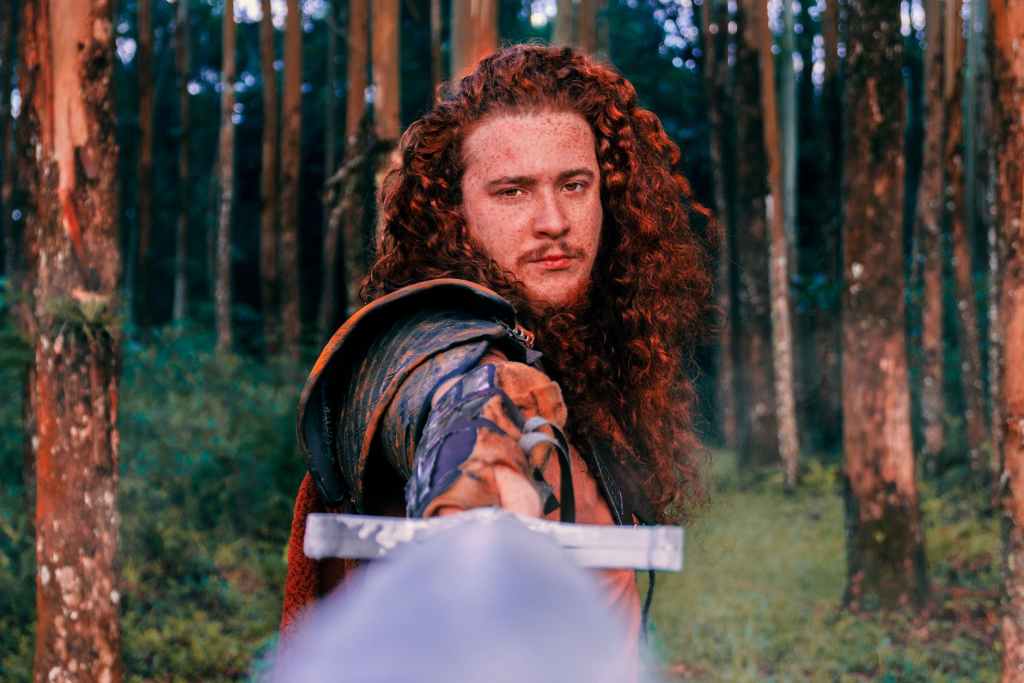
    If you didn’t get the clue from Darius Dondermonger, I enjoy heroes with interesting backstories. A cheese maker can become a famed ranger. Your cleric may have just been a mercenary, or a candlemaker. That butcher in the village that was conscripted? They’re now one of the realm’s greatest fighters.

    Photo by Daisa TJ on Pexels.com

    Backgrounds are the D&D rule that best embraces this concept in 5e. Toss in a dose of Xanathar’s Guide to Everything Chapter 1: Section: This Is Your Life and you’re on your way to having a backstory that embraces the pre-hero version of your character.

    Still, it takes a player that is willing to embrace that zero part of your zero-to-hero journey. It’s up to you to embrace the idea that a fence maker can become a powerful sorcerer.

    That’s essentially what the “My Next D&D Character Is…” thought-bombs are over on twitter. They are the embrace that these unconventional Dungeons & Dragons concepts are as valid as the the mercenary, the head of the local thieves guild, the student-wizard, the acolyte-cleric. Normal people get caught up in grand stories. Your adventuring party and character creation should embrace that.

    Make someone who is just exhausted by all the strife, or a town ball hero, the neighborhood helper/do gooder, the chessmaster, or so many more ideas.

    Throw off the yoke of convention and make the story that you want to tell. Make the character that embraces some small aspect of you, your friends, or just that person down the street – amplify that and create. All stories are valid. Everyone can become a hero.

    For the most part, when creating these types of characters with no homebrew rules I start with the Folk Hero Background (the Guild Artisan is #2), and then remove all of the skills, languages, and tools. The mechanics are then built around the profession. Use the tool that makes sense, add two skills that fit the closest to the concept, and then add a language or another tool to round out the idea.

    In DnDBeyond.com this is done in standard character creation during step 4, custom background. There’s then a choice of 2 skills + [options]. You will also be asked which feature to adopt (Rustic Hospitality is likely the best). It’s quick and easy, and part of the core system as 5th edition is designed.

    The more complex way is to partner with your DM to build custom backgrounds from scratch, or connect with me and take one of my 40+ concepts out for a test drive.

    Who is your next zero-to-hero?

  • Darius Dondermonger – inspired by dragons and cheese.

    Darius Dondermonger – inspired by dragons and cheese.

    Character concepts come from all sorts of places. Sometimes they grow over years, tended like a rare flower they sprout and bloom after long care. Then there are those that burst forth from your mind to page (actual or digital) in a flurry.

    Darius Dondermonger came into being when two roads combined. The first road originated some time ago, when the D&D released the Drakewarden. Dragons are quite important in the World of the Everflow, so I knew I would revisit the Drakewarden. The second road came when grocery shopping. We needed cheese, lots of cheeses. Yes, we’re fans of charcuterie. These roads merged when reading about Dragon’s Milk Stout’s web-RPG release. As often happens, flavor started to inspire the story.

    The Chef Feat in Tasha’s Cauldron of Everything is quite useful for someone who latches onto flavors like this. That pushed towards a Variant Human so that the foods he creates can help heal and/or inspire his companions towards greatness.

    Darius Dondermonger kept growing. From a legacy family in a small village, Darius was to be the head of household and manage the ageing of grana (think Parmesean and similar cheeses). Some of these for decades. They use adjuncts at times. That is what sent him to the forests and hills of the area.

    He is also flawed. Not only does he prefer the hunt for herbs and the like to management, he also prefers the making of cheese to business. That’s part of why he rejects the full family name. The other part is that he does not feel he’s earned that name, for he has lost something special to them.

    Lastly, he took on Dunder, due to his companion’s, and later his own, connection to thunder & lightning.

    He is more than just a ranger, more than just a cheesemonger specializing in aged cheeses – Darius Dondermonger has a small dragon companion and has discovered that he is also part dragon. The family’s most exclusive grana comes from their age-old connection to drakes, wyverns, and all of dragonkind.

    That same blood compels Darius to travel away from town, for someone with his powers cannot just work the books of Amberhearth and Highwall’s greatest cheese makers. Someone with the blood of dragons must, must, pursue a grander destiny — and also find that which they’ve lost.

  • Turn flavors into the story you wish to tell

    Turn flavors into the story you wish to tell

    In wine, beer, coffee, etc there’s the concept of the perfect pairing. At its simplest, the concept is to find foods that complement that specific flavor notes of the beverage. More completely you can find ways to do this through similar and disparate notes – sometimes hitting opposites on the flavor wheel gives the taster an experience that highlights both the food and the beverage.

    Pairing beverages with gaming in something I just do. When playing Awf I always have a beverage. Sometimes that beverage is inspired by his personality – drinking an earl grey lavender toddy out of a masonry mug to highlight his duel cultures of dwarf and bladesinger. Other times the beverage connects to the adventure that Droop’s Brigade is going – Skookum Caverns, a barrel aged strong ale, as we enter Wave Echo Cave.

    The use of flavor here helps inspire the story being told during that gaming session. The flavors evoke a mental space where Awf’s unique history of annoying elves enough that they taught him bladesong, despite his being a stubby dwarf, is brought to the forefront. Or, the dangers and darkness of a cave are brought to the front of mind through can art and the potency of a strong ale.

    Flavor does wonderful things. Pairings aren’t just about maximizing the flavor experience. The connection between taste-smell and memory is powerful. People buy Kona coffee because it awakens memory, much more than due to its quality. A margarita on a cold winter day can put your headspace back to a nice beach vacation. Hot cocoa in front of a fire, even while home alone by yourself, will send you dreaming back to a Christmas visit to a small town.

    As roleplayers, in Dungeons & Dragons or any other game, we can use the magic of flavor to help us. The foods and beverages of your game night are important. Make those small choices that aid gaming, just like you would a token, art, or cosplay.

    Rather than confine yourself into using flavor as a way to connect your current character, you can also use flavor to inspire new characters.

    Each of those characters started with the simple prompt related to a beverage and the object out of which it is consumed. From there decisions were made not just regarding the race, class, and background, but also to inform the skills, attributes, spells, and weapons chosen.

    Rum connected to sailors, pirates, merchants, or water genasi. Carbonation was an indication of something light, refreshing. Salt a connection to authority. The mistaken belief that halflings are just old children popped into the head with the root beer.

    What those various prompts did was start internet searches into the techniques used to create certain beverages, into their history, into their cultural significance. Chasing those touchpoints and activating them through D&D and by including others in the process, my character portfolio expanded. These are now new NPCs, or maybe even PCs, that would never exist.

    Food and drink can inform your characters just as art, books, movies, shows, music and media can. Great cooks say that their meals tell stories. Adapt that into your PC and NPCs.

    Empower flavor to empower the stories you tell.

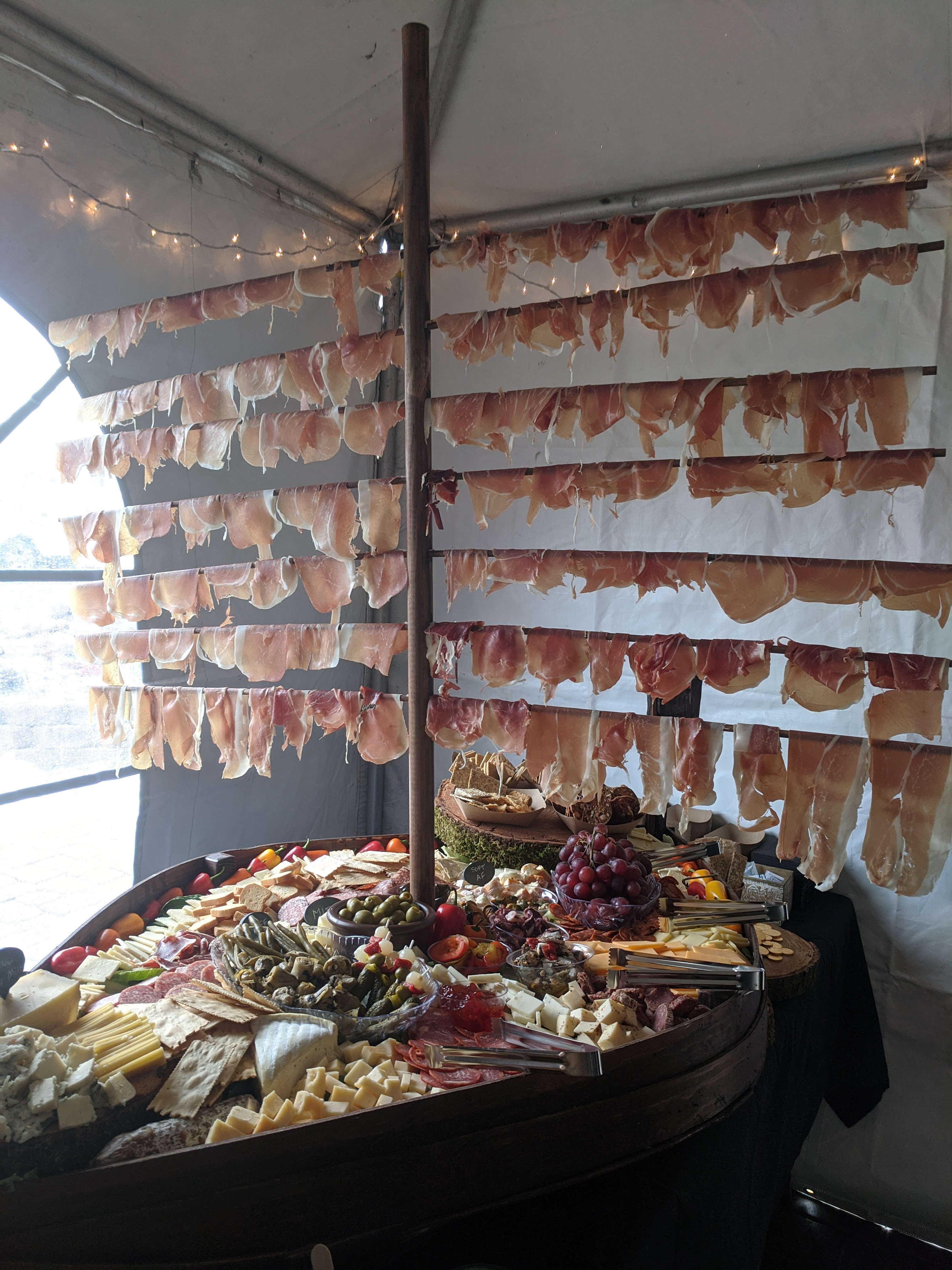
    A replica viking longboat loaded up in charcuterie. From the 4-foot tall mast hangs shaved prosciutto. The base of the boat has cured meats, pickled vegetables, and various cheeses.

    What type of character builds a replica longboat and uses it as a charcuterie table? How does that inform who they are?

    Fediverse Reactions