The Font of Two Paths, the Two-Headed Spring, Pool of Life, Lake of Wonder — the Everflow. This supernatural gift from Quar is the result of the last action of gods who turned their backs on Kin. The Lake of Wonder has two exits, a thing that shouldn’t ever, ever happen when making maps. This wasn’t because of Quar, but instead due to the people who wanted to spread these waters as far as possible. The Font of Two Paths is as much a study of Quar as it is of the ingenuity of his church.
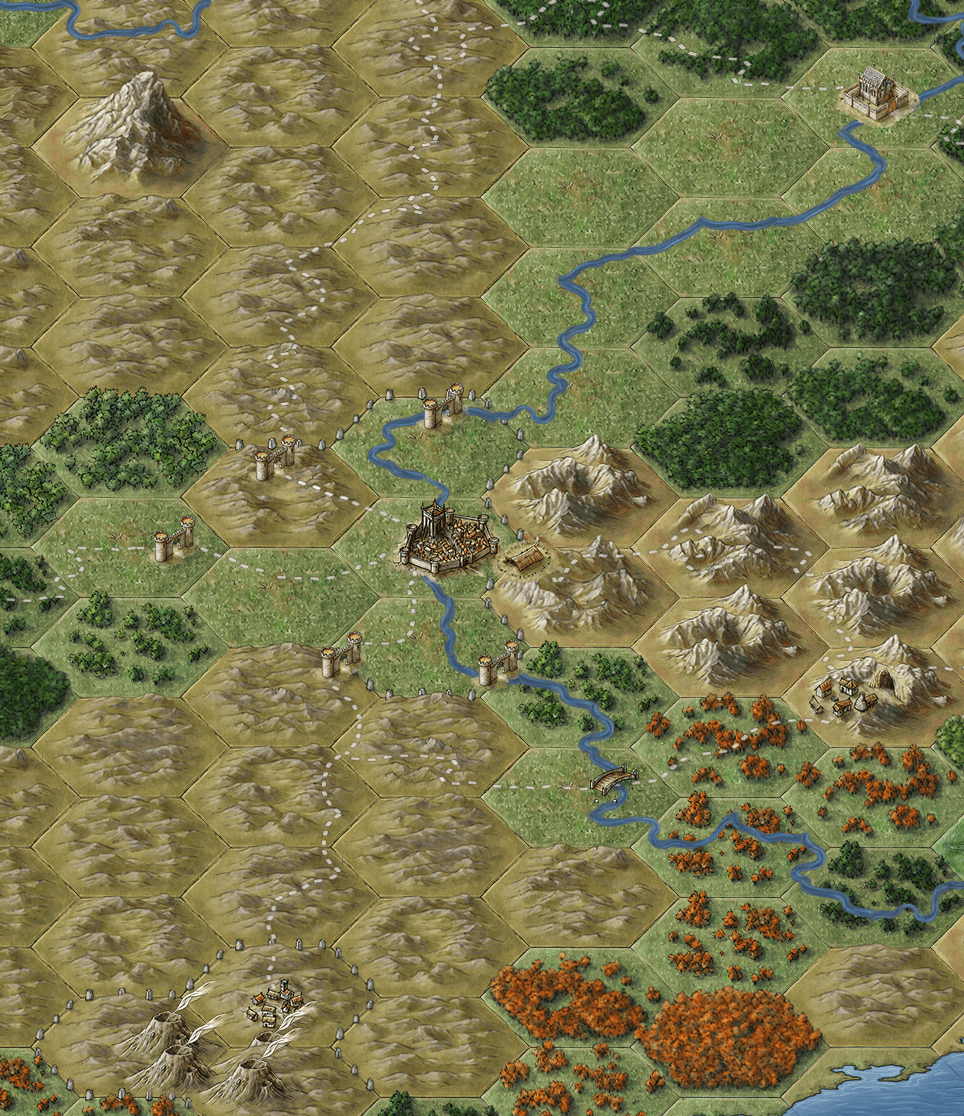
Map developed using the beta of Hex All Things by Fantastic Maps
In the land of Kin the time of creation of the Everflow started one of the popular calendars. This day is known, only due to the Church of Quar (in actuality it is the date when the first Bishop took the Church from religion to merchant guild and non-national power).
The modern era, 21-26 Post Awakening (PA), the Everflow has a few mechanical benefits. This is true in a world where common magic is merely cantrips and the kinship between beasts. A vial of Everflow, attainable in many markets in Telse and through the rest of Kin only at the Church of Quar, works as three uses of a Potion of Healing. In this world it takes only a Bonus Action to consume a use. Taking all three at once is an Action, and also removes a level of Exhaustion. Again, magic is quite rare, so this healing power has created the potency and power of the Church, which profits off of controlling the Source.
This post is an entry in the Blog Carnival, a group of blogs who share content inspired by the same prompt for a month. This month’s host is Sea of Stars.
Make up new items or stat up those from myth, describe places where lost items can be found or quests set by the gods for those who wish to “borrow” item for an important task, what artifacts would your campaign villain seek? What is the craftsman of the gods working on?
The Third Celestial Armory is their own entry into the Blog Carnival.
When the Western Wildes were controlled by the Empire of Sheljar the Church’s influence was so strong that Telse remained a mostly-independent city, though the defenses of Telse and Upper Telse were provided by Sheljar as the mighty empire controlled all lands around the lake town.
This power dynamic shifted at the Fall of Sheljar. As the Necromancer took power in the bog city the other cities in the west earned their freedoms, for the most part.

- Sheljar then sat empty as people fled the Tunneling Nightmares and the Night Peoples.
- Mira is a port city in the north, with some influence over Fort Ooshar.
- Qin is the city of guilds in the south.
- The Ferments are a region of hot springs, alcohol, homesteads, and vibrant independence.
- Bell’an’aur is the community of mines and glass blowing.
But Telse and Upper Telse remain influential. Bishop Ollium maintains power through the wealth of the church — both in the masses of gold and the healing powers of the Everflow. His church-shops are scattered in all kingdoms (Crinth, Azsel, Kirtin, Daoud, and even Mehmd in the dry east). Though smaller than Qin and Mira, Telse’s gift from the gods, an everflowing fountain of healing water that fills a lake with large locks controlling outflow towards both Mira and Qin.
This gift changed the world. Due to the corruption inherent in the People of Love (humans, halflings, goliaths — the Kin) a gift of healing created a church more powerful than nations, able to control who lives and dies, able to topple dynasties.
In times legendary, Quar expected his gift to be a lasting connection created through generous health, as the Font never runs dry everyone would benefit. The flawed god of life did not expect the flaws of man to control this ability.
Other worlds may have mighty boons from the divine that shake the land, or summon kaiju, or protect cities. In the World of the Everflow the minor gift of healing created a non-national empire, a form of currency, and a town that now has a large refugee populace fleeing the Fall of Sheljar or the cursed magicks now entering the Western Wildes — and dragons.
No matter how large or small an artifact of the gods is it will change your world. The Waters of the Everflow did so much more than a god intended.