They can be disgusting. There are times that I’ve called them the rats of the vegetable world — they are not vegetables. In our games we can use mushrooms as food.
What dungeon bound civilization hasn’t used fields of mushrooms for sustenance? Every time Drow, Dueger, Svirfneblin, and the rest raise shrooms. It’s part of the lore. Bioluminescent fungus and molds can be used for lighting as well.
These tropes are common in Dungeons & Dragons.
But you should also use mushrooms to build things. This is happening in the real world, but as bricks. Sure, that works in D&D. It makes a lot of sense for certain cultures.
Expand on that idea.
Who lives inside the shrooms like the Smurfs did. Or do your fey hide from the rain underneath a little cap.
What secret assassin group searches for a specific fungus for their signature poison? What apothecary makes a healing tisane out of mycelium and molds? Which street vendor took the meals of the underdark and turned them into handheld pastries stuffed with minced mushrooms and aged cheese making a name for themselves in the lighted world?
Everything you experience — eat, read, watch, listen to, encounter — can inspire you to add a little bit to your gameworld or character.
You might be able to outrun a Tyrannosaurus Rex, if you’re a peak athlete. Keep note of that. You almost certainly can outmaneuver them. Those are the key takeaways that Wired wants you to have after reading “How to Outrun a Dinosaur.“
There’s a lot more depth in there for a game designer, homebrewer, or storyteller.
Three years ago the biologist Myriam Hirt, who studies animal movement at the German Centre for Biodiversity Research, asked a seemingly simple question: Why is it that the biggest, most powerful animals—the whales, elephants, and rhinoceroses—are not the fastest, while the smallest—the mice, minnows, and millipedes—are some of the slowest? Is the implication that there is an optimum size for speed?
The answer, Hirt found, is yes. If you were designing an animal for speed, that animal should weigh approximately 200 pounds. A bit heavier for a swimmer, and a bit lighter for a flyer.
The speed of 50 might make sense if the primary time in D&D that speed is used is to determine distance running. But it is not. Speed most frequently comes up in combats in six-second chunks of time. Beasts and Monstrosities with high speeds should be the ones that accelerate and burst forward — cheetahs, lions, and Deltadromeus. Even the velociraptor should be average-to-athletic human sprint speed-ish.
That also brings up a key point. A D&D character is supposed to represent, in general, above average athletes. There’s no direct tie-in between Strength, Dexterity, or Constitution and speed. Most races get a 30, some get a 25, rare ones get 35, and even rarer are the few that fly or swim.
There are three things we should do with the knowledge from that Wired article;
Centerline most speeds to better represent reality in non-magical creatures.
Add line in the description that addresses distance traveled by unencumbered and encumbered beasts of burden.
Create a quick and easy way to avoid getting run down by a dinosaur.
That last bullet doesn’t take a lot of work. When in a chase scene use opposed Dexterity checks (Acrobatics or Athletics or Sports could apply) when the chaser is within Reach of the chasee. A success would permit an attack/shove/grapple, if the action economy makes sense. If not, let the chasee take half their movement as a reaction as long as they are able to, and do, significantly change direction.
Any creature that has magical influence on their speed can operate as normal.
Before we dive into the news around the net, let’s review what you may have missed from Full Moon Storytelling. There’s some awesome tools to create NPC character art. Using those the post about Thoumas, the Swarmkeeper of Terriers, now has art. You should also check out Ginny Di’s recommendations to make virtual D&D suck less. Every recommendation is also valid for your business meetings.
Let’s get on with the news around Dungeons & Dragons and the other stuff that geeks like us enjoy.
They also just fixed three more of the features from Tasha’s Cauldron of Everything.
Heroes’ Feast
The Shepherd Gazette gets in on the Heroes’ Feast review action. This is a fun little story for a smaller paper to cover. Stuff magazine in New Zealand also covers the 3rd most popular cookbook of 2020.
Dragonlance Art
Advice for Dungeons & Dragons Payers and DMs
Think DM thinks that the language about surprise can be simplified by bringing back Surprise Rounds and/or using the Surprise Condition.
It can be hard to find schedule a full table for D&D, even if everything is virtual. Kobold Press is jumping on the duets (D&D with just a Player and a DM) bandwagon.
What happens when you combine a pirate from the early modern Middle East with D&D? Add Piri Reis to your game.
Playing D&D in Civic Spaces During the Pandemic
As someone who grew up in the 80s, with a mom who bought into the Satanic Panic, I will never get used to libraries and community centers hosting D&D for the general public.
I’m all for more Wakanda. Ryan Coogler is going to give us a limited series when he’s done with Black Panther 2.
As Always, Maps
Dungeon Alchemist is creating amazing fantasy interiors. These isometric maps are perfect for a quick tavern, castle, or other building you need. Yes, I’ve signed up to be notified when the Kickstarter goes live.
Everyone needs an icy villa map to help you pass time during the icy winter.
Christian Oesch’s DM Heroes page throws together a handful of racial/lineage options with descriptions that are not centered on combat. Additionally there are suggestions on how to connect them to each other.
Veklani Skandalor
Female Dwarf Cobbler – If it doesn’t kill you…
Veklani’s suggested traits are;
Features
70 years old (young adult) 4′2″ (128cm) Normal voice Speaks about themself in 3rd person.
Traits
Never changes their facial expression. Hates the government. Is happy because of a recent dream.
Story
Asks the party to help their become a cult leader. Wants to kill Erag Ambershard
Other
Prays to Dugmaren Brightmantle, god of discovery (CG)
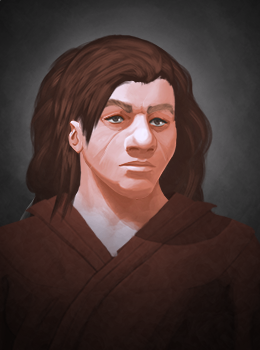
If you don’t have time to custom craft a handful of minor NPCs just in case, this tool does wonders. It also can be a handy tool to get quick art for your PC, though you’ll need to spend time tuning the various sliders and such. Reroll, Hero Forge and others might be better for that.
Quick art for your characters, whether player or DM controlled, helps with immersion and inspiration. Find those tools that help you and your group enjoy the game most.
After many, many months of the covid-19 pandemic more people are playing D&D than ever. Much of this is online. Long-time players and D&D rookies both are discovering the challenges of gaming via video.
Ginny Di put together a strong 12-minute video that hits on the common challenges and solutions that come up at virtual tables. Even if your virtual table play is going well this is a good reminder. If you haven’t played virtually before the package is an excellent starting point.
When I watched this it reminded me of one my habits as Awf — I can dominate the channel rather than share the spot light. When I play as Thoumas, the group interplay is different. We split the party frequently, something that is harder to handle on a VTT, in my experience. Coordination requires a bit more care.
Her best piece of advice, at least for my groups (hi guys), is to use the text chat for out-of-character stuff. That clears space for the DM to manage the game. My second favorite is to schedule a little bit of the time pre & post game to communicate about non-gaming things. Be friendly and social with each other, because being social during the pandemic is hard enough.
Full Moon Storytelling is brought to you by Kristin Clark of Keller-Williams Lake Washington If you are looking to buy or sell a home in King or Pierce County, Washington support Full Moon Storytelling by supporting Kristin.