Category: Kin

  • Gendarmes of Sheljar Campaign: One Sheet

    Gendarmes of Sheljar Campaign: One Sheet

    This campaign is set seven years after the Lorebook Hunters returned magic to the World of the Everflow. It is set in the Free City of Sheljar, and is centered on clearing portions of the bog-city from the return of undead and tunneling nightmares. Combat and exploration will be heavier than social play at the beginnnig. Every character is united in keeping residents of Sheljar safe and mostly unified in the ideals of Free Shejlar (all thinking peoples have value), but may have differing concepts about how to do so.
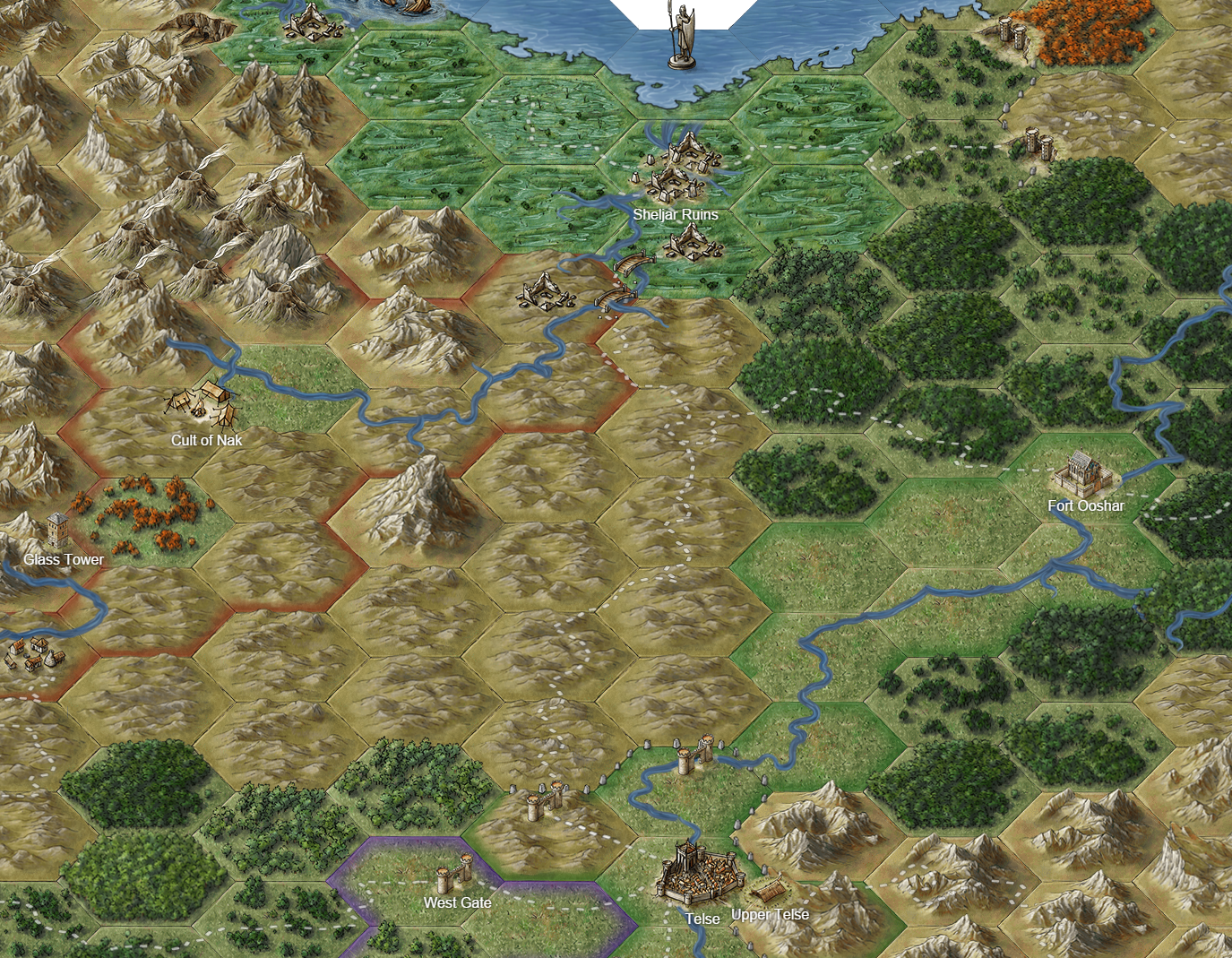
    The bog-city of Sheljar sits in a lowland below a waterfall. The climate is cool and wet, think the lowlands of the upper Salish, the moors of Scotland with a boggy multi-island brackish lake similar to New Orleans.

    Campaign Premise

    The party is a group of guards that volunteered and is paid to help the Lorebook Hunters keep the people of Sheljar safe from skeletons, zombies, wights and other undead. Tunneling Nightmares may have returned to isles in the bog-city as well. They will start in the old neighborhood of Jherr as recent migrants have noticed a cavern with odd noises and smells.

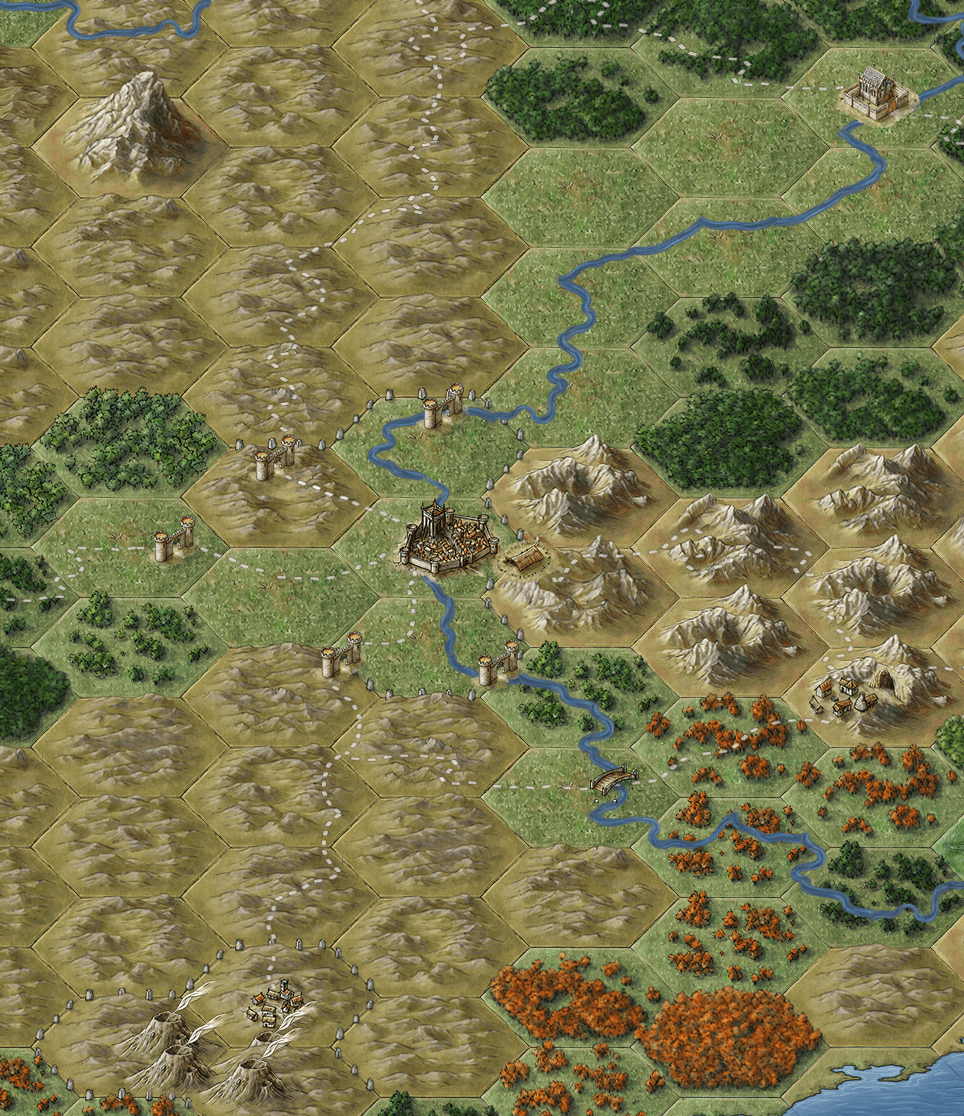
    Made using Perilous Shores, this is the neighborhood of Jherr, to the north and east of the core of Sheljar. The southeast corner is less brackish than most of the bog-city, almost an internal fresh water space.

    Background

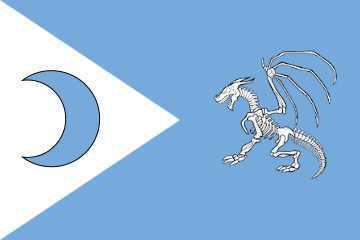
    The Flag of the Free City of Sheljar features the moon Feylf in crescent, a white triangle entering a field of the sea and Boo, in his skeletal form.

    Once upon a time, the Empire of Sheljar ruled all of the Western Wildes, from the Cliffs of Galinor to Mira to Qin. Then, the Born Generation of magically imbued teens (27 years ago) caused chaos and disruption, upending the old ways. One of the Born Generation, the Necromancer, thought he was doing good, keeping dying peoples and animals with their families, but these horrifying undead monstrosities were often rejected. As he raised more and more, people fled Sheljar, emptying it out, leaving the bog-city nearly abandoned to the Necromancer and his unliving nightmares. A misty stench then started to control the city and more people fled.

    It was not until after the eruption of the volcano, the battle of Cortez and Chorl, and the Lorebook Hunters eventually slaying the Necromancer that Sheljar felt free again. Now, six years later the Free City of Sheljar welcomes all thinking peoples. Those that return to their former homes have their property back. Those without homes are granted plots and space with the promise of aid. Few ships dock at Sheljar, but that number increases every month.

    Sheljar has several dozen gobkon, a few dozen Ken with no known dragons, but most of its 2,000 generally agrarian peoples are various Kin with their animal companions. The Gendarmes and the Lorebook Hunters are the only standing ‘army.’ Most of the residents are frontier peoples ready to defend their cottages but only have clubs and other utensils as weapons.

    A map of the former Empire of Sheljar, now a series of independent city-states and free towns.

    Grand Conflicts

    At the start this is a simple island of the week adventure, where the Gendarmes are responsible for discovering and clearing pockets of undead.

    Factions

    • Lorebook Hunters – this is the leadership of Sheljar.
    • Cult of Nak – these are the remnants of Chrol’s transformations.
    • Fort Ooshar is under control of the Fox and Crow, a gang that sees opportunity to raid the migrants heading to Sheljar
    • A death cult has taken over the lands west of Telse.

    Rumors

    • The Folio of Necromancy may be missing. Saffron had held it prior to rising to part of the leadership council.
    • What is that stench out east? Tunneling Nightmares?
    • The Volcano of the Glass Tower is glowing.

    Facets

    • Exploring the zero-to-hero tropes, friendship with animals, and who gets to control knowledge.
    • Sandbox play.
    • Player agency creates history.
    • Drop in/drop out, whatever. This is an episodic campaign.
    • Sessions are 60-90 minutes. Adventures are 1-3 sessions.

    Variant Rules

    • Playable races are Human, Hin(what they call themselves)/Halfling, Goliath/Firbolg, Elf, Dwarf, Gnome (wood only), Goblin, Hobgoblin, Bugbear.
      • Only the Kon (goblinoids) may be Artificers.
      • Kin start with a Bonded Companion.
      • Ken start with a Feat that grants a 1st level spell such as Magic Initiate.
      • Kon start with Tek.
    • There are a few custom subclasses available (Way of Frayed Knot, Society of Veil and Shadows, Conscript, Propagandist, Circle of Sewers).
    • There are several custom backgrounds and tools available. We will use cultures, not languages.
    • Use point buy or standard array for starting attributes. If you want something random, the redrick roller gives random point buy valid stats.
    • Start at 1st level because several are new to the game, let’s learn together.
    • The Gendarmes start with a small sailing boat (Crew:4 for rudder, sails, a repeating heavy crossbow, and a fire sling).
    • Long rests require 24 hours within sanctuary. This creates a pace of play more similar to novels than video games.

    Practicum

    Sessions will be on Wednesdays right after work, played over Meet with shared screen used to help set the scene. Theater of the Mind will be the most common form of combat, ideally using cinematic descriptions which will grant Inspiration. There is a campaign on DnDBeyond, used only by the participants rather than open to public.

    Every character is assumed to have Common Knowledge in the Six Kingdoms.

  • Whistle of Az and Sel for the Blog Carnival

    Whistle of Az and Sel for the Blog Carnival

    Within the World of the Everflow every thinking peoples from the Land of Kin bonds with an animal. The most common of these are dogs (especially among halflings), birds (especially among goliaths), and horses (especially among humans). These beasts are family, inseparable companion, and essentially an extension of that person. They share personality and aid each other throughout their shared lives.

    This intimate companionship started after magic left the world. Now, the norm, bonding started with Az, his dog Sel, and a three-hole pipe. Together they created more and more and more and more and more bondings. Eventually this drove Az mad, for the thoughts of 100s of beasts were in his head. What was to be a blessing from one of the gods, turned into a curse for young Az. As he aged, the nation of Azsel formed around Az and Sel. Their whistle becoming the symbol of the nation, it was once under guard as a holy relic. Over the millennia the whistle disappeared. The power of bondings spread beyond what the Whistle started. Companionship is now so common that few consider it magical.

    Many also think legend of Az and Sel is merely a story, not real. But the Whistle of Az and Sel is in fact real, and dangerous, for the curse will drive you as mad. If any have found the Whistle in the current era they are not making that discovery public.

    This is my latest entry for the Blog Carnival.

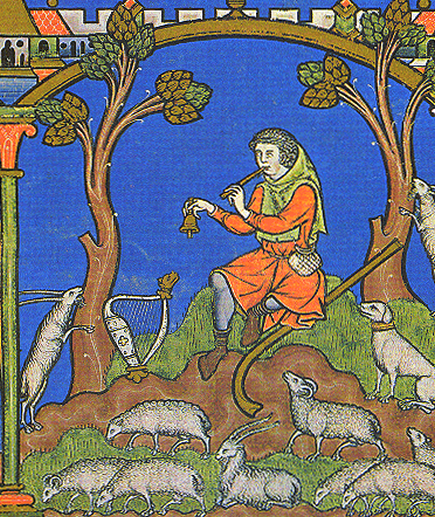
    David, as a young man, playing pipe and bell as he watches his sheep in the pasture. – The Morgan Bible, Folio 25

    Whistle of Az and Sel

    Wondrous Item, artifact, cursed (requires attunement)

    When playing the Whistle of Az and Sel the user can cast the following spells at will, without expending a charge and as a bonus action. These require no spell components nor concentration if that is normally required.

    • Animal Friendship
    • Beast Bond
    • Speak with Animals
    • Animal Messenger
    • Locate Animals
    • Summon Beast
    • Conjure Animals
    • Dominate Beast
    • Commune with Nature
    • Druid Grove

    This power comes with a cost. That cost varies by user.

    When one attunes with the Whistle of Az and Sel they experience two minor and one major detrimental properties. They also suffer from one long-term madness upon attuning and indefinite madness for as long as they are attuned (see DMG page 260). This cursed item requires a quest from a god or powerful magic to be unattuned.

  • The Everflow, a gift from the gods

    The Everflow, a gift from the gods

    The Font of Two Paths, the Two-Headed Spring, Pool of Life, Lake of Wonder — the Everflow. This supernatural gift from Quar is the result of the last action of gods who turned their backs on Kin. The Lake of Wonder has two exits, a thing that shouldn’t ever, ever happen when making maps. This wasn’t because of Quar, but instead due to the people who wanted to spread these waters as far as possible. The Font of Two Paths is as much a study of Quar as it is of the ingenuity of his church.

    Telse and its immediate surroundings.
    Map developed using the beta of Hex All Things by Fantastic Maps

    In the land of Kin the time of creation of the Everflow started one of the popular calendars. This day is known, only due to the Church of Quar (in actuality it is the date when the first Bishop took the Church from religion to merchant guild and non-national power).

    The modern era, 21-26 Post Awakening (PA), the Everflow has a few mechanical benefits. This is true in a world where common magic is merely cantrips and the kinship between beasts. A vial of Everflow, attainable in many markets in Telse and through the rest of Kin only at the Church of Quar, works as three uses of a Potion of Healing. In this world it takes only a Bonus Action to consume a use. Taking all three at once is an Action, and also removes a level of Exhaustion. Again, magic is quite rare, so this healing power has created the potency and power of the Church, which profits off of controlling the Source.

    This post is an entry in the Blog Carnival, a group of blogs who share content inspired by the same prompt for a month. This month’s host is Sea of Stars.

    Make up new items or stat up those from myth, describe places where lost items can be found or quests set by the gods for those who wish to “borrow” item for an important task, what artifacts would your campaign villain seek?  What is the craftsman of the gods working on?

    The Third Celestial Armory is their own entry into the Blog Carnival.

    When the Western Wildes were controlled by the Empire of Sheljar the Church’s influence was so strong that Telse remained a mostly-independent city, though the defenses of Telse and Upper Telse were provided by Sheljar as the mighty empire controlled all lands around the lake town.

    This power dynamic shifted at the Fall of Sheljar. As the Necromancer took power in the bog city the other cities in the west earned their freedoms, for the most part.

    Telse, Mira, Qin and the other cities near the Everflow and its two rivers.
    • Sheljar then sat empty as people fled the Tunneling Nightmares and the Night Peoples.
    • Mira is a port city in the north, with some influence over Fort Ooshar.
    • Qin is the city of guilds in the south.
    • The Ferments are a region of hot springs, alcohol, homesteads, and vibrant independence.
    • Bell’an’aur is the community of mines and glass blowing.

    But Telse and Upper Telse remain influential. Bishop Ollium maintains power through the wealth of the church — both in the masses of gold and the healing powers of the Everflow. His church-shops are scattered in all kingdoms (Crinth, Azsel, Kirtin, Daoud, and even Mehmd in the dry east). Though smaller than Qin and Mira, Telse’s gift from the gods, an everflowing fountain of healing water that fills a lake with large locks controlling outflow towards both Mira and Qin.

    This gift changed the world. Due to the corruption inherent in the People of Love (humans, halflings, goliaths — the Kin) a gift of healing created a church more powerful than nations, able to control who lives and dies, able to topple dynasties.

    In times legendary, Quar expected his gift to be a lasting connection created through generous health, as the Font never runs dry everyone would benefit. The flawed god of life did not expect the flaws of man to control this ability.

    Other worlds may have mighty boons from the divine that shake the land, or summon kaiju, or protect cities. In the World of the Everflow the minor gift of healing created a non-national empire, a form of currency, and a town that now has a large refugee populace fleeing the Fall of Sheljar or the cursed magicks now entering the Western Wildes — and dragons.

    No matter how large or small an artifact of the gods is it will change your world. The Waters of the Everflow did so much more than a god intended.

  • Creating a new world

    Creating a new world

    It comes with just a single question. What if? What if I started a new blog? What if we talked about fantasy fiction? What if the stories told coincided with a role-playing game? What if I set myself back two decades and cracked open Dungeons & Dragons again?

    bard-dave
    Every storyteller needs their tools – a good mug, a notebook (or netbook), a satchel for tokens and memories and a block of cheese maybe some sausage, and a trusty sword.

    What if the themes were strong adult subject matter that made for gritty tales of life, death and heroism? What if magic was real? And the gods could talk, but then they stopped?

    What if the continents were small, the peoples plentiful and not all human? What if humans didn’t believe in magic because it had disappeared in the only continent they know? How about making it so they are defined more by their cultures than by their phenotype?

    Have they stopped believing in themselves, in their gods? Do they see good and evil? How?

    Is there slavery? Why? Is there nobility? Can someone be both?

    These questions and the cascade of answers start to form more questions. It’s a nearly infinite series of responses. World building, particularly the creation of a world that breathes, is hard. Crafting a world-space that can withstand episodic gaming is harder.

    Take chunks at a time. That’s what Full Moon Storytelling will be. Small chunks of content for use in a campaign setting, built around a custom set of rules adapted from 5th edition D&D, but with accompanying tales. If the setting says “The Necromancer is just someone trying to be good” there will be a story that explains how that happened.

    As The Worthing Saga took a novella and broke out portions into branch stories, Full Moon Storytelling takes a campaign setting, rule set and crafts micro-fiction, short stories, plotless narrations and episodic adventures within the World of the Everflow.

    Maybe that’s where we start, not with a character, but with a story about a fountain that flows from a cliff and diverts along two paths – the Font of Two Paths, the Two-Headed Spring, Pool of Life, Lake of Wonder. The Everflow influences the western peninsula of Kin, is clearly unnatural and …

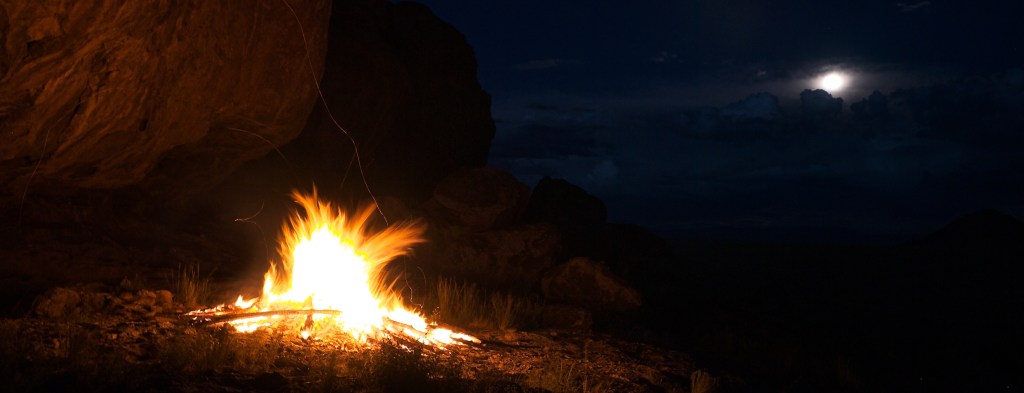
    This is Full Moon Storytelling. It’s a way to share writing, writing process and to think aloud, while words spring forth from tiny digits. Things will happen live, in front of you. Process will be as important as output. Creation is play. Come, join me at this fire under a full moon with clear sky as we look up through trees staring towards the open world of wonder, knowing that behind those trees at your back is whatever reality you can imagine.

    Fediverse Reactions
  • Taien Sahul – the ripper lizard

    Taien Sahul – the ripper lizard

    Out in the lands of Mehmd mammals and avians are rare. Many of the ecological and domestic niches are instead filled by lizards, amphibians and dinosaur-like creatures. The Taien Sahul are small saurs based on the Velociraptor by Sam Stockdale at ENWorld.

    In Mehmd they tend to roam the wilderness, though certain tribes of Unkempt in the South and the Isles use them as companions. When free they roam in packs of 9 or so (3d6). Their Pounce needs quite a distance in order to be used, but when the commit they tend to rush prey quickly. Taien Sahul can survive in deserts, having advantage on CON checks to deal with dehydration.

    Photo by Innermost Limits on Pexels.com

    Taien Sahul – the ripper lizard
    Small beast, unaligned

    Armor Class 13 (natural)
    Hit Points 3 (1d6)
    Speed 45 ft., climb 10 ft.

    STR 7 (–2)
    DEX 15 (+2)
    CON 10 (+0)
    INT 3 (–4)
    WIS 14 (+2)
    CHA 7 (–2)

    Skills Perception +4, Stealth +4
    Senses passive Perception 14
    Languages —
    Challenge: ½ CR 50 xp

    Keen Sight: The raptor has advantage on sight-based Perception (WIS) checks.
    Pounce: If the raptor moves at least 30 feet straight toward a target and then hits with a claw attack on the same turn, that target must succeed on a DC 10 Strength saving throw or be knocked prone. If a target is prone, the raptor can make one bite attack against it as a bonus action.
    Pack Tactics: The raptor has advantage on an attack roll against a target if at least one of the raptor’s allies is within 5 feet of the target and isn’t incapacitated.

    ACTIONS
    Multiattack: The raptor makes two melee attacks, usually using both claws unless they’ve pounced.
    Bite: Melee Weapon Attack: +4 to hit, reach 5 ft., one target. Hit: 1d4+2 piercing damage.
    Claws: Melee Weapon Attack: +4 to hit, reach 5 ft., one target. Hit: 1d4+2 slashing damage.