Tag: DnD

  • Errata for December 2021 mostly focused on helping your character be yours

    Errata for December 2021 mostly focused on helping your character be yours

    The semi-regular blog by the D&D team at Wizards of the Coast released today is from Jeremy Crawford, folding in Sage Advice and Errata updates.

    Four rules answers are shared, all about spells. The biggest impact on my games would be the clarification that spell attacks are not spells. This means Counterspell and similar are not effective against the consolidated stat blocks for monsters in the latest and upcoming releases. Also, Silvery Barbs is ineffective against Legendary Resistance, which shouldn’t be a surprise. The other two questions seemed to have obvious answers, but the clarification helps.

    There is a significant change to Drow, and that connects to most of the player-facing Errata updates.

    This new text replaces a description that confused the culture of Menzoberranzan—a city in the grip of Lolth’s cult in the Forgotten Realms—with drow themselves. The new text more accurately describes the place of drow in the D&D multiverse and correctly situates them among the other branches of the elf family, each of which was shaped by an environment in the earliest days of the multiverse: forests (wood elves), places of ancient magic on the Material Plane (high elves), oceans (sea elves), the Feywild (eladrin), the Shadowfell (shadar-kai), and the Underdark (drow). Drow are united by an ancestral connection to the Underdark, not by worship of Lolth—a god some of them have never heard of.

    Sage Advice December 2021

    Within the nine books that have Errata updates that theme is extended.

    The Player’s Handbook sees 15 of 22 new changes being related to Alignment. The most common change is “The “Alignment” section has been removed.” No longer are characters going to be directed towards certain behaviors. They are, instead, the heroes and anti-heroes of the story — unique and special.

    “The “Alignment” section has been removed.”

    Volo’s Guide to Monsters and Sword Coast Adventurer’s Guide (which is not only still in print, but still getting updates!) have similar changes to their PC-facing content. Volo’s also notes that Volo himself is an unreliable narrator with almost all of his experiences being confined to the Forgotten Realms.

    “The lore in this chapter represents the perspective of Volo and is mostly limited to the Forgotten Realms. In the Realms and elsewhere in the D&D multiverse, reality is more varied than the idiosyncratic views presented here. DM, use the material that inspires you and leave the rest.”

    Volo’s Guide to Monsters Errata

    SCAG has some changes to the Sun Soul Monk and the Swashbuckler that bring them in line with these subclass’s appearances in other books.

    Overall the Errata focuses on the concept that only canon that matters is what’s at your table, and that your character is yours. All nine books with Errata in the last year are linked at the Sage Advice update.

  • Deck of Many Gifts: A Holiday Shopping Guide

    Deck of Many Gifts: A Holiday Shopping Guide

    Not everyone is an expert on D&D, but thanks to the pandemic, nearly everyone knows someone who has taken up the hobby within the past year. If you are looking for ideas, this collection should help you find the perfect gift for the new Dungeons & Dragons fan in your life. Or, it’s a great way to share ideas with your family and friends that need to support your hobby during the holidays.

    The following collections of gifts are sorted by the style of D&D fan you are shopping for. None of the links, except one, has an affiliation with myself or Full Moon Storytelling. For the most part the links are not to Amazon, but to direct purchasing, or in some cases, King’s Books in Tacoma, an indie that needs support. For digital gaming only DnDBeyond is linked, but check what digital service your gamer uses to see how to best aid them in playing.

    Don’t critically fail. Shop from this gift guide instead.

    The Pandemic Casual

    Over the past 9 months many people took up the game to help create social interactions via digital spaces in a time when doing so in real life would help spread the disease. They may only be using the free version of the Basic Rules. Give them an upgrade.

    If they’re only playing a single campaign or so, they don’t need subscription on DnDBeyond. But it can be handy to grab the Player’s Handbook, Xanathar’s Guide to Everything, or Tasha’s Cauldron of Everything. These can expand your options as they level up or play their second and third character. If they use Roll20 or Fantasy Grounds go for those manuals on those systems.

    When they convert from digital play get a nice set of dice that inspires them and a written notebook for that analog pen & paper experience – my favorite entry level is from Field Notes. At the higher end, the Adventurer’s Kit from Arcana Note is stunning.

    The Digital Addict

    Others are now addicts, gaming a half-dozen times a week or more. These people need more expansive tools, and art.

    The Hero Tier on DnDBeyond is of great value if your giftee is constantly talking about their next character build rather than their current. The Sourcebook Bundle provides the maximum number of options in the 5th edition rule set.

    An expert at DMing on Roll20 or Fantasy Grounds will love Newbie DM’s Spell Templates. Support a map maker on Patreon – 2-Minute Tabletop, Dyson Logos, and Deven Rue are my favorites – so that they have great maps to help them game.

    The Beginner

    There is no better time for a family to start playing D&D together. For those with little to no experience in playing analog role-playing games start with the D&D Essentials Kit (currently less than $10). For those just a bit too young to start playing, The Young Adventurer’s Collection from Jim Zub, Stacy King, and Andrew Wheeler will give them the experiences of the multiverse through original art and writing. There’s also Adventure Begins, a basic board-meets-roleplaying game.

    The Collector

    They probably have all the gaming stuff already. You need to find them with something related to the game that they don’t have. There are high end options galore, including Beedle & Grimm’s assortment of adventures.

    Heroes’ Feast is a cookbook inspired by D&D. How ’bout a dice box with a caddypult? Or a prop map for their wall? Finally, rather than something inspired by D&D, why not give them Appendix N, the materials that inspired the game?

    The Actor

    Some role-players take a deep dive into their role. They create elaborate backstories, dress as their character, and only want to spin the tales from their singular deep build. You can aid them in this endeavor.

    Head over to HeroForge to create a custom version of their character. They even offer full color now. Now, find the perfect pairing of fancy dice, like the all wood from Artisan Dice (or poo, or bone?).

    They also likely need a prop or two. Maybe a sword, or sextant, or a spyglass. Match their passion with fun trinkets and maybe even a custom dice bag from Tea & Tails so they get in character as soon as they sit at the table.

    Creator of Worlds

    For some of your friends, the rulebooks are only part of the game. They aren’t interested in Faerûn, Krynn, Athas, Eberron, Oerth, or other pre-created realms. They are the Dungeon Master. They create their own places for heroic tales. They need other tools.

    For guidance in world creation, there is nothing better than the Kobold Guide to Worldbuilding. For those that need more monsters, the Tome of Beasts 2 expands the monsters in the world. As someone who gets a thrill from creating new villages and cities, Spectacular Settlements from Nord Games is amazing. Finally, the Monsters Know What They Are Doing, no DM should assume those beasties and what-not are dumb.

    Lifestyle

    Those that live the D&D lifestyle will love the Lambert House D&D shirts, Found Familiar coffee, and Friday Afternoon Tea.

    What if you’re Dave?

    If you’re me you’ll enjoy everything listed above, as well as things on my wishlist.

  • Four ways to use Oleg Dolya’s new Neighborhood maps

    Four ways to use Oleg Dolya’s new Neighborhood maps

    There are certain DMs (me) who aren’t good at drawing and or mapping. For us, a few dollars a month towards various map makers helps us create our worlds. Even if you don’t commission specific works, the services of Dyson Logos (my favorite dungeons), Two Minute Tabletop (my favorite battlemaps), Deven Rue (my favorite regional maps), and Watabou (my favorite procedural maps) can add depth to your gaming sessions — even when you don’t use miniatures.

    Oleg Dolya, the person behind Watabou, just released neighborhoods.

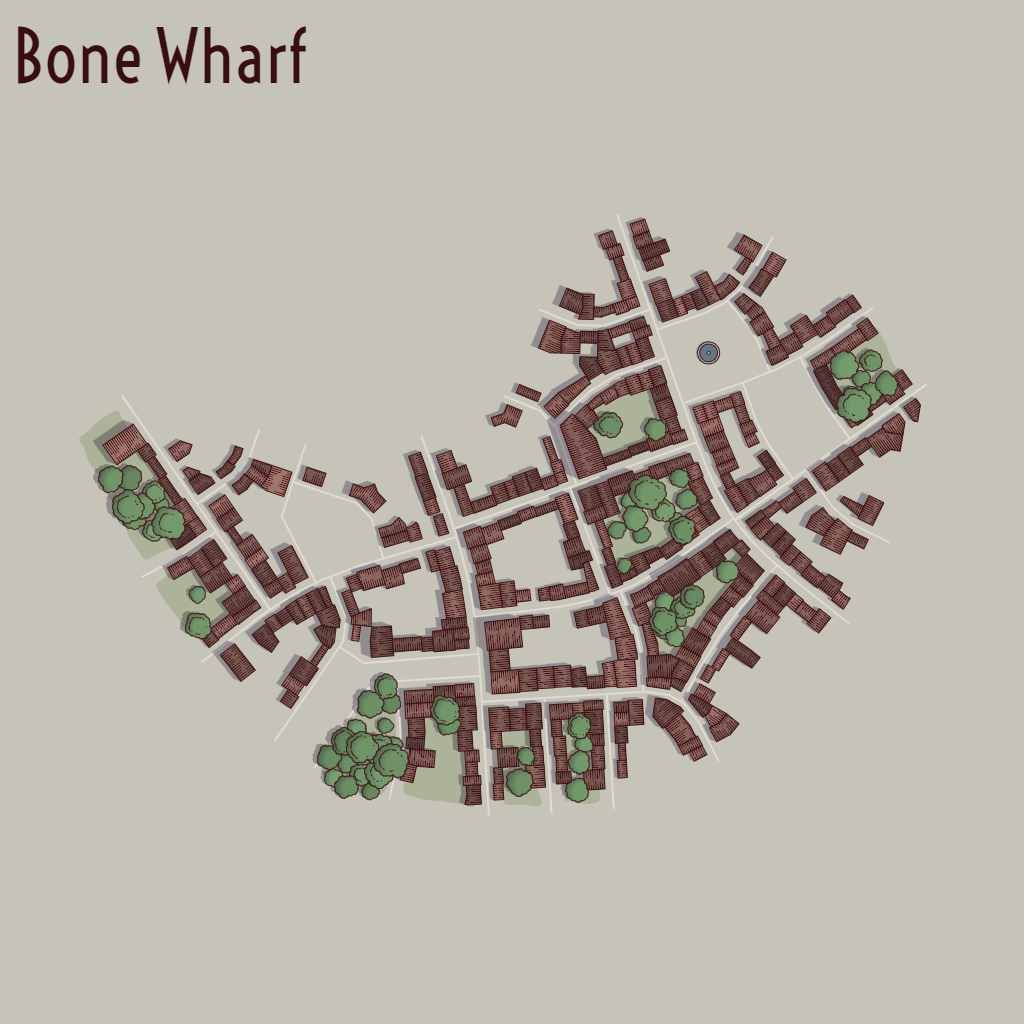
    This is vital for me. Uprising & Rebellion takes place in large city. Having maps of districts and neighborhoods within that is important for the game. Being able to create one on the fly as my players head off script is vital. Players will always go off script. Just because you think they’re going to have a battle in the Docks doesn’t mean they won’t visit North Shore, the Ward of Mighty Trees, the University or Silk Row.

    Created using Watabou

    Will I have two or three of these printed out just for the flavor of the next neighborhood over? Yes.

    Here are three other ways you can use the Neighborhood maps.

    1. Stitch together an assembly of several of them to create a city. The unnatural gaps make perfect sense as mountains, lakes, rivers, etc. A whole city at this level of detail would be interesting. Make certain to use the same color set for each.
    2. Some of the generations for the neighborhood map make sense as compact villages. Yes, Dolya has a village creator, but those don’t have wells, fountains, and ponds in them. The neighborhoods can.
    3. The map can be an underground cavern in the Dwarven city trope. First shift the colors using the ‘0’ key to one that has some darkness to it. Pretend that the trees are mushrooms, and that the streets are the passageways and tunnels to the rest of the world. Bone Wharf is now a Mountain Dwarf city.
    Created using Watabou

    The key to using a procedural map is that you aren’t going to get exactly what you want, or even close to what you want. You are going to get a usable map, fast. Let the oddities of the creation guide you towards creating the people and the space. That long road running from lower-left to upper-right on Silk Row? That’s obviously the Silk Row itself. The fountain is where the various traders and merchants gather to discus their deals. The light smattering of trees are for the very richest of households, those that raise silkworms in the climate that isn’t proper for them. There are some roads that run parallel to the Silk Row, those are for supporting businesses, not the wealthy traders. The non-enclosed squares like the large one up-and-right are areas that are pack animal friendly. You are the DM (or when you use as a player to describe a hometown the creator). Let the algorithm take you to answers you could never find on your own.

    What else do you see in Silk Row? Why is the dwarven city called Bone Wharf? What makes Bone Wharf unique?

  • The Hunter should be among your D&D Backgrounds

    The Hunter should be among your D&D Backgrounds

    Myth, legend and story energize Dungeons & Dragons. The game, especially in its 5th edition circles back and amplifies itself. So many of the tales which helped create the game are those of the zero who becomes a hero. A small town X becomes greater than life, saving kingdoms and worlds.

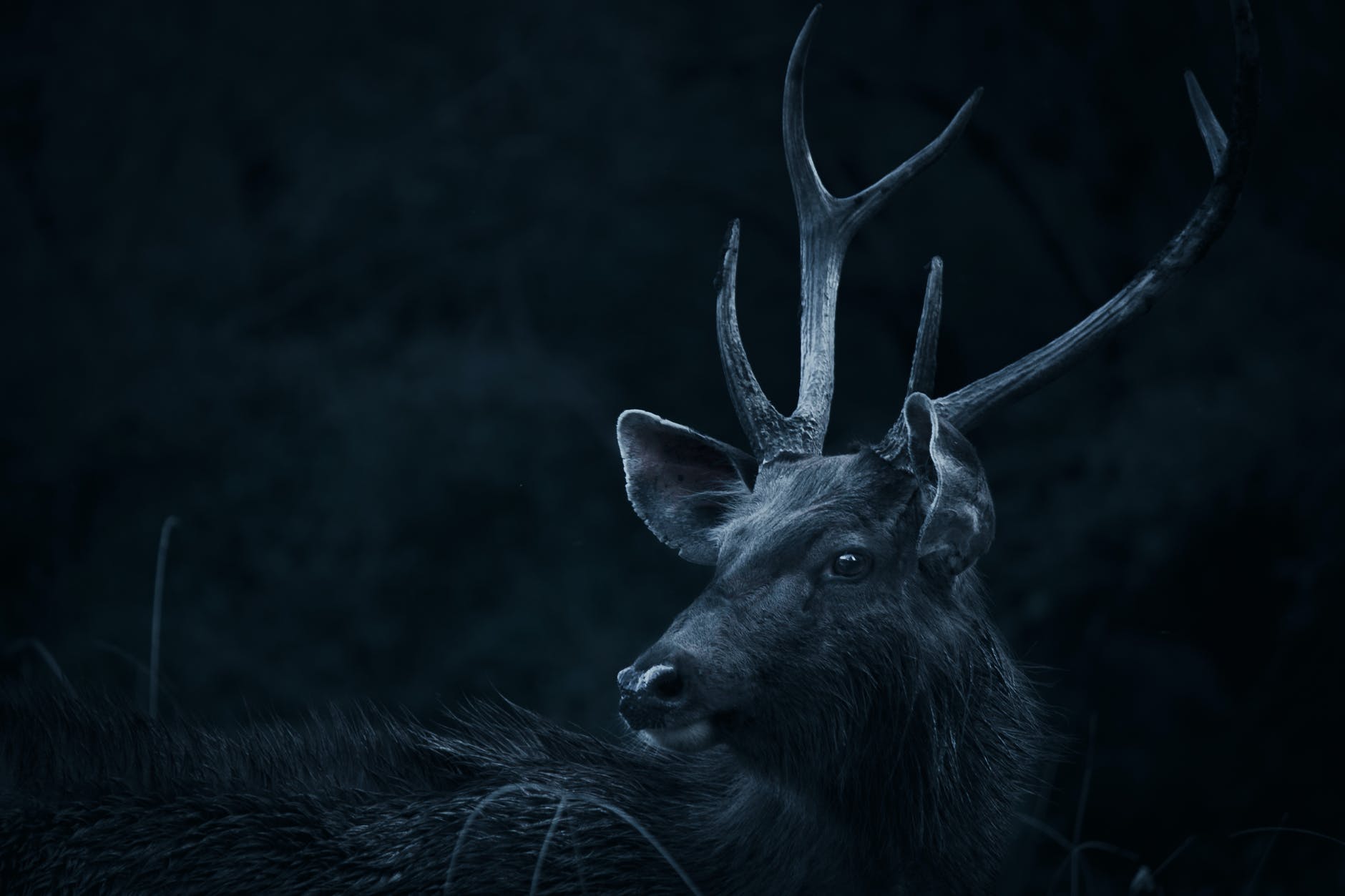
    These zeroes have so many professions. In 5th edition these preheroic roles are captured in Backgrounds. The game does a decent job of offering several. But some are missing — like the Hunter. A Hunter may be chasing a stag and stumble upon a sleeping woman. Or they set traps for furs, travelling to the city later.

    Currently you could use an Outlander or a Folk Hero. But you aren’t a hero yet. That’s going to happen at the table. The Outlander ignores many of the stories of a hunter who is part of the community from which the tale starts. That’s why you need a Hunter. So here it is.

    Photo by Vincent M.A. Janssen on Pexels.com

    Hunter

    Whether for your lone homestead or for a large city you hunt for your people’s food. You may do this with a bow, or a sling, or traps. You do this swiftly and effectively, honoring the prey for what they provide your family, friends, and neighbors. You may be a pseudo-noble authorized to hunt on the Queen’s lands or a trapper out in the wilds.

    Some hunters are expert trackers, others can stalk their prey for miles, while others still use snares. A hunter may focus on specific beasts, or not. No matter their preferred protein when they are on the trail they are completely dedicated to success.

    Skill Proficiencies: Survival, Stealth
    Tool Proficiencies: Leatherworker’s or Woodcarver’s Tools
    Languages: None
    Equipment: A non-magical ranged (w/ 10 pieces of ammunition) or 3 thrown weapons or 2 hunting traps, traveler’s clothes, waterskin, knife, whetstone

    Feature: Provider

    During a long rest you are able to find enough food for yourself and your proficiency bonus number of people for a day. You can do so and still gain the benefits of a rest, but still must sleep or trance as appropriate to your race or lineage. Additionally, you have twice your proficiency bonus for your Stealth or Survival skill gained from this Background when in natural surroundings. This bonus does not stack with Expertise or similar rules at any time.

    You are not proficient with the weapons that are starting equipment.

    For personality use the Folk Hero or Outlander, for now. When the Before We Were Heroes project is available for purchase every Background will have their own traits, ideals, bonds, and flaws.

    The Hunter can also be played as a Trapper without any changes beyond the name. Just choose the hunting traps for your equipment.

    Hunter Design Goals

    As usual this design started with the massive hole in the Dungeons & Dragons Player’s Handbook not having many mundane backgrounds and trying to shoehorn them into the Folk Hero. But being a hero is what playing the game is about, not the story in your past.

    With the Hunter I wanted to explore a way to grant Expertise, under a different name, to any character at 1st level. But, this is as pricey as the cantrip granted by the Drudge. There must be a cost. That cost isn’t just dropping a single skill, but dropping a skill and one language/tool/etc. That didn’t seem to be enough though. So, the rule is that a Hunter must choose one of two skills and cannot have the other at 1st level. Our mundane hunter is either good at tracking/trapping or good at sneaking — not both.

    The inspiration has to start with Artemis, Orion, and the Huntsman. But there are more, so many more. Missing this trope is glaring. Crockett, Boone, Ishi, and others can guide you to your own character.


    Other Custom Backgrounds


  • Add the Herbalist Background to your 5th edition D&D games

    Add the Herbalist Background to your 5th edition D&D games

    Picking herbs from a backyard garden, a hot house, or a forest outside of town the herbalist collects natural items that aid and harm. An herbalist can heal, poison, invigorate. They know the powers of plants and fungi to change how humanoids and beasts experience the world.

    Photo by murat esibatir on Pexels.com

    Herbalist

    You are a naturalist. You use the art and science of foods and other natural goods to change the way people experience the world. Maybe your favorite tisane helps awaken the weary, or heal the hurt, or cure a disease, or puts people to sleep. A poultice could stop blood flow, or cool the overheating.

    There’s power in the natural world and your various recipes. Clerics count on gods. Druids channel the magic of nature. An herbalist knows that life interacts with itself in interesting ways. There’s a magic to that, it’s just not ‘magic.’

    Skill Proficiencies: Nature, Survival
    Tool Proficiencies: Herbalist Kit
    Languages: Druidic
    Equipment: Sickle, 2 candles, Scroll case with 5 pieces parchment or a notebook, common clothes, component pouch, herbalism kit, 2 vials (1 w/ either antitoxin or healing potion)

    Feature: A Dash of This; a Dollop of That

    Using a short rest, you can always find the various fungus, plants, and whatnot needed to make antitoxin, healing potions, poison, or coffee-like substances. Your recipes manifest as salves, poultices, potions, pills, or any other way to deliver the ingredients. Any of your recipes take just a Bonus Action to use as they are more potent than typical.

    The personality traits, ideals, bonds of flaws of the Acolyte, Folk Hero, Hermit, Outlander, and Sage all make sense to borrow from during the playtest of this Background. When published all Backgrounds will have unique character traits.

    Herbalist Design Goals

    Again, this design exists because the Guild Artisan puts most Backgrounds that are related to Tools into a Guild. That’s fine for some stories, but it ignores so many others.

    A rural or farm community Herbalist is common in the lore upon which D&D is based. These can become Druids, Rangers, Clerics, Sorcerers, Wizards, and Warlocks most commonly. There’s also a fit with certain Barbarians, Monks, and Paladins. Frankly, a Rogue (Assassin) and Paladin (Devotion, Ancients), and even a Fighter (Eldritch Knight). Because frankly every background should have a story with every core class.

    There was also a desire to have access to Druidic, my least favorite D&D language, at a Background level. A couple Backgrounds grant access to Thieves Cant, and it makes sense to have at least one grant Druidic. Shortly, there will be a post about a new take on Druidic that expands it to cover at least one more class and a couple more Backgrounds soon.

    Nynaeve al’Meara from the Wheel of Time is a foundational character for this Background.


    Custom Backgrounds for 5th edition Dungeons & Dragons