While chatting about Wish, Chris Pine suggested that Dungeons & Dragons: Honor Among Thieves 2 is possibly/maybe going to happen. It wasn’t a strong statement, but it’s also the strongest since the co-writer/director duo were talking before the writers and actors strikes.
“I’ve heard some rumors about it,” he tells us of a potential follow-up. “But I don’t know anything yet. But I feel pretty confident that it may happen.” When we ask if he’d be happy to return, Pine responds: “Absolutely.”
Because a large part of that falling short was due to the compacted nature of releases that have meant a majority of films missed their targets this year. Releases are stacked up next to each other due to how the covid-19 pandemic reduced available theater openings for two years.
Because the TV shows ordered, TV in development (Kolstad) and the documentary would be boosted by the greater attention that major films still get over prestige television. There would be synchronicity, and unlike Marvel, Star Wars there isn’t yet danger of being overwhelmed with barely connected interoperable plots.
Because if they act quickly the main cast are available (a small benefit of the pauses due to the strikes). Pine has only 1 project (he’s said Star Trek IV v2 is dead). Rodriguez has 1 project, Regé-Jean Page has 1 project, Justice Smith has 4 projects. Sophia Lillis has 1 project. Chloe Coleman has 1 project. The cast that advocated for school D&D and grandparents D&D and just playing D&D in general is available now. That won’t be true for long.
That last point may be the most important. Long tails are rare in the current media environment. Many studios give up on “failures” rather than wait. The path to cancellation is quick. But Paramount and Hasbro haven’t given up on Dungeons & Dragons. It sits there on Paramount+ getting attention as one of the best found family films ever, a highly rated fantasy and it continues to help earn renewals at Paramount+ globally.
So yes, I agree with Gizmodo on this point — released D&D 2, you cowards.
Sweat dripping from my brow, I head back towards home. Dinodas bounds towards me, shifting to walk on the customary left side as we stroll. My hand reaches up to scratch that comfortable spot behind his ear. It’s an instinctive move now, for both of us.
We’re kin for many years now, this massive hound and little me, a halfling from Kirtin, just off Slope.
On certain days in the field he’s closer to me than others. On rising full Glibbon he knows I’m going to cut wood and brush. The physical exertion helps me focus, or unfocus — whatever. Those things that happened down Slope, and the years after, normally sit back in my head, but since the Hornjaws started visiting on full moons I’m unable to avoid the thoughts.
Don’t know how they got me to open up — probably something to do with how well they treat Dinodas. He likes them, so I like them. It’s typical for a bond. Meeting Belni and Terdu was good for him, probably good for me too.
I don’t like thinking about those times. I don’t want to remember the decision I made.
So that’s why when a moon rises full I cut brush and start a burn pile. Because this evening I’m going to share some stories. Daytime cannot be about Down Slope and regrets. That’s what moons rise is for.
I think back to the week-moon Feylf’s rise in Autumn. Belni was at the door. I didn’t have the rituals then, no stories. Just a drink from second mug. First mug is for caf in morning; second mug is ale in evenings. I lost third mug a while ago, that’s the one that Serg’nt gave me with the bottle. The fire was blazing, a bit too hot for this time of the year. Din’s at my feet when the knock comes.
Out here in Cold Creek things are pretty spread out. Down by Iron Road they be more city types. Here we’re alone at night, and that’s why I live by Creek.
“Ho. Door’s open.”
I set second mug down. Looking towards the door, one eye on the dusty sword that hangs to its right. Dinodas lifts one ear, one eye. The old hound is apathetic.
“Sir, ‘s Belni. I been looking for Terdu. He late from bonds-day.”
I helped the older Hornjaw look for his younger brother. They human, Belni with a solid herding dog. Good size to his bond, smaller than Din.
We searched for a few hours, the light of Feylf helped, and a few hours after sunset the month-moon Glibbon rose too. That made things easier. We found Terdu crying in a briar. He was embarrassed. His bond were two little sheep — two little fluffy wool sheep.
So I talked and talked and talked. I told tale to Terdu of all the kin and their bonds I met Down Slope. Many dogs, horses too. But when you’re on the northern front you see a bit of everything. Cold Creek doesn’t have a lot of people. Most of their bonds are herding dogs, we’re a herding community and then Iron Road nearsby has the ford. Still mostall the bonds have purpose.
Telling Terdu and Belni about the bigger world helped. Terdu was willing to go home. Belni, his dog, the two floof-sheep and the now prideful Terdu waved away. On that first night I didn’t know they’d come back. They’ve been back five Glibbons now.
Winter on the Slope and Rise gets cold, so the fire rages and the Hornjaws started to bring their friends.
There’s a first-timer tonight. Someone from Iron Road? Not from Creek, that’s certain.
He’s with a pony, carrying a lance and shield. Oh, and the helm of a new conscript. Older than the Hornjaws. Hmmm.
Feylf and Glibbon are both rising now, full. Kin is three-quarters too. It’s a bright night, but bitter cold. The Dragon is tucked behind a cloud and years from being full.
“Terdu, is this everyone you invited?”
“Yessi.. I mean, yes.” They’d stopped calling me sir. I’m just a man, and a dog, and a past that interests them.
There’s three girls, not the same families, as one is a goliath. She’s got a flutter of sparrows round her, several braiding her beard while she sits and waits.
“Belni, serve the cider. Tonight I’m going to talk about Fer and his bull. Fer came from out east. Getting to know Fer was probably the best thing about serving Down Slope. Warm soul who knew warm songs, and would always smile.”
The new one is clearly disinterested.
“It was Fer who taught me talking-drum. I never picked it up the speed he could do, but didn’t matter. He made me practice. Made me good in the head. Hitting that little drum meant not thinking about the lines across the river with the people of Az and Sel, their mastiffs, their rage…”
New kid stops muttering to himself and just interrupts.
“How was he at fighting?!” He shouts.
“Fer would sing too. Not a deep voice, not falsetto — just that type of voice that is confident in itself and willing to share…”
“His fighting! Was he a master at the sword, or bow, or an axeman?” Another interuption.
It’s going to be one of those nights. This isn’t the first time a near-child has wanted the focus to be on the violence in the front. It most certainly won’t be the last.
“Others may tell you those stories. My tales are of the friendships made, the acquaintances held close, and the connections lost. I no longer swing a sword or throw my spear. But I still think warmly about the women and men with whom I serve.
“They are what I miss. They are my regrets. The people and their bonds are the only thing worth my time, for any other thought is sorrow and pain.
“Maybe you’ll find another to tell you your tales. Here, at my fire, under the full moons, my stories are of them, because these are the stories I have.”
Chided, the man-child laughs and storms off. No one joins him.
“Another custom Fer taught me…” I continue with my tale of my friend, the story I have.
As part of the Worlds to-go! The Elysians Kickstarter I pitched PJ the idea of adding sports inspired by this magical world that is a conjunction of city-states, godly wilderness and island-hopping villagers. The microsetting we’re going for has some ancient Greek and Roman inspiration, flexing into similar tropes taken by the Percy Jackson series, a dash of Narnia without the chivalry and because I’m me dashes of magic in all things.
It leans into narrative as mechanics. The concept here is to describe the action your are taking using your specialty (an advanced 5e rule), skill and attribute in unique ways.
Normally I ignore individual sports as they can typically be done with a one roll roll-off. But Elysia had to have something inspired by the original multi-national sporting competition. So I added the Pentiad.
As the peoples are emulating the gods (a fun bit of lore I enjoy) there’s no such thing as cheating. Borrowing from The Magicians, I leaned into the concept that the gods have minds beyond people’s minds. Emulating the minds of gods meant no cheating. There’s no cheating! Do whatever you want for victory — that’s what the gods would do. Pursue victory using spells or even attacks. Just don’t kill people.
Throwing Stars is based off an ancient Roman juggling competition, adding in a dash of mysticism around the creation of constellations and turning it into a team event. Combat juggling is a modern thing that should be captured in this lore too. Throwing Stars takes combat juggling with magic and then instead of awarding points on surviving, awarding points on the artistry of the creation — a divine act.
When Throwing Stars what object or magic will you create to impress the gods?
You can check out Sports on the Fields of Elysia for free for a few days. It’s a proof of concept, not a final rule set. If the Kickstarter continues on its strong path you may seen the final version of the rules, along with two other team sports.
Try out the rules for sports. Tell us what you think.
Working with PJ over at Homebrew & Hacking, I’m helping put together a set of backgrounds and other elements for a micro-setting for use in the 5e D&D variant Level Up. Our project is tightly focused on a culture of temples, philosophers, oracles and city-states — Worlds to-go! The Elysians.
One of the reasons I chose a Level Up project rather than traditional 5e Dungeons & Dragons is that Level Up puts a large emphasis on Backgrounds and Cultures. Things like NPC connections, mementos and even advancement in that pre-heroic profession are featured in a Level Up Background. That fits how I want to tell stories using D&D.
I also listen to PJ’s podcast quite a bit, which I guess PJ just found out.
For the project some of my previous Backgrounds will be adapted, but there are also new ones that help fill the micro-setting of the Elysians.
Head over toKickstarterand click on “Notify Me On Launch” to see the project when it is live. The team PJ is putting together will provide you with some simple tools to help expand your D&D stories and maybe even tell the future.
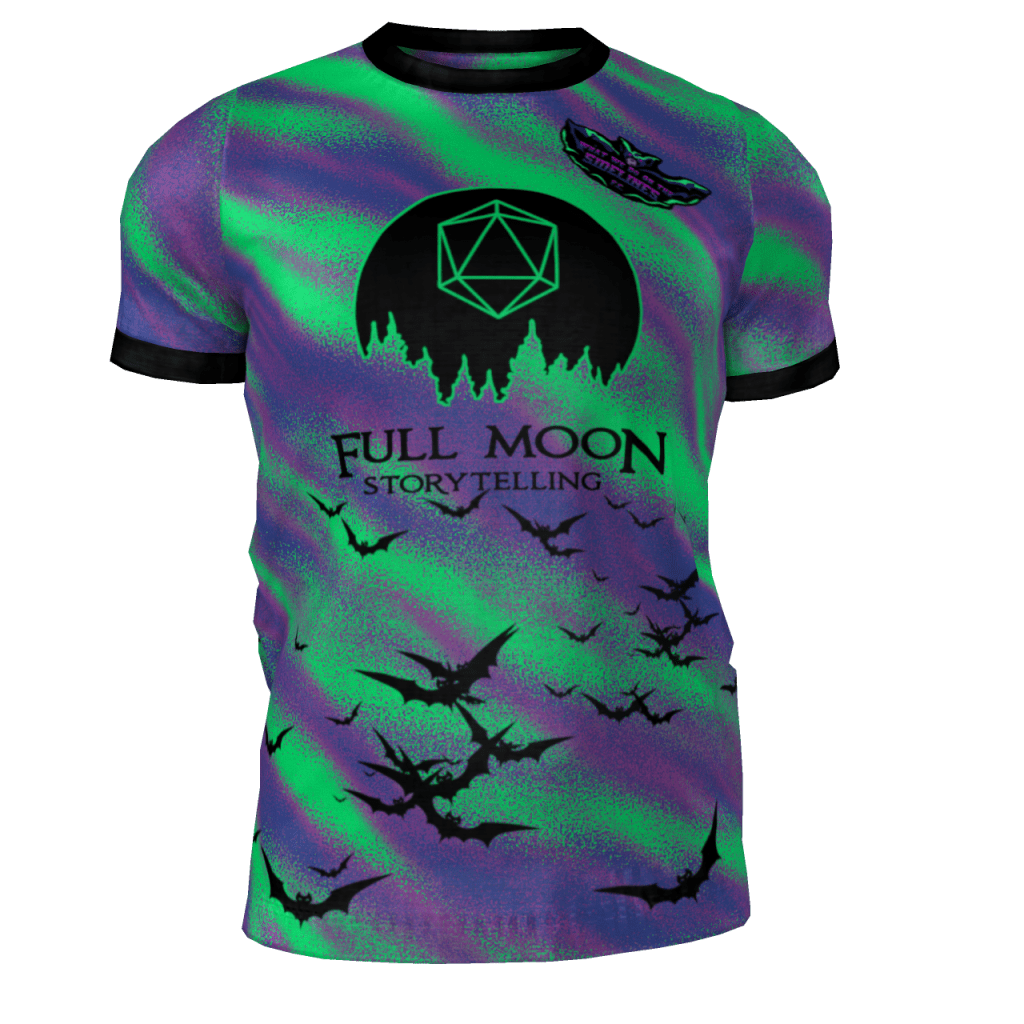
There’s a blue super moon tonight, which feels like the perfect time to reveal “What we do on the sidelines FC.” This team is inspired by What we do in the Shadows, a fine vampire production.
Full Moon Storytelling was kind of the perfect fit for the front of shirt sponsor.
The orange is the keeper kit. I may need to talk to the corrupt league commissioner for one of those. When the season is done, I’ll be getting the “Strahd #83” jersey and maybe one of the other sub jerseys too.
If you want one of the pirate themed sub jerseys from Spring ’23 reach out to me. I do not need three, but will be keeping the Dread Pirate Roberts #6 (Wesley was #4 btw) top.
As I said last time I say again, maybe one of the players on the soccer team I sponsor will play Dungeons & Dragons for the first time because of this. Maybe not. That’s not the point. The point is my friends needed a tiny bit of help and I could help — so I did.
tl;dr – I’ve become a horse-race style observer of the D&D movie because I see the numbers as a proxy for acceptance of a hobby that remains just on the edge of pop culture.
It is inarguable that the D&D movie didn’t turn a profit at the box office. It was pulled from theaters after earning ~208 million dollars. Production costs were reported to be ~$150 million, some of that budget was higher due to filming during the early stages of the pandemic and across four nations (Iceland, Ireland, England and the U.S.A). Those costs were supposedly split evenly between Paramount and Hasbro, but Hasbro only held distribution rites in the U.K. and Canada due to their ownership of eOne at the time.
Paramount reported in Q1 that they spent at most $62 million on advertising the movie (that number is bundled with another film). Hasbro never revealed their ad spend, but did take a $25 million impairment due to the film not hitting theater expectations.
It is a highly rated film. And some would consider those box office numbers a failure or a flop. I have spent way too much time in certain corners of the internet arguing how it wasn’t flop or failure.
But my evidence isn’t raw dollar numbers. So why do I argue?
Part of it is because I’m a marketer that loves D&D. One piece of guidance I use is the massive increase in search around the movie.
Red is D&D the game. Blue is D&D the movie. The first blue spike is when the movie’s name was released. The second blue spike is the Super Bowl ad. The third is the release buildup. All are echoed more strongly in the game’s search results.
Search results don’t directly connect to purchasing. They are merely an indicator. But that indicator is strong, very strong. No other event in modern D&D has the spike creation that Honor Among Thieves did.
Also, a ton of people are still watching D&D: Honor Among Thieves. It’s been available in the United States via Paramount+ for more than three months. From its release week on streaming it has been a top ten movie every week.
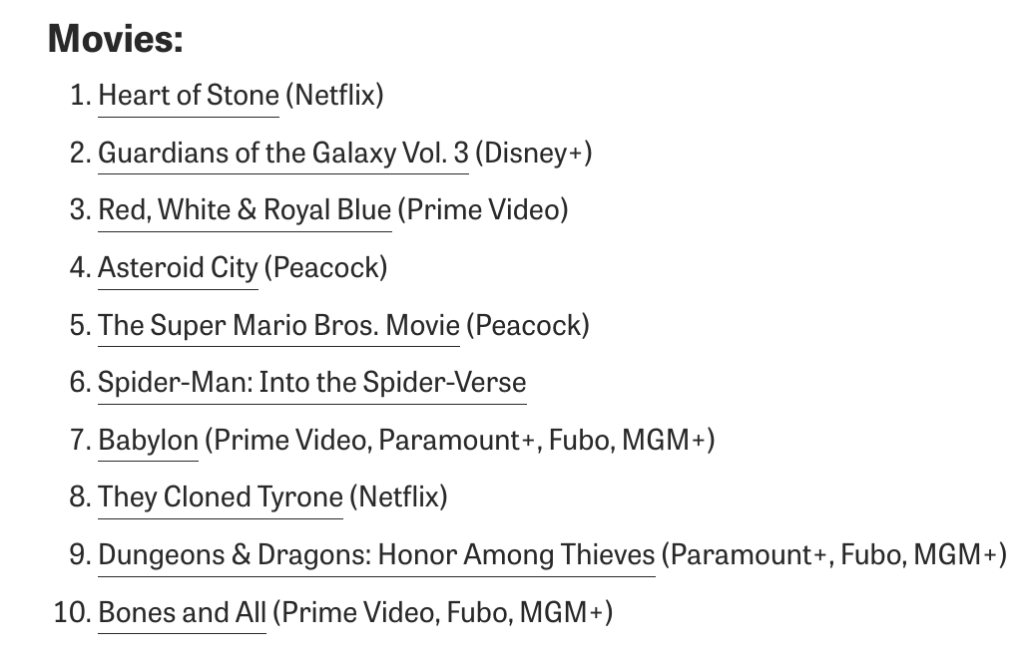
D&D: Honor Among Thieves was #9 heading into this weekend.
Just prior to the current weekend it finally released in the U.K. and Ireland. It is number one on Paramount+ in both markets. When it was released in Canada on Netflix, it was number two for most of the first week. It releases on Amazon Prime globally on August 25.
It ranks when bigger box offices successes don’t.
Some streaming isn’t captured. For example, I just watched it on Alaska Airlines. It was the third listed movie in the New Movies section, again ahead of much more popular films.
For 35 days it was number one or two on iTunes. In the 110 days it has been available there are only seven days it is not in the top 10.
On Google Play it had a 44 day run at #1. Once on general release it has never dropped below 7th.
On Amazon it wasn’t quite as popular, but the D&D movie was still strong.
On less popular services it still did well, on Rakuten it just leapt to number one last week, for example.
How does a movie that fell a bit, but not a lot, short of financial success metrics (pre-March 2020 people would use a doubling of production+marketing, now the 1.5 is more common) do this well in the modern environment?
How did D&D: The Brand (not the game) have a 74% increase in revenue when the movie was a failure? Probably because of licensed goods. There are a lot of them. I bought the Healing Potion mints for example.
Why do I argue with people about this?
Again, I’m a marketer.
But I’m also a nerd who had his D&D books knocked out of his hands walking the halls of high school. I had a parent think that the game was the path to Satan. The moral outrage and general jocks v. nerds aspect of my relationship to the game came up a lot when I was interviewed for “Hero’s Feast: Finding Community through Dungeons and Dragons.”
I’m lucky enough to see, and help, my other main hobby grow in popularity. Soccer in America is mainstream. It’s popular enough in the Seattle area that a hobby website can go independent and fully employ at least one person.
And yes, there are similar successes in D&D. Critical Role is the largest of those. They aren’t alone. These are still often niche cases, and not an indicator of mainstream acceptance, as much as there can be a mainstream in a world where every hobby and interest has its own channel.
Honor Among Thieves was an opening for something like the mainstreaming of comics. It may not have gotten there. It might have. There’s still a D&D TV show in the works, as part Hasbro Entertainment and in cooperation with Paramount.
Paramount and Hasbro also keep expanding where D&D: Honor Among Thieves is available. That’s uncommon with niche properties. The Peripheral was just cancelled. Willow was cancelled. It’s easy to cancel shows and movies that aren’t massively popular.
Streaming continues to sort itself out. Paramount was late to the game. They are moving ahead of older streaming platforms because of their original movies and their deep catalog of TV.
And I guess that means D&D: Honor Among Thieves judgement as a financial success is a lot more like a campaign than a one-shot. There was no overnight hit, just a consistent leveling up and growth over the past six months as the fans of the game keep watching, keep showing others the movie and keep powering the growth of D&D to heights that us 1980s basement dwellers thought was just a dream.
Depending on sourcing (I’ll use Berlitz) that’s now languages one, four, five, twelve and Italian (outside of the top twenty) that have a free, open version of Dungeons & Dragons available to them.
I wouldn’t be surprised if Japanese is added soon, as WotC took over the Japanese release of D&D a couple years ago.
Chinese, Portuguese, Arabic and Dutch were the next most popular languages for Dungeons & Dragons: Honor Among Thieves that have not yet had an SRD released for them.
This is an introduction to the seventh campaign set in the World of the Everflow. The most significant difference between these and the previous campaigns are that the player characters are all members of the Proctors, a group that once completely restricted magic from entering the Land of the Six Kingdoms.
The campaign will start in the city of Ras Rurulit in Daoud shortly after the PCs were dropped off there. They have a safe house. Operating in the city either in hiding or in open defiance of convention will be up to the party.
Your group of Proctors are working together to capture and contain the Book of the Word and the Book of Dance, two groups of Scholars active in southern Daoud. You are authorized to use any measures necessary to control this group. They have been teaching well beyond just a Scholar and two Students – end them.
Background
In the last passing of the Dragon, the fourth moon, the World of Everflow experienced the return of magic, the introduction of goblins with smog teknologies, and empowerment of animal companions. Native to the Lands of the Everflow, the Kin all have animal companions, some learning minor magics. Rarer are those whose companions are empowered.
The fey Ken object to these souls casting spells. Their Proctors crush the spread of magic and seek the Lorebooks from the seventeen schools where spellcraft was trapped. As the Ken invade from the west and the Six Kingdoms’ borders are rewritten, a forgotten peoples float on airxips from the north. The Kon are a smog-punk society with klackety, noisy tek coming from an island of guilds and invention.
Heroes rise with their animal companions joining their journey. From humble beginnings these heroes show the power of fellowship and share knowledge with the greater world.
In this case, the PCs are not heroes. They are not antiheroes. They are the Ken, people of knowledge, hoarding and limiting magic from the common people in the Six Kingdoms.
This map is what the initial intelligence of the Ken thought the Six Kingdoms looked like. It’s quite wrong. Your group of Proctors are in the far south of Daoud, a rough land similar to the non-desert coastal Maghreb.
Grand Conflicts
Proctors versus Scholars
Proctors versus the rare Gobkon in the south
Do the Elder Dragons really know best?
Factions
The Book of the Word – book based spellcasters
The Book of the Song – music based spellcasters
Fleet of the Silent Knight – Daoud’s force responsible for maintaining control of the bay.
Isarnalijik and Isamamimir’s Squadron – the remnants of land forces who insist they are the rightful heir to the desert lands.
Rumors
There are many colleges and universities in the land.
Magistrate Sas Rurulit is the greatest singer in Daoud’s history.
Ishurrumukuf has been taken over by one of the trade guilds of Qin
A great storm is coming from the West.
Facets
The group are a collection of secret agents or special operators. They may act undercover or violently during the mission.
They have one ally to start, Sabrinigha. She runs the safehouse and is a halfling of the born generation slowly discovering spell craft.
The lack of animal companions will be obvious. They’ll need a cover story.
In traditional D&D this mission would be Lawful Evil.
Variant Rules
Ken start with a Feat that grants a 1st level spell such as Magic Initiate.
Short rests are 8 hours. Long rests need sanctuary and 12 hours. This leads to a pace more similar to a novel.
Find Familiar and similar spells are banned from PC knowledge at the start of the game.
50% of Enchantment spells no longer exist. This will not impact your spell choice.
Use point buy or standard array for starting attributes. If you want something random, the redrick roller gives random point buy valid stats.
Start at 7th level because the Proctors are powerful.
There are several custom backgrounds and tools available. We will use cultures, not languages. Each character will start with “Daoud (Common to the area) and Ken” for their cultures. If your PC would have more languages discuss that with the DM.
Each character will start with 500+1d10*25 gold to spend on mundane items or to put in a pouch and use as spending money.
Each character will start with TWO COMMON magic items, plus an Oriq Mask (see Strixhaven) and one RARE item based on the character’s Background and role within the Proctors. That Rare item will have story elements to it, may get stolen. May level up. We’ll see.
Each character must be be a spellcaster, but no Druids or Clerics or Rangers. Proctors serve the Elder Dragons, not gods or nature.
Every character must represent one of the Proctor factions – Seeker, Defender, Striker. The chart below shows a few examples.
Seeker
Defender
Striker
Wizard
Evoker
X
Diviner
X
Abjurer
X
Warlock (dragons)
Archfey
X
Fiend
X
Great Old One
X
Sorcerer
Draconic
X
Wild
X
Rogue
Arcane Trickster
X
Paladin
Ancients
X
Devotion
Monk
Four Elements
X
Fighter
Eldritch Knight
X
X
Bard
Lore
X
X
Valor
X
X
Artificer
Armorer
X
X
X
Artillerist
X
X
Alchemist
X
X
Battle Smith
X
Subclasses in other 5e Wizards of the Coast and Kobold Press books may be used as well.
Driving off into the wilderlands of Oregon my thoughts wandered to the D&D world I’ve created. Creating names for places on the fly is hard. Often people get consumed with making something that feels like Tolkien, Jordan, Weis, Bardugo or other greats. These names are complicated and often involve invented languages.
You don’t need to be so impressive that linguists study you.
Your world will feel alive borrowing from our own world.
These are great names for a fantasy space.
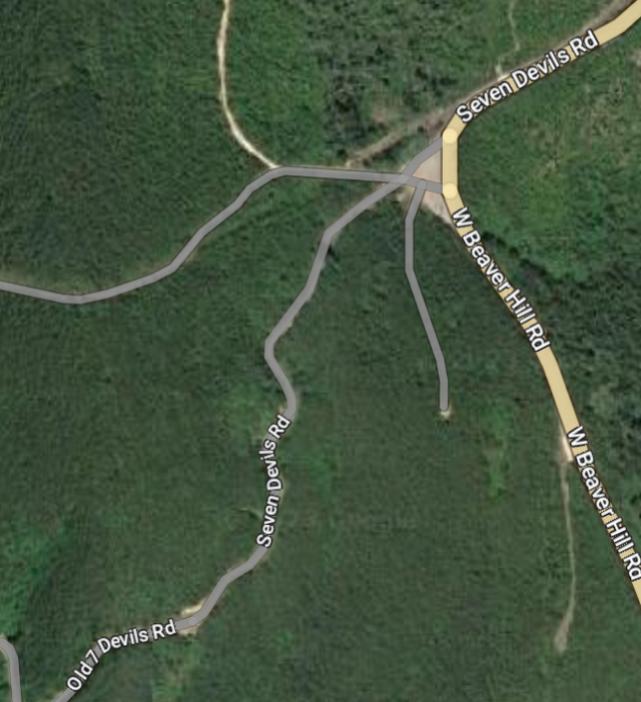
Seven Devils Road and Old Seven Devils Road is perfect for any Dungeons and Dragons game. You don’t need to stretch to far for there to be both an incident that involved seven devils and for the now ruling empire to have a newer, more popular road that carries the same name.
West Beaverhill Road could mean that it is west of Beaverhill. I submit that your fantasy world is more Lewis when you have every cardinal direction have a Beaverhill Road. Each of those is for a different beaverhill. Make those beavers talkative and have them part of the empire to capture some Fillory vibes too.
Whiskey Run Road is just down the way from where we are staying. In my fantasy world that road probably started as a minor trail used by some bootleggers. Now, as they gained power within the realm, thanks to their whiskey runs making money, Whiskey Run Road is the main thoroughfare between the capitol and its not-quite-satellite city. What was once a former smuggler cove is now the headquarters of a major influence on a failing state.
Hidden Canyon Road is something I’m fairly certain I passed by driving to get a cranberry turnover this morning. But my memory of this road is fragile as the road may not exist. The canyon might not exist. I never saw it. In a fantasy world Hidden Canyon Road could be a road, and a bridge, that exists over a fey gulch. There are nights when the gulch exists on most days the hidden canyon and covered bridge is just a normal passage with no need of a bridge at all. But on those nights with a few moons waning the fey canyon is back. Elves and their friends come out of the gulch demanding tax from those who use the bridge.
tl;dr
Take a few road names with you and be ready to create them as fantastic locations using the techniques from SlyFlourish’s Lazy Dungeon Master series. These quite normal names create a world of magic and wonder. Use placenames in reality to inspire your fiction.
As a lover of fantasy fiction and storytelling my friends have consistently suggested comic books for more D&D source material, for further stories. Unlike many in the space, I was not a comics fan and certainly not a collector in my youth.
I came to comics through soccer — the friends that I made through the game. The first person who really convinced me to give comics a shot was ETHAN HD, owner of Destiny City Comics and real life superhero in Tacoma.
We chatted about subcultures, genre and the power of story. I picked up a couple comics, different formats — March, Dungeons & Dragons, some supers stuff.
Later, again through soccer, I met G. Willow Wilson. We chatted about the paths to fandom, embracing stories of others and discovery of commonalities in differences. I now have a Poison Ivy book, because I loved and learned from Wilson’s Kamala Khan and her Empty Quarter.
Wilson has a new series coming out and it’s right up my alley. The D&D vibe is strong. The Hunger and The Dusk is set in an enviro-apocalypse with an invasion of alien and/or planar beings. I’ll probably create the main characters as NPCs in my world.
Releasing to the public on July 12, The Hunger and The Dusk from G. Willow Wilson and Chris Wildgoose is story fuel for any Dungeon/Game Master who tells fantasy stories. You’ll immediately recognize the first issue’s story of destruction, sadness and tiny bit of hope.
This preview is from a pdf of issue #1 given by G. Willow Wilson. I had already pre-ordered the issue based on earlier reviews.
I will attempt to not spoil anything.
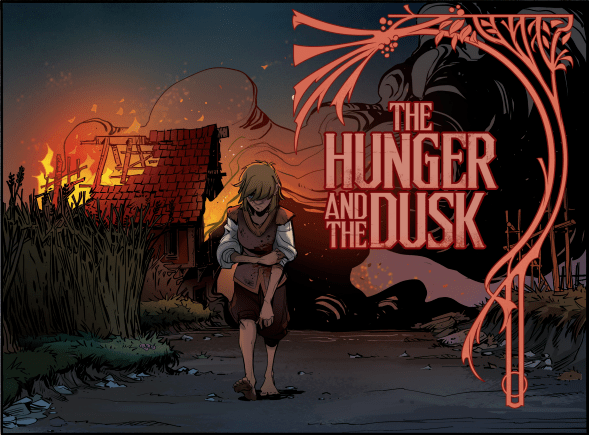
This is an interior cover, effectively the transition from prologue to main story. The prologue shows the multiple dangers facing the world. There’s environmental destruction forcing migration, there are the conflicts between human and orc, and there are the Vangol — an alien and superior being destroying all living things.
They came out of the Dusk
The introduction of the Vangol is violent, swift. They are more powerful than orcs and humans acting on their own. Whether warrior or farmstead the peoples of this world cannot stand up to the Vangol.
They came as an Omen
The combination of language, color and layout are powerful. You see scale of story and individual depth in equal parts. The main characters are Gruakhtar Icemane, and Callum Battlechild (I think that’s Will too in later scenes). They have complimentary fantasy tropes and there’s depth to them behind just tropes early in issue 1.
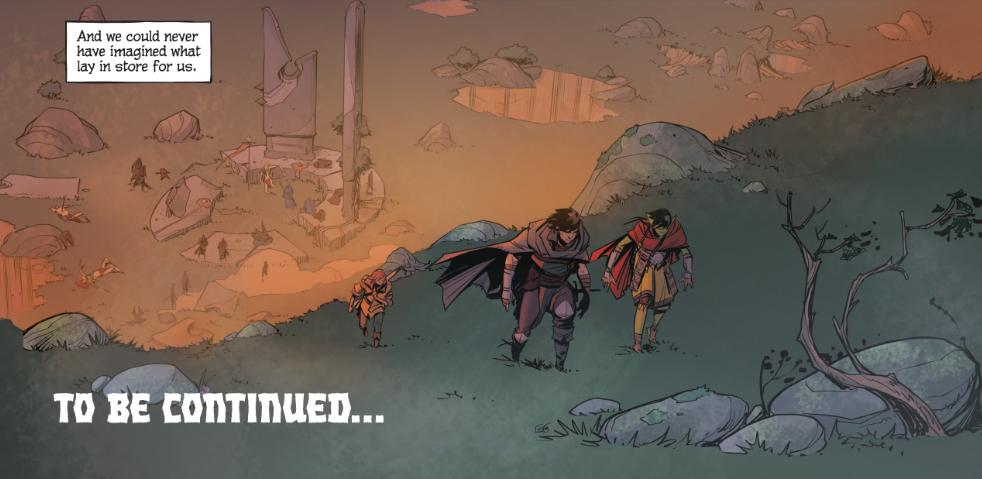
The Hunger and The Dusk mixes color themes in a way to signify despair and hope. Lush green fields are rare, a brief respite in a world where there is drought up and down the coast. The ending image of issue one is a transition from the oranges of a violent dusk to a soft, dark green hillside show that our protagonists might just be heroes, if things work out.
I’m excited to see where the story goes. In interviews Wilson has said that this is a “hot orc saga.” I expect there’s some romance, there’s certainly found family to come, and there’s probably hope, because the world of The Hunger and The Dusk deserves hope.
The story of Gruakhtar Icemane, Callum Battlechild and the Last Men Standing is available in The Hunger and The Dusk at your favorite local comic book shop (like Destiny City Comics) or online on July 12 and throughout the hot orc summer.










 Full Moon Storytelling