Tag: RPG

  • Inspiration is everywhere: Floating islands

    Inspiration is everywhere: Floating islands

    Creating memorable scenes and adventures is easier when fantastic elements are included. Many of these fantastic elements can simply be things from the real world, but amplified or expanded. In this case we’ll walk through the concept of floating islands and make those even more mythical.

    First off, yes, floating islands are real. In Lake Chippewa one is large enough it has to be pushed by motor boats so it doesn’t damage bridges.

    A floating island that drifts about on a lake or sea is already pretty fantastic. How can we up the fantasy to make it more memorable in D&D when the players are getting together every few weeks?

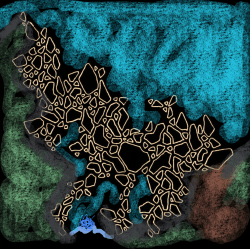
    This example is going to be for Sheljar, the bog-city once ruled by an intending-to-be-good necromancer, but could apply anywhere. Sheljar is a city of 100s of islands.

    Simple map of 100s of islands in a sea with a large waterfall in the south and mountains to the south and south east.

    What if a few of those islands floated like the bog-island of Chippewa?

    Rather than be moved by motorboat, they were moved by water elementals during the Age of Myths. The largest of these, Reylerel, at the time was the home of a power school of mages that integrated water, animals that live in and along water, and the peoples.

    As the Age was crashing they attempted to flee the city. The school wanted to isolate itself from the riots, to hide the dolphins, elementals, beaver and ducks that worked together to help the Kin survive. Reylerel went adrift, into the Sea of Sheljar.

    Now, thousands of years later the Free City of Sheljar is no longer ruled by the Necromancer. It is regrowing, discovering some of its influence from the Age of Myths. This bog-city isn’t a city of fog and depression, but a city of hope and humanity integrating gobkon teknology, love of animals and the lost magics.

    The leadership knows this is possible. Myth said it happened before, and drifting towards them is the Floating Island of Reylerel. At sea it moves with the swells and storms. The towers and buildings are rundown. Someone is going to need to go to Reylerel and find a way to prevent it from crashing into the docks.

    And that’s how you take a small trending topic on the internet and turn it into an adventure.

    Fediverse Reactions
  • Sharing your world: The power of co-DMing in the same space

    Sharing your world: The power of co-DMing in the same space

    This is a story about The Dragon.

    Which is a moon, not a big dragon. I don’t know why I called the biggest and slowest moon “The Dragon.” It was probably in honor of The Wheel of Time, one of my foundational fictions in the world. But the name never really came up in play.

    The 21-year cycle did come up. That generational marker (key for many goliaths and the Crinth Confederation) marked a cycle from the Born Generation to the present era.

    But, by expanding play in the world to a second DM The Dragon also finally became a point of clear fiction. It’s named that because during the Age of Myths that’s when the leading dragons on the Council retreated from society — Draakenmoten.

    That’s about to come up in the campaign I’m playing within my own world.

    Playing in the world I’ve invented has expanded the stories in ways I never expected. While I’ve included player concepts in world development in the past, including DM concepts in the world requires trust and grants wonderful opportunities for story-threads to be pulled into new places.

    Other things added to my world through sharing the experience;

    • Evil fungal druids that dabble in necromancy
    • Dragon Council, a ruling body of dragons and their magical allies who control the continent in a federal system.
    • Les Remoden Eisha, the intelligence and security branch of the Council.
    • Necromancy as the forbidden school of magic.
    • Elemental airships. Unlike the era where I DM, magic is common enough that it powers the airships, unlike the clackety, smog xips of the goblins.

    Those first four elements seem to be growing into the major division that leads to the sundering of the world, separating the continent with the Everflow on it from all the magical spaces in the rest of the planet. Those councils and forbidden magicks could grow into the dragon-founded schools with their abusive Proctors, supplicant Scholars and limited magic in a world that has merely love for companionship, healing waters and hope.

    Tips for Sharing a World

    First, have the creator DM and non-creating DM talk about history and key elements. Discuss where the foundational elements of the world are necessary in each campaign. Unlike Uprising & Rebellion (and the other ‘modern’ campaigns set in the World of the Everflow) the current campaign doesn’t have a foundational element about animals as life companions for example.

    Understand that things that happen in history don’t have to be understood in the future. Did Xabal discover tar-trees? Maybe someone else claims that 3,000 years later. Unless the details are vital to a plot point minor differences in the way myth-legend-history are known aren’t important. They can even both be true!

    Second, play and act with trust. Going back to point one, the details don’t matter if they don’t matter. Does the now co-DM get the name of a city wrong? That doesn’t matter. Keep playing at the table. Don’t even bother to correct it. Many cities in the real world have multiple names. That’s the way worlds work.

    Borrow heavily from each other. This is part communication, but also because you’re seeing each set of stories (every table is a set of stories that is some combination of the total number of people playing and their interactions) from different angles.

    Is there a new nugget dropped that you want to be permanently part of the tale? Take note in heavy ink and add it to your own version of the world document. Just like when a player adds something new to the world let the co-DM do the same thing.

    Be a player — you aren’t the DM, so don’t be a co-DM at the table, unless asked. The only time to speak up about some out-of-character element related to previous campaigns or lore is when the DM asks. Then you answer.

    Bonus points if you can work that into something that your character would know/do/say. I didn’t do this most recently, but wish I had. The current DM asked me what Sheljar, the bog-city, was like in the Age of Myths. I gave an encyclopedic answer rather than the answer Xabal would give.

    It’s been so much fun opening the world to more tales set within. We’ve added fantastic spaces, myths and histories that wouldn’t have existed if the World of the Everflow was merely my setting with nearly two dozen players. Adding a second DM to the world has changed the story dynamics in an exponential rather than additive fashion.

    My hope is that after this Age of Myths campaign we return to the modern era with new tales too.

  • Adding Culture to your game: A new tool

    Adding Culture to your game: A new tool

    Languages in most Dungeons & Dragons settings are rather rudimentary. There’s the pidgin-trade tongue of Common (and sometimes Undercommon). From there, the typical known languages are based on races and the planes.

    A character might know Common, Elvish, and Primordial for example.

    This is bland, unnecessary, and lacks verisimilitude (people don’t either know or not know a language).

    Get rid of languages.

    They rarely come up at the table. For most tables, languages are simply “You can communicate” or “You must use gestures.” Few encounters are successes and failures based on the 3-7 languages a character knows.

    Instead replace them with Culture: NAME.

    This then replaces Intelligence (History). This small tweak aids deeper connections between certain character classes and backgrounds with the world in which they are played.

    What do you gain from adding Culture?

    Especially in games with heavier social and exploration pillars you have a better idea of what your character knows. Rather than have a wood elf raised as an urchin on the streets of Waterdeep be capable of talking to every single elf in the world, as if language is hard-coded in the soul, it is instead a learned thing.

    Said wood elf would instead know Common and the Culture of the Sword Coast, able to communicate with the peoples in and around Waterdeep, as well as knowing the traditions of the various peoples, their symbols, their stories.

    The characters are deeper, with more connections to the world in which they play. A Fighter-Sage would be intimately familiar with many nations and cultures, rather than just a few and whatever the DM determines is known through a d20. A character that has studied the Dalelands would know the holidays, conflicts, and ways to communicate that are common in the the Moon Sea and the Inner Sea.

    At its simplest with Culture, you know more.

    What do you lose by removing Languages and History?

    Not much.

    The characters will still be able to communicate as always. There may be a perceived penalty for a few backgrounds, but there is a fix for that.

    There is additional bookkeeping. You will have to use a custom language on DnDBeyond.com, for example. You do this by clicking on Languages on the character sheet on the website (the app may be different). Then click add proficiency. Then select custom language. Add the culture you choose. If you skip language selection during the creation process you’ll now have a listing of Common plus the Cultures your character experienced and/or studied.

    How does adding Culture work when building a Player Character?

    While building your character in the standard order (Race, Class, Background) take note of every language learned. Each of these are replaced with adding a culture for each language.

    When you would take History you would now have the option to take another proficiency or take a culture.

    Additionally, I would encourage most tables to use a PC’s Intelligence modifier to add (or subtract) from known cultures. This is mostly because Intelligence is undervalued within the game.

    Example: A High Elf, Fighter, Sage would begin knowing as many as 8 cultures known. This would represent their studious familiarity with many peoples.

    How do you use Culture?

    Use Culture like you would use History, but apply it like a tool. Most often it would connect with Intelligence, but there are times when your proficiency in a culture would apply to a check based off of Wisdom (if a character isn’t proficient in Insight their awareness of the opponent’s culture might help them) or Charisma would apply.

    Knowing a culture of a peoples with which you are interacting is particularly helpful in social encounters. A character familiar with a particular empire should be able to take advantage of that knowledge at the table!

    Are you familiar with the Dalelands? Then you would recognize their heraldry, for example. Hidden societies, or subsets of a culture may require a check (DC: 15) to see if you have studied or are aware of that aspect.

    Practical Examples of Cultures in D&D

    Within the World of the Everflow, a rather narrow setting, the following cultures would be available;

    • Western Wildes
      • Ancient Sheljar
      • Ancient Gallinor
    • Kirtin
    • Daoud
    • Crinth Confederacy
    • Azsel
    • Mehmd
    • Gobkon Union
    • Dragonken
    • Church of Quar (yes, this is cross-national group with influence throughout the continent of Kin)
      • There are other faiths and cults that may be appropriate
    • The Scholars and Proctors of Grace

    In a more explored and developed setting such as the Forgotten Realms I would recommend using the super-national regions such as, but not limited to the Sword Coast or the Dalelands or Chult. If you are a member of a Faction, assume that you know their Culture too. The list of political groups, religions, factions, and other strong cultural groups within the Forgotten Realms would fill an entire wiki.

    If you are playing in Eberron: Rising from the Last War the various nations of Khorvaire would all be appropriate Cultures as would most of the religions.

    Tables that use other setting would have to assess that setting. Do not make the cultures too narrow, nor too broad (then you just have the language problem, but different).

    Fediverse Reactions
  • Counting in the Land of Kon

    Counting in the Land of Kon

    The smogpunk land of goblins in the World of the Everflow was set apart from the Kingdom of Sheljar, Crinth, and other areas for a few millennia. Within this separation the goblins and hobgoblins changed from the standard tropes.

    In the Everflow they answer to the Queen Mother. Everyone is organized around their family’s history of developing teknology for one of the various guilds. Inventiveness and cleverness are more important than fighting and viciousness.

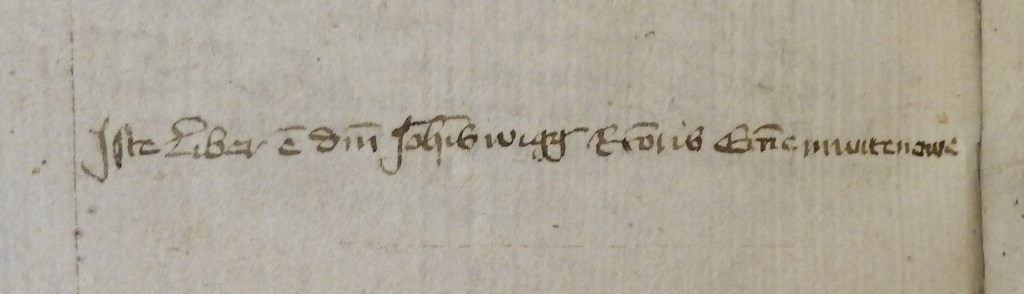
    To emphasize these differences, but still capture traditional goblinoid feelings there should be a some differences in language. This discovery of numerals from the 13th century feels proper for the gobkon of the world.

    It works in a printing press, scribbled on paper or carved into wood.

    Will it ever see the table? Probably not. Or maybe just one or two numbers in a handout for the players to demonstrate the differences between their lands with the languages of Telse (Common) and the rest of the Six Kingdoms.

    If there was a campaign book for the World of the Everflow this could be a tiny sidebar for flavor, not a rule for use.

  • Now is the time to reduce the house rules in your D&D game

    Now is the time to reduce the house rules in your D&D game

    Dungeons and Dragons is more popular than ever. That is undeniable. The game has grown and become a side channel to the mainstream, with its influence everywhere. But it is about to get a lot more popular. Tens of millions are going to watch Dungeons & Dragons: Honor Among Thieves.

    That’s going to attract a lot more neophytes to the game.

    The Honor Among Thieves trailer has vibes of Thor: Ragnarok, Guardian of the Galaxy, and Princess Bride.

    But the D&D movie is not the only thing that will grow fantasy gaming.

    Johnny Stanton, the Cleveland Browns fullback, and his group have been featured in Sports Illustrated. Stanton is also part of San Diego ComicCon’s Everybody is Playing Dungeons & Dragons! seminar — expect even more coverage of his game in mainstream media.

    From Chris Pine saying every high school should have a D&D club to mainstream local soccer fundraisers like YachtCon playing the game (we’ll do something this year too) the game is spreading faster than ever before. After a season of not-really-D&D Stranger Things dipped back in with the Hellfire Club. Season five, the final will also be D&D themed.

    There’s also D&D adjacent properties like Wheel of Time (season 2 of Origins is out in August and season 3 is already happening) and Rings of Power (season 1 in Fall). Witcher keeps going strong. Vox Machina got a season 2 and probably will get a third. List goes on, and on.

    There’s no better time for fantasy TV and movies — none.

    As experienced players and DM’s it is our responsibility and duty to welcome these new players to the game. One way to do that is through the classic Starter Set, the Stranger Things boxed set, the Essentials Kit, the new Dragons of Stormwreck Isle, Spelljammer Academy, etc, etc.

    But you also have your home games with elaborate and thought-out original plots. These games are the most common way to play D&D, a majority do not play in the official worlds. There’s a danger in welcoming people to the game the first time in an original world. Those campaigns can have a lot of custom rules.

    When the Lorebook Hunters first started in the World of the Everflow there were more than four pages of custom rules, heavily tweaking the game. Now there are just four sentences of rules not taken from the books – all able to integrate with DnDBeyond, excepting the custom subclasses. Players new to the game can create a character in 30-60 minutes rather than hours.

    That helps first-time players pick up the game. There’s plenty of support online for the official rules — blogs, video, podcasts, social media. There’s only your table as a place to learn about custom rules. That can be intimidating. Plus they need to pick up custom lore. Another barrier to play.

    Reducing both of those weights helps a first-time player become a perpetual player and eventual Dungeon Master.

    Tips for types of rules to add

    • Optional rules from the Dungeon Master’s Guide — they’re already official, in a book for others to read.
    • Rules that enable your story — the World of the Everflow has a key question as to why we love pets. It wouldn’t be the same without the bonus feat of Bonded Companion.
    • Changes that empower cinematic flavor — since many people new to the game will come from watching film give them that vibe.
    • Tweaks that don’t require technical knowledge — asking a first time player to learn a VTT rather than just video or theater of the mind can reduce their interest.

    At the same point, if you have a massive world already, don’t retro those rules. Find ways for your table to welcome new people into your complex lore and ruleset. Use session zeroes frequently, both one-on-one and with the group. Tell a new player why you have those rules. House rules that help tell the communal storytelling are always better than house rules that add complexity, at least for the modern gamer coming at D&D as a storytelling game that empowers group tales of action and adventure.

    Most of all, enjoy the new players and their new stories. They’re going to add to your table coming up with ideas and concepts you’ve never seen before. If you are doing it right you’ll have a more diverse group, telling more diverse tales — and you’ll be stronger both in real life and in the game.