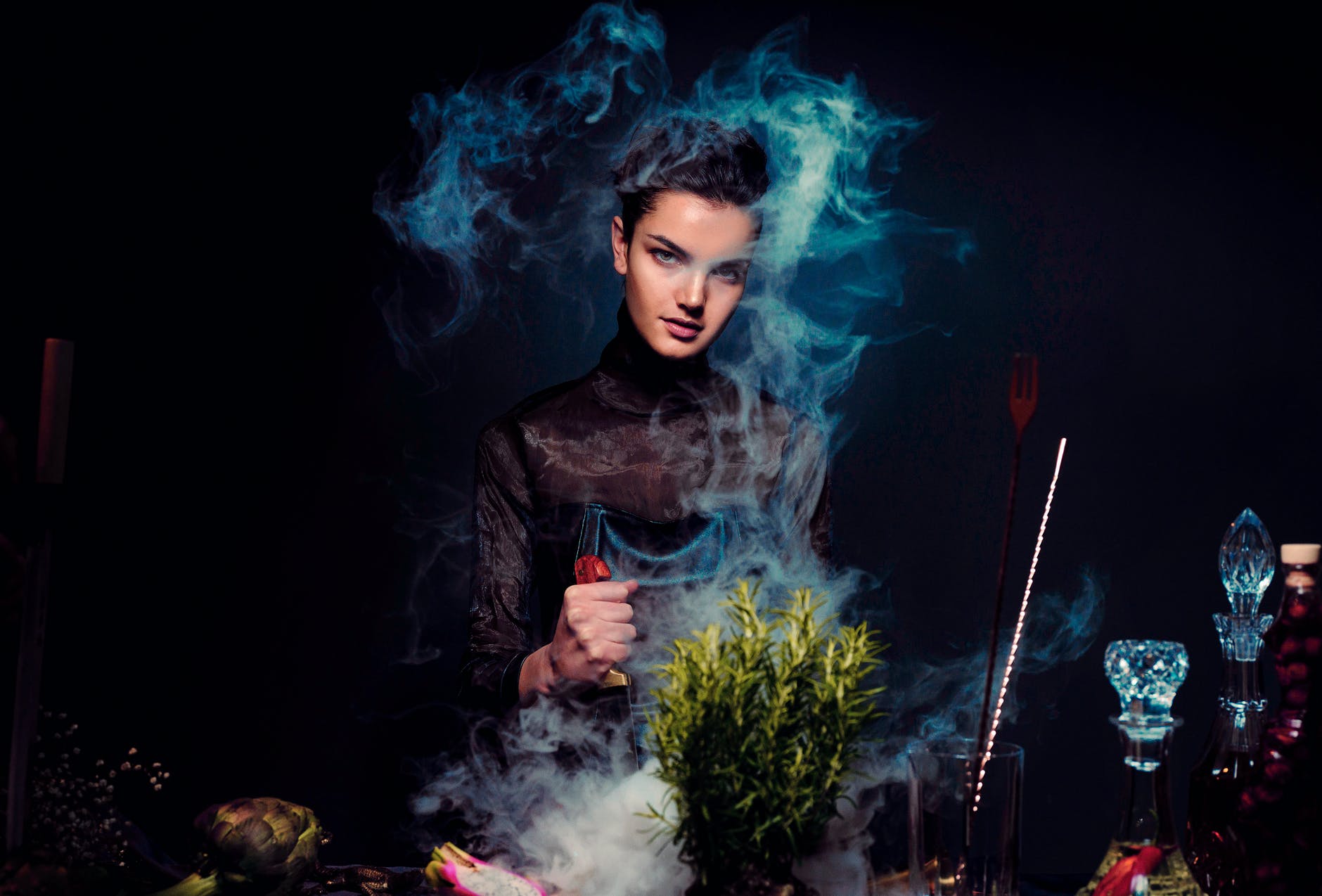
Picking herbs from a backyard garden, a hot house, or a forest outside of town the herbalist collects natural items that aid and harm. An herbalist can heal, poison, invigorate. They know the powers of plants and fungi to change how humanoids and beasts experience the world.
You are a naturalist. You use the art and science of foods and other natural goods to change the way people experience the world. Maybe your favorite tisane helps awaken the weary, or heal the hurt, or cure a disease, or puts people to sleep. A poultice could stop blood flow, or cool the overheating.
There’s power in the natural world and your various recipes. Clerics count on gods. Druids channel the magic of nature. An herbalist knows that life interacts with itself in interesting ways. There’s a magic to that, it’s just not ‘magic.’
Skill Proficiencies: Nature, Survival Tool Proficiencies: Herbalist Kit Languages: Druidic Equipment: Sickle, 2 candles, Scroll case with 5 pieces parchment or a notebook, common clothes, component pouch, herbalism kit, 2 vials (1 w/ either antitoxin or healing potion)
Feature: A Dash of This; a Dollop of That
Using a short rest, you can always find the various fungus, plants, and whatnot needed to make antitoxin, healing potions, poison, or coffee-like substances. Your recipes manifest as salves, poultices, potions, pills, or any other way to deliver the ingredients. Any of your recipes take just a Bonus Action to use as they are more potent than typical.
The personality traits, ideals, bonds of flaws of the Acolyte, Folk Hero, Hermit, Outlander, and Sage all make sense to borrow from during the playtest of this Background. When published all Backgrounds will have unique character traits.
Herbalist Design Goals
Again, this design exists because the Guild Artisan puts most Backgrounds that are related to Tools into a Guild. That’s fine for some stories, but it ignores so many others.
A rural or farm community Herbalist is common in the lore upon which D&D is based. These can become Druids, Rangers, Clerics, Sorcerers, Wizards, and Warlocks most commonly. There’s also a fit with certain Barbarians, Monks, and Paladins. Frankly, a Rogue (Assassin) and Paladin (Devotion, Ancients), and even a Fighter (Eldritch Knight). Because frankly every background should have a story with every core class.
There was also a desire to have access to Druidic, my least favorite D&D language, at a Background level. A couple Backgrounds grant access to Thieves Cant, and it makes sense to have at least one grant Druidic. Shortly, there will be a post about a new take on Druidic that expands it to cover at least one more class and a couple more Backgrounds soon.
Nynaeve al’Meara from the Wheel of Time is a foundational character for this Background.
Custom Backgrounds for 5th edition Dungeons & Dragons
Within our fantasy worlds are massive cites. There are lots of problems with the scale of some of these cities — they need farms, roads, and light because residents are up at all hours. Settings like Ravnica and Eberron deal with the largest cites via magic. Those worlds with less magic manage metropolises with some magic, some magically imbued races and hand-waving. One of those hands we can wave relates to light.
Magic is the simple way to add light to cities. Another way to have them with some level of light for safety and to encourage all races to reside within is via a public lantern system. For about 150 years this was the process in Western Europe and Northeast America. People would go through and light lanterns along the street. Those shops and establishments that wanted business in the evening or early morning would do the same.
These workers would live split lives as early risers and night owls.
Let’s crank all of this up to d20 and make them potential heroes. Meet the Lamplighter, for “in darkness there is light.”
You know your neighborhood. You don’t have a favorite bar, or food stand, or favorite bakery — they all are you favorite. They know your route, you know when every one gets up or goes to sleep. You know the street urchin, the acolyte, the haberdasher, the goblin family that makes the best trinkets (maybe you have one favorite). They all know you too.
Getting around the city you use a run-jump parkour along the crates and awnings, somehow never letting your lighting candle go out. You flow through the streets and alleys. You’re a great observer and with the other Lamplighters the group always knows the secrets and rumors of a land — a nobleman leaving the tavern too late, a merchant up too early with visitors on the stoop, a door left opened. And you know the guilds and gangs of the underground, because when your lights go out they are there, ready to do their work. They know you, and never act against you (unless you count putting out a light early), because you are a beloved symbol of the city. You are a Lamplighter.
Skill Proficiencies: Acrobatics, Insight Tool Proficiencies: None Languages: Thieves Cant, one other language (as always, use Cultures instead of Languages) Equipment: Common Clothes, Ladder, 5 Flasks Oil, Flint & Steal, 5 Candles, Hourglass, Signal Whistle, Pouch with 2 GP and 7 SP
Feature: Songs of the Street
When visiting a new town or city you quickly pick up the rhythm of the streets. The Lamplighter is able to figure out what neighborhoods and buildings are most active at what times, when the urchins and gangs are out, when the guards are on patrol. The pace of a city and its people is second nature to the Lamplighter.
In your hometown your knowledge is more accurate and more complete, and you will always know someone who will help you in a time of need.
Lamplighter Design Goals
Frankly, this background started with Lin-Manuel Miranda’s Jack in Mary Poppins Returns. The lamplighters featured throughout the movie, riding bikes, lighting the neighborhoods of London, and inspiring people to be their best through song, dance, and conversation. There are some bard themes, but nothing is magical besides a few people loving their town and making it better.
Beyond what Jack does in the movie, there’s also an opportunity for a Lamplighter in the massive cities of not-quite Eberron levels of magic. These workers are active at dawn and dusk. As Waterdeep, Skuld, Calimport and other transition between night and day the neighborhoods transition too. Lamplighters are not guards or police. They fill of space of advisor, guide, and concerned citizen.
They know that the world’s largest cities need the hope and safety that lanterns provide. Without that comforting light what is a city anyway?
Custom Backgrounds for 5th edition Dungeons & Dragons
The clattering of tin as they come over the hill; a belly laugh as the tinker learns of some gossip from mother; the circle of enraptured youth as a tale that is at most half-true is told; the fussing over a minor repair for a family that has no goods to offer in service.
In fantasy the Tinker is a trope that captures a travelling fixer who knows news, rumor, and myth. Their wealth rides a donkey or canoe with them and every community on their circuit is home and an unknowable set of peoples. Now, you too can play a Tinker.
Maybe you grew up in a family of smiths, or were raised by bards, or maybe you were kind of good at a lot of arts, but not really good at one in particular. Whatever your past you decided to leave the ‘civilized’ world and help those families on the frontier. When things break you fix them.
When communities break you share that information with others who need to hear it. You carry as much information as you do tin. Your donkey is your only friend on the trails throughout the wilds. Everyone you meet trusts you, even the bandits, brigands and raiders. They need your services too.
Skill Proficiencies: Performance, Insight Tool Proficiencies: Tinker’s Tools, Vehicle (Land or Water) Languages: None Equipment: Donkey/Mule/Pony (if water vehicles chosen a canoe, rowboat or skiff is appropriate), Tinker’s Kit, 1 Pound Each Tin, Copper, Iron, Pack Saddle, 3 Pots, Traveler’s Clothes, Pouch with 5 Gold
Feature: I Can Fix It
Facing a mundane device that is broken you are able to fix it, even if you don’t have the proper supplies and parts. This repair may only last a few minutes or a few hours, though it is enough for the device to last through it’s next use. You may wind up using a copper coin, or a bit of string, or a knife during this repair. This feature can be used to fix ammunition, traps, broken wheels, or other adventuring equipment. The repair is not permanent.
Tinker Design Goals
Throughout the literature that inspires Dungeons & Dragons are tales of itinerant workers who travel the barely civilized wildernesses drifting between villages. Primarily they are fixers, using bits of tin, copper, iron, leather, etc to repair farming tools or kitchen utensils in the homesteads too far from smithys.
The fiction also has these tinkers as storytellers. They aren’t bards, as their magic is just the magic of carrying tales of other households, villages, and empires to people who long for information, but don’t want to live in places where information is common. The Tinker tells their tales around a fire or a meal, informing the group through storytelling. At their next stop they will share what they’ve learned. Every encounter is a bit of knowledge to share in an attempt to connect the frontier lands despite weather and monsters that keep those connections broken.
For these reasons the Tinker has Performance and Insight. Consideration was made for History. That would seem to indicate an intellectual rather than a tale-teller. Insight made sense because of the way the literature has the Tinker connect to the families year after year.
Custom Backgrounds for 5th edition Dungeons & Dragons
Queen’s Fleet continues to expand presence in Kirtin-on-the-Lake; various factions may lead to infighting; what are these stunning and dirty technologies?
Kirtin-on-the-Lake | Neremyn Quizana
Lately you’ve seen, heard, or smelled the newest additions to Kirtin-on-the-Lake. During this stalemate between Daoud and the Dragons and Kirtin traders from the Free City of Sheljar have entered the city. Some land on the lake with ships under great balloons filled with oily gasses; others enter with the rackety-clackety of wooden gears on various cycles of one, two, and even four wheels — like a cart without a horse.
These goblins (we shall use this word for all of them whether merely the size of halflings or the masses of muscle as large as goliaths) are organized differently than any of the Five Kingdoms of the Everflow. Most similar to the guild-houses of Qin, the Kon organize into at least six guilds that are based in familial relationship and what they call ‘teknical’ skills.
Through numerous conversations we have learned that these are their guilds active in the Western Wildes. Not all have been seen in Kirtin-on-the-Lake yet. According to our sources all are present in Sheljar and the towns under the Free City’s sway — Fort Ooshar, Mira, Telse, Bell-an-Fair, Hagtown, and possibly The Ferments.
A new peoples to the Western Wildes, these snapshots should help the fair people of Kirtin-on-the-Lake understand the goblins and their bizarre systems that ignore the shared bonds of people with animal or the potent magicks of the Dragons and their allies.
Most noticed on the streets of Kirtin-on-the-Lake due to their loud clanking cycles, the Clockwerks League is currently the most powerful of the various goblins. The Queen herself is a member, having won many flags prior to ascending to the throne.
Besides the cycles, the Clockwerks include clocks, timers, repeating crossbows, giant powerwheels similar to a waterwheel that uses their mulgobs rather than water. There is word that they will open a new grain mill took.
Ratxets Guild
Conflicting reports say that the Ratxets Guild are a spinoff from the League or something entirely new. They make wonderful climbing devices and on many days you can find a demonstration down by Theater. The ability to use their rope and ratxet to climb the side of Rock is amazing. When this author used the device it made the journey up Rock pleasant rather than the long chore that the stairway can be.
Rumor is that the Ratxet may install a gondola from the Rock that connects several districts by massive sky-ropes.
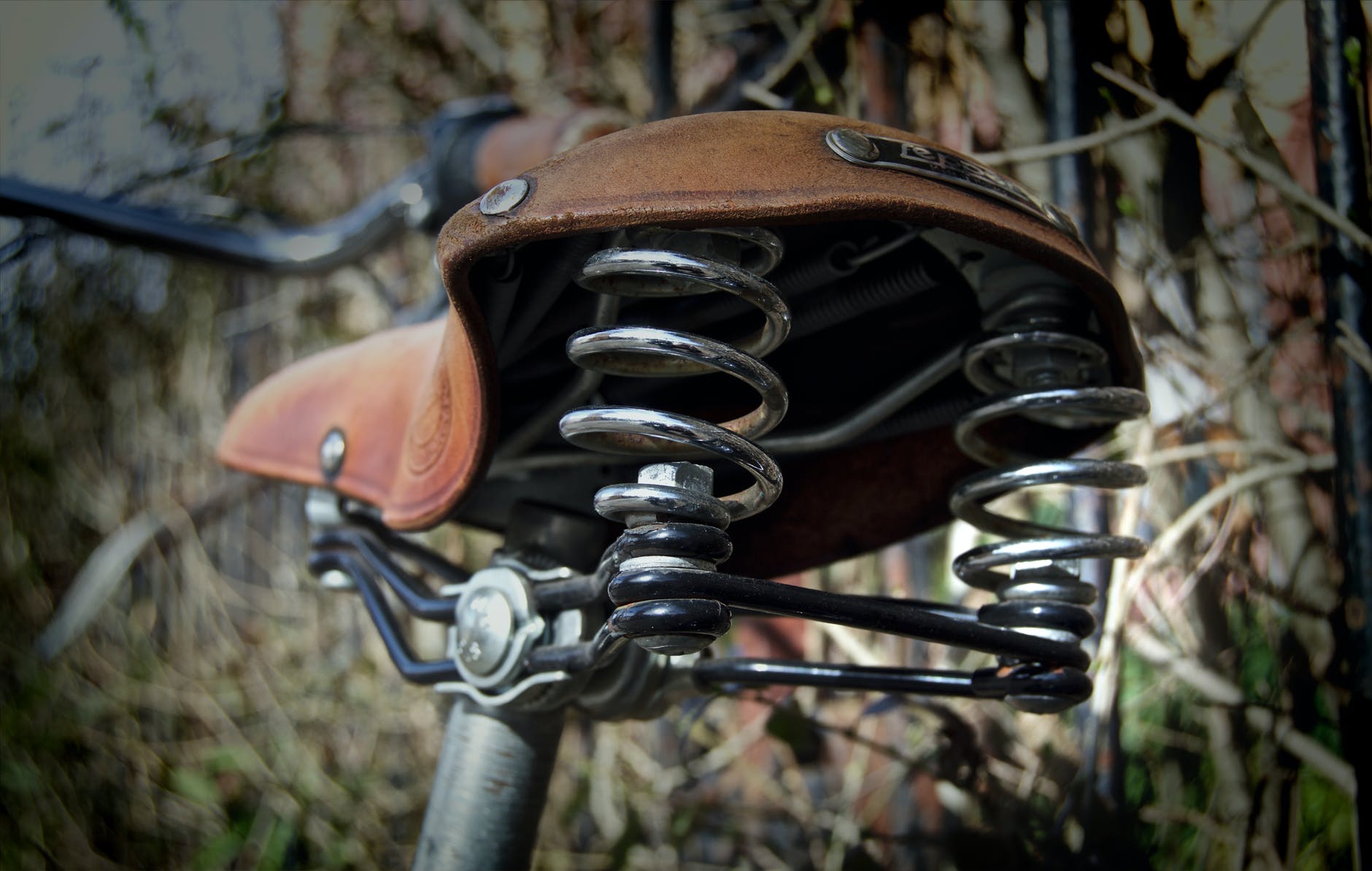
Coils of strong metal come off of smiths that burn hotter than ours. Without the tartek maybe the Springwerks Union couldn’t exist. This symbiotic relationship betwixt the guilds is routine. They compete harshly for recognition from the Queen and yet their greatest werks are interconnected and use tekniques of others.
Their crossbows are a bit lighter. A siege engine powered by a Springwerk may be able to fell a Dragon. The energy trapped within the springs is grand. It may take days for the muls and hobs to get the springs set, but once they are the power can slowly release or go all at once.
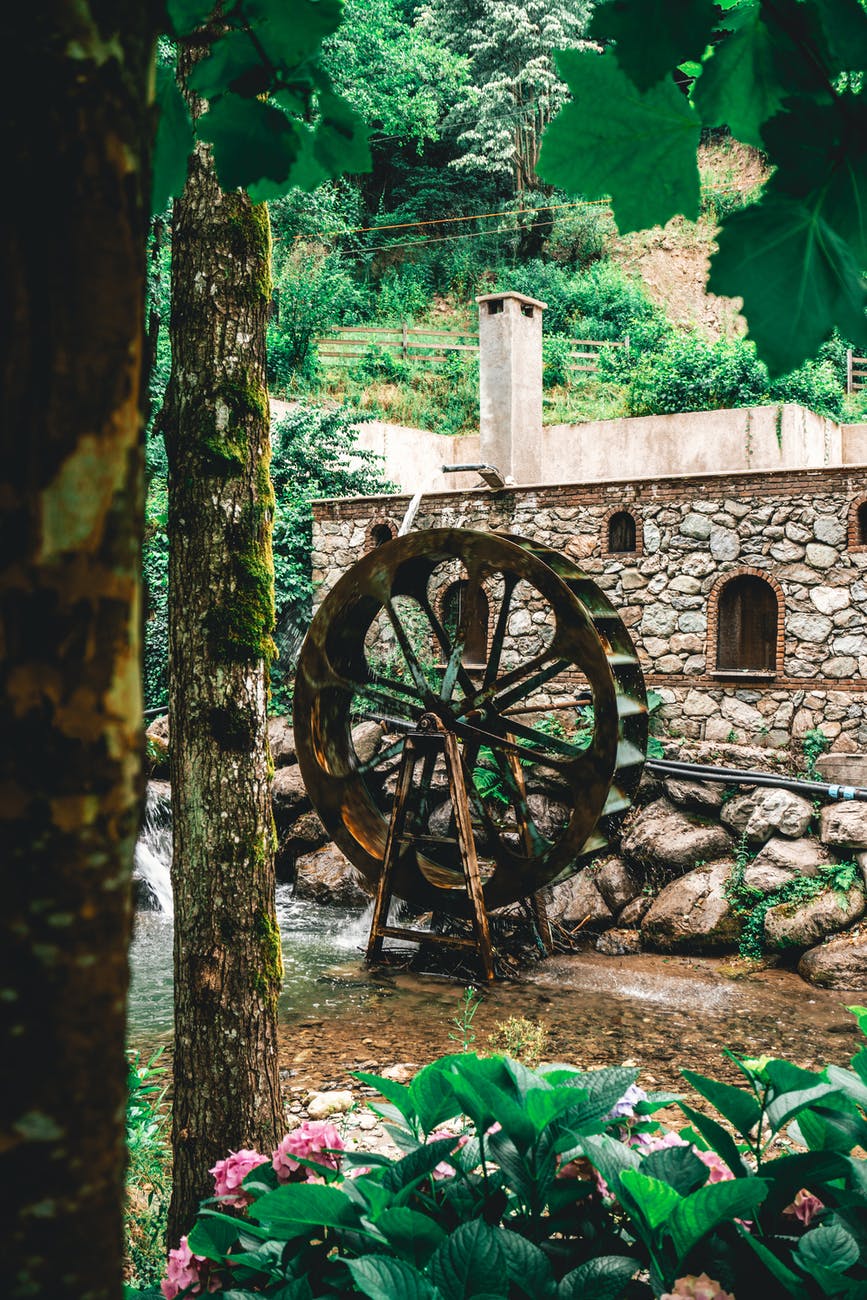
A good little friendly goblin introduced me to how the Alliance works. Our waterwheels are what they used a life of lifes ago. Now using either water or something called pneumatics the Alliance is two former competitors joined. Anything that flows can be trapped, contained, and utilized.
If you’ve been to Haystreet after DragonTree you’ll have seen the inn there with running water! There is an attached bath with a dryer!
Why do so many goblins stink of their tartek when the Alliance allows such great cleanliness? I know after a day at print (our newsletter has bids out to the League and Guild for help reducing prices for you our fair reader) I will use that bath of warm water.
At Carnival you’ve seen the Sparklers. They contain joy in their little packets. The Sisterhood is a group that takes that type of energy and applies it to more than just entertainment. The Alchems are busy foraging the rocks, vegetation, and even animal waste of our lands to find new ways to create violence. Their inventions are on par with many of the magicks of Dragons, in a way that can be taught and handed over.
This Sisterhood will not share their methods of creation. They make the Sparklers look like a newspaper since the Alchms refuse to be public in how they operate.
Also, they hate the Tarteks Federation. Supposedly these groups could be the unified, there’s some sort of familial break that has nothing to do with the teknology used.
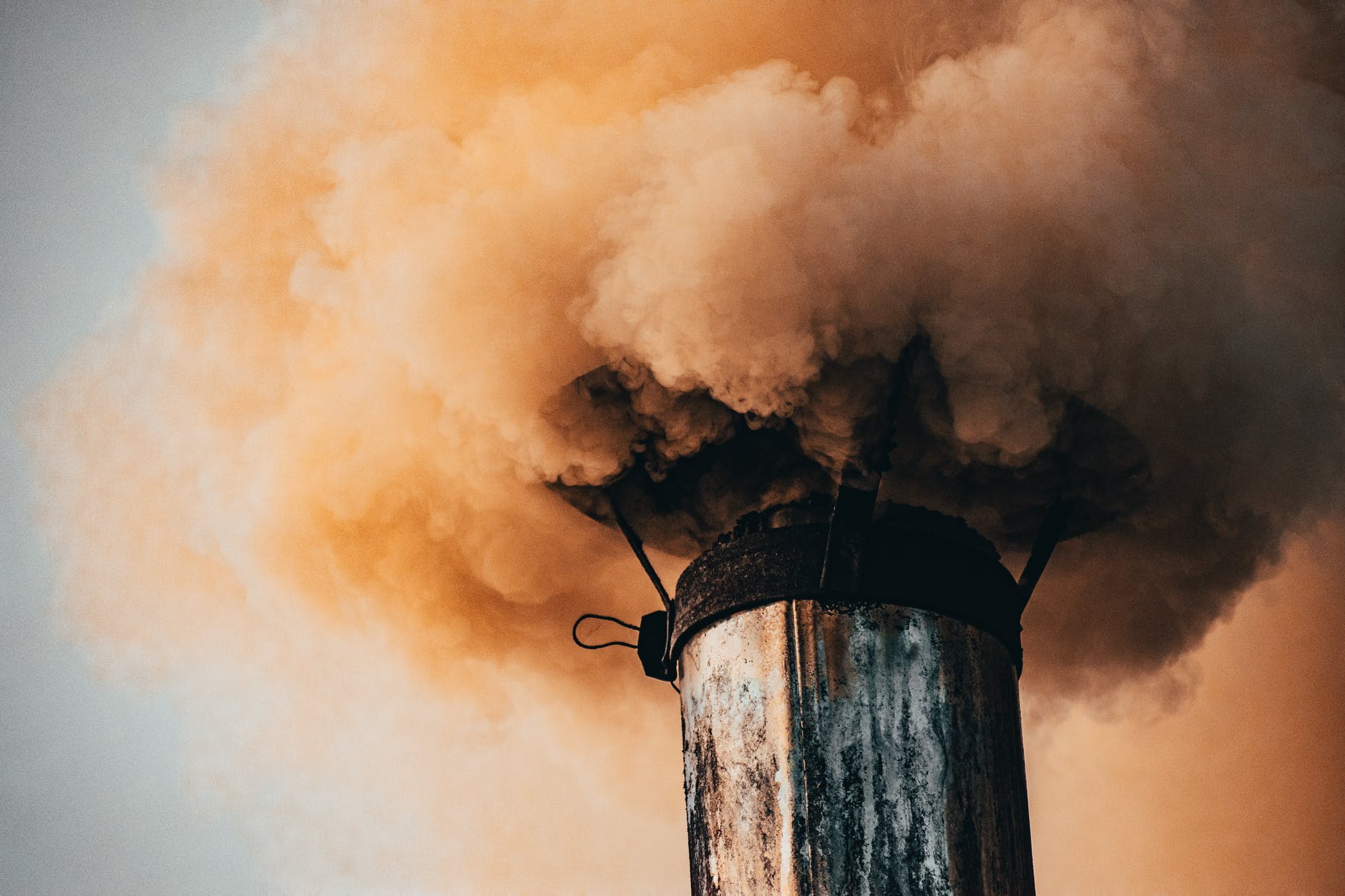
You know the smell by know. Using their tar-trees the goblins have changed the air and water in Kirtin-on-the-Lake, maybe forever. They burn this sticky oil and create self-powered cycles, no pedaling needed. Like the Sisterhood, The Federation are reclusive.
This lack of information seems to be how the gobs keep their strength and respect. A combination of Tartek and Airxip work is what enabled the gobkon to cross the Teeth of Sheljar and, as they claim, return to their lands.
Those massive ships travel the air, floating above the rapids of rivers, the mountain passes, the brigands and bandits. Their ‘airxips’ are barely related to Daoud’s large galleons. Some of the airxips cannot even land in the waters of Kin! They must have towers or long rope ladders to interact with the grounds below.
Bladders may be filled with the works of Alchems, Tarteks, or even Airmatics. Each insists their techniques are best. This author does not know which is best. The xips and gliders of the Syndicate enable travel and connection to communities in ways that our horses cannot. Sheljar’s connection to Hagtown shouldn’t be possible. It is just uphill from us, but due to regular visits from the Syndicate it maintains a relationship to the Free City rather than Kirtin or Daoud as it was in the past.
These transports are stunning, if slow. I have booked a ride to go to Kirtin-in-the-Sky for the summer as my first test of what the Syndicate can do. Hopefully the stalemate between rebel, Daoud, Kirtin, and the Dragons will hold until after my report.
Additional reporting was provided by allies and sources within Hagtown, Sheljar, and Telse. Those sources will not be revealed.
Combing magic with an emergent technology these workers of fire are usually about celebration and frivolity. They remain rare in most D&D worlds. When they work they are paid quite well. But outside of the largest communities there is little need for a Sparkler. For this reason they often travel in a small group of other Sparklers, attached to a circus, or maybe even part of an empires retinue.
This Dungeons & Dragons background is designed for 5th edition. It also adds a new tool (using PHB rules) and a new exotic weapon. The Sparkler grants a cantrip rather than one of the skills and tools/languages that are typical of backgrounds.
You are a master of smokepowder or gunpowder as appropriate to your world. Using these powders you can create displays to inspire or scare thinking beings. As a Sparkler you have also learned how to combine these effects with magic, thereby increasing the the scope of your art.
Often hired as an entertainer the Sparkler is in high demand during festival season. Due to wandering between large and/or rich communities your close friends tend to be the other Sparklers and your hosts.
Your knowledge of the powders is often approached as a magic much more powerful than it is, because it is both different and rare. Most Sparklers hide this knowledge from the general public working in secret except during their performances. Some Sparklers specialize in aerial displays, others in massive thunderous noises, and a few even weave the illuminating powder into their fluid dances and twirling — all are artists.
Skill Proficiencies: Acrobatics or Performance Tool Proficiencies: Fireworks Languages: None Cantrip: Minor Illusion Equipment: Traveler’s Clothes, Costume, flint & steel, assorted fireworks including 3 rockets all stored in an oilcloth backpack, pouch with 5 gp
Feature: Ooohs and Ahhhhhs
Given a few minutes to prepare, you can create a wonderous display of lights and sounds that can serve as a distraction. This display may be augmented by your Minor Illusion. This display can serve as a distraction for some guards, as inspiration for a besieged city, or as a reward for those who have worked hard. The display, whether spells are used or not, feels supernatural to those who watch it.
Characteristics: For now, use those from the Entertainer, Guild Artisan, or pick & choose as appropriate for your concept. Whenever my background project sees full publication there will be unique characteristics for each of them.
Fireworks (Tool)
Cost: 150 gp | Weight: 20 lbs
Proficiency with fireworks means that you know how to safely store and transport the pseudomagical devices known as fireworks. You are also proficient in how to set up a small display that would entertain a group for a few minutes. This could be an aerial, ground, or sound based display — or a mix of all three. Larger displays would require several people proficient in the tool to work together.
Additionally you know how to create more fireworks. With the necessary supplies you can create a new display or three rockets during a long rest. The supplies may not be readily available.
*On a hit those within 5′ of the target must succeed on a saving throw or take half damage.
All awakened rodents are proficient in rockets.
Sparkler Design Goals
The desire here is to have a real-world, culture-neutral version of a fireworks specialist. The primary example of these in fiction is the Illuminators from the Wheel of Time series, which share some aspects of Romany culture and some from aspects from various northeast Asian cultures.
Additionally the Sparkler serves to introduce a new tool and a new weapon to the game. The Rocket varies from the standard firearms rules by being a charge on a stick that would be pointed at a target either held in the hand or planted in ground, and then lit. Players may develop other ways to use them rather than just as a first round attack.
Custom Backgrounds for 5th edition Dungeons & Dragons
In a city you might be part of a guild, where in rural communities you could be the only midwife for miles. You are there to aid during pregnancy and birth. Your role goes beyond just those times, as you are also the confidant within the region. Your charges trust you, confide in you, and know that you will support them in their time of need.
You are capable of calming emotions during impassioned times, trained in techniques of general healing, when you are present life is honored and saved. Whether itinerant or attached to a guild, your role within the community is respected. Those who don’t need your services still hold you in esteem, if from a distance.
Midwife
Skill Proficiencies: Insight Tool Proficiencies: Herbalism Kit Languages: None Cantrip: Spare the Dying Equipment: Druidic focus or religious symbol, healer’s kit, traveler’s clothes, flask, jug, steel mirror, soap, 5 gp
Feature: Welcome to our home
Folk that care for families will always welcome a midwife into their house. They will not fight for the midwife, but will help them hide, provide some food or provisions for the midwife and their friends if able, and share the gossip that caregivers invariably know about a community.
Characteristics: For now, use those from the Folk Hero or pick & choose your favorites. Whenever my background project sees full publication there will be unique characteristics for each of them
Midwife Design Goals
First and foremost, this design is to honor my late mother-in-law. She was a maternity nurse, and through her I met many other nurses. Secondly, the background leans into Call the Midwife, which my wife watches regularly. There is a bit of inspiration from Nynaeve al’Meara (Wheel of Time) and her time as Wisdom of Emond’s Field when she cared for the community as a healer and confidant for the women of the community. As there is no healer among official D&D products, the Midwife attempts to fill some of that niche (as will the Barber, the Apothecary, and the Healer).
Like the Remarkable Drudge, the Midwife grants a cantrip at the cost of a skill and a tool/language.
Custom Backgrounds for 5th edition Dungeons & Dragons
Within the literature that inspires Dungeons & Dragons we see many tales of those born to magic. Some of these peoples are untrained, their magic barely controlled. In 5th edition D&D these are represented by Wild Magic Sorcerers. Not all fit the narrative around Sorcerers, because they are more than just an in-born mage. They have hints of spellcasting, but because it is born rather than learned control is not there.
Yes, multiclassing can solve this. So can a Feat.
The desire with Born to be Wild is to capture the feeling of those who have a tiny bit of innate magic in their bodies, but no control. Their magic sparks bizarre occurrences that range from helpful to destructive. Maybe they get trained someday. Maybe they are a warrior who can heal an ally, or a thief that can blast with missiles of power. Whoever they are, they struggle with innate powers and the impact of casting.
Choose a cantrip from the following list: Prestidigitation, Thaumaturgy, Druidcraft. [This represents that you have innate minor powers]
Choose any 1st level spell. You may now cast this spell once per short rest, but when you do you roll on the Wild Magic Surge table of the Wild Magic Sorcerer. This spell may be added to your spell list, but whenever cast does cause a surge. [There is a temptation to have the player roll on the table twice and let them choose the better effect.]
Your spellcasting ability for these spells is Constitution. [This is to represent that the magic courses through your body.]
Design notes
The intent here is to be similar in power to Magic Initiate, but to embrace the chaos of the Wild Magic Sorcerer. Dropping one cantrip and upping the usage of the spell is similar to the Artificer Initiate. Adding Metamagic would give the holder of the Feat control, which is in opposition to the intent.
Animal Companions, or Bonded Companions, or a key element of life in Kin. The Kin are the people of friendship, loyalty of loving those around them. This extends towards their non-humanoid companions as well. Where an elf might group in a land where spells are used to do mundane things, in Kin when a goliath needs a bit of string to finish sewing they send their swallow off to do it, or their heron to fish. Halflings have dogs that pull, push, fetch, hunt, fish, carry, and many other tasks. Human bonds with goats, rams, dogs, birds and horses are quite common. Bonds of Kin are a very essence of life. Almost everyone has one.
This ruleset needs to do a few things.
Scale like cantrips, attacks and proficiency. The companion is expected to live alongside their friend for some time.
Build in a reason that having a Bond die is bad for the PC
Not destroy the action economy
As a bonus, can it be simplified for usage in gaming outside the World of Everflow?
Feat: Bonded Companion
Prerequisite: Wisdom of 13 or higher. Kin and Rangers ignore this prerequisite. This feat can be taken more than once.
You have an intense bond with a beast. These beasts cannot have a higher Intelligence than the character. In certain worlds the bonded companion can be a monstrosity. At this point I considered just granting access to the Bonded Companion system in a similar manner as to how Magic Initiate works, but instead built it within the Feat. The rule could be built by making Bonded Companion a Class Feature and Feat, but I digress. Taking the feat gives you Companion Points. You also gain companion points in the following manners;
Rangers at 1st, 3rd, 5th, 11th, and 17th levels
Druids at 1st and 5th level.
Clerics with the Nature domain at 1st level.
Your Wisdom modifier
Those points can be spent on a single companion or multiple companions. A character can bond with a number of Companions equal to their Wisdom modifier +1 (minimum 1). Each new companion takes a number of weeks to establish a bond as their cost in companion points. This can be done as downtime, or could be a solo adventure. A character may only spend new points when they take the feat or if they are a Ranger or Druid at their higher levels that earn Companion Points.
The following chart lists various Companions and their Companion Point cost.
One
Two
Three
Five
Seven
Ten
Herd dog
Sled Dog
Warhound *
Giant Eagle *&
Rhino &
Mammoth *&
Retriever
Mastiff *
Axebeak *&
Bison
Elephant *
Wyvern *&
Terrier
Bloodound
Ostrich &
Bear *&
Dire Wolf *&
Roc *&
Sentry Dog
Guard dog *
Elk &
Lion *&
Owlbear *&
Sprinter
Raven
Panther *&
Worg *&
Griffon *&
Heron
Eagle *&
Bear Cub *&
Hippogriff *&
Pegasus *&
Pigeon
Falcon *
Wolf *&
Peryton *&
Sparrow
Parrot
Tiger *&
Awakened Tree &
Pony/Mule
Draft Horse
Warhorse *
Fox
Riding Horse
Ape &
Goat/Sheep
Monkey
Awakened Shrub &
Cow
Legend: The ‘&’ is used to indicate an animal companion that can only be paired with a Ranger, Druid or Nature Cleric. They are normally wild. The ‘*’ is used to indicate animals that can enter combat on command.
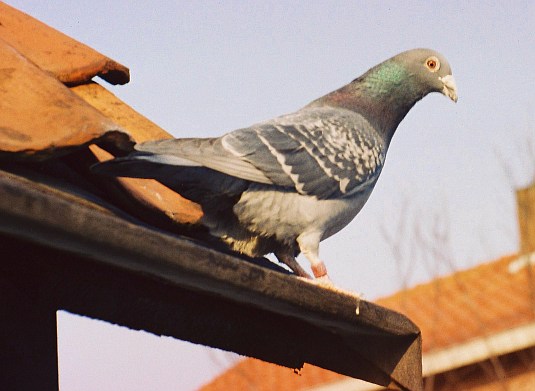
“Postduif” – Licensed under Public Domain via Wikimedia Commons
As a Bonus Action the Bonder can command their animal. These commands are Attack, Dash, Disengage, Dodge, or Help. An animal without a * can only attack if the Bonder passes a Wisdom (Animal Handling) DC: 20 check. The Companion will continue that action until the combat is complete or another Bonus Action is used (ie they will Attack the directed target until that target is no longer participating in the combat). Some Companions have other actions that can be taken (A Retriever can Fetch as an action). Check with your DM for these other actions.
When separated a Bonder and Companion that are on the same plane know the direction and rough travel time between them.
If someone tries to control a Companion it is an opposed Animal Handling check for the Bonder and whatever skill or spell is appropriate for the attempt to control the Companion. The duration of the control is per the appropriate spell or skill.
If a Companion dies the Bonder takes half their Companion’s hit points in psychic damage. If they make a Wisdom save (DC: 15) they then take one quarter of their Companion’s hit points in psychic damage.
Variant Rule in Kin: At first level and below halflings usually bond with canines and goliaths usually bond with avians. All Kin start with an additional Companion Point.
On a family vineyard with vines as thick as hippogriff legs you work the grapes. The slow, tedious springs and summers on the hard scrabble rocks are exhausting, the harvest a frenzy of activity. Then the fun starts, as does the waiting.
The vintner enjoys all of this time, but the apex of their art is the finished bottle, and sharing it with others. They carry stories in their bottles. Stories of grapes, of skies full of wyvern, of the journey past the bandit camps, of that one time the mage saved their vines, and that other time when the druid thought they were helping.
Every bottle has a story as does every person who sips it. The vintner is not just an expert at crafting wines. They are a marketing specialist and a storyteller. Each barrel, every cork, each wineskin, every jug – another tale to tell is discovered. The vintner may not have intended to travel the lands on quests, but they know whenever they return to their villa and vineyard they’ll have new discoveries to share.
The following rules are a pre-publication example of a Vintner – a background for the current edition of Dungeons & Dragons.
Vintner
Skill Proficiencies: Nature and one of Deception or Persuasion Tool Proficiencies: Farming Tools, Winemaking Tools Languages: None Equipment: Farming Tools, common clothes, 1 pound of cheese, 3 wine skins, 3 small cups or glasses, 10 gp
Feature: Wine Lets Secrets Out
The vintner has a knack for storytelling and conversation. Through pouring a tasting and chatting they are able to learn a tale from the person’s past. Sometimes these are of an adventure, or a foible, or a mystery that needs to be solved, and at the rarest times these tales are things that were supposed to always remain hidden.
Characteristics: For now, use those from the Guild Artisan or pick & choose your favorites. Whenever my background project sees full publication there will be unique characteristics for all of them.
This map popped into my Facebook feed the day I published the Vintner. It’s included because it is perfect, and actually reminds me of Balboa.
Vintner Design Goals
To more capture the feel of the pseudo-Mid Ages/Renaissance period the Vintner is the grower, the maker, the taster, the seller. Plus, that type of specificity gets anti-5e pretty quick. While the Guild Artisan can capture this background, it forces the artisan into a guild. Many adventurers pride themselves in their independence. The Vintner had to be a solo gig.
The choice of Deception or Persuasion is out of a desire to represent the different angles in marketing that can occur within the flavor business.
When it came to tools versus languages there was a part of me that wanted a language rather than second tool, but that was hampered by two things. First, I generally frown on how D&D handles languages. Second, if I’m bundling growing in and have developed Farmers Tools, let’s use the Farmers Tools.
The feature, which uses a Chinese proverb rather than the Latin In Vino Veritas, is an attempt to capture the flow of story and words as friends and even enemies commune over a bottle(s). As a DM having a player with this feature helps grant so many clues in new ways.
Custom Backgrounds for 5th edition Dungeons & Dragons
Some heroes work the earth, till the fields, care for orchards, manage vineyards. The adventuring life was not part of their blood. There is no heroic act of rebellion or violence in their past, like the Folk Hero. They show their potential and heart every day. Some rise early, work late, and rest hard. Others understand nature, harnessing those forces to do as little as possible until harvest comes.
All are connected to the land. Whether serf or free, whether rural or within the city, the farmer raises crops not just for their own family, but to supply a larger group. They are the blood of a civilization – vital.
Some farmers do not get to remain in the pastoral life. They can be conscripted into battles, inspired by a local bard, maybe their debts force them to work with a local gang, Whatever took your farmer away from their homestead to the adventure they are on now that homestead, connection to earth, and family is a part of them forever.
The following rules a pre-publication example of a Farmer – a background for the current edition of Dungeons & Dragons.
Skill Proficiencies: Athletics, Nature Tool Proficiencies: Farming Tools, Vehicles (Land or Water) Languages: None Equipment: Farming Tools, common clothes, beast of burden (donkey, mule, dog, etc) or cart, basket, 2 days rations, wine skin, 2 gp
Feature: Horn of Plenty
Through your knowledge of foods, their qualities and usefulness, combined with an uncanny knack for preparation you are able to stretch food supplies. A meal that would normally serve one serves two. They are both content and satisfied. A harvest in which you participate is also more effective – your senses help find a few more plants that are ready, branches that are missed, or mistakenly dropped produce. Those harvests produce more food, resulting in an increase in gold or barter value of 50%.
Characteristics: For now, use those from the Folk Hero or pick & choose your favorites. Whenever my background project sees full publication there will be unique characteristics for all of them.
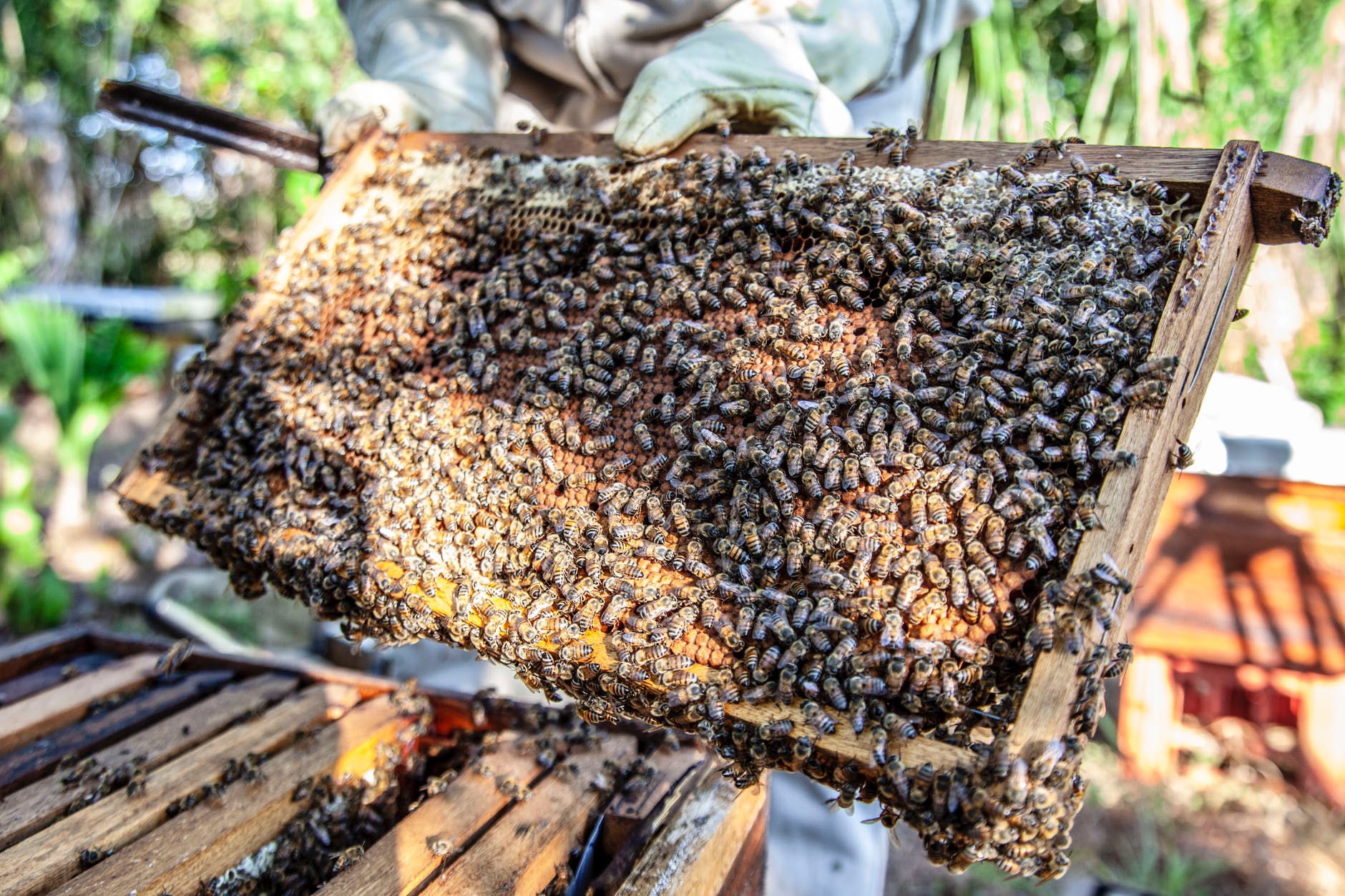
Drop Athletics for Sleight of Hand. This is to represent the deft hands of someone who does their best to avoid being stung too frequently. Their loads also tend to be lighter compared to farmers who carry bushels of apples, shovel manure, dig irrigation, etc.
Alternate Feature: Sweets
You always have some honey – tiny jars, little wax sticks, hard candies, the format is up to you – to give away. Generally those who are gifted your sweets welcome the gift and have a positive impression of you and your group. These gifts can act as a salve to harsh spirits or a reward for previous help. They can also be traded for other uncommon goods that you may be in need of.
Originally included as an option for the Remarkable Drudge, Farmer’s Tools are a must have for any farmer.
Farmer’s Tools
Cost: 5 gp | Weight: 7 lbs
Proficiency with farmer’s tools means that you are familiar with the operations of a farm, orchard, vineyard, or other cropland. You are knowledgeable in the typical crops within an area, to include when to plant and harvest them. You also know their market value in most lands.
Custom Backgrounds for 5th edition Dungeons & Dragons











 Full Moon Storytelling