Tag: homebrew

  • Integrating pop songs into the five-room dungeon system

    Integrating pop songs into the five-room dungeon system

    You have limited time for gaming. Pulled in so many directions, you need to find ways to reduce prep time and focus the game on action.

    Two innovations help those efforts quite a bit when playing a D&D style game.

    But, you’re still left trying to be creative within those techniques.

    Take the five-room dungeon, the short essay of dungeons. It’s an introduction/guardian, puzzle/social encounter, trick/setback, climax/big bad, and the resolution or plot twist.

    This generally follows the basic plot graph in literature. It’s familiar, fast and can be done in one sitting if you time things well.

    How do you fill that out? What’s the source of creativity?

    Use pop songs!

    No, really, they often follow a similar arc, but have a chorus that echoes the main theme of the song. This idea first sprung to mind with Apollo, by SYML.

    Rather than five-rooms, we’re going to go with seven events because of the chorus. The song provides the creative prompts to fill these out.

    Introduction/Entry — on the steps of a temple the party sees a golden altar being shined, hears talks of other wonders when a dark cloud blots the sky. A raven and a wolf rush to the altar, tossing it aside, fleeing to the countryside.

    Note: after the intro the PCs determine the order of approach.

    Social encounter — Interview the group talking of other wonders and the goals for the faith. Secrets and clues include a song that is unsung and a build up of a military force by the faith.

    Choral echo — Tracking the raven and wolf leads to a moonlit glade with an empty space framed by 7 monoliths.

    Setback — The huntress on wolf back, she rides with bow drawn, ready to fight. If the party sings the unsung song there is an attack. She only appears at night, under a full moon.

    Choral echo — If the party rights the altar themselves and shines it to bright gold they discover a medallion that prevents the poison on the arrows from taking effect on the group (immunity from the poison condition in an emanation of 10′ from the one wearing the medallion).

    Climax — The songmaker arrives when one of the party bends their knee (falling unconscious qualifies, as does voluntary submission)

    Resolution (always last) — When the songmaker and huntress are both defeated a flock of ravens blots out the full moon. The wonders fall and a song echoes at their altars “I am. I was. I will be.”

    Yes, that’s quick and dirty. Tuning that to a party shouldn’t be too difficult. Maps and expanding on the secrets can turn it into a decent short adventure facing off against avatars of gods in any D&D world.

    Sure, that works for Apollo, but what about other songs?

    Quicker and dirtier with Last Great American Dynasty by Taylor Swift.

    Intro — In history there was a party with many attendees scheduled at any outsider’s home. Celebrations are held in town honoring the host and diminishing the current leaders

    Chorus — One of the hosts dies, their partner is blamed in efforts by the current leadership to reduce influence

    Puzzle — How did the person die? Clues include a neighbor’s dog, poor health, a nearby sea, a long drink together prior to the party

    Chorus — The commoners in the community ignore the other surviving families, focusing instead on the surviving partner as both suspect and hero

    Setback — Both partner-hosts haunt the house, interfering with ideas at solutions, causing the group to collect extra clues that may or may not be relevant.

    Climax — PCs discover that the old money in the area is the reason for the death, as they didn’t want the new money to interfere. If the PCs share this with the commoners there is an uprising.

    Resolution — The house remains haunted, after the PCs solve the mystery of the death, though the group can live there undisturbed.

    Did you just use a Taylor Swift song?

    Yes, I did.

    Not every pop song will work

    Just like not every TV show, movie or book is a good inspiration for a D&D adventure or campaign, not every song is.

    But, if you find out at 9 in the morning that you’re DMing in the afternoon you can adapt the five-room dungeon using the chorus to help with theme and secrets.

    Playing the song that inspires you on repeat can help you focus your energy. Sketch out the quick map including notable fantastic elements, make certain your secrets and clues work in a multi-nodal fashion.

    Fill the monsters or opponents that fit the song (ravens, wolves, ghosts). The NPCs are in the song as well (commoners from LGAD or clergy in Apollo).

    Connect a couple events to the characters and/or past adventures.

    The chorus can either be tucked into various other scenes, can be dream sequences, portents, or speeches from various NPCs rather than specific events.

    Have fun gaming

    Fediverse Reactions
  • Enable your table to embrace wider stories using 2024 D&D Backgrounds

    Enable your table to embrace wider stories using 2024 D&D Backgrounds

    There are significant changes between the 2014 5th edition Dungeons & Dragons Backgrounds and the way 2024 5e D&D manages the same design space. 5e14 used backgrounds to expand on the social and exploration pillars of the game while encouraging roleplay via traits, ideals, bonds and flaws.

    5e24 abandons that, turning backgrounds into a space with more mechanical heft than ever before — adding Ability Score Increases and Origin Feats. This also differs from alt-5e systems like Black Flag (no ASIs, talents are Feats) and Advanced 5e (no ASI, no Feat, single ASI adding connections, momentos and advancement).

    By nature 5e24 reduces the story available via Backgrounds. Every Soldier is a Savage Attacker and never Tough. There’s no personality assigned everywhere, not even a highly detailed matrix of choices that results in 100s of combinations. There are also assigned ability scores, which means that Soldiers aren’t wise, for example.

    So how do you inject story back into your table as you transition to 2024 5e?

    Remove ASIs from Background

    They can go back to floating like they were with Tasha’s or just included in the standard array/point buy like Black Flag.

    This has absolutely zero impact on the power balance of the game.

    Associate multiple Feats/Talents with a Background

    Tough Soldiers exist! So could a soldier trained in magic in a high fantasy world (see the Second Army in the Grishaverse). A solider could be trained in Healing or Linguistics. Make the assigned Feat the one that most members of the Background have, but do not confine your story to that.

    Pick a Feat and then justify it with a single clause in your backstory (backstories for Tier 1 play should fit in a text-based social post).

    For myself, I’ll be using a chart that puts the most common Feat in the middle with the next most common next to them and rares on the outside. This small curve helps define the world in which you play.

    Here’s an example for the Tinker

    2. Magic Initiate
    3. Tough
    4. Linguist
    5. Actor
    6. Skilled
    7. Ritual Caster
    8. Artificer Initiate

    This doesn’t impact the power level at the table at all.

    Use custom Backgrounds to expand your world’s lore

    Add more Backgrounds to enrich your world. Similar to how official Wizards of the Coast settings books have added a couple Backgrounds to help define those stories. Dragonlance added Wizards of High Sorcery and the Knights.

    Take this lesson and use it at your table.

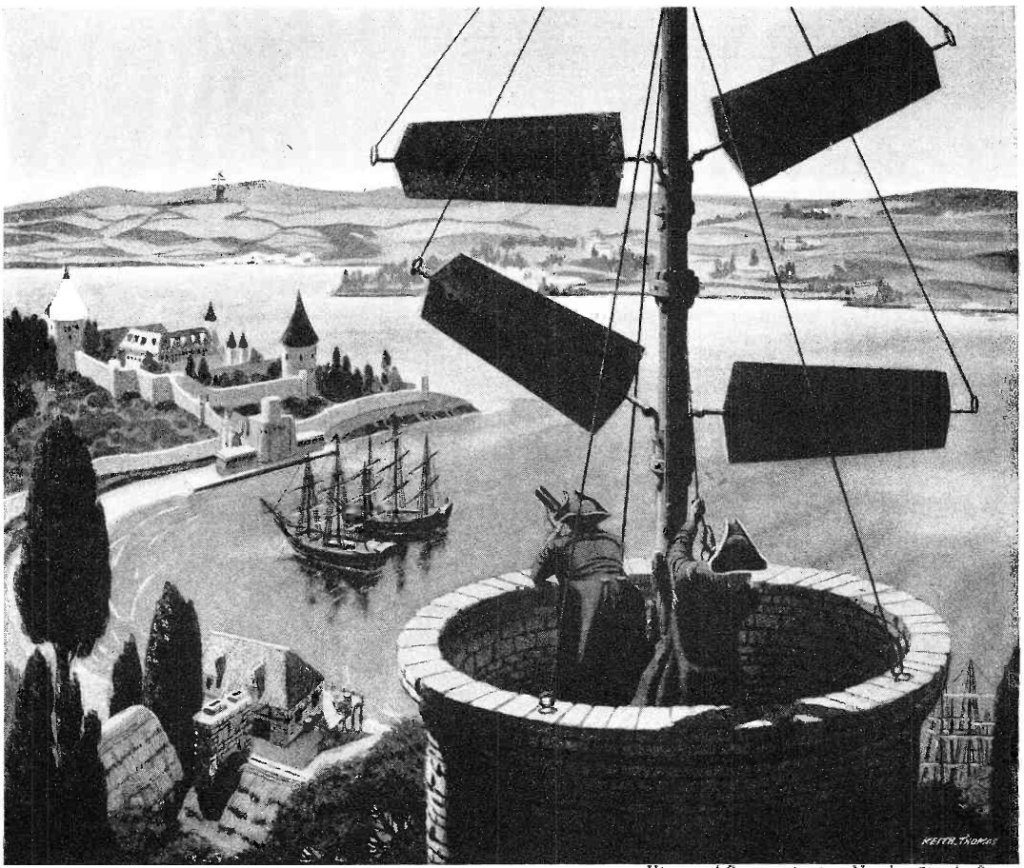
    Do your stories consist of a world on the edge of Renaissance technology? Add in Optical Telegraph Far Talkers. Is there something inspired by the Silk Road? Add the Caravanserai. Are airships common? Those shouldn’t have sailors, but flyers. It’s a different skill set and a different story.

    Again, there’s no power imbalance.

    Add personality back to the game

    Even though WotC, and the alt-5es too, got rid of personality you don’t need to. The 5e14 system is long and clunky. Alignment is tired and dated.

    Instead, use short-form personality. Having 3-5 words or phrases isn’t a bulky system. Still grant Inspiration off of this — your players should be rewarded in game for playing their role. If you’re shifting to Black Flag or borrowing their Luck system do that instead.

    This has a minimal amount of power disruption while encouraging more story through play.

    These four simple steps don’t disrupt the power balance of 5e (and variants). They add lore to your world and story to your characters.

    Best of all is that they can all be done while playing using DnD Beyond or any other virtual character sheet.

    Fediverse Reactions
  • Age of Myths, the Uncoupling: Campaign One Sheet

    Age of Myths, the Uncoupling: Campaign One Sheet

    For the first time I’m going to be playing a character in my world. One of my players in the last two campaigns is going to DM and together we set up the one-sheet so as to not change too much lore. One of the ideas I came up with early, was by playing in the Age of Myths, because any lore changes can just be referenced as legend when we play in the current era.


    The Road to the Uncoupling

    Your story begins in a prosperous world of togetherness and mutual can-do spirit.  Before the battle for the heart of Kirtin on the Lake (KotL) or the sacking of Kirtin in the Sky (KotS), before the Proctors spread death and misery in Sas Rurulit, and before the unprecedented events of the Awakening and the finding of Lorebooks, there was The Uncoupling.  The apocalypse that destroyed the weave of magic for the Kin and Kon, leaving Ken and the 5 coloured dragons of the Chromatic Convocation in complete possession of magik. 

    Players are part of a select group that were born with innate magical ability (you’ve been everflow touched) that is prized even in this magic-rich world.  Possibly you inherited your trait from a bloodline trait or ancestral ties to deeper magik of the Everflow.  It has shaped your early years, possibly enrolled at a young age by family in the scholarly studies to become part of the magik ruling core of society or you hid your talent and nurtured it on your own. 

    However, recently there have been rumblings, rumors about a shadow organization unhappy with the status quo, who seek to eliminate the existing ruling council and rule not by consensus but by force.  You’ve each been selected by the bronze Dragonborn Artok, tasked with this mission by his patron, the adult Bronze Dragon (Othimbane) who sits on the council, to identify and either infiltrate or forcefully break these fools of their notions and ensure that no other plots are forthcoming. 

    A global map of the world centered on the spaces where play in the campaign has occurred to this point.

    The following is written by the DM for this campaign.

    Premise 

    • This campaign takes at least three millennia before the Born Generation and the return of magic to the Lands of the Everflow.
    • Gain information about “The Shadows”, a secretive organization bent on wiping out the Ruling Council of Aur.
      • Artok has the rough information about several potential members that could lead you to a hideout or meeting place. 
    • Infiltrate or brute force your way into the group. 
    • Identify other members and find potential leads about who is the power behind “The Shadows”.
      • Keep (human council) and (gnome council) members apprised of your investigation. 
    • Possibly assist the council with additional tasks at your discretion.  

    Factions  (NPC names to come soon)

    • The Ruling Council of Aur (RCoA) – A group of 9 members, three of each Ken, Kin, and Kon, and 4 dragons, two each of metallic and chromatic. 
      • The RCoA is the “federational government” of Aur, with different cultures/regions governing in their own way and answering to the RCoA.
      • Kin: Human (F), Goliath (they), Halfling (M)
      • Ken: Elf (F), Elf (M), Dwarf (M)
      • Kon: Goblin (M), Bugbear (They), Hobgoblin (They)
      • Dragons:
        • Elder Metallic (Silver) – Tanargnyvur
        • Adult Metallic (Bronze) – Othimbane
        • Elder Chromatic (White) – Dwargauth
        • Adult Chromatic (Blue) – Nymaryxon
    • In occurrence with the rise of The Dragon moon (the fourth moon of the Aurian system), the dragons withdraw from the council for a year (draakmoeten) and meet at an undisclosed location with the world dragon (a deep time dragon) named Andarawus Del-mos. 
    • The Metallic Dragons
    • The Chromatic Dragons 
    • The Shining Order of Dreki – Holy dragonborn order who serve the Draconic races as paladins, clerics, and religious personages located across the world. Some that choose a more individual path travel and assist as Priests and Mortuary persons in smaller towns and villages.
      • Necromantic magic is thought to primarily flow through the draconic race). 
    • The Shadows – A heretofore unknown organization/cult/religion(?) focused on the overthrow of the RCoA, and to rule through force and oppression rather than through consensus. 

    Campaign Facets 

    • 2nd & 3rd tier drop in/out campaign play, starting at 5th level 
    • All PCs start at lv.5 with the added feat “Everflow Touched”, adding a +1 to spell attack modifier and adding one free 1st level spells (from any school except necromancy, unless your PC is dragonborn) to your spell list which can be cast once per long rest.
      • Material components will not be needed.
      • at lv. 9 this will increase to +2 and an additional spell (2nd lv.) can be learned.
    • Rules used are core 2014 WotC D&D, plus most player facing options from WotC
      • Check with the DM about using setting-specific feats, subclasses and spells
    • Allowed races are Kin (human, halfling, goliath), Kon (goblin, hobgoblin, bugbear), Ken (elf, dwarf, non-rock gnomes) and dragonborn/kobold as shining order of Dreki
    • Divine magic is thought to come from the forces of nature and the philosophies, there is no active pantheon of faith, beyond those who worship the dragons.
    • Potential for multiple pathways to quest completion
    • Player driven story creation in a sandbox setting
    • Wide regional/worldwide settings with airship and/or teleportation travel 
    • Actions may become legend
    • Milestone leveling – several sessions per level gain; saves time when we all don’t have to track XP
  • Goodbye Alignment. Hello short-form personality.

    Goodbye Alignment. Hello short-form personality.

    Alignment is tired, boring and essentially meaningless in 5th edition Dungeons & Dragons.

    Many playing the modern game trying to replace it with personality. Wizards of the Coast tried to take major steps towards personality play with their Traits, Ideals, Bonds and Flaws system attached to backgrounds. That system uses five sentences of 5-25 words to describe the personality of the character. Alignment also exists.

    Then, if the DM and/or the other players remember your TIBF and you play to it you might get advantage via Inspiration.

    It’s a bulky system that requires memorizing a lot of detail that aren’t necessarily relevant to how your character is played. The Acolyte is in the SRD 5.1 CC BY. Here’s a sample of TIBF for a lawful good Acolyte.

    I see omens in every event and action. The gods try to speak to us, we just need to listen.
    I quote (or misquote) sacred texts and proverbs in almost every situation.
    Faith. I trust that my deity will guide my actions. I have faith that if I work hard, things will go well. (Lawful)
    I would die to recover an ancient relic of my faith that was lost long ago.
    I am suspicious of strangers and expect the worst of them.

    That’s 82 words plus two for lawful good. But really, it’s just a few. You don’t need that much detail.

    Just like when you fill out that your character has brown or brown-green eyes you know there is more detail to the eyes than just that word or two. You can do this for your personality.

    That Acolyte?

    Faithful, Suspicious, Orderly, Erudite.

    Replace the entire TIBF system with those four words. Can you memorize a few words that describe how the other characters in the party act? Absolutely! Your mind was already taking the shortcuts on the way to do so.

    Then award inspiration when the character is played along their personality.

    You could build your short-form personality using the official background information already provided. That’s a great start. But you could also use a list of personality traits. Here’s 638!

    A character modelled off a favorite movie or TV or comic or book or video game or etc character could use their traits too.

    • Margot from The Magicians — sexy, strong willed, crass, loyal
    • Wesley from The Princess Bride — dedicated, adaptable, loving
    • Tasselhoff from the original Dragonlance – friendly, curious, brave, aloof
    • Moiraine from early Wheel of Time – determined, withdrawn, studious
    • Lan from early Wheel of Time – lawful, loyal, commanding
    • Awf, my PC in Lost Mines – persistent, exuberant, fearless

    The intent with short-form personality is to reduce memorization, reward roleplaying and continue the de-emphasization of alignment in D&D.

    Be generous with the Inspiration you award. Play up the personality. Just make it simpler than a system that might require 100 words when you only need three to five.

    Fediverse Reactions
  • Adapting Genoan revolutionary lunches to fantasy third places

    Adapting Genoan revolutionary lunches to fantasy third places

    During the Age of Revolutions the leaders who wanted liberalization and democracy in Genoa had no idea how to govern. They were a bit idealistic. They struggled to get the various classes of this significant mercantile kingdom to get along.

    This all comes up in a recent Nerd Farmer podcast featuring Nathan Perl-Rosenthal. And it’s going to inspire a new third-place tradition in my Dungeons & Dragons world.

    By Aldan-2 – {{[1]}}{{[2]}}, CC BY-SA 4.0

    One of the ways the Genoan revolutionaries tried to create cross-class conversations was by mandating public lunches be held on the streets before festivals. These lunches would be funded by the elites, had limitations on the number of courses and were intended to inspire conversation before the entire group proceeded together towards a town square for fest time.

    This attempt at a third place being a space in time rather than a physical building intrigues me. That porch was only a third place during the luncheon, roughly every two weeks. It didn’t work.

    This is a fantasy blog, mostly about a fantasy world where dragons and magic are real. Let’s make the Genoa public luncheons real.

    My world has a naval empire, which makes this easy. But it is rather hierarchical and centered on the influence of the navy as sailor-citizens with power and influence. It is expansionist. Daoud won the war with Kirtin twice, and just lost their hold on Kirtin-on-the-Lake, the winter capital of Kirtin.

    Douad’s fleets sail the seas trading goods, conquering territory and bring their wealth back to the homeland.

    Daoud is the southern nation and controls the Green Isles in the Southeast.

    This is where the lunchtime third places come in!

    These now-wealthy sailors, officers and captains are required, by the Admiralty of the Land, upon returning to port to share their wealth and throw a party in the neighborhood from which they came.

    They lunch and fest together, with the Admiralty and Royalty surprising random porches with visits.

    This now ingrained tradition started because when the first ships came back with massive wealth they were seen as a threat to the non-sailing gentry. So that leadership in a form of taxation started the luncheon program. This kept the peasants that didn’t sail happy with the leadership and that joy spread.

    These lunches are simple fare — three courses, one which must always be from the land the ship just visited. There’s always a flatbread, that was originally simple but is now treated as a complex way to serve a fourth course that is not in violation of the edict. There is wine and coffee, tea and liquor.

    There is joy.

    Then there’s the party, always in sight of the harbor with the ships lit and glowing at mast and crossbeam. There are flags and fireworks (the best ships travel with Sparklers). These parties are on a time limit. They start within two sunrises of the ship’s return. They end the next morning.

    And everyone participates. The paupers, urchins and sweeps know that when a ship returns they will eat well for at least a day, often two. The displays of wealth are ostentatious and the people are happy. These aren’t circuses, nor taxes. It’s Daoudian Luncheon — one of the two third places in the culture. The ships are the other third place.

    Fediverse Reactions