Tag: Animal Companion

  • Neither darkness, nor snow, nor wyverns – the Message must be delivered

    Neither darkness, nor snow, nor wyverns – the Message must be delivered

    Worlds of points of light in a wilderness, or fallen empires, or warring kingdoms, or with merchant guilds that control trade need ways for far-ranging communities to stay in touch. In the real world this meant messenger pigeons, in the Potterverse they used owls, in Game of Thrones there were crows and ravens to communicate. Other fictions use dogs, or just a hearty human that trudges through awful conditions to keep the ties of society together — The Postman by David Brin, or the Pony Express in reality.

    Your Dungeons & Dragons worlds also need these messengers. They make sense and fit the fiction so well. A Messenger in D&D also doesn’t need to be confined to the animals of the real world. A Ravnica or Eberron game might use a tiny ornithopter. Fastieths fit in Eberron and parts of the Six Kingdoms. Spiders or bats fit in Ravenloft. There’s a flavor of messenger companion for every world.

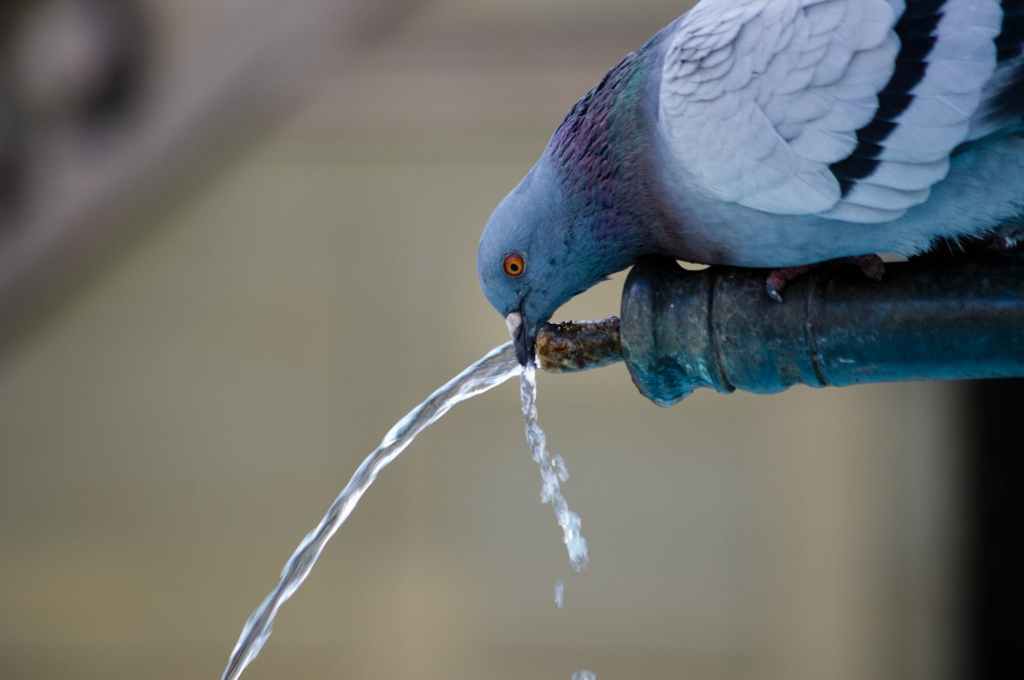
    Photo by Jimmy Chan on Pexels.com

    Messenger

    You are the connection between disparate homesteads, towns, or cities. Conveying the messages and scrolls between the communities rapidly without magic you bring news, warning, and joy to peoples who often struggle to keep in touch or that would take weeks to travel and deliver the message themselves. Often welcomed in strange towns, a messenger sometimes wears an official uniform of a ruling power and at others is a freelancer working without direction from above. You and your messenger companion are a symbol of civilization even in the furthest outposts.

    Skill Proficiencies: Animal Handling, Nature
    Tool Proficiencies: None
    Languages: Two Languages
    Equipment: One animal messenger companion, travelers clothes, a scroll case with a dozen pages, a quill, an ink pot, a whistle or bell or other command device, a pouch with 5 gp

    Choose an animal that is your messenger’s companion and conveyance, and discuss with the DM how the companion will fit into the adventure. These come in four primary groups, and a few examples are provided. Don’t feel limited to the specific animals listed, but use them for guidance regarding their abilities, if, gods forbid, they enter combat.

    • Small land animals — cats, dogs, iguanas, otters, monkeys, not-quite-giant spiders
    • Medium land animals — axe beaks, ponies, fastieths, antelopes
    • Small flying animals — pigeons, crows, ravens, owls, bats
    • Fantastic animals — enchanted paper airplanes, clockwork machines, not-quite-giant dragonflys, flying snakes, stirges, not-quite-giant wasps

    Feature: Rivers and Roads

    Your messenger companion begins the game with a network of three destinations and the ability to find its way back to you where you sent it from. When delivering a message to a known destination on the network it travels at a fast pace and does so with no penalty to a stealth check (your messenger companion add your proficiency bonus and your Wisdom bonus to their stealth at all times). If you plan to move from your location when you send a message you can instruct your messenger companion to deliver the message and then go to a different destination. You and your messenger companions have a number of network destinations of proficiency bonus +1. If your companion perishes you must train a new one. This takes several weeks of downtime.

    Natural weather has less impact on your own travels. Survival and/or Constitution checks made due to harsh natural weather are made with advantage.

    Traits, Ideals, Bonds, Flaws: At this time use the Sage, Outlander, or Folk Hero for inspiration.

    Messenger Design Goals

    Starting with the idea that greyhounds would be perfect canine versions of messenger pigeons, this background just kept growing and growing in its scope. Eventually I spun out the Far Talker as a similar but different role in the world.

    One of the difficulties was coming up with the dual features. I wanted cover the US Postal Service’s unofficial motto which actually dates back to 500-449 B.C.E.

    Neither snow nor rain nor heat nor gloom of night stays these couriers from the swift completion of
    their appointed rounds.

    Emulating those words was vital, but needed to not be game breaking.

    The non-magically empowered companion couldn’t be built out of Find Familiar, which was considered. My world’s bonded companions are meant to be non-magical. While the phrasing of the ability is a bit long, it’s mostly an ability that adds flavor. The messenger companion is not going to change a D&D party’s combat power.

    Other Custom Backgrounds

  • Feat: Bonded Companion

    Feat: Bonded Companion

    Salvy

    Animal Companions, or Bonded Companions, or a key element of life in Kin. The Kin are the people of friendship, loyalty of loving those around them. This extends towards their non-humanoid companions as well. Where an elf might group in a land where spells are used to do mundane things, in Kin when a goliath needs a bit of string to finish sewing they send their swallow off to do it, or their heron to fish. Halflings have dogs that pull, push, fetch, hunt, fish, carry, and many other tasks. Human bonds with goats, rams, dogs, birds and horses are quite common. Bonds of Kin are a very essence of life. Almost everyone has one.

    This ruleset needs to do a few things.

    • Scale like cantrips, attacks and proficiency. The companion is expected to live alongside their friend for some time.
    • Build in a reason that having a Bond die is bad for the PC
    • Not destroy the action economy
    • As a bonus, can it be simplified for usage in gaming outside the World of Everflow?

    Feat: Bonded Companion

    Prerequisite: Wisdom of 13 or higher. Kin and Rangers ignore this prerequisite.
    This feat can be taken more than once.

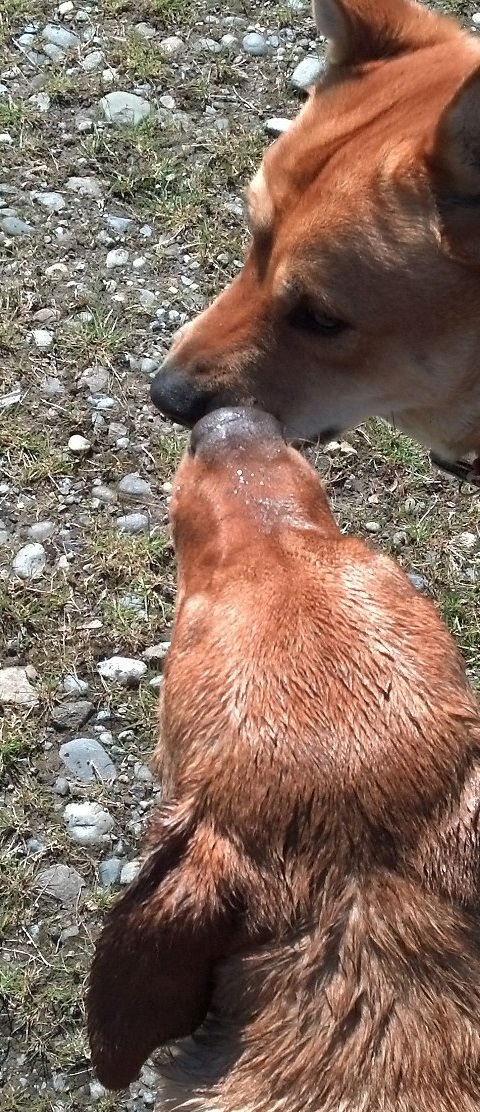
    Two dogs on gravel

    You have an intense bond with a beast. These beasts cannot have a higher Intelligence than the character. In certain worlds the bonded companion can be a monstrosity. At this point I considered just granting access to the Bonded Companion system in a similar manner as to how Magic Initiate works, but instead built it within the Feat. The rule could be built by making Bonded Companion a Class Feature and Feat, but I digress. Taking the feat gives you Companion Points. You also gain companion points in the following manners;

    • Rangers at 1st, 3rd, 5th, 11th, and 17th levels
    • Druids at 1st and 5th level.
    • Clerics with the Nature domain at 1st level.
    • Your Wisdom modifier

    Those points can be spent on a single companion or multiple companions. A character can bond with a number of Companions equal to their Wisdom modifier +1 (minimum 1). Each new companion takes a number of weeks to establish a bond as their cost in companion points. This can be done as downtime, or could be a solo adventure. A character may only spend new points when they take the feat or if they are a Ranger or Druid at their higher levels that earn Companion Points.

    The following chart lists various Companions and their Companion Point cost.

    OneTwoThreeFiveSevenTen
    Herd dogSled DogWarhound *Giant Eagle *&Rhino &Mammoth *&
    RetrieverMastiff *Axebeak *&BisonElephant *Wyvern *&
    TerrierBloodoundOstrich &Bear *&Dire Wolf *&Roc *&
    Sentry DogGuard dog *Elk &Lion *&Owlbear *& 
    SprinterRavenPanther *&Worg *&Griffon *& 
    HeronEagle *&Bear Cub *&Hippogriff *&Pegasus *& 
    PigeonFalcon *Wolf *&Peryton *&  
    SparrowParrotTiger *&Awakened Tree &  
    Pony/MuleDraft HorseWarhorse *   
    FoxRiding HorseApe &   
    Goat/SheepMonkey    
    Awakened Shrub &Cow    

    Legend: The ‘&’ is used to indicate an animal companion that can only be paired with a Ranger, Druid or Nature Cleric. They are normally wild. The ‘*’ is used to indicate animals that can enter combat on command.

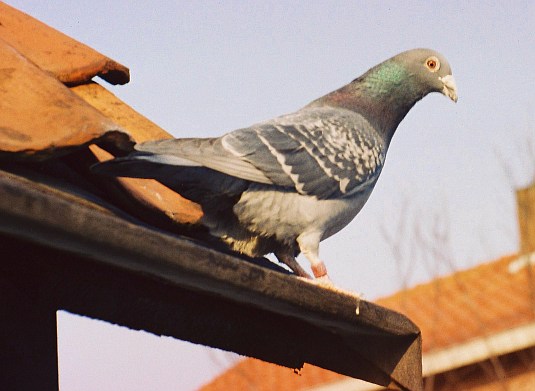
    "Postduif". Licensed under Public Domain via Wikimedia Commons - https://commons.wikimedia.org/wiki/File:Postduif.jpg#/media/File:Postduif.jpg
    Postduif” – Licensed under Public Domain via Wikimedia Commons

    As a Bonus Action the Bonder can command their animal. These commands are Attack, Dash, Disengage, Dodge, or Help. An animal without a * can only attack if the Bonder passes a Wisdom (Animal Handling) DC: 20 check. The Companion will continue that action until the combat is complete or another Bonus Action is used (ie they will Attack the directed target until that target is no longer participating in the combat). Some Companions have other actions that can be taken (A Retriever can Fetch as an action). Check with your DM for these other actions.

    When separated a Bonder and Companion that are on the same plane know the direction and rough travel time between them.

    If someone tries to control a Companion it is an opposed Animal Handling check for the Bonder and whatever skill or spell is appropriate for the attempt to control the Companion. The duration of the control is per the appropriate spell or skill.

    If a Companion dies the Bonder takes half their Companion’s hit points in psychic damage. If they make a Wisdom save (DC: 15) they then take one quarter of their Companion’s hit points in psychic damage.

    Variant Rule in Kin: At first level and below halflings usually bond with canines and goliaths usually bond with avians. All Kin start with an additional Companion Point.

  • Whistle of Az and Sel for the Blog Carnival

    Whistle of Az and Sel for the Blog Carnival

    Within the World of the Everflow every thinking peoples from the Land of Kin bonds with an animal. The most common of these are dogs (especially among halflings), birds (especially among goliaths), and horses (especially among humans). These beasts are family, inseparable companion, and essentially an extension of that person. They share personality and aid each other throughout their shared lives.

    This intimate companionship started after magic left the world. Now, the norm, bonding started with Az, his dog Sel, and a three-hole pipe. Together they created more and more and more and more and more bondings. Eventually this drove Az mad, for the thoughts of 100s of beasts were in his head. What was to be a blessing from one of the gods, turned into a curse for young Az. As he aged, the nation of Azsel formed around Az and Sel. Their whistle becoming the symbol of the nation, it was once under guard as a holy relic. Over the millennia the whistle disappeared. The power of bondings spread beyond what the Whistle started. Companionship is now so common that few consider it magical.

    Many also think legend of Az and Sel is merely a story, not real. But the Whistle of Az and Sel is in fact real, and dangerous, for the curse will drive you as mad. If any have found the Whistle in the current era they are not making that discovery public.

    This is my latest entry for the Blog Carnival.

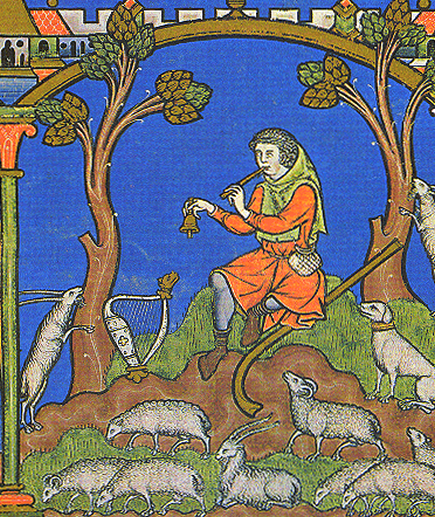
    David, as a young man, playing pipe and bell as he watches his sheep in the pasture. – The Morgan Bible, Folio 25

    Whistle of Az and Sel

    Wondrous Item, artifact, cursed (requires attunement)

    When playing the Whistle of Az and Sel the user can cast the following spells at will, without expending a charge and as a bonus action. These require no spell components nor concentration if that is normally required.

    • Animal Friendship
    • Beast Bond
    • Speak with Animals
    • Animal Messenger
    • Locate Animals
    • Summon Beast
    • Conjure Animals
    • Dominate Beast
    • Commune with Nature
    • Druid Grove

    This power comes with a cost. That cost varies by user.

    When one attunes with the Whistle of Az and Sel they experience two minor and one major detrimental properties. They also suffer from one long-term madness upon attuning and indefinite madness for as long as they are attuned (see DMG page 260). This cursed item requires a quest from a god or powerful magic to be unattuned.

  • Add these prehistoric beasts to your animal companion and familiar catalogue

    Add these prehistoric beasts to your animal companion and familiar catalogue

    Who didn’t grow up loving dinosaurs? The massive ones were essentially real-life kaiju, and they populate so much Dungeons & Dragons lore. But prehistory also has smaller dinosaurs. These too belong in your D&D games. They make perfect low-level scene setting creatures — even more special they offer player characters new choices for Familiars and Animal Companions.

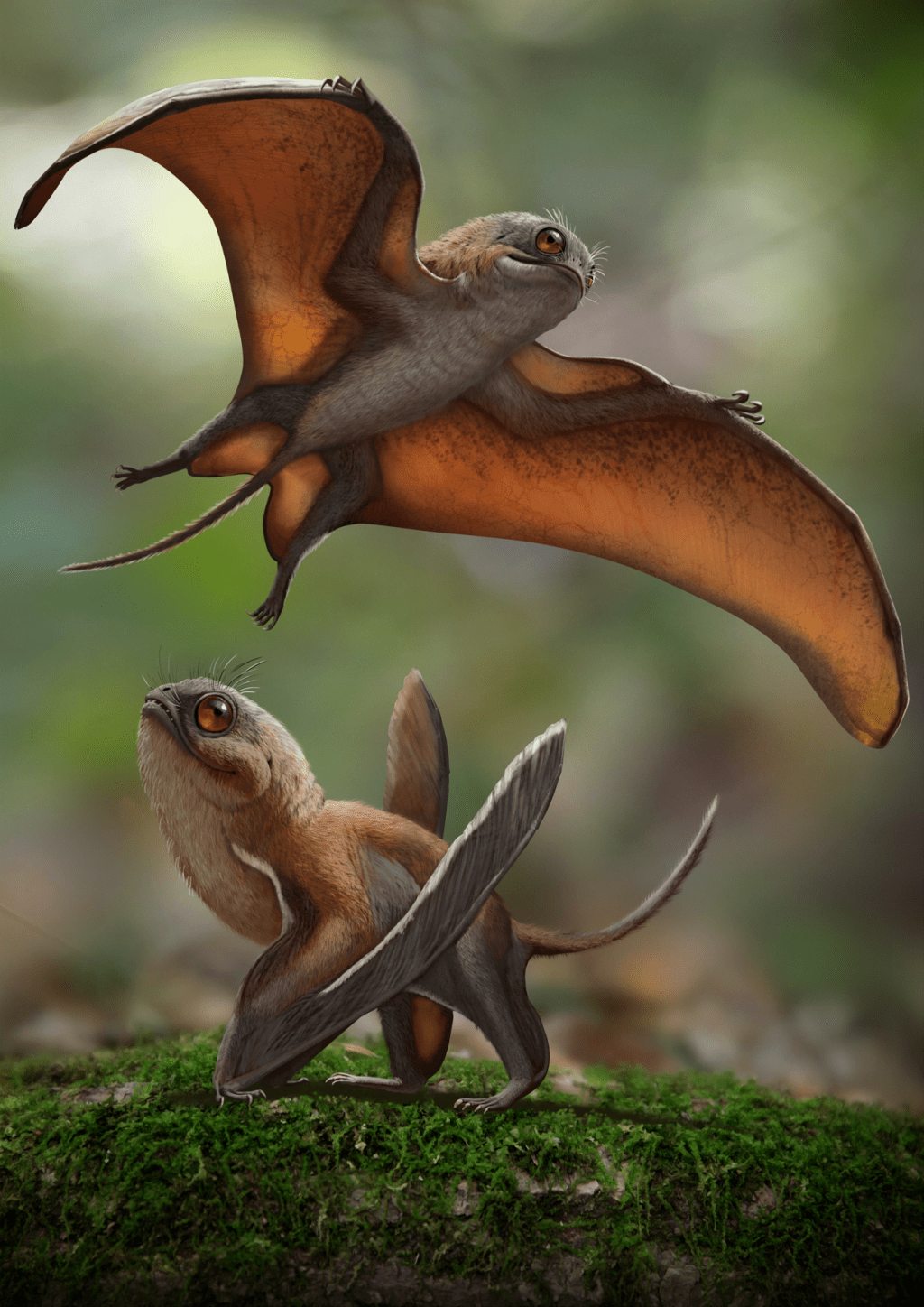
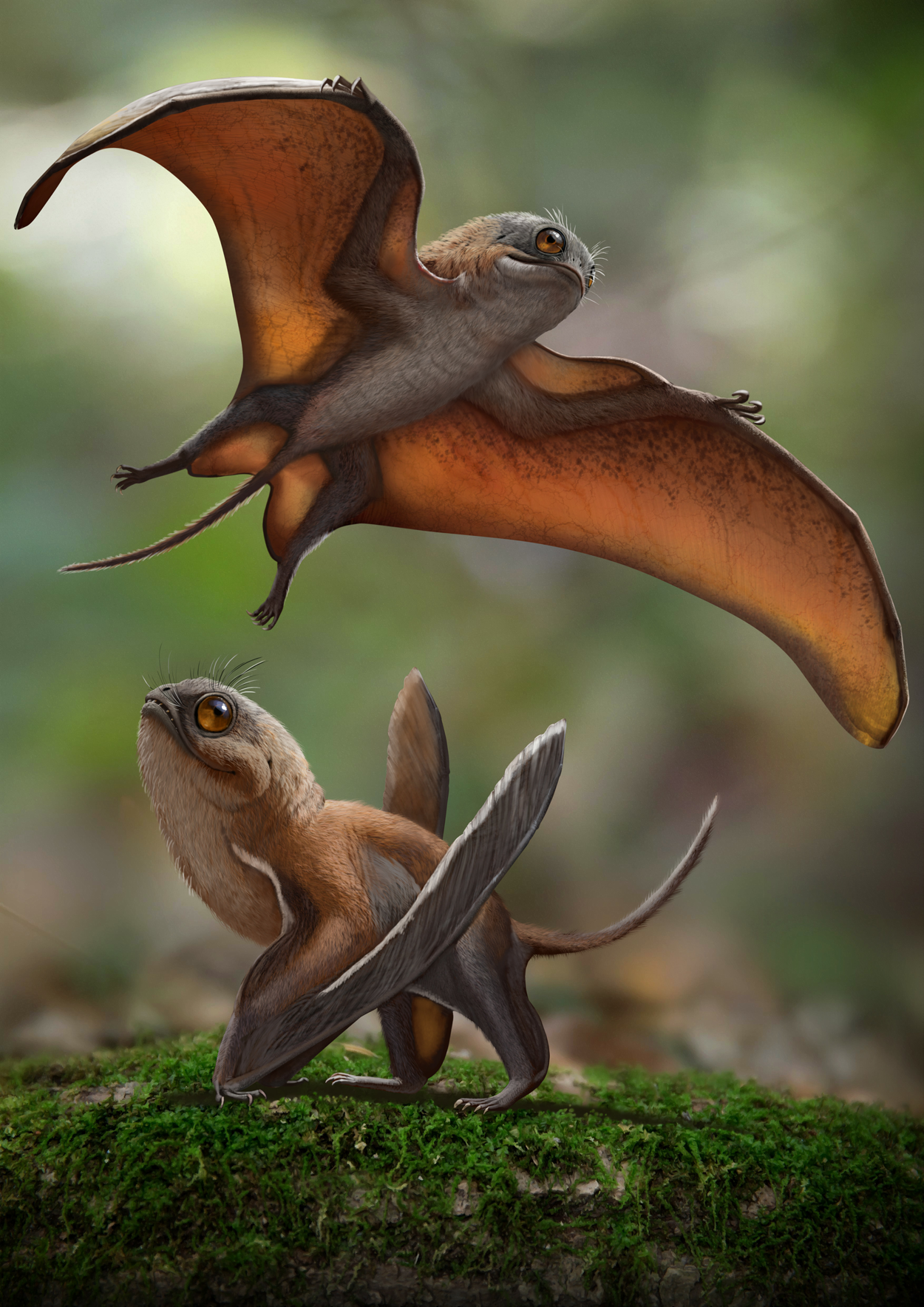
    Via SyFy we learn of a small pterosaur that’s pretty darn cute. The sinomacrops bondei would make an excellent scout and their tiny little hands might be able to hold some spell components or messages.

    Full Size paleoart courtesy of Zhao Chuang available at link

    For stats, use a common bird – the Owl makes the most sense. But Ravens with their mimicry may make sense for you character. A talking tiny ‘saur that flits and floats about to help your wizard? Perfect!

    The fact is that the world of inspiration for other beasties to be your best friend. From small carnivores like the Taien Sahul to the Sinomacrops Bondei your companions do not need to be confined to what is in the basic rules.

    Dragons of Wales has wonderful art that fits many micro-dragons and ‘saurs.

    There’s so much out there. Your world is a fantasy with imps and elves. Your companions can be beasts that are unreal, but power appropriate. Some may even have minor magical powers, slightly shifting their “natural” abilities because if your characters are imbued with magic, shouldn’t their animal companions also be blessed with fantastic abilities?

    Updated: Add these pre-whales too.

    https://twitter.com/ddoniolvalcroze/status/1382369065277132801

    Updated again for this rhino-buffalo thing.

    https://twitter.com/ddoniolvalcroze/status/1384873844519759875

  • Thunder Monkeys and Other Remarkable Beasts for Your D&D Campaign

    Thunder Monkeys and Other Remarkable Beasts for Your D&D Campaign

    How magic interacts with the world is often a defining space in Dungeons & Dragons. In the Forgotten Realms magic, whether arcane or divine, exists as 5th edition defines it. In Eberron magic is instead something that is common, fueling the themes of steampunk and noir with orcs and elves. Dark Sun goes the opposite direction. Magic there is not just limited. Magic continues the ecological disaster that mars the world.

    In the World of the Everflow magic burst forth onto the world in two awakenings. The first, explored mostly through short fiction and table narration gave the Kin (People of Love) a single cantrip, all of them. The second awakening brought the ability to cast spells to certain Kin and saw the return of the Ken (People of Knowledge) and Kon (People of Technology) to the shores of the Six Kingdoms.

    As my worldspace, and the associated tales continuing to develop, the thought popped into my head “What happened to the animals during the Awakening?” Throughout known time the Kin were always bonded with companions (initial rules). With the bond between beast and person so strong, did some beasts get small magics?

    The answer is yes.

    And so the Thunder Monkey became a reality in the World of the Everflow.

    Photo by Arindam Raha on Pexels.com

    The mechanics are fairly simple. The Thunder Monkey can cast Thunderclap once per short rest. They can also use the first bullet point from Thaumaturgy at will. All other stats are like the basic version of a baboon with minor tweaks that you feel are appropriate. This spectacular beast is rare within the Six Kingdoms, mostly found in Douad, a Mediterranean feeling space.

    A character, player or non-player, with a Thunder Monkey becomes more notable and memorable.

    Combining mundane beasts with other cantrips can lead to other fun combinations.

    • Lightning Lure Bugs are giant wasps without a stinger, but instead the ability to cast Lightning Lure and Dancing Lights making them useful in a conflict or able to help light the darkness.
    • Flapping Foxes are fennec foxes that cast Gust with the breeze originating from their big ears.
    • Pointers are tracking dogs able to cast True Strike as they direct their companion where the target is.
    • Slinging Spiners are porcupines that cast Sword Burst flinging more spines than their body carries.
    • Fixin’ Friends are spiders that cast Mending, using their silk to fix what is broken.
    • Tidings Birds are pigeons with the ability to cast Encode Thoughts, carrying messages throughout the town.
    • Savage Mousers are housecats with the ability to cast Primal Savagery, their normal painful non-damaging bites now capable of felling a threat.

    These remarkable companions are practically limitless. The damage dealing cantrips (probably Guidance and True Strike as well) at just 1 per short rest will not create any sort of imbalance on any world. Others can be more frequent, likely at 2 or 3 ties a short rest, so that they are used but do not overshadow the players.

    Every cantrip and every beast is an opportunity to expand the stories you are telling through the use of magic. This expands the 1,000 times a thousands tales available at the table.

    What will be the first remarkable beast your character meets?

    Fediverse Reactions
  • Add a Herding Dog to your D&D Game

    Add a Herding Dog to your D&D Game

    Animal companions are a tradition in Dungeons & Dragons. The Ranger with a hunting dog; the halfling riding a wolfhound; the dogs guarding the entry to the castle — all have status as tropes. In the standard rules the “Mastiff” represents all of these.

    But not every dog is a mass of muscle, teeth, and bark.

    Belgian Shepherd by Fouquier ॐ declared public domain at https://flic.kr/p/2i12JQq

    Other dogs exist in any fantasy world. These doggos deserve game-love, too. Inspired by Ambrose, the ranger in the game where my dwarven axe-wizard Awf slings spells and swings a battle axe like some kind of D&D version of John Casey, the Herding Dog leapt into existence.

    The desire with the Herding Dog was to not have an increase in power for a medium canine, but represent how shepherds, collies, sheepdogs, and other AKC Herding Group members are different from the working group types that the Mastiff embraces.

    There’s a small dip in strength, constitution, and damage with the most significant boosts being adding Animal Handling (to embrace the ability to make the herd go places) and Pack Tactics (to represent that herding dogs often work in groups).

    The minor changes give this dog a different identity, stay at the same power level, and give Ambrose a friend that isn’t purely a means to biting enemies. We’re using the Herding Dog in our campaign. Let me know if you decide to add it to your own.

    Terriers and Retrievers are on my list of potential design additions.