Category: Playing D&D

Custom Backgrounds, classes, advice and more about Dungeons & Dragons

  • Sharing your world: The power of co-DMing in the same space

    Sharing your world: The power of co-DMing in the same space

    This is a story about The Dragon.

    Which is a moon, not a big dragon. I don’t know why I called the biggest and slowest moon “The Dragon.” It was probably in honor of The Wheel of Time, one of my foundational fictions in the world. But the name never really came up in play.

    The 21-year cycle did come up. That generational marker (key for many goliaths and the Crinth Confederation) marked a cycle from the Born Generation to the present era.

    But, by expanding play in the world to a second DM The Dragon also finally became a point of clear fiction. It’s named that because during the Age of Myths that’s when the leading dragons on the Council retreated from society — Draakenmoten.

    That’s about to come up in the campaign I’m playing within my own world.

    Playing in the world I’ve invented has expanded the stories in ways I never expected. While I’ve included player concepts in world development in the past, including DM concepts in the world requires trust and grants wonderful opportunities for story-threads to be pulled into new places.

    Other things added to my world through sharing the experience;

    • Evil fungal druids that dabble in necromancy
    • Dragon Council, a ruling body of dragons and their magical allies who control the continent in a federal system.
    • Les Remoden Eisha, the intelligence and security branch of the Council.
    • Necromancy as the forbidden school of magic.
    • Elemental airships. Unlike the era where I DM, magic is common enough that it powers the airships, unlike the clackety, smog xips of the goblins.

    Those first four elements seem to be growing into the major division that leads to the sundering of the world, separating the continent with the Everflow on it from all the magical spaces in the rest of the planet. Those councils and forbidden magicks could grow into the dragon-founded schools with their abusive Proctors, supplicant Scholars and limited magic in a world that has merely love for companionship, healing waters and hope.

    Tips for Sharing a World

    First, have the creator DM and non-creating DM talk about history and key elements. Discuss where the foundational elements of the world are necessary in each campaign. Unlike Uprising & Rebellion (and the other ‘modern’ campaigns set in the World of the Everflow) the current campaign doesn’t have a foundational element about animals as life companions for example.

    Understand that things that happen in history don’t have to be understood in the future. Did Xabal discover tar-trees? Maybe someone else claims that 3,000 years later. Unless the details are vital to a plot point minor differences in the way myth-legend-history are known aren’t important. They can even both be true!

    Second, play and act with trust. Going back to point one, the details don’t matter if they don’t matter. Does the now co-DM get the name of a city wrong? That doesn’t matter. Keep playing at the table. Don’t even bother to correct it. Many cities in the real world have multiple names. That’s the way worlds work.

    Borrow heavily from each other. This is part communication, but also because you’re seeing each set of stories (every table is a set of stories that is some combination of the total number of people playing and their interactions) from different angles.

    Is there a new nugget dropped that you want to be permanently part of the tale? Take note in heavy ink and add it to your own version of the world document. Just like when a player adds something new to the world let the co-DM do the same thing.

    Be a player — you aren’t the DM, so don’t be a co-DM at the table, unless asked. The only time to speak up about some out-of-character element related to previous campaigns or lore is when the DM asks. Then you answer.

    Bonus points if you can work that into something that your character would know/do/say. I didn’t do this most recently, but wish I had. The current DM asked me what Sheljar, the bog-city, was like in the Age of Myths. I gave an encyclopedic answer rather than the answer Xabal would give.

    It’s been so much fun opening the world to more tales set within. We’ve added fantastic spaces, myths and histories that wouldn’t have existed if the World of the Everflow was merely my setting with nearly two dozen players. Adding a second DM to the world has changed the story dynamics in an exponential rather than additive fashion.

    My hope is that after this Age of Myths campaign we return to the modern era with new tales too.

  • Expanding the types of Halflings in your world

    Expanding the types of Halflings in your world

    No other early-era playable species/race in D&D history has been shoehorned into a singular type as the Halfling. Originally called Hobbits, because that’s what they were, Gygax decided to avoid a legal battle and renamed them as Halflings.

    But for nearly thirty years these small people were either the peoples who lived in homely burrows (Stouts) or peoples who lived in Buckland (Tallefellows). There were also hairfoots, which let’s be honest the three types of D&D Halfling perfectly mirrored Tolkien’s varieties of Hobbit.

    In 2024 Dungeons & Dragons, Wizards of the Coast says there are more varieties, mentioning Eberron’s street-gang house and Dark Sun’s roving cannibals. And that’s it.

    Halfling communities come in all varieties. For every sequestered shire tucked away in an unspoiled part of the world, there’s a crime syndicate like the Boromar Clan in the Eberron setting or a territorial mob of halflings like those in the Dark Sun setting.

    No longer are the differences in Halfling types subraces as earlier versions of the game. But the “all varieties” are conventional hobbits, gangsters and cannibals.

    This need not be all varieties of the small folk

    Caravans

    In Rings of Power we meet two varieties of Halflings. The first are the Harfeet, who travel in communal covered wagons travelling with the seasons over a wide land. These peoples hide quickly (a Halfling born trait) and sing proudly of their history. Though not ‘Shire-y’ they are clearly the popular Hobbit/Halfling of fantasy tropes. Caravan Halflings have been embraced by D&D in the past, fitting them in your world is easy.

    Desert cliffs

    A painting of a scene from Rings of Power showing small people living in an arid cliff and valley town with water chutes and small farms.
    Stoors from the Rings of Power (Fandom | CC BY SA)

    Season 2 introduces the Stoors, who live in cliffside holes in an arid land. You can see some Halfing behavior in the structure of the settlement. Again, they are quite communal, which I don’t like associating with a species because that feels cultural, not born, but this is part of the Halfling trope still. What makes these Stoors inspiring for small folk in my world is that they seem to embrace the divine luck of Halflings. Those aqueducts and microforms carved into cliff sides seems to require bravery, nimbleness and luck. Children scampering through that space would fall constantly without the luck of the gods.

    There are other ways that you can embrace the born traits of Halflings and build some societies, captured in their homes.

    Coop homes

    Photo of a full enclosed wooden home, sized for chickens.
    Chicken coops sold at American feed stores (Dave Clark)

    In visiting various farm and feed stores you can find fancy chicken coops. These will frequently have multiple levels, many doors and windows. Sometimes they have a small fence in material similar to the walls or roof.

    These have made me think of Halflings for some time, not just because they are made for tiny creatures. The various nooks and crannies are places to hide. Similar to modern micro-housing, a cluster of these coop-style Halfling homes would take up very little space in a fantasy city too. A cluster would touch on the communal aspect that Halflings will never escape, because their connection to Tolkien is so strong (even in Eberron and Dark Sun).

    Or one with a run extension could be a connection to terriers, cats, or other small domestic animals that live with these Halflings as companions. A design with space underneath is sensible for raising mushrooms or other foods.

    What other home types make sense for Halflings?

    Rafts and waterways

    A species of brave nimble peoples living on the waters in a mix of canals, creeks and lakes makes a lot of sense. Their small size lends itself well to working in the sails and ropes of the big people too. Narrow paths of docks and ladders would require a nimble and lucky peoples too. This also works at sea, with Halflings living in the rigging of multi-mast ships.

    Bridges

    Yes, I love this trope. My own Fort Ooshar uses it. Small folk are perfect for settling in the upper levels of a bridge-city. They also make sense in the undercarriage. The ability to slip into and out of the various rope elevators is perfect for the narrative. Halflings in this environment can be similar to the Eberron gangs or they can be families who take up the small spaces that humanity (all the medium thinking peoples) ignores.

    Tree houses

    Yes, yes, yes — this trope is heavily associated with Elves. It need not be. Halflings make a lot of sense as a tree people. They are small and light, which means they can live in a much larger variety of tree and not just the not-Redwoods. Put them in birch, or larches, or cedar. Maybe they live in briars with offices in the local oak. Being just a couple dozen pounds is a massive advantage for Halfling tree people. Their divine bravery and luck are also a great fit.

    Spire lands

    Imagine a land of natural spires with Stoor-like homes, but even more exaggeration of height with tiny bridges of rope connecting the neighborhoods. Humans would hate such a place, but a Halfling would run full speed along a rope bridge connecting two towering rocks.

    tl;dr

    Halflings can be more than just Hobbits. Your fantasy version of the small folk should embrace their born traits – brave, nimble, lucky, stealthy. Don’t assign culture due to their species, but the places where they live and how that influences them.

    Your city Halflings could be gangsters, your caravan Halflings could be communal, your bridge Halflings could be a hidden undercurrent, your burrow Halflings could be a coven.

    Embrace more options in your fantasy world so you can tell a wider variety of fantastical tales.

    Fediverse Reactions
  • Reblogging: I’ll be adding NPC ritualists to my world

    In this post Jared talks about how rules support fiction with the examples being from Tales of the Valiant’s rituals system.

    The magic of this is you don’t even have to use Tales of the Valiant as your base system to add this to your 5e world. The ritual system is essentially 5e D&D neutral.

    Take Divine Ritualists as described. They look like, and are mechanically supported like, miracle workers at a temple. The Primordial Ritualists are like less powerful Tom Bombadils.

    Thank you Jared Rascher for the inspiration.

  • 2024 D&D Player’s Handbook Review

    2024 D&D Player’s Handbook Review

    The latest version of D&D is out in the wild. I’ve been perusing it via D&D Beyond, and I bought the local shop version of the hardbound book (which already lacks the near-immediate errata updates). That cover, with its slice-of-life capture rather appealed to me. A large part of what I love about the game is imagining these heroes in their between times.

    This review isn’t going to dive deep into rules, nor the debate about this being a new edition. Instead it’s going to be why I enjoy the book. Eventually I’ll use the 2024 version of 5e as my baseline, but leaning into SlyFlourish’s ideals I’ll augment it with other 5e materials I enjoy — Tales of the Valiant/Black Flag, Advanced 5e/Level Up, 2014 Wizards of the Coast, and more. Whatever tells the story at the table best will be what’s welcome at my table, when I DM.

    I’ve played D&D in some variant for nearly as long as I can remember. My first games involved a few d6 and were kind of ad hoc, played with a red box and a DM who had to explain everything to my much too young mind. I stuck through it and grew into it, and played for more than ten years during my first run in the 80s and 90s. Then I came back to the game with 5th edition, almost twenty years after leaving the game. I bring this up, because in many ways the 2024 rule set isn’t made for me — it’s made for people who are still new to Dungeons & Dragons.

    More welcoming

    Photo of Chapter 1 of the 2024 Player's Handbook "Playing the Game"

    There are a lot of new rules, both revisions and outright new items.

    But the best, absolute best, thing about this new PHB is that it seems crafted to help someone who has never played D&D before. It leads with how to play the game rather than how to create a character.

    The examples given cover all pillars of the game, which is vital as more and more actual plays emphasize social and exploration pillars over the pure combat that birthed Dungeons & Dragons.

    Photo of the social interaction example from the opening chapter. There's also a LEGO eleven bard.

    With a layout and organization that welcomes the eye the craft of the book is immediately obvious. The larger font is welcome to my old eyes, while also helping youngsters not feel like the wall of text is an obstruction to learning.

    Massive amounts of art help too. That art sets tone, all the tones. Art throughout the book gives examples of sword & sorcery, high fantasy, magi-punk. In fact every active setting from 5e is given art at some point. There’s art that shows dirt and grit. There’s art from high fantasy superheroes. There’s art of a calm brook and a dragon and so much more.

    Art is language. It shows us what the game can do, and for people with less D&D firmware updates in their brain they can see the game as it can be.

    Having helped more than a dozen friends try to learn the game from the 2014 PHB I cannot wait for the first person to ask to learn now that 2024 is in our hands. It won’t feel like studying for a test.

    Origins

    Photo of the halfling section of the 2024 PHB. The art shows Halflings at a dinner party enjoying life.

    There are some misses in the rules of the Origins section. Backgrounds remove some of the distinct flavor elements that were great (this is fixable via expanded feat opportunities and short-form personality). Also, my halflings were simplified, which makes me sad.

    There are also wonderful new things that, once again, help new players more than old.

    Background and species art is a slice of life for both.

    With the species are every species listed but one shows at least one character with corrective lenses. Yes, this is something I harp on a lot, but it is a rather easy way to show the level of technology and acceptance within a society (even if it wasn’t historically accurate, which it is, your D&D campaign should include glasses). Species art shows the typical cultures for a species. The language also makes it clear, that you don’t have to make a character that is typical.

    This is further reinforced because the background art shows other cultures. These vignettes of life are demonstrations of what the future heroes did before. It’s a wonderful and subtle to show more variety in the worlds of D&D. There are rice patties and sailing-canal towns and magi-scribes and so much possibility. That’s really what D&D is about at the core, possibility.

    Equipment improvements

    Photo of the LEGO version of Tasha next to the gear entry on Book within the 2024 PHB

    Of all the rule tweaks and expansions, my attention keeps coming back to what the design team did with gear. In old school D&D your equipment build out helped define how you could innovate to solve exploration and social problems.

    2024 doesn’t go that same direction. Instead of innovation it goes for explanation. Every non-container (probably, I haven’t counted) has a description about what types of mechanical things it helps the owner of such gear do. A book helps with history checks. Perfume helps charisma checks. The list continues.

    This is a massive improvement for the social and exploration pillars’ mechanical support. Equipment availability also helps describe the types of worlds within D&D. With muskets and pistols and ball bearings and magnifying glasses and spyglasses this is a world similar to the Renaissance.

    A setting book can also remove or add to those elements. Eberron and Dark Sun need this the most.

    As someone who used to peruse the polearm section of the original Unearthed Arcana for hours upon hours the massive amount of drawings for mundane gear is a pleasure.

    Rules Glossary!

    D&D is a complicated game. There are quite a few rules. Within the tabletop RPG space it is somewhere between medium and high complexity, even with 5th edition’s much more welcoming ruleset.

    Photo of the Tasha figure again, holding her open spell book while atop the Rules Glossary.

    Another wise layout choice was to not waste space on an index, but instead give us a glossary of rules. A 384-page book, even one with a larger font and loads of art, can be intimidating.

    For 2024 Wizards of the Coast decided to cut back on that potential complexity via the Rules Glossary (yes, it probably should have been an index also, but the glossary aspect is most important).

    When people first start playing they consult rules frequently. During character creation they do this to understand what their PC is capable of. During play flipping pages to understand is quite common.

    A glossary speeds things up at the table. So does writing the page number of your abilities on your character sheet (another SlyFlourish tip).

    Who should get the 2024 PHB?

    • People new to D&D who will be joining a table where it is the baseline rule set.
    • Completionists.
    • DMs who want to understand the tweaks that will speed up play (like beasts no longer having rules riders with saving throws).
    • Players who want a much better monk.
    • Tables that want better representation.
    • Art lovers.
    • Me
    Fediverse Reactions
  • Diary: Success in Mihrstone

    Diary: Success in Mihrstone

    We’re flying back to Sheljar.

    I guess we did what we needed to do, but something doesn’t sit right. A family lost their father and their oxen. A town lost its feeling of safety.

    Yes, the stream is running clear again and those evils in the cave complex are gone.

    They aren’t going to be harming the town and the standard guards should be able to help everyone feel safe, eventually. The town of Mihrstone can take a small comfort in that.

    But I’m not comfortable. Artok’s mission feels incomplete. We lost an ally. We don’t know why this pungent fungal druidism rose to strength. There’s reason to think it is a danger that will be constant now.

    Cap’n Crilbort and the Sadijh are taking a group that started as two (Artok and Amos) and is now five — I guess I’m in the group, maybe? — to Sheljar. Artok and Amos will report to their factions. I ain’t got a faction, nor do Rolf and this Crag, we don’t know ‘im yet. But he’s with us, because he’s heard there’s more to this evil than just the one city.

    Aft Artok and Amos report in, what next?

    Imma little communicator and fixit. I like small problems. I like thinkin’ ’bout how to get Midqh to do new things. I don’t like mysteries. I don’t walking shroom people. I don’t like not-quite dead elves with weird molds on them. I don’t like cursed scrolls and global dangers. And I don’t like losing a friend.

    This world is getting more dangerous, not less.

    I’ll help where I can. Come up with new ideas. Mayhap they’ll be wrong, but I’ll try. That’s all I can do, that and annoy Rolf by giving him too many options.


    In our current Age of Myths campaign I’m playing Xabal, a smaller hobgoblin artificer that uses an eldritch cannon called Midqh. My goal is to be the party notetaker, but with a twist. I’m writing our recaps as if Xabal, a motormouth former Tinkerer is the author.

    Other PCs are;
    Artok — bronze dragonborn paladin
    Amos — elven wizard
    Rolf — bugbear monk
    Crag — dwarf barbarian

    Rest in peace Eustace, the gnome bard, laid to rest in Mihrstone

  • Diary: Eustace

    Diary: Eustace

    Hello again fair reader. You may be wondering why these diaries of my times with Artok and the crew are from me and not the humble bard we met. The reason is two-fold.

    1 – I happen to want to remember the journey I’m having. It’s my life and my tale.

    2 – Eustace died.

    china tour guilin reed flute cave fungal looking purple and blue
    china tour guilin reed flute cave fungal looking purple and blue by Ben Burkland Carolyn Cook (CC BY)

    Yeah… things didn’t go well in the fungal caves behind the waterfall. Some of that is my fault. Some is the fault of the funguses. Sometimes it’s just bad luck, like when that crewmem’ went o’erboard. This death in the violent life we lead has fault.

    Eustace getting stuck inside a shambling mound of vegetal horror is kinda traumatic. Especially since at one point all of the group spent time inside that mound. I nearly died too, at my last available breath Rolf slew the dread beast!

    How’d we get into a situation where the four of us were in such danger?

    It started by trying to help a mushroom man who asked for help. I’m always up for helping the needy. Plus, Rolf really trusted fun-guy. Turns out that was because of a spell. Which, we probably should have figured out, but didn’t, again, because I believe in helping the less fortunate and who is less fortunate than someone made of fungus.

    Deep in the cave the two of us were following Funguy, the shroom, and things started to get complicated. We discovered a ritual with other ambling funguses plus this thing that looked like what would happen if a fungus and elf merged, maybe that’s what was happening to poor Glovin who at least had the fortune to die before being taken over.

    Things turn violent pretty quick, luckily Eustace and Amos showed up. We’re outnumbered. Things are going well somehow. We start to get confident. Things are working, kind of. I did accidentally destroy Midqh in boom of thunder, but we’re doing well outside of that until…

    Funguy summons that mound.

    In our weakened state we struggle. I get off some decent spells. So does Amos (that wizard knows some powerful magic). Rolf is doing alright with his magic too! Eustace’s words weaken things.

    I’ve got no Midqh and I’m out of little bits and bobs to build more. I have to stand toe-to-toe with the mound eventually. It sucks me in.

    Rolf and Amos tell me later that they were in serious danger. Rolf uses a misty step to get out and then he and Amos finish off the shambling mound, last of our enemies. I thank them after they wake me up.

    “Where’s Eustace, our gnome storyteller?”

    Their faces turn sad. One points to his body.

    We search spellbooks and knowledge bases. We have nothing to help.

    We have nothing for Eustace.

    We’re stuck in this fungal cave, still no answer to what’s terrorizing Mihrstone, what killed Glovin, what stole his herd.

    And there’s one less of us.


    In our current Age of Myths campaign I’m playing Xabal, a smaller hobgoblin artificer that uses an eldritch cannon called Midqh. My goal is to be the party notetaker, but with a twist. I’m writing our recaps as if Xabal, a motormouth former Tinkerer is the author.

    Other PCs are;
    Artok — bronze dragonborn paladin
    Amos — elven wizard
    Rolf — bugbear monk

    Rest in peace Eustace, the gnome bard.

  • Enable your table to embrace wider stories using 2024 D&D Backgrounds

    Enable your table to embrace wider stories using 2024 D&D Backgrounds

    There are significant changes between the 2014 5th edition Dungeons & Dragons Backgrounds and the way 2024 5e D&D manages the same design space. 5e14 used backgrounds to expand on the social and exploration pillars of the game while encouraging roleplay via traits, ideals, bonds and flaws.

    5e24 abandons that, turning backgrounds into a space with more mechanical heft than ever before — adding Ability Score Increases and Origin Feats. This also differs from alt-5e systems like Black Flag (no ASIs, talents are Feats) and Advanced 5e (no ASI, no Feat, single ASI adding connections, momentos and advancement).

    By nature 5e24 reduces the story available via Backgrounds. Every Soldier is a Savage Attacker and never Tough. There’s no personality assigned everywhere, not even a highly detailed matrix of choices that results in 100s of combinations. There are also assigned ability scores, which means that Soldiers aren’t wise, for example.

    So how do you inject story back into your table as you transition to 2024 5e?

    Remove ASIs from Background

    They can go back to floating like they were with Tasha’s or just included in the standard array/point buy like Black Flag.

    This has absolutely zero impact on the power balance of the game.

    Associate multiple Feats/Talents with a Background

    Tough Soldiers exist! So could a soldier trained in magic in a high fantasy world (see the Second Army in the Grishaverse). A solider could be trained in Healing or Linguistics. Make the assigned Feat the one that most members of the Background have, but do not confine your story to that.

    Pick a Feat and then justify it with a single clause in your backstory (backstories for Tier 1 play should fit in a text-based social post).

    For myself, I’ll be using a chart that puts the most common Feat in the middle with the next most common next to them and rares on the outside. This small curve helps define the world in which you play.

    Here’s an example for the Tinker

    2. Magic Initiate
    3. Tough
    4. Linguist
    5. Actor
    6. Skilled
    7. Ritual Caster
    8. Artificer Initiate

    This doesn’t impact the power level at the table at all.

    Use custom Backgrounds to expand your world’s lore

    Add more Backgrounds to enrich your world. Similar to how official Wizards of the Coast settings books have added a couple Backgrounds to help define those stories. Dragonlance added Wizards of High Sorcery and the Knights.

    Take this lesson and use it at your table.

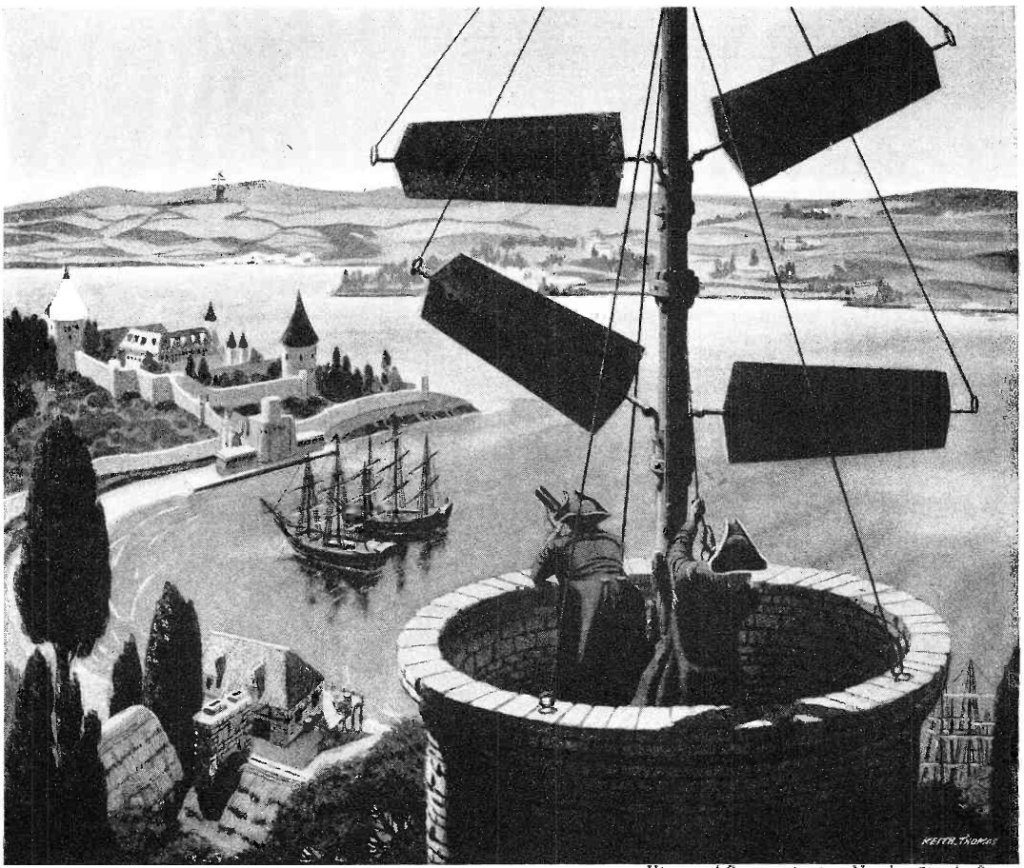
    Do your stories consist of a world on the edge of Renaissance technology? Add in Optical Telegraph Far Talkers. Is there something inspired by the Silk Road? Add the Caravanserai. Are airships common? Those shouldn’t have sailors, but flyers. It’s a different skill set and a different story.

    Again, there’s no power imbalance.

    Add personality back to the game

    Even though WotC, and the alt-5es too, got rid of personality you don’t need to. The 5e14 system is long and clunky. Alignment is tired and dated.

    Instead, use short-form personality. Having 3-5 words or phrases isn’t a bulky system. Still grant Inspiration off of this — your players should be rewarded in game for playing their role. If you’re shifting to Black Flag or borrowing their Luck system do that instead.

    This has a minimal amount of power disruption while encouraging more story through play.

    These four simple steps don’t disrupt the power balance of 5e (and variants). They add lore to your world and story to your characters.

    Best of all is that they can all be done while playing using DnD Beyond or any other virtual character sheet.

    Fediverse Reactions
  • Diary: Underbrush

    Diary: Underbrush

    After Glovin’s eye opened we confirmed that he dead. Which, thank the moons, he is. But also, that’s kind of bad too. We’re at a bit of an impasse. There aren’t more clues that we can suss out. Artok and Amos think they have a lead on somthin. The A&A crew head off their way.

    I needs support.

    I head back to Mirrstone’s tavern, because I think maybe someone there can help me figure out Glovin’s neighbors — they don’t wanna talk at me. There was this small folk playing a lute. Many of those instrumentalists pickup on the local conversations. I’ll ask them.

    Eustace knows the neighbor, a bit. That’s good. He say he can join me heading there.

    One the goblin big folk is hiding in a corner, all quiet like. But, this Rolf, he has a cart. That’s great. I don’t like walking. Talkin’ to these two I present all the options afore us. Eustace puts fore his knowledge. I put fore three things, which includes going back to look at one-eye dead Glovin.

    Rolf don’t like choices, so we go where the bard wants.

    When we get to Sam and Mell’s they tell us about strange noises coming from the forest, like wolves, but unwell wolves. It all started ’bout ten days ago, more then a Feylf passing. Other places been missing livestock by 1s and 2s. Sam and Mell say Glovin’s done gone gone all at once, with lots of vermin coming from the forest.

    We go in that forest.

    There’s lots of thick underbrush. We have a small trail, but it’s not great. Probably good that we’re mostly smalls (well, Rolf isn’t short, but skinny). Thing is this thicket of forest feels dank. It’s not dark. There’s something foreboding.

    Then the spiny things attack.

    Photo by Hunter Harmon on Pexels.com

    They surprise us at first. Which gives them the opportunity to latch on, kind of hugging us with spines. They try to drain us of blood even. We can walk faster than they amble, so we do this dodgy-fight dance.

    This gets us well off the trail, kinda confused. We’re a bit lost. Eustace didn’t stick with Rolf and I.

    Rolf and I take a nap.

    We find our way towards a waterfall ’bout 20 feet high. But the water is putrid, oily. There’s a trail for things heading to the pool. But that nothing would drink from that water — it’s horrid.

    Rolf suggests we hide. This is smart, because four woodsy human-ish things amble along. They drink up the stank-water. We deal with these things. We’re a bit hurting and need more than a nap. Rolf, the decider that he is suggests getting to the top of the cliff because the small hidden cave (keep up, there’s a cave) doesn’t make the low area feel safe.

    Getting to the top takes a while. We’re not strong. That’s unusual for us two gobbos. Midqh helps out with the pitons and the rope and such. As we prepare camp I reconfigure Midqh and the rope, pulling it apart and turning it into a true rope of climbing. That’ll help us get down without falling.

    So much easier!

    We get down to the cave and enter. It smells a lot like that stank-water. The cave is also dark, limiting our ability to see things. As we start to explore something that looks like a fungal human-ish says “You will help us.”

    Which, well, I don’t know how…


    In our current Age of Myths campaign I’m playing Xabal, a smaller hobgoblin artificer that uses an eldritch cannon called Midqh. My goal is to be the party notetaker, but with a twist. I’m writing our recaps as if Xabal, a motormouth former Tinkerer is the author.

    Other PCs are;
    Artok — bronze dragonborn paladin
    Amos — elven wizard
    Eustace — gnome bard
    Rolf — bugbear monk

  • Adding Culture to your game: A new tool

    Adding Culture to your game: A new tool

    Languages in most Dungeons & Dragons settings is rather rudimentary. There’s the pidgin-trade tongue of Common (and sometimes Undercommon). From there, the typical known languages are based on races and the planes.

    A character might know Common, Elvish, and Primordial for example.

    This is bland, unnecessary, and lacks verisimilitude. Get rid of languages. They rarely come up at the table. For most tables, languages are simply “You can communicate” or “You must use gestures.” Few encounters are successes and failures based on the 3-7 languages a character knows.

    Instead replace them with Culture: NAME.

    This then replaces Intelligence (History). This small tweak aids deeper connections between certain character classes and backgrounds with the world in which they are played.

    What do you gain from adding Culture?

    Especially in games with heavier social and exploration pillars you have a better idea of what your character knows. Rather than have a wood elf raised as an urchin on the streets of Waterdeep be capable of talking to every single elf in the world, as if language is hard-coded in the soul, it is instead a learned thing.

    Said wood elf would instead know Common and the Culture of the Sword Coast, able to communicate with the peoples in and around Waterdeep, as well as knowing the traditions of the various peoples, their symbols, their stories.

    The characters are deeper, with more connections to the world in which they play. A Fighter-Sage would be intimately familiar with many nations and cultures, rather than just a few and whatever the DM determines is known through a d20. A character that has studied the Dalelands would know the holidays, conflicts, and ways to communicate that are common in the the Moon Sea and the Inner Sea.

    At its simplest with Culture, you know more.

    What do you lose by removing Languages and History?

    Not much.

    The characters will still be able to communicate as always. There may be a perceived penalty for a few backgrounds, but there is a fix for that.

    There is additional bookkeeping. You will have to use a custom language on DnDBeyond.com, for example. You do this by clicking on Languages on the character sheet on the website (the app may be different). Then click add proficiency. Then select custom language. Add the culture you choose. If you skip language selection during the creation process you’ll now have a listing of Common plus the Cultures your character experienced and/or studied.

    How does adding Culture work when building a Player Character?

    While building your character in the standard order (Race, Class, Background) take note of every language learned. Each of these are replaced with adding a culture for each language.

    When you would take History you would now have the option to take another proficiency or take a culture.

    Additionally, I would encourage most tables to use a PC’s Intelligence modifier to add (or subtract) from known cultures. This is mostly because Intelligence is undervalued within the game.

    Example: A High Elf, Fighter, Sage would begin knowing as many as 8 cultures known. This would represent their studious familiarity with many peoples.

    How do you use Culture?

    Use Culture like you would use History, but apply it like a tool. Most often it would connect with Intelligence, but there are times when your proficiency in a culture would apply to a check based off of Wisdom (if a character isn’t proficient in Insight their awareness of the opponent’s culture might help them) or Charisma would apply.

    Knowing a culture of a peoples with which you are interacting is particularly helpful in social encounters. A character familiar with a particular empire should be able to take advantage of that knowledge at the table!

    Are you familiar with the Dalelands? Then you would recognize their heraldry, for example. Hidden societies, or subsets of a culture may require a check (DC: 15) to see if you have studied or are aware of that aspect.

    Practical Examples of Cultures in D&D

    Within the World of the Everflow, a rather narrow setting, the following cultures would be available;

    • Western Wildes
      • Ancient Sheljar
      • Ancient Gallinor
    • Kirtin
    • Daoud
    • Crinth Confederacy
    • Azsel
    • Mehmd
    • Gobkon Union
    • Dragonken
    • Church of Quar (yes, this is cross-national group with influence throughout the continent of Kin)
      • There are other faiths and cults that may be appropriate
    • The Scholars and Proctors of Grace

    In a more explored and developed setting such as the Forgotten Realms I would recommend using the super-national regions such as, but not limited to the Sword Coast or the Dalelands or Chult. If you are a member of a Faction, assume that you know their Culture too. The list of political groups, religions, factions, and other strong cultural groups within the Forgotten Realms would fill an entire wiki.

    If you are playing in Eberron: Rising from the Last War the various nations of Khorvaire would all be appropriate Cultures as would most of the religions.

    Tables that use other setting would have to assess that setting. Do not make the cultures too narrow, nor too broad (then you just have the language problem, but different).

  • Goodbye Alignment. Hello short-form personality.

    Goodbye Alignment. Hello short-form personality.

    Alignment is tired, boring and essentially meaningless in 5th edition Dungeons & Dragons.

    Many playing the modern game trying to replace it with personality. Wizards of the Coast tried to take major steps towards personality play with their Traits, Ideals, Bonds and Flaws system attached to backgrounds. That system uses five sentences of 5-25 words to describe the personality of the character. Alignment also exists.

    Then, if the DM and/or the other players remember your TIBF and you play to it you might get advantage via Inspiration.

    It’s a bulky system that requires memorizing a lot of detail that aren’t necessarily relevant to how your character is played. The Acolyte is in the SRD 5.1 CC BY. Here’s a sample of TIBF for a lawful good Acolyte.

    I see omens in every event and action. The gods try to speak to us, we just need to listen.
    I quote (or misquote) sacred texts and proverbs in almost every situation.
    Faith. I trust that my deity will guide my actions. I have faith that if I work hard, things will go well. (Lawful)
    I would die to recover an ancient relic of my faith that was lost long ago.
    I am suspicious of strangers and expect the worst of them.

    That’s 82 words plus two for lawful good. But really, it’s just a few. You don’t need that much detail.

    Just like when you fill out that your character has brown or brown-green eyes you know there is more detail to the eyes than just that word or two. You can do this for your personality.

    That Acolyte?

    Faithful, Suspicious, Orderly, Erudite.

    Replace the entire TIBF system with those four words. Can you memorize a few words that describe how the other characters in the party act? Absolutely! Your mind was already taking the shortcuts on the way to do so.

    Then award inspiration when the character is played along their personality.

    You could build your short-form personality using the official background information already provided. That’s a great start. But you could also use a list of personality traits. Here’s 638!

    A character modelled off a favorite movie or TV or comic or book or video game or etc character could use their traits too.

    • Margot from The Magicians — sexy, strong willed, crass, loyal
    • Wesley from The Princess Bride — dedicated, adaptable, loving
    • Tasselhoff from the original Dragonlance – friendly, curious, brave, aloof
    • Moiraine from early Wheel of Time – determined, withdrawn, studious
    • Lan from early Wheel of Time – lawful, loyal, commanding
    • Awf, my PC in Lost Mines – persistent, exuberant, fearless

    The intent with short-form personality is to reduce memorization, reward roleplaying and continue the de-emphasization of alignment in D&D.

    Be generous with the Inspiration you award. Play up the personality. Just make it simpler than a system that might require 100 words when you only need three to five.