Category: Playing D&D

Custom Backgrounds, classes, advice and more about Dungeons & Dragons

  • Born to be Wild: A Feat of Wild Magic

    Born to be Wild: A Feat of Wild Magic

    Within the literature that inspires Dungeons & Dragons we see many tales of those born to magic. Some of these peoples are untrained, their magic barely controlled. In 5th edition D&D these are represented by Wild Magic Sorcerers. Not all fit the narrative around Sorcerers, because they are more than just an in-born mage. They have hints of spellcasting, but because it is born rather than learned control is not there.

    Yes, multiclassing can solve this. So can a Feat.

    The desire with Born to be Wild is to capture the feeling of those who have a tiny bit of innate magic in their bodies, but no control. Their magic sparks bizarre occurrences that range from helpful to destructive. Maybe they get trained someday. Maybe they are a warrior who can heal an ally, or a thief that can blast with missiles of power. Whoever they are, they struggle with innate powers and the impact of casting.

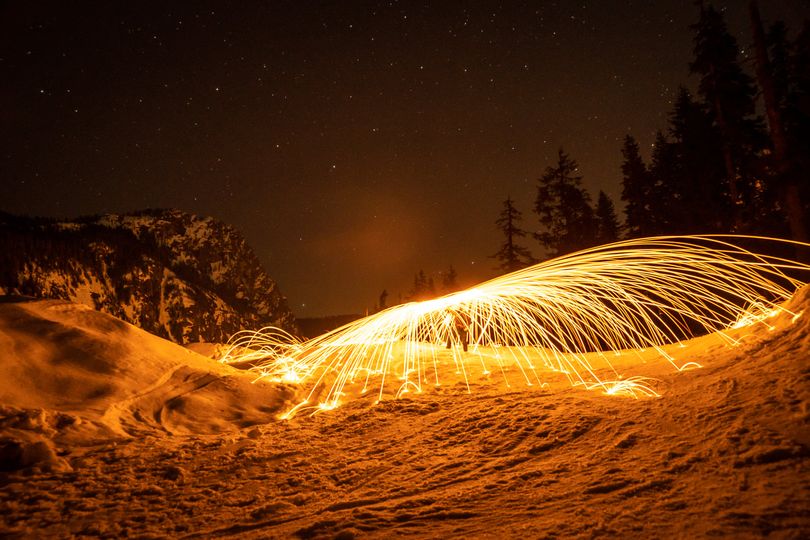
    Photo by Max Aquino

    Born to be Wild

    • Choose a cantrip from the following list: Prestidigitation, Thaumaturgy, Druidcraft. [This represents that you have innate minor powers]
    • Choose any 1st level spell. You may now cast this spell once per short rest, but when you do you roll on the Wild Magic Surge table of the Wild Magic Sorcerer. This spell may be added to your spell list, but whenever cast does cause a surge. [There is a temptation to have the player roll on the table twice and let them choose the better effect.]
    • Your spellcasting ability for these spells is Constitution. [This is to represent that the magic courses through your body.]

    Design notes

    The intent here is to be similar in power to Magic Initiate, but to embrace the chaos of the Wild Magic Sorcerer. Dropping one cantrip and upping the usage of the spell is similar to the Artificer Initiate. Adding Metamagic would give the holder of the Feat control, which is in opposition to the intent.

  • Feat: Bonded Companion

    Feat: Bonded Companion

    Salvy

    Animal Companions, or Bonded Companions, or a key element of life in Kin. The Kin are the people of friendship, loyalty of loving those around them. This extends towards their non-humanoid companions as well. Where an elf might group in a land where spells are used to do mundane things, in Kin when a goliath needs a bit of string to finish sewing they send their swallow off to do it, or their heron to fish. Halflings have dogs that pull, push, fetch, hunt, fish, carry, and many other tasks. Human bonds with goats, rams, dogs, birds and horses are quite common. Bonds of Kin are a very essence of life. Almost everyone has one.

    This ruleset needs to do a few things.

    • Scale like cantrips, attacks and proficiency. The companion is expected to live alongside their friend for some time.
    • Build in a reason that having a Bond die is bad for the PC
    • Not destroy the action economy
    • As a bonus, can it be simplified for usage in gaming outside the World of Everflow?

    Feat: Bonded Companion

    Prerequisite: Wisdom of 13 or higher. Kin and Rangers ignore this prerequisite.
    This feat can be taken more than once.

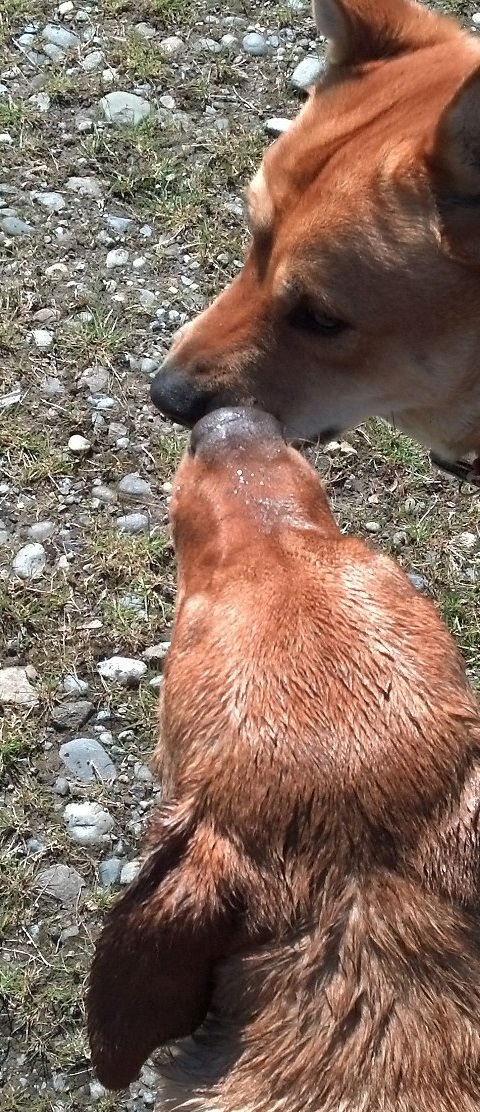
    Two dogs on gravel

    You have an intense bond with a beast. These beasts cannot have a higher Intelligence than the character. In certain worlds the bonded companion can be a monstrosity. At this point I considered just granting access to the Bonded Companion system in a similar manner as to how Magic Initiate works, but instead built it within the Feat. The rule could be built by making Bonded Companion a Class Feature and Feat, but I digress. Taking the feat gives you Companion Points. You also gain companion points in the following manners;

    • Rangers at 1st, 3rd, 5th, 11th, and 17th levels
    • Druids at 1st and 5th level.
    • Clerics with the Nature domain at 1st level.
    • Your Wisdom modifier

    Those points can be spent on a single companion or multiple companions. A character can bond with a number of Companions equal to their Wisdom modifier +1 (minimum 1). Each new companion takes a number of weeks to establish a bond as their cost in companion points. This can be done as downtime, or could be a solo adventure. A character may only spend new points when they take the feat or if they are a Ranger or Druid at their higher levels that earn Companion Points.

    The following chart lists various Companions and their Companion Point cost.

    OneTwoThreeFiveSevenTen
    Herd dogSled DogWarhound *Giant Eagle *&Rhino &Mammoth *&
    RetrieverMastiff *Axebeak *&BisonElephant *Wyvern *&
    TerrierBloodoundOstrich &Bear *&Dire Wolf *&Roc *&
    Sentry DogGuard dog *Elk &Lion *&Owlbear *& 
    SprinterRavenPanther *&Worg *&Griffon *& 
    HeronEagle *&Bear Cub *&Hippogriff *&Pegasus *& 
    PigeonFalcon *Wolf *&Peryton *&  
    SparrowParrotTiger *&Awakened Tree &  
    Pony/MuleDraft HorseWarhorse *   
    FoxRiding HorseApe &   
    Goat/SheepMonkey    
    Awakened Shrub &Cow    

    Legend: The ‘&’ is used to indicate an animal companion that can only be paired with a Ranger, Druid or Nature Cleric. They are normally wild. The ‘*’ is used to indicate animals that can enter combat on command.

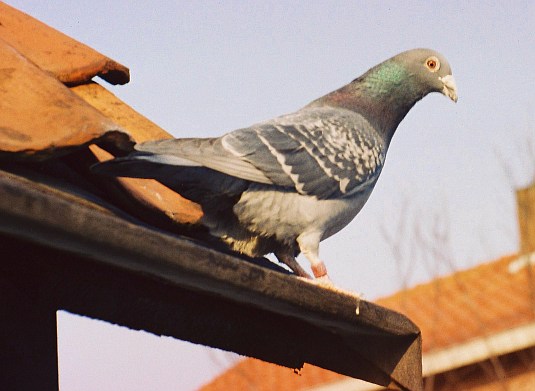
    "Postduif". Licensed under Public Domain via Wikimedia Commons - https://commons.wikimedia.org/wiki/File:Postduif.jpg#/media/File:Postduif.jpg
    Postduif” – Licensed under Public Domain via Wikimedia Commons

    As a Bonus Action the Bonder can command their animal. These commands are Attack, Dash, Disengage, Dodge, or Help. An animal without a * can only attack if the Bonder passes a Wisdom (Animal Handling) DC: 20 check. The Companion will continue that action until the combat is complete or another Bonus Action is used (ie they will Attack the directed target until that target is no longer participating in the combat). Some Companions have other actions that can be taken (A Retriever can Fetch as an action). Check with your DM for these other actions.

    When separated a Bonder and Companion that are on the same plane know the direction and rough travel time between them.

    If someone tries to control a Companion it is an opposed Animal Handling check for the Bonder and whatever skill or spell is appropriate for the attempt to control the Companion. The duration of the control is per the appropriate spell or skill.

    If a Companion dies the Bonder takes half their Companion’s hit points in psychic damage. If they make a Wisdom save (DC: 15) they then take one quarter of their Companion’s hit points in psychic damage.

    Variant Rule in Kin: At first level and below halflings usually bond with canines and goliaths usually bond with avians. All Kin start with an additional Companion Point.

  • Tracking time in the dungeon

    Tracking time in the dungeon

    Reblogging this because simplified tracking of time is always handy

    newbiedm's avatarwww. Newbie DM .com

    One of the things that still gives me a little bit of difficulty when I’m DMing is tracking time in the game’s fiction when the characters are in exploration mode. Combat is simple, the 6 second rounds are codified, and we know that 10 rounds is a minute in the game world, 5 rounds is just :30 seconds, and so on. Which means most fights are resolved in just under :20 seconds! Wow! 

    Social encounters are also fairly easy to determine, as it’s usually real time conversations, with perhaps some minor adjudications of time passing as you negotiate and wait around for the car salesman to go talk to his manager about the offer you made him, etc… 

    But inside the dungeon, as the players are exploring, that’s a whole different…eh… monster. Now, the game offers a bit of rules in that regard… the DMG tells us that PCs moving…

    View original post 929 more words

  • Work the earth as a Farmer – a 5e D&D Background

    Work the earth as a Farmer – a 5e D&D Background

    Some heroes work the earth, till the fields, care for orchards, manage vineyards. The adventuring life was not part of their blood. There is no heroic act of rebellion or violence in their past, like the Folk Hero. They show their potential and heart every day. Some rise early, work late, and rest hard. Others understand nature, harnessing those forces to do as little as possible until harvest comes.

    All are connected to the land. Whether serf or free, whether rural or within the city, the farmer raises crops not just for their own family, but to supply a larger group. They are the blood of a civilization – vital.

    Some farmers do not get to remain in the pastoral life. They can be conscripted into battles, inspired by a local bard, maybe their debts force them to work with a local gang, Whatever took your farmer away from their homestead to the adventure they are on now that homestead, connection to earth, and family is a part of them forever.

    The following rules a pre-publication example of a Farmer – a background for the current edition of Dungeons & Dragons.

    Photo by Quang Nguyen Vinh on Pexels.com

    Farmer

    Skill Proficiencies: Athletics, Nature
    Tool Proficiencies: Farming Tools, Vehicles (Land or Water)
    Languages: None
    Equipment: Farming Tools, common clothes, beast of burden (donkey, mule, dog, etc) or cart, basket, 2 days rations, wine skin, 2 gp

    FeatureHorn of Plenty

    Through your knowledge of foods, their qualities and usefulness, combined with an uncanny knack for preparation you are able to stretch food supplies. A meal that would normally serve one serves two. They are both content and satisfied. A harvest in which you participate is also more effective – your senses help find a few more plants that are ready, branches that are missed, or mistakenly dropped produce. Those harvests produce more food, resulting in an increase in gold or barter value of 50%.

    Characteristics: For now, use those from the Folk Hero or pick & choose your favorites. Whenever my background project sees full publication there will be unique characteristics for all of them.

    Alternate: Beekeeper

    Photo by FRANK MERIu00d1O on Pexels.com

    Drop Athletics for Sleight of Hand. This is to represent the deft hands of someone who does their best to avoid being stung too frequently. Their loads also tend to be lighter compared to farmers who carry bushels of apples, shovel manure, dig irrigation, etc.

    Alternate Feature: Sweets

    You always have some honey – tiny jars, little wax sticks, hard candies, the format is up to you – to give away. Generally those who are gifted your sweets welcome the gift and have a positive impression of you and your group. These gifts can act as a salve to harsh spirits or a reward for previous help. They can also be traded for other uncommon goods that you may be in need of.


    Originally included as an option for the Remarkable Drudge, Farmer’s Tools are a must have for any farmer.

    Farmer’s Tools

    Cost: 5 gp | Weight: 7 lbs

    Proficiency with farmer’s tools means that you are familiar with the operations of a farm, orchard, vineyard, or other cropland. You are knowledgeable in the typical crops within an area, to include when to plant and harvest them. You also know their market value in most lands.


    Custom Backgrounds for 5th edition Dungeons & Dragons

  • Adding Festivals, Holidays, and Birthdays to Your Game – the May Blog Carnival

    Adding Festivals, Holidays, and Birthdays to Your Game – the May Blog Carnival

    Fantasy literature is full of parties – Bilbo’s birthday, various fests appear in Robin Hood, lunar celebrations and so much more. Watching or reading celebration scenes helps connects these myths and fantasies to reality. Who doesn’t like a party? They also are a reminder that the times upon which Dungeons & Dragons are founded had a hundred holidays.

    All told, holiday leisure time in medieval England took up probably about one-third of the year. And the English were apparently working harder than their neighbors. The ancien règime in France is reported to have guaranteed fifty-two Sundays, ninety rest days, and thirty-eight holidays. In Spain, travelers noted that holidays totaled five months per year.

    Pre-industrial workers had a shorter workweek than today’s

    Within our games we can also capture these feelings of merriment, civic pride, religious faith, and family gathering. Not only can we, we should. The foundational literature demands it. Having characters and societies that are more than sword swinging, spell flinging battlers creates stories of greater emotional depth.

    Full Moon Storytelling is hosting this month's Blog Carnival because it is my birthday. What better way to celebrate my own aging than talking about D&D parties? Last month's blog carnival was hosted at Codex Anathema, and was all about powerful magic items and artifacts. The rest of 2021's blog carnivals can be found at Of Dice and Dragons.

    There are several ways that you can integrate these events into your campaigns. Whether they get a couple lines or are a couple sessions will be up to you and your tables.

    Fetch Quests

    This may be the easiest way to add a holiday to the start of your game. A cold open that involves a civic leader that needs the very specific item for the holiday in question gathers a group of specialists together in order to find the lost item.

    Maybe at the beginning the community is downhearted. Rather than party they have to head off into the wilds to search for very specific item. Their journey brings them out of the village. In that world they can discover the thing, bring it back home as heroes and the festival is now also a victory celebartion.

    Introducing New Culture

    Journeys to strange lands mean new discoveries. When the group arrives in an unfamiliar place have them encounter a festival unlike any they’ve seen before. This introduction to a new culture emphasizes the differences, in a way that is full of brightness, joy, and excitement (unless you choose something dour).

    By arriving at fest-time the group immediately knows how different the place is. Maybe if they have observational knowledge of the culture a history or culture check helps the character in question understand what is going on. Otherwise the group learns what’s going on by engaging with the worlds and cultures which you’ve created together.

    Change of Pace

    Between dungeons, dragons, orc wars, piracy, invasions by mindflayers, elemental cultists, the mists – what happens? Normal life. And normal life in the worlds of D&D is weird. But it’s also people who do things like celebrate birth, coming-of-age, weddings, coronations, harvests, solstices, equinoxes and more.

    Take those moments of normality to highlight the abnormality of your D&D world. The dichotomy of a party with the world-shaking events of a tier 3 or 4 adventure is potent. Those few moments of calmness and levity during a session may just be the ones that the table remembers later. Killing a 45th bandit isn’t a big deal. Giving the town kids the feather of an owlbear? That’s a moment!

    Victory Celebrations

    You’ve cleared the dungeon, slain the dragon, the forces of Gruumsh were held back, recovered the holy tooth of the founding family of the town, the heist was prevented, the heist was successful – however your adventure or campaign ends there must be a party, a big party.

    Maybe the characters are throw the party. Perhaps the queen calls the empire to celebrate. Imagine that you’ve save the world and the Old Gods convene the grandest fairies of the planes to reward you and the world for the success.


    Inspiration for Characters

    You can also spin things the other way. Search real world festivals and holidays and turn them into you own character concepts. Maybe your next Artificer is based the technomancers of Jingle Jangle. What Moon Druid isn’t dedicated to the thirteen full moons? Before you became a hero were you a carnival barker? Your next D&D character could be the expert marksman brought in as a ringer, or the strongest person in the world.

    Every birthday, holiday, or real world festival is an opportunity for character creation. So create. I’m certain that Awf’s birthday is coming up. Everyone’s favorite axe-wizard is going to party like the elf-raised dwarf he is – I don’t know what that means yet.


    How do you integrate festivals, holidays, and birthdays into your D&D games?