Category: Playing D&D

  • In darkness there is light — the Lamplighter is a new 5th edition D&D Background

    In darkness there is light — the Lamplighter is a new 5th edition D&D Background

    Within our fantasy worlds are massive cites. There are lots of problems with the scale of some of these cities — they need farms, roads, and light because residents are up at all hours. Settings like Ravnica and Eberron deal with the largest cites via magic. Those worlds with less magic manage metropolises with some magic, some magically imbued races and hand-waving. One of those hands we can wave relates to light.

    Magic is the simple way to add light to cities. Another way to have them with some level of light for safety and to encourage all races to reside within is via a public lantern system. For about 150 years this was the process in Western Europe and Northeast America. People would go through and light lanterns along the street. Those shops and establishments that wanted business in the evening or early morning would do the same.

    These workers would live split lives as early risers and night owls.

    Let’s crank all of this up to d20 and make them potential heroes. Meet the Lamplighter, for “in darkness there is light.”

    Photo by Josh Hild on Pexels.com

    Lamplighter

    You know your neighborhood. You don’t have a favorite bar, or food stand, or favorite bakery — they all are you favorite. They know your route, you know when every one gets up or goes to sleep. You know the street urchin, the acolyte, the haberdasher, the goblin family that makes the best trinkets (maybe you have one favorite). They all know you too.

    Getting around the city you use a run-jump parkour along the crates and awnings, somehow never letting your lighting candle go out. You flow through the streets and alleys. You’re a great observer and with the other Lamplighters the group always knows the secrets and rumors of a land — a nobleman leaving the tavern too late, a merchant up too early with visitors on the stoop, a door left opened. And you know the guilds and gangs of the underground, because when your lights go out they are there, ready to do their work. They know you, and never act against you (unless you count putting out a light early), because you are a beloved symbol of the city. You are a Lamplighter.

    Skill Proficiencies: Acrobatics, Insight
    Tool Proficiencies: None
    Languages: Thieves Cant, one other language (as always, use Cultures instead of Languages)
    Equipment: Common Clothes, Ladder, 5 Flasks Oil, Flint & Steal, 5 Candles, Hourglass, Signal Whistle, Pouch with 2 GP and 7 SP

    Feature: Songs of the Street

    When visiting a new town or city you quickly pick up the rhythm of the streets. The Lamplighter is able to figure out what neighborhoods and buildings are most active at what times, when the urchins and gangs are out, when the guards are on patrol. The pace of a city and its people is second nature to the Lamplighter.

    In your hometown your knowledge is more accurate and more complete, and you will always know someone who will help you in a time of need.

    Lamplighter Design Goals

    Frankly, this background started with Lin-Manuel Miranda’s Jack in Mary Poppins Returns. The lamplighters featured throughout the movie, riding bikes, lighting the neighborhoods of London, and inspiring people to be their best through song, dance, and conversation. There are some bard themes, but nothing is magical besides a few people loving their town and making it better.

    Beyond what Jack does in the movie, there’s also an opportunity for a Lamplighter in the massive cities of not-quite Eberron levels of magic. These workers are active at dawn and dusk. As Waterdeep, Skuld, Calimport and other transition between night and day the neighborhoods transition too. Lamplighters are not guards or police. They fill of space of advisor, guide, and concerned citizen.

    They know that the world’s largest cities need the hope and safety that lanterns provide. Without that comforting light what is a city anyway?


    Custom Backgrounds for 5th edition Dungeons & Dragons

    Fediverse Reactions
  • The Tinker — A 5th edition D&D Background

    The Tinker — A 5th edition D&D Background

    The clattering of tin as they come over the hill; a belly laugh as the tinker learns of some gossip from mother; the circle of enraptured youth as a tale that is at most half-true is told; the fussing over a minor repair for a family that has no goods to offer in service.

    In fantasy the Tinker is a trope that captures a travelling fixer who knows news, rumor, and myth. Their wealth rides a donkey or canoe with them and every community on their circuit is home and an unknowable set of peoples. Now, you too can play a Tinker.

    Photo by Isa Sebastiu00e3o on Pexels.com

    Tinker

    Maybe you grew up in a family of smiths, or were raised by bards, or maybe you were kind of good at a lot of arts, but not really good at one in particular. Whatever your past you decided to leave the ‘civilized’ world and help those families on the frontier. When things break you fix them.

    When communities break you share that information with others who need to hear it. You carry as much information as you do tin. Your donkey is your only friend on the trails throughout the wilds. Everyone you meet trusts you, even the bandits, brigands and raiders. They need your services too.

    Skill Proficiencies: Performance, Insight
    Tool Proficiencies: Tinker’s Tools, Vehicle (Land or Water)
    Languages: None
    Equipment: Donkey/Mule/Pony (if water vehicles chosen a canoe, rowboat or skiff is appropriate), Tinker’s Kit, 1 Pound Each Tin, Copper, Iron, Pack Saddle, 3 Pots, Traveler’s Clothes, Pouch with 5 Gold

    Feature: I Can Fix It

    Facing a mundane device that is broken you are able to fix it, even if you don’t have the proper supplies and parts. This repair may only last a few minutes or a few hours, though it is enough for the device to last through it’s next use. You may wind up using a copper coin, or a bit of string, or a knife during this repair. This feature can be used to fix ammunition, traps, broken wheels, or other adventuring equipment. The repair is not permanent.

    Tinker Design Goals

    Throughout the literature that inspires Dungeons & Dragons are tales of itinerant workers who travel the barely civilized wildernesses drifting between villages. Primarily they are fixers, using bits of tin, copper, iron, leather, etc to repair farming tools or kitchen utensils in the homesteads too far from smithys.

    The fiction also has these tinkers as storytellers. They aren’t bards, as their magic is just the magic of carrying tales of other households, villages, and empires to people who long for information, but don’t want to live in places where information is common. The Tinker tells their tales around a fire or a meal, informing the group through storytelling. At their next stop they will share what they’ve learned. Every encounter is a bit of knowledge to share in an attempt to connect the frontier lands despite weather and monsters that keep those connections broken.

    For these reasons the Tinker has Performance and Insight. Consideration was made for History. That would seem to indicate an intellectual rather than a tale-teller. Insight made sense because of the way the literature has the Tinker connect to the families year after year.


    Custom Backgrounds for 5th edition Dungeons & Dragons

  • Add the bright lights and big booms of fireworks to D&D – the Sparkler Background

    Add the bright lights and big booms of fireworks to D&D – the Sparkler Background

    Combing magic with an emergent technology these workers of fire are usually about celebration and frivolity. They remain rare in most D&D worlds. When they work they are paid quite well. But outside of the largest communities there is little need for a Sparkler. For this reason they often travel in a small group of other Sparklers, attached to a circus, or maybe even part of an empires retinue.

    This Dungeons & Dragons background is designed for 5th edition. It also adds a new tool (using PHB rules) and a new exotic weapon. The Sparkler grants a cantrip rather than one of the skills and tools/languages that are typical of backgrounds.

    Photo by Rakicevic Nenad on Pexels.com

    Sparkler

    You are a master of smokepowder or gunpowder as appropriate to your world. Using these powders you can create displays to inspire or scare thinking beings. As a Sparkler you have also learned how to combine these effects with magic, thereby increasing the the scope of your art.

    Often hired as an entertainer the Sparkler is in high demand during festival season. Due to wandering between large and/or rich communities your close friends tend to be the other Sparklers and your hosts.

    Your knowledge of the powders is often approached as a magic much more powerful than it is, because it is both different and rare. Most Sparklers hide this knowledge from the general public working in secret except during their performances. Some Sparklers specialize in aerial displays, others in massive thunderous noises, and a few even weave the illuminating powder into their fluid dances and twirling — all are artists.

    Skill Proficiencies: Acrobatics or Performance
    Tool Proficiencies: Fireworks
    Languages: None
    Cantrip: Minor Illusion
    Equipment: Traveler’s Clothes, Costume, flint & steel, assorted fireworks including 3 rockets all stored in an oilcloth backpack, pouch with 5 gp

    Feature: Ooohs and Ahhhhhs

    Given a few minutes to prepare, you can create a wonderous display of lights and sounds that can serve as a distraction. This display may be augmented by your Minor Illusion. This display can serve as a distraction for some guards, as inspiration for a besieged city, or as a reward for those who have worked hard. The display, whether spells are used or not, feels supernatural to those who watch it.

    Characteristics: For now, use those from the Entertainer, Guild Artisan, or pick & choose as appropriate for your concept. Whenever my background project sees full publication there will be unique characteristics for each of them.

    Fireworks (Tool)

    Cost: 150 gp | Weight: 20 lbs

    Proficiency with fireworks means that you know how to safely store and transport the pseudomagical devices known as fireworks. You are also proficient in how to set up a small display that would entertain a group for a few minutes. This could be an aerial, ground, or sound based display — or a mix of all three. Larger displays would require several people proficient in the tool to work together.

    Additionally you know how to create more fireworks. With the necessary supplies you can create a new display or three rockets during a long rest. The supplies may not be readily available.

    Rocket (weapon)

    Type: Firearms Ranged Weapon | Cost: 10 gp | Weight: 1 lbs | Damage: 2d4 | Type: Fire | Properties: Ranged (30/90), Loading, Special*

    *On a hit those within 5′ of the target must succeed on a saving throw or take half damage.

    All awakened rodents are proficient in rockets.

    Sparkler Design Goals

    The desire here is to have a real-world, culture-neutral version of a fireworks specialist. The primary example of these in fiction is the Illuminators from the Wheel of Time series, which share some aspects of Romany culture and some from aspects from various northeast Asian cultures.

    Additionally the Sparkler serves to introduce a new tool and a new weapon to the game. The Rocket varies from the standard firearms rules by being a charge on a stick that would be pointed at a target either held in the hand or planted in ground, and then lit. Players may develop other ways to use them rather than just as a first round attack.


    Custom Backgrounds for 5th edition Dungeons & Dragons

    Fediverse Reactions
  • Talking with Ed Greenwood and Jeff Grubb

    Talking with Ed Greenwood and Jeff Grubb

    One of my favorite D&D v/bloggers nailed two great guests at once. You should watch.

    newbiedm's avatarwww. Newbie DM .com

    I had the opportunity to speak with legendary D&D authors Ed Greenwood and Jeff Grubb on the debut episode of my new webshow, The NewbieDM Show. It was an interview I’ve wanted to do for a long time, as I am a big fan of their work. Jeff Grubb is one of those D&D designers who was so prolific in his heyday, that it’s a shame he’s no longer involved with the game. The Manual of the Planes, Forgotten Realms, Al Qadim, Spelljammer… the man’s track record was solid–TSR, CALL JEFF GRUBB!

    Anyway, the interview was great, they are lovely people to chat with, and I hope you enjoy it. It’s part of a larger effort on my part to create more content. If you want to support me, please, subscribe to my twitch and youtube channels (links below). I’m also putting whatever content makes sense as a podcast feed…

    View original post 79 more words

  • Library D&D and other playdates during the pandemic

    Library D&D and other playdates during the pandemic

    Throughout the Covd-19 pandemic libraries and community centers have had to find new ways to keep their communities connected and informed. Virtual D&D has been quite popular with libraries around the US and Canada. Now that pandemic-related restrictions are being reduced, in-person play of Dungeons and Dragons is starting to ramp up. The game has been especially important for school-age children who lose the connections that schools traditionally build.

    Newspapers, magazines, and websites around the world are covering the booming phenomena, and not calling it a Satanic ritual that leads to murder.

    Today’s Lore Collage is focused on playing the game in libraries, other community spaces, and advice for players and dungeon masters.

    Photo by Janko Ferlic on Pexels.com

    Library D&D

    The Manhattan Public Library recommends finding inspiration in the Player’s Handbook and Art & Arcana.

    Other community events

    General D&D advice

    With so many people picking up this intimidating hobby there are a lot of questions about how to play. Much of that can be answered by watching or listening to actual plays on YouTube, Twitch, or your favorite podcasting app. But, some people are like me, readers, so here’s some general Dungeons & Dragons advice.

    Advice for players

    Advice for DMs

    Quick random NPCs are handy.

    As Always, Maps

    From Boing Boing, we discover a way that non-artists can create maps, which I need! Or just play the Legend of Zelda map.

    Maps don’t have to look like maps. They can be art that represents the scene and not just a place to move miniatures around.

  • 7 reasons I’m excited for Witchlight and Strixhaven

    7 reasons I’m excited for Witchlight and Strixhaven

    There was a ton of news about tabletop Dungeons and Dragons last week, and hints at much more this week. The Week of Legend Lore announced two new books, some Dark Alliance news, and the 300th episode of Dragon Talk included the announcement of D&D Celebration from Sept. 24-26. The buildup to Celebration includes a contest for the Best DM in D&D.

    D&D Live is being presented by G4 on July 16 and 17. That’s when the flood of details about The Wild Beyond the Witchlight will come out, and probable a few other tabletop D&D news items.

    On Tabletop Tuesday my focus is on the two new books, and what intrigues me about them.

    Strixhaven: Curriculum of Chaos

    From the product page

    Right up front, I have to admit that during the pandemic I turned into a near nightly player of Magic: The Gathering Arena. I’m already a bit familiar with the lore around Strixhaven thanks to that. The card game got me quite interested in the magical university. Seeing how it transforms into a D&D world excites me. But there are a few reasons I’m more excited for Strixhaven than I was Theros or Ravnica.

    • Coming of Age stories are common in the mage school trope. Whether you enjoy Winx Saga, The Magicians, or that more famous property all of them capture that middle school to college vibe of discovering who you are. That genre has not yet been a focus of D&D.
    • Zero-to-Hero tales are related to that, and D&D as a leveling game embraces those quite well. Strixhaven has a solid mix of card strength so it does this too (some other MtG planes focus on big mana and others on small).
    • The Space for Mundane Students lets those that aren’t magical join your party. Where Potterworld just uses the mundane as an excuse for discrimination and The Magicians basically ignores them, Strixhaven is more like Winx in that non-casters are included (even if only mildly so). These warriors and such help defend the school from threats. Not every D&D party member needs to cast spells.
    • I miss college (DLI). Those stresses were different than the stresses I have no. Exploring some of them through the lens of D&D will be fun, and different from how I explored them playing Vampire on the streets of Pacific Grove, CA in the mid-90s.

    Also, there’s an Unearthed Arcana testing out archetypes that apply to multiple classes. Each of them represent one of the five colleges at Strixhaven. SyFy has a newser covering the book and the UA subclasses. Tribality breaks down the power level of test.

    The Wild Beyond the Witchlight

    Alt cover by Hydro74 will be available in local stores

    The next adventure from Wizards of the Coast is a jaunt to the feywild. Details at this time are still fairly sparse, but there is a fey carnival run by Mr. Witch and Mr. Light, that parallels the carnival in Ravenloft. This is lower on my purchase spectrum, mainly because I don’t want to be tempted into spoilers for an adventure in which I want to play. But, I still want it.

    • The World of the Everflow treats dragons, elves, dwarves, gnomes, and other inherently magical thinking beings as Fey. Witchlight can help me refine those other-earthly mindsets for my world.
    • The pseudo-Victorian look reminds me of Carnival Row. Having literature and shows that echo D&D helps me embrace the themes. It also helps when you pitch the adventure to people who don’t know D&D.
    • Anthropomorphic animals are fun. Back in the early 90s I played Albedo. The first fantasy series I read to completion was Narnia. Sweet Tooth is one of the best fantasy series of the modern era. Players looking for angles based on those elements will probably have them as the UA released with Feywild in its title had a rabbitfolk and owlfolk (this is probably also going to be in Strixhaven).

    Polygon has my favorite newser on Witchlight. There’s more at IGN.

    There’s still more Van Richten’s Guide to Ravenloft reactions

    From the official D&D blog talking about how 5e Ravenloft is more an exploration of genre buy-in rather than a power battle between players and monsters, to a Nerdists guide to how to run horror when you don’t like horror, the book is still being unwrapped. If you need help understanding the Domains of Dread there is little better than Black Dice Society. Watch a couple episodes before you run a campaign set in the Mists.

    The book exploded into the best-sellers scene with a 4th place in non-fiction in week one.

    Odds and Ends

    There’s a new DM screen coming out.

    Yahoo! has an intro to D&D, which is eternally handy.

    Once upon a time the changes to Drow were expected to be the big news around D&D this summer. Those are now on the backburner a bit. They look intriguing.

    As Always, Maps

    Also, if you are a Patron of Deven Rue you can submit to have her make a map. Yes, I’m submitting, two areas in fact. One with be the bridge-city of Fort Ooshar and the other the region around Kirtin-on-the-Lake.

  • Call the Midwife – a 5th edition D&D Background

    Call the Midwife – a 5th edition D&D Background

    In a city you might be part of a guild, where in rural communities you could be the only midwife for miles. You are there to aid during pregnancy and birth. Your role goes beyond just those times, as you are also the confidant within the region. Your charges trust you, confide in you, and know that you will support them in their time of need.

    You are capable of calming emotions during impassioned times, trained in techniques of general healing, when you are present life is honored and saved. Whether itinerant or attached to a guild, your role within the community is respected. Those who don’t need your services still hold you in esteem, if from a distance.

    Cottage

    Midwife

    Skill Proficiencies: Insight
    Tool Proficiencies: Herbalism Kit
    Languages: None
    Cantrip: Spare the Dying
    Equipment: Druidic focus or religious symbol, healer’s kit, traveler’s clothes, flask, jug, steel mirror, soap, 5 gp

    Feature: Welcome to our home

    Folk that care for families will always welcome a midwife into their house. They will not fight for the midwife, but will help them hide, provide some food or provisions for the midwife and their friends if able, and share the gossip that caregivers invariably know about a community.

    Characteristics: For now, use those from the Folk Hero or pick & choose your favorites. Whenever my background project sees full publication there will be unique characteristics for each of them

    Midwife Design Goals

    First and foremost, this design is to honor my late mother-in-law. She was a maternity nurse, and through her I met many other nurses. Secondly, the background leans into Call the Midwife, which my wife watches regularly. There is a bit of inspiration from Nynaeve al’Meara (Wheel of Time) and her time as Wisdom of Emond’s Field when she cared for the community as a healer and confidant for the women of the community. As there is no healer among official D&D products, the Midwife attempts to fill some of that niche (as will the Barber, the Apothecary, and the Healer).

    Like the Remarkable Drudge, the Midwife grants a cantrip at the cost of a skill and a tool/language.


    Custom Backgrounds for 5th edition Dungeons & Dragons

  • Born to be Wild: A Feat of Wild Magic

    Born to be Wild: A Feat of Wild Magic

    Within the literature that inspires Dungeons & Dragons we see many tales of those born to magic. Some of these peoples are untrained, their magic barely controlled. In 5th edition D&D these are represented by Wild Magic Sorcerers. Not all fit the narrative around Sorcerers, because they are more than just an in-born mage. They have hints of spellcasting, but because it is born rather than learned control is not there.

    Yes, multiclassing can solve this. So can a Feat.

    The desire with Born to be Wild is to capture the feeling of those who have a tiny bit of innate magic in their bodies, but no control. Their magic sparks bizarre occurrences that range from helpful to destructive. Maybe they get trained someday. Maybe they are a warrior who can heal an ally, or a thief that can blast with missiles of power. Whoever they are, they struggle with innate powers and the impact of casting.

    Photo by Max Aquino

    Born to be Wild

    • Choose a cantrip from the following list: Prestidigitation, Thaumaturgy, Druidcraft. [This represents that you have innate minor powers]
    • Choose any 1st level spell. You may now cast this spell once per short rest, but when you do you roll on the Wild Magic Surge table of the Wild Magic Sorcerer. This spell may be added to your spell list, but whenever cast does cause a surge. [There is a temptation to have the player roll on the table twice and let them choose the better effect.]
    • Your spellcasting ability for these spells is Constitution. [This is to represent that the magic courses through your body.]

    Design notes

    The intent here is to be similar in power to Magic Initiate, but to embrace the chaos of the Wild Magic Sorcerer. Dropping one cantrip and upping the usage of the spell is similar to the Artificer Initiate. Adding Metamagic would give the holder of the Feat control, which is in opposition to the intent.

  • Feat: Bonded Companion

    Feat: Bonded Companion

    Salvy

    Animal Companions, or Bonded Companions, or a key element of life in Kin. The Kin are the people of friendship, loyalty of loving those around them. This extends towards their non-humanoid companions as well. Where an elf might group in a land where spells are used to do mundane things, in Kin when a goliath needs a bit of string to finish sewing they send their swallow off to do it, or their heron to fish. Halflings have dogs that pull, push, fetch, hunt, fish, carry, and many other tasks. Human bonds with goats, rams, dogs, birds and horses are quite common. Bonds of Kin are a very essence of life. Almost everyone has one.

    This ruleset needs to do a few things.

    • Scale like cantrips, attacks and proficiency. The companion is expected to live alongside their friend for some time.
    • Build in a reason that having a Bond die is bad for the PC
    • Not destroy the action economy
    • As a bonus, can it be simplified for usage in gaming outside the World of Everflow?

    Feat: Bonded Companion

    Prerequisite: Wisdom of 13 or higher. Kin and Rangers ignore this prerequisite.
    This feat can be taken more than once.

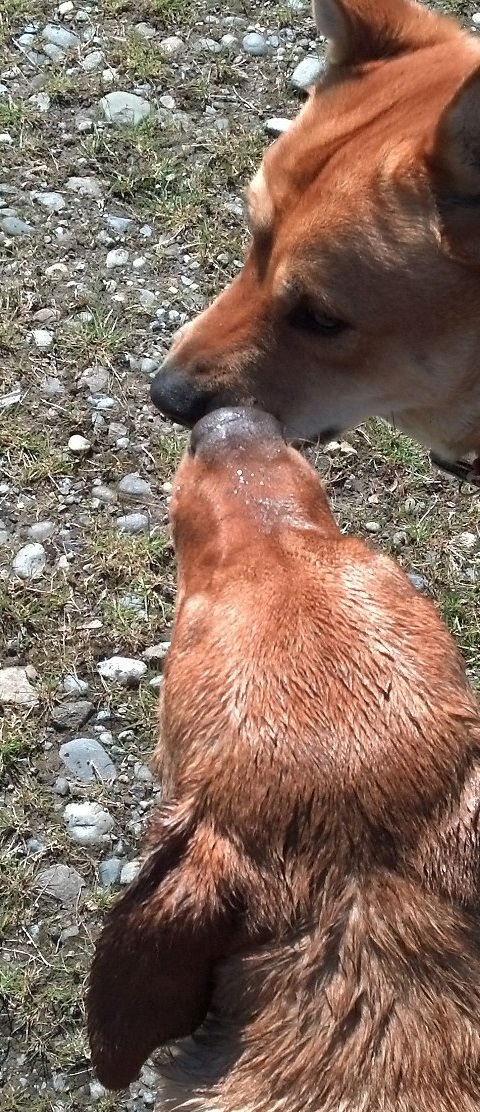
    Two dogs on gravel

    You have an intense bond with a beast. These beasts cannot have a higher Intelligence than the character. In certain worlds the bonded companion can be a monstrosity. At this point I considered just granting access to the Bonded Companion system in a similar manner as to how Magic Initiate works, but instead built it within the Feat. The rule could be built by making Bonded Companion a Class Feature and Feat, but I digress. Taking the feat gives you Companion Points. You also gain companion points in the following manners;

    • Rangers at 1st, 3rd, 5th, 11th, and 17th levels
    • Druids at 1st and 5th level.
    • Clerics with the Nature domain at 1st level.
    • Your Wisdom modifier

    Those points can be spent on a single companion or multiple companions. A character can bond with a number of Companions equal to their Wisdom modifier +1 (minimum 1). Each new companion takes a number of weeks to establish a bond as their cost in companion points. This can be done as downtime, or could be a solo adventure. A character may only spend new points when they take the feat or if they are a Ranger or Druid at their higher levels that earn Companion Points.

    The following chart lists various Companions and their Companion Point cost.

    OneTwoThreeFiveSevenTen
    Herd dogSled DogWarhound *Giant Eagle *&Rhino &Mammoth *&
    RetrieverMastiff *Axebeak *&BisonElephant *Wyvern *&
    TerrierBloodoundOstrich &Bear *&Dire Wolf *&Roc *&
    Sentry DogGuard dog *Elk &Lion *&Owlbear *& 
    SprinterRavenPanther *&Worg *&Griffon *& 
    HeronEagle *&Bear Cub *&Hippogriff *&Pegasus *& 
    PigeonFalcon *Wolf *&Peryton *&  
    SparrowParrotTiger *&Awakened Tree &  
    Pony/MuleDraft HorseWarhorse *   
    FoxRiding HorseApe &   
    Goat/SheepMonkey    
    Awakened Shrub &Cow    

    Legend: The ‘&’ is used to indicate an animal companion that can only be paired with a Ranger, Druid or Nature Cleric. They are normally wild. The ‘*’ is used to indicate animals that can enter combat on command.

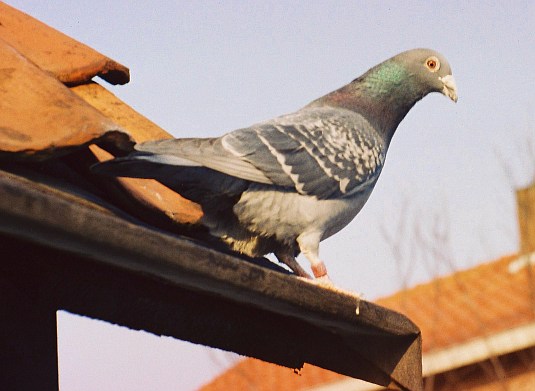
    "Postduif". Licensed under Public Domain via Wikimedia Commons - https://commons.wikimedia.org/wiki/File:Postduif.jpg#/media/File:Postduif.jpg
    Postduif” – Licensed under Public Domain via Wikimedia Commons

    As a Bonus Action the Bonder can command their animal. These commands are Attack, Dash, Disengage, Dodge, or Help. An animal without a * can only attack if the Bonder passes a Wisdom (Animal Handling) DC: 20 check. The Companion will continue that action until the combat is complete or another Bonus Action is used (ie they will Attack the directed target until that target is no longer participating in the combat). Some Companions have other actions that can be taken (A Retriever can Fetch as an action). Check with your DM for these other actions.

    When separated a Bonder and Companion that are on the same plane know the direction and rough travel time between them.

    If someone tries to control a Companion it is an opposed Animal Handling check for the Bonder and whatever skill or spell is appropriate for the attempt to control the Companion. The duration of the control is per the appropriate spell or skill.

    If a Companion dies the Bonder takes half their Companion’s hit points in psychic damage. If they make a Wisdom save (DC: 15) they then take one quarter of their Companion’s hit points in psychic damage.

    Variant Rule in Kin: At first level and below halflings usually bond with canines and goliaths usually bond with avians. All Kin start with an additional Companion Point.

  • ‘Wine lets secrets out’ – the Vintner, a 5e D&D Background

    ‘Wine lets secrets out’ – the Vintner, a 5e D&D Background

    On a family vineyard with vines as thick as hippogriff legs you work the grapes. The slow, tedious springs and summers on the hard scrabble rocks are exhausting, the harvest a frenzy of activity. Then the fun starts, as does the waiting.

    The vintner enjoys all of this time, but the apex of their art is the finished bottle, and sharing it with others. They carry stories in their bottles. Stories of grapes, of skies full of wyvern, of the journey past the bandit camps, of that one time the mage saved their vines, and that other time when the druid thought they were helping.

    Every bottle has a story as does every person who sips it. The vintner is not just an expert at crafting wines. They are a marketing specialist and a storyteller. Each barrel, every cork, each wineskin, every jug – another tale to tell is discovered. The vintner may not have intended to travel the lands on quests, but they know whenever they return to their villa and vineyard they’ll have new discoveries to share.

    The following rules are a pre-publication example of a Vintner – a background for the current edition of Dungeons & Dragons.

    Vintner

    Skill Proficiencies: Nature and one of Deception or Persuasion
    Tool Proficiencies: Farming Tools, Winemaking Tools
    Languages: None
    Equipment: Farming Tools, common clothes, 1 pound of cheese, 3 wine skins, 3 small cups or glasses, 10 gp

    FeatureWine Lets Secrets Out

    The vintner has a knack for storytelling and conversation. Through pouring a tasting and chatting they are able to learn a tale from the person’s past. Sometimes these are of an adventure, or a foible, or a mystery that needs to be solved, and at the rarest times these tales are things that were supposed to always remain hidden.

    Characteristics: For now, use those from the Guild Artisan or pick & choose your favorites. Whenever my background project sees full publication there will be unique characteristics for all of them.

    By Jolbert

    This map popped into my Facebook feed the day I published the Vintner. It’s included because it is perfect, and actually reminds me of Balboa.

    Vintner Design Goals

    To more capture the feel of the pseudo-Mid Ages/Renaissance period the Vintner is the grower, the maker, the taster, the seller. Plus, that type of specificity gets anti-5e pretty quick. While the Guild Artisan can capture this background, it forces the artisan into a guild. Many adventurers pride themselves in their independence. The Vintner had to be a solo gig.

    The choice of Deception or Persuasion is out of a desire to represent the different angles in marketing that can occur within the flavor business.

    When it came to tools versus languages there was a part of me that wanted a language rather than second tool, but that was hampered by two things. First, I generally frown on how D&D handles languages. Second, if I’m bundling growing in and have developed Farmers Tools, let’s use the Farmers Tools.

    The feature, which uses a Chinese proverb rather than the Latin In Vino Veritas, is an attempt to capture the flow of story and words as friends and even enemies commune over a bottle(s). As a DM having a player with this feature helps grant so many clues in new ways.


    Custom Backgrounds for 5th edition Dungeons & Dragons