Category: Fiction

Scenes, narration, poems, and short stories set in the World of the Everflow

  • Finding fantastic locations in the normal world

    Finding fantastic locations in the normal world

    Driving off into the wilderlands of Oregon my thoughts wandered to the D&D world I’ve created. Creating names for places on the fly is hard. Often people get consumed with making something that feels like Tolkien, Jordan, Weis, Bardugo or other greats. These names are complicated and often involve invented languages.

    You don’t need to be so impressive that linguists study you.

    Your world will feel alive borrowing from our own world.
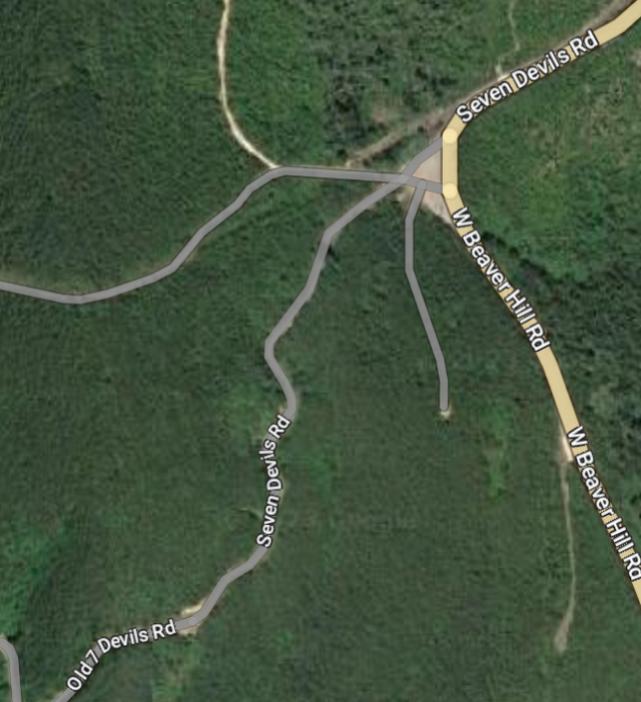
    These are great names for a fantasy space.

    Seven Devils Road and Old Seven Devils Road is perfect for any Dungeons and Dragons game. You don’t need to stretch to far for there to be both an incident that involved seven devils and for the now ruling empire to have a newer, more popular road that carries the same name.

    West Beaverhill Road could mean that it is west of Beaverhill. I submit that your fantasy world is more Lewis when you have every cardinal direction have a Beaverhill Road. Each of those is for a different beaverhill. Make those beavers talkative and have them part of the empire to capture some Fillory vibes too.

    Whiskey Run Road is just down the way from where we are staying. In my fantasy world that road probably started as a minor trail used by some bootleggers. Now, as they gained power within the realm, thanks to their whiskey runs making money, Whiskey Run Road is the main thoroughfare between the capitol and its not-quite-satellite city. What was once a former smuggler cove is now the headquarters of a major influence on a failing state.

    Hidden Canyon Road is something I’m fairly certain I passed by driving to get a cranberry turnover this morning. But my memory of this road is fragile as the road may not exist. The canyon might not exist. I never saw it. In a fantasy world Hidden Canyon Road could be a road, and a bridge, that exists over a fey gulch. There are nights when the gulch exists on most days the hidden canyon and covered bridge is just a normal passage with no need of a bridge at all. But on those nights with a few moons waning the fey canyon is back. Elves and their friends come out of the gulch demanding tax from those who use the bridge.

    tl;dr

    Take a few road names with you and be ready to create them as fantastic locations using the techniques from SlyFlourish’s Lazy Dungeon Master series. These quite normal names create a world of magic and wonder. Use placenames in reality to inspire your fiction.

    Fediverse Reactions
  • Tips about naming your characters

    Tips about naming your characters

    Naming characters can be hard. For a DM coming up with names at the spur of the moment can lead to a stoppage in play as their mind struggles to find something appropriate for the NPC that was supposed to be a background character, but your players have thrust that individual into a major role.

    For most players, naming a character is a rare event. It is usually the first or last thing that they do. Then, it’s over until the next campaign starts. Still, you want to get the proper name for your character, because you will carry it with you for a long time*.

    *strong exceptions for rogues, criminals, urchins, and the like.

    As someone who both creates way too many PCs, and once named a formerly non-notable NPC “Anderson” after the car dealer across the street from the restaurant hosting our session I’ve developed a few tricks to naming characters.

    Easy Button

    Those of you using DnDBeyond.com probably already know this, but the Fantasy Name Generator has well over 100 different naming categories. Click the category and it will spit out ten names. Simple is as simple does. Sometimes you’ll hit those buttons a dozen times to get the one you like.

    Xanathar’s Guide to Everything

    All the way back in November of 2017 Wizards of the Coast released Xanathar’s Guide to Everything. The book is most well known for being the first official significant expansion of character classes in 5th edition. Those people into optimization ranted against the inclusion of almost 20 pages of names.

    Frankly, it was a poor critique.

    There are so many more people picking up the game every day, every month, every year. They don’t have the knowledge base that stretches back editions. They may not want unofficial sources for fantasy names.

    Xanathar’s includes official lists of fantasy names as well as dozens of real cultures that are often captured within your gaming table. This section is one of the forgotten joys of Xanathar’s Guide to Everything. Cracking the book open to those sections should help inspire your next character’s name.

    Use Athletes for Inspiration

    After working in sports for nearly 15 years, there should be little surprise that they become part of my gaming paradigm. There’s a reason that Sports as a Tool exists in my worlds.

    Sports, particularly Olympic sports and soccer/football, are an excellent way to discover wonderful inspiration for names. Just look at the recent MLS SuperDraft.

    Mitch Guitar was drafted. Who doesn’t want to make a Bard called Mith Lyre now?

    Sondre Norheim was drafted. Could that be your next dwarf named after a powerful elven king? Yes.

    Real people and cultures can inspire your name. Honor those peoples through the name of your character.

    To discover new names head to a reference website covering a sport with international play. Click on a league outside of the mainstream, click a team at random, and combine a two-four players’ names. Drop a couple letters, or add a few. Research those players because their lives can help inspire you the same way that reading Tolkien can inspire you.

    Sports Reference, Soccerway, and Transfermarkt are my favorite places to do this.

    As a DM, I try to have a small selection of NPCs already made up ahead of a session. These index card sized characters are there because my players will always surprise me. Most of their names have come from various athletes around the world. Some will be consistent within a certain set of cultures, while others recognize that the fantasy worlds in which we play are generally as interconnected as the modern world in which we live.

    Your naming conventions should embrace the fact that the peoples travel extensively.

    How do you name your characters?

  • Queen and Konstruct: A Goblin’s Lyfe

    Queen and Konstruct: A Goblin’s Lyfe

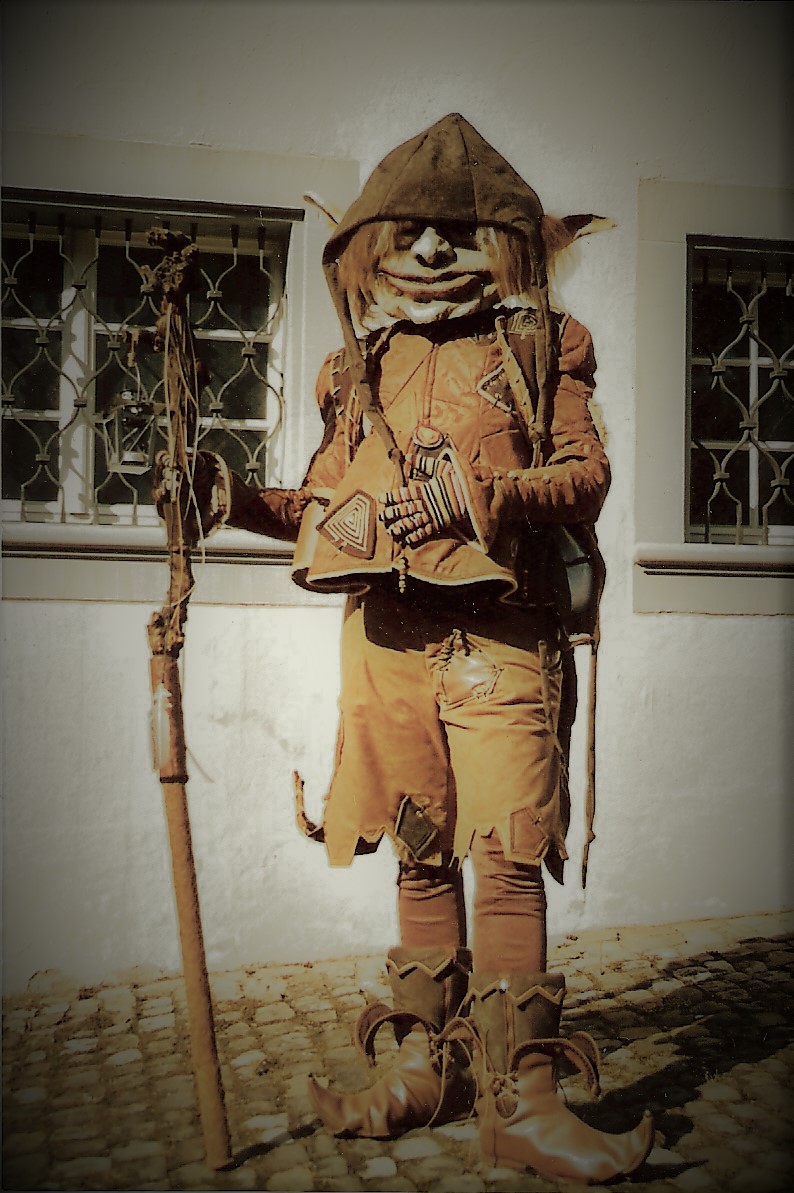
    There are two important things in a goblin’s lyfe. I’m talking about all of us, the gobkon, the hobkon, the mulkon — all of us — our relationship to the Queen and our Guild. This is hard for you humans, with all your divergent nations and cities and faiths and disgusting menagerie animals to understand.

    Goblin
    By creanita design und ausführung by nina saner (CC BY-SA 2.0)

    I’m a printer, part of the Ratxet Guild. My engines run on the power of muls (best!) or whoever else I can hire. The clockwerks give that comforting noise as sheaf and stamp press against each other leaving words behind.

    We’re into gears, mostly. But also some other interesting clockwerks. Frankly, we do better with springs than the Union does. Sure, they’ve the Queens’ Stamp – so we cannot sell to others. In our builds we don’t buy from the Union anymore.

    My first engine was a climbing device. Lean it up against a feral tar-tree and you’ll be able to get to the top on a platform to work that tree with nary your own effort. It was a tough build, because I needed it to be strong enough for a hob. Without a brother there were no hobs to help me. Sis rode atop my shoulders during the entire testing phase.

    At Test it showed a new mechanic for the tar-tree. A Baroness blessed the family via flag and decree. Mother’s standing improved, and the full family took on that glory.

    Now, sister is part of the Airxip Syndicate. They’re relatively new. Taking our bike-props and bladders from the Sisterhood, and the Federation’s tar stacks, the Syndicate built those awesome airxips. I don’t understand her werk. There’s something about steampipes. She’s done well for mother. Her flags came from a Countess, one for her and one for mother. Blerxa left on the First Flight with me.

    I’m Phatha Phioxa Baroness-flagged of the Guild. Sis is Blerxa Phioxa First-Countess Flagged and Many Unfurled of the Syndicate.

    We are what we build and how much the Ladies, may they serve the Queen, reward us for our werks.

    A few more daughters like us and mother could be a Lady. If Blerxa and I hadn’t left for the untamed lands of the Kin Blerx may have earned mother the knighting on her own.

    Our werks are trapped from knowing since we are far from Queen, so I expect mother to have a few more gobkon. Maybe I’ll find out if I go back, not until after I figure out how to use the power of horses in my next werk. They smell, but they are even stronger than mulgobs.

  • Turn flavors into the story you wish to tell

    Turn flavors into the story you wish to tell

    In wine, beer, coffee, etc there’s the concept of the perfect pairing. At its simplest, the concept is to find foods that complement that specific flavor notes of the beverage. More completely you can find ways to do this through similar and disparate notes – sometimes hitting opposites on the flavor wheel gives the taster an experience that highlights both the food and the beverage.

    Pairing beverages with gaming in something I just do. When playing Awf I always have a beverage. Sometimes that beverage is inspired by his personality – drinking an earl grey lavender toddy out of a masonry mug to highlight his duel cultures of dwarf and bladesinger. Other times the beverage connects to the adventure that Droop’s Brigade is going – Skookum Caverns, a barrel aged strong ale, as we enter Wave Echo Cave.

    The use of flavor here helps inspire the story being told during that gaming session. The flavors evoke a mental space where Awf’s unique history of annoying elves enough that they taught him bladesong, despite his being a stubby dwarf, is brought to the forefront. Or, the dangers and darkness of a cave are brought to the front of mind through can art and the potency of a strong ale.

    Flavor does wonderful things. Pairings aren’t just about maximizing the flavor experience. The connection between taste-smell and memory is powerful. People buy Kona coffee because it awakens memory, much more than due to its quality. A margarita on a cold winter day can put your headspace back to a nice beach vacation. Hot cocoa in front of a fire, even while home alone by yourself, will send you dreaming back to a Christmas visit to a small town.

    As roleplayers, in Dungeons & Dragons or any other game, we can use the magic of flavor to help us. The foods and beverages of your game night are important. Make those small choices that aid gaming, just like you would a token, art, or cosplay.

    Rather than confine yourself into using flavor as a way to connect your current character, you can also use flavor to inspire new characters.

    Each of those characters started with the simple prompt related to a beverage and the object out of which it is consumed. From there decisions were made not just regarding the race, class, and background, but also to inform the skills, attributes, spells, and weapons chosen.

    Rum connected to sailors, pirates, merchants, or water genasi. Carbonation was an indication of something light, refreshing. Salt a connection to authority. The mistaken belief that halflings are just old children popped into the head with the root beer.

    What those various prompts did was start internet searches into the techniques used to create certain beverages, into their history, into their cultural significance. Chasing those touchpoints and activating them through D&D and by including others in the process, my character portfolio expanded. These are now new NPCs, or maybe even PCs, that would never exist.

    Food and drink can inform your characters just as art, books, movies, shows, music and media can. Great cooks say that their meals tell stories. Adapt that into your PC and NPCs.

    Empower flavor to empower the stories you tell.

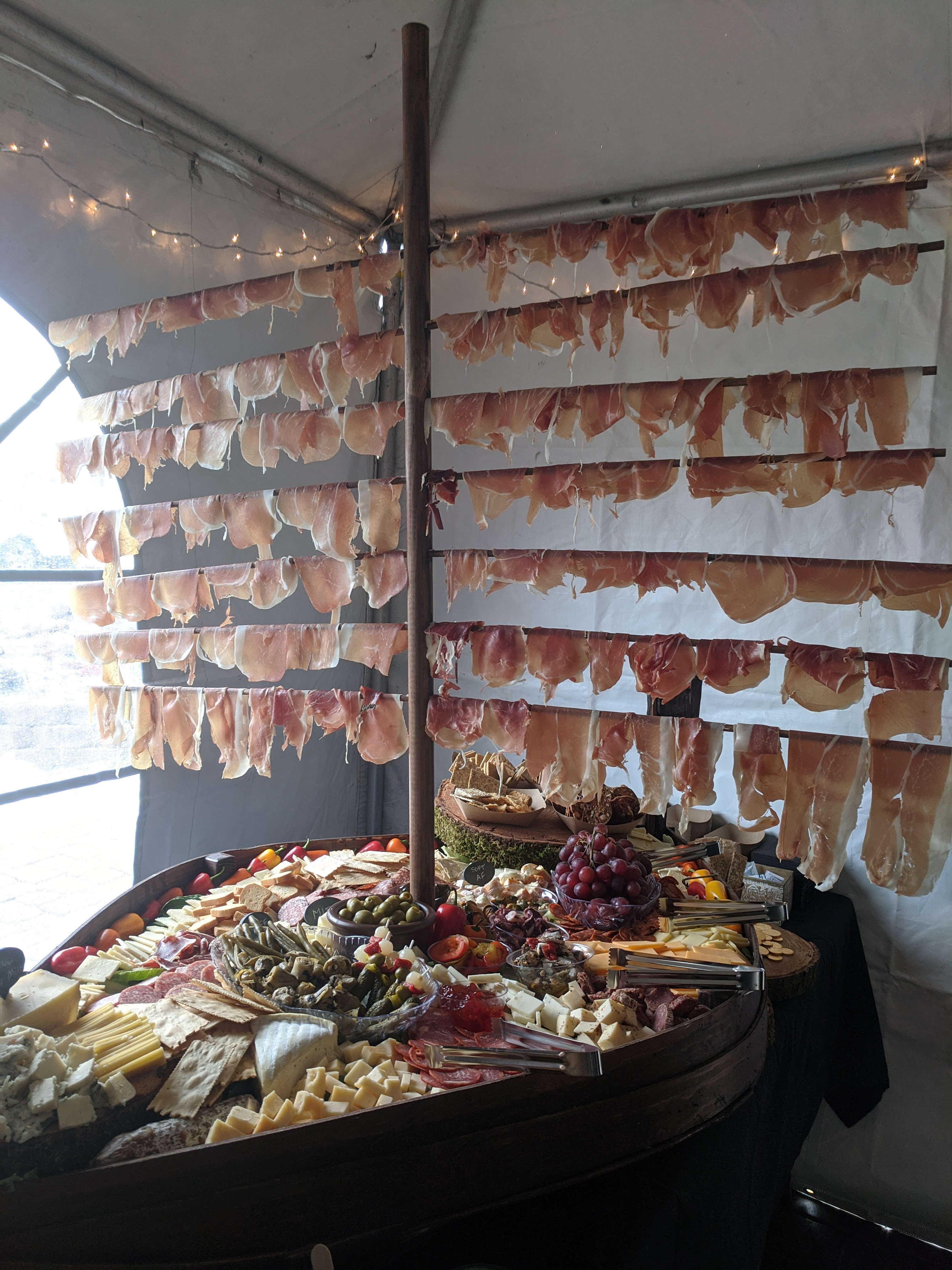
    A replica viking longboat loaded up in charcuterie. From the 4-foot tall mast hangs shaved prosciutto. The base of the boat has cured meats, pickled vegetables, and various cheeses.

    What type of character builds a replica longboat and uses it as a charcuterie table? How does that inform who they are?

    Fediverse Reactions
  • Here There Be Dragons

    Here There Be Dragons

    In most fantasy worlds dragons are hoarders of treasure. In some they are (also?) destroyers of worlds. There are worlds where dragons founded existence. On Krynn the chromatic and metallic dragons battle each other sometimes interfering in the lives of Man.

    In establishing the World of the Everflow I wanted a slightly different take upon how dragons (as well as other dragonkin) exist within the World.

    Dragons are part of the People of Ken. They are knowers of things, especially of magic. They, and all of the Ken, control access to magic of all kinds. For millennia of millennia they prevented the People of Kin (companionship and love) from knowing magic. Through the Scholars and the Proctors of Grace the Dragons and their followers (Elves, Dwarves, Gnomes) kept their thumb on magic, eliminating all but love and the healing power of the Everflow.

    Rather than piles of gold, a dragon’s home back on Ken (the continent) is full of scrolls, books, and tomes. The long lives of all Ken mean that their minds are full of mighty spells well beyond the standards of Dungeons & Dragons.

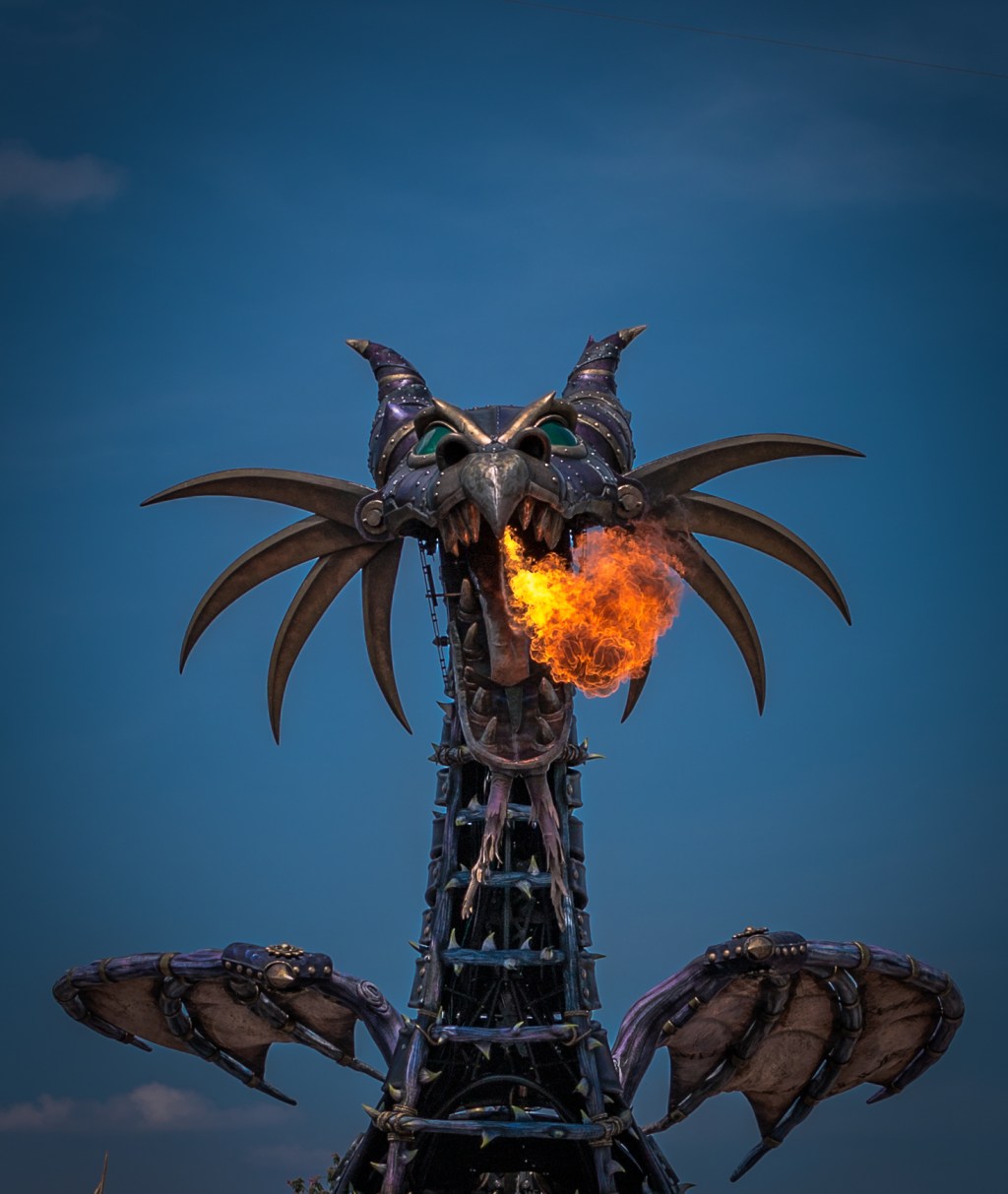
    Dragon breath by Nicklas Lundqvist (CC BY-SA 2.0)
    Dragon breath by Nicklas Lundqvist (CC BY-SA 2.0)

    Their immense powers are legendary, the same way that our modern world views dragons — a story so fictional it is not even legend. Statues and tales about dragons are created for artistic reasons.

    Within the current campaign the dragons are returning to Kirtin-on-the-Lake seeking an ancestral homeland in the Ward of Mighty Trees. These trees are essential to the Dragons life in ways that the group has yet to discover.

    Those Dragons, from the Ale Dragon Brewst Griselle to a mighty Red waiting on the southern plains of Kalst’s Field, are now quite real. Some fit in well. Brewst is small enough to fit inside buildings. He drinks and cavorts. His study of brewing, distilling, and vintning is familiar to the Kin. Yes, he’s different, but there is also familiarity.

    Other drakes do not cause fear, initially. They remind most in Kirtin and Daoud about the lizards of Mehmd, a Kin-ish kingdom that bonds with lizards more frequently than mammals.

    KOMODO DRAGON by NAPARAZZI (CC BY-SA 2.0)
    KOMODO DRAGON by NAPARAZZI (CC BY-SA 2.0)

    But, when those drakes fought they taught fear. Their breath of fire, or poisoned stingers, killed in ways that nature should not. The drakes are not as intelligent as a person. Unlike Brewst they do not speak. They consume. Negotiation is not possible.

    Brewst, and his companion gnome Oolia, are talkers. They also use the power of illusion and charm to work their way towards their goals. The governor and the group do not know these goals. They only know that the influence of the two continues to grow.

    They worked as advanced scouts for the Proctors of Grace. Their goals could be called fey-like as all of the magical Ken work in ways that are not familiar to Kin (Goliaths, Halflings, Humans). The plans of Ken take centuries or even millenia.

    When life lasts at least a few hundred years the approach to the world is incomprehensible to races that live to 100 at most.

    Now, our heroes have to discover how these plans impact life in Kirtin-on-the-Lake, and the two kingdoms. This process of discovery could be deadly, it will be challenging. In the end, life in Kirtin and Daoud will change. Our heroes will determine how much it changes and how the Dragons will be included, punished, or rewarded.

    Fediverse Reactions