Tag: World of the Everflow

My homebrew world where tales of animal companionship, forgotten magic, and the question of who controls information are told.

  • Sharing your world: The power of co-DMing in the same space

    Sharing your world: The power of co-DMing in the same space

    This is a story about The Dragon.

    Which is a moon, not a big dragon. I don’t know why I called the biggest and slowest moon “The Dragon.” It was probably in honor of The Wheel of Time, one of my foundational fictions in the world. But the name never really came up in play.

    The 21-year cycle did come up. That generational marker (key for many goliaths and the Crinth Confederation) marked a cycle from the Born Generation to the present era.

    But, by expanding play in the world to a second DM The Dragon also finally became a point of clear fiction. It’s named that because during the Age of Myths that’s when the leading dragons on the Council retreated from society — Draakenmoten.

    That’s about to come up in the campaign I’m playing within my own world.

    Playing in the world I’ve invented has expanded the stories in ways I never expected. While I’ve included player concepts in world development in the past, including DM concepts in the world requires trust and grants wonderful opportunities for story-threads to be pulled into new places.

    Other things added to my world through sharing the experience;

    • Evil fungal druids that dabble in necromancy
    • Dragon Council, a ruling body of dragons and their magical allies who control the continent in a federal system.
    • Les Remoden Eisha, the intelligence and security branch of the Council.
    • Necromancy as the forbidden school of magic.
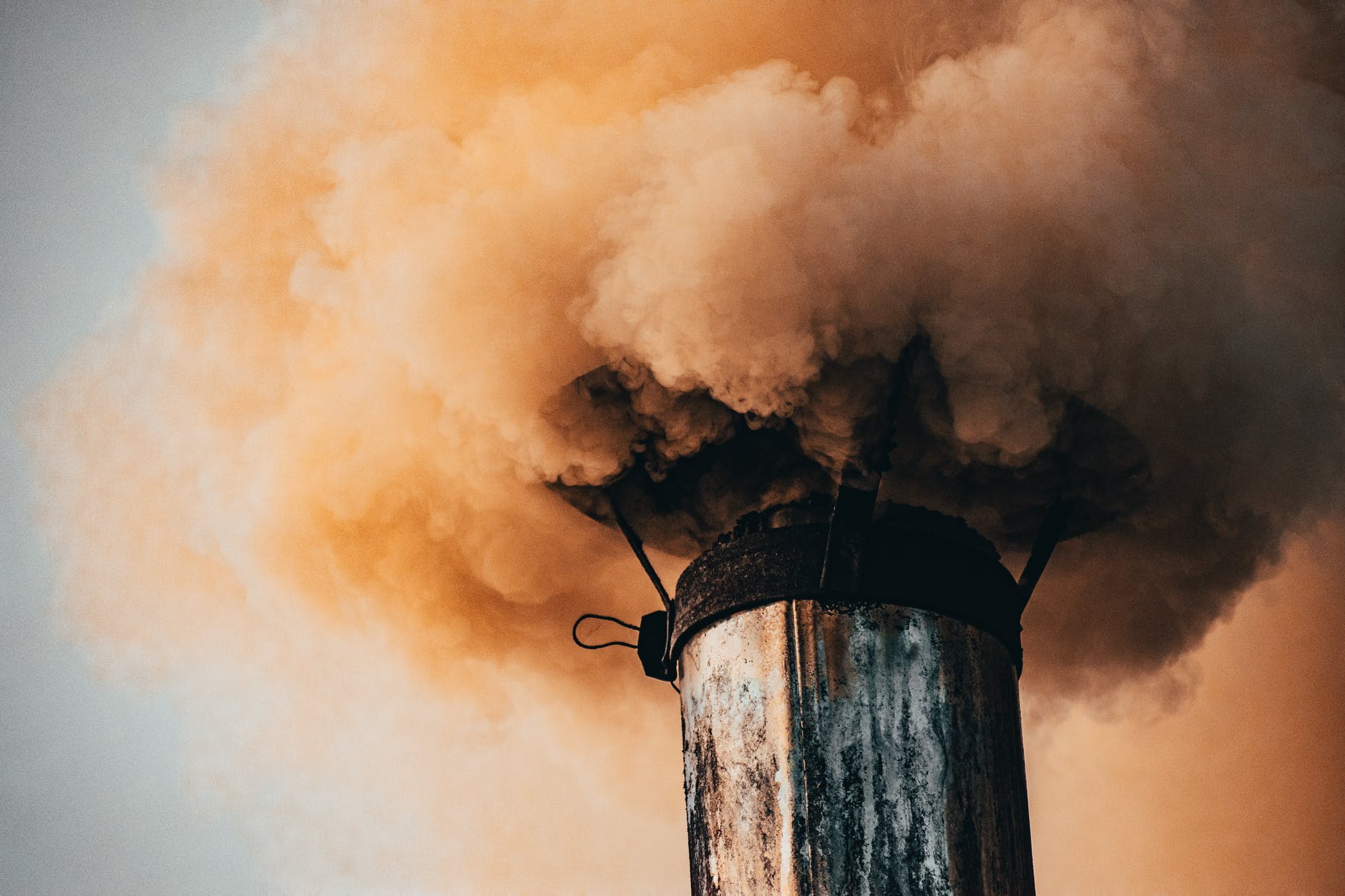
    • Elemental airships. Unlike the era where I DM, magic is common enough that it powers the airships, unlike the clackety, smog xips of the goblins.

    Those first four elements seem to be growing into the major division that leads to the sundering of the world, separating the continent with the Everflow on it from all the magical spaces in the rest of the planet. Those councils and forbidden magicks could grow into the dragon-founded schools with their abusive Proctors, supplicant Scholars and limited magic in a world that has merely love for companionship, healing waters and hope.

    Tips for Sharing a World

    First, have the creator DM and non-creating DM talk about history and key elements. Discuss where the foundational elements of the world are necessary in each campaign. Unlike Uprising & Rebellion (and the other ‘modern’ campaigns set in the World of the Everflow) the current campaign doesn’t have a foundational element about animals as life companions for example.

    Understand that things that happen in history don’t have to be understood in the future. Did Xabal discover tar-trees? Maybe someone else claims that 3,000 years later. Unless the details are vital to a plot point minor differences in the way myth-legend-history are known aren’t important. They can even both be true!

    Second, play and act with trust. Going back to point one, the details don’t matter if they don’t matter. Does the now co-DM get the name of a city wrong? That doesn’t matter. Keep playing at the table. Don’t even bother to correct it. Many cities in the real world have multiple names. That’s the way worlds work.

    Borrow heavily from each other. This is part communication, but also because you’re seeing each set of stories (every table is a set of stories that is some combination of the total number of people playing and their interactions) from different angles.

    Is there a new nugget dropped that you want to be permanently part of the tale? Take note in heavy ink and add it to your own version of the world document. Just like when a player adds something new to the world let the co-DM do the same thing.

    Be a player — you aren’t the DM, so don’t be a co-DM at the table, unless asked. The only time to speak up about some out-of-character element related to previous campaigns or lore is when the DM asks. Then you answer.

    Bonus points if you can work that into something that your character would know/do/say. I didn’t do this most recently, but wish I had. The current DM asked me what Sheljar, the bog-city, was like in the Age of Myths. I gave an encyclopedic answer rather than the answer Xabal would give.

    It’s been so much fun opening the world to more tales set within. We’ve added fantastic spaces, myths and histories that wouldn’t have existed if the World of the Everflow was merely my setting with nearly two dozen players. Adding a second DM to the world has changed the story dynamics in an exponential rather than additive fashion.

    My hope is that after this Age of Myths campaign we return to the modern era with new tales too.

  • Children of Chorl

    Children of Chorl

    The first Scholar to be discovered was the Necromancer. His works were hard to ignore, as the undead he mistakenly raised thinking he was helping the peoples of Fort Ooshar and Sheljar broke the empire. That built a distrust for newly released magic.

    Sheljar, Telse, Mira, Qin and the other cities near the Everflow and its two rivers.

    This is likely why Chorl attempted to hide. Not only was his work in Transformation often done involuntarily, Chorl wanted to conquer. His goal was to fill the gaps from the Fall of Sheljar, taking over the Western Wildes via his hybrid peoples. For Chorl, in all his evils, was creating new peoples, a combination of humanity and their companions.

    Some chose to be combined, these peoples frequently became his lieutenants and sergeants. Many fled. The breaking of his camps and the deaths of Chorl and his Student Anderson created an opportunity to escape.

    Now, the Children of Chorl exist in mixed pockets of freedom almost always outside of the major towns and cities. They may want vengeance hating Scholars and magic; they may want freedom; they may want to be respected. They are all hybrids in the World of the Everflow.


    Mechanics for the Children of Chorl

    To play a Child of Chorl in the World of the Everflow select a hybrid species/race. There’s a long list of them available in DnD Beyond now, thanks to Wizards of the Coast adding the Humblewood setting.

    Though none of the core species for 2014 or 2024 D&D are Children of Chorl the current list from official products includes;

    Aarakocra, centaur, harengon, kenku, lizardfolk, minotaur, satyr, shifter, tabaxi, tortle, giff, hadozee, owlin, leonin, loxodon, locathah, or grung.

    Players at my table can also use those from Humblewood;

    Cervan, corvum, gallus, hedge, jerbeen, luma, mapach, raptor, strig or vulpin.

    Then select a feat or bonded companion. Though all Children of Chorl were a goliath, halfling or human combined with a bonded companion, that doesn’t mean that they didn’t have more than one companion.

    Decide what the character was before they were melded. They should generally be someone from the West. They can be someone who volunteered or not, that’s up to you.

    Their background and class represent what they were before. How they present to the world now is similar to the X-Men.

  • Lore 24: Oath of Free Sheljar

    Lore 24: Oath of Free Sheljar

    All of the campaigns that have taken place win the World of the Everflow have focused on tracking down the various Lorebooks, with each group having other side quests, generally towards making the world for the common peoples of the Lands of the Six Kingdoms.

    They’ve run counter to the Proctors, an evil faction that is trying to control knowledge of magic, and rogue Scholars who are spreading knowledge of magic in order to control people. Necromancy and Transformation are the ones most counter to traditional D&D goodness.

    The only other super-natural organization is the Orthodox Church of Quar. The Quarites control access to the Everflow and a massive merchant endeavor with their churches also working as trade posts and shops for what are in game terms healing potions.

    This world has no equal to the Factions of tradition D&D, or the Knights of the Round Table, or Templars or other super-national knightly orders. No one has wanted to be in one.

    But if a player wanted to play a character with these kinds of ideals and/or oaths, we’d talk about how it would fit. Knowing my player base the inspiration would be the Free City of Sheljar, the egalitarian re-founding of Sheljar after the early campaigns purged the Necromancer, his agents of undeath and the Tunneling Nightmares (they’ll be the subject of a future Lore 24).

    Based off the players and characters that founded the Free City such an idealistic organization would look similar to the Harpers, with a dash of de oppresso liber and a side of asymmetric organization.

    • Determination for all peoples Kin, Ken, Kon and any who think.
    • Share knowledge, so all in the world may live better lives.
    • Defend those that cannot defend themselves and their companions
    • Judge behavior, not the companion, the nationality or the faith
    • Recognize successes at spreading the word of a Free Shejar and Free Everflow

    Like the oaths of D&D paladins, these ideals within the oath are aspirational. They aren’t to be perscriptive.

    A player wanting to be part of this order wouldn’t necessarily pledge to sergeant or knight. They wouldn’t need to swear fealty to the current Mayor of Sheljar (Samul). The order would rise because the oath is a bit viral — it’s one that encourages heroic actions and fulfilling quests.

    A band could be one halfling and her dog, or an entire airxip of goblins, or an adventuring party, or three elves visiting the Everflow that abandon their fey pacts, or a group of Mehmdians, or a village near Telse, or a tribe in Crinth. A band inspired by the ideals of Free Sheljar aren’t sworn to them, in fact the current governance of Kirtin-on-the-Lake is inspired by Sheljar, but free from them.

    That’s the knightly order I would make if I were to make a knightly order.

  • Lore 24: School of Herbimancy

    Lore 24: School of Herbimancy

    Within the World of the Everflow magic is relatively new, well besides the Everflow’s healing power and ability to flow in two directions and the powerful bond between beast and Kin. In the current Proctors of Song and Book magic returned ~27 years ago. First that was via the Born Generation when over a period of a year every child of Kin came of age knowing a single cantrip. About 7 years ago the Lorebook of Divination was found and over the following years, magic started to spread with the realization that there were 17 or so Lorebooks scattered across the lands.

    The current campaign takes place in Sas Rurulit, where the Proctors are attempting to collect two Lorebooks. But the ingenious groups that control the Lorebooks down in this land broke them up. The Lorebook of the Book are people who cast directly from books and scrolls.

    These peoples are manifesting magic at various colleges. The college of metallurgy used every fire and electricity spell to forge metals. The college of hydrology was water and air spells, with a bit of illusion. The Proctors (PCs) have essentially destroyed these two schools ability to function by either capturing or damaging the master books there.

    In the last session they visited a public park that is also the School of Herbimancy.

    Photo by Chris F on Pexels.com

    School of Herbimancy

    Unlike traditional D&D approaches to herbs, the School of Herbimancy isn’t about ingesting herbs in some fashion to gain magical effects. Instead, the plants themselves are the magic.

    For example, the paths in the park were softly lit at night via the glowing flowers of a particular plant (a version of Dancing Lights). Maybe the smell of burning needles from a deciduous tree heals (Healing Spirit). Fallen branches from a tree are a magical staff (Shillelagh). Within Sas Rurulit, this school’s magic is artifice meets druid — the plants are simultaneously technology and magical.

    The group failed a series of checks, one with a natural 1, so they don’t know the professor in charge of the school. Instead, they got the name of the banker financing the project. A way to turn a nat 1 into a meaningful failure!

    They also didn’t quite figure out that the seed room may be the equal of a scroll room or library at the other schools they’ve raided (some read this site and it would be a natural conclusion for the characters to reach after fleeing the fires they set to cover their raid).

    I’m doing Lore 24, an attempt to write small lore elements daily in the year 2024. Each element will be something that’s come up in play or will come up in play within my homebrew World of the Everflow — there will be actionable threads for PCs to grab onto and advance the story.

  • Storytime as Moons Rise – a short story

    Storytime as Moons Rise – a short story

    Sweat dripping from my brow, I head back towards home. Dinodas bounds towards me, shifting to walk on the customary left side as we stroll. My hand reaches up to scratch that comfortable spot behind his ear. It’s an instinctive move now, for both of us.

    We’re kin for many years now, this massive hound and little me, a halfling from Kirtin, just off Slope.

    A wolfhound running towards you
    Drew by Airwolfhound (CC BY-SA 2.0)

    On certain days in the field he’s closer to me than others. On rising full Glibbon he knows I’m going to cut wood and brush. The physical exertion helps me focus, or unfocus — whatever. Those things that happened down Slope, and the years after, normally sit back in my head, but since the Hornjaws started visiting on full moons I’m unable to avoid the thoughts.

    Don’t know how they got me to open up — probably something to do with how well they treat Dinodas. He likes them, so I like them. It’s typical for a bond. Meeting Belni and Terdu was good for him, probably good for me too.

    I don’t like thinking about those times. I don’t want to remember the decision I made.

    So that’s why when a moon rises full I cut brush and start a burn pile. Because this evening I’m going to share some stories. Daytime cannot be about Down Slope and regrets. That’s what moons rise is for.

    I think back to the week-moon Feylf’s rise in Autumn. Belni was at the door. I didn’t have the rituals then, no stories. Just a drink from second mug. First mug is for caf in morning; second mug is ale in evenings. I lost third mug a while ago, that’s the one that Serg’nt gave me with the bottle. The fire was blazing, a bit too hot for this time of the year. Din’s at my feet when the knock comes.

    Wrong time of day for a visitor.

    A hatchet settled into a stump, with a burn pile in the background
    Fire and sickle by Enrico Francese (CC BY-ND 2.0)

    Out here in Cold Creek things are pretty spread out. Down by Iron Road they be more city types. Here we’re alone at night, and that’s why I live by Creek.

    “Ho. Door’s open.”

    I set second mug down. Looking towards the door, one eye on the dusty sword that hangs to its right. Dinodas lifts one ear, one eye. The old hound is apathetic.

    “Sir, ‘s Belni. I been looking for Terdu. He late from bonds-day.”

    I helped the older Hornjaw look for his younger brother. They human, Belni with a solid herding dog. Good size to his bond, smaller than Din.

    We searched for a few hours, the light of Feylf helped, and a few hours after sunset the month-moon Glibbon rose too. That made things easier. We found Terdu crying in a briar. He was embarrassed. His bond were two little sheep — two little fluffy wool sheep.

    So I talked and talked and talked. I told tale to Terdu of all the kin and their bonds I met Down Slope. Many dogs, horses too. But when you’re on the northern front you see a bit of everything. Cold Creek doesn’t have a lot of people. Most of their bonds are herding dogs, we’re a herding community and then Iron Road nearsby has the ford. Still mostall the bonds have purpose.

    Telling Terdu and Belni about the bigger world helped. Terdu was willing to go home. Belni, his dog, the two floof-sheep and the now prideful Terdu waved away. On that first night I didn’t know they’d come back. They’ve been back five Glibbons now.

    Winter on the Slope and Rise gets cold, so the fire rages and the Hornjaws started to bring their friends.

    There’s a first-timer tonight. Someone from Iron Road? Not from Creek, that’s certain.

    He’s with a pony, carrying a lance and shield. Oh, and the helm of a new conscript. Older than the Hornjaws. Hmmm.

    A campfire on the side of a cliff with a moon well off in the distance.
    Island Rock Fire and Moon by Michael Rael (CC BY 2.0)

    Feylf and Glibbon are both rising now, full. Kin is three-quarters too. It’s a bright night, but bitter cold. The Dragon is tucked behind a cloud and years from being full.

    “Terdu, is this everyone you invited?”

    “Yessi.. I mean, yes.” They’d stopped calling me sir. I’m just a man, and a dog, and a past that interests them.

    There’s three girls, not the same families, as one is a goliath. She’s got a flutter of sparrows round her, several braiding her beard while she sits and waits.

    “Belni, serve the cider. Tonight I’m going to talk about Fer and his bull. Fer came from out east. Getting to know Fer was probably the best thing about serving Down Slope. Warm soul who knew warm songs, and would always smile.”

    The new one is clearly disinterested.

    “It was Fer who taught me talking-drum. I never picked it up the speed he could do, but didn’t matter. He made me practice. Made me good in the head. Hitting that little drum meant not thinking about the lines across the river with the people of Az and Sel, their mastiffs, their rage…”

    New kid stops muttering to himself and just interrupts.

    “How was he at fighting?!” He shouts.

    “Fer would sing too. Not a deep voice, not falsetto — just that type of voice that is confident in itself and willing to share…”

    “His fighting! Was he a master at the sword, or bow, or an axeman?” Another interuption.

    It’s going to be one of those nights. This isn’t the first time a near-child has wanted the focus to be on the violence in the front. It most certainly won’t be the last.

    “Others may tell you those stories. My tales are of the friendships made, the acquaintances held close, and the connections lost. I no longer swing a sword or throw my spear. But I still think warmly about the women and men with whom I serve.

    “They are what I miss. They are my regrets. The people and their bonds are the only thing worth my time, for any other thought is sorrow and pain.

    “Maybe you’ll find another to tell you your tales. Here, at my fire, under the full moons, my stories are of them, because these are the stories I have.”

    Chided, the man-child laughs and storms off. No one joins him.

    “Another custom Fer taught me…” I continue with my tale of my friend, the story I have.

  • Counting in the Land of Kon

    Counting in the Land of Kon

    The smogpunk land of goblins in the World of the Everflow was set apart from the Kingdom of Sheljar, Crinth, and other areas for a few millennia. Within this separation the goblins and hobgoblins changed from the standard tropes.

    In the Everflow they answer to the Queen Mother. Everyone is organized around their family’s history of developing teknology for one of the various guilds. Inventiveness and cleverness are more important than fighting and viciousness.

    To emphasize these differences, but still capture traditional goblinoid feelings there should be a some differences in language. This discovery of numerals from the 13th century feels proper for the gobkon of the world.

    It works in a printing press, scribbled on paper or carved into wood.

    Will it ever see the table? Probably not. Or maybe just one or two numbers in a handout for the players to demonstrate the differences between their lands with the languages of Telse (Common) and the rest of the Six Kingdoms.

    If there was a campaign book for the World of the Everflow this could be a tiny sidebar for flavor, not a rule for use.

  • Gendarmes of Sheljar Campaign: One Sheet

    Gendarmes of Sheljar Campaign: One Sheet

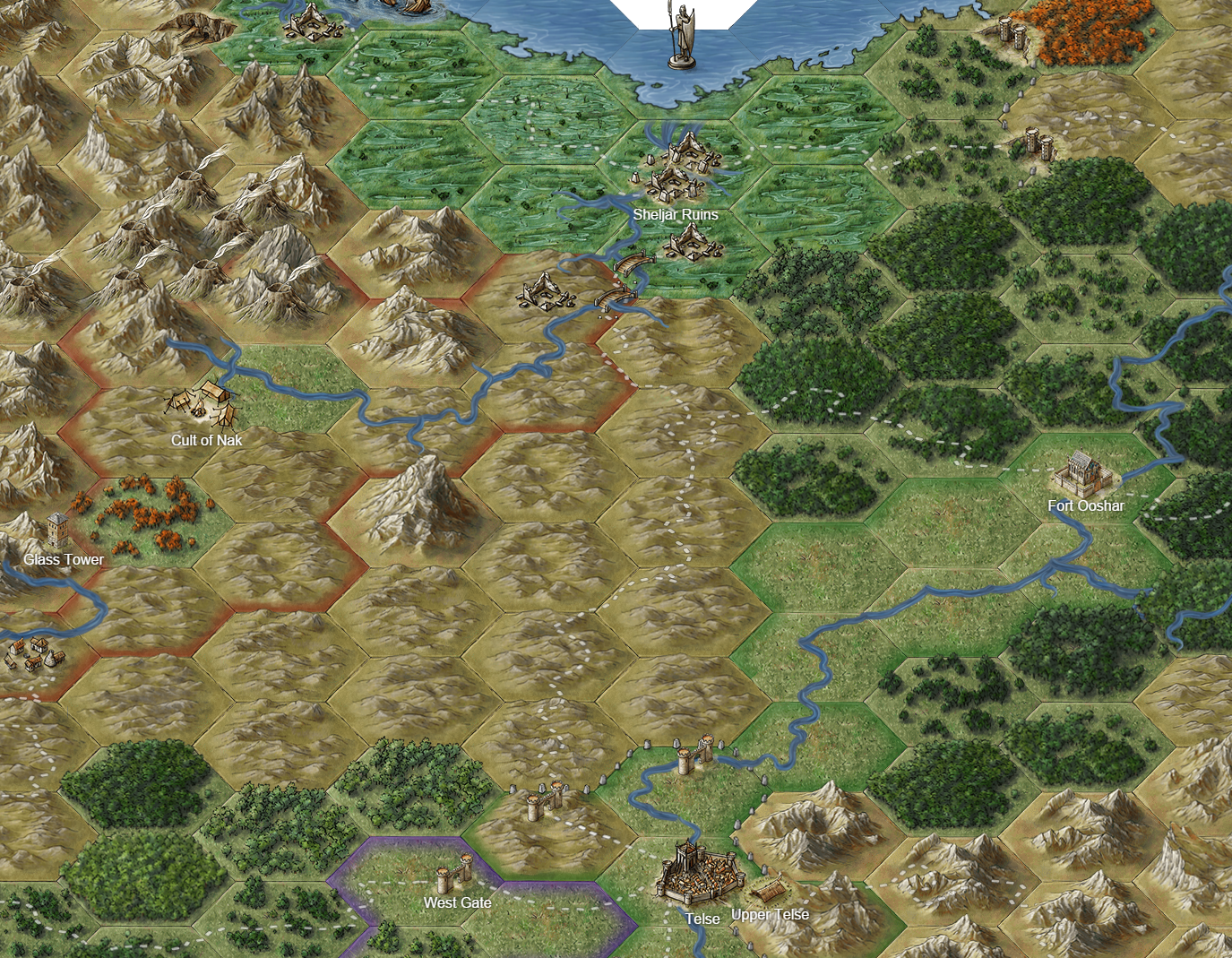
    This campaign is set seven years after the Lorebook Hunters returned magic to the World of the Everflow. It is set in the Free City of Sheljar, and is centered on clearing portions of the bog-city from the return of undead and tunneling nightmares. Combat and exploration will be heavier than social play at the beginnnig. Every character is united in keeping residents of Sheljar safe and mostly unified in the ideals of Free Shejlar (all thinking peoples have value), but may have differing concepts about how to do so.

    The bog-city of Sheljar sits in a lowland below a waterfall. The climate is cool and wet, think the lowlands of the upper Salish, the moors of Scotland with a boggy multi-island brackish lake similar to New Orleans.

    Campaign Premise

    The party is a group of guards that volunteered and is paid to help the Lorebook Hunters keep the people of Sheljar safe from skeletons, zombies, wights and other undead. Tunneling Nightmares may have returned to isles in the bog-city as well. They will start in the old neighborhood of Jherr as recent migrants have noticed a cavern with odd noises and smells.

    Made using Perilous Shores, this is the neighborhood of Jherr, to the north and east of the core of Sheljar. The southeast corner is less brackish than most of the bog-city, almost an internal fresh water space.

    Background

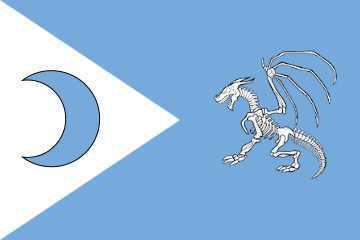
    The Flag of the Free City of Sheljar features the moon Feylf in crescent, a white triangle entering a field of the sea and Boo, in his skeletal form.

    Once upon a time, the Empire of Sheljar ruled all of the Western Wildes, from the Cliffs of Galinor to Mira to Qin. Then, the Born Generation of magically imbued teens (27 years ago) caused chaos and disruption, upending the old ways. One of the Born Generation, the Necromancer, thought he was doing good, keeping dying peoples and animals with their families, but these horrifying undead monstrosities were often rejected. As he raised more and more, people fled Sheljar, emptying it out, leaving the bog-city nearly abandoned to the Necromancer and his unliving nightmares. A misty stench then started to control the city and more people fled.

    It was not until after the eruption of the volcano, the battle of Cortez and Chorl, and the Lorebook Hunters eventually slaying the Necromancer that Sheljar felt free again. Now, six years later the Free City of Sheljar welcomes all thinking peoples. Those that return to their former homes have their property back. Those without homes are granted plots and space with the promise of aid. Few ships dock at Sheljar, but that number increases every month.

    Sheljar has several dozen gobkon, a few dozen Ken with no known dragons, but most of its 2,000 generally agrarian peoples are various Kin with their animal companions. The Gendarmes and the Lorebook Hunters are the only standing ‘army.’ Most of the residents are frontier peoples ready to defend their cottages but only have clubs and other utensils as weapons.

    A map of the former Empire of Sheljar, now a series of independent city-states and free towns.

    Grand Conflicts

    At the start this is a simple island of the week adventure, where the Gendarmes are responsible for discovering and clearing pockets of undead.

    Factions

    • Lorebook Hunters – this is the leadership of Sheljar.
    • Cult of Nak – these are the remnants of Chrol’s transformations.
    • Fort Ooshar is under control of the Fox and Crow, a gang that sees opportunity to raid the migrants heading to Sheljar
    • A death cult has taken over the lands west of Telse.

    Rumors

    • The Folio of Necromancy may be missing. Saffron had held it prior to rising to part of the leadership council.
    • What is that stench out east? Tunneling Nightmares?
    • The Volcano of the Glass Tower is glowing.

    Facets

    • Exploring the zero-to-hero tropes, friendship with animals, and who gets to control knowledge.
    • Sandbox play.
    • Player agency creates history.
    • Drop in/drop out, whatever. This is an episodic campaign.
    • Sessions are 60-90 minutes. Adventures are 1-3 sessions.

    Variant Rules

    • Playable races are Human, Hin(what they call themselves)/Halfling, Goliath/Firbolg, Elf, Dwarf, Gnome (wood only), Goblin, Hobgoblin, Bugbear.
      • Only the Kon (goblinoids) may be Artificers.
      • Kin start with a Bonded Companion.
      • Ken start with a Feat that grants a 1st level spell such as Magic Initiate.
      • Kon start with Tek.
    • There are a few custom subclasses available (Way of Frayed Knot, Society of Veil and Shadows, Conscript, Propagandist, Circle of Sewers).
    • There are several custom backgrounds and tools available. We will use cultures, not languages.
    • Use point buy or standard array for starting attributes. If you want something random, the redrick roller gives random point buy valid stats.
    • Start at 1st level because several are new to the game, let’s learn together.
    • The Gendarmes start with a small sailing boat (Crew:4 for rudder, sails, a repeating heavy crossbow, and a fire sling).
    • Long rests require 24 hours within sanctuary. This creates a pace of play more similar to novels than video games.

    Practicum

    Sessions will be on Wednesdays right after work, played over Meet with shared screen used to help set the scene. Theater of the Mind will be the most common form of combat, ideally using cinematic descriptions which will grant Inspiration. There is a campaign on DnDBeyond, used only by the participants rather than open to public.

    Every character is assumed to have Common Knowledge in the Six Kingdoms.

  • Goblin Guilds of the Queen’s Fleets

    Goblin Guilds of the Queen’s Fleets

    Queen’s Fleet continues to expand presence in Kirtin-on-the-Lake; various factions may lead to infighting; what are these stunning and dirty technologies?

    Kirtin-on-the-Lake | Neremyn Quizana

    Lately you’ve seen, heard, or smelled the newest additions to Kirtin-on-the-Lake. During this stalemate between Daoud and the Dragons and Kirtin traders from the Free City of Sheljar have entered the city. Some land on the lake with ships under great balloons filled with oily gasses; others enter with the rackety-clackety of wooden gears on various cycles of one, two, and even four wheels — like a cart without a horse.

    These goblins (we shall use this word for all of them whether merely the size of halflings or the masses of muscle as large as goliaths) are organized differently than any of the Five Kingdoms of the Everflow. Most similar to the guild-houses of Qin, the Kon organize into at least six guilds that are based in familial relationship and what they call ‘teknical’ skills.

    Through numerous conversations we have learned that these are their guilds active in the Western Wildes. Not all have been seen in Kirtin-on-the-Lake yet. According to our sources all are present in Sheljar and the towns under the Free City’s sway — Fort Ooshar, Mira, Telse, Bell-an-Fair, Hagtown, and possibly The Ferments.

    A new peoples to the Western Wildes, these snapshots should help the fair people of Kirtin-on-the-Lake understand the goblins and their bizarre systems that ignore the shared bonds of people with animal or the potent magicks of the Dragons and their allies.

    Clockwerks League

    Photo by Coledoco on Pexels.com

    Most noticed on the streets of Kirtin-on-the-Lake due to their loud clanking cycles, the Clockwerks League is currently the most powerful of the various goblins. The Queen herself is a member, having won many flags prior to ascending to the throne.

    Besides the cycles, the Clockwerks include clocks, timers, repeating crossbows, giant powerwheels similar to a waterwheel that uses their mulgobs rather than water. There is word that they will open a new grain mill took.

    Ratxets Guild

    Conflicting reports say that the Ratxets Guild are a spinoff from the League or something entirely new. They make wonderful climbing devices and on many days you can find a demonstration down by Theater. The ability to use their rope and ratxet to climb the side of Rock is amazing. When this author used the device it made the journey up Rock pleasant rather than the long chore that the stairway can be.

    Rumor is that the Ratxet may install a gondola from the Rock that connects several districts by massive sky-ropes.

    Springwerks Union

    Photo by PIRO4D on Pexels.com

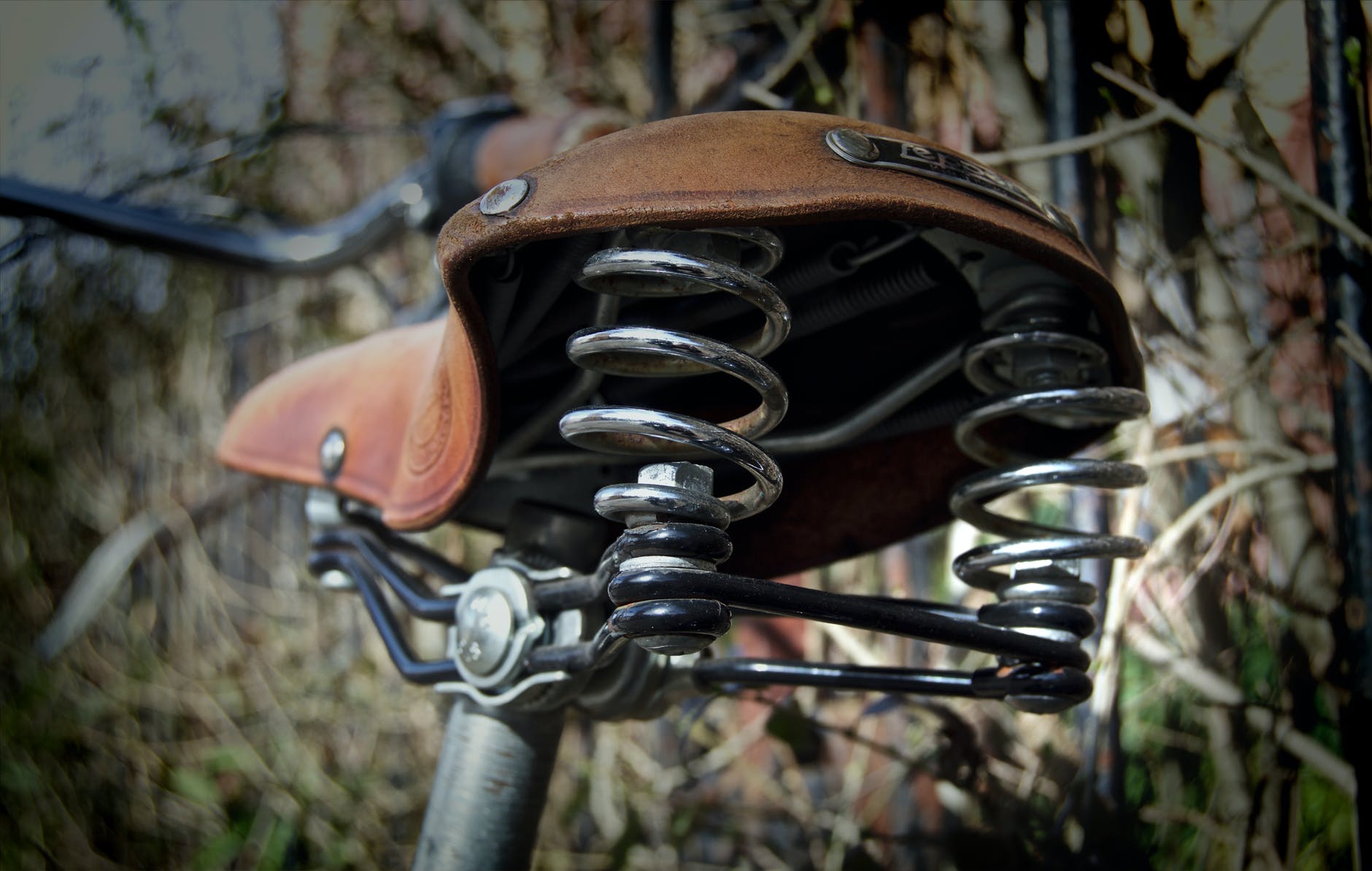
    Coils of strong metal come off of smiths that burn hotter than ours. Without the tartek maybe the Springwerks Union couldn’t exist. This symbiotic relationship betwixt the guilds is routine. They compete harshly for recognition from the Queen and yet their greatest werks are interconnected and use tekniques of others.

    Their crossbows are a bit lighter. A siege engine powered by a Springwerk may be able to fell a Dragon. The energy trapped within the springs is grand. It may take days for the muls and hobs to get the springs set, but once they are the power can slowly release or go all at once.

    Airmatics and Waterwerks Alliance

    Photo by Ali Arapou011flu on Pexels.com

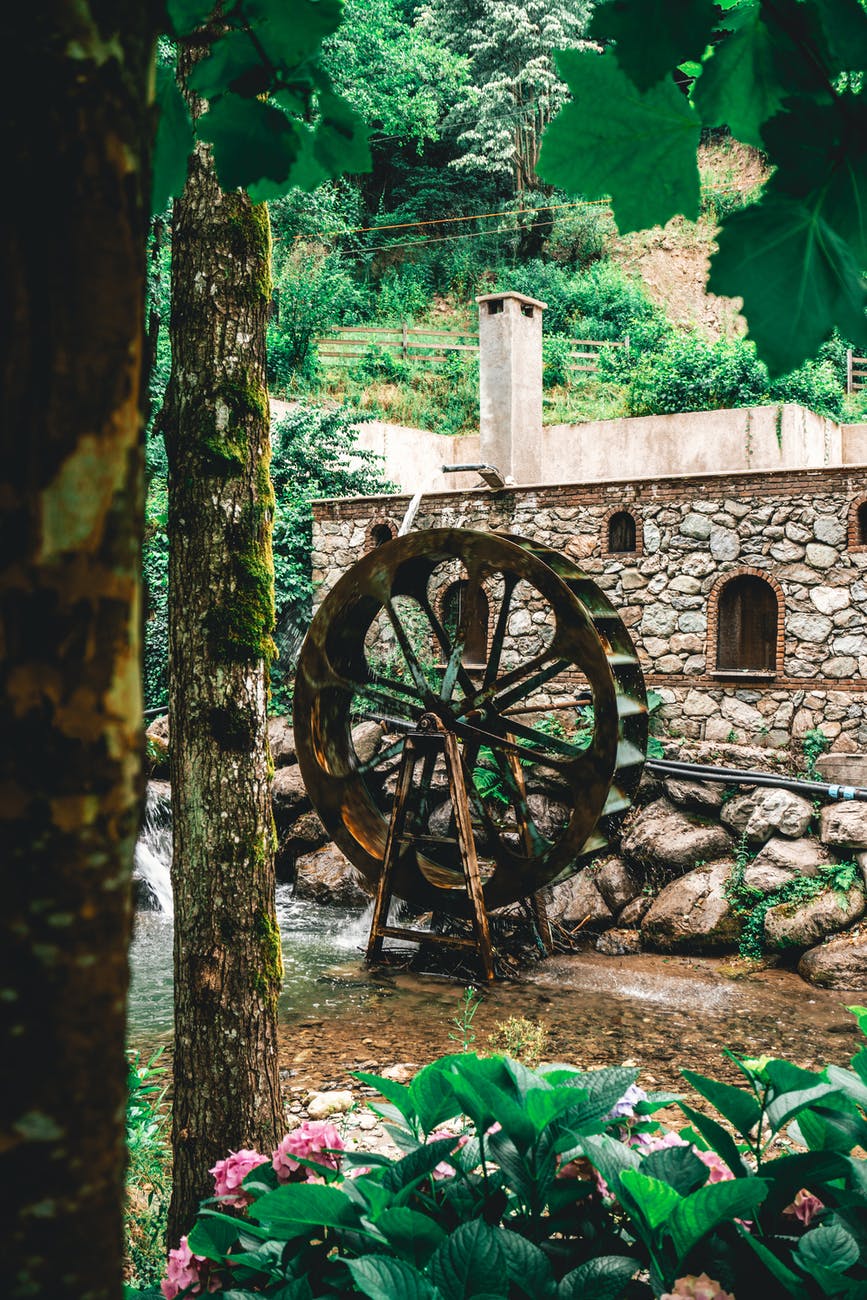
    A good little friendly goblin introduced me to how the Alliance works. Our waterwheels are what they used a life of lifes ago. Now using either water or something called pneumatics the Alliance is two former competitors joined. Anything that flows can be trapped, contained, and utilized.

    If you’ve been to Haystreet after DragonTree you’ll have seen the inn there with running water! There is an attached bath with a dryer!

    Why do so many goblins stink of their tartek when the Alliance allows such great cleanliness? I know after a day at print (our newsletter has bids out to the League and Guild for help reducing prices for you our fair reader) I will use that bath of warm water.

    Alchems Sisterhood

    Photo by Ioannis Ritos on Pexels.com

    At Carnival you’ve seen the Sparklers. They contain joy in their little packets. The Sisterhood is a group that takes that type of energy and applies it to more than just entertainment. The Alchems are busy foraging the rocks, vegetation, and even animal waste of our lands to find new ways to create violence. Their inventions are on par with many of the magicks of Dragons, in a way that can be taught and handed over.

    This Sisterhood will not share their methods of creation. They make the Sparklers look like a newspaper since the Alchms refuse to be public in how they operate.

    Also, they hate the Tarteks Federation. Supposedly these groups could be the unified, there’s some sort of familial break that has nothing to do with the teknology used.

    Tarteks Federation

    Photo by Ion Ceban @ionelceban on Pexels.com

    You know the smell by know. Using their tar-trees the goblins have changed the air and water in Kirtin-on-the-Lake, maybe forever. They burn this sticky oil and create self-powered cycles, no pedaling needed. Like the Sisterhood, The Federation are reclusive.

    This lack of information seems to be how the gobs keep their strength and respect. A combination of Tartek and Airxip work is what enabled the gobkon to cross the Teeth of Sheljar and, as they claim, return to their lands.

    Airxip Syndicate

    100,000 Cubic Meter Comercial Zeppelin
    Fings (CC BY 2.0)

    Those massive ships travel the air, floating above the rapids of rivers, the mountain passes, the brigands and bandits. Their ‘airxips’ are barely related to Daoud’s large galleons. Some of the airxips cannot even land in the waters of Kin! They must have towers or long rope ladders to interact with the grounds below.

    Bladders may be filled with the works of Alchems, Tarteks, or even Airmatics. Each insists their techniques are best. This author does not know which is best. The xips and gliders of the Syndicate enable travel and connection to communities in ways that our horses cannot. Sheljar’s connection to Hagtown shouldn’t be possible. It is just uphill from us, but due to regular visits from the Syndicate it maintains a relationship to the Free City rather than Kirtin or Daoud as it was in the past.

    These transports are stunning, if slow. I have booked a ride to go to Kirtin-in-the-Sky for the summer as my first test of what the Syndicate can do. Hopefully the stalemate between rebel, Daoud, Kirtin, and the Dragons will hold until after my report.

    Additional reporting was provided by allies and sources within Hagtown, Sheljar, and Telse. Those sources will not be revealed.
  • Feat: Bonded Companion

    Feat: Bonded Companion

    Salvy

    Animal Companions, or Bonded Companions, or a key element of life in Kin. The Kin are the people of friendship, loyalty of loving those around them. This extends towards their non-humanoid companions as well. Where an elf might group in a land where spells are used to do mundane things, in Kin when a goliath needs a bit of string to finish sewing they send their swallow off to do it, or their heron to fish. Halflings have dogs that pull, push, fetch, hunt, fish, carry, and many other tasks. Human bonds with goats, rams, dogs, birds and horses are quite common. Bonds of Kin are a very essence of life. Almost everyone has one.

    This ruleset needs to do a few things.

    • Scale like cantrips, attacks and proficiency. The companion is expected to live alongside their friend for some time.
    • Build in a reason that having a Bond die is bad for the PC
    • Not destroy the action economy
    • As a bonus, can it be simplified for usage in gaming outside the World of Everflow?

    Feat: Bonded Companion

    Prerequisite: Wisdom of 13 or higher. Kin and Rangers ignore this prerequisite.
    This feat can be taken more than once.

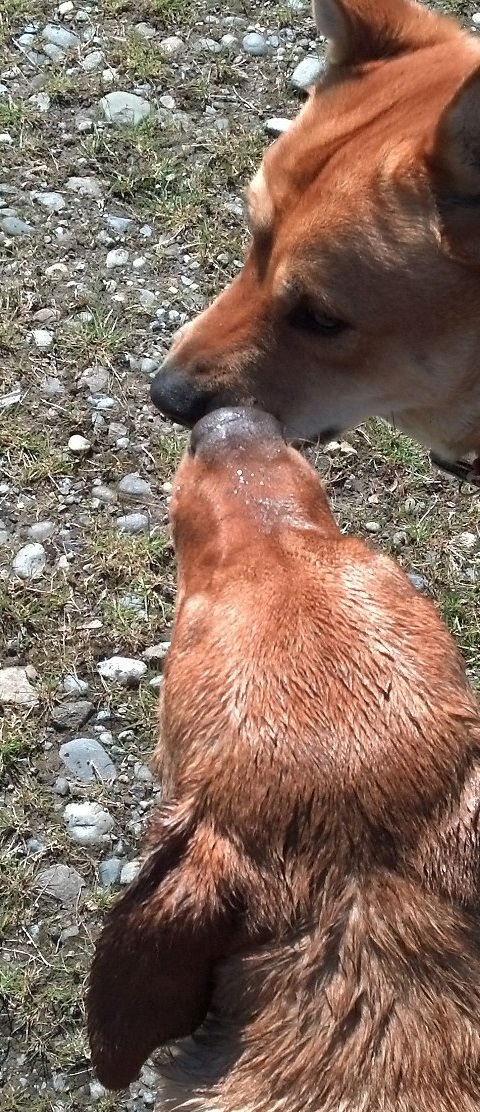
    Two dogs on gravel

    You have an intense bond with a beast. These beasts cannot have a higher Intelligence than the character. In certain worlds the bonded companion can be a monstrosity. At this point I considered just granting access to the Bonded Companion system in a similar manner as to how Magic Initiate works, but instead built it within the Feat. The rule could be built by making Bonded Companion a Class Feature and Feat, but I digress. Taking the feat gives you Companion Points. You also gain companion points in the following manners;

    • Rangers at 1st, 3rd, 5th, 11th, and 17th levels
    • Druids at 1st and 5th level.
    • Clerics with the Nature domain at 1st level.
    • Your Wisdom modifier

    Those points can be spent on a single companion or multiple companions. A character can bond with a number of Companions equal to their Wisdom modifier +1 (minimum 1). Each new companion takes a number of weeks to establish a bond as their cost in companion points. This can be done as downtime, or could be a solo adventure. A character may only spend new points when they take the feat or if they are a Ranger or Druid at their higher levels that earn Companion Points.

    The following chart lists various Companions and their Companion Point cost.

    OneTwoThreeFiveSevenTen
    Herd dogSled DogWarhound *Giant Eagle *&Rhino &Mammoth *&
    RetrieverMastiff *Axebeak *&BisonElephant *Wyvern *&
    TerrierBloodoundOstrich &Bear *&Dire Wolf *&Roc *&
    Sentry DogGuard dog *Elk &Lion *&Owlbear *& 
    SprinterRavenPanther *&Worg *&Griffon *& 
    HeronEagle *&Bear Cub *&Hippogriff *&Pegasus *& 
    PigeonFalcon *Wolf *&Peryton *&  
    SparrowParrotTiger *&Awakened Tree &  
    Pony/MuleDraft HorseWarhorse *   
    FoxRiding HorseApe &   
    Goat/SheepMonkey    
    Awakened Shrub &Cow    

    Legend: The ‘&’ is used to indicate an animal companion that can only be paired with a Ranger, Druid or Nature Cleric. They are normally wild. The ‘*’ is used to indicate animals that can enter combat on command.

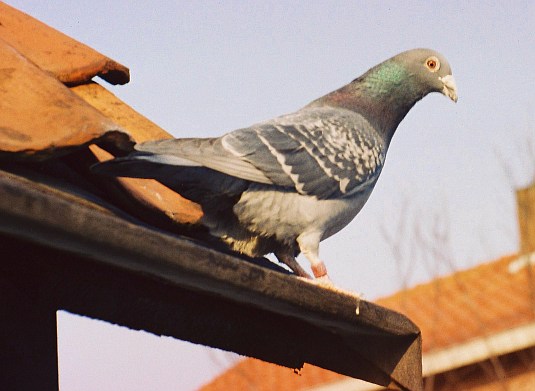
    "Postduif". Licensed under Public Domain via Wikimedia Commons - https://commons.wikimedia.org/wiki/File:Postduif.jpg#/media/File:Postduif.jpg
    Postduif” – Licensed under Public Domain via Wikimedia Commons

    As a Bonus Action the Bonder can command their animal. These commands are Attack, Dash, Disengage, Dodge, or Help. An animal without a * can only attack if the Bonder passes a Wisdom (Animal Handling) DC: 20 check. The Companion will continue that action until the combat is complete or another Bonus Action is used (ie they will Attack the directed target until that target is no longer participating in the combat). Some Companions have other actions that can be taken (A Retriever can Fetch as an action). Check with your DM for these other actions.

    When separated a Bonder and Companion that are on the same plane know the direction and rough travel time between them.

    If someone tries to control a Companion it is an opposed Animal Handling check for the Bonder and whatever skill or spell is appropriate for the attempt to control the Companion. The duration of the control is per the appropriate spell or skill.

    If a Companion dies the Bonder takes half their Companion’s hit points in psychic damage. If they make a Wisdom save (DC: 15) they then take one quarter of their Companion’s hit points in psychic damage.

    Variant Rule in Kin: At first level and below halflings usually bond with canines and goliaths usually bond with avians. All Kin start with an additional Companion Point.

  • Whistle of Az and Sel for the Blog Carnival

    Whistle of Az and Sel for the Blog Carnival

    Within the World of the Everflow every thinking peoples from the Land of Kin bonds with an animal. The most common of these are dogs (especially among halflings), birds (especially among goliaths), and horses (especially among humans). These beasts are family, inseparable companion, and essentially an extension of that person. They share personality and aid each other throughout their shared lives.

    This intimate companionship started after magic left the world. Now, the norm, bonding started with Az, his dog Sel, and a three-hole pipe. Together they created more and more and more and more and more bondings. Eventually this drove Az mad, for the thoughts of 100s of beasts were in his head. What was to be a blessing from one of the gods, turned into a curse for young Az. As he aged, the nation of Azsel formed around Az and Sel. Their whistle becoming the symbol of the nation, it was once under guard as a holy relic. Over the millennia the whistle disappeared. The power of bondings spread beyond what the Whistle started. Companionship is now so common that few consider it magical.

    Many also think legend of Az and Sel is merely a story, not real. But the Whistle of Az and Sel is in fact real, and dangerous, for the curse will drive you as mad. If any have found the Whistle in the current era they are not making that discovery public.

    This is my latest entry for the Blog Carnival.

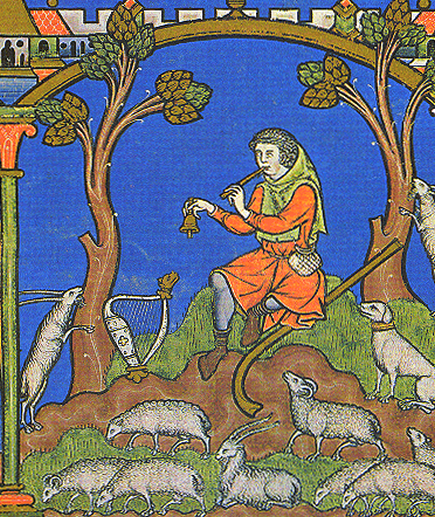
    David, as a young man, playing pipe and bell as he watches his sheep in the pasture. – The Morgan Bible, Folio 25

    Whistle of Az and Sel

    Wondrous Item, artifact, cursed (requires attunement)

    When playing the Whistle of Az and Sel the user can cast the following spells at will, without expending a charge and as a bonus action. These require no spell components nor concentration if that is normally required.

    • Animal Friendship
    • Beast Bond
    • Speak with Animals
    • Animal Messenger
    • Locate Animals
    • Summon Beast
    • Conjure Animals
    • Dominate Beast
    • Commune with Nature
    • Druid Grove

    This power comes with a cost. That cost varies by user.

    When one attunes with the Whistle of Az and Sel they experience two minor and one major detrimental properties. They also suffer from one long-term madness upon attuning and indefinite madness for as long as they are attuned (see DMG page 260). This cursed item requires a quest from a god or powerful magic to be unattuned.