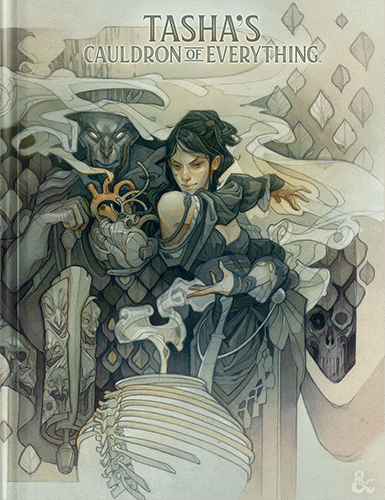
Tag: Tasha's Cauldron of Everything

  • Swarmkeeper of Terriers

    Swarmkeeper of Terriers

    Thoumas Javelot Kern of Aviceland is the first character built from Tasha’s Cauldron of Everything I’ve taken for a spin in actual play. He is a Ranger: Swarmkeeper. With a background as a hunter (used fisher and reskinned) and a forest gnome, the only new rules in Tasha’s that took a spin were related to the Ranger.

    Swapping in Deft Explorer, Favored Foe, Primal Awareness, and Thrown Weapon Fighting changed his flavor and story from the baseline Ranger quite a bit.

    The rules were also much simpler. Implementation of the new rules via VTT was simple (we played using Roll20). Deft Explorer reduces the need to negotiate with the DM about when/how to gain advantage on skill checks since you will have Expertise on one of the Ranger’s signature skills. Favored Foe means more dice for damage. It doesn’t combine well with most Ranger spells, but it gave a nice boost to the average damage done. Thrown Weapon Fighting let me hurl 3 daggers in a round, and when all hit the small damage of the weapon combined with Favored Foe and Gathered Swarm became significant. Flinging out 3d4 (daggers) + 1d6 (Favored Foe) + 1d6 (Gathered Swarm) + 6 (Thrown Weapon Fighting) + 12 (Dex) is a significant first round attack potential. Plus, lots of dice!

    Seven Things I Love in Tasha’s Cauldron of Everything.

    More significant to me, was the fun of flavoring the Gathered Swarm. The connection to the fey spirits that are the swarm is what powers this subclass. How those appear is nearly infinite. The book suggests pixies, twig blights, birds, insects – do not limit yourself to those stories.

    Thoumas’ swarm appears as significant number of cairn terriers. They can do anything another swarm can do, because these are fey spirits. How they do it is up to the player. In play I described the swarm as abnormally playful (terriers are basically fey creations anyway), to include the way they fetched the thrown daggers after the combat (this is essentially Mage Hand, reskinned).

    There was also description of Thoumas reaching down to pet his swarm. They don’t exist except as spirits, except when they manifest, but the natural habit of his time with dogs in reality emerges frequently. He converses and experiences life as if these are real cairn terriers.
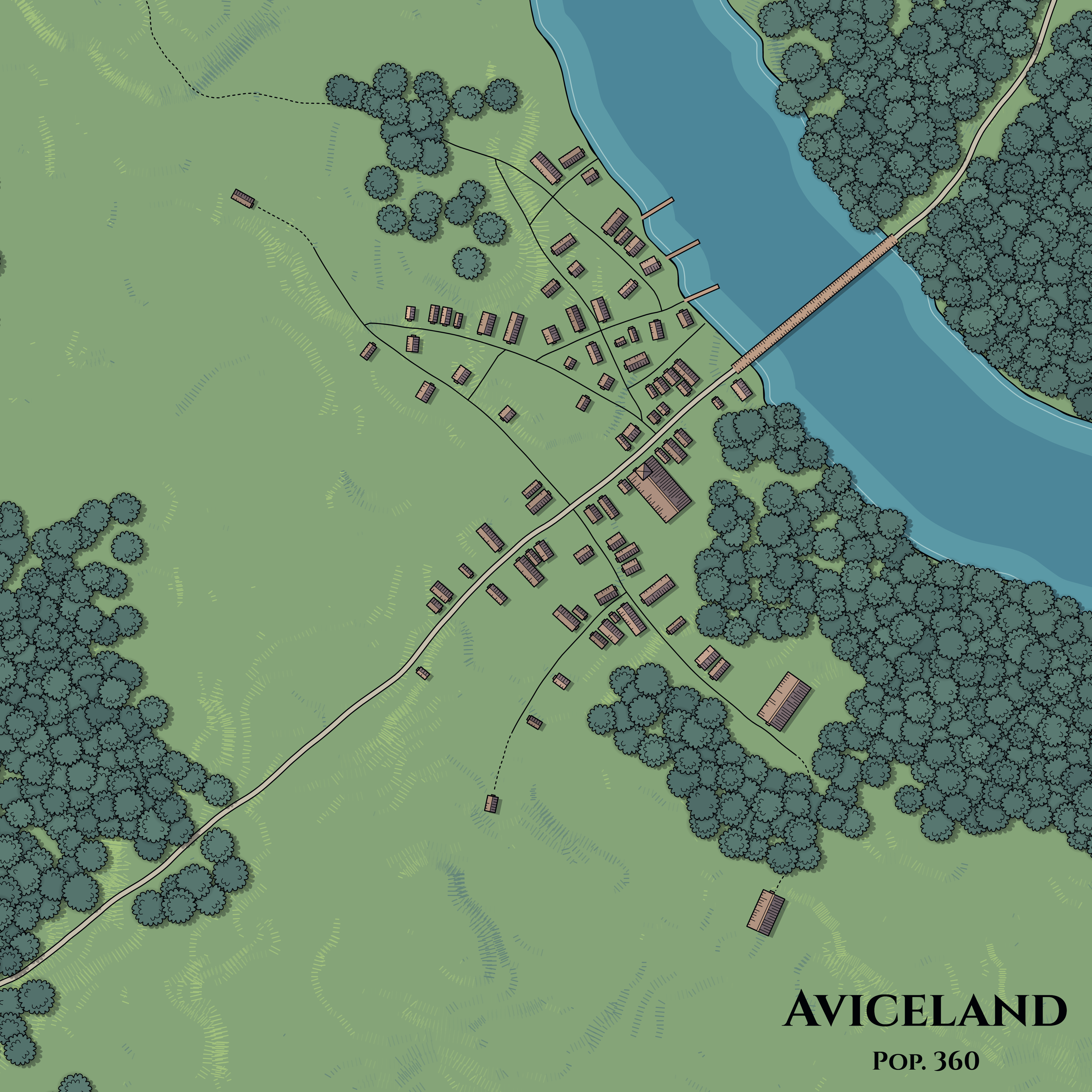
    Aviceland was created using the Village Generator

    Part of my build process for any character is to imagine where they are from and how they became heroes. It informs my play. Often using the Traits, Ideals, Bonds, Flaws from the chosen Background, the vision that emerges helps inform roleplay in the game.

    Personality Traits
    Rich folk don’t know the satisfaction of hard work.
    I am unmoved by the wrath of nature.
    Ideals
    Balance. Do not hunt the same spot twice in a row; suppress your greed, and nature will reward you. (Neutral)
    Bonds
    I will hunt the many famous forests of this land.
    Flaws
    I am inclined to tell long-winded stories at inopportune times.

    Thoumas is from a small village, and even then he lived on the outskirts, separated from the other families by a small wood out in the southeast corner of the map.

    He, and his family, hunted, but never over-hunted the region. The Kern clan of gnomes were tied to the land, working as a bridge between the people and the animals. This helped explain why he became a Ranger, eventually. As a gnome (or halfling) having a pack of terriers help the family just made sense. Pets are fun, both in real life and in gaming. Including working pets in the apocryphal world of D&D is something I do frequently.

    Overall, Thoumas felt as powerful as the other characters, but again, more important than the power was the story that could be told of this tiny man with a swarm of terriers serving him as an extra set of hands and even some pesky little biting.
  • What Tools Tell You About Your D&D Character

    What Tools Tell You About Your D&D Character

    Within Tasha’s Cauldron of Everything there is an optional rule that allows you to create a character that shifts their proficiencies around. No longer is every Dwarf a brewer, mason, or smith. No longer will every Elf know how to use a sword.

    The ability to swap these out lets you tell new stories through new mechanics. But the change to the game mechanics are quite minor. Half the classes already allow the weapons that the Dwarf and Elf start with in the Player’s Handbook, in this case many optimizers will take Tools in order to expand their skills.

    Yes, this expands the powers of certain combinations Race and Class. Frankly, ignore that tiny tic up in power.

    This optional rule in Tasha’s grants you the ability to expand the story of your character.

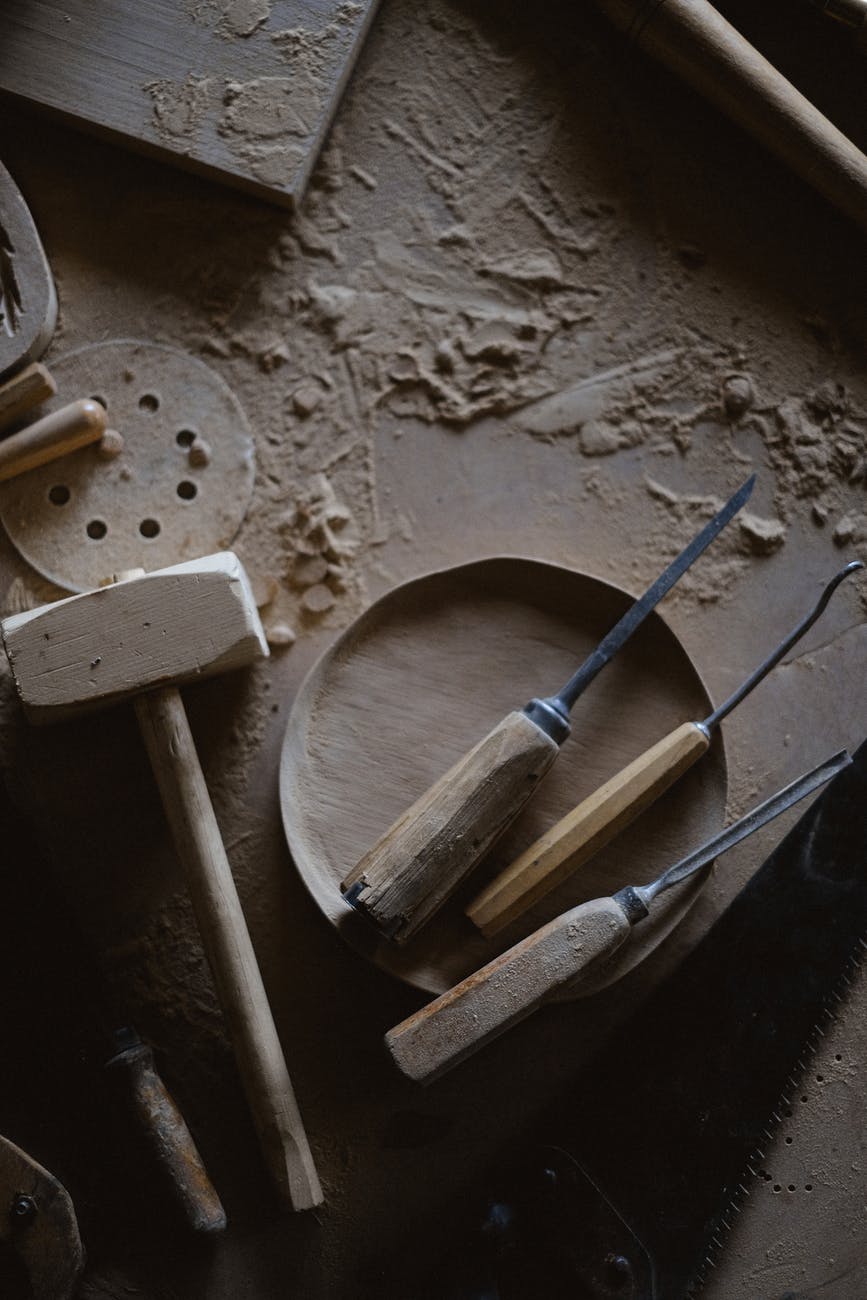
    Photo by Anna Shvets on Pexels.com

    Since your Dwarf didn’t grow up knowing masonry, but instead was a woodsman, what does Woodcarver’s Tools mean for them? Were they part of the crew that regularly left the caves of the fathers to harvest the massive trunks that became reinforcement for the great halls? Or were they just not raised among their people, instead taking their mother’s stone carving tools but applying those to the softer structure of wood to create art?

    Your High Elf that did not learn the sword and bow, maybe instead they have Coffee Gear and Insight, because they founded a cafe where they interacted with wizards, nobles, and adventurers. You aren’t a warrior by nature, instead you are someone who understands the people who go out and see the world beyond the city.

    Photo by Tom Swinnen on Pexels.com

    Like so much of Tasha’s Cauldron of Everything, the mechanics by this decision do not create power creep – they fashion story creep. There are 25 tools, plus Gaming Sets and Musical Instruments. Your character that has more of these than typical or usual has reasons for these.

    As you generate new ways that your spells manifest (one of my favorite suggestions in Tasha’s) you should generate the reasons for your differing skill set from the classical presentations within your race. Whether it is all in your head, or a single line on your character sheet, a hint in the art you commission or draw, or an entire blog entry is up to you, the player.

    But it should be there, because the 1000 thousands of stories that can be told in any game session originate in the mechanics, but the mechanics aren’t the point – the story is.

  • 7 Things I Love in Tasha’s Cauldron of Everything

    7 Things I Love in Tasha’s Cauldron of Everything

    Tasha’s Cauldon of Everything is packed with new mechanics to add to the game. The expansion of racial options, which reduces but doesn’t eliminate the bioessentialism in D&D, and the new class options was the focus of most of the attention of previews. Now that the book is in the hands of the masses there a few other things that deserve your eyeballs, your character sheet, and your campaign.

    Wizards provides this handy list about how to get your handses [in voco Gollum] on the book, but we strongly recommend supporting your local gaming store. The main digital play tools all have Tasha’s at this time and are in various stages of integration for what is a massive update and reworking of character creation.

    Lean Into Personalization

    While every player-facing book in 5th edition talks about creating your character’s identity through minor reskinning of features, none go as heavy into this as Tasha’s. There aren’t just lists. Through the ample use of sidebars and even art, the designers make it clear that your character is yours, and how that character presents itself is up to you.

    The art with the chicken-shaped Magic Missiles is the most clear demonstration of this concept.

    I’m leaning into this with a Swarmkeeper Ranger whose swarm is a bunch of terriers. They can nip the opponent’s heals, overwhelm them and force them to move, pull me to safety, and even fetch my spent ammunition after the fight.

    Make the world yours, that’s what Tasha would do.

    Battle Master Builds

    The Fighter’s two non-magical subclasses from the Player’s Handbook can lack the identifying traits that connect them to fantasy literature in ways that every other subclass does. Tasha’s helps solve this by providing some sample builds for the Battle Master.

    Each example includes the fighting styles, maneuvers, and feats that help create a cohesive identity rather than have a character that is merely a collection of mechanics.

    With a sampling of those mechanics and about 50 words your Battle Master transforms into a representation of the legendary heroes of yore, that is uniquely yours.

    Session Zero

    Many, many, many blogs, vids, podcasts and articles over the decades have focused on Session Zero. Nowhere has the concept been laid out as clearly in a book produced by the maker of the game.

    Adding this guide to what will almost certainly be the 4th best selling book in the arsenal of official products will help so many people who want to try the game. New players and new DMs will have a foundation upon which to establish their own social contract.

    Sidekicks

    Puppy! Wait, no warrior-wolf.

    Scheduling play sessions during a global pandemic are a different struggle than they were in the Before Times. Getting a group together, using the same technology. In games with only 1 or 2 PCs having a sidekick can help solve the issues of game balance and limit the chances of a total party kill. They also fit the stories we try to tell.

    Here, again, the creators used art to provide examples of the variety of sidekicks that can be created through the three “classes.”

    The Expert shows up as a tortle scout/navigator, a winged kobold with some kind of charm, and a kenku historian/sage. The three versions of the Spellcaster are a bullywug wizard, a goblin mage (love that pink dress), and a tabaxi oracle with a pack of extra large scrolls. For the Warrior the art is of an aasimar with a sword & shield, a wolf, and a firbolg chef ready to smash someone with a cast iron pan.

    Class Icons

    Each of the 13 core classes (Artificer is in two books, it’s core now in my mind) has a icon that represents them. These small images are not new (they’re in the Player’s Handbook), they are just more obvious in their presentation within Tasha’s Cauldron of Everything.

    They’re a clean look that I hope to see on merch at some point. Many third-party D&D inspired jewelers and apparel companies use class iconography. There is no reason why Wizards shouldn’t embrace this as well.

    Parleying

    People have been homebrewing versions of this for years, but including it in such a common book is important. D&D is, at its core, a combat game. But it doesn’t have to be and more rules to demonstrate that are good.

    Hints, Allegations, Rumors of What’s to Come

    Hidden within Tasha’s in character conversations and the rules sidebars are a plethora of hints about the future of the game. All attempts to figure out what these mean will be futile fun. Search them all and you too can shout “[setting name] confirmed.”

    What are you looking forward to using from Tasha’s?