As part of the Worlds to-go! The Elysians Kickstarter I pitched PJ the idea of adding sports inspired by this magical world that is a conjunction of city-states, godly wilderness and island-hopping villagers. The microsetting we’re going for has some ancient Greek and Roman inspiration, flexing into similar tropes taken by the Percy Jackson series, a dash of Narnia without the chivalry and because I’m me dashes of magic in all things.
It leans into narrative as mechanics. The concept here is to describe the action your are taking using your specialty (an advanced 5e rule), skill and attribute in unique ways.
Normally I ignore individual sports as they can typically be done with a one roll roll-off. But Elysia had to have something inspired by the original multi-national sporting competition. So I added the Pentiad.
As the peoples are emulating the gods (a fun bit of lore I enjoy) there’s no such thing as cheating. Borrowing from The Magicians, I leaned into the concept that the gods have minds beyond people’s minds. Emulating the minds of gods meant no cheating. There’s no cheating! Do whatever you want for victory — that’s what the gods would do. Pursue victory using spells or even attacks. Just don’t kill people.
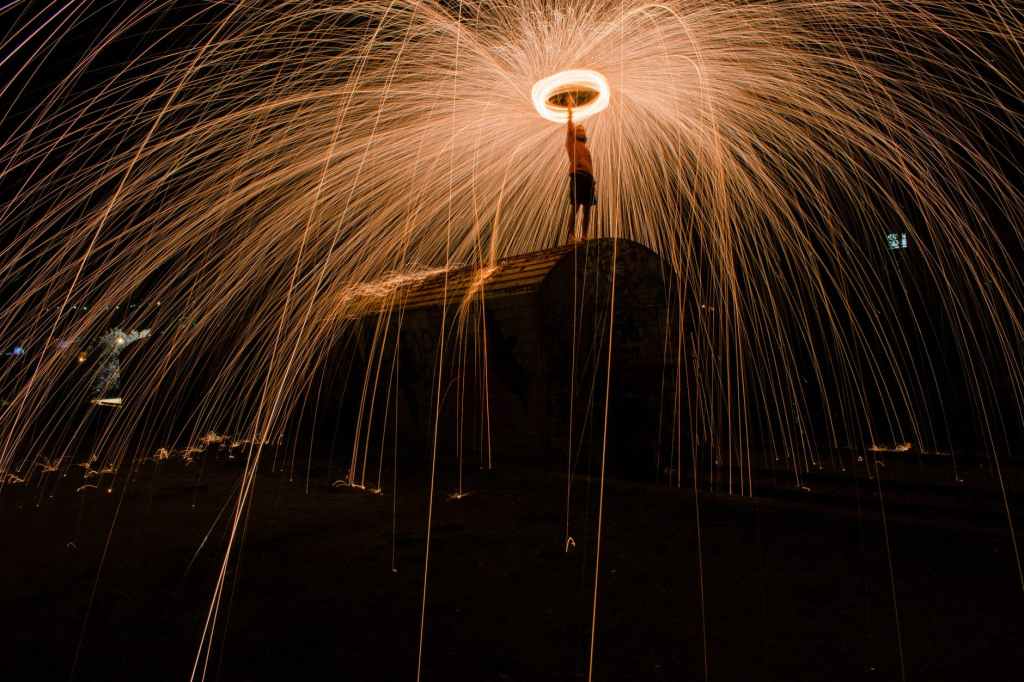
Throwing Stars is based off an ancient Roman juggling competition, adding in a dash of mysticism around the creation of constellations and turning it into a team event. Combat juggling is a modern thing that should be captured in this lore too. Throwing Stars takes combat juggling with magic and then instead of awarding points on surviving, awarding points on the artistry of the creation — a divine act.
When Throwing Stars what object or magic will you create to impress the gods?
You can check out Sports on the Fields of Elysia for free for a few days. It’s a proof of concept, not a final rule set. If the Kickstarter continues on its strong path you may seen the final version of the rules, along with two other team sports.
Try out the rules for sports. Tell us what you think.
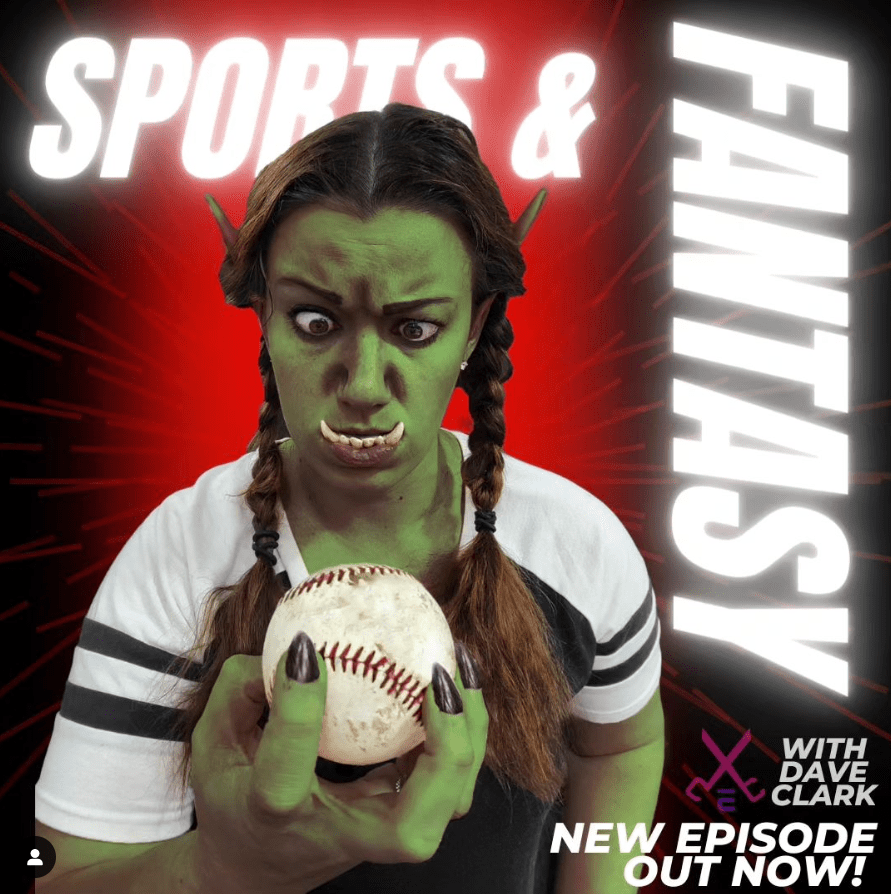
After one of my regular D&D sessions at Logan Brewing someone watching us started asking me about my campaign. I just couldn’t stop talking. We eventually got to talking about Sports in D&D.
That’s when Bears invited me onto her podcast, because I’m a talker.
The Cutting Edge Cosplay group were great hosts. I’ve listened to all of their other episodes and enjoy how much they share their passions for performance via cosplay.
This episode is also available as a podcast.
Share your passions, open up to others — you never know the friends you can make.
Most Dungeons & Dragons settings (Forgotten Realms, Eberron, DragonLance, Midgard, Greyhawk) exist in a similar socio-economic state to the very late Middle Ages through the Victorian period. The commonality of magic, the relative wealth and existence of a middle class, and other indicators compare fairly well to those concepts. There is a certain apocrypha that makes it clear that much of the fantasy we roleplay is not from Arthurian legend, instead there are modern concepts such as trade guilds, inns with more individual rooms rather than sleeping halls, massive sailing ships, some worlds even have printing presses producing newspapers.
Something lacking in almost every world set within that many hundred year period is sports. Almost all sporting events mentioned in the literature are individual in nature, essentially replacing things which were in the original Olympics. This ignores the fact that by the time societies had inns, guilds, papers, etc. they had team sports.
By Unknown author – Pietro di Lorenzo Bini (ed.), Memorie del calcio fiorentino tratte da diverse scritture e dedicate all’altezze serenissime di Ferdinando Principe di Toscana e Violante Beatrice di Baviera, Firenze, Stamperia di S.A.S. alla Condotta [1688], Public Domain, https://commons.wikimedia.org/w/index.php?curid=864734
A partial list of the team sports from around the globe within the time periods that inspire a majority of D&D fiction includes Town Ball (ball, stick, & safety), Mob Ball (ball, foot, & goal), Lacrosse (ball, stick, & goal), Maya Ballgame (ball, stick/hip, & goal), Polo (ball, stick, horse, & goal), Dakyu (ball, stick, & goal with maybe horses), Buzkashi (animal head, horse, & goal), and others – like the predecessor of hockey.
Fantasy Team Sports
Fantasy literature tends to ignore the element of sports. There are some that exist — from the barely mentioned phandrel (team chasing-and-destination) in the Forgotten Realms to, of course, quidditch, which somehow exists in the real world now. The Magicians has welters, which combines chess with magical violence. Strixhaven, the Magic: the Gathering and D&D setting, has Mage Tower and the single reference to Silk Ball (and a map).
Yes, adventures like Tomb of Annihilation, Rime of the Frostmaiden, and Theros capture individual sports.
But we know that the times upon which our worlds are based have a wonderful glut of sports. At the minimum these should be used to add color and flavor to our worlds. Make them part of festivals. Have a red v blue v green v orange v black phandrel contest that interrupts a chase scene, or maybe even becomes part of it.
Still, there’s more available to make your world live and breathe. Not just the Athlete and Gladiator backgrounds, which are great for a hero that specializes in individual sport. Add team sports to your character’s history.
Sports (type): A 5th Edition Tool
Lean into tools for the mechanics. They are an excellent way to add more story to your backstory. The use and specialization in a specific set of tools tells us much about the artisan, the bard, the entertainer and so many other backgrounds.
Expand on your Athlete by adding Sports (type) as one of their tools. Borrow from what was established by Musical Instrument (shawm, etc) for your model. The specific type of sport is purely a flavor and story element, until it isn’t. Maybe, you’ll find a fun town ball bat, or a ball game stick, or whatever, during your journeys and that may provide a clue as to who was in that space prior – DC YY Intelligence (Investigation) with advantage if you have experience with that or a similar sport, for example.
Bringing sports into your game as a tool expands the tales you can tell. Be Waterdeep’s version of Roy Hobbs, or a Sharn’s version of Mara. Maybe during a chaotic match of mob football between Aviceland and Copperwall in the Foxshaw Field you became a folk hero that repelled a skeleton attack.
Don’t Worry About Mechanics
As always, here at Full Moon Storytelling we’re focused on story rather than mechanics. Using a new Tool isn’t going to change your D&D game’s power level, not even as much as Coffee Gear.
Trying to figure out a winner might be necessary, but not with significant frequency. If you wanted to roleplay actual sports something like Blaseball would be a better than D&D. But, if you need a result and want to use the dice, limit the contest to a single roll for each participant on the team (use party sizes of 3 to 6), and have it opposed by an NPC. Through the description of their primary role within the sport and what that character is attempting have them make a roll Athletics or Acrobatics, assigned to an attribute that most fits their action and with advantage if they character is proficient. Then roll the same for the NPC. Have the first team to 3 successes wins that match.
Most games before the codification of rule and laws (baseball and football/soccer in the mid 19th century) could last from sunrise to sunset. If the players succeed on their first three rolls, consider that a game done by lunch. If it takes five, or more due to a bunch of ties, make it last into twilight.
Do not attempt to get deeper into the mechanics than this. Your session doesn’t need hours dedicated to sport. Instead any match should be a way to access new stories told at the table. Instead of hanging at the bar, or boxing – play some Dakyu. Meet some new NPCs based around that event, then hit the tavern to talk about that day’s new star athlete.
Handy Maps for Play
Two-minute Tabletop’s wonderful map works for many structures. There’s a small stadium with markings for halves that could work for town ball or mob ball that develop into a spectator sport.
Welcome to Connor’s Fantasy Stadium battle map, a field of packed earth ready for a clash of gladiators, athletes, or whatever you imagine!
Fantasy sports can be a fun way to add depth and cultural to a campaign world. One of my players in Uprising & Rebellion is playing a character from Mehmd and invented the sport of Goltoppa. He adapted some of the cultural touchpoints from the hidden empire, placing them into the common state of the game and has asked for it to be featured in a session soon. The character in question is not a Goltoppa player or coach.
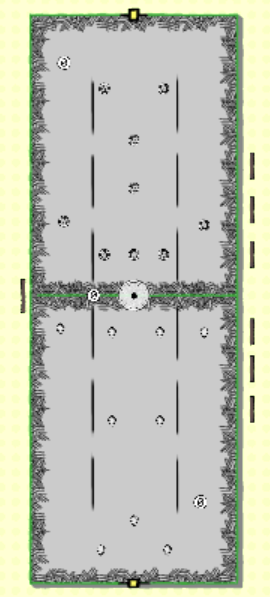
The game is played on an open, flat, dirt field, generally free of rocks & debris, that is 360 feet long by 144 feet wide. The field is split lengthwise down the entirety of the center into 72 feet wide halves, and crosswise at 120 feet intervals. These six resulting areas are marked off with white paint borders. Particularly enterprising/wealthy teams have been known to pay to have the sections magicked to different colors. Straddling the centerline at each end of the playing field is a netted goal, 9 feet wide by 3 feet tall. One narrow end of the field is to be facing North, indicating the “head” of the field. Three referees patrol the playing surface to control the action during the run of play.
Players:
Goltoppa is played by two opposing teams, consisting of 9 starting players on each side. Teams are permitted to ‘dress’ 3 bench players for each contest, to be subbed into the game in the event of injury. Players may not be subbed into the game for strategic reasons or in the event of a player’s expulsion from the contest. A player’s uniform shall consist of a sleeveless tunic, belted at the waist & extending to mid-thigh, in the primary color of one of the six teams currently representing the league’s six social strata: Noble (violet), Military (red), Religious (white), Artisan (gold), Farmer/Fisher (green), Merchant (blue). Note that players are recruited to represent these strata, and need not be members of them. Additionally, players shall wear sandals that wrap up around their calves, with linen padding over their shins. Each team dresses one Left & Right “Slasher,” designated by a black sash that goes diagonally from either left or right shoulder to opposing hip, with the shoulder covered indicating which side of the field they may patrol. Players may wear short pants as well.
Play:
The game is played in two 36 minute halves. At the start of the game, a coin toss determines initial possession, which begins via kicking a ball onto the field from a position to the left of the goal which the possessing team is defending. The ball is traditionally made from a treated cow’s stomach filled with air, or a leather ball of approximately the same size . There are no goalies; all players may attempt to kick the ball toward or away from the goal, or to a teammate. Additionally, each team’s Slashers are allowed to catch the ball on the fly in their hands and run with it to the border of whichever section of the field they currently occupy, at which point they must kick the ball themselves unless trying to place the ball in the opposing goal. A Slasher with possession of the ball may be leg tackled by the opposing team. A successful leg tackle means the Slasher must kick the ball to a teammate (only) from the spot of the tackle. Tackling with one’s arms, striking a Slasher above the waist, or attempting to strip the ball from a Slasher’s hands by a player other than an opposing Slasher is not allowed. A ball that goes out of the field of play results in a change of possession, with the new possessing team kicking the ball into the field of play from the sideline spot where the referees determine the ball crossed out of the field.
Scoring:
A score happens whenever the ball is put into the net during the run of play, A ball kicked into the net scores 2 points; a ball placed into the net by hand scores 5 points.
Penalties:
Rough Play: Arm tackles; deliberate leg tackles of a non-Slasher; headbutts; intentional hands to the face or back of an opponent – Offending player off the field for 3 minutes.
Stripping: An attempt to pull the ball from the hands of a Slasher by a non-Slasher – Offending player off the field for 3 minutes.
Catching: Non-Slasher making deliberate contact with his hands to the ball, especially with an effort to control the ball – Offending player off the field for 2 minutes.
Scooping: Slasher attempting to pick the ball up off the field, rather than catching it on the fly. This includes a ball that bounces before being caught – Offending player off the field for 1 minute.
Offsides: Slasher maintaining possession of the ball beyond the area of the field where he caught it, or crossing from his designated half of the field – Change of possession from the spot; no kick to inbound the ball needed.
Belligerence: Fighting; intentional physical contact/intimidation toward a referee – Offending player ejected.
Playing Goltoppa at the table
There will be a series of contested checks to determine scoring. These will use the Tool Sports: Goltoppa and have a few skills that can connect to them.
My first thought is a way to generate scoring similar to what is described by JayDubTheGamer would be to have five contested checks by half. That’s a lot of rolling, but provides some variety of results and capability of multiple players participating.
Winning a check by 1-5 results in two points. Winning a check by more than 5 results in 5 points. Winning a check by more than 10 results in seven points and winning by 15 or more is good for nine points.
Losing a check by less than 5 results in two points for your own team. Any natural 1 means that you have given up a five-pointer or have committed a foul, rolling their next challenge at Disadvantage. Any natural 20 means that you have scored a five-pointer.
This should generate scores that look a bit like early 20th century American football or current rugby.
Applying skills
Acrobatics and Athletics will be the most used skills, most frequently connecting to Dexterity and Strength. It would also make sense for someone in a coaching position to use Intelligence with one of those and for a character playing the captain to use Charisma.
I would allow up to one role to use Deception in order to get away with a foul. That team would have Advantage on the next check, but if they lose that roll their next roll would be at Disadvantage.
An example:
Violet team
Blue team
Score
13
7
Violet 5: Blue 0
16
20 (natural)
Violet 2: Blue 7
9
15
Violet 0: Blue 5
12
12
Violet 2: Blue 2
4
15
Violet 0: Blue 7
1st half
9 points
21 points
2
9
Violet 0: Blue 5
20 (natural)
7
Violet 12: Blue 0
14
11
Violet 2: Blue 2
18
6
Violet 7: Blue 0
3
9
Violet 0: Blue 5
2nd half
21 points
12 points
FINAL
30 points
33 points
Yes, that’s ten rolls for a non-combat encounter. Which feels like a bit, but the descriptions are at most two sentences, show the shifts in momentum, and feel like watching a sport when including those descriptions especially around the nat 20s.
The mechanics of Dungeons & Dragons don’t force you to choose a pastime or hobby. Outside of Bards and the various Backgrounds that include entertainment and arts there is no obligation or hint that a character should do things besides fight, interact socially to solve or cause problems, or explore a wildernesses and dungeons.
With a limited number of skills and tools you might weaken your character if you take something without a direct impact on their ability to perform as an asset in the adventuring party – so what?
Be a tiny bit weaker and add something that your character enjoys doing that has nothing to do with defeating dragons or wandering dungeons. In the real world in the eras upon which D&D reflects, this was common. Commoners worked less than we do in the modern era.
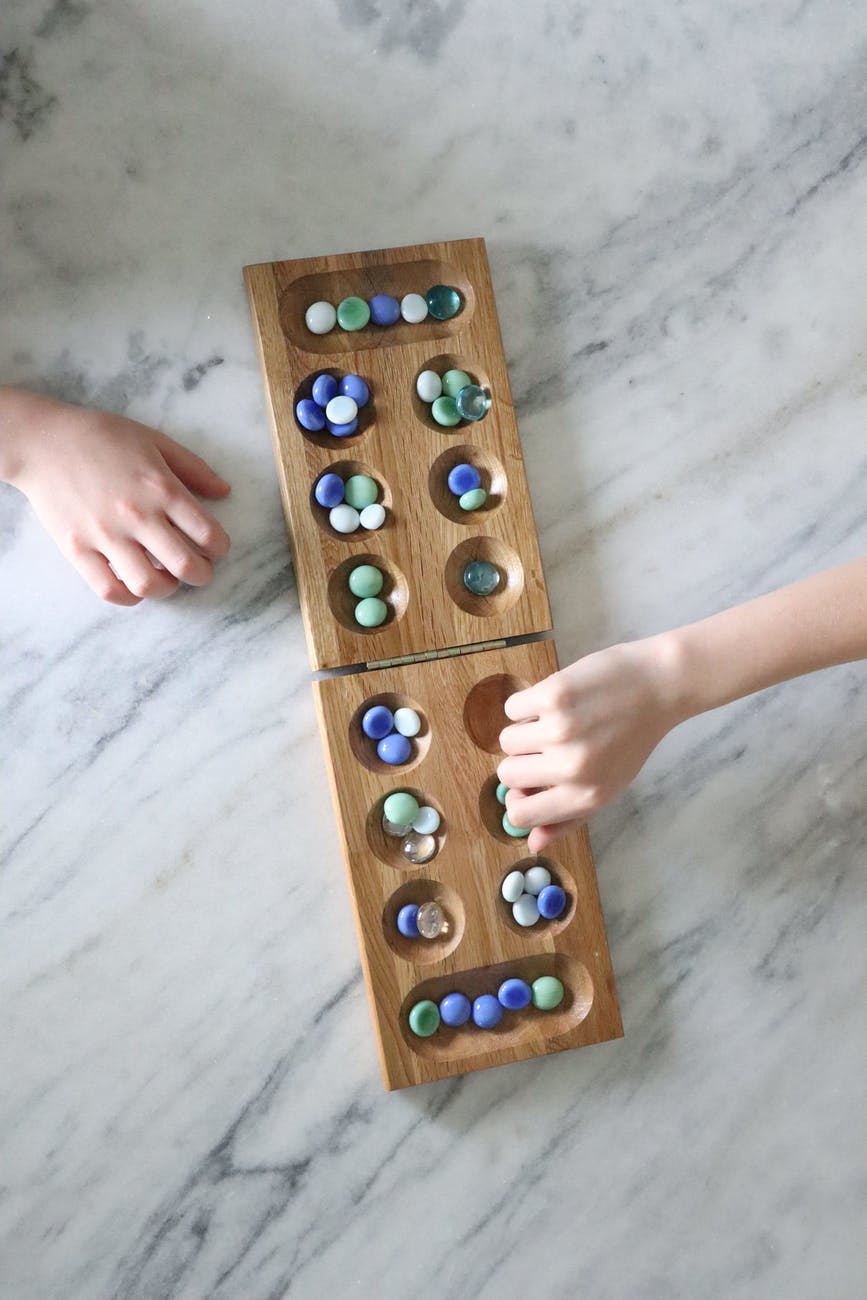
Look at games like draughts, chess, mancala, 9-man morris, hnefatafl, and others lost to history. People had time. They did things with that time that they enjoyed.
They sang songs. Told tales. Wrote dumb epic poems that we still read.
So what does your character do when they aren’t living their life and when they aren’t dungeoning or dragoning?
Burn a tool or skill on this – or don’t! – maybe they enjoy doing something that they are bad at.
Maybe your next PC or NPC is the world’s best tafl player, or the local community’s worst singer. Maybe they make little sweaters for the elves that aren’t actually elves, and then they meet real elves. Maybe they are the old man that talks story to the children of his town.
These elements may show in just a sentence or two in a given gaming session. That’s okay. It’s part of who they are and what they do, even if a d20 isn’t involved.
As is appropriate for so much of Renton’s history, the exhibit starts with a Moses. Henry Moses, of the dxʷdəwʔabš/Duwamish, often referred to as chief, is the entry point for Renton History Museum’s journey through sports history.
Originally scheduled to launch in spring, the museum and exhibit adapted to a the COVID-19 pandemic. Mask usage is required, the staff takes your info for possible contact tracing, there is a path to guide you through the main exhibits, and with the spacious main hall you feel comfortable even when others enter.
The exhibit itself shifted as gaining access to artifacts was complicated due to the pandemic. The delay the launch means that it is up at the same time as What Difference Do Renton Women Make?
Being up at the same time as an exhibit focused on women makes sense for the dive into Renton’s sporting history. After Moses, the display shifts to two girls who helped Renton High School dominate the King County high school basketball scene in the 20s. And then girls’ sports disappeared from schools.
While Renton produced an Olympic quality women’s track star during the stretch between the Great Depression and Title IX, it was more by accident than any plan. After 37 years with a smattering of sports, the US legal ruling brought about a surge in opportunity for female athletes.
The best museum exhibits do not explain everything. Instead they open up stories that inspire you to learn more. Renton History Museum will help do that for the visitor. Even those steeped in the tales of the South King County city will learn that Mark Prothero was more than a lawyer that defended the Green River Killer, but one of Washington’s best swimmers ever.
Before Zach LaVine was winning dunk contests Renton High won titles in both football and basketball, with seven players that featured on both squads. There are other pros that called Renton home, not just a birthplace.
The triumph in the exhibit is the way that it teases you to learn more – to understand and connect with Renton via sports. That there is a throughline to the other feature exhibit as well as two of the three static subjects for the museum is a great bonus.