Tag: RPG

  • Estrella was as Common as they come

    Estrella was as Common as they come

    “Here, fix this,” Estrella’s brother hands her an axe. It takes a few moments and the large chip is gone. “Done.” Others have these big powers, they can do things. Baboli can predict the weather and make flowers bloom. That’s so useful. Femmo does fun little things with fire. He helped clear a new field. It’s so handy.

    She repaired a broken jar and the little ornament she blew for her Journeywork to reveal on Service Day. Chechu, her little pigeon, returns from Kirtin-in-the-Sky. The letter is simple. No exception is granted. She will serve, as all do. A common glassblower, with a messenger pigeon and the ability to mend will serve on the Keltann Slope where Azsel continues to raid. She isn’t a hero. She’s as common as can be. Simple, and ineffective at war, but she will serve.

    Commoners are the foundation of the land. They aren’t adventurers and heroes. They blow glass. They tend bar. They farm. It’s not often that a GM needs a stat block for a Commoner, unless they are routine. At this point Estrella is young, with attributes that don’t seem like they should develop into a fighter, but she’s an experienced glassworker. Below you will find a rules hack to quickly throw together a Commoner who has an uncommon role within your DnD campaign.

    Commoners start with the following attributes and skills.

    Class Features
    HD: 1d4 at 1st and 2nd levels
    HP at 1st: 4+CON
    HP at higher levels: CON + HD if appropriate
    Must have 12 in Apprentice Attribute and 11 in Journeyman
    Array: 12,11,11,10,9,8
    If dice roll: 3d4+3

    Proficiencies
    Padded Armor
    Two simple weapons, 1 must be melee
    Saving Throws: Apprentice attribute at 1st level, Journeyman at 2nd
    Skills/Tools by profession and level

    Estrella’s array is STR: 8, DEX 12 13, CON 9, INT 10 11, WIS 12, CHA 13 with a woeful 3 HP. Her humanness added 3 points. Estrella is a bit of a leaders and wise, for a Commoner. She knows how to use darts and a light hammer.

    As a glassblower she has some skills. As most in Kin she learns some History on the Day of Glight. She knows how to use Glassblower’s Tools, because well, that’s what she does. There’s also a bonus to her DEX or INT, because those are the attributes she uses the most. Since she’s already finished her journeywork we know that she’s actually already reached that second tier as a commoner, a Journeyman. She could set up her own shop now. Her work is decent.

    That has game benefits too. Glassblowers pickup Arcana as their vials and bubbles are often used by various scholars, alchemists and sages. She again gets a bonus to DEX or INT. This time it goes to INT to represent her fascination with book learning. That’s still a pretty poor array. If she continues on her path she’ll become a Master Glassworker with expertise in those tools.

    She could also learn a new profession.

    Obviously she could have been some other profession with other skills and familiarity with tools, but then she would not be Estrella. She’d be a different commoner. Here are a few of those.

    Professions Apprentice Attribute Apprentice Skill Apprentice Tools Journeyman Skill Journeyman Attribute Master Ability Prerequisites
    Artist CHA History Artist Tools Religion DEX Expertise: Artist Tools
    Barber CHA Medicine Insight WIS Dagger
    Blacksmith STR History Smith tools 1 other tool CON Any 1 weapon
    Brewer/Vintner INT Arcana Brewer’s Tools Herbalism Kit WIS Cook or Herbalist
    Butcher STR Animal Handling INT Any 1 slashing weapon
    Carpenter STR History Carpenter’s Tools CON Expertise: Carpenter’s Tools
    Clerk INT History Calligrapher’s Supplies Religion WIS 3 Languages

    A GM could throw together a list of professions or slap them together as needed. They should be skeletons of a class, not an actual class. They shouldn’t even match a background in potency, until their fourth tier as a Commoner when they possibly become heroes, or they are just extraordinary artisans, craftspeople, etc.

    Here are those tiers of play. The first three can be played by PCs if a player wants to have that feeling as the farmboy that becomes something (or the glassblower).

    At 1st level (Apprentice)
    Plus 1 to Apprentice attribute or Journeyman attribute
    Proficiency in Apprentice skill and tool (if only one can take any single skill, language, tool)
    If in Kin gain Bonded Companion
    If in Kin gain single Cantrip

    At 1.1 (Journeyman) – 50 xp
    Proficiency in Journeyman skill. If none listed or already known can take any single skill, language, or tool
    Plus 1 to Apprentice attribute or Journeyman attribute

    At 1.2 (Master) – 100 xp to advance
    Proficiency bonus grows to +2
    Plus 1 to Apprentice attribute

    At 2.1 level (Expert) – 300 xp
    Gain expert ability
    Plus 1 to Journeyman attribute
    Gain HD

    At 2.2 (Adept) – 600 xp
    Learns 1 new skill/tool/kit of choice
    Can take 1 Feat
    Gains +1 to any two attributes related to profession(s)
    Learns proficiency in shield or leather armor and 1 additional simple weapon

    MULTI PROFESSION RULES
    At 3rd level rather than Master can become Journeyman in either profession. Gain those abilities at new 1st level
    At 4th level can advance a tier in either profession gaining those benefits
    At 5th level must advance highest tier one more tier. They would not get a feat, nor the martial profs if multi-professions.

    BECOMING A HERO
    At 300 or 900 xp a Commoner can become a hero and multiclass
    Pick a background and gain all skills, features yet unlearned

    This makes a Commoner, a bit less common. It’s a waste of time for an NPC that won’t regularly interact with characters and is most useful if that NPC is going to partake in some kind of action or encounter with the PCs. For a PC the slow start is difficult. But advancement should be rapid. During a session zero a one-on-one session could take that PC through a couple minor encounters. This type of PC doesn’t need a backstory because they play that backstory.

    Don’t let your regular Commoners remain common.

    We’ll dive back into Estrella’s heroic rise from glassworker to frustrated peace as she meets Teegan and Rohan in their Summer of Service.

  • Developing a calendar, because your players demand it

    Developing a calendar, because your players demand it

    Making a homebrew setting can be rough. You give thought to empires, races, class restrictions, some unique things (cantrips for all, bonded companions). You start to layer on some histories (Lorebooks), maybe a secret society or two, some competing faiths as well. Eventually you think “this can run.”

    Then your players ask you a question you can’t answer quickly. Sunday, that question was “What day is it?”

    I thought I had the answer. “It’s seven days since you started your quest.”

    “Actually, it’s nine. I wrote that down. I mean what day of the week is it? What month?”

    “Oh, you want a calendar. I don’t have one. I’ll fix that. For now, consider it late Spring.”

    Then the searching the internet started. Calendars need a few things answered. Are there moons and how many? Are the moons tidally locked? How fast do they orbit the planet? How many days does the planet to take to orbit its sun? Does the dominant culture mark its calendar by the moons or by sun?

    So I started answering some of these, but not in a particular order. There were some things I wanted. The calendar where the characters were active would be a solar calendar that has no months, just seasons. Then I decided to cheat and make one of the moons have a cycle that matched the seasons. This is cheating. It lacks realism, but it can have verisimilitude. As long as this is kept consistent and reasonable, it creates a believable, though unreal, world.

    Decisions to this point: solar calendar, four months that match the seasons

    Would there be other moons? Yes. After a quick internet search I found an awesome resource for calendar creation and played with some ideas. At one point there were seven moons, but eventually I brought it down to four moons. Moon three guides the calendar of the lands of Telse, Kirtin and Daoud with an origin from one Qin was dominant in the South and West. It is roughly the size of our moon.

    Moon four (The Dragon) is absurdly large, but also quite distant with a long orbit of just under 20 years. It is a generational moon. The calendar won’t be guided by this, but some holidays and story points can be. Maybe a culture considers its people as One Dragon (developing), Two Dragons (Young Adults), Three Dragons (Adults), Four Dragons (Aged), and Five Dragons (Ancients). Boom! More development right there. This makes a lot of sense for Crinth. They don’t celebrate years, but the passing of The Dragon and how many times someone remembers it being Full.

    That’s moon three (Kin) and moon four (The Dragon). But what if I want some cultures to use a lunar calendar?

    The answer is moon two (Glibbon). For ease of rules conversion this moon is at 31 days. Making a moon, or other satellite, that follows between 28-40 days should keep your DnD rule-set simple enough. Monthly spells/features/etc should maintain their power. Azsel and Mehmd would use this calendar system. Complicated conversions won’t be necessary as the game will run using the Qin Calendar as the Scholars and host city use it. But at times referencing the competing calendars can help make the World of the Everflow breathe life.

    For fun I added a moon with a weekly cycle. The tiniest of the moons (Feylf) whips around the planet every seven days. Crinth’s druids use this moon quite a bit.

    Decisions: Four Moons. Three competing calendar systems with one dominating the educated classes, two Kingdoms and a several fallen Kingdoms.

    Another thing needs to happen. What is year zero? That changes. The common calendar on Earth starts in a year that is recognized as the birth of Christ. Prior to that is BC or BCE and after is AD or CE.

    On Kin the most important event is simple – The Awakening. That’s the start of the Qin Calendar. It began 22 years ago. The current game, answering that player’s question, is now 71 Spring 22 P.A QC. That’s when The Five cashed their cheques from Mayor Kellamon upon returning to Telese.

    This convention is common in the Western Wildes (Telse, Qin, Mira, Sheljar, etc) and through the Scholars. Kirtin and Daoud start with the conquest of Kirtin-on-the-Lake. On the Qin calendar that was on the 4th day of Autumn 792 BA. The two Hundred Years wars started in 543 BA and 291 BA.

    But, the calendar also needs names for its days. I decided on seven day weeks for two reasons – we’re used to thinking like that and because any rules that reference weeks are pretty simple.

    Decisions: Four moons, three calendars, seven days.

    Naming the days would in some ways echo the real world.

    1. Elmsday starts the week and honors Selley (Goddess of Birth, Life and Death) and Belsem (Goddess of the Untamed).
    2. Bell’an’Aur is the second day of the week. It starts with a rejection of that which can’t be tamed and ends with a dinner celebrating Aur. Aur is the name of the planet. It hadn’t had a name until the calendar issue came up. In Kirtin and Crinth this is Feylfday and is the day when Feylf is full, shortly after sunset.
    3. Quarsday is the third day. It celebrates Quar (God of Rivers, Mountains)
    4. Day of Glight honors the Lord of Knowledge. In developed lands the afternoons are given to learning.
    5. Torday honors Torq (Goddess of Sea and Storm).
    6. Az and Sel is day six. This honors not a god within the Wildes/Kirtin/Daoud, but the man and dog that legend says discovered the bonding. Nik is also frequently honored on this day. Azsel recognizes Az and Sel as man and dog that raised to the gods.
    7. Day of Oun is the end of the week. Oun and Obscon are not honored. The Lords of the End are respected in that all things end. They are feared.

    There are a few other things that should be noted, and here I leaned on the players again. It’s a complex set of moons. When are they all full? That would be every 337,435 Auran years (they have 312 days), except that when the 20 year moon is full it stays full for several weeks. The Dragon is full to the human eye for over two years. So four full moons happens about every 17.5 years. Three full moons happen every 7.75 years. Every 217 days two of the moons are full at the same time.

    To look at the Qin Calendar in the year when The Five are in action click here and enter the following on the data tab.

    {“year_len”:312,”events”:1,”n_months”:4,”months”:[“Spring”,”Summer”,”Autumn”,”Winter”],”month_len”:{“Spring”:78,”Summer”:78,”Autumn”:78,”Winter”:78},”week_len”:7,”weekdays”:[“Elmsday”,”Bell’an’Aur”,”Quarsday”,”Day of Glight”,”Torday”,”Az and Sel”,”Day of Oun”],”n_moons”:4,”moons”:[“Feylf”,”Glibbon”,”Kin”,”The Dragon”],”lunar_cyc”:{“Feylf”:7,”Glibbon”:31,”Kin”:78,”The Dragon”:6220},”lunar_shf”:{“Feylf”:1,”Glibbon”:9,”Kin”:0,”The Dragon”:0},”year”:22,”first_day”:1}

    All of this effort did not create just a calendar. For the most part when role-playing players will not refer to a custom calendar. It’s tedious and slow. But, you should know how many days are in a year and when you create your custom calendar you start to create festivals, celebrations and justifications as to how certain cultures think. Now, with a calendar there is life to the worldspace.

    “What day is it?” asked Samul, a Barbarian from Mehmd who currently lives in Telse.

    “It’s 71 Spring 22 P.A QC a Bell’an’Aur. Glibbon is full later this week when Ahid (the sun) hides Ounsday.”

  • Session 8: Return to Telse

    Session 8: Return to Telse

    Waking the morning after taking the Lorebook away from Cortez The Five rescue a half-dozen cattle. Starting on their way back to Telse they know that they will move slowly. Maurice heads off on his own to scout the road. There is some concern that the Western Tower of Telse may be held by non-friendly forces. The rest of The Five (now actually five) start the slow trudge through lands as a light fall of ash continues.

    Around noon the ash stops falling. A few homesteads are out in this land, but it is mostly wild. A light forest is off to the North while the right side of the road is a rougher land of hill and rock. Off to that wooded side Saffron notices a mix of men and canines rushing from stand of trees to woods. She can’t make much more out than that, but does warn the group.

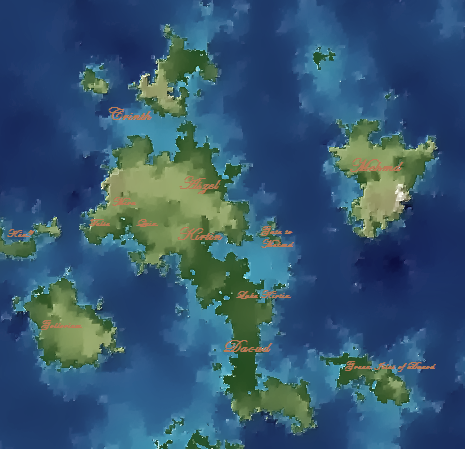
    Map of KinOnward they travel, a bit more wary and unworried. An hour or so later, Samul in lead position sees two canines and two men. They are then joined by a third wolf. Shonie stops the cattle. Samul walks steadily forward. This is too simple to be a trap.

    Saffron recognizes one of the men from the Village of Nak. These are enemies. Behn and Saffron ready their crossbows. Samul readies his chain, slamming it into the ground as his left foot hits the ground. Aamar and his bear cub Bernie move through the cattle preparing to help.

    Action is swift. The wolves fly forward with two rushing the barbarian and another targeting Saffron. Behn lets a bolt fly. It’s a miss. Everyone is rather surprised.

    Samul enters a frenzy, whipping his chain at the two wolves. Both strike him as he misses. He shrugs off the wounds. Saffron utters dissonant whispers. The wolf charging her whelps turns 180 degrees and dashes off into the woods. The wolf rushes past the man that she recognized. The wolf and man can’t run away fast enough. The man’s fear is from recognition. The wolf’s fear from that spell.

    Samul’s chain whips into wolf, this time ripping through the fur, tearing out flesh. It’s human companion cringes, as his bond leaves the living world. Aamar speaks the healing words of Quar and the minor wounds from the wolf bites are gone. The rival acolyte of Nak hit Aamar with his second scared flame. Aamar dodged the first.

    The Bard speaks a quick rhythm, inspiring Samul to success as she charges the remaining battle. Samul takes out the acolyte. When Saffron reaches the conflict a single stab of her sword is all it takes. It’s over. A few seconds of fury and a clear signal that Nak’s followers weren’t entirely eliminated.

    They march onward and camp prior to sunset. Overnight, on the final watch, Samul notices a herd of elk leaving the ashen lands of the northwest for more fertile lands around the Ferments.

    By morning all are rested, healed. A ranch on the road’s right seems a good spot to offer the cattle. Aamar sells them at a below market rate, but the group takes in some gold for their efforts.

    Maurice returns from his scouting trip, winded.

    “Ahead, the Telse’s Western Tower, it’s no longer under the town’s control,” he spits out between heavy breathes.

    “Who took it?” Aamar asks.

    “Obscon’s followers. There are dozens. Some laborers still work for them.”

    “All armed?”

    “Not all, but most.”

    “We should go around,” Aamar suggests.

    “Why?” Samul’s thoughts are simple.

    “To the North or South,” asks Saffron.

    “Maybe we get closer and see what path would be easier?” Shonie questions. The group nods. That’s the plan now. Mo scribbles out a tiny map. If the approach makes it clear that they cannot risk trying to go through Obscon’s annihilationists they can head into the hills to the South.

    That’s the path. A few days of construction and the fence towards the Sheljar Gate has made more progress. The rougher lands to the south will provide more cover. The group turns towards the Ferments giving space to Obscon’s faithful. Popping over a crest they notice a man and a female goliath hunched over at a bush.

    The two don’t seem hostile. Their robes indicate that they are local circle of druids, plucking herbs.

    “Ho!” calls out Aamar.

    The great goliath gives greeting back. Her bird flutters about her shoulder. “You’re the group searching for the Book! Are you back?”

    Aamar answers, “we’re on our way, but the tower was taken.”

    “Yes, Obscon’s followers were forced away from the West Gate by Piyu and Allison. But, that group took the tower and the Guard isn’t enough to take it back.”

    “Is the gate safe”

    “Yes, we will return through the West Gate when we go back to our apothecary.”

    “Thank you.”

    The druids are left to their gathering of herbs. The Five (actually six) head towards Telse. They reach the gate with others who’ve had to go overland rather than along the road. Trade with the Western Wildes will be greatly diminished with Obscon’s people taking over the gate and a volcanic eruption. When they left the guard numbered four. Now there are eight from the Guard and eight militia as well.

    Walking into the city along the Western Street the group passes the stables where those with larger bonds leave them under highly paid care. The streets bustle with dogs, cats and birds. Bernie gets some odd looks. Bear cubs are not typical companions. They pass houses and shops with Telse’s unique mix of halfling houses, human houses, goliath homes and those with entries that accommodate all. As they approach the Market and the Font of Two Paths (the Everflow) The Five pass Allison’s house and Barracks. The Mayor’s office and rooms are across the street along the edge of the market.

    The Mayor’s is a multi-racial building with 14 foot stories and a sequence of doors and hatches for Kin and their bonds. Aamar knocks. Kellamon answers. The portly halfling asks them to enter. “I will write you a script that you can cash at the money changer. You will be paid. Take the Lorebook to Ollium. He knows the local scholars that can study it safely.”

    Aamar, Saffron and Samul’s players were present for this session. The group is considering an attempt to convince Bishop Ollium that they should remain in control of the Lorebook. They’ve found that book, but they didn’t get answers, only more questions.

    The remaining Nak cultists, wandering herd of elk and druid herbalists were all rolled random encounters. The group was about to charge through the Towers but the quickly sketched map started to sway them away from the simple action. Rather than take a wide path their narrower route did result in more random encounters, but the one that hit provided some story rather than violence. The elk were another such story device, that showed how the events in past sessions change current ones. Encountering more members of the Nak group gave the clue/reminder that not all of that faith were destroyed.

  • Lorebooks

    Lorebooks

    Lorebooks, and the search for them, are a large portion of the questing nature of early adventures in the Land of the Everflow. Rumors abound that there is a person, or persons, that have the Book and they know why the Awakening happened. Before the Awakening these were merely thought to be great tomes of knowledge, describing history that goes back thousands of years and even to a time before companionship. After the Awakening some sought them only for knowledge, others soon learned that they are also repositories of power.

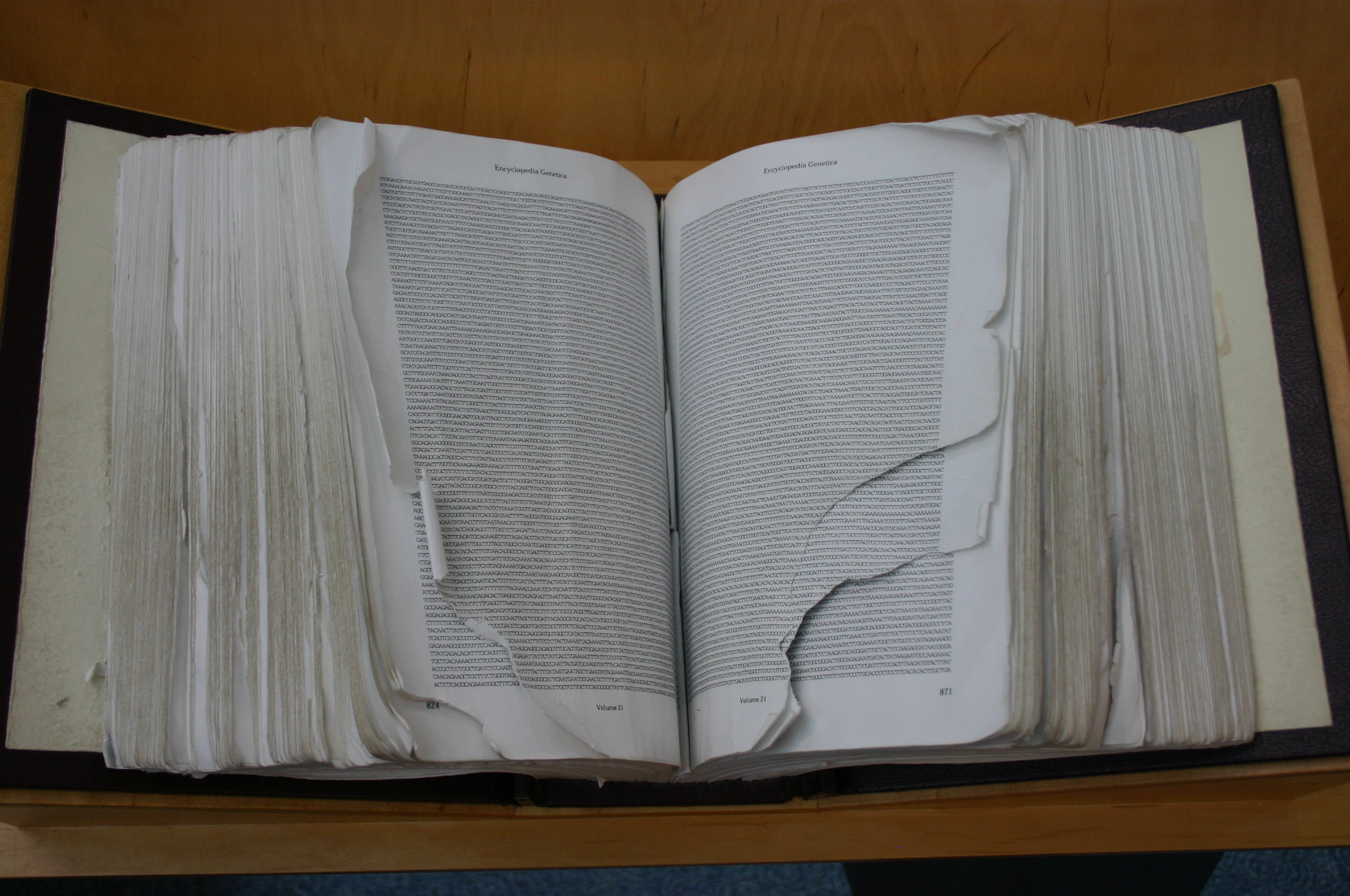
    Actual photo of Encyclopedia Genetica by Ryan Somma at https://flic.kr/p/a6yTFZ
    Actual photo of Encyclopedia Genetica by Ryan Somma at https://flic.kr/p/a6yTFZ

    The Five have learned that there are more than just the Lorebook they hold. They also learned that Cortez refers to other scholars around Kin that communicate and hide these books from those attempting to use them.

    They do not know how these Scholars are using the books. Chorl was once a student under Cortez and clearly sought to use the book to advance the cause of Nak. Trapped between this contest for control of the Lorebook they witnessed Cortez cause a volcanic eruption and probably destroy Chorl and his cultists. As Cortez laughed at his power The Five fled the area with the tome.

    Now they head towards Telse with the Book in hand and somewhat aware of the powers contained within it.

    The Lorebook
    wondrous item, legendary

    Half of each Lorebook contains a history of Kin that starts at an event called The Uncoupling. The event itself is not described. The book that the Five hold talks about the Western Wildes and various empires that rose and fell throughout history – Qin, Mira, Bell’an, Telse and Sheljar. That history ends about 10 years prior to the Awakening with Sheljar ruling the West. The introduction includes a summation of the People of the Land, the Land of Az and Sel, Ahid’s Home, the Green Isle, Gallinor and Lake Country.

    Any intelligent peoples within 90 feet of the Lorebook are able to cast divine spells at standard casting times. Arcane spells do not climb the wild magic spectrum as is standard in Kin. If a Lorebook is attuned to a thinking person that person gains +1 INT while in control of the book. When attuned the Lorebook’s range becomes 100 feet times the attuned user’s Intelligence modifier. The attunee can also, as a bonus action, choose to limit the effects of the book to only their allies, limited to a number of intelligent peoples by their intelligence modifier. These effects do not override cantrip casting, only leveled spells.

    Finally the Lorebook can also act as a spellbook as the final half of the book contains hundreds of spells.

  • Post-Awakening Spellcasting in Kin

    Post-Awakening Spellcasting in Kin

    In the lands of the Everflow there was no magic, only legend. Those legends were of immense powers, wizards and priests, dragons and gods. They are a fiction. All magic was a fiction, until just a generation ago. When the Two Day Moon came things changed. Power flowed through people in ways that they don’t yet understand. Every single intelligent peoples of Kin have a cantrip, but they are still learning how to activate these tiny spells.

    A few release themselves to the powers that flow through the land. These Wild Sorcerers barely control the magical powers that surge in their system. Others have discovered that the through careful practice and faith in the gods, or the lands, they can accomplish little moments of divine influence.

    The newly magical lands and people mean that there are some changes to the baseline magic system in 5th edition.

    Cantrips

    Everyone can learn a single cantrip at the age of maturity. They often manifest during any bonding ceremony. When a player builds their character they pick from the appropriate list (Halfling-Bard, Goliath-Druid, Human-any except warlock; lists from PHB 207-210). An NPC could role randomly, or the DM would select what is best for the story. A character that takes the Magic Initiate Feat (PHB, 168) gains the two cantrips per the following modified rules. They also get the single 1st level spell once per short rest.

    Cantrips in the Land of the Everflow are not at-will spells. The peoples have not yet gained the education to channel magic in such a way. Instead any Kin can cast any cantrip they know once per short or long rest, plus their character level, plus the controlling attribute bonus of the cantrip (determined by the class list from which they learned the cantrip). The controlling attribute also grants a damage bonus based on that controlling attribute’s bonus.

    Example: Gregr is a 3rd level Goliath Ranger who knows Poison Spray. His is a wise Goliath with a 16 Wisdom. That +3 modifier means he can cast Poison Spray 7 times per rest. When cast it produces a cloud that does 1d12+3 poison damage.

    There is also one new cantrip available to any character. First Aid replaces Spare the Dying.

    First Aid
    Evocation cantrip.
    Casting Time: 1 action
    Range: Touch
    Component: V, S
    Duration: Instantaneous
    A creature with zero hit points that you touch regains 1 hp and gains 1d4+casting modifier temporary hit points for the next minute or until they take damage that removes temporary HP. It is most often used so an injured companion can retreat from battle. This spell does not work on undead or constructs. At 5th, 11th and 17th level another d4 is added to this effect.

    Divine Casters

    Through the communities of priesthood or the druidic circles clerics and druids have learned more about how to channel their faith and call on the influence of their gods. Both clerics and druids prepare spells per the PHB, but they cast all non-cantrips as rituals. The only exception are the spells that they gain through their domain or circle and their cantrips. All cantrips are cast per the Kin modified rules.

    Paladins and Rangers are mundane in Kin.

    Arcane Casters

    Warlocks and Wizards are not present in Kin. This is also true of Eldritch Knights and Arcane Tricksters.

    Bards are mundane and only learn the College of Lore.

    Wild Magic Sorcerers are those people of Kin that opened themselves to the weave of magic and barely control what occurs. Their spells are not rituals. The primary change is that their Wild Magic Surge (PHB 103-4) chance increases by 1 every time they cast a non-cantrip. This surge meter resets on a long rest. At 2nd level these Sorcerers can also choose to spend sorcery points to remove two steps from their surge meter. A Wild Magic can also choose to risk a surge by taking four steps towards surging and gain a sorcery point.

    Players or DMs can use a d20 to track their surge chance.

    Magic Items

    Magic in the Lands of the Everflow is common at its lowest levels, but extraordinarily rare beyond that. This is also true for magic items. Beyond bottled Waters of the Everflow (acts as healing potion) and other blessed locations magic items are under the purview of ruling families, guilds, and faith groups. There is/are the Lorebook(s). Every Kingdom has a Sending Stone. Their partner stones may or may not be on Kin. The fallen Kingdoms Stones were collected by the conquering peoples. Each faith has a Blessed Robe that is passed from leader to leader. Characters know of these by making an INT (Arcana) DC 25 check or a INT (History) DC 30.

    Other magic items do exist. Their value is nearly immeasurable. Each has a story. Even a simple +1 longsword is named. Its owner can talk about how she earned it, and how that person earned it or how they died.