Working with PJ over at Homebrew & Hacking, I’m helping put together a set of backgrounds and other elements for a micro-setting for use in the 5e D&D variant Level Up. Our project is tightly focused on a culture of temples, philosophers, oracles and city-states — Worlds to-go! The Elysians.
One of the reasons I chose a Level Up project rather than traditional 5e Dungeons & Dragons is that Level Up puts a large emphasis on Backgrounds and Cultures. Things like NPC connections, mementos and even advancement in that pre-heroic profession are featured in a Level Up Background. That fits how I want to tell stories using D&D.
I also listen to PJ’s podcast quite a bit, which I guess PJ just found out.
For the project some of my previous Backgrounds will be adapted, but there are also new ones that help fill the micro-setting of the Elysians.
Head over toKickstarterand click on “Notify Me On Launch” to see the project when it is live. The team PJ is putting together will provide you with some simple tools to help expand your D&D stories and maybe even tell the future.
Most Dungeons & Dragons settings (Forgotten Realms, Eberron, DragonLance, Midgard, Greyhawk) exist in a similar socio-economic state to the very late Middle Ages through the Victorian period. The commonality of magic, the relative wealth and existence of a middle class, and other indicators compare fairly well to those concepts. There is a certain apocrypha that makes it clear that much of the fantasy we roleplay is not from Arthurian legend, instead there are modern concepts such as trade guilds, inns with more individual rooms rather than sleeping halls, massive sailing ships, some worlds even have printing presses producing newspapers.
Something lacking in almost every world set within that many hundred year period is sports. Almost all sporting events mentioned in the literature are individual in nature, essentially replacing things which were in the original Olympics. This ignores the fact that by the time societies had inns, guilds, papers, etc. they had team sports.
By Unknown author – Pietro di Lorenzo Bini (ed.), Memorie del calcio fiorentino tratte da diverse scritture e dedicate all’altezze serenissime di Ferdinando Principe di Toscana e Violante Beatrice di Baviera, Firenze, Stamperia di S.A.S. alla Condotta [1688], Public Domain, https://commons.wikimedia.org/w/index.php?curid=864734
A partial list of the team sports from around the globe within the time periods that inspire a majority of D&D fiction includes Town Ball (ball, stick, & safety), Mob Ball (ball, foot, & goal), Lacrosse (ball, stick, & goal), Maya Ballgame (ball, stick/hip, & goal), Polo (ball, stick, horse, & goal), Dakyu (ball, stick, & goal with maybe horses), Buzkashi (animal head, horse, & goal), and others – like the predecessor of hockey.
Fantasy Team Sports
Fantasy literature tends to ignore the element of sports. There are some that exist — from the barely mentioned phandrel (team chasing-and-destination) in the Forgotten Realms to, of course, quidditch, which somehow exists in the real world now. The Magicians has welters, which combines chess with magical violence. Strixhaven, the Magic: the Gathering and D&D setting, has Mage Tower and the single reference to Silk Ball (and a map).
Yes, adventures like Tomb of Annihilation, Rime of the Frostmaiden, and Theros capture individual sports.
But we know that the times upon which our worlds are based have a wonderful glut of sports. At the minimum these should be used to add color and flavor to our worlds. Make them part of festivals. Have a red v blue v green v orange v black phandrel contest that interrupts a chase scene, or maybe even becomes part of it.
Still, there’s more available to make your world live and breathe. Not just the Athlete and Gladiator backgrounds, which are great for a hero that specializes in individual sport. Add team sports to your character’s history.
Sports (type): A 5th Edition Tool
Lean into tools for the mechanics. They are an excellent way to add more story to your backstory. The use and specialization in a specific set of tools tells us much about the artisan, the bard, the entertainer and so many other backgrounds.
Expand on your Athlete by adding Sports (type) as one of their tools. Borrow from what was established by Musical Instrument (shawm, etc) for your model. The specific type of sport is purely a flavor and story element, until it isn’t. Maybe, you’ll find a fun town ball bat, or a ball game stick, or whatever, during your journeys and that may provide a clue as to who was in that space prior – DC YY Intelligence (Investigation) with advantage if you have experience with that or a similar sport, for example.
Bringing sports into your game as a tool expands the tales you can tell. Be Waterdeep’s version of Roy Hobbs, or a Sharn’s version of Mara. Maybe during a chaotic match of mob football between Aviceland and Copperwall in the Foxshaw Field you became a folk hero that repelled a skeleton attack.
Don’t Worry About Mechanics
As always, here at Full Moon Storytelling we’re focused on story rather than mechanics. Using a new Tool isn’t going to change your D&D game’s power level, not even as much as Coffee Gear.
Trying to figure out a winner might be necessary, but not with significant frequency. If you wanted to roleplay actual sports something like Blaseball would be a better than D&D. But, if you need a result and want to use the dice, limit the contest to a single roll for each participant on the team (use party sizes of 3 to 6), and have it opposed by an NPC. Through the description of their primary role within the sport and what that character is attempting have them make a roll Athletics or Acrobatics, assigned to an attribute that most fits their action and with advantage if they character is proficient. Then roll the same for the NPC. Have the first team to 3 successes wins that match.
Most games before the codification of rule and laws (baseball and football/soccer in the mid 19th century) could last from sunrise to sunset. If the players succeed on their first three rolls, consider that a game done by lunch. If it takes five, or more due to a bunch of ties, make it last into twilight.
Do not attempt to get deeper into the mechanics than this. Your session doesn’t need hours dedicated to sport. Instead any match should be a way to access new stories told at the table. Instead of hanging at the bar, or boxing – play some Dakyu. Meet some new NPCs based around that event, then hit the tavern to talk about that day’s new star athlete.
Handy Maps for Play
Two-minute Tabletop’s wonderful map works for many structures. There’s a small stadium with markings for halves that could work for town ball or mob ball that develop into a spectator sport.
Welcome to Connor’s Fantasy Stadium battle map, a field of packed earth ready for a clash of gladiators, athletes, or whatever you imagine!
One gap in the official backgrounds is the trope of innkeeper. So many tales that inspired this game consist of an innkeeper (and we’re keeping that slightly different than barkeep) who exists as an NPC. A related topic, and one I wished to amplify is that version of an innkeeper who plies their trade at a frontier stop or waypoint on a much travelled road. The Caravanserai is meant to capture that individual, and the alternate the urban innkeeper.
Along dusty roads and alpine trails there are forts that operate as a rest stop, place to pickup supplies, maybe an opportunity to trade, and a safe enclosure from the dangers of people and nature. You grew up at one of these caravanserais, or moved there when young, learning the lingua franca and other tongues, picking up on the various cultures that came through the walls to spend a night or a week in your safety.
When bandits attacked you helped to defend the fort, as did everyone within. Some may focus on those tales. Others would focus on the caravans traveling with spices and fabrics from lands that others only think of fanciful stories, but for you are the real origins of people you’ve met. You are worldly, without travelling the world until now. Gifted a family heirloom you are off on a journey away from safety, ready to explore spaces that are no longer fiction.
Skill Proficiencies: Animal Handling, Insight Tool Proficiencies: None Languages: Any two (Thieves Cant included) — as always, using cultures is better Equipment: Abacus, Baton (a club with finesse properties), Bell, Blanket (2), Guestbook, Candles (5), Map Case, Traveler’s Clothes, Ink Pen, Heirloom Spyglass, 5 gp
Feature: Warm Welcome
When you first meet new people they usually assume you are friendly. Your demeanor is such to put them at ease. Those being chased, followed, or otherwise harassed seek you for protection and comfort. For the most part, thinking peoples want to be on your good side because you are known to accept those in need, especially those who can pay.
Characteristics: For now, use those from the Folk Hero or pick & choose your favorites. Whenever my background project sees full publication there will be unique characteristics for each of them and feats, because that’s what 2024’s version of the game will have.
You either worked at an inn owned by others, once owned your own small inn, or have left the inn owned by your family as you head out into the world of adventure. Whether you come from a small town or a metropolis, your experiences are generally urban. You know the temples, libraries, parks, and other civic buildings of the neighborhood as well as someone who works or lives there.
People know your inn as a place for visitors and some locals. They know your for your ability to make friends, for your ready weapon to enforce the peace within your building, a willingness to clean up a mess, and that you always have the right key available.
Changes from Caravanserai
Replace the Animal Handling skill with Persuasion or Intimidation.
Replace the equipment of the Caravanserai with the following.
Equipment: Abacus, Any Simple or Martial Weapon, Bell, Blanket (2), Guestbook, Candles (5), Map Case, Traveler’s Clothes, Towel or Rag, a Key Ring, Ink Pen, 10 gp
This map from Newbie DM inspired the release of these backgrounds. Every innkeeper should have an inn they left when they started out on their adventure. There are many reasons to leave that life, some by choice and others more sinister. When creating an innkeeper or caravanserai have a map of that location, and a story about why you left.
I’ll admit, leading with the Caravanserai is inspired by my studies (Near Eastern Cultures and Civilizations, Arabic), my gaming passion for al-Qadim, and my visits to Palestine, Israel, and Kuwait. Also, there are some unique spaces to fill. The heirloom spyglass is a fun trick of creation. Taking that away from the family adds story. Adding a weapon in which the character may not be proficient is a technique I’ll lean into a bit in the backgrounds project. Certain civilian (aka non-adventuring) roles in a society will have a weapon, but not necessarily be good at using it.
Whether the Silk Road or ancient mountain pass, travel routes have always, in every culture and geography, needed the safe respite away from brigands, bandits, wild animals, and extreme weather. At this locales the caravanserai and/or innkeeper offers a warm smile, food & board, and information all for just a few coins.
Custom Backgrounds for 5th edition Dungeons & Dragons
Waterdeep, Tear, Dragaera City, Tajar, Zobeck — whatever the city in your world, there are barbers. The technology exists, and the art of Dungeons & Dragons provides a dazzling array of hair and beard styles that go well beyond those from the real world. But how would you play a barber or stylist in D&D?
That’s easy, via backgrounds. They’re what you were before. Maybe some heroes, especially rogues and bards, would learn to use their common implements as weapons. But anyone could be a stylist or barber before.
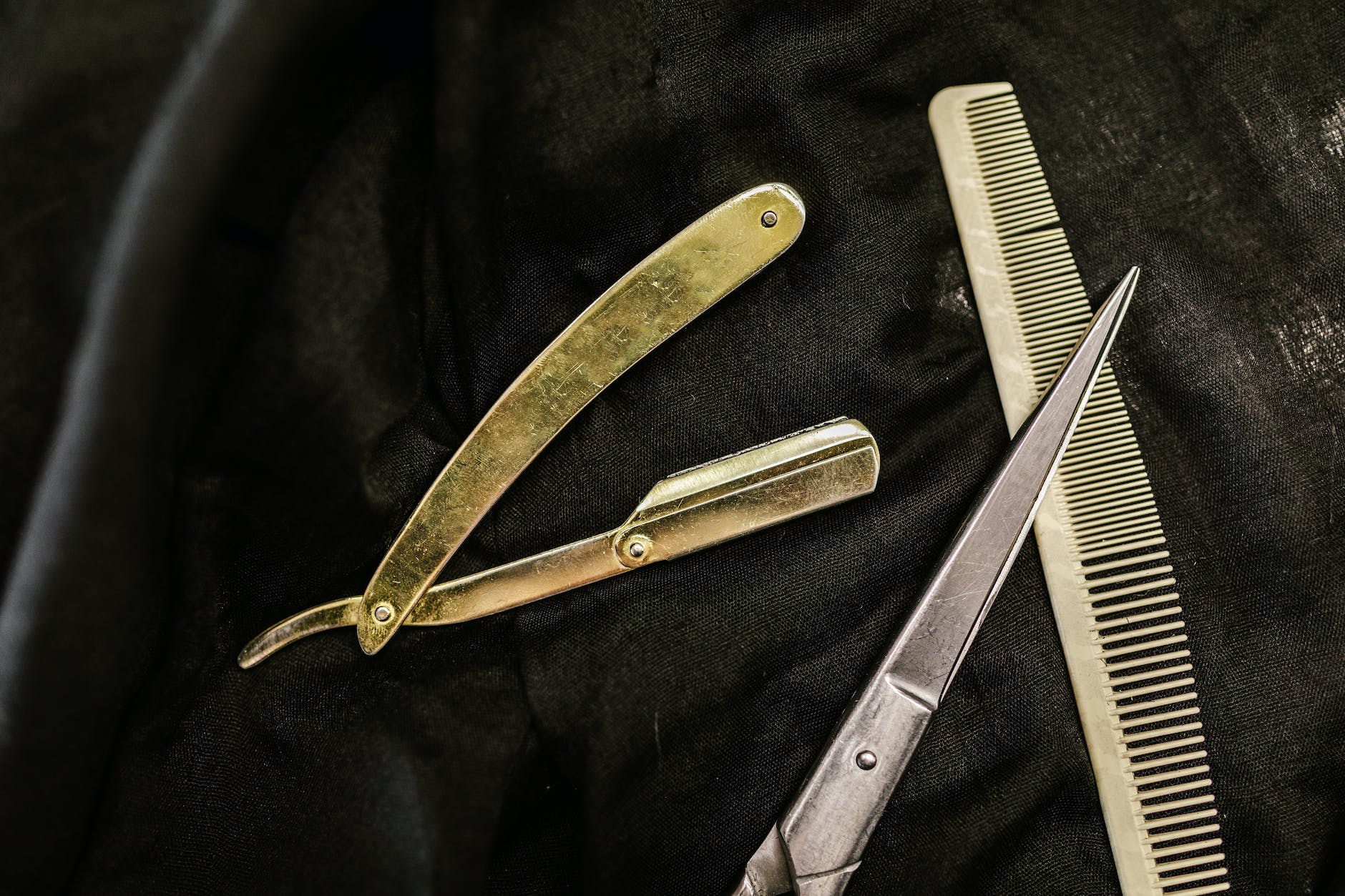
Whether in a big city or travelling between cities, you are an expert at maintaining hair whether on face or head. With your scissors or razor you create art with hair. Additionally you are capable of non-magical healing. Depending on your practice you may use leaches, your blades or some other form of blood letting.
Barbers, under any name, are also strong conversationalists. When others are in your stool or chair they feel welcome, sharing the conversation of the neighborhood and their own life.
Skill Proficiencies: Insight, Medicine Tool Proficiencies: Barber’s Tools, Healer’s Kit Languages: No additional languages Equipment: Barber’s kit, two Healer’s Kits, two vials of perfume, a stool, pouch with 5 gold.
Feature: Bloodletting
Whether via razors or leaches, using an action the Barber grants a willing creature the ability to expand a hit die to heal or recover from certain non-magical conditions (Charmed, Frightened, Incapacitated, Paralyzed, Poisoned, Unconscious). The creature takes on a level of exhaustion.
Personality traits would be similar to the Folk Hero, the Acolyte and the Fisher.
Barber’s Kit
Cost: 25 gp | Weight: 2 lbs
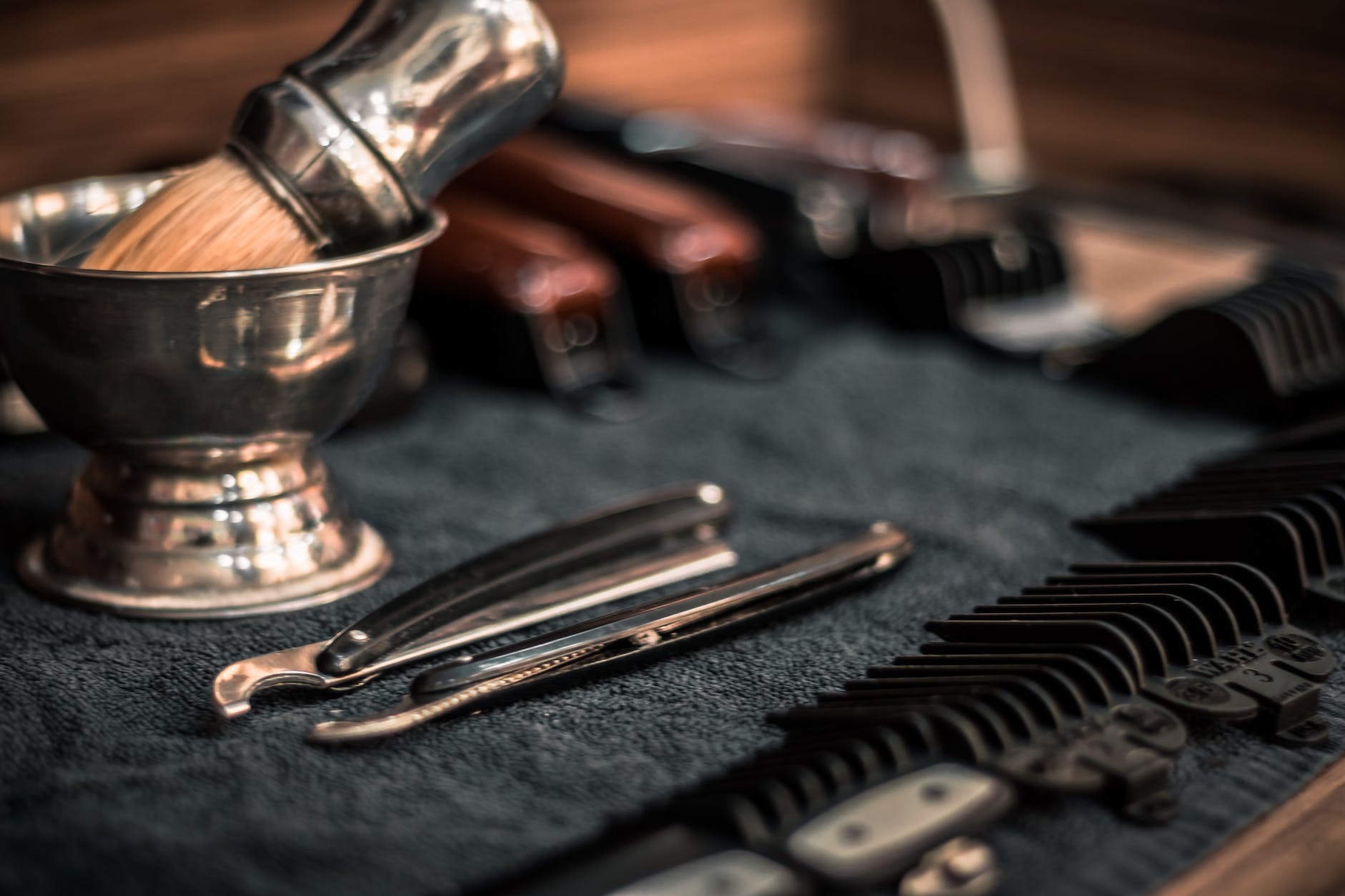
Proficiency with Barber’s Tools means that you are familiar with how to style hair — cutting it, braiding it, etc. You can color it with various dyes as well. The kit includes a couple razors, scissors, a silver mirror, lotions, dyes, hair ties and other small items to help the barber.
Once upon a time I read, played and DMed in al-Qadim. The Arab/Turk/etc-ish setting included a barber, part healer and part friendly ear. That barber and their role in post-Renaissance England as “surgeons” fits many of the worlds of D&D.
They aren’t common in literature and games that inspire our games. That’s okay. They should be. Visiting a barber should be part of the story, even in magical worlds. Mending and Prestidigitation don’t trim your locks or beards.
Have a conversation, look better, maybe get a tiny bit of natural healing (no, it doesn’t work like this in real life). Also, I really like my stylist Chamaine.
Custom Backgrounds for 5th edition Dungeons & Dragons
Spelljammer is already on printing two. That’s because they need to make some changes to the Hadozee for reasons of insensitivity. They’re good changes and Wizards of the Coast is changing the processes that allowed the culturally insensitive material to appear first too. This new printing has other errata too.
The one that sticks out is the addition of Feats to every Background.
“These backgrounds each give a feat. If a character takes a background from elsewhere and doesn’t get a feat from that background, the character gains one of the following feats of the player’s choice: Magic Initiate, Skilled, or Tough.”
Dragonlance will have something similar. For Dragonlance this was because these are characters in a war. They must be stronger, tougher, etc. In Spelljammer it kind of makes sense. Normal people aren’t space halflings and asteroid dwarves.
Similar to the Dragonlance decision my world has an additional feat at first level. In the case of the World of the Everflow these choices are;
Kin get a Bonded Companion.
Ken get a feat that grants a cantrip.
Kon get Artificer Initiate and the Rock Gnome’s tinker ability.
Similar to the Dragonlance decision to add Feats this was done to add flavor, speaking to the types of powers that people from various continents have.
With One D&D’s playtest we know there’s a chance at adding Feats for everyone at 1st level.
What if the One D&D system of 1st Level Feats was added to 5e now?
You could add Feats to any character in the current game with a minor, but not overwhelming, increase in power with a few simple guidelines.
Only allow Feats that don’t have a +1 to an attribute.
Don’t allow the +5/-10 Feats.
Don’t allow Lucky.
Don’t allow Polearm Master
That’s it.
Now you can have flavorful feats in your 5e game at 1st level.
Instead, attach Feats to Backgrounds
Now, my current world attaches Feats to racial choices, but one could choose to go the path of Dragonlance, Spelljammer, and Strixhaven. Each of those books assigns their unique Backgrounds specific Feats for flavor.
A more flexible system would be to attach Feats on a small curve. Those Feats would be selected to emphasize specific stories typically told regarding that Background.
Actor reminds me of Paden Fain. Artificer Initiate seems obvious. Linguist fits the wanderer mold. Ritual Caster makes sense to capture the one who picks up hedge magic.
Putting those on a chart with a curve using two dice can influence the commonality of the Feats.
Since it looks likely that Before We Were Heroes won’t be ready before the 2024 edition, I’m thinking of adding that Feat guidance to each listed Background.
Have another Background you’d like a Feat Chart for, ask in comments.