Tag: third place

  • Adapting Genoan revolutionary lunches to fantasy third places

    Adapting Genoan revolutionary lunches to fantasy third places

    During the Age of Revolutions the leaders who wanted liberalization and democracy in Genoa had no idea how to govern. They were a bit idealistic. They struggled to get the various classes of this significant mercantile kingdom to get along.

    This all comes up in a recent Nerd Farmer podcast featuring Nathan Perl-Rosenthal. And it’s going to inspire a new third-place tradition in my Dungeons & Dragons world.

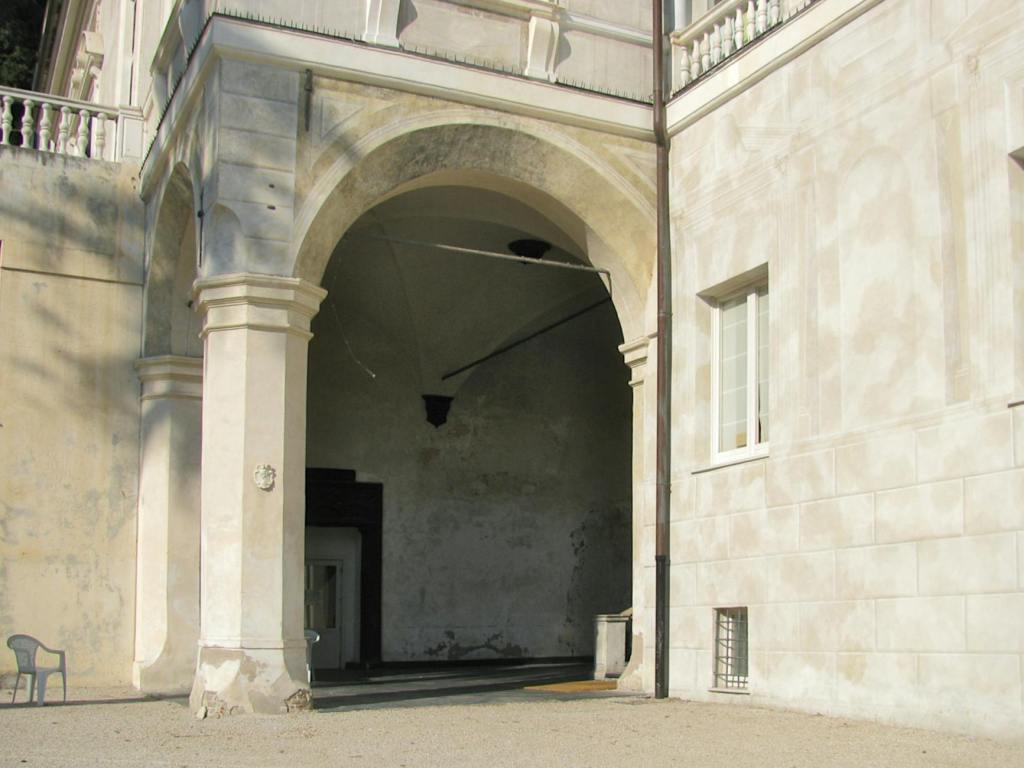
    By Aldan-2 – {{[1]}}{{[2]}}, CC BY-SA 4.0

    One of the ways the Genoan revolutionaries tried to create cross-class conversations was by mandating public lunches be held on the streets before festivals. These lunches would be funded by the elites, had limitations on the number of courses and were intended to inspire conversation before the entire group proceeded together towards a town square for fest time.

    This attempt at a third place being a space in time rather than a physical building intrigues me. That porch was only a third place during the luncheon, roughly every two weeks. It didn’t work.

    This is a fantasy blog, mostly about a fantasy world where dragons and magic are real. Let’s make the Genoa public luncheons real.

    My world has a naval empire, which makes this easy. But it is rather hierarchical and centered on the influence of the navy as sailor-citizens with power and influence. It is expansionist. Daoud won the war with Kirtin twice, and just lost their hold on Kirtin-on-the-Lake, the winter capital of Kirtin.

    Douad’s fleets sail the seas trading goods, conquering territory and bring their wealth back to the homeland.

    Daoud is the southern nation and controls the Green Isles in the Southeast.

    This is where the lunchtime third places come in!

    These now-wealthy sailors, officers and captains are required, by the Admiralty of the Land, upon returning to port to share their wealth and throw a party in the neighborhood from which they came.

    They lunch and fest together, with the Admiralty and Royalty surprising random porches with visits.

    This now ingrained tradition started because when the first ships came back with massive wealth they were seen as a threat to the non-sailing gentry. So that leadership in a form of taxation started the luncheon program. This kept the peasants that didn’t sail happy with the leadership and that joy spread.

    These lunches are simple fare — three courses, one which must always be from the land the ship just visited. There’s always a flatbread, that was originally simple but is now treated as a complex way to serve a fourth course that is not in violation of the edict. There is wine and coffee, tea and liquor.

    There is joy.

    Then there’s the party, always in sight of the harbor with the ships lit and glowing at mast and crossbeam. There are flags and fireworks (the best ships travel with Sparklers). These parties are on a time limit. They start within two sunrises of the ship’s return. They end the next morning.

    And everyone participates. The paupers, urchins and sweeps know that when a ship returns they will eat well for at least a day, often two. The displays of wealth are ostentatious and the people are happy. These aren’t circuses, nor taxes. It’s Daoudian Luncheon — one of the two third places in the culture. The ships are the other third place.


  • Using ‘third places’ to add cultural depth to your D&D campaign or character

    Using ‘third places’ to add cultural depth to your D&D campaign or character

    The trope that starts nearly every Dungeons & Dragons campaign is “So, you meet in a tavern.” Which is fitting. For most campaigns start with a diverse group of characters who don’t have strong connections throughout the group. They are a cross-cultural, cross-class, cross-Class, cross-everything group that wouldn’t meet at most places in the medieval-Renaissance-ish fantasy world that is D&D.

    But the tavern, via the trope, has become a third place. It’s not home (though it often becomes that). It’s not work (though it often becomes that). It’s the place between. And these places between are frequently where subcultures within a society connect.

    Various cultures have had different third places. For modern America it is now the coffeeshop and used to be bowling alleys. In the Ottoman Empire in the classical age had its cafes, where philosophy, music and political debate occurred.

    In New England during the American Revolution public houses were the gathering point, for many at that time the first place was a co-located home with work and the second were churches.

    The Greeks gathered on the steps of temples. Finns and Russians gather in bathhouses.

    Sporting venues have been third places, before they became economically stratified. Travelling carnivals and festivals can be a third place.

    No matter the type of third place, it tells you a bit about the culture.

    Using third places as a character backstory tool

    When creating a PC think about the place where you mingled with peoples unlike you. Where did your dwarf first meet an elf? Where did your farmer first meet a noble? Where did your follower of Lathander meet an unbeliever?

    This decision will help tell you about your own history.

    It will connect them to a place and associated behaviors that aren’t mechanics, but are fuel for the social pillar. Their own stories about a trip to watch a great debate between philosophers, a visit to the library, or the type of ale they enjoyed at the pub are stories that add more depth to the shared story that is D&D.

    Adventurers have the place where they sleep (a cave, a cove, an inn), the place where they work (dungeons), and the places where they spend time meeting strangers with odd quests. Once they start their adventure they have the third place that was cross-cultural communication when they were growing up and now the place between — and that’s up to the whole party of different peoples.

    Using third places as a world building tool

    Dungeon Masters generally are more active in creating the world. There are a few ways they can use third places in that world.

    • Collect each players’ third places in your notes. Give them the opportunity to revisit them in new lands.
    • Start the campaign at the typical third place for the origin culture of the campaign. “So, you meet on the steps of the temple.”
    • When the group comes to a new land and looks for their comfortable third place (the tavern) demonstrate how that locale is different from their expectation and what the unfamiliar culture would use as their non-stratified place that welcomes outsiders.
    • Use maps of abandoned third places to show how different the older ages were from the one in which you campaign.
    • Have an NPC name-drop their favorite third place. This can show how they are familiar to most of the group, or different. Each NPC can have their own place, they should!
    • Have two third places in the same town share similarities but still be unique beyond their name. Maybe the Rusty Clam is a working pub and the Silver Nail is for the merchant class — and yet the players are welcomed at both.

    These are flavor elements, but flavor is story in D&D. And story is what tables build together, usually because Dungeons and Dragons is now our third place.