Tag: Dungeons and Dragons

  • Adding Culture to your game: A new tool

    Adding Culture to your game: A new tool

    Languages in most Dungeons & Dragons settings is rather rudimentary. There’s the pidgin-trade tongue of Common (and sometimes Undercommon). From there, the typical known languages are based on races and the planes.

    A character might know Common, Elvish, and Primordial for example.

    This is bland, unnecessary, and lacks verisimilitude. Get rid of languages. They rarely come up at the table. For most tables, languages are simply “You can communicate” or “You must use gestures.” Few encounters are successes and failures based on the 3-7 languages a character knows.

    Instead replace them with Culture: NAME.

    This then replaces Intelligence (History). This small tweak aids deeper connections between certain character classes and backgrounds with the world in which they are played.

    What do you gain from adding Culture?

    Especially in games with heavier social and exploration pillars you have a better idea of what your character knows. Rather than have a wood elf raised as an urchin on the streets of Waterdeep be capable of talking to every single elf in the world, as if language is hard-coded in the soul, it is instead a learned thing.

    Said wood elf would instead know Common and the Culture of the Sword Coast, able to communicate with the peoples in and around Waterdeep, as well as knowing the traditions of the various peoples, their symbols, their stories.

    The characters are deeper, with more connections to the world in which they play. A Fighter-Sage would be intimately familiar with many nations and cultures, rather than just a few and whatever the DM determines is known through a d20. A character that has studied the Dalelands would know the holidays, conflicts, and ways to communicate that are common in the the Moon Sea and the Inner Sea.

    At its simplest with Culture, you know more.

    What do you lose by removing Languages and History?

    Not much.

    The characters will still be able to communicate as always. There may be a perceived penalty for a few backgrounds, but there is a fix for that.

    There is additional bookkeeping. You will have to use a custom language on DnDBeyond.com, for example. You do this by clicking on Languages on the character sheet on the website (the app may be different). Then click add proficiency. Then select custom language. Add the culture you choose. If you skip language selection during the creation process you’ll now have a listing of Common plus the Cultures your character experienced and/or studied.

    How does adding Culture work when building a Player Character?

    While building your character in the standard order (Race, Class, Background) take note of every language learned. Each of these are replaced with adding a culture for each language.

    When you would take History you would now have the option to take another proficiency or take a culture.

    Additionally, I would encourage most tables to use a PC’s Intelligence modifier to add (or subtract) from known cultures. This is mostly because Intelligence is undervalued within the game.

    Example: A High Elf, Fighter, Sage would begin knowing as many as 8 cultures known. This would represent their studious familiarity with many peoples.

    How do you use Culture?

    Use Culture like you would use History, but apply it like a tool. Most often it would connect with Intelligence, but there are times when your proficiency in a culture would apply to a check based off of Wisdom (if a character isn’t proficient in Insight their awareness of the opponent’s culture might help them) or Charisma would apply.

    Knowing a culture of a peoples with which you are interacting is particularly helpful in social encounters. A character familiar with a particular empire should be able to take advantage of that knowledge at the table!

    Are you familiar with the Dalelands? Then you would recognize their heraldry, for example. Hidden societies, or subsets of a culture may require a check (DC: 15) to see if you have studied or are aware of that aspect.

    Practical Examples of Cultures in D&D

    Within the World of the Everflow, a rather narrow setting, the following cultures would be available;

    • Western Wildes
      • Ancient Sheljar
      • Ancient Gallinor
    • Kirtin
    • Daoud
    • Crinth Confederacy
    • Azsel
    • Mehmd
    • Gobkon Union
    • Dragonken
    • Church of Quar (yes, this is cross-national group with influence throughout the continent of Kin)
      • There are other faiths and cults that may be appropriate
    • The Scholars and Proctors of Grace

    In a more explored and developed setting such as the Forgotten Realms I would recommend using the super-national regions such as, but not limited to the Sword Coast or the Dalelands or Chult. If you are a member of a Faction, assume that you know their Culture too. The list of political groups, religions, factions, and other strong cultural groups within the Forgotten Realms would fill an entire wiki.

    If you are playing in Eberron: Rising from the Last War the various nations of Khorvaire would all be appropriate Cultures as would most of the religions.

    Tables that use other setting would have to assess that setting. Do not make the cultures too narrow, nor too broad (then you just have the language problem, but different).

  • Diary: Airxip Sadijh took me to meet a dead man who can blink

    Diary: Airxip Sadijh took me to meet a dead man who can blink

    Been flying on the Sadijh since Captain Crilbort and the crew picked me up outside Oojar a few feylfs ago (weeks). My canoe broke, and, curse it, somehow I couldn’t repair the clackety rudder and the self-paddler lost its energy. My path was to go upriver, but upriver is hard when you have to paddle yourself. Harder at 3’4″.

    Oh, yeah. Sadijh. It’s big magic, not minors. No balloons, fancy tendrils of powers and a magic crystal in it. I ain’t helping with that. They have me doing comms. It’s ’cause my talents. Also, cause the old comms officer died — I was available. They weren’t. It’s not that I was conscripted, it’s just that I didn’t have a choice.

    Wait, here I am filling out my diary talking to myself and I cannay focus enough to stay to the story. I guess that’s why I write. Gotta figure out the best tale for the next campfire. I miss campfires, Mate Pryn told me we can’t have them on Sadijh.

    I figure this story’s going to be a big deal.

    Riding in Sadijh after defeating some pirates we get called back to work for the Ruling Council. This is when I learn I’m on a formal military ‘xip. Guess I’m an officer now?!

    So we’re called back. We have to pick up ‘authorities.’ One is dragonborn (first time I’ve seen ’em!) – Artok, big and beefy. The other is part of Les Remoden Eisha, a studious wizardly type. At least Amos likes books, even if I can’t read his.

    We’re to take Artok and Amos to Mirrstone. There’s been a lot of livestock gone missing out there. Enough that the Council is getting involved, but also, only enough that there’s two assigned to this investigation, plus the Sadijh.

    That’s both a lot, and a little. On Sadijh we’ve a few officers and not-quite two dozen crew (some work nights and I ain’t getting up at night).

    Captain Crilbort is in charge with First Mate Pryn helping. They both gobs. Most of us are gobs. There’s a navigator and a medic/cook too. And I guess, me?!

    Master-at-arms Holx has five guard (it was six, but Prix went overboard — I’ll get to that | whoa, I have asides to my asides). They work with three on duty and three off duty. (that’s got to change soon).

    Bosun Musi manages the deckhands. There aren’t as many hands on this kind of airxip as their are on the dirigibles or sail boats, because the magic takes care of a lot. It’s great. Almost nice enough I’d crew one.

    Cabin chile Fokz is the one of the chilles I deal with. Fokz helps Crilbort. There’s two others, one helping the cook mostly and another that does general service for the rest of the crew.

    Let’s get back to the tale. If I’m going to do this diary to help my memory I’m going to need to focus.

    So, we pick up Artok and Amos for this investigation. It’s a couple days flight, which is great! Walking would take a feylf. We only encounter one problem during the journey. There’s a storm about halfway through and it’s big enough it opened up a rift. Two elementals try to bust up our ‘xip.

    Artok helps us with some aid. That’s great, because I’m a hob that’s sized like a gob.

    I’m not here to sound like the hero, but me and Midqh pert-much saved the day. Midqh catapulted a block and tackle at one, used its tail to shield Crilbort. Spells and sundry thrown all over the place.

    Both me and Amos made big booms! He does it differently, no powders or tools involved. I’ll figure that out when I can focus. Battle was rough. A few us forgot to latch in during the storm and fight, so we were thrown about quite a bit. Only Prix went over the rail (knocks on chain).

    Not to be casual, but when a rift opens and elemental forces attack a ship I’m used to the whole thing going down, but that’s because I’ve only been on balloon boats before — I only crashed once!

    We get to town the next day. The crew lands at a field and Captain Crilbort orders me to go with Artok and Amos so I can message the ‘xip if they need rescue. This is a rather smart thing to do, if it didn’t involve me.

    Mirrstone is about two dozen buildings, mostly stone. The residents are mostly human. The area seems to be primarily ranches — cattle and sheep. First we talk to Fiendhere, who is like a mayor. He doesn’t know why the herds are disappearing and the town doesn’t have many clues. I overpay for our food and lodging. They have a comfy chair for me to sleep under, which is so much better than the ‘xip’s hammocks. Plus, it’s on ground, so there’s no wobble from the air.

    Fiendhere had told us the ranch most impacted was run by Glovin, whose entire herd of oxen is gone. The three of us inspect the area. The house and fields don’t show anything. No tracks, no trails, no signs. It’s baffling. Amos points out that if the herd was magicked away that it would take an immense amount of power and a portal that many would see.

    I head into the barn. Something is amiss there. Artok and Amos are looking at stalls while I head up a ladder. I leave a tinkering behind so they can find me. This is smart. I’m a communications officer!

    Up in the loft it stanks, rotten and musty. Like mushrooms and fairies (I hear). I call for help and the Two A are behind me, not far at all. We move slowly in this space, me because it’s scary. Them because the roof is low and there’s bales all over.

    We round one place and discover why it stank. Glovin is dead. His body has fungus on it and the smell is intense. We all stop, look at each other. Then we look at the body again. Someone will have to inspect it and though I’m short I don’t want that short straw.

    Then Glovin’s eye opens.

    I need to stop here. That moment put me in a mood, bad one. I’ll write more later.


    In our current Age of Myths campaign I’m playing Xabal, a smaller hobgoblin artificer that uses an eldritch cannon called Midqh. My goal is to be the party notetaker, but with a twist. I’m writing our recaps as if Xabal, a motormouth former Tinkerer is the author.

    Other PCs are;
    Artok — bronze dragonborn paladin
    Amos — elven wizard

    and more that we’ll meet soon.

    The header image is the ribbon jammer from Dyson Logos.

  • Age of Myths, the Uncoupling: Campaign One Sheet

    Age of Myths, the Uncoupling: Campaign One Sheet

    For the first time I’m going to be playing a character in my world. One of my players in the last two campaigns is going to DM and together we set up the one-sheet so as to not change too much lore. One of the ideas I came up with early, was by playing in the Age of Myths, because any lore changes can just be referenced as legend when we play in the current era.


    The Road to the Uncoupling

    Your story begins in a prosperous world of togetherness and mutual can-do spirit.  Before the battle for the heart of Kirtin on the Lake (KotL) or the sacking of Kirtin in the Sky (KotS), before the Proctors spread death and misery in Sas Rurulit, and before the unprecedented events of the Awakening and the finding of Lorebooks, there was The Uncoupling.  The apocalypse that destroyed the weave of magic for the Kin and Kon, leaving Ken and the 5 coloured dragons of the Chromatic Convocation in complete possession of magik. 

    Players are part of a select group that were born with innate magical ability (you’ve been everflow touched) that is prized even in this magic-rich world.  Possibly you inherited your trait from a bloodline trait or ancestral ties to deeper magik of the Everflow.  It has shaped your early years, possibly enrolled at a young age by family in the scholarly studies to become part of the magik ruling core of society or you hid your talent and nurtured it on your own. 

    However, recently there have been rumblings, rumors about a shadow organization unhappy with the status quo, who seek to eliminate the existing ruling council and rule not by consensus but by force.  You’ve each been selected by the bronze Dragonborn Artok, tasked with this mission by his patron, the adult Bronze Dragon (Othimbane) who sits on the council, to identify and either infiltrate or forcefully break these fools of their notions and ensure that no other plots are forthcoming. 

    A global map of the world centered on the spaces where play in the campaign has occurred to this point.

    The following is written by the DM for this campaign.

    Premise 

    • This campaign takes at least three millennia before the Born Generation and the return of magic to the Lands of the Everflow.
    • Gain information about “The Shadows”, a secretive organization bent on wiping out the Ruling Council of Aur.
      • Artok has the rough information about several potential members that could lead you to a hideout or meeting place. 
    • Infiltrate or brute force your way into the group. 
    • Identify other members and find potential leads about who is the power behind “The Shadows”.
      • Keep (human council) and (gnome council) members apprised of your investigation. 
    • Possibly assist the council with additional tasks at your discretion.  

    Factions  (NPC names to come soon)

    • The Ruling Council of Aur (RCoA) – A group of 9 members, three of each Ken, Kin, and Kon, and 4 dragons, two each of metallic and chromatic. 
      • The RCoA is the “federational government” of Aur, with different cultures/regions governing in their own way and answering to the RCoA.
      • Kin: Human (F), Goliath (they), Halfling (M)
      • Ken: Elf (F), Elf (M), Dwarf (M)
      • Kon: Goblin (M), Bugbear (They), Hobgoblin (They)
      • Dragons:
        • Elder Metallic (Silver) – Tanargnyvur
        • Adult Metallic (Bronze) – Othimbane
        • Elder Chromatic (White) – Dwargauth
        • Adult Chromatic (Blue) – Nymaryxon
    • In occurrence with the rise of The Dragon moon (the fourth moon of the Aurian system), the dragons withdraw from the council for a year (draakmoeten) and meet at an undisclosed location with the world dragon (a deep time dragon) named Andarawus Del-mos. 
    • The Metallic Dragons
    • The Chromatic Dragons 
    • The Shining Order of Dreki – Holy dragonborn order who serve the Draconic races as paladins, clerics, and religious personages located across the world. Some that choose a more individual path travel and assist as Priests and Mortuary persons in smaller towns and villages.
      • Necromantic magic is thought to primarily flow through the draconic race). 
    • The Shadows – A heretofore unknown organization/cult/religion(?) focused on the overthrow of the RCoA, and to rule through force and oppression rather than through consensus. 

    Campaign Facets 

    • 2nd & 3rd tier drop in/out campaign play, starting at 5th level 
    • All PCs start at lv.5 with the added feat “Everflow Touched”, adding a +1 to spell attack modifier and adding one free 1st level spells (from any school except necromancy, unless your PC is dragonborn) to your spell list which can be cast once per long rest.
      • Material components will not be needed.
      • at lv. 9 this will increase to +2 and an additional spell (2nd lv.) can be learned.
    • Rules used are core 2014 WotC D&D, plus most player facing options from WotC
      • Check with the DM about using setting-specific feats, subclasses and spells
    • Allowed races are Kin (human, halfling, goliath), Kon (goblin, hobgoblin, bugbear), Ken (elf, dwarf, non-rock gnomes) and dragonborn/kobold as shining order of Dreki
    • Divine magic is thought to come from the forces of nature and the philosophies, there is no active pantheon of faith, beyond those who worship the dragons.
    • Potential for multiple pathways to quest completion
    • Player driven story creation in a sandbox setting
    • Wide regional/worldwide settings with airship and/or teleportation travel 
    • Actions may become legend
    • Milestone leveling – several sessions per level gain; saves time when we all don’t have to track XP
  • Goodbye Alignment. Hello short-form personality.

    Goodbye Alignment. Hello short-form personality.

    Alignment is tired, boring and essentially meaningless in 5th edition Dungeons & Dragons.

    Many playing the modern game trying to replace it with personality. Wizards of the Coast tried to take major steps towards personality play with their Traits, Ideals, Bonds and Flaws system attached to backgrounds. That system uses five sentences of 5-25 words to describe the personality of the character. Alignment also exists.

    Then, if the DM and/or the other players remember your TIBF and you play to it you might get advantage via Inspiration.

    It’s a bulky system that requires memorizing a lot of detail that aren’t necessarily relevant to how your character is played. The Acolyte is in the SRD 5.1 CC BY. Here’s a sample of TIBF for a lawful good Acolyte.

    I see omens in every event and action. The gods try to speak to us, we just need to listen.
    I quote (or misquote) sacred texts and proverbs in almost every situation.
    Faith. I trust that my deity will guide my actions. I have faith that if I work hard, things will go well. (Lawful)
    I would die to recover an ancient relic of my faith that was lost long ago.
    I am suspicious of strangers and expect the worst of them.

    That’s 82 words plus two for lawful good. But really, it’s just a few. You don’t need that much detail.

    Just like when you fill out that your character has brown or brown-green eyes you know there is more detail to the eyes than just that word or two. You can do this for your personality.

    That Acolyte?

    Faithful, Suspicious, Orderly, Erudite.

    Replace the entire TIBF system with those four words. Can you memorize a few words that describe how the other characters in the party act? Absolutely! Your mind was already taking the shortcuts on the way to do so.

    Then award inspiration when the character is played along their personality.

    You could build your short-form personality using the official background information already provided. That’s a great start. But you could also use a list of personality traits. Here’s 638!

    A character modelled off a favorite movie or TV or comic or book or video game or etc character could use their traits too.

    • Margot from The Magicians — sexy, strong willed, crass, loyal
    • Wesley from The Princess Bride — dedicated, adaptable, loving
    • Tasselhoff from the original Dragonlance – friendly, curious, brave, aloof
    • Moiraine from early Wheel of Time – determined, withdrawn, studious
    • Lan from early Wheel of Time – lawful, loyal, commanding
    • Awf, my PC in Lost Mines – persistent, exuberant, fearless

    The intent with short-form personality is to reduce memorization, reward roleplaying and continue the de-emphasization of alignment in D&D.

    Be generous with the Inspiration you award. Play up the personality. Just make it simpler than a system that might require 100 words when you only need three to five.

  • Adapting Genoan revolutionary lunches to fantasy third places

    Adapting Genoan revolutionary lunches to fantasy third places

    During the Age of Revolutions the leaders who wanted liberalization and democracy in Genoa had no idea how to govern. They were a bit idealistic. They struggled to get the various classes of this significant mercantile kingdom to get along.

    This all comes up in a recent Nerd Farmer podcast featuring Nathan Perl-Rosenthal. And it’s going to inspire a new third-place tradition in my Dungeons & Dragons world.

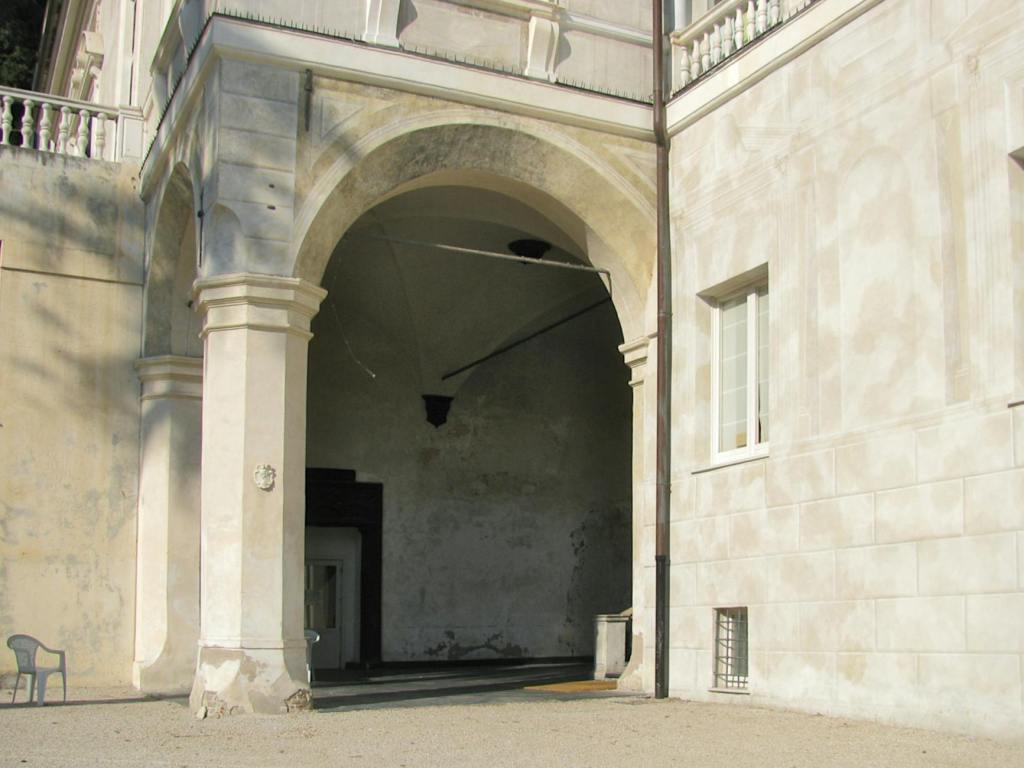
    By Aldan-2 – {{[1]}}{{[2]}}, CC BY-SA 4.0

    One of the ways the Genoan revolutionaries tried to create cross-class conversations was by mandating public lunches be held on the streets before festivals. These lunches would be funded by the elites, had limitations on the number of courses and were intended to inspire conversation before the entire group proceeded together towards a town square for fest time.

    This attempt at a third place being a space in time rather than a physical building intrigues me. That porch was only a third place during the luncheon, roughly every two weeks. It didn’t work.

    This is a fantasy blog, mostly about a fantasy world where dragons and magic are real. Let’s make the Genoa public luncheons real.

    My world has a naval empire, which makes this easy. But it is rather hierarchical and centered on the influence of the navy as sailor-citizens with power and influence. It is expansionist. Daoud won the war with Kirtin twice, and just lost their hold on Kirtin-on-the-Lake, the winter capital of Kirtin.

    Douad’s fleets sail the seas trading goods, conquering territory and bring their wealth back to the homeland.

    Daoud is the southern nation and controls the Green Isles in the Southeast.

    This is where the lunchtime third places come in!

    These now-wealthy sailors, officers and captains are required, by the Admiralty of the Land, upon returning to port to share their wealth and throw a party in the neighborhood from which they came.

    They lunch and fest together, with the Admiralty and Royalty surprising random porches with visits.

    This now ingrained tradition started because when the first ships came back with massive wealth they were seen as a threat to the non-sailing gentry. So that leadership in a form of taxation started the luncheon program. This kept the peasants that didn’t sail happy with the leadership and that joy spread.

    These lunches are simple fare — three courses, one which must always be from the land the ship just visited. There’s always a flatbread, that was originally simple but is now treated as a complex way to serve a fourth course that is not in violation of the edict. There is wine and coffee, tea and liquor.

    There is joy.

    Then there’s the party, always in sight of the harbor with the ships lit and glowing at mast and crossbeam. There are flags and fireworks (the best ships travel with Sparklers). These parties are on a time limit. They start within two sunrises of the ship’s return. They end the next morning.

    And everyone participates. The paupers, urchins and sweeps know that when a ship returns they will eat well for at least a day, often two. The displays of wealth are ostentatious and the people are happy. These aren’t circuses, nor taxes. It’s Daoudian Luncheon — one of the two third places in the culture. The ships are the other third place.

  • Kobold Press Eonics offer time loop fun to D&D

    Kobold Press Eonics offer time loop fun to D&D

    I’m one of those passive backers for most projects. For Tales of the Valiant I sent Kickstarter my money to send Kobold Press and then I waited. I did this because I have enough of their products that I know I will use them. Many of their dragon variants are part of my world right now.

    That also means I get fun surprises for their intermittent reveals, like the Eonics.

    This new lineage (their current term for race) is a bunch of time travellers who lost their ways on the time stream, now existing your D&D/Black Flag/5e world without the ability to get back to their normal time.

    They do still have minor time travelling abilities. That’s where things get fun. Their core abilities are about possibly knowing the past, their expectation that things are going to go wrong and a skin that’s been scarred by time streams. Those combine to have fun uses as monks, rogues, bards and maybe even an off-brand barbarian.

    In Black Flag (Kobold Press’s SRD) and Tales of the Valiant characters are born into a lineage and grow via a heritage. Heritages are similar in power to 5e (2014) subraces, but are open to any species/race/lineage.

    The eonic-themed heritages immediately become part of my world. This is time-hoppy funness.

    Time-lost Drifter

    Those raised as drifters have a special belt and some exhaustion based mechanics with a future-self time echo. Plus, they are hard to kill. Their body comes disconnected from time.

    Inheritor of the Future

    The inheritors get a super-advantage Help action and a powerful time warping staff.

    Mirror Worlder

    These peoples can see alternate realities and grab things from them. This is a classic trope in fantasy that hasn’t been embraced much in 5e, until now.

    The Eonics and all of their heritages fit in the World of the Everflow as the peoples from the future who went back to when the gods shunted off magic from the World. They would be 3,000 years in the future from the current games, popping into a world that they helped break and create at the same time.

    With these and the Tales of the Valiant goblins I’m very excited to bring more variety to my table.

  • Children of Chorl

    Children of Chorl

    The first Scholar to be discovered was the Necromancer. His works were hard to ignore, as the undead he mistakenly raised thinking he was helping the peoples of Fort Ooshar and Sheljar broke the empire. That built a distrust for newly released magic.

    Sheljar, Telse, Mira, Qin and the other cities near the Everflow and its two rivers.

    This is likely why Chorl attempted to hide. Not only was his work in Transformation often done involuntarily, Chorl wanted to conquer. His goal was to fill the gaps from the Fall of Sheljar, taking over the Western Wildes via his hybrid peoples. For Chorl, in all his evils, was creating new peoples, a combination of humanity and their companions.

    Some chose to be combined, these peoples frequently became his lieutenants and sergeants. Many fled. The breaking of his camps and the deaths of Chorl and his Student Anderson created an opportunity to escape.

    Now, the Children of Chorl exist in mixed pockets of freedom almost always outside of the major towns and cities. They may want vengeance hating Scholars and magic; they may want freedom; they may want to be respected. They are all hybrids in the World of the Everflow.


    Mechanics for the Children of Chorl

    To play a Child of Chorl in the World of the Everflow select a hybrid species/race. There’s a long list of them available in DnD Beyond now, thanks to Wizards of the Coast adding the Humblewood setting.

    Though none of the core species for 2014 or 2024 D&D are Children of Chorl the current list from official products includes;

    Aarakocra, centaur, harengon, kenku, lizardfolk, minotaur, satyr, shifter, tabaxi, tortle, giff, hadozee, owlin, leonin, loxodon, locathah, or grung.

    Players at my table can also use those from Humblewood;

    Cervan, corvum, gallus, hedge, jerbeen, luma, mapach, raptor, strig or vulpin.

    Then select a feat or bonded companion. Though all Children of Chorl were a goliath, halfling or human combined with a bonded companion, that doesn’t mean that they didn’t have more than one companion.

    Decide what the character was before they were melded. They should generally be someone from the West. They can be someone who volunteered or not, that’s up to you.

    Their background and class represent what they were before. How they present to the world now is similar to the X-Men.

  • Happy birthday to the dungeons and happy birthday to the dragons

    Happy birthday to the dungeons and happy birthday to the dragons

    My experience with Dungeons & Dragons doesn’t go back to the beginning. That would be kind of hard, as I’m not 50. It does go back to some of my earliest memories. For me D&D always started as a storytelling game, probably because the way the first DM I played under introduced it to me.

    Derek convinced us to play because he was and is a storyteller. He knew that I loved The Hobbit, Narnia, King Arthur and Robin Hood. The pitch was simple — “Do you want to tell your own stories in the world?”

    The answer was simply “Yes.”

    We played with, those simple dice that needed a Crayon to color in the numbers. For some reason I only remember d6s and dungeons.

    Two old d6 showing the number 5. They are a green like the color of exposed old copper.

    D&D is what started me on my journey to tell stories. I always thought those stories I would tell would be fiction. As of yet, conventional publishers haven’t accepted any of the short stories I’ve pitched.

    But it also started me on the journey to be a journalist, and that worked out to be sports (mostly soccer) and then marketing tales. Derek’s connected to that journey too, but that advances several years into high school and again to when I was an emergent baseball blogger (which didn’t work out).

    Later in my journey Dungeons & Dragons became the central point of my strongest friendships in those harsh teenage years. Like many GenX suburban white males, I was a latchkey kid in a neighborhood with cul de sacs and basements.

    Those basements provided our play space and our avoidance. We avoided thinking about divorcing parents, impending nuclear annihilation, ozone depletion and whatever other terror the nightly news foisted on us.

    Erik, Justin, Abel, Colin, Jacob, Andy, Chris, and the others — we hid from all of that. There were early video games, many board games, and other role-playing games, but it was D&D that was our unifying factor. The stories we told via rolling oddly shaped dice and convoluted rules gave us an escape. We were big, damn heroes. We were anti-heroes. We were thieves and priests and archers and wizards. We adhered to the noble codes that our imperfect real lives could not. We violated those codes to see what would happen.

    That late 80s to early 90s version of D&D that we played was sometimes in dungeons and always dragons. Every world we played in had dragons in the background providing terror, often ending in a TPK.

    My second D&D era was about avoidance. The stories and people helped me make it through the bad times — puberty, divorces, fights with friends, being the outsider from the in-cliques. Without that group I’d be a horrible athlete, the storyteller incapable of finishing a tale, a ‘gifted’ kid who avoided hard work, someone with constantly broken ankles and a body that doctors considered brutally altering because I was dramatically smaller than my peers.

    In the Army I nearly avoided D&D. During my time at DLI I did participate in a Vampire: The Maquerade LARP in Pacific Grove, California. That was the only place I met non-military people while in that hybrid college-military experience. In 5th Group one of the 18D (combat medics) invited me to do solo play with him as the DM. That was basically impossible to keep up because our deployment schedules didn’t quite overlap. We also never played when deployed together. I’m pretty certain no one in his ODA knew that’s what we did when we hung out outside of work.

    Then D&D disappeared from my life.

    I thought I grew up.

    I thought I didn’t need the funky dice, the tales.

    5th edition brought me back after not playing regularly since 94 (the 5th Group experience was 97-98).

    My current era of D&D is broader in playing styles, stories told and the people I play with. There have been two dozen people who have played in the now-seven campaigns within the World of the Everflow. Plus I’ve been a player in four campaigns and hosted a charity actual play for YachtCon.

    Where my first era of D&D planted the seeds of creativity and the second era taught me math (and kept me as sane as I’ll be due to avoidance), this third era of my Dungeons and my Dragons is about exploring fellowship, exploring philosophical issues, confronting the issues of the era rather than avoiding them.

    On this 50th birthday of D&D I discover that my eras of D&D are the eras of my life, showing a maturity in my life while being skills and abilities I continue to use in this life.

    My game doesn’t really have dungeons. Dragons aren’t omnipresent. But it’s still the same game.

    My game doesn’t roll characters. They’re created for story rather than optimization. It’s still the same game.

    My game isn’t in the Forgotten Realms or another official world (or third party world). It’s a world concocted by me and mutually, continually created by us. It’s still the same game.

    For forty years this game has been present in my life. At times it has been my most defining hobby. Other times it was locked behind a haunted door in my head, hidden but influencing my personal journey.

    Today I don’t lock my passions away. People get to see them. They can judge me — whatever.

    We’ll play in public today. Something that was nigh impossible in the 80s, when even my own family thought D&D meant devil worship.

    Today we roll for initiative.

  • Lore 24: Oath of Free Sheljar

    Lore 24: Oath of Free Sheljar

    All of the campaigns that have taken place win the World of the Everflow have focused on tracking down the various Lorebooks, with each group having other side quests, generally towards making the world for the common peoples of the Lands of the Six Kingdoms.

    They’ve run counter to the Proctors, an evil faction that is trying to control knowledge of magic, and rogue Scholars who are spreading knowledge of magic in order to control people. Necromancy and Transformation are the ones most counter to traditional D&D goodness.

    The only other super-natural organization is the Orthodox Church of Quar. The Quarites control access to the Everflow and a massive merchant endeavor with their churches also working as trade posts and shops for what are in game terms healing potions.

    This world has no equal to the Factions of tradition D&D, or the Knights of the Round Table, or Templars or other super-national knightly orders. No one has wanted to be in one.

    But if a player wanted to play a character with these kinds of ideals and/or oaths, we’d talk about how it would fit. Knowing my player base the inspiration would be the Free City of Sheljar, the egalitarian re-founding of Sheljar after the early campaigns purged the Necromancer, his agents of undeath and the Tunneling Nightmares (they’ll be the subject of a future Lore 24).

    Based off the players and characters that founded the Free City such an idealistic organization would look similar to the Harpers, with a dash of de oppresso liber and a side of asymmetric organization.

    • Determination for all peoples Kin, Ken, Kon and any who think.
    • Share knowledge, so all in the world may live better lives.
    • Defend those that cannot defend themselves and their companions
    • Judge behavior, not the companion, the nationality or the faith
    • Recognize successes at spreading the word of a Free Shejar and Free Everflow

    Like the oaths of D&D paladins, these ideals within the oath are aspirational. They aren’t to be perscriptive.

    A player wanting to be part of this order wouldn’t necessarily pledge to sergeant or knight. They wouldn’t need to swear fealty to the current Mayor of Sheljar (Samul). The order would rise because the oath is a bit viral — it’s one that encourages heroic actions and fulfilling quests.

    A band could be one halfling and her dog, or an entire airxip of goblins, or an adventuring party, or three elves visiting the Everflow that abandon their fey pacts, or a group of Mehmdians, or a village near Telse, or a tribe in Crinth. A band inspired by the ideals of Free Sheljar aren’t sworn to them, in fact the current governance of Kirtin-on-the-Lake is inspired by Sheljar, but free from them.

    That’s the knightly order I would make if I were to make a knightly order.

  • Lore 24: Mijdaf, the paddler

    Lore 24: Mijdaf, the paddler

    One of the great parts of Dungeons & Dragons is the impromptu nature of it all. When you’re at the table, especially for a homebrew campaign, things just happen. The participants riff off of each other and a story is created that shouldn’t exist and can never exist again. It is a moment in time. Mijdaf was born in one such moment recently.

    Mijdaf, the paddler

    Mijdaf is an NPC in the current campaign. He started because the group needed transportation up the river from their neighborhood to one on the very edges of urbanity.

    Me: There’s a barge pulled along the ropes on the side of the river.

    The PCs: That seems slow.

    Me: There’s also a paddleboat operated by a goliath.

    The PCs: We take that.

    That’s how a desert goliath living in the largest city of the region started to grow into relevance in the game. But at this point he’s just a ferryman in a boat. Sure, he’s huge and can paddle upriver faster than those humans can pull themselves, but he’s not yet unique.

    PCs: What kind of birds does he have?

    Me: Four seagulls that mostly rest on a branching perch above his head. He asks where your companions are.

    PCs: We’re trying to get a new one for Lauray. Do you know a good breeder?

    As Mijdaf I talk about two options and why he has one that he prefers. It’s one that doesn’t recognize the current government. Mijdaf starts talking about the history of the region that connects to an artisan that they’d met in the previous session.

    They riff off of this, pulling more information from the goliath. It’s interactive at this point. They roll very well. I start playing into Mijdaf being willing to talk, constantly. Soon the PCs figure out that the reason that Mijdaf was available is because no locals will ride in his boat.

    He’s not just a talker — he’s a conspiracy theorist.

    Mijdaf pulls out a slate with tangential connections between various politicians, professors and military leaders. He keeps going.

    At the table this was great. The players with me that day were smiling, nodding and laughing. The total scene may have been 10 minutes. There were some social dice rolls and a lot of me as the DM picking up on table clues to see what the group was enjoying and emphasizing that.

    And then Mijdaf reached the destination, dropping them off. He and they never expected to see each other again.

    A day later in game time the group needs to get back from the nearly rural neighborhood to their home base deep in the port city. They recognize a paddleboat, but don’t see Mijdaf. They steal the boat.

    That’s how Mijdaf, the paddler, went from a simple single scene NPC into a character with purpose, gaming joy, and just possibly a problem for the future.