TO: Flasfur Wreltor with Blackbirds and the gobkons Chofs Chupmolea badged al-Chems and Bolnis Abica nox Qawaha via Artok at the Keep
Aboard the ship you’ll find a vial of the corruption I discovered. Additionally this letter’s addendum includes a report of testing as well as a sketch-print of a mechanical hand discovered on this long journey. When I return is unknown. This journey shall be long and ideally fruitful. It is also violent and absurd. Tsavancoast is a land of extreme wealth and extreme poverty, with many artificers, tinkers and crafters mostly gobkon with a few goliaths, plus you wouldn’t believe if but I think there’s a human using cattle to turn wheels like we might a mill. I saw a monkey pushing bellows.
It’s a large city. Where Sheljar is one with the land and full of righteousness Tsavancoast is bright even at night, garish. There’s gambling where we stay. I win regularly.
Sorry. Too long. I get distracted.
You are probably wondering what’s happened with the corruption. It’s a much bigger problem than we or Le Remoden Eisha or the Dragon Council thought. There’s also a local leader in Tsavancoast who is working to spread the corruption while supposedly being in Le Remoden Eisha.
I found that out after repelling an army of walking trees and this weird elf-insect hybrid creatures. Yes, others helped, including some great dwarven sappers who brought down a bridge, scouts that helped save outlying communities, a lot of wizards. It was a staged battle. Midqh helped quite a bit. I learned how to make even bigger fire and booms through its apparatuses.
Anyway, after that massive series of battles — yes, we won, that’s how you’re getting this letter — we chatted with the leaders of the wizard and dragon groups, plus a gent named Ryghast. Don’t ask me the order of who talked to who and when it happened. We were in a casino! I won a few games, many games.
Eventually we chatted. But chatting with Ryghast was difficult. He took me into a magical silence to spill secrets. I tried and tried and tried to break his spells with my own systems. A wizard of his power is well beyond my teknical abilities.
BUT, in his confidence he told me of his double-crossing ways. I immediately told Amos, Rolf, Crag and Nandi, who passed the information around.
Probably created a big enemy. Hopefully he didn’t follow the Sadijh back to the keep. If he did please flee. Artok cannot defend you on his own.
Anyhow, we’re back off to the wilds. The source of the corruption that created that army of trees is our goal. I don’t know when I’ll see you again. I have ideas about what we can do with this hand and I’ve started to work on armored carts with Rolf. There’s also a clockwork amulet that can give one a second chance. My latest invention is to burn a bit of corruption to power our items.
See you again under the Dragon Moon.
Xabal Gaitee Quarter-Flagged Optigraph Balaneer nox Free Tink and non-Commissioned Officer of the Sadijh (on leave in absence)
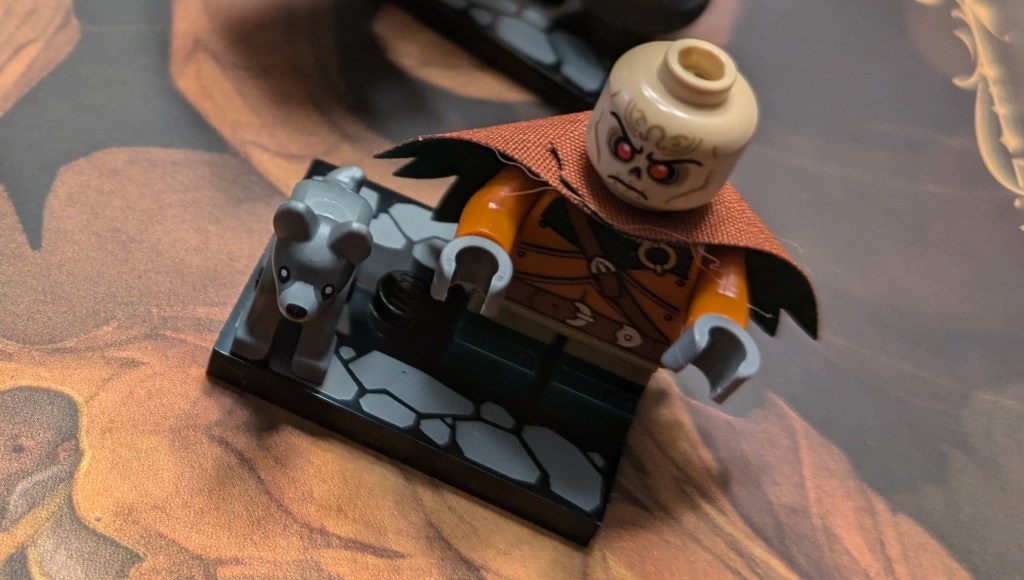
This recap of the Defense of Tsavancoast is written in first person by Xabal, a gnome artificer, to their hirelings at Xabal’s Workshop set in the Age of Myths campaign.
Traveling the harsh lands of the Ferments? Find everything you need at WEST THUNDERMOON TRADING POST!!! Settled in the foothills of the Thundermoon Mountains a half a day’s ride west of Ourten, WEST THUNDERMOON TRADING POST is the go to location to find all of your hunting and travelling needs.
Run by the Maltunyn family for generations, they’re knowledge of the local terrain, as well as their selection of only the finest gear will ensure your travels will be safe and comfortable. Or you could pick up some of the finest furs and rations provided by master hunter Velthuria Maltunyn, and her daughter Keesrah. If you need a quick repair, or even an herbal remedy or two, Cay Maltunyn has you covered.
With the experience of generations, and a deep love of the land and air, the WEST THUNDERMOON TRADING POST is a must for any serious travelers of the Thundermoon Mountains. Visit the WEST THUNDERMOON TRADING POST today!!!
You can find that brochure throughout the villages and homesteads of the Thundermoon Mountains in The Ferments.
Keesrah Maltunyn, a human guide and drakewarden ranger with a raven named Crow, is the player character who calls the trading post home.
The West Thundermoon Trading Post is about two days south by southeast from Orten. The post is on the southerly road towards a desert region. That road runs roughly parallel to the Thundermoon River. In the hills and mountains are a few fishing and hunting families.
Ensuring environmental oddities of The Ferments are included.
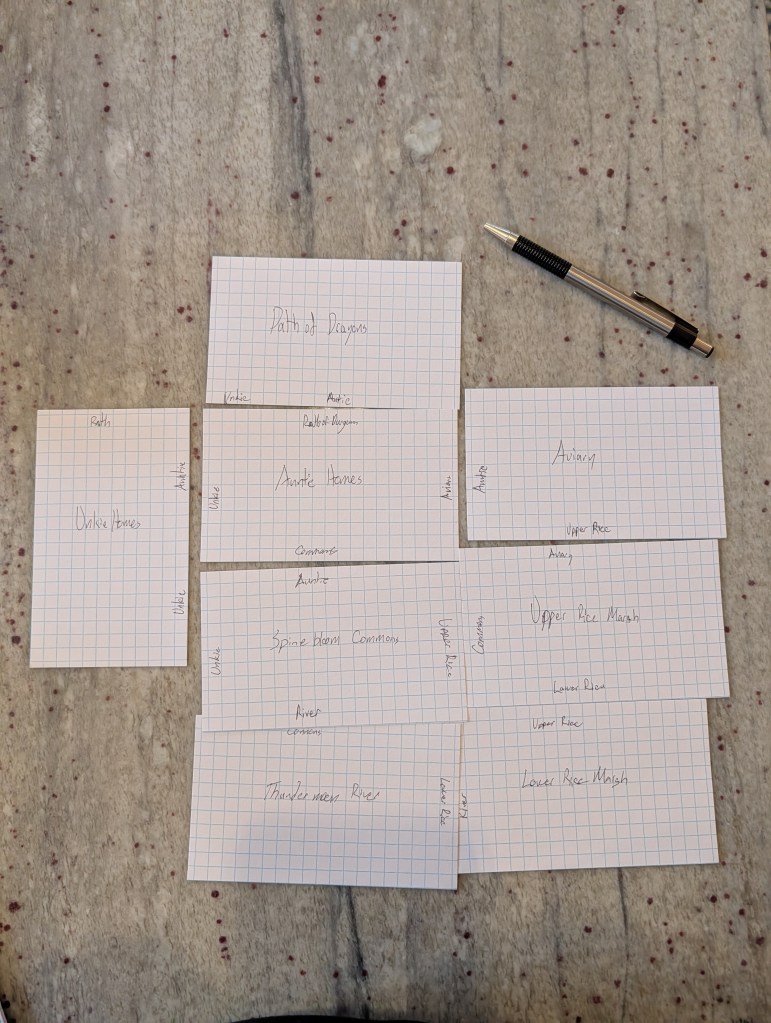
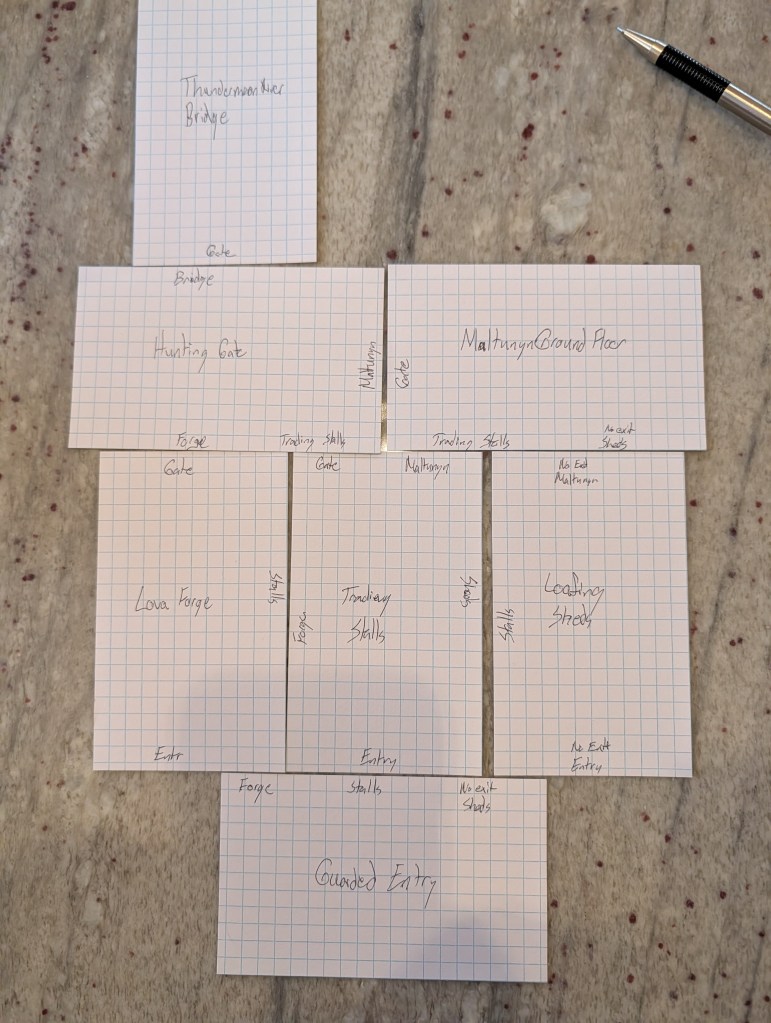
Zonal word map of the Trading Post
Guarded entry
A wooden wall surrounds the Trading Post. The entry is where all merchants and visitors arrive. There are two large doors, which are barred at night. A guard stand rises to the left of the doors, as one exits. It can hold one medium creature and grants them half cover. A ladder provides access.
Elemental affinity: None.
Hazards: Breaking down the closed door requires a DC: 15 Strength check.
The guarded entry connects to the lava forge, the merchant stalls and the loafing sheds.
Lava Forge
A small semi-open air forge where Cay works as a sometime smith. The heat and bellows are from an active fissure where magma surges underneath the trading post. Malk, the goblin captain, now helps out. Malk and Borkin also store their own clutter there, including the smog-buggy.
Elemental affinity: Earth, fire, lava
Hazards: Those knocked prone who fail their DC by five or more take 1d8 fire damage from the forge. Forced movement can result in the tools of the trade being knocked all over, turning the Lava Forge into difficult terrain. Oh, and beware of a lava flare — who knows when that will happen.
Allies: Cay, Malk and Borkin may be present
Occupancy: Four medium creatures.
The lava forge connects to the guarded entry, to the trading stalls and the hunting gate.
Trading stalls
One large and two smaller open stalls sit in the large enclosed central space of the post. Various homesteads and outsiders come through with their wares on a seasonal basis. There’s a central fire pit with some large stones and simple benches frequently with a stew pot and hot beverages available.
Elemental affinity: Fire, air
Hazards: The cook pit can become a fire hazard, doing 1d8 damage to those who fall into it and setting their flammable gear on fire. It provides 10′ of bright light and 10′ of dim light at night.
Allies: Neighbors may be present depending on the season. They will almost always limit their help to rallying the Maltunyns.
Occupancy: 3 in the large stall, 2 in each small stall and room for 12 more medium creatures.
The trading stalls connect to every other zone except the hunting gate.
Loafing sheds
Like everyone in the Six Kingdoms the Maltunyns have space for beloved animals. These sheds are designed for equines, canines as well as the rare bovine or more exotic companions. There are small cabinets for feed and tack.
Elemental affinity: Cold, air
Hazards: When occupied the animals could be feisty.
Allies: None typically
Occupancy: 7 medium creatures.
The loafing shed connects to the guarded entry, the trading stalls and the Maltunyn home.
Hunting gate
Known for the gate that Caile leaves open it’s actually the place where Cay raises herbs. There’s also the gate to the hills where Keesrah and Velthuria hunt. It’s also a lower land, near the river.
Elemental affinity: Water, plants
Hazards: During heavy rains the mud creates difficult terrain. A rapid freeze after rains can lead to icy conditions.
Allies:
Occupancy:
Thundermoon River bridge
A few weeks ago there was a small wooden bridge over the river. Then the mephit mudslide took it out. Now a ford those that cross must be wary of mud mephits who settled in the area after the slide. Heavy rains may bring them back and upriver there is a threat that the open lava could change the river’s path.
Elemental affinity: Mud, water, maybe lava
Hazards: During floods the ford is impassable terrain without aids — ropes, other people or animal companions. Mud mephits may strike at random, the little chaos beasties they are.
Allies: One of the Maltunyn animal companions are frequently in the area.
Occupancy: This is a large space without a limit as it connects to the hills and mountains.
Thundermoon River bridge connects to the hunting gate.
Maltunyn home
A two-story wooden building, the ground floor of the home is mostly accessible to the general public. The main room is a mix of general store with goods on consignment, smithed tools, dried or smoked meats and a few tables with chairs for visitors. This room can be entered from either the hunting gate through a small side door or the main entry connecting to the trading stalls. An outer stair to the second floor reaches the roof of the loafing sheds and a narrow platform along the wall running to the guard stand. There’s a small open kitchen/stove with a root cellar stretching under the homestead wall near the river.
The second floor is two bedrooms and a small aviary.
Elemental affinity: Smoke
Hazards: Bar fights are rare, mostly because Cay is a smith and Velthuria is a scout.
Allies: If the trading post has visitors one of the family or goblins is always present.
Velthuria is Keesrah’s mother. A human scout with a small dog, she is the primary hunter and runs the operations such as rentals of the three stalls for merchants.
Cay is Keesrah’s father. A human smith with a miniature pony, he uses a magma powered forge, Cay can craft anything with metals. He also grows herbs.
Caile is Keesrah’s brother, a human with a small dog. Smitten with one of the Drudzhar Caile sometimes wanders off on his own. Ally, but adversary sometimes.
Malk is a goblin captain and was saved in session one. A colonialist they are searching for resources for the Queen. They may become an adversary.
Borkin is a goblin cart driver. They are less colonial and more willing to help the Maltunyns, especially in defense and general labor. Malk is still their boss.
Henkel family
River fishers in the ponds and streams of the low Thundermoons the Henkel family are halflings with river dogs. They are indebted to Keesrah after she rescued Taier one of their younger teens.
Adversaries
Clan Drudzhar
A group of goliaths who live higher in the Thundermoon Mountains. Clan Drudzhar and the Maltunyn’s have been arguing, and sometimes openly fighting, over hunting territory in the mountains for years. One of their children is in love with Caile.
Their home is high in the scrub mountains and was recently near the mud mephit floods. They and the Maltunyns use different styles of traps and will frequently destroy each other’s snares. Birds of prey are their most common companions.
Elements of mud and lava
Mud mephits, magmin and lava elementals roam the Thundermoons. These adversaries are manifestations of The Ferments, a land that refuses to be tamed.
Children of Chorl
Punch chickens raided a market stall, but quick action by Keesrah and her acquaintance Ellis ended the theft and the punch chickens. The two later learned that the Children of Chorl raided Ourten too. These human-animal hybrids seem to be hiding in the hills or plateau near Pirna Farms, now Ellis Mill.
Kon colonialists
While saving the lives of Malk and Borkin pushed off the investigation by the Queen’s goblins into how the resources of The Ferments could replace the tar trees of their homeland. That colonial raid and investigation may expand.
Downtime and Quests
Keesrah is researching how to create Serpent Scale Mail armor. She’s learned that the elemental drakes do not leave behind enough resources. The dragonkin raiding Spinebloom Farms do.
Previously some work was done to reinforce the guarded entry which connects to the road Outsiders arrive along.
In session three the focus was on Keesrah. A duet session handled on Discord due to let turnout, session three was a fine example of the intent behind The Ferments campaign — always find a way to play D&D.
Session four was held at Logan Brewing in Burien, as is typical. Keesrah and Guarese attended.
What did the other characters do? We’ll use downtime to talk about the use of their homesteads as bastions, Xanathar’s downtime actions and/or improving their defenses for Militia Actions. And, due to player feedback we’re including traps in Militia Actions to embrace the case where a homestead may be solo or light on membership.
Keesrah heads into the scrub mountains for food to celebrate the visit of the liquor-creating family of halflings from downway. Her mom is on the trip.
During this trip in horrific weather a mudslide forces a change in path, and eventually she is attacked by mud mephits. It’s a fierce encounter on the edge of failure. But together the two managed to hold off the mephits.
Later in the trip home they notice a fox, Rennard. Using spellcraft, Keesrah learns that fox is the companion to Taier Henkel. Tier is missing, and presumed dead.
Keesrah and her mother, Velthuria, need to cross the mudflow to return home. Using some craft, luck and Crow the Raven the two managed to safely cross the mud mephit slide. Keesrah is punched by a mud mephit swimming through the flow.
After the flow and storm subsides Keesrah and Caile (the brother) head into the hills to talk to the Henkels and then the Drudzhars. One of these conversations goes much better than the other.
As a sign of fellowship, and because of Caile, Taier’s memorial is to be held at the Trading Post — there’s also easy access to the liquors from the visiting family.
The celebration goes well, except for the fight between Caile and Keesrah.
Learned clues
Keesrah Maltunyn learned that the Henkel halflings get along with Clan Drudzhar.
Caile is friendly with both the Henkel halflings and Drudzhar.
Taier Henkel washed away in the mephit mudslide.
Keesrah rescued Taier’s fox Rennard.
Taier’s body was encased in mud by chwingas claiming he gave them a piece of his soul.
Chwingas released Taier when Guarase Spinebloom said he’d find them another bit of soul — maybe his.
Ken raiders with an ambush drake made their presence known. One donated its soul.
Guarase earned a Charm of Heroism granted by the semi–domesticated fey chwinga that now live in the Spinebloom’s rice marsh.
Session four
This was the first session featuring the Spinebloom homestead. It is a series of mostly underground dome structures in a desert environment. Many Spineblooms have some druidic magic and they use this and their traditional growing methods to have the least influence on the environment as possible.
The same river that goes past the Maltunyn’s flows to the Spineblooms. Since The Ferments are infested with extreme elemental influences the desert and scrub mountains are close than is practical in a typical world.
Keesrah and Caile travel along that river to try to find Taier’s remains. That journey includes meeting Guarase who helps them search. There is a mud casing hidden in the rice marsh the Spineblooms farm.
Unfortunately there are also chwingas, little elemental sprites whose morality is not the same as humanity. These chwingas rescued Taier, but kept him cased as a way to protect him during the mephit mudslide.
In order to get Taier free the chwingas demand another soul. Somewhat confused, Guarase agrees. Then the goliath figures out that they mean his soul.
During this exchange the non-chwingas notice two advancing elves and an ambush drake. Keesrah sends Caile and Taier home.
Guarase and Keesrah fend off the elves, while the drake and those elves destroy a third of the rice marsh including many chwingas. When one of the elves is dropped unconscious in the marsh a chwinga captures its soul.
The elves also damage a Spinebloom home.
Keesrah and Guarase learn of more threats to The Ferments, more friends that could be made and the challenges to come in a land that threatens their livelihood.
The second session of The Ferments campaign, an East March style took place again at West Thundermoon Trading Post.
Again, the session started with rolling on the random encounter chart. Only one of the encounters happened, as there was a lot of great roleplay between the characters.
That encounter was with “Chickens with arms and fists” also referred to as “punch chickens.” These larger-than-a-turkey chickens have humanoid arms coming out of their wing joints and are semi intelligent.
Session two started with a brief recap of the last session and a reminder of the nature of the East March campaign — problems come to you.
Then Keesrah spoke to her brother, Caile, about the situation with the open door up to the game trails. That conversation leads to the discovery that the brother is dating one of the goliaths in the rival clan up in the hills. Keesrah leans on the young love bird to keep the doors and gates closed as the brother mocks Keesrah for the fight with the fire snakes.
Ellis, a guest (another PC) enters the compound seeking materials for their homestead. He’s taken over an abandoned plateau homestead nearby. Those religious zealots left the region nearly 30 years ago during the time of the born generation. With decades of wear on the home, mill and other equipment Ellis will have to work hard to reopen the spring-fed mill and granary.
Needing smithed goods, Ellis chats with Keesrah’s father, Cay, and the goblin Malk. During those conversations Keesarh and Ellis learn that Malk is not merely a refugee, but has strong goals to learn how to take the magma and steam power from The Ferments to the Queen.
This learning is specifically called out in the quick recap as a note for all players. As was the brother's love interest.
One piece of advice I try to follow is to remind players of the clues their characters learn. Our memories of a game are more fallible than our characters' memories of their lives.
Learned clues
Malk (goblin leader) is a taker. They want to take whatever they can from The Ferments that helps the Queen.
Keesrah’s brother has a lover up with the Goliath Clan Drudzhar.
Ellis homestead was previously abandoned by religious zealots during the Born Generation when magic returned.
Someone is creating animal hybrids.
Those first three clues are from the conversations between the characters and the named NPCs.
The fourth clue was an interjection because I could tell the table needed some action, plus there were two random encounters rolled and we hadn’t gotten to either.
Using the open door to the game trail from session one, and the obvious wealth of the trading post as inspiration the punch chickens were the easier of the two random rolls to integrate.
Punch chickens
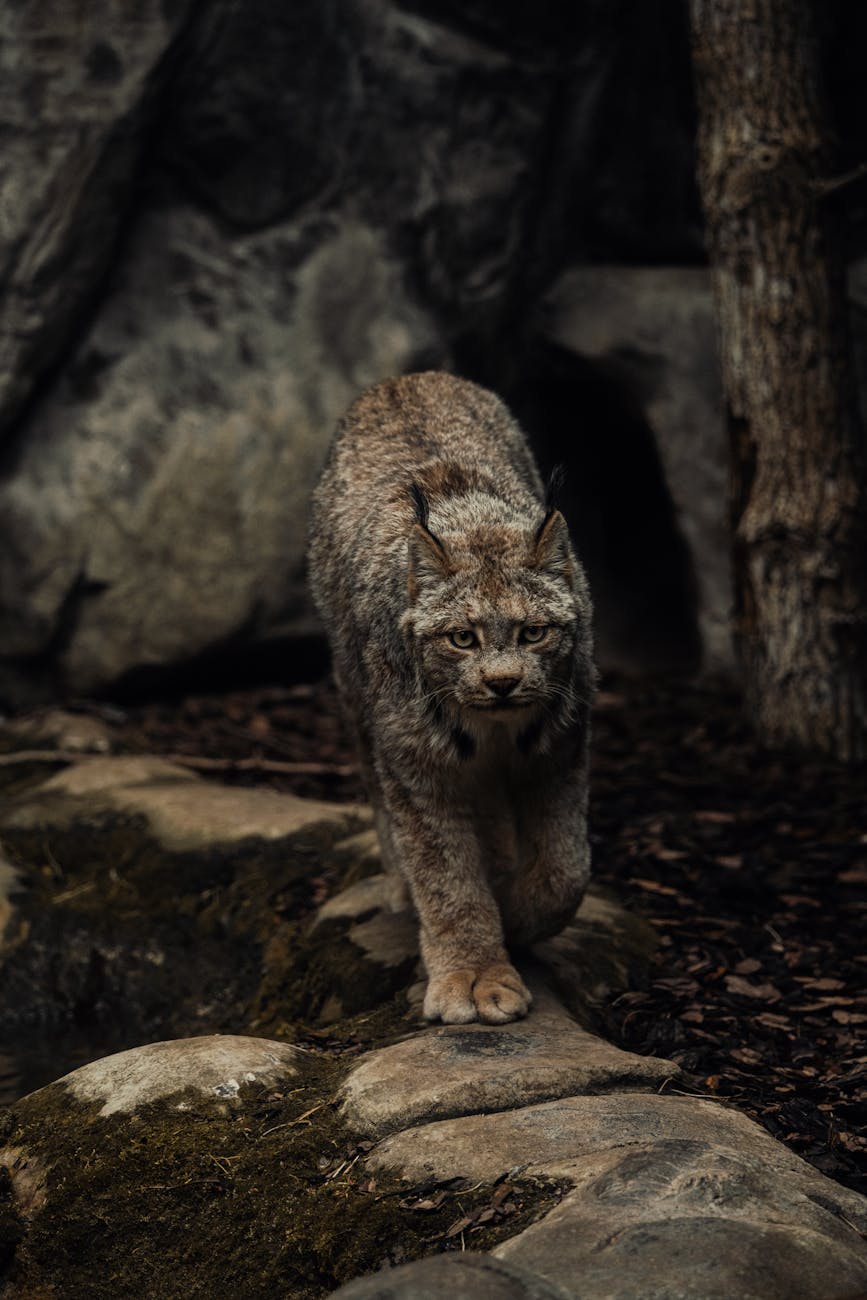
Three punch chickens are discovered by Ellis’ lynx, Lenny. The lynx flushes them out of one of the merchant booths. Those armed chickens are carrying some goods away, sprinting towards the open door.
What are punch chickens?
Statistically they are axe beaks (Black Flag page 371) that punch rather than poke. Their special ability of Evasion turns out to be too significant for 2.5 combatants.
Deadly encounter
This is a deadly encounter with two characters and one combatant animal companion. The action economy combined with consistent dodging means both characters are dropped unconscious. The final roll comes down to Ellis’ lynx versus a wounded punch chicken. The lynx lands the fatal blow.
Keesrah did bar the door preventing a simple escape, so even if they had completely failed there was a narrative success available via the peasants and non-heroic NPCs.
Keesrah’s mother, Velthuria, helps the group heal.
During the recovery the group used some social checks to learn that the punch chickens likely originate from a group that myths call the Children of Chorl (an evil transmuter who tried to create various hybrid creatures).
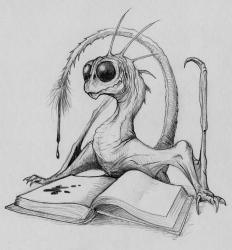
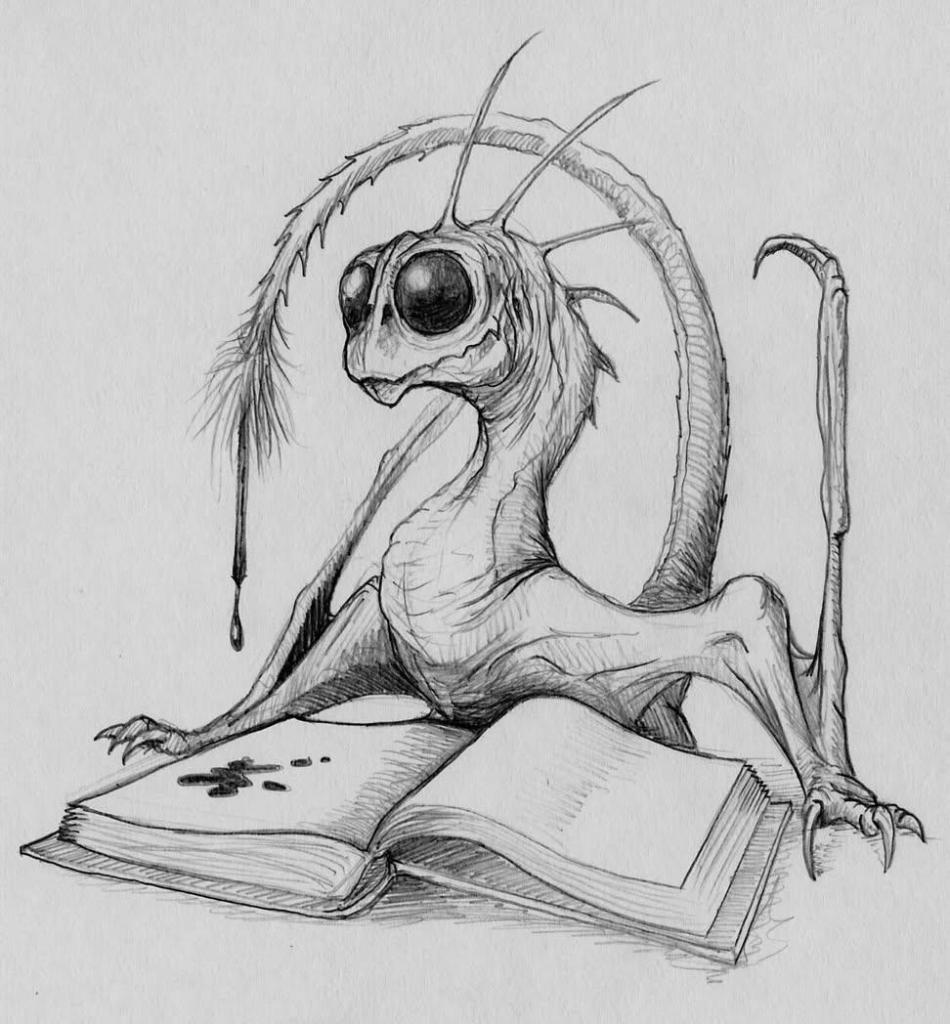
Inkling Dragons are thought to be related to pseudodragons, but where the pseudodragon is a wilderness lover the inkling dragon is generally an urban drake that enjoys being surrounded by books, scrolls and pamphlets.
Generally the size of a large rat or small cat inkling dragons can be mistaken for an immature jaculus drake. As all dragonkin hoard something, an inkling dragon is consumed with the pursuit of knowledge and writing, similar to paper drakes.
An inkling dragon without a companion can be found in libraries, universities, bardic colleges and wherever records are kept. Some are creatives writing fiction and song. Others are historians, tracking the world through the written word. At least one inkling dragon is known to only write in mathematics. This inkling dragon, Aymon, is a friend of transmuters, tax collectors and merchants often working as a clerk or calculator.
The Inkling Dragon was created as part of a limited commission in the upcoming book Dragons of the Dwindling by Dragons of Wales (Andy Frazer). Follow Dragons of Wales on Instagram, Threads and Mastodon. Support Dragons of Wales on Patreon.
Inkling Dragon companions
Frequently inkling dragons and writers bond over their love of the written word. Sought after by many wizards and writers, an inkling dragon chooses their companion as much as their companion chooses them — the tiny dragon has to find the work engaging and relevant to their own writing.
Art by Dragons of Wales in the forthcoming book Dragons of the Dwindling
Inkling Dragon stat block
Inkling Dragon (CR 1/4) Tiny Dragon
Armor Class 14 (natural armor, small size) Hit Points 8 Speed 10 ft., fly 30 ft. Perception 11 Stealth 12 Resistant none | charmed Senses darkvision 30 ft., keensense 10 ft. Languages Common and four other languages (or cultures)
STR
DEX
CON
INT
WIS
CHA
-3
+2
-1
+4
+1
+1
Heightened Senses. The inkling dragon’s Perception is 20 when perceiving by sight. Ability checks for Perception using sight use Intelligence.
Magic Resistance. The inkling dragon has advantage on saves against spells and other magical effects.
Limited Telepathy. The inkling dragon can magically communicate simple ideas, emotions, and images telepathically with any creature within 30 feet of it that can understand a language it knows.
Copying a Spell into the Book. When an inkling dragon or its companion finds an Arcane spell of 1st circle* or higher, the inkling dragon can add it to a spellbook if it is of a spell circle the companion can prepare and if they can make time to decipher and copy it. For each circle of the spell, the process takes 1 hour with no gp costs. Once the inkling dragon spends this time, the companions can prepare the spell just like their other Arcane spells. Copying a spell from a scroll into a spellbook doesn’t consume or destroy the scroll. Non-magical writing is written four times as fast when compared to humans. The inkling dragon produces ink from its tail as long as it isn’t at level two exhaustion or higher. * Black Flag uses circle as D&D uses spell level.
Ritualist. An inkling dragon with its own book can be a Ritualist, per the Black Flag Talent. The spell source is Arcane. Intelligence is their spellcasting ability. The inkling dragon knows one 1st circle ritual (typically Identify). If the inkling dragon is a companion to a spellcaster it can learn rituals at the same circle and source as their spellcasting companion.
1st circle Arcane rituals
Alarm
Create Familiar (these can only be common beasts)
Identify
Illusory Script
Unseen Servant
ACTIONS
Sting. Melee Weapon Attack: +4 to hit, reach 5 ft., one creature. Hit: 4 (1d4 + 2) piercing damage and the target must succeed on a DC 11 DEX save or be poisoned for 10 minutes. If the creature fails the save by 5 or more, it is stained by ink per Ink Stain below. This staining does not count against the number of uses per day.
Ink Stain (1/short rest). On a successful sting the inkling dragon can mystic mark (Ranger) one creature. While a creature is marked (including for the attack that triggered the mark), the inkling dragon and allies deal an extra 1d4 damage to it (of the same damage type as the weapon) each time you successfully hit it with a weapon attack. A marked creature can use an Action to remove the Ink Stain. An inkling dragon that is a familiar or companion to a character may use this ability proficiency bonus (of that character) times per day rather than once per short rest.
It’s incredibly difficult to capture what D&D can be in 30 or 60 seconds. That may be part of why the latest advert for the Starter Set, Heroes of the Borderlands is 75 seconds.
That’s also a short amount of time.
My sessions are typically three hours. We’ve played nearly a dozen campaigns in 5th edition from 2014 to the present averaging a game session every other week for the past 11 years.
Critical Role plays closer to four hours on average with the main campaign playing about 40 sessions a year over that same stretch.
How do you introduce the layers of play, the layers of friendship and the depth of potential in a minute?
Wizards of the Coast did that by showing a generation of players who said yes to adventure in the 90s and now play with their kids.
Saying that first “yes” to playing D&D
The people who introduced me to Dungeons & Dragons way back in the 80s introduced me to science fiction, to creative writing, to journalism and debate.
Later the second group I played with introduced to the concept of joining the Army, anime/comic books, writing my own game, and British comedy because we played Twilight:2000, Albedo, TMNT, Synnibarr, MERPS and of course D&D.
Saying yes to Vampire: The Masquerade helped me during language school, when the stresses of required success were overwhelming and I needed an escape from the combination Army-university life.
A year later saying yes to D&D with another nerd in 5th Special Forces Group helped me be myself while being all I could be and more. Those duet sessions created an escape and creative outlet.
Then I stopped.
Saying yes later
As my soccer blog matured and jobs came-and-went 5th edition D&D came out. I didn’t have a group. I hadn’t played in two decades except for those dozen or so sessions with a combat medic.
But, I was intrigued.
I asked my friends who wrote with me, who edited, who advised a small soccer blog as we grew.
Those first sessions of 5e included grand friends who helped each other learn the new system, remember our pasts and tell tales of glory through fellowship.
Those campaigns tuckered out and then ceased due to a wonderful job opportunity and then the pandemic.
Yes during covid
My last yes to adventure was when one of those friends asked me to DM again. During the pandemic I’d stopped running sessions. I still played, but online play and my DMing style don’t get along. I tried it once, in an actual play.
This yes meant getting a new group together. The old groups had scattered. Unlike the characters in that D&D advert I’ve never managed to maintain a group across decades. Not even my brother who was part of that first yes still plays.
This yes has our group playing in public, right in front of other people who don’t know what D&D is. We played with strangers who became friends. We introduced others to the game.
Marketing D&D
Saying yes to playing role playing games took me a lot of places.
And in 75 seconds the marketing team behind D&D reminded me of all of that. Taking us backwards on a journey of glory, of watching a child grow up, of a pregnant woman playing the game and a group of friends who stick together from 1995 to the present is brilliant.
Where will yes take you?
To the Caves of Chaos and The Ferments. To rolling d20s at a brewery and getting on stage at a security event. To Krynn, to Theros, to Sigil, to Exandria, to Trinyvale, to The Strix, to Wagadu, to al-Qadim, to Grim Hollow, to Drakenheim, to Midgard, to Obojima, to Eberron, to the darkest crypts and the glorious eternal afterlife, from dragons to halflings.
But mostly it will take you on a journey of friendship and discovery of the stories that you are unable to tell yourself.
That’s what saying yes does — it opens you up to things beyond what is contained within your own being.
The East marched on West Thundermoon Trading Post.
Wrapping up a typical day, Keesrah noticed a thick, acrid cloud coming from the east. At the same time a not-unusual goliath walked up the packed dirt road from the south.
The goliath, Guarase Spinebloom, reached the gates of the wooden palisade enclosure a few minutes before the smog buggy. Keesrah starts closing the doors.
The smog buggy encounter was one of three random encounters rolled by the three players taking part in today's session.
In a thick accent, the boss of the smog buggy, a goblin with driver and second passenger, demands/requests entry to escape “fire snakes.”
Keesrah messages her mother. This takes nearly a minute because it is the spell. She opens the gate and lets the rancid smoke engulfed clackety buggy into the trading post.
Mere feet behind them are fire snakes.
This was not a euphemism. They are snakes, made of fire.
Fire snakes were also rolled on the random encounter chart.
The fight is swift with another Trading Post visitor, a halfling with six tiny terrier companions, Luke with a silent and non-appearing q in his name. Luke is a cleric and joins in the defense. He was picking up farm implements from Keesrah’s father, a smith whose forge burns over an open lava seam.
Luke, Keesrah and Guarase try to defend these goblins. They have difficulty conversing with the goblins. Though the goblins know common (Telsian as we’re using cultures not languages)the two dialects known aren’t similar between the Ferments-born and the Essians (goblin born).
A unique use of Create Water by Luke reduces the fire snake effectiveness for a round, while also limiting the spread of fire in the walls.
During the fight the fire snakes kill one of the goblin minions and damage everyone, as well as a bit of the palisade. It’s a win, but with a hefty loss.
A mistake the DM, me, made was having four fire snakes. Standard fire snakes have too many hit points for three 1st level characters, even with their allies.
As soon as I realized the error I dropped them to 13 or 14 HP. That meant the fight was very difficult, but not a campaign ender.
A morale roll means that the smog buggy driver will likely never leave the trading post again. Their best friend is gone, burnt. Malk, the goblin boss needs to repair their buggy, which is also crispy, and find a crew and find the resources to use as fuel. The goblins normally use tar trees, but outside of Essia those are extremely rare.
Malk and Keesrah’s father talk about the possibility of using lava to fuel the smog buggy.
After a bit of rest, and setting up a guard by Keesrah’s family the group tries to recover. They talk a bit.
Looking around the Post they notice the overflight of dozens of hunting birds. The Maltunyn family rivals up in the hills almost always bond with birds. At a heightened alert, the group of Luke, Guarase and Keesrah notice that one of the smaller doors out to the game trails is open. Keesrah’s younger brother is gone.
The overflight was the third random encounter rolled.
Key learnings (SlyFlourish would call these secrets).
Goblins are searching The Ferments for a resource that can fuel their smog-tek.
Fire snakes are now aggressive, rather than passive. They will chase outsiders in the area.
Keesrah’s brother snuck out at night. That raised an alert from the adversarial clan nearby.
Community helps community. No matter the challenge and the danger.
It is an experiment in using random encounters, defensible places, and a West Marches style to talk about community, control of knowledge and love of pets.
One of the tenets of Dungeons & Dragons is that your character can be anything. Well nearly anything. There are certain limitations on species, mostly due to fantasy tropes. Those continue to expand. The embrace of characters with crutches, wheelchairs, and other ambulatory aids continues. Official books always include art showing these samples.
While the movement towards inclusion of disabled people as potential heroes is slow. It is there. This is wonderful. Because everyone deserves representation. Everyone should have the choice to see themselves as a hero.
Me? I wear glasses. Have all my life. This includes when I was a cartoon superhero as a linguist in the 5th Special Forces. On the range? Glasses. Jumping out of airplanes? Glasses. Setting det-cord? Glasses. Giving an IV? Glasses.
But how would my character where glasses? How could I play this?
My next D&D character is a glasses wearer. They carry dozens of lenses for varied uses. One of the land’s best archers, they can shoot a bee’s nest at 300 lengths. Once a truffle hunter always paying attention what was close, they now look afar, constantly.
There’s no rules for wearing glasses. The fix is simple. The worlds of D&D have magnifying glasses (100 gp, can start fires) and spyglasses (1000 gp, doubles size of object). So grinding glass isn’t a problem within typical D&D. Neither is the construction of simple frames. In the real world glasses as we know them date to the 13th century.
Eyeglasses or Spectacles
Type: Adventuring Gear | Cost: 25 gp* | Weight: — Wearers of eyeglasses or spectacles have their vision corrected to normal within the world.
* any player who wants to start their character with lenses should be permitted at no cost.
Now, you may ask — what happens if they get knocked off?
First, I say? Whatever. No, seriously, is your game a constant barrage of disarming player characters of their weapons, shields, and spell components? If not, then don’t worry about it. If you do run that kind of game, then use the same rules for other disarms and expect that characters would carry an extra set of lenses, as I did when I was a cartoon superhero. Maybe their next attack is at disadvantage if you feel cruelty is necessary in your game of heroics.
Those rules are rather unnecessary. My glasses fell off only once during training exercises that involved nearly the highest level of training in the US Army (I was SOT-A, not tabbed).
Hero Forge, DM Heroes, ReRoll, Never Ending all have glasses options for art. Currently DnD Beyond does not have character art with glasses, but many of the 2024 books do.
My next D&D Character is bespectacled. They wear lens to correct their poor eyesight. Not a nerd, just a person who lives life with lenses on their face. They slay dragons with a giant sword and use their shield to protect their friends.
Somewhat overshadowed by the release of several high-fantasy systems not based in 5e D&D is that Wizards of the Coast has two starter sets, a two-book/three-pdf Forgotten Realms set, and Eberron expansion coming out from September through the holidays.
Additionally, other 5e systems inspired by D&D are also cranking right now.
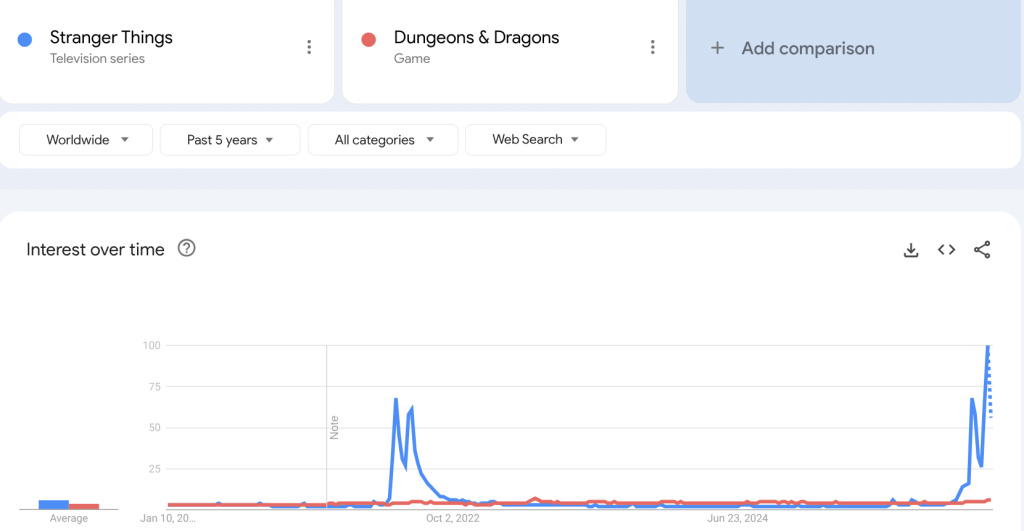
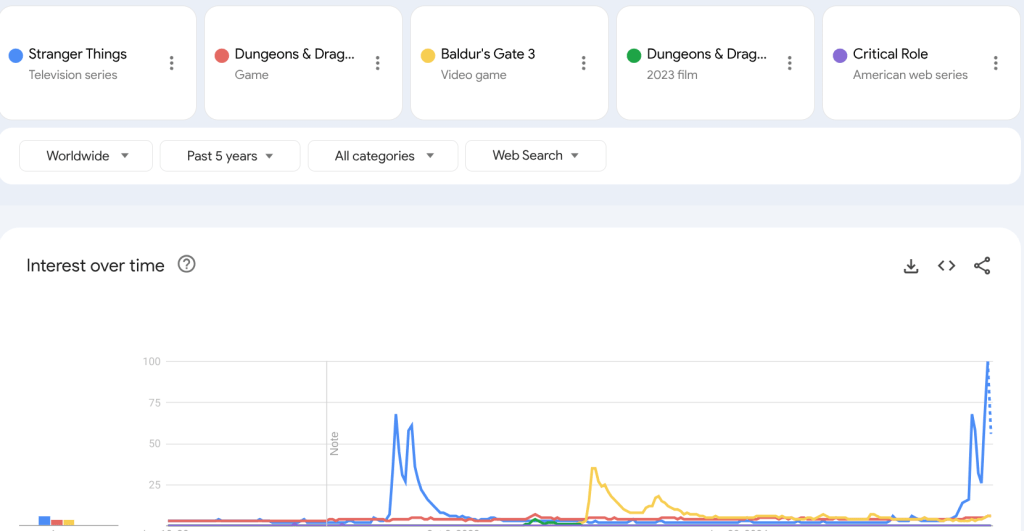
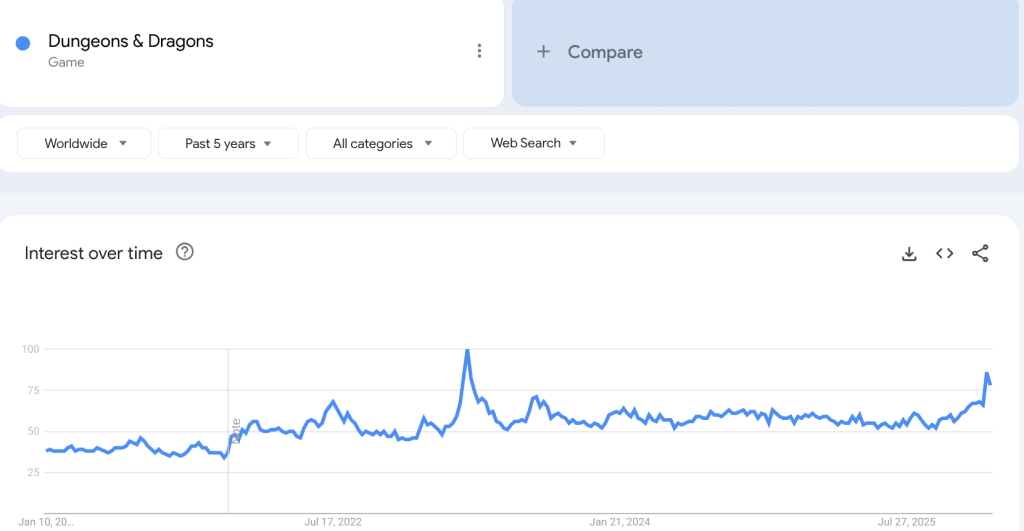
There’s a plethora of choice, right as genre TV’s most D&D related property is coming back — Stranger Things season 5 releases Thanksgiving, Christmas and New Year’s in the U.S. Several of the early monsters based on Dungeons & Dragons are making a comeback.
Your normie (non-RPG) friends may be interested in the game again thanks to the combination of product releases, the Mighty Nein release, Stranger Things and the general zeitgeist around being big heroes with power in a world where that feels missing.
What game or books are the right system for them right now?
If you read Full Moon Storytelling it is likely that you are a DM/GM. It’s also likely that you lean towards 5e D&D. That will be the focus, with a small discussion of the other systems capturing attention (million dollar+ Kickstarters and the like).
Are you the GM/DM?
Go with what you like best, what fits your world, and be welcoming. Cut back on house rules and homebrew, at first, as the people who are new to the game can be overwhelmed with normal rule sets that can stretch to 1,000 pages.
Fold the new invitees into your world by asking them what they enjoy about high fantasy roleplaying. Finding out what your table’s Appendix N always helps, but it is the most helpful knowing what someone new (or returning from long ago) to the hobby wants.
If they want something simple, but familiar like the D&D of the 80s, but modern there are a few routes. Sticking with 2014 5e one can still get the older starter sets from Target or Amazon. Dragons of Strormwreck Isle is under $16 at Target online, and some physical stores may have it. Check with your local gaming store to see if they are offloading old product.
You can also intro them to 2014 via Kobold Press Tales of the Valiant Starter Set. It is under $14 at the time of publishing. The primary differences between Wizards of the Coast 2014 D&D and Tales of the Valiant lies in Tales having character creation that separates nature and nurture, luck replacing inspiration and the insertion of unique abilities on every monster.
I’d recommend Tales of the Valiant over 2014 D&D because of those changes, even if it doesn’t have the branding your friends expect. It also comes with minis! If Stormwreck Isle is 5.1 5e, ToV is probably 5.3.
Stranger Things: Welcome to the Hellfire Club
Maybe your friends didn’t get into D&D from Stranger Things season 1, or 2, or 3, or 4. Or maybe they did, but didn’t have the time, energy or mental space to play the game.
Welcome to the Hellfire Club uses Wizards of the Coast’s modern take on starter sets — lots of tokens, handouts, cards and a written approach that blurs the line between board game and roleplaying game.
modern take on starter sets — lots of tokens, handouts, cards
The presentation includes a look that borrows from 80s nostalgia as expected. The four adventure books include trade dress that would make Gary Gygax and TSR proud.
This is the second starter set built out of Stranger Things by Wizards of the Coast. Both lean heavily into using the voice of the character from the show that was the featured DM, lean into the mythology of the TV show with its ‘not quite D&D monsters, but monsters that middle/high schoolers would think are D&D monsters.’
The first Stranger Things set was rather linear in nature, which fit the times and works fairly well for people newer to roleplaying. Welcome to the Hellfire Club uses 2024 5e D&D rules.
D&D Starter Set: Heroes of the Borderlands
Similar to Stranger Things pulling out 80s nostalgia to pull people into its world, Wizards of the Coast uses Dungeons & Dragons most popular adventure from the foundational period to inspire its new general purpose Starter Set.
Keep on the Borderlands is now Heroes of the Borderlands, with three adventures. Using 2024 5e D&D’s rules, card-based character creation, tokens and maps, the intent of Heroes is to again bridge that gap between board game night and RPG night.
Because it is 2024’s rules rather than 1974s, the set is massive. Those three little folios that could fit in a small lunchbox are gone. Instead Heroes has more than 400 cards and tokens, a quick start, a set of rules, and three adventures.
The game of D&D is simultaneously more complex and more approachable than it was in the 70s and 80s. Being a more pervasive part of the culture is part of that. Also the decades of exposure to computer RPGs changes how one approaches teaching the game.
Forgotten Realms expansions
A massive two-book, three-digital book expansion coming with the brilliant marketing around “The Realms will know your name” these books aren’t necessarily great for first timers to tabletop roleplaying, unless…
You know people who were heavy into the lore of Baldur’s Gate 3 and/or D&D: Honor Among Thieves and/or the once dominant fantasy novels set in the Realms. Those legends exist within the expansion, but the point of D&D and RPGs in general is to tell your story.
Only dive into this if you are being joined by people who absolutely love those non-tabletop versions of the Forgotten Realms. These expansions include 50 micro-adventures that fit an on-the-fly DM rather well (similar to those in the 2024 DMG).
Those playing with your classic group you need little guidance. If you are using the 2024 D&D rules, or at a table that permits a broad swath of 5e rules, the expansion is handy if you want to borrow factions, subclasses, new species and nuggets of lore to insert into your homebrew.
In total the Realms expansions add about 30% more character creation options while dramatically expanding the story through the lore expansions.
Eberron: Forge of the Artificer
High fantasy doesn’t have to take place in a world that’s pseudo medieval/Renaissance and Euro coded.
It can also include pervasive magic, spread widely among the populace in a world that echoes tropes related to early Industrialization with great Houses, lightning rails, elemental airships and a ‘war to end all wars.’
That’s Eberron.
Forge of the Artificer is a lightweight updated to the setting originally invented by Keith Baker.
Don’t get Forge of the Artificer unless you already have Rising from the Last War or you really want to have the magitech Artificers at your table or you are a completionist. I’ll be getting it for the first two reasons. I’m currently playing a goblin Artificer.
The Artificer in Forge is updated for 2024 with a brand new subclass as well. From what was in the Unearthed Arcana developing this coming version of the Artificer it looks to have the quality of life improvements I would expect.
Other RPGs
LevelUp
LevelUp is built on the 5.1 5e chassis, but advances it. This does make it a more complex version of high fantasy role playing. Some of the greatest improvements come from expanding the social and exploration pillars. This helps tell a wider variety of stories. Like every offshoot of D&D from the 5e era it separates nature and nurture.
There’s now a Starter Set available. Yes, it has tokens and multiple adventure, because that’s what modern starter sets do. EN Publishing’s Starter Set is an excellent way to try on a different version of the game you already know.
Cosmere RPG
If you enjoy Brandon Sanderson’s writing you might enjoy the Cosmere RPG. It is not based on 5e. It is the highest earning RPG kickstarter of all time.
Cosmere is beautiful, complex and the most extensive lore heavy game upon release likely ever.
Draw Steel
While not the level of Kickstarter success of Cosmere, Draw Steel was still a massive earner. The design team from MCDM is mostly people who produced wonderful 5e products, but are now releasing a system that emphasizes combat (tactical, heroic, cinematic) even more than D&D. The rules are crafted so that the feeling of conflicts is a reminder of watching a movie or TV show’s fight scenes.
Daggerheart
If Draw Steel is inspired by D&D, but wanting to be more combat, Daggerheart is inspired by D&D, but wanting to empower more story. Like Draw Steel and Cosmere, Daggerheart is a wholly new system. Most simply defined there is a Hope/Fear mechanic attached to the double-dice roll of players. Additionally it covers more ground about how to communally create the worlds and social interaction. Coming from Critical Role’s Darrington Press Daggerheart is designed to showcase the types of stories Critical Role excelled at.
Similar to Cosmere and D&D there is a wealth of media associated with it already — with more coming from the media arm of what was once a D&D actual play, but is now a multimedia company.
There are plenty of other games too — listing them all is foolhardy. Pathfinder and Starfinder, Legend of the Ring, Warhammer, Shadowdark and the list could go on.
But the zeitgeist right now seems to be focused on 2024 D&D versus a few upstarts with million dollar or more crowdfunding campaigns all coming out in the second half of 2025.
Over the past decade the 5th edition of Dungeons & Dragons grew three main offshoots from its original 2014 release by Wizards of the Coast. These three trunks are all now in the Creative Commons thanks to Kobold Press’s announcement this week.
A5e is the Systems Reference Document for LevelUp, from EN Publishing. This branch of 5e places much greater emphasis on social and exploration, while also being a more complex combat engine. It’s “advanced” 5e.
2024 D&D by Wizards of the Coast (the 5.2.1 SRD) is an evolution of the most popular version of the game in history. It adds minor layers of complexity, and removes most bioessentialism.
Now, Black Flag, the SRD for Tales of the Valiant is also in the Commons under the CC BY 4.0. The primary changes within Black Flag are replacing Inspiration with Luck, adding Dread and similar to A5e uses both nature and nurture to define an upbringing.
All three modern offshoots add a unique element to every monster. Rather than have merely have bigger numbers, monsters do something different — a Commoner in Black Flag has Angry Mob, while in A5e Commoners have a Stone (they can also be a Group) and in 5.2.1 they have Training.
What can a DM/GM/designer do with all four in the same license?
I am not a lawyer. Nor am I your lawyer. Use an actual lawyer if you have questions and are publishing for money.
Read all relevant SRDs as well as their related FAQs.
Find the place you want fiddle with and become an expert at that before you try to be an expert at everything.
At your home table, borrow liberally from every system. If you don’t find yourself handing out 2014 Inspiration and don’t like 2024 D&D’s mechanical implementation, use Luck from Black Flag. Use everyone’s monsters — they’re balanced enough for the elastic system that is 5e — your players will have fun interacting with different commoners doing different things.
Maybe you’re thinking “that’s nice advice Dave, but what are you going to do?”
Each of the main trunks of 5e do something different from the 2014 version of the game. That’s good! Your table can use a Background from any of the modern versions and there will be no balance issues. That means dozens of more origin stories for your heroes.
For myself it means my eternal project becomes a simple project. A few dozen new Backgrounds with methodology to fit in all four trunks of 5e.
Custom Backgrounds for 5th edition Dungeons & Dragons
This week the Tinker is my most popular Background. Tuning it for each version of 5e doesn’t take much.
2014 5e by WotC
It’s already released, but the key point is the feature “I Can Fix It.” The feature helps in exploration situations, mostly, as it means the Tinker will usually have a way to MacGyver there way through a problem even if they don’t have the proper supplies.
2024 5e by WotC
If you leave Ability Score Improvements within the Background rather than have them float the Tinker would choose between Dexterity, Intelligence and Charisma.
Connections – Tinkers might know a caravanserai, an innkeeper, a ferien, a smith, a group of bandits, a sergeant from a warring nation, a local farmer, a maker of fine meed, a faerie that’s a cheesemonger.
Memento – Tinker memento options could include a letter from home, a chapbook of poetry, a metal they’ve never been able to bend or smelt, a strap of leather from their first failed project, the stein from their favorite inn, or a book of cantrips though they don’t know any.
Adventures and Advancement – A Tinker who repaired a notable authority’s broken item may be granted a writ of access granting the Tinker expertise on Persuasion rolls.
Feature – same as the original on Full Moon Storytelling.
Now, these examples are quick looks at a future project that will include the score of Backgrounds already on the site, plus the four Everflow specific Backgrounds that didn’t get their own entry. And more as my reading expands.
With four versions of 5e available in the Creative Commons (CC BY 4.0) how will you create for your table?