Tag: advice

  • Lore Collage: Playdates in the Pandemic

    Lore Collage: Playdates in the Pandemic

    Signups for the official Virtual Weekend of May 8-10 remain open. Visit the Yawning Portal for more information.

    On Wednesdays Lore Collage will focus on public play as well as advice for DMs and players of D&D.

    Public Dungeons & Dragons

    Campbell County High School in Wyoming added a D&D club. No, the participants aren’t combatting Demogorgons and saving Star Mall.

    Pandemic D&D offers socialization

    Dicebreaker speaks to Game to Grow about how roleplaying games create social connection. Though the lack the campfire, usually, they are similar to the campfire tales of our ancestors.

    Advice for DMs

    This is old advice from Think DM, but it’s always good to review how to address problem players.

    Cutting Words doesn’t play well with the game as it is currently played. You only need to remove one line to improve the spell.

    What if dragons are just former adventurers transformed by their greed and avarice?

    As a fan of uprisings and rebellion fantasy, this entry about how to bring revolution to your campaign fueled my soul.

    Starting a homebrew campaign many DMs start with a continental map, but it’s much easier to start local, because that’s where your players start.

    If you think 5e skills don’t make sense, wait until you try to figure out how earlier editions handled skills.

    Advice for Players

    Want to play yourself? Melbourne University created an app that converts your face into the six attributes and a suggested class. It thinks I am a CE, Cleric with STR 15, DEX 9, CON 12, INT 9, WIS 15, CHA 9. Maybe. Probably not, as I haven’t been close to a STR 15 since my 20s.

    As always, maps

  • Adding Festivals, Holidays, and Birthdays to Your Game – the May Blog Carnival

    Adding Festivals, Holidays, and Birthdays to Your Game – the May Blog Carnival

    Fantasy literature is full of parties – Bilbo’s birthday, various fests appear in Robin Hood, lunar celebrations and so much more. Watching or reading celebration scenes helps connects these myths and fantasies to reality. Who doesn’t like a party? They also are a reminder that the times upon which Dungeons & Dragons are founded had a hundred holidays.

    All told, holiday leisure time in medieval England took up probably about one-third of the year. And the English were apparently working harder than their neighbors. The ancien règime in France is reported to have guaranteed fifty-two Sundays, ninety rest days, and thirty-eight holidays. In Spain, travelers noted that holidays totaled five months per year.

    Pre-industrial workers had a shorter workweek than today’s

    Within our games we can also capture these feelings of merriment, civic pride, religious faith, and family gathering. Not only can we, we should. The foundational literature demands it. Having characters and societies that are more than sword swinging, spell flinging battlers creates stories of greater emotional depth.

    Full Moon Storytelling is hosting this month's Blog Carnival because it is my birthday. What better way to celebrate my own aging than talking about D&D parties? Last month's blog carnival was hosted at Codex Anathema, and was all about powerful magic items and artifacts. The rest of 2021's blog carnivals can be found at Of Dice and Dragons.

    There are several ways that you can integrate these events into your campaigns. Whether they get a couple lines or are a couple sessions will be up to you and your tables.

    Fetch Quests

    This may be the easiest way to add a holiday to the start of your game. A cold open that involves a civic leader that needs the very specific item for the holiday in question gathers a group of specialists together in order to find the lost item.

    Maybe at the beginning the community is downhearted. Rather than party they have to head off into the wilds to search for very specific item. Their journey brings them out of the village. In that world they can discover the thing, bring it back home as heroes and the festival is now also a victory celebartion.

    Introducing New Culture

    Journeys to strange lands mean new discoveries. When the group arrives in an unfamiliar place have them encounter a festival unlike any they’ve seen before. This introduction to a new culture emphasizes the differences, in a way that is full of brightness, joy, and excitement (unless you choose something dour).

    By arriving at fest-time the group immediately knows how different the place is. Maybe if they have observational knowledge of the culture a history or culture check helps the character in question understand what is going on. Otherwise the group learns what’s going on by engaging with the worlds and cultures which you’ve created together.

    Change of Pace

    Between dungeons, dragons, orc wars, piracy, invasions by mindflayers, elemental cultists, the mists – what happens? Normal life. And normal life in the worlds of D&D is weird. But it’s also people who do things like celebrate birth, coming-of-age, weddings, coronations, harvests, solstices, equinoxes and more.

    Take those moments of normality to highlight the abnormality of your D&D world. The dichotomy of a party with the world-shaking events of a tier 3 or 4 adventure is potent. Those few moments of calmness and levity during a session may just be the ones that the table remembers later. Killing a 45th bandit isn’t a big deal. Giving the town kids the feather of an owlbear? That’s a moment!

    Victory Celebrations

    You’ve cleared the dungeon, slain the dragon, the forces of Gruumsh were held back, recovered the holy tooth of the founding family of the town, the heist was prevented, the heist was successful – however your adventure or campaign ends there must be a party, a big party.

    Maybe the characters are throw the party. Perhaps the queen calls the empire to celebrate. Imagine that you’ve save the world and the Old Gods convene the grandest fairies of the planes to reward you and the world for the success.


    Inspiration for Characters

    You can also spin things the other way. Search real world festivals and holidays and turn them into you own character concepts. Maybe your next Artificer is based the technomancers of Jingle Jangle. What Moon Druid isn’t dedicated to the thirteen full moons? Before you became a hero were you a carnival barker? Your next D&D character could be the expert marksman brought in as a ringer, or the strongest person in the world.

    Every birthday, holiday, or real world festival is an opportunity for character creation. So create. I’m certain that Awf’s birthday is coming up. Everyone’s favorite axe-wizard is going to party like the elf-raised dwarf he is – I don’t know what that means yet.


    How do you integrate festivals, holidays, and birthdays into your D&D games?

  • Measuring long distances in D&D – time matters

    Measuring long distances in D&D – time matters

    Distances in the modern world are measured quite accurately. Whether you use Google Maps (or whatever your favorite similar app is) or even just wayfinding markers, much of the inhabited world is known. The distance from place to place is precise. But when you’re wandering the wilderness your characters do not need that level of precision, nor would they have it.

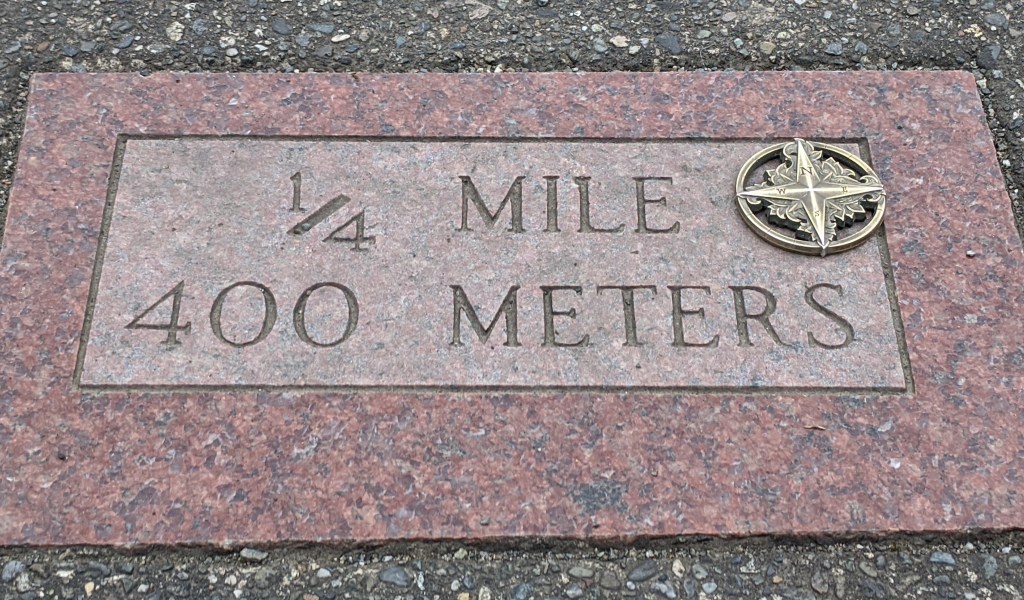
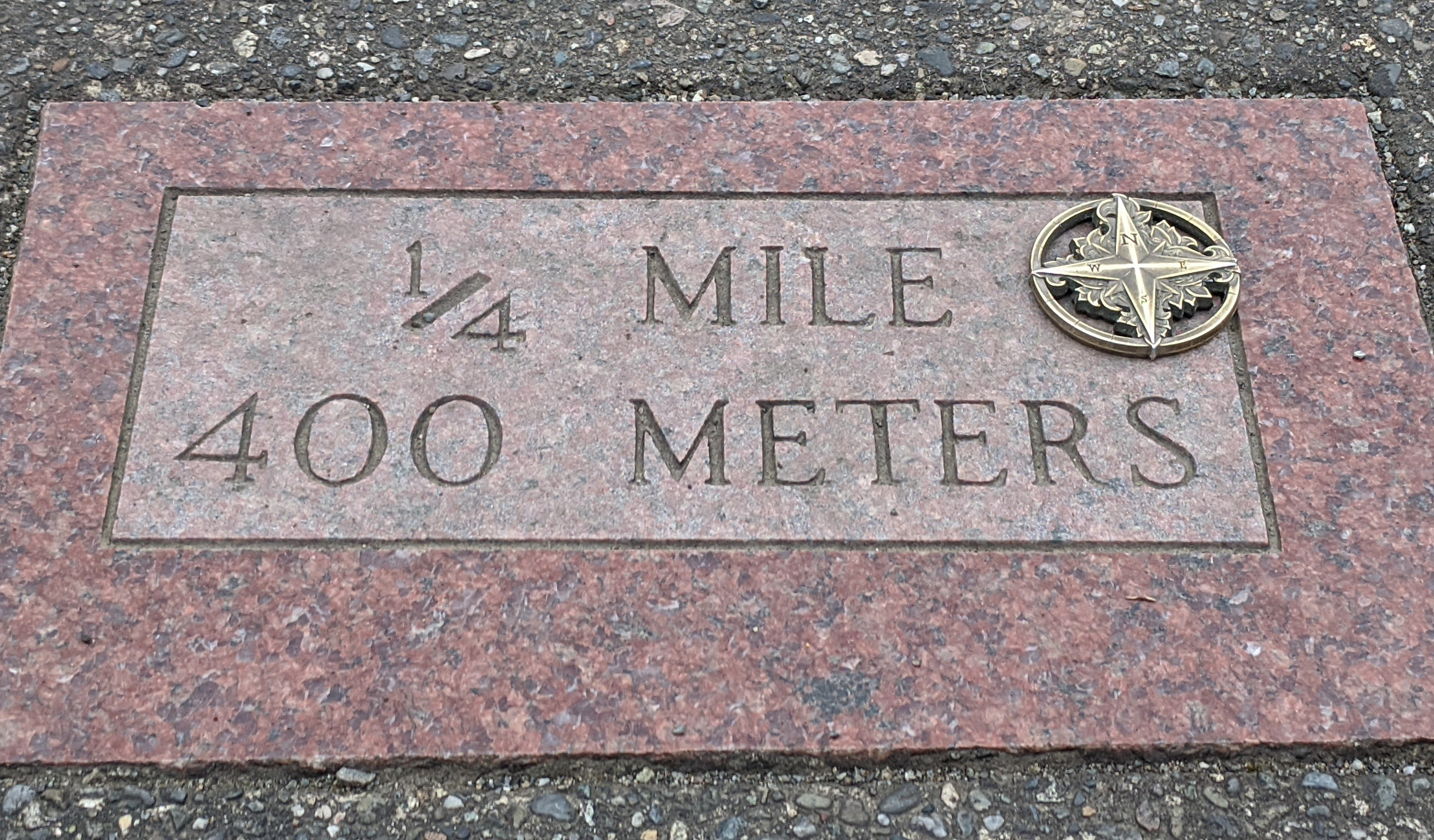
    A sign indicating a distance of 1/4 mile or 400 meters from the last marker.

    Miles, why?

    A mile originated as 1000 paces of road and marked off by an ancient fallen empire. It later gets corrupted by locals to mean dozens of dozens of slightly different things. They only make sense in a world where there was a unitary fallen empire that had a vast majority of its residents be of the medium races.

    This makes sense in some fantasy worlds, but not many. A single cohesive empire within the primary region is a story that is sometimes told, but only those that marched soldiers would use a mile.

    Now, for players, rather than characters, the mile has the advantage of being what Americans use for distance, and the majority of Dungeons and Dragons players are Americans. It’s a handy shorthand for distance.

    It remains though a measure of distance with an accuracy that is meaningless. It does not matter if the next village/cave/castle/dragon is 7.2 miles away.

    Immersive Travel Distances

    What matters is “how long does it take to get there?

    That’s what characters need to know. Thereby that’s what DMs need to know. Travel time is the key. How many encounters (social, exploration, or combat) will happen during the journey. Do the characters need to stock up on supplies? Do they need to find a cart or mount due to the distance? Do they need to hurry?

    So throw out the mile. It’s unnecessarily precise for your game. Just like the number of minutes you travel don’t matter in the majority of your sessions. Abilities that impact travel are measured in time, not mileage.

    Replace miles with a measure of distance that relates to what the characters know. Make it simple enough that your players know what it is as well.

    Introducing the League

    Borrow from the league. This is a great measure to use in your game world. Yes, it’s also based in that ancient empire. In this case it was the marching distance that a soldier could travel on a road in an hour. It works out to basically 3 miles, which is extra handy, because that’s the number of miles that D&D says a human character travels in an hour.

    This means you do not need to convert any of your maps that display mileage. Just divide it by 3 and you know how many leagues separate the two locations – easy.

    Throw in some variants similar to Welsh measures of distance with the short yoke, the lateral yoke, and the long yoke, and you can capture the nature of travel by shorter races, pony/dog/donkey, horse. These slightly different names help with immersion because in D&D there are essentially four different speeds that matter.

    Photo by Anugrah Lohiya on Pexels.com

    Travel Distances Chart

    Race, Creature, or VehicleCombat SpeedHourDay
    Halfling, Gnome, Kobold, Goblin25′ or 5 pacesShort League (2.5 miles)Short Journ’ or A Daylong (20 miles)
    Human, Elf, Dwarf30′ or 6 pacesStandard League (3 miles)Daylong Journey (24 miles)
    Cart, Dog, Pony40′ or 8 pacesLateral League (4 miles)Daylong (28 miles)*
    Horses60′ or 12 pacesLong League (6 miles)Long Journey (36 miles)*
    *animals don’t like being ridden for quite as long as humans like to march.

    Introducing the Daylong Journey

    That last column is another measurement that matters – the day. In a given adventuring day a party should take two rests and a long rest. They could do those overnight or during the daylight, depending on the party makeup and whether there is a need to hide from baddies.

    Take those rests whether or not there is combat. The fact of the matter is that when people or horses march of hours and hours and hours they need to rest. There’s even a mechanic for forced marches (pg 181 of the PHB) if you want to avoid those rests and push through. Those groups run the risk of exhaustion.

    There is no historic English word for a daylong journey, so just call it a daylong journey in Common. But also recognize that some societies might abbreviate it. The common perception of halflings in most fantasy worlds might call it a Joun’ or just a Daylong. Those cultures that use carts or dogs or ponies might not use a different word. They just know they travel a tiny bit faster, but not a lot faster than humans.

    You can still use the page 182 PHB chart about Fast or Slow travel too. Fast travel is 33% faster than normal travel and harms your passive traits like Perception and/or Survival for tracking. Slow travel is 33% increase in time spent travelling, but you can use Stealth for the group (as a reminder a group check means each player rolls for success and if 50% or more succeed the group succeeds).


    To Sum Up

    • Don’t get caught up in granularity.
    • You’re going on an adventure, not a trip to the grocery store.
    • Do use measurements that your characters care about – a league and daylong journey.
    • Use a system that most of your group likes, which could still be the boring mile.