• Adapting Genoan revolutionary lunches to fantasy third places

    Adapting Genoan revolutionary lunches to fantasy third places

    During the Age of Revolutions the leaders who wanted liberalization and democracy in Genoa had no idea how to govern. They were a bit idealistic. They struggled to get the various classes of this significant mercantile kingdom to get along.

    This all comes up in a recent Nerd Farmer podcast featuring Nathan Perl-Rosenthal. And it’s going to inspire a new third-place tradition in my Dungeons & Dragons world.

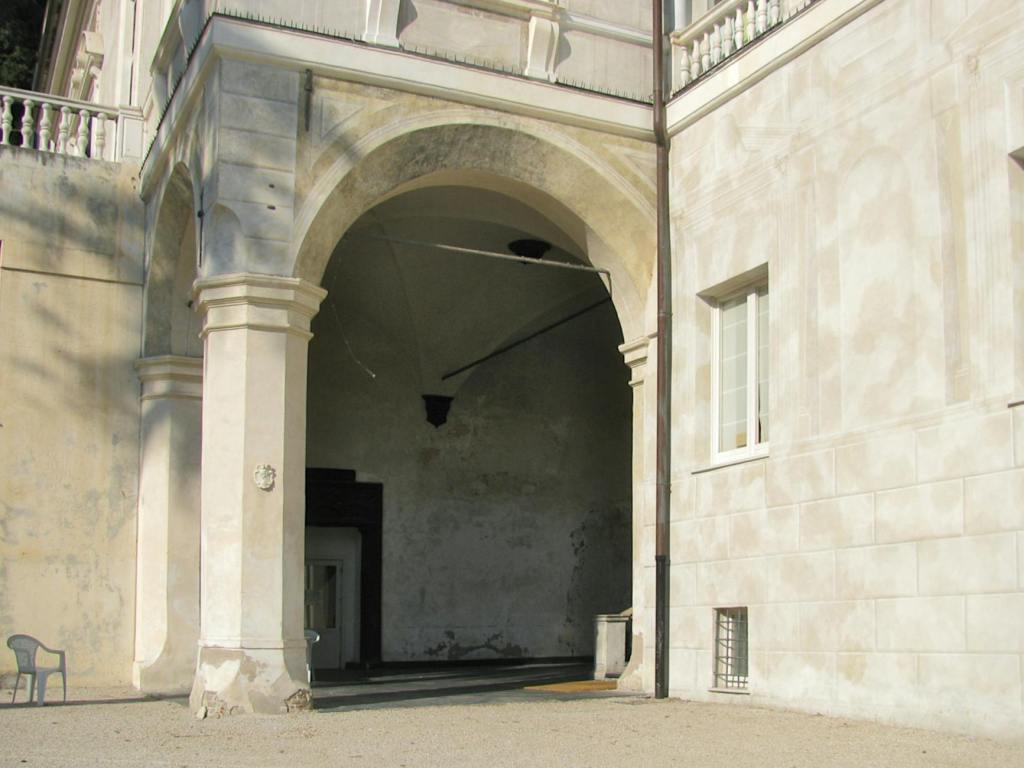
    By Aldan-2 – {{[1]}}{{[2]}}, CC BY-SA 4.0

    One of the ways the Genoan revolutionaries tried to create cross-class conversations was by mandating public lunches be held on the streets before festivals. These lunches would be funded by the elites, had limitations on the number of courses and were intended to inspire conversation before the entire group proceeded together towards a town square for fest time.

    This attempt at a third place being a space in time rather than a physical building intrigues me. That porch was only a third place during the luncheon, roughly every two weeks. It didn’t work.

    This is a fantasy blog, mostly about a fantasy world where dragons and magic are real. Let’s make the Genoa public luncheons real.

    My world has a naval empire, which makes this easy. But it is rather hierarchical and centered on the influence of the navy as sailor-citizens with power and influence. It is expansionist. Daoud won the war with Kirtin twice, and just lost their hold on Kirtin-on-the-Lake, the winter capital of Kirtin.

    Douad’s fleets sail the seas trading goods, conquering territory and bring their wealth back to the homeland.

    Daoud is the southern nation and controls the Green Isles in the Southeast.

    This is where the lunchtime third places come in!

    These now-wealthy sailors, officers and captains are required, by the Admiralty of the Land, upon returning to port to share their wealth and throw a party in the neighborhood from which they came.

    They lunch and fest together, with the Admiralty and Royalty surprising random porches with visits.

    This now ingrained tradition started because when the first ships came back with massive wealth they were seen as a threat to the non-sailing gentry. So that leadership in a form of taxation started the luncheon program. This kept the peasants that didn’t sail happy with the leadership and that joy spread.

    These lunches are simple fare — three courses, one which must always be from the land the ship just visited. There’s always a flatbread, that was originally simple but is now treated as a complex way to serve a fourth course that is not in violation of the edict. There is wine and coffee, tea and liquor.

    There is joy.

    Then there’s the party, always in sight of the harbor with the ships lit and glowing at mast and crossbeam. There are flags and fireworks (the best ships travel with Sparklers). These parties are on a time limit. They start within two sunrises of the ship’s return. They end the next morning.

    And everyone participates. The paupers, urchins and sweeps know that when a ship returns they will eat well for at least a day, often two. The displays of wealth are ostentatious and the people are happy. These aren’t circuses, nor taxes. It’s Daoudian Luncheon — one of the two third places in the culture. The ships are the other third place.

    Fediverse reactions
  • My Spring ’24 soccer team is inspired by the 90s

    My Spring ’24 soccer team is inspired by the 90s

    Being able to support my friends who do fun stuff is good. ECS continues to run Pub League, a simple barely competitive set of two soccer leagues full of joy that embraces everyone. Once upon a time I sponsored them while I managed Sounder at Heart. Then I stopped because I didn’t manage Sounder at Heart. A year ago they had an empty slot that needed a sponsor. I was able to and that was when my team was a group of pirates. Last fall it was vampires.

    Now it’s the Almost Full 90 FC, inspired by the era when I was a teen with Trapper Keepers and Peechees playing D&D hiding my inner nerd behind pastels (including my jeans).

    Two soccer jerseys and two logos. First soccer jersey on the left is a swirl of pastel colors in a sunset with two shiny dolphins jumping out of a pastel ocean over the setting sun. Second jersey is black with bands of swirly pastels over the black. Top logo is Almost Full 90s FC, a 1990s logo similar to MS Paint of that era. Second logo is for Full Moon Storytelling which shows a rising full moon with a polyhedral d20 silhouette embedded in it. The moon is rising out of a pine forest. The words Full Moon Storytelling are under the forest.

    Every player name is inspired by 90s era TV shows, songs and memes (we had those back then).

    Coaches: Bop it Throw it Pass it, That’s Brisk Baby, and Eat My Shorts

    Players: WHAT’S THE 411, COOPER, FRESH PRINCE OF DEFENSE, SPORTY SPICE, FOOTBALL HEAD, THAT’S BRISK BABY, I DID NOT INHALE, EAT MY SHORTS, ON A BREAK, BOP IT THROW IT PASS IT, DOCTOR, BEANIE BABE, REPTAR ON TURF, TRUNCHBULL, D’OH!’, MIDAS, YOU’VE GOT MAIL, STREET SOCCER, TOO YOUNG FOR THIS, UGH, AS IF!, NEVERMIND, NON BLONDES.

    I’m telling you, they’re going to win the ‘ship.

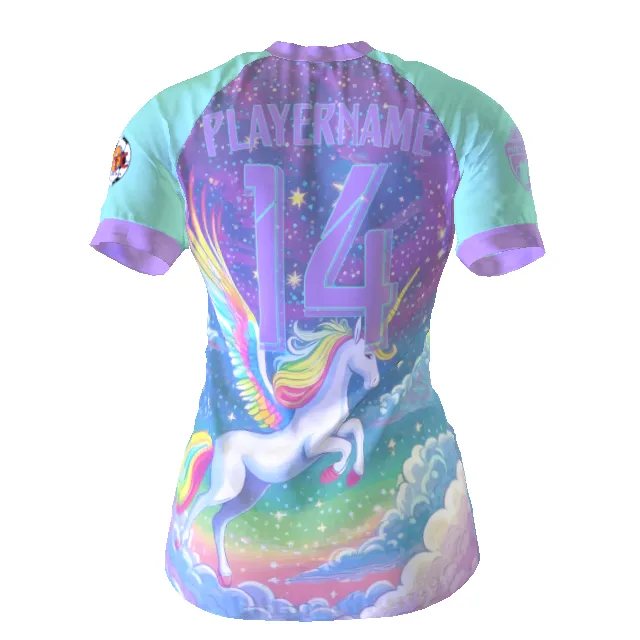
    There’s a couple other cool bits. The Captain’s armband is inspired by iconic frogs from the era and unlike most soccer jerseys these days, the back is similar to the front — with a unicorn.

    As always, the lesson from this is to support your friends when they do rad things. It’s totally awesome.

  • Kobold Press Eonics offer time loop fun to D&D

    Kobold Press Eonics offer time loop fun to D&D

    I’m one of those passive backers for most projects. For Tales of the Valiant I sent Kickstarter my money to send Kobold Press and then I waited. I did this because I have enough of their products that I know I will use them. Many of their dragon variants are part of my world right now.

    That also means I get fun surprises for their intermittent reveals, like the Eonics.

    This new lineage (their current term for race) is a bunch of time travellers who lost their ways on the time stream, now existing your D&D/Black Flag/5e world without the ability to get back to their normal time.

    They do still have minor time travelling abilities. That’s where things get fun. Their core abilities are about possibly knowing the past, their expectation that things are going to go wrong and a skin that’s been scarred by time streams. Those combine to have fun uses as monks, rogues, bards and maybe even an off-brand barbarian.

    In Black Flag (Kobold Press’s SRD) and Tales of the Valiant characters are born into a lineage and grow via a heritage. Heritages are similar in power to 5e (2014) subraces, but are open to any species/race/lineage.

    The eonic-themed heritages immediately become part of my world. This is time-hoppy funness.

    Time-lost Drifter

    Those raised as drifters have a special belt and some exhaustion based mechanics with a future-self time echo. Plus, they are hard to kill. Their body comes disconnected from time.

    Inheritor of the Future

    The inheritors get a super-advantage Help action and a powerful time warping staff.

    Mirror Worlder

    These peoples can see alternate realities and grab things from them. This is a classic trope in fantasy that hasn’t been embraced much in 5e, until now.

    The Eonics and all of their heritages fit in the World of the Everflow as the peoples from the future who went back to when the gods shunted off magic from the World. They would be 3,000 years in the future from the current games, popping into a world that they helped break and create at the same time.

    With these and the Tales of the Valiant goblins I’m very excited to bring more variety to my table.

  • Children of Chorl

    Children of Chorl

    The first Scholar to be discovered was the Necromancer. His works were hard to ignore, as the undead he mistakenly raised thinking he was helping the peoples of Fort Ooshar and Sheljar broke the empire. That built a distrust for newly released magic.

    Sheljar, Telse, Mira, Qin and the other cities near the Everflow and its two rivers.

    This is likely why Chorl attempted to hide. Not only was his work in Transformation often done involuntarily, Chorl wanted to conquer. His goal was to fill the gaps from the Fall of Sheljar, taking over the Western Wildes via his hybrid peoples. For Chorl, in all his evils, was creating new peoples, a combination of humanity and their companions.

    Some chose to be combined, these peoples frequently became his lieutenants and sergeants. Many fled. The breaking of his camps and the deaths of Chorl and his Student Anderson created an opportunity to escape.

    Now, the Children of Chorl exist in mixed pockets of freedom almost always outside of the major towns and cities. They may want vengeance hating Scholars and magic; they may want freedom; they may want to be respected. They are all hybrids in the World of the Everflow.


    Mechanics for the Children of Chorl

    To play a Child of Chorl in the World of the Everflow select a hybrid species/race. There’s a long list of them available in DnD Beyond now, thanks to Wizards of the Coast adding the Humblewood setting.

    Though none of the core species for 2014 or 2024 D&D are Children of Chorl the current list from official products includes;

    Aarakocra, centaur, harengon, kenku, lizardfolk, minotaur, satyr, shifter, tabaxi, tortle, giff, hadozee, owlin, leonin, loxodon, locathah, or grung.

    Players at my table can also use those from Humblewood;

    Cervan, corvum, gallus, hedge, jerbeen, luma, mapach, raptor, strig or vulpin.

    Then select a feat or bonded companion. Though all Children of Chorl were a goliath, halfling or human combined with a bonded companion, that doesn’t mean that they didn’t have more than one companion.

    Decide what the character was before they were melded. They should generally be someone from the West. They can be someone who volunteered or not, that’s up to you.

    Their background and class represent what they were before. How they present to the world now is similar to the X-Men.

  • Happy birthday to the dungeons and happy birthday to the dragons

    Happy birthday to the dungeons and happy birthday to the dragons

    My experience with Dungeons & Dragons doesn’t go back to the beginning. That would be kind of hard, as I’m not 50. It does go back to some of my earliest memories. For me D&D always started as a storytelling game, probably because the way the first DM I played under introduced it to me.

    Derek convinced us to play because he was and is a storyteller. He knew that I loved The Hobbit, Narnia, King Arthur and Robin Hood. The pitch was simple — “Do you want to tell your own stories in the world?”

    The answer was simply “Yes.”

    We played with, those simple dice that needed a Crayon to color in the numbers. For some reason I only remember d6s and dungeons.

    Two old d6 showing the number 5. They are a green like the color of exposed old copper.

    D&D is what started me on my journey to tell stories. I always thought those stories I would tell would be fiction. As of yet, conventional publishers haven’t accepted any of the short stories I’ve pitched.

    But it also started me on the journey to be a journalist, and that worked out to be sports (mostly soccer) and then marketing tales. Derek’s connected to that journey too, but that advances several years into high school and again to when I was an emergent baseball blogger (which didn’t work out).

    Later in my journey Dungeons & Dragons became the central point of my strongest friendships in those harsh teenage years. Like many GenX suburban white males, I was a latchkey kid in a neighborhood with cul de sacs and basements.

    Those basements provided our play space and our avoidance. We avoided thinking about divorcing parents, impending nuclear annihilation, ozone depletion and whatever other terror the nightly news foisted on us.

    Erik, Justin, Abel, Colin, Jacob, Andy, Chris, and the others — we hid from all of that. There were early video games, many board games, and other role-playing games, but it was D&D that was our unifying factor. The stories we told via rolling oddly shaped dice and convoluted rules gave us an escape. We were big, damn heroes. We were anti-heroes. We were thieves and priests and archers and wizards. We adhered to the noble codes that our imperfect real lives could not. We violated those codes to see what would happen.

    That late 80s to early 90s version of D&D that we played was sometimes in dungeons and always dragons. Every world we played in had dragons in the background providing terror, often ending in a TPK.

    My second D&D era was about avoidance. The stories and people helped me make it through the bad times — puberty, divorces, fights with friends, being the outsider from the in-cliques. Without that group I’d be a horrible athlete, the storyteller incapable of finishing a tale, a ‘gifted’ kid who avoided hard work, someone with constantly broken ankles and a body that doctors considered brutally altering because I was dramatically smaller than my peers.

    In the Army I nearly avoided D&D. During my time at DLI I did participate in a Vampire: The Maquerade LARP in Pacific Grove, California. That was the only place I met non-military people while in that hybrid college-military experience. In 5th Group one of the 18D (combat medics) invited me to do solo play with him as the DM. That was basically impossible to keep up because our deployment schedules didn’t quite overlap. We also never played when deployed together. I’m pretty certain no one in his ODA knew that’s what we did when we hung out outside of work.

    Then D&D disappeared from my life.

    I thought I grew up.

    I thought I didn’t need the funky dice, the tales.

    5th edition brought me back after not playing regularly since 94 (the 5th Group experience was 97-98).

    My current era of D&D is broader in playing styles, stories told and the people I play with. There have been two dozen people who have played in the now-seven campaigns within the World of the Everflow. Plus I’ve been a player in four campaigns and hosted a charity actual play for YachtCon.

    Where my first era of D&D planted the seeds of creativity and the second era taught me math (and kept me as sane as I’ll be due to avoidance), this third era of my Dungeons and my Dragons is about exploring fellowship, exploring philosophical issues, confronting the issues of the era rather than avoiding them.

    On this 50th birthday of D&D I discover that my eras of D&D are the eras of my life, showing a maturity in my life while being skills and abilities I continue to use in this life.

    My game doesn’t really have dungeons. Dragons aren’t omnipresent. But it’s still the same game.

    My game doesn’t roll characters. They’re created for story rather than optimization. It’s still the same game.

    My game isn’t in the Forgotten Realms or another official world (or third party world). It’s a world concocted by me and mutually, continually created by us. It’s still the same game.

    For forty years this game has been present in my life. At times it has been my most defining hobby. Other times it was locked behind a haunted door in my head, hidden but influencing my personal journey.

    Today I don’t lock my passions away. People get to see them. They can judge me — whatever.

    We’ll play in public today. Something that was nigh impossible in the 80s, when even my own family thought D&D meant devil worship.

    Today we roll for initiative.

A thin shape of a house with script Kristin Clark inset

Full Moon Storytelling is brought to you by Kristin Clark of Keller-Williams Lake Washington
If you are looking to buy or sell a home in King or Pierce County, Washington support Full Moon Storytelling by supporting Kristin.
Here’s a wonderful 3-bed townhome in the Totem Lake area you should consider.
She’s my partner in everything I do.