Category: Reviews

  • Professional failure

    Professional failure

    Professionals fail all the time — in roleplaying games, in elite athletics, in special operations, in life.

    The idea that they shouldn’t miss in a game is built on a foundation of water, not even sand.

    There are still some valid reasons that one wouldn’t roll to hit, but they have nothing to do with professionalism.

    Matt Colville on Mastering Dungeons

    In a recent edition of Mastering Dungeons Matt Colville talked extensively about the business of RPGs. It’s a wonderful listen.

    Something stood out to me though.

    “You’re professionals; you shouldn’t roll to hit.”

    Now, the idea of not rolling to hit is part of Colville’s quite intentional design. I’m certain he’s said it before and will say it again. There are reasons in games to not roll to hit.

    They have nothing to do with the character being a professional.

    Let’s break down the idea of professionals not needing to roll to hit.

    Elite Failure

    Elites fail regularly. They fail when contested. They fail when on their own. Failure at elite levels may not be as common as for us normal people, but it happens.

    This is true for the real, actual elites, not those mere professionals. My personal history is blessed to experience a few elites in fashions that many do not.

    Special operations

    Assigned to 5th Special Forces as a peacetime soldier my Army days were defined by the Quiet Professionals — the Green Berets. Working alongside these masters in warfare I saw failure every single day.

    On the range those trained to be snipers, an uncontested contest in gaming terms, missed. There are reasons for each miss, but missing happened.

    When soldiers, even in highly trained units such as the Special Forces, go to war they miss even more. The human brain does not like to kill things, plus there is chaos all around you. Errors happen. They always will.

    Elite failure isn’t limited to elite warfare.

    High-level sports

    Leaving 5th Group I decided I wanted nothing to do with my high school dreams or hard journalism. I turned to sports. During that era I worked as a producer for the Sonics broadcasting network, baseball’s best postgame show, as an on-air analyst for soccer and founded Sounder at Heart.

    At the field and court level I’ve watched Ichiro, Ken Griffey Jr., Gary Payton, Michael Jordan, Megan Rapinoe, Kasey Keller and many others.

    The list of these Hall of Fame talents failing would be immense.

    But let’s use hard numbers.

    Ichiro is the best contact hitter of the modern era. The ten-time All Star and MVP had a batting average on balls in play forty points higher than his contemporaries, but it was still only .338.

    Jordan’s shooting percentage was just under 50%.

    Now, both of those are contests. What about the best athletes when uncontested? Steph Curry makes only 91% of his free throws.

    It doesn’t matter which sport we consider. Kasey Keller stops 74% of shots he faces. Megan Rapinoe put ~40% of her shots on frame, and scored even fewer of those.

    Failure among the elite is regular and normal. They roll to hit and fail.

    Business

    Pick your favorite business leader and their success rate is higher than average, but whether its Howard Schultz launching a magazine, or Steve Jobs launching NeXT, or Warren Buffet investing in a shoe company, they fail too.

    Gaming reasons to not roll to hit

    So professionals do miss. Elites miss.

    Are there good reasons to not roll to hit? Yes, absolutely, as part of intentional design choices for a style of play that has nothing to do with professionalism of the character

    Hit points vs meat points

    The long standing D&D debate about hit points being more than meat points can be ignored here. Games developing to-hit rolling or direct-to-damage techniques do not need to burden them with Gygax’s decisions.

    Direct-to-damage rolling is excellent when hit points are, as in D&D, a symbol of morale, luck, fortitude, energy and more than merely meat. Since every attempt to physically damage an opponent wears away at those elements you don’t necessarily need to roll to hit. Missing still costs luck, energy, mental health and morale.

    The meat of the opponent can be damaged eventually, even without rolling to hit.

    Speed of play

    Colville did this in MCDM monster design for his 5e books — minions and the like can be hit easily. And then eliminated easily. This speeds up the action at the table and mimics narratives from movies, TV, video games within role playing games. Slicing and dicing through waves of small threats feels great. Having that take only a few moments rather than many minutes is good.

    Additionally in games like Draw Steel, with extensive tactical choices being a goal, eliminating a set of rolling helps speed gameplay up. This is a wise and intentional design choice that amplifies the other intent of bundling morale with meat.

    This supports the designer’s desires for their game — and need not be connected to reality or even lore.

    A wrong justification, with the right idea

    Professionalism in the real-world elite activities includes failure. Even the arts that inspire our gaming include failure. Black Widow misses. Skywalkers miss. Robin Hood misses.

    Designers should embrace failure when missing, because Ichiro, Rapinoe, every special forces soldier, every business leader, every legendary hero misses.

    And when they do design away the miss they should do so with intent that supports their game, no matter what reality and lore suggest. Just as Colville’s done in Draw Steel.

    Fediverse Reactions
  • Gift guide for nerds like me

    Gift guide for nerds like me

    Maybe you know some people like me — nerds, happily embracing their hobbies that were once considered abnormal but are now mainstream enough they sell out arenas.

    Most who read this blog are here for the dungeons and the dragons. Communal storytelling with dice and friends is what unites us. You probably already have the core elements of the games you love, but your family still wants to get you things over the holidays that stretch from late November to early January. Pass them this guide.

    • Almost all links are direct to the supplier or to Bookshop.org. When you can, shop locally and/or directly.

    Our hobbies and communities grow with support.

    For the experienced roleplaying game fanatic

    First off, expand their Appendix N. The Tolkien-esque stories that founded fantasy RPGs are well known. There’s so much more available now.

    The Hunger and The Dusk volumes 1 and 2 (Bookshop links) tell tales of romance between orcs and humans fighting aliens in a world that’s dying. G Willow Wilson wrote other stories as well, many which fit a fantasy motif, but none apply directly to D&D like The Hunger and The Dusk.

    Lev Grossman’s works like The Magicians and Bright Sword take familiar tales (Narnia & King Arthur) and twist them up. Also on my TBR pile are Children of Blood & Bone, The Fifth Season and Brigands & Breadknives.

    Expand their 5e games outside of Wizards of the Coast. Your RPG nerd friends already buy themselves the official D&D products they want. But you can help them incorporate wider tales.

    Try other games! Talk to your friend and see what they already have or where their interests lie. There are a lot of other popular RPGs out right now. While Daggerheart and Draw Steel are supported by some of my mutuals on Mastodon. The one that intrigues me the most is the forthcoming Plotweaver system. It is the engine behind the Cosmere RPG and supports political stories beyond what D&D does.

    Twilight:2000‘s update is a fun read of the classic post-nuclear exchange apocalypse game that helped me consider the Army. Song of the River Prince is a more cozy fantasy. With light mechanics and tales quite different from the high fantasy of D&D.

    You can always get your geek new dice (Artisan Dice are my dream) or support a mapmaker (Deven Rue or Dyson Logos are two I enjoy) in their name. Or order a custom map. Someday the World of the Everflow, Telse and The Ferments will get custom maps. My favorite dice box maker is Elderwood Academy. A gift card to Hero Forge works too.

    There are other options, but those are some of my favorites.

    For the newbie

    While the Tales of the Valiant Starter Set is below $15, get it. Or, stick to the WotC products because your nibblings or friends’ kids don’t want the off brand stuff. I grew up with the Odyssey video game system and Gobots. I get it — sometimes finances mean support how you can.

    But when the price isn’t significantly different get;

    • Stranger Things: Welcome to the Hellfire Club if they are into Stranger things.
    • Heroes of the Borderlands Starter Set for those that aren’t. Both of those are designed to welcome new people to D&D.

    The battle boards from Beedle & Grim’s look great for a not-quite newbie or someone who consistently plays the same class. I’m currently running an Artificer, and Rogues are my second most played class.

    And for those who want to be a newbie DM, Return to the Lazy Dungeon Master is the best collection of simple advice to focus on the players, their characters and empowering their story options.

    Those shopping in the Renton area should support Shane’s Cards & Games, Wizard Keep Games and Mox Boarding House.

    For flavor dorks

    My preferred geeky coffee is Found Familiar. My current favorite is Fae Magic. My preferred geeky tea is Friday Afternoon Tea. It helps that they’re local-ish too. A friend recently tried Many Worlds Tavern. I’m looking forward to a flavor report.

    For coffees in the South Sound area, I recommend Campfire, Bluebeard, and Boon Boona. I swing by Macadons and Common Ground for sweets.

    Beer people should head to The Brewmaster’s Taproom. My go to wine shop is All Things Wine and when in Walla Walla I support Tempus (we’re in the club), Sleight of Hand (also in SoDo), Balboa and Echolands. If you ever tour the dub-dub send me a message. It’s a fun town for those that love flavor experiences.

    For finer liquors I enjoyed a taste of The Dalmore recently and would love more. It was a rare scotch that my non-peaty-preferring wife would enjoy with its softer, luxurious mouth feel.

    Straightaway cocktails are the best packaged cocktails for people who want smaller servings on hand.

    For soccer fans in the Puget Sound

    If your soccer friend doesn’t read Sounder at Heart they must. It’s another place I write. There’s a special on annual support right now at 20% off.

    Reign tickets are cheaper than Sounders tickets and you’ll be supporting the best women in the world. For the Sounders fans that don’t have tickets get the two-pack. Avoid getting Men’s World Cup tickets at the current pricing unless your budget is quite a bit bigger than mine.

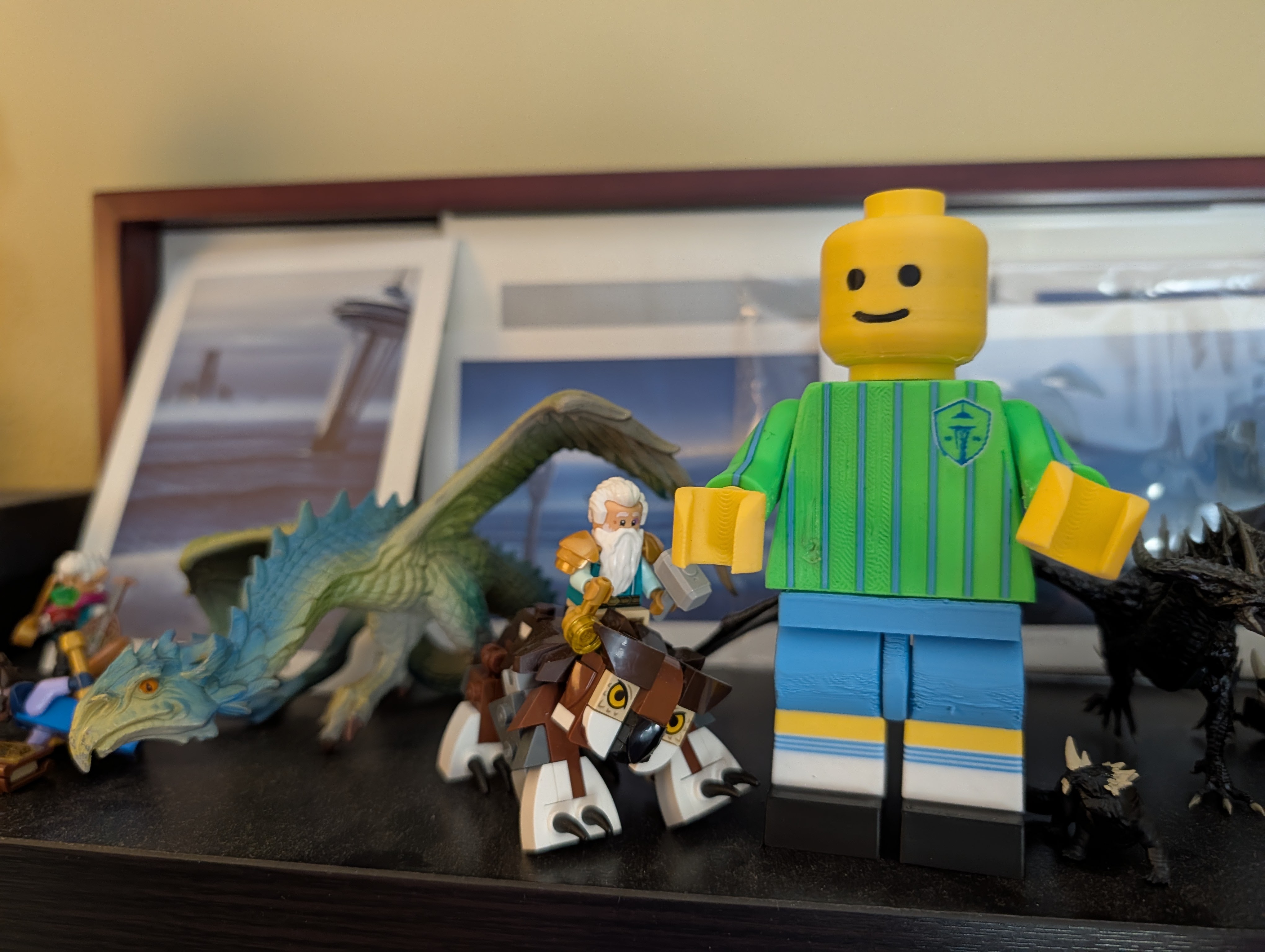
    Not from the local area? 1996 Designs makes excellent large brick people of your favorite American soccer teams.

    For being prepared without being a Prepper

    Working around emergency and crisis managers is reminding me of a few ways to be prepared.

    Have a plan when the emergency happens. Know your neighbors and the organizations that will help when disasters happen, because they will happen. A communications system that involves receiving alerts from multiple sources is vital — that should include a radio, as well as your local alerts system and free services on social media. Have backup power, even light solar for portable devices is helpful. You need at least three days of food and water, but if your budget of money and space allows a week or two that’s better.

    SHARE AND HELP OTHERS as part of your plan.

    I also keep an Amazon list for my family that lives well away. People can also decide to support the website.

    None of the above products or services pay me except Sounder at Heart, the website I founded and ran from 2008 to 2019 and rejoined in 2022, Factal (and those linked resources are free to the general public) and the two supplements mentioned in line paid me a one-time commission.

    Fediverse Reactions
  • Review: Sanguine by Found Familiar Coffee

    Review: Sanguine by Found Familiar Coffee

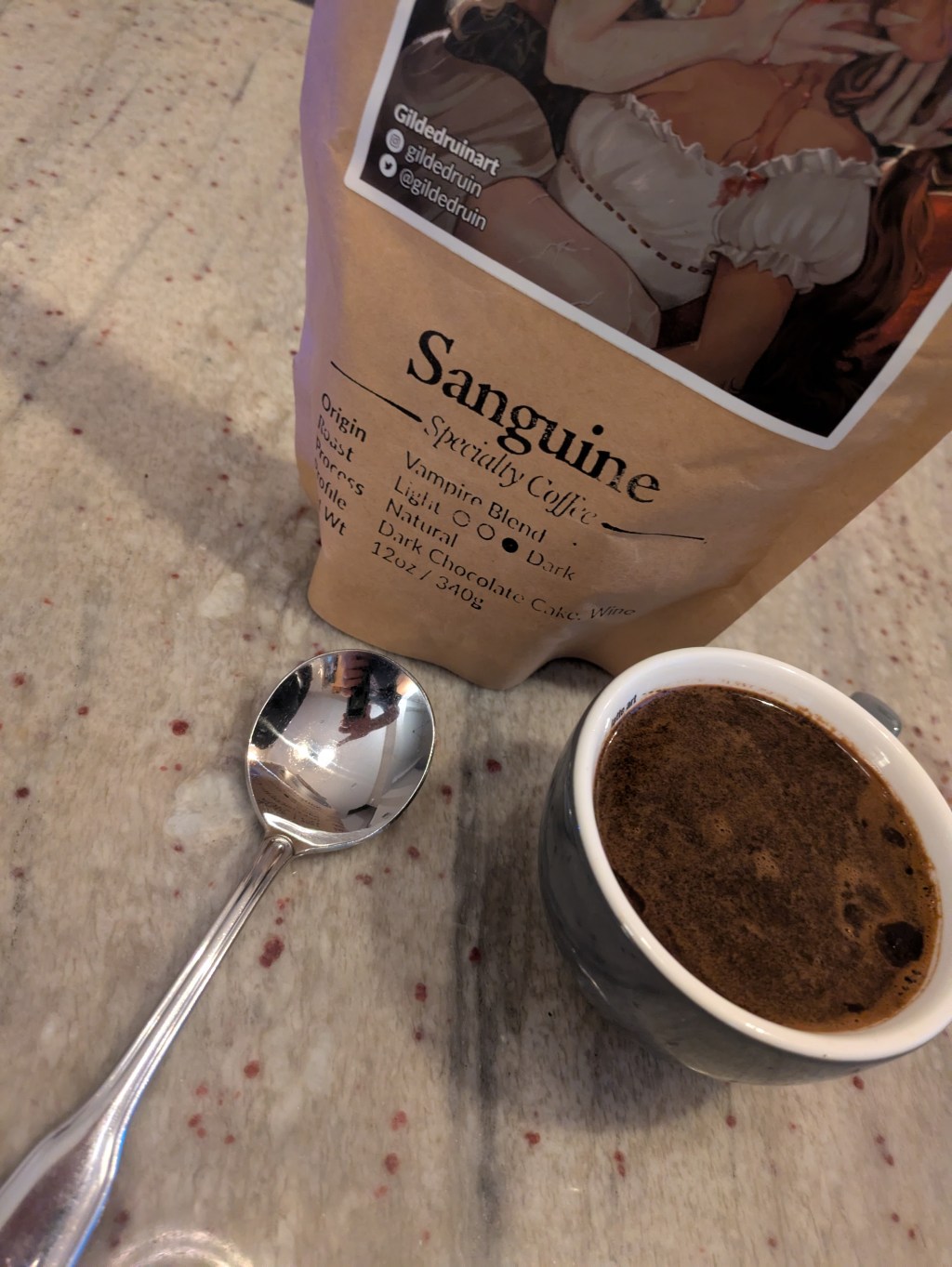
    Found Familiar is third wave roasting style coffees in bags with geeky art. Their Sanguine Vampire Blend is inspired by, well, vampires.

    As a former professional coffee taster my first, and most important note, is that if you like your coffee you are doing it right. Also, as a former taster, I decided that in 2025 I’m going to do a cupping of each new coffee I taste, because I don’t want to lose the skill.
    This will also help me maintain my sense of taste for wine, beer, food, etc.

    Sanguine Vampire Blend tasting notes

    This coffee was cupped at home, using a Baratza grinder, my kettle, a cup and one of my spoons from back in the day. It was tasted across a few temps. Additionally I’ve enjoyed espresso and cortados with Sanguine from a Breville Barista Touch and pour overs using a Chemex with paper filters with cream and without.

    On the break: Aroma of dark fruit, cherry or blackberries. Medium to strong roast.

    First slurp: Light, medium body without acid. Notes closer to dark cherry, mild acid, cocoa.

    Third slurp: Picks up roast better as cools. Stronger dark chocolate rather than cocoa. Bright cherry rather than dark?

    Lightly drying after spitting — think like eating a walnut

    Who should buy Sanguine?

    This is a great coffee for espresso, macchiato and cortado drinkers. There’s complexity to it, and it does pair well with the heavy chocolate and berry desserts as Found Familiar mentions.

    As a straight black cup of coffee it’s not as dark as I’d want — the vast majority of my 15 years of coffee experience were in second wave places (though I did stints in 3rd too).

    If you enjoy a lot of cream the roast may not get through like you want, unless you mostly go for 3rd wave profiles. Those that don’t use a lot of cream will enjoy it, especially with a bit of sugar, which I’ve found brings out the fruit notes.

    What makes Found Familiar different?

    There are several geek-roasters. What I like about Found Familiar is their support of artists and one of my preferred mapmakers. I’ve also purchased the Run D&D t-shirt twice because like many middle aged people I grew.

    Note: The coffee was purchased by myself and there was no expectation from the company that I would do a review.

    Fediverse Reactions
  • Making it easier to DM

    Making it easier to DM

    Being a Dungeon Master is intimidating. At it’s biggest level it can seem like you are supposed to run an entire world, know all the rules to the game, spotlight every player-character equally and help everyone have fun.

    There are many ways to make it simpler than that;

    • Focus only on the world with which the PCs interact
    • Skip rules that aren’t meaningful at the time
    • Rotate the spotlight as appropriate to the table
    • Get feedback from players in order to improve

    There are other ways too. I’m a big fan of the Lazy GM series.

    2024 Dungeons & Dragons helps make it easier in their Dungeon Masters Guide by incorporating some, but not all of SlyFlourish’s ideas. One notable thing is the tracking sheets — theirs and different from his, but that’s fine. Not everything needs to be the same.

    The Game Expectations tracking sheet features space for the DM's name, player names, theme, flavor, sensitive elements and more

    The layout of the new book is much better for new DMs. It also has excellent examples on how to spiral out from the characters while building a world, using Greyhawks as an example. There are micro adventures, which may not give enough information, but they do show that one doesn’t need a lot of notes to run a session. My sessions are usually a single notecard for example.

    Overall the ’24 DMG is a good to great book for Dungeon Masters early in their experience. It’s also handy that those tracking sheets are all available for free!

    But, (sorry WotC), there is a flaw in how easy it is to be a DM in this modern era.

    Those wonderful tracking sheets aren’t really part of DnDBeyond.com

    They exist, but without integration.

    What could make it easier to DM in the DnD Beyond era?

    When you Create a Campaign on Beyond it should start with that Game Expectations sheet. The notes should be replaced with the Campaign Journal.

    These are wonderful tools, and they are completely unsupported.

    Adding the sheets or similar fields to the campaign page would help a DM as they introduce the players to the game-to-be. They’d all be able to see what the story is about.

    Right now those pre-session one-sheets and the like need to be shared on the web, via email, Discord, at the table, or other tools rather than in the platform that Wizards of the Coast owns. It’s a silly gap in integration.

    Make it easier to share variant rules and setting information

    Currently, Beyond lets you share all of your books or none of your books. But that doesn’t help for a specific campaign.

    Currently, Beyond lets you share books in a deeper layer of content sharing, but doesn’t let you pick and choose rules (like attributes, extra feats, no feats, encumbrance)

    The above was updated at 8:57 pm on Nov 27, 2024

    My current Age of Myths campaign would make sense to permit Strixhaven, Theros and Dragonlance rules. It’s absurd for it to include the Illrigger, Ravenloft, or Lord of the Rings (TM).

    Imagine how much easier it would be for a DM and the table to say “these are the rules we are using for this campaign” and then toggle those rules and books either on our off.

    Currently that’s a player-by-player decision within the character creator.

    But what type of encumbrance a table is using isn’t a player-by-player decision. That’s a table decision. The appropriate setting and adventure rules aren’t most or none, but a delicate basis that sets the tone for the next several months or years of hanging out with your friends.

    Wizards of the Coast and the D&D team can make it even easier for DMs by changing some architecture of their semi-walled garden in such a way that they already believe works, because it’s in their brand new book.

    Fediverse Reactions
  • Tasting the official D&D coffee: Dragonfire Roast

    Tasting the official D&D coffee: Dragonfire Roast

    Licensing incongruent products is hard. We’ve all seen poor attempts at Big Screen Movie + Pancake House, or French Fries and that other Big Movie Franchise. Getting the proper fit for tie-ins is art and science.

    Dungeons and Dragons attempted bologna in the 80s and these days the lifestyle brand has a $70 two-slice toaster. Those don’t work. Their t-shirts have been great — I strongly recommend the Harper Motto shirt.

    Merging coffee and a brand is also difficult. I’ve been part of this with a major morning show and a coffee brand in the past, that was a fairly natural fit. Gamers of all types and caffeine tends to be a good fit too. Mt Dew and various energy drinks have partnered with numerous video games over the decades.

    D&D’s official coffee does a couple things really well. There’s also a major miss.

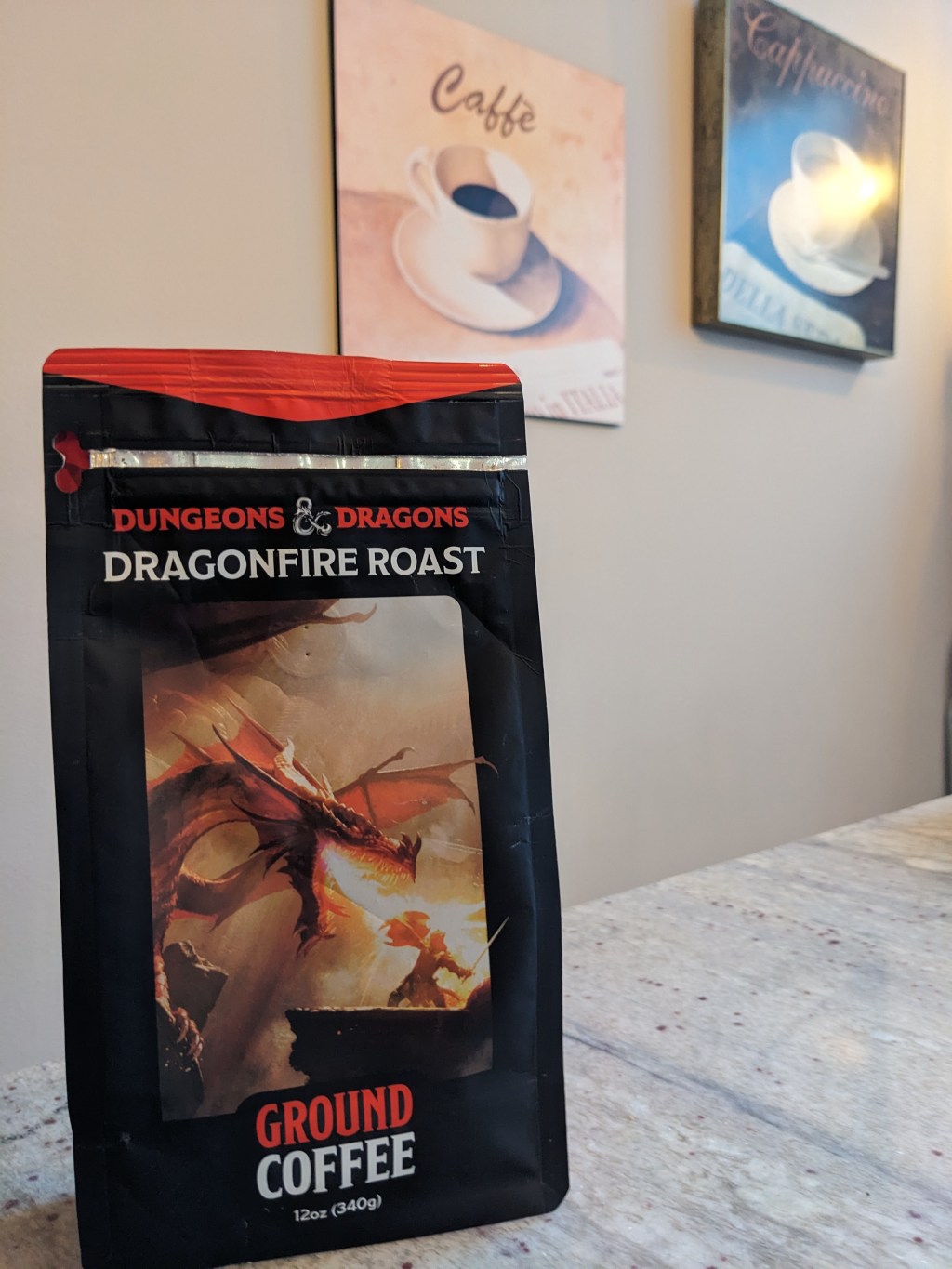
    Dungeon's & Dragons Dragonfire Roast bag with the zip-pull opened. The art shows a red dragon breathing fire on a solitary fighter with a shield. The bag is black. 
In the background are two cafe art pieces.

    The art and branding continuity is perfect. This coffee looks to be a perfect extension of official Dungeons & Dragons and presented by Wizards of the Coast. Easy access to the art is a big reason for that.

    But there are plenty of these kinds of partnerships that get the art and branding wrong, despite the easy legal and marketing access.

    The bag’s language is very 5e D&D in writing style. The ampersand is all over the sidewalls of the bag. That central art piece is tremendous — matching the aesthetic of modern D&D.

    When I was a full-time apprentice coffee taster we focused on four major elements to coffee flavor — body, acidity, flavor and finish. Despite not working in that field for a decade now, that’s still how I approach flavor, including when selling beer or tasting wine for pleasure.

    This is where Dragonfire fails.

    Per the bag it is a medium roast, preground “for any filter” which basically means for various drip techniques/filters and wholly Brazilian beans. The label did not call out 100% Arabica (the website does), but there are no tell-tale signs of robusta or other varieties. It also says that it is “medium flavor.”

    I did not perform a cupping, as the coffee was pre-ground.

    I tasted multiple Chemex pourovers using a metal filter over the past week — my current traditional coffee preference. I also attempted to use it in an espresso machine, but was unable to tamp sufficiently enough to make up for the different grind size.

    Body: fairly low body for a Brazil
    Acidity: essentially neutral
    Flavor: no spikes of premium flavors such as nutty, vanilla, etc
    Finish: very clean, no roughness which can be common in lower grown Brazils (this is where robustas would have been obvious)

    For a coffee fan Dragonfire would not be a coffee I would suggest. As a gift to a non-flavor nerd who likes D&D and drinks coffee with sugar and/or cream it’s a decent choice.

    For the flavor nerd who likes D&D I prefer Found Familiar coffees. I have a bag of Fey Magic waiting for a cupping, espresso tasting and pourover just as soon as I’m through my Middle Fork roaster and right before switching back to Campfire’s Summer Camp.